• The Power of an Innovative Mindset

    An innovative mindset is more than just thinking creatively—it’s a way of approaching problems, opportunities, and everyday challenges with curiosity, flexibility, and a willingness to take calculated risks. People with an innovative mindset don’t just accept the status quo; they question it, experiment with new ideas, and learn from failures as much as from successes.

    At the core of innovation is curiosity. Those with an innovative mindset constantly ask “why” and “what if,” seeking to understand systems deeply and explore new possibilities. They are adaptable, able to pivot when circumstances change, and resilient, seeing setbacks as stepping stones rather than roadblocks.

    Innovation also requires collaboration. While individual creativity is important, groundbreaking ideas often emerge from exchanging perspectives, challenging assumptions, and building on the insights of others.

    Ultimately, cultivating an innovative mindset transforms the way we approach life and work. It encourages continuous learning, inspires bold solutions, and drives progress—turning challenges into opportunities and ideas into impact.
    The Power of an Innovative Mindset An innovative mindset is more than just thinking creatively—it’s a way of approaching problems, opportunities, and everyday challenges with curiosity, flexibility, and a willingness to take calculated risks. People with an innovative mindset don’t just accept the status quo; they question it, experiment with new ideas, and learn from failures as much as from successes. At the core of innovation is curiosity. Those with an innovative mindset constantly ask “why” and “what if,” seeking to understand systems deeply and explore new possibilities. They are adaptable, able to pivot when circumstances change, and resilient, seeing setbacks as stepping stones rather than roadblocks. Innovation also requires collaboration. While individual creativity is important, groundbreaking ideas often emerge from exchanging perspectives, challenging assumptions, and building on the insights of others. Ultimately, cultivating an innovative mindset transforms the way we approach life and work. It encourages continuous learning, inspires bold solutions, and drives progress—turning challenges into opportunities and ideas into impact.
    love
    1
    · 0 Commentarios ·0 Acciones ·3K Views
  • About Us – Fintter

    Our Story

    Fintter was born from a simple idea: people talk every day, but very few are truly heard. In a world crowded with content, trending headlines, and noise, authentic conversations often get lost. We wanted to create a space where stories matter, curiosity thrives, and every voice has the chance to be understood.

    What We Do

    At Fintter, we turn conversations into meaningful content. We ask the questions that matter, listen deeply, and share insights that inspire, educate, and connect. From podcasts and interviews to articles and social media content, everything we create is designed to spark thought, foster understanding, and bring people closer together.

    Our Mission

    We exist to help people feel seen, heard, and understood. Our mission is to:
    • Build meaningful connections through storytelling
    • Give voices a platform to share their journeys
    • Turn curiosity into knowledge, and knowledge into action

    Why Fintter?

    Because every story matters. Every question matters. Every conversation can change how we see the world. Fintter is more than a brand—it’s a community, a platform, and a mindset for anyone who believes in the power of human connection.

    Join Us

    Whether you’re here to share your story, learn from others, or simply explore new ideas, Fintter welcomes you. Together, we turn conversations into understanding, one story at a time.
    About Us – Fintter Our Story Fintter was born from a simple idea: people talk every day, but very few are truly heard. In a world crowded with content, trending headlines, and noise, authentic conversations often get lost. We wanted to create a space where stories matter, curiosity thrives, and every voice has the chance to be understood. What We Do At Fintter, we turn conversations into meaningful content. We ask the questions that matter, listen deeply, and share insights that inspire, educate, and connect. From podcasts and interviews to articles and social media content, everything we create is designed to spark thought, foster understanding, and bring people closer together. Our Mission We exist to help people feel seen, heard, and understood. Our mission is to: • Build meaningful connections through storytelling • Give voices a platform to share their journeys • Turn curiosity into knowledge, and knowledge into action Why Fintter? Because every story matters. Every question matters. Every conversation can change how we see the world. Fintter is more than a brand—it’s a community, a platform, and a mindset for anyone who believes in the power of human connection. Join Us Whether you’re here to share your story, learn from others, or simply explore new ideas, Fintter welcomes you. Together, we turn conversations into understanding, one story at a time.
    love
    1
    · 0 Commentarios ·0 Acciones ·2K Views
  • About Us – Fintter

    Our Story

    Fintter was born from a simple idea: people talk every day, but very few are truly heard. In a world crowded with content, trending headlines, and noise, authentic conversations often get lost. We wanted to create a space where stories matter, curiosity thrives, and every voice has the chance to be understood.

    What We Do

    At Fintter, we turn conversations into meaningful content. We ask the questions that matter, listen deeply, and share insights that inspire, educate, and connect. From podcasts and interviews to articles and social media content, everything we create is designed to spark thought, foster understanding, and bring people closer together.

    Our Mission

    We exist to help people feel seen, heard, and understood. Our mission is to:
    • Build meaningful connections through storytelling
    • Give voices a platform to share their journeys
    • Turn curiosity into knowledge, and knowledge into action

    Why Fintter?

    Because every story matters. Every question matters. Every conversation can change how we see the world. Fintter is more than a brand—it’s a community, a platform, and a mindset for anyone who believes in the power of human connection.

    Join Us

    Whether you’re here to share your story, learn from others, or simply explore new ideas, Fintter welcomes you. Together, we turn conversations into understanding, one story at a time.
    About Us – Fintter Our Story Fintter was born from a simple idea: people talk every day, but very few are truly heard. In a world crowded with content, trending headlines, and noise, authentic conversations often get lost. We wanted to create a space where stories matter, curiosity thrives, and every voice has the chance to be understood. What We Do At Fintter, we turn conversations into meaningful content. We ask the questions that matter, listen deeply, and share insights that inspire, educate, and connect. From podcasts and interviews to articles and social media content, everything we create is designed to spark thought, foster understanding, and bring people closer together. Our Mission We exist to help people feel seen, heard, and understood. Our mission is to: • Build meaningful connections through storytelling • Give voices a platform to share their journeys • Turn curiosity into knowledge, and knowledge into action Why Fintter? Because every story matters. Every question matters. Every conversation can change how we see the world. Fintter is more than a brand—it’s a community, a platform, and a mindset for anyone who believes in the power of human connection. Join Us Whether you’re here to share your story, learn from others, or simply explore new ideas, Fintter welcomes you. Together, we turn conversations into understanding, one story at a time.
    0 Commentarios ·0 Acciones ·2K Views
  • JUST IN
    Wizkid and Davido didn’t become icons by staying comfortable. They started from the ground up, evolved constantly, took risks, and experimented with new sounds. That commitment to growth is why they remain relevant today.

    According to Lord Lamba, the same mindset inspired his transition from skit-making to live streaming.

    Growth demands reinvention. Relevance belongs to those who adapt. In entertainment, standing still is the fastest way to fall behind.
    `~Richard Udofia

    #Wizkid #Davido #LordLamba #EntertainmentNews #GrowthMindset #Reinvention
    JUST IN ‼️ Wizkid and Davido didn’t become icons by staying comfortable. They started from the ground up, evolved constantly, took risks, and experimented with new sounds. That commitment to growth is why they remain relevant today. According to Lord Lamba, the same mindset inspired his transition from skit-making to live streaming. Growth demands reinvention. Relevance belongs to those who adapt. In entertainment, standing still is the fastest way to fall behind. 🗣️ `~Richard Udofia #Wizkid #Davido #LordLamba #EntertainmentNews #GrowthMindset #Reinvention
    0 Commentarios ·0 Acciones ·2K Views
  • KEY THINGS PEOPLE IGNORE BEFORE MARRIAGE
    1. Communication Style
    How you talk during peace is different from how you talk during conflict.
    2. Conflict Resolution
    Do you resolve issues or sweep them under the carpet?
    3. Money Mindset
    Spending habits, debt, saving culture, and financial transparency.
    4. Emotional Maturity
    Can your partner apologize, accept correction, and take responsibility?
    5. Expectations in Marriage
    Roles, responsibilities, lifestyle, and standards.
    6. Family Boundaries & In-Laws
    Who comes first — spouse or parents?
    7. Values & Beliefs
    Faith, morals, principles, and life priorities.
    8. Life Goals & Direction
    Career plans, relocation, children, and long-term vision.
    9. Anger & Temperament
    How your partner reacts when upset or stressed.
    10. Respect (Not Just Love)
    Love can fade temporarily, but respect must remain constant.
    11. Handling Stress & Pressure
    How they act during hardship, not comfort.
    12. Sexual Expectations & Intimacy
    Needs, boundaries, and openness (without details).
    13. Health & Genetics
    Physical, mental health history, and genotype discussions.
    14. Past Trauma & Baggage
    Unhealed wounds can show up in marriage.
    15. Parenting Style
    Discipline, education, and values for children.
    16. Friendships & Influences
    Who has access and influence over your partner?
    17. Honesty & Transparency
    Secrets before marriage often become scandals after.
    18. Growth Mindset
    Are you both willing to learn and change?
    19. Decision-Making Style
    Who decides what, and how?
    20. Definition of Love & Commitment
    What does cheating, loyalty, and commitment mean to each of you?
    🔑 KEY THINGS PEOPLE IGNORE BEFORE MARRIAGE 1. Communication Style How you talk during peace is different from how you talk during conflict. 2. Conflict Resolution Do you resolve issues or sweep them under the carpet? 3. Money Mindset Spending habits, debt, saving culture, and financial transparency. 4. Emotional Maturity Can your partner apologize, accept correction, and take responsibility? 5. Expectations in Marriage Roles, responsibilities, lifestyle, and standards. 6. Family Boundaries & In-Laws Who comes first — spouse or parents? 7. Values & Beliefs Faith, morals, principles, and life priorities. 8. Life Goals & Direction Career plans, relocation, children, and long-term vision. 9. Anger & Temperament How your partner reacts when upset or stressed. 10. Respect (Not Just Love) Love can fade temporarily, but respect must remain constant. 11. Handling Stress & Pressure How they act during hardship, not comfort. 12. Sexual Expectations & Intimacy Needs, boundaries, and openness (without details). 13. Health & Genetics Physical, mental health history, and genotype discussions. 14. Past Trauma & Baggage Unhealed wounds can show up in marriage. 15. Parenting Style Discipline, education, and values for children. 16. Friendships & Influences Who has access and influence over your partner? 17. Honesty & Transparency Secrets before marriage often become scandals after. 18. Growth Mindset Are you both willing to learn and change? 19. Decision-Making Style Who decides what, and how? 20. Definition of Love & Commitment What does cheating, loyalty, and commitment mean to each of you?
    0 Commentarios ·0 Acciones ·3K Views
  • Is Superstition Holding Nigerian Communities Hostage? How Fear of ‘Poison,’ Rituals, and Dog Poop Is Fueling Paranoia, Poverty, and Exploitation – By Leo Igwe

    Is superstition silently destroying communities in Nigeria—and why are fear, paranoia, and ritual beliefs still shaping how people interpret illness, death, and misfortune?

    In this powerful and unsettling account, Leo Igwe recounts his return to his hometown in southeastern Nigeria after decades away, where he encountered what he describes as the toxic grip of superstition and irrational fear on everyday life. From the moment he arrived, Igwe says he witnessed how ordinary health issues were being interpreted as the work of unseen enemies using “poison,” spiritual attacks, or occult forces.

    A family housekeeper with a swollen hand claimed he had “picked up poison” while farming—an explanation widely accepted by community members, despite no one being able to describe what the poison was, how it worked, or where it came from. Rather than seeking medical help, the man was subjected to prayers, spiritual pressing, and ritual interventions, which only worsened the condition. For Igwe, this was a troubling reminder of how medical problems are often rebranded as spiritual attacks, delaying proper treatment and deepening fear.

    But why does this mindset persist? Igwe explains that in his community, no one is believed to die naturally. Death, illness, stroke, or paralysis are frequently attributed to enemies—often relatives or neighbors—who are accused of using occult means. Phrases like “they have killed him” or “they have finally gotten him” dominate conversations, reinforcing suspicion and tearing families apart. People live in constant fear that someone has planted spiritual “poisons” that they might step on or touch.

    Despite identifying as Christians, many residents, Igwe notes, move between churches, prophets, pastors, traditional priests, and ritual specialists. They pray to Jesus, invoke ancestors, hire “prayer warriors,” and perform sacrifices in an endless cycle of spiritual protection. But does this offer safety—or does it deepen exploitation? Igwe argues that this climate has created fertile ground for con artists, fake prophets, and self-styled spiritual practitioners who extract money in exchange for deliverance, exorcism, and supposed protection.

    One striking episode involved a roaming prayer man who went from house to house, collecting food or money after loud, theatrical prayers. In another home, Igwe witnessed a dramatic ritual in which sand was placed in people’s hands while God was commanded to “open doors,” even instructing someone to physically open the living room door to symbolize prosperity. To Igwe, this performance illustrated how faith is manipulated into spectacle while poverty remains unchanged.

    Perhaps the most disturbing moment came when a neighbor reported that dog feces found in their compound was not ordinary waste but a weapon of spiritual harm. The family believed it had been ritually placed to bring sickness or death—just as, they claimed, their parents had previously been killed. The response? Olive oil poured on it, urine used as a neutralizer, and the case escalated to village authorities. To Igwe, this episode captured how fear transforms harmless events into imagined threats, driving communities deeper into paranoia.

    Addressing a village meeting, Igwe warned of the dangerous consequences of baseless accusations, superstition, and occult blame, citing how such beliefs have destroyed families and communities across the region. He urged residents to free themselves from irrational fear and confront the social damage caused by suspicion, exploitation, and magical thinking.

    So what is the real cost of these beliefs? According to Igwe, communities trapped in superstition remain locked in poverty, fear, and manipulation, unable to address real health, economic, and social challenges. The essay ultimately asks a haunting question: Can communities break free from the cycle of fear before superstition consumes trust, development, and human dignity?

    Is Superstition Holding Nigerian Communities Hostage? How Fear of ‘Poison,’ Rituals, and Dog Poop Is Fueling Paranoia, Poverty, and Exploitation – By Leo Igwe Is superstition silently destroying communities in Nigeria—and why are fear, paranoia, and ritual beliefs still shaping how people interpret illness, death, and misfortune? In this powerful and unsettling account, Leo Igwe recounts his return to his hometown in southeastern Nigeria after decades away, where he encountered what he describes as the toxic grip of superstition and irrational fear on everyday life. From the moment he arrived, Igwe says he witnessed how ordinary health issues were being interpreted as the work of unseen enemies using “poison,” spiritual attacks, or occult forces. A family housekeeper with a swollen hand claimed he had “picked up poison” while farming—an explanation widely accepted by community members, despite no one being able to describe what the poison was, how it worked, or where it came from. Rather than seeking medical help, the man was subjected to prayers, spiritual pressing, and ritual interventions, which only worsened the condition. For Igwe, this was a troubling reminder of how medical problems are often rebranded as spiritual attacks, delaying proper treatment and deepening fear. But why does this mindset persist? Igwe explains that in his community, no one is believed to die naturally. Death, illness, stroke, or paralysis are frequently attributed to enemies—often relatives or neighbors—who are accused of using occult means. Phrases like “they have killed him” or “they have finally gotten him” dominate conversations, reinforcing suspicion and tearing families apart. People live in constant fear that someone has planted spiritual “poisons” that they might step on or touch. Despite identifying as Christians, many residents, Igwe notes, move between churches, prophets, pastors, traditional priests, and ritual specialists. They pray to Jesus, invoke ancestors, hire “prayer warriors,” and perform sacrifices in an endless cycle of spiritual protection. But does this offer safety—or does it deepen exploitation? Igwe argues that this climate has created fertile ground for con artists, fake prophets, and self-styled spiritual practitioners who extract money in exchange for deliverance, exorcism, and supposed protection. One striking episode involved a roaming prayer man who went from house to house, collecting food or money after loud, theatrical prayers. In another home, Igwe witnessed a dramatic ritual in which sand was placed in people’s hands while God was commanded to “open doors,” even instructing someone to physically open the living room door to symbolize prosperity. To Igwe, this performance illustrated how faith is manipulated into spectacle while poverty remains unchanged. Perhaps the most disturbing moment came when a neighbor reported that dog feces found in their compound was not ordinary waste but a weapon of spiritual harm. The family believed it had been ritually placed to bring sickness or death—just as, they claimed, their parents had previously been killed. The response? Olive oil poured on it, urine used as a neutralizer, and the case escalated to village authorities. To Igwe, this episode captured how fear transforms harmless events into imagined threats, driving communities deeper into paranoia. Addressing a village meeting, Igwe warned of the dangerous consequences of baseless accusations, superstition, and occult blame, citing how such beliefs have destroyed families and communities across the region. He urged residents to free themselves from irrational fear and confront the social damage caused by suspicion, exploitation, and magical thinking. So what is the real cost of these beliefs? According to Igwe, communities trapped in superstition remain locked in poverty, fear, and manipulation, unable to address real health, economic, and social challenges. The essay ultimately asks a haunting question: Can communities break free from the cycle of fear before superstition consumes trust, development, and human dignity?
    0 Commentarios ·0 Acciones ·3K Views
  • Pastor’s Daughter Reveals Life After Leaving Christianity, Sparks Social Media Debate

    Kaylah Osarume Odemwingie, a fashion designer and daughter of a pastor, has publicly shared her experience after leaving Christianity for traditional worship. She expressed that her life improved, noting greater happiness and a healthier mindset since her religious transition. Her tweet questioning why Christians assume life becomes miserable after leaving the faith ignited widespread reactions online, with social media users debating faith, personal fulfillment, and spiritual beliefs. This revelation follows other similar accounts of former Christians sharing insights after leaving the religion.

    #ExChristianExperience
    #PastorsDaughter
    #FaithDebate
    #TraditionalReligion
    #NigerianSocialMedia
    #SpiritualJourney
    #ReligionAndLifestyle
    Pastor’s Daughter Reveals Life After Leaving Christianity, Sparks Social Media Debate Kaylah Osarume Odemwingie, a fashion designer and daughter of a pastor, has publicly shared her experience after leaving Christianity for traditional worship. She expressed that her life improved, noting greater happiness and a healthier mindset since her religious transition. Her tweet questioning why Christians assume life becomes miserable after leaving the faith ignited widespread reactions online, with social media users debating faith, personal fulfillment, and spiritual beliefs. This revelation follows other similar accounts of former Christians sharing insights after leaving the religion. #ExChristianExperience #PastorsDaughter #FaithDebate #TraditionalReligion #NigerianSocialMedia #SpiritualJourney #ReligionAndLifestyle
    0 Commentarios ·0 Acciones ·2K Views
  • Ifeanyi Ejiofor Slams Boris Johnson’s Comments on Nigeria as ‘Imperial Mindset’

    Human rights lawyer Ifeanyi Ejiofor has strongly criticised former UK Prime Minister Boris Johnson over remarks he made at an economic summit in Owerri, Imo State. Johnson had joked about trade relations, security concerns, and political mobility between Nigeria and the UK, comments Ejiofor described as disrespectful and rooted in “imperial mindset.” He argued that Johnson’s statements echoed colonial-era attitudes and ignored the historical imbalance in relations between both countries. Ejiofor also faulted African elites for applauding the remarks, calling it a troubling display of complicity. He urged Nigeria to demand more nuance from visiting leaders, reframe narratives around trade, and prioritise partnerships based on technology transfer, capacity building, and equitable terms.
    Ifeanyi Ejiofor Slams Boris Johnson’s Comments on Nigeria as ‘Imperial Mindset’ Human rights lawyer Ifeanyi Ejiofor has strongly criticised former UK Prime Minister Boris Johnson over remarks he made at an economic summit in Owerri, Imo State. Johnson had joked about trade relations, security concerns, and political mobility between Nigeria and the UK, comments Ejiofor described as disrespectful and rooted in “imperial mindset.” He argued that Johnson’s statements echoed colonial-era attitudes and ignored the historical imbalance in relations between both countries. Ejiofor also faulted African elites for applauding the remarks, calling it a troubling display of complicity. He urged Nigeria to demand more nuance from visiting leaders, reframe narratives around trade, and prioritise partnerships based on technology transfer, capacity building, and equitable terms.
    0 Commentarios ·0 Acciones ·770 Views
  • Job Title: Area Customer Manager (ACM)
    Job Purpose:
    The Area Customer Manager is responsible for driving customer acquisition, retention, and growth within a defined territory. The role emphasizes expanding customer base, increasing sales volume, and deepening relationships by promoting solutions such as BNPL (Buy Now, Pay Later) and Customer Membership programs that enhance loyalty and market share.

    Location: Amuwo Odofin
    Key Responsibilities:

    1. Customer Growth & Acquisition
    • Identify, prospect, and onboard new retail customers in the assigned territory.
    • Drive adoption of the BNPL(Buy Now Pay Later) feature to increase purchasing power and sales turnover.
    • Promote and enroll customers into the Membership program to strengthen loyalty.

    2. Sales & Revenue Delivery
    • Achieve monthly, quarterly, and annual sales targets.
    • Increase sales volume through BNPL utilization and membership-driven repeat purchases.
    • Monitor competitor activity and adjust strategies to stay ahead.
    3. Customer Relationship Management
    • Build and maintain long-term customer relationships.
    • Ensure customer satisfaction by resolving issues quickly and effectively.
    • Conduct regular customer visits and promote added-value services like BNPL and Membership.
    4. Team & Territory Management
    • Responsible for growing team members a minimum of 10 Active Account managers, Supervise, coach, and support account managers within the territory.
    • Ensure route planning, market coverage, and daily execution excellence.
    • Track performance, motivate the team, and enforce discipline in execution.
    • Reporting & Insights
    • Submit daily/weekly/monthly reports on sales, Customer acquisiton, BNPL adoption, and membership sign-ups.
    • Provide actionable insights on customer behavior and growth opportunities.
    • Work with cross-functional teams (Marketing, Finance, Logistics) to drive customer loyalty and financial inclusion.
    Key Requirements (Skills & Qualifications):
    • Bachelor’s degree in Business, Marketing, or related field.
    • Minimum 3–5 years in Sales/Account/Area Management (FMCG, Retail, or Distribution preferred).
    • Experience in driving customer programs (loyalty, membership, or BNPL adoption).
    • Excellent communication, negotiation, and leadership skills.
    • Analytical mindset with proven track record of growing customer base and sales.
    Interested and qualified persons should send cv to careers@omniretail.africa using the subject head and location as job title
    Job Title: Area Customer Manager (ACM) Job Purpose: The Area Customer Manager is responsible for driving customer acquisition, retention, and growth within a defined territory. The role emphasizes expanding customer base, increasing sales volume, and deepening relationships by promoting solutions such as BNPL (Buy Now, Pay Later) and Customer Membership programs that enhance loyalty and market share. Location: Amuwo Odofin Key Responsibilities: 1. Customer Growth & Acquisition • Identify, prospect, and onboard new retail customers in the assigned territory. • Drive adoption of the BNPL(Buy Now Pay Later) feature to increase purchasing power and sales turnover. • Promote and enroll customers into the Membership program to strengthen loyalty. 2. Sales & Revenue Delivery • Achieve monthly, quarterly, and annual sales targets. • Increase sales volume through BNPL utilization and membership-driven repeat purchases. • Monitor competitor activity and adjust strategies to stay ahead. 3. Customer Relationship Management • Build and maintain long-term customer relationships. • Ensure customer satisfaction by resolving issues quickly and effectively. • Conduct regular customer visits and promote added-value services like BNPL and Membership. 4. Team & Territory Management • Responsible for growing team members a minimum of 10 Active Account managers, Supervise, coach, and support account managers within the territory. • Ensure route planning, market coverage, and daily execution excellence. • Track performance, motivate the team, and enforce discipline in execution. • Reporting & Insights • Submit daily/weekly/monthly reports on sales, Customer acquisiton, BNPL adoption, and membership sign-ups. • Provide actionable insights on customer behavior and growth opportunities. • Work with cross-functional teams (Marketing, Finance, Logistics) to drive customer loyalty and financial inclusion. Key Requirements (Skills & Qualifications): • Bachelor’s degree in Business, Marketing, or related field. • Minimum 3–5 years in Sales/Account/Area Management (FMCG, Retail, or Distribution preferred). • Experience in driving customer programs (loyalty, membership, or BNPL adoption). • Excellent communication, negotiation, and leadership skills. • Analytical mindset with proven track record of growing customer base and sales. Interested and qualified persons should send cv to careers@omniretail.africa using the subject head and location as job title
    0 Commentarios ·0 Acciones ·793 Views
  • We Must Win By Whatever Means Necessary” – Former INEC Boss Exposes Politicians Dangerous Mindset.

    Former Chairman of the Independent National Electoral Commission (INEC), Attahiru Jega, has condemned the desperation of Nigerian politicians to undermine the integrity of the nation’s electoral process.

    Speaking in Abuja while delivering a keynote address at the joint graduation ceremony of the National Institute for Legislative and Democratic Studies and the University of Benin, Jega warned that such a “do-or-die” attitude poses a threat to democratic development.

    Jega lamented that the politicians’ attitude towards elections has eroded public trust in the Democratic process.

    He pointed out that despite 25 years of uninterrupted democracy since 1999, Nigeria still struggles with electoral malpractice, violence, and widespread distrust in the electoral system.

    He said, “When we see the desperation of these politicians, it is very clear, as former President Obasanjo said, that they engage with elections with a ‘do-or-die’ mentality. We must win by whatever means are necessary.

    “No elections are perfect and none are likely to ever be,” he admitted, stressing that electoral integrity “is relative and measured as a continuum from the extreme worst-case scenario to the ideal best-case scenario.”

    Jega noted that Nigeria’s political landscape has for decades been tainted by the pursuit of power at all costs, adding that fixing the country’s electoral process would require “continuous concerted efforts”.

    “The credibility of elections has a direct correlation with the quality of representation and governance,” he added.
    We Must Win By Whatever Means Necessary” – Former INEC Boss Exposes Politicians Dangerous Mindset. Former Chairman of the Independent National Electoral Commission (INEC), Attahiru Jega, has condemned the desperation of Nigerian politicians to undermine the integrity of the nation’s electoral process. Speaking in Abuja while delivering a keynote address at the joint graduation ceremony of the National Institute for Legislative and Democratic Studies and the University of Benin, Jega warned that such a “do-or-die” attitude poses a threat to democratic development. Jega lamented that the politicians’ attitude towards elections has eroded public trust in the Democratic process. He pointed out that despite 25 years of uninterrupted democracy since 1999, Nigeria still struggles with electoral malpractice, violence, and widespread distrust in the electoral system. He said, “When we see the desperation of these politicians, it is very clear, as former President Obasanjo said, that they engage with elections with a ‘do-or-die’ mentality. We must win by whatever means are necessary. “No elections are perfect and none are likely to ever be,” he admitted, stressing that electoral integrity “is relative and measured as a continuum from the extreme worst-case scenario to the ideal best-case scenario.” Jega noted that Nigeria’s political landscape has for decades been tainted by the pursuit of power at all costs, adding that fixing the country’s electoral process would require “continuous concerted efforts”. “The credibility of elections has a direct correlation with the quality of representation and governance,” he added.
    like
    1
    · 0 Commentarios ·0 Acciones ·1K Views
  • I Have Never Heard any Wealthy Person Say ‘Money na Water’—Billionaire Businessman Cosmas Maduka Informs Cubana ChiefPriest, Others; Says Rich People don’t Make Noise.

    Nigerian businessman and founder of Coscharis Group, Dr. Cosmas Maduka, has condemned the growing trend of using the slang “money na water” to justify reckless spending and public display of wealth.

    In a passionate statement, Maduka criticized the culture of throwing money at parties and flaunting riches, describing it as a “dead value system” that corrupts societal morals and misguides the younger generation.

    “I’ve never heard Tony Elumelu say ‘money na water,’ I’ve never heard Femi Otedola say it, and I’ve never said it myself,” Maduka stated. “When I attend a function and people start throwing money in the air, I quietly walk away. This madness must stop.”

    The billionaire businessman lamented that modesty and humility, traits once associated with true wealth have been replaced by showiness and noise. He stressed that real money inspires humility, not arrogance, adding that the glorification of such wasteful behavior should be rejected, not celebrated.

    “When we were growing up, rich people didn’t make noise. All these people making noise today never made real money,” he said. “We’ve embraced a deadly culture and are now passing it on to our children. That’s not how to build a value-driven society.”

    Maduka urged Nigerians to desist from celebrating ostentatious spending, saying the “money na water” mindset erodes discipline, hard work, and moral integrity.
    I Have Never Heard any Wealthy Person Say ‘Money na Water’—Billionaire Businessman Cosmas Maduka Informs Cubana ChiefPriest, Others; Says Rich People don’t Make Noise. Nigerian businessman and founder of Coscharis Group, Dr. Cosmas Maduka, has condemned the growing trend of using the slang “money na water” to justify reckless spending and public display of wealth. In a passionate statement, Maduka criticized the culture of throwing money at parties and flaunting riches, describing it as a “dead value system” that corrupts societal morals and misguides the younger generation. “I’ve never heard Tony Elumelu say ‘money na water,’ I’ve never heard Femi Otedola say it, and I’ve never said it myself,” Maduka stated. “When I attend a function and people start throwing money in the air, I quietly walk away. This madness must stop.” The billionaire businessman lamented that modesty and humility, traits once associated with true wealth have been replaced by showiness and noise. He stressed that real money inspires humility, not arrogance, adding that the glorification of such wasteful behavior should be rejected, not celebrated. “When we were growing up, rich people didn’t make noise. All these people making noise today never made real money,” he said. “We’ve embraced a deadly culture and are now passing it on to our children. That’s not how to build a value-driven society.” Maduka urged Nigerians to desist from celebrating ostentatious spending, saying the “money na water” mindset erodes discipline, hard work, and moral integrity.
    0 Commentarios ·0 Acciones ·974 Views
  • Don’t Beg People — Inspire Them

    Stop begging people to do things for you.
    Give them a reason to want to do it.
    Respect, value, and energy attract more than pressure ever will.

    Be the reason people choose to show up. not the reason they feel forced to.

    #Motivation #Leadership #Mindset #Growth
    💭 Don’t Beg People — Inspire Them Stop begging people to do things for you. Give them a reason to want to do it. Respect, value, and energy attract more than pressure ever will. Be the reason people choose to show up. not the reason they feel forced to. #Motivation #Leadership #Mindset #Growth
    0 Commentarios ·0 Acciones ·492 Views
  • Afenifere Leader Blasts APC: “They Deceive, Manipulate Figures, and Conceal the Truth!”


    The Leader of the Yoruba Socio-Cultural Organization, Afenifere, Oba Oladipo Olaitan, has taken a strong swipe at the All Progressives Congress (APC), accusing the ruling party of deceiving Nigerians and manipulating facts for political gain.

    Speaking during an interview on Sunrise Daily on Channels Television, Olaitan said the APC has mastered the art of misleading the public.

    “APC is good at what they know how to do — deceive people, manipulate figures, conceal issues. That’s their job, and they know how to do it,” he said.


    He questioned whether Nigerians truly feel safe under the current administration, noting that insecurity and distrust have worsened.

    Olaitan also revisited allegations that during the previous administration, foreign nationals — particularly from the Fulani ethnic group — were allegedly brought into Nigeria to disrupt peace and influence power.

    “The last administration before the current one… just because they wanted to rule by hook or crook, they allegedly imported foreign nationals — Fulanis to be precise — to destroy the nation if they couldn’t get power,” he alleged.


    The Afenifere leader further criticised President Bola Ahmed Tinubu, recalling his campaign remark that it was “his turn” to rule Nigeria.

    “If anybody has that type of mindset, nothing good can come out of him,” Olaitan stated. “When he said it was his turn, what that means is — it’s either me or nobody else.”

    His comments have stirred conversations nationwide, reigniting debates about the credibility of the ruling party and the state of governance in Nigeria.
    Afenifere Leader Blasts APC: “They Deceive, Manipulate Figures, and Conceal the Truth!” The Leader of the Yoruba Socio-Cultural Organization, Afenifere, Oba Oladipo Olaitan, has taken a strong swipe at the All Progressives Congress (APC), accusing the ruling party of deceiving Nigerians and manipulating facts for political gain. Speaking during an interview on Sunrise Daily on Channels Television, Olaitan said the APC has mastered the art of misleading the public. “APC is good at what they know how to do — deceive people, manipulate figures, conceal issues. That’s their job, and they know how to do it,” he said. He questioned whether Nigerians truly feel safe under the current administration, noting that insecurity and distrust have worsened. Olaitan also revisited allegations that during the previous administration, foreign nationals — particularly from the Fulani ethnic group — were allegedly brought into Nigeria to disrupt peace and influence power. “The last administration before the current one… just because they wanted to rule by hook or crook, they allegedly imported foreign nationals — Fulanis to be precise — to destroy the nation if they couldn’t get power,” he alleged. The Afenifere leader further criticised President Bola Ahmed Tinubu, recalling his campaign remark that it was “his turn” to rule Nigeria. “If anybody has that type of mindset, nothing good can come out of him,” Olaitan stated. “When he said it was his turn, what that means is — it’s either me or nobody else.” His comments have stirred conversations nationwide, reigniting debates about the credibility of the ruling party and the state of governance in Nigeria.
    0 Commentarios ·0 Acciones ·652 Views
  • Veteran highlife musician, Bright Chimezie has advised Nigerians to rethink the growing trend of relocating abroad in search of greener pastures, insisting that there are equally valuable opportunities within the country

    In a recent interview, He said many Nigerians wrongly assume that life is easier overseas but often end up facing harsh realities when they get there.

    “Our problem is right here. We keep helping people over there because we think the grass is greener on the other side. But it’s not,” he said

    “I’ve travelled quite a bit & I can tell you there are no more opportunities there. When you get there, you start from the bottom, sometimes even washing toilets just to survive.

    He further lamented that colonial influence and the mindset it left behind have made many Nigerians undervalue their own country.

    “When the white people came, it affected our mentality & development. If we studied biology & mathematics with the same passion we use to read the Bible, our society would be far better, He added.
    Veteran highlife musician, Bright Chimezie has advised Nigerians to rethink the growing trend of relocating abroad in search of greener pastures, insisting that there are equally valuable opportunities within the country In a recent interview, He said many Nigerians wrongly assume that life is easier overseas but often end up facing harsh realities when they get there. “Our problem is right here. We keep helping people over there because we think the grass is greener on the other side. But it’s not,” he said “I’ve travelled quite a bit & I can tell you there are no more opportunities there. When you get there, you start from the bottom, sometimes even washing toilets just to survive. He further lamented that colonial influence and the mindset it left behind have made many Nigerians undervalue their own country. “When the white people came, it affected our mentality & development. If we studied biology & mathematics with the same passion we use to read the Bible, our society would be far better, He added.
    0 Commentarios ·0 Acciones ·851 Views
  • It’s Cultural, Not Biblical, for Men to Provide for Women – Pastor Kingsley Okonkwo.

    The founder of David’s Christian Centre, Pastor Kingsley Okonkwo, has urged women to stop depending on men for financial support, stressing that such expectations are rooted in culture, not scripture.

    In a recent sermon, Okonkwo explained that the Bible encourages hard work and personal responsibility rather than dependency. He argued that women should not expect men to cater to their financial needs, reminding them that scripture clearly states, “He that does not work should not eat.”

    The clergyman questioned why many women who were self-reliant before marriage suddenly shift the burden of survival to their husbands or partners. He described this mindset as “p++r people talk,” pointing out that individuals from wealthy backgrounds are usually raised with the mentality of self-sufficiency.

    Okonkwo also criticized women who define their worth by what men can provide, warning that this often leads to exploitation and disrespect. According to him, women who set low standards based on material demands, such as insisting a man must buy them little gifts to gain attention, end up being mistreated.

    “The way some of you are being treated is because of how you’ve rated yourself. If you say, ‘If you don’t buy me popcorn, I won’t come,’ then don’t be surprised when they pop you like corn. You’re disgracing your family,” he cautioned.
    It’s Cultural, Not Biblical, for Men to Provide for Women – Pastor Kingsley Okonkwo. The founder of David’s Christian Centre, Pastor Kingsley Okonkwo, has urged women to stop depending on men for financial support, stressing that such expectations are rooted in culture, not scripture. In a recent sermon, Okonkwo explained that the Bible encourages hard work and personal responsibility rather than dependency. He argued that women should not expect men to cater to their financial needs, reminding them that scripture clearly states, “He that does not work should not eat.” The clergyman questioned why many women who were self-reliant before marriage suddenly shift the burden of survival to their husbands or partners. He described this mindset as “p++r people talk,” pointing out that individuals from wealthy backgrounds are usually raised with the mentality of self-sufficiency. Okonkwo also criticized women who define their worth by what men can provide, warning that this often leads to exploitation and disrespect. According to him, women who set low standards based on material demands, such as insisting a man must buy them little gifts to gain attention, end up being mistreated. “The way some of you are being treated is because of how you’ve rated yourself. If you say, ‘If you don’t buy me popcorn, I won’t come,’ then don’t be surprised when they pop you like corn. You’re disgracing your family,” he cautioned.
    0 Commentarios ·0 Acciones ·916 Views
  • Impact of COVID-19 on the Global Digital Transformation Market

    Despite its status as a top corporate priority, the path to successful digital transformation is fraught with significant and often underestimated Digital Transformation Market Restraints that can derail projects and prevent organizations from realizing the full value of their investments. The single most significant and pervasive restraint is not technological, but cultural and organizational. The deep-seated resistance to change and the inertia of established processes and legacy mindsets are the primary reasons why many transformation initiatives fail. Digital transformation is not just about implementing new software; it is about fundamentally changing the way people work, the way decisions are made, and the way the company interacts with its customers. This can be deeply threatening to employees who are comfortable with the status quo and may fear that new technologies will make their skills obsolete. The challenge of breaking down long-standing departmental silos to create more integrated, cross-functional ways of working is another massive cultural hurdle. Without a strong, top-down commitment to change management, clear communication, and a proactive effort to upskill the workforce, this cultural resistance can become an insurmountable barrier.

    https://www.marketresearchfuture.com/reports/digital-transformation-market-8685

    Impact of COVID-19 on the Global Digital Transformation Market Despite its status as a top corporate priority, the path to successful digital transformation is fraught with significant and often underestimated Digital Transformation Market Restraints that can derail projects and prevent organizations from realizing the full value of their investments. The single most significant and pervasive restraint is not technological, but cultural and organizational. The deep-seated resistance to change and the inertia of established processes and legacy mindsets are the primary reasons why many transformation initiatives fail. Digital transformation is not just about implementing new software; it is about fundamentally changing the way people work, the way decisions are made, and the way the company interacts with its customers. This can be deeply threatening to employees who are comfortable with the status quo and may fear that new technologies will make their skills obsolete. The challenge of breaking down long-standing departmental silos to create more integrated, cross-functional ways of working is another massive cultural hurdle. Without a strong, top-down commitment to change management, clear communication, and a proactive effort to upskill the workforce, this cultural resistance can become an insurmountable barrier. https://www.marketresearchfuture.com/reports/digital-transformation-market-8685
    0 Commentarios ·0 Acciones ·2K Views
  • Triggered by My Statement, Presidential Spokesperson
    @BayoOnanuga
    Writes Me to Delete My Posts on Tinubu

    Presidential spokesperson, Bayo Onanuga, wrote directly to me on WhatsApp, asking that I delete my tweet and Facebook post in which I referred to President Bola Tinubu as a criminal based on Tinubu’s recent speech in Brazil, where he claimed that there is “no more corruption in Nigeria.”

    Onanuga argued that my interpretation was a “misfire,” claiming Tinubu was only referring to the process of sourcing foreign exchange and not corruption as a whole. He even cited examples from business figures like Samad Rabiu to defend his point, and then advised me to delete my post.

    Here is his WhatsApp message to me: Good afternoon. Your August 26 tweet that the DSS is complaining about is anchored on a total misinterpretation of what the President said in Brazil. He said there was no more corruption regarding sourcing foreign exchange and that you do not need to know CBN Governor Cardoso to get forex. Prominent business people like Samad Rabiu have all given testimony about this. That was what he meant. Nothing more. You truly misfired. I will advise that you delete the contentious post. Good afternoon.

    And here is my response:

    Good afternoon. I am surprised that you consider it appropriate to dictate to citizens like me how to interpret what is already in the public domain, especially when it comes to videos and matters that touch on the State of the Nation.

    What is more troubling is that in Nigeria today, anyone who dares to criticise the President is instantly subjected to harassment by the DSS, political thugs, and every coercive instrument the state can muster. I once thought perhaps you were unaware of such abuse, but it is now clear you are complicit.

    In this regard, it is you who has misfired. Your request reflects not only poor judgment but also the mindset of the principal you represent.

    Nota Bene:* I have known Bayo Onanuga for many decades. Back when I was a student leader in Lagos, Tempo, The News, and PM News were our go-to platforms. Later, before founding SaharaReporters, I even moonlighted as a Special Correspondent for The News, working alongside Kunle Ajibade and
    @BabafemiOjudu
    to produce some of the hottest stories of that era.

    This clarification is necessary because it explains why Mr. Onanuga may have chosen to write me a private message over my recent post. Out of respect, I sought his permission to make our exchange public, but he did not reply.
    Triggered by My Statement, Presidential Spokesperson @BayoOnanuga Writes Me to Delete My Posts on Tinubu Presidential spokesperson, Bayo Onanuga, wrote directly to me on WhatsApp, asking that I delete my tweet and Facebook post in which I referred to President Bola Tinubu as a criminal based on Tinubu’s recent speech in Brazil, where he claimed that there is “no more corruption in Nigeria.” Onanuga argued that my interpretation was a “misfire,” claiming Tinubu was only referring to the process of sourcing foreign exchange and not corruption as a whole. He even cited examples from business figures like Samad Rabiu to defend his point, and then advised me to delete my post. Here is his WhatsApp message to me: Good afternoon. Your August 26 tweet that the DSS is complaining about is anchored on a total misinterpretation of what the President said in Brazil. He said there was no more corruption regarding sourcing foreign exchange and that you do not need to know CBN Governor Cardoso to get forex. Prominent business people like Samad Rabiu have all given testimony about this. That was what he meant. Nothing more. You truly misfired. I will advise that you delete the contentious post. Good afternoon. And here is my response: Good afternoon. I am surprised that you consider it appropriate to dictate to citizens like me how to interpret what is already in the public domain, especially when it comes to videos and matters that touch on the State of the Nation. What is more troubling is that in Nigeria today, anyone who dares to criticise the President is instantly subjected to harassment by the DSS, political thugs, and every coercive instrument the state can muster. I once thought perhaps you were unaware of such abuse, but it is now clear you are complicit. In this regard, it is you who has misfired. Your request reflects not only poor judgment but also the mindset of the principal you represent. Nota Bene:* I have known Bayo Onanuga for many decades. Back when I was a student leader in Lagos, Tempo, The News, and PM News were our go-to platforms. Later, before founding SaharaReporters, I even moonlighted as a Special Correspondent for The News, working alongside Kunle Ajibade and @BabafemiOjudu to produce some of the hottest stories of that era. This clarification is necessary because it explains why Mr. Onanuga may have chosen to write me a private message over my recent post. Out of respect, I sought his permission to make our exchange public, but he did not reply.
    0 Commentarios ·0 Acciones ·2K Views
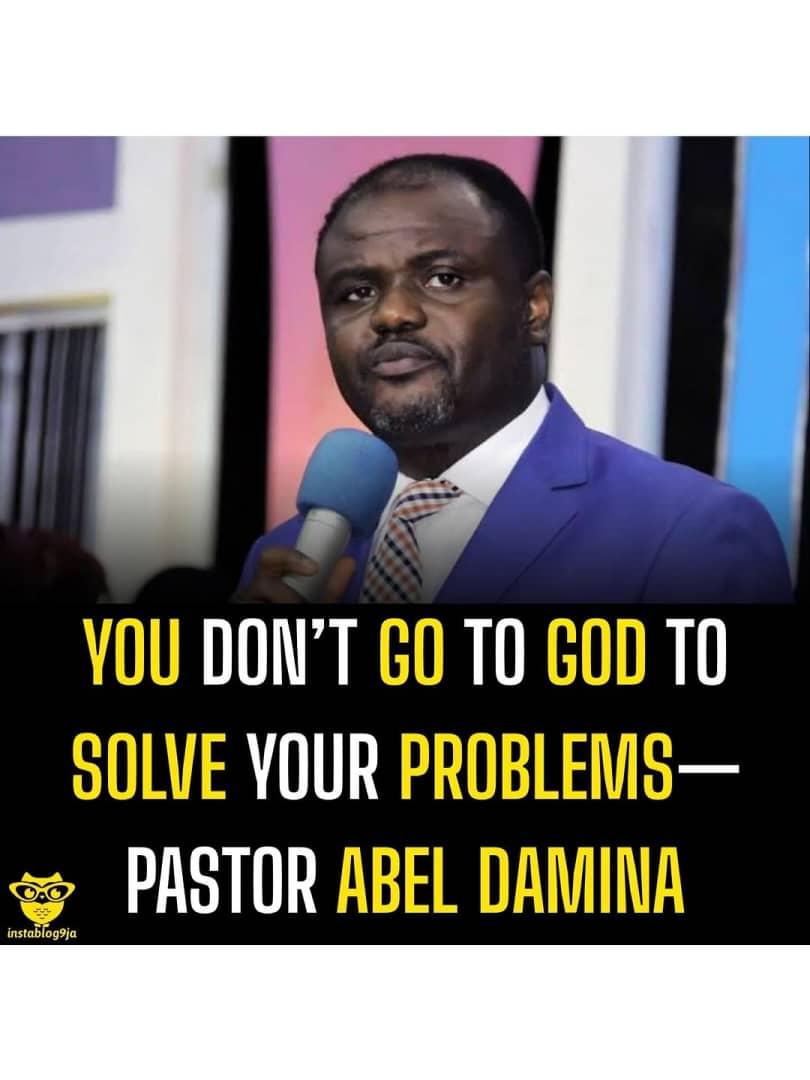
  • You don’t go to God to solve your problems— Pastor Abel Damina.

    In a recent conversation with Nedu, Pastor Abel Damina challenged the mindset of using God as a quick fix for life’s problems. He called it “the corr¥ption of the gospel” when people turn to God only because they’re desper@te, not because they seek a relationship.

    The Founder of The Kingdom Life Network pointed out that many churches are filled with the less fortunate, not necessarily because of strong faith, but because poverty has driven them to look for spiritual answers to physical struggles.

    Pastor Abel Damina words hit hard not just as critic+sm, but as a reminder: God is not an emergency escape plan. He is a relationship.
    You don’t go to God to solve your problems— Pastor Abel Damina. In a recent conversation with Nedu, Pastor Abel Damina challenged the mindset of using God as a quick fix for life’s problems. He called it “the corr¥ption of the gospel” when people turn to God only because they’re desper@te, not because they seek a relationship. The Founder of The Kingdom Life Network pointed out that many churches are filled with the less fortunate, not necessarily because of strong faith, but because poverty has driven them to look for spiritual answers to physical struggles. Pastor Abel Damina words hit hard not just as critic+sm, but as a reminder: God is not an emergency escape plan. He is a relationship.
    0 Commentarios ·0 Acciones ·621 Views
  • “Marry a Good Wife, Be Disciplined, and Fear God” – Singer Mr Eazi Shares Keys to Success.

    Nigerian music sensation and entrepreneur, Mr Eazi, recently shared rare insight into his personal principles for success during an impromptu street-style interview that’s now gaining attention online.

    In a laid-back encounter, the award-winning artist was approached by a passerby who was intrigued by his composed appearance. “Sorry, you guys look very well put together. Do you mind if I ask what profession you work in?” the interviewer asked.

    With a calm smile, Mr Eazi responded, “Oh, I make music.” The conversation quickly turned into an inspirational exchange as the artist was asked about the key principles of success.

    Without hesitation, Mr Eazi replied, “Marry a good wife.” He then emphasized the importance of discipline, patience, and the fear of God as essential traits for young people especially those under 25, who aspire to achieve greatness.

    Reflecting on his own journey in the music industry, Mr Eazi pointed out “unbelief” as one of the major challenges he had to overcome. “When you’re being second-guessed,” he said, “you could turn it into something that drives you.”

    Asked if he thought Nigerians have a different mindset compared to people born in the West, the “Leg Over” crooner explained that, having been born and raised in Nigeria, he can attest to a natural “go-getter” mentality embedded in the culture.

    “Even in the way we walk — audacity,” he noted, highlighting the self-belief and boldness many Nigerians carry.
    “Marry a Good Wife, Be Disciplined, and Fear God” – Singer Mr Eazi Shares Keys to Success. Nigerian music sensation and entrepreneur, Mr Eazi, recently shared rare insight into his personal principles for success during an impromptu street-style interview that’s now gaining attention online. In a laid-back encounter, the award-winning artist was approached by a passerby who was intrigued by his composed appearance. “Sorry, you guys look very well put together. Do you mind if I ask what profession you work in?” the interviewer asked. With a calm smile, Mr Eazi responded, “Oh, I make music.” The conversation quickly turned into an inspirational exchange as the artist was asked about the key principles of success. Without hesitation, Mr Eazi replied, “Marry a good wife.” He then emphasized the importance of discipline, patience, and the fear of God as essential traits for young people especially those under 25, who aspire to achieve greatness. Reflecting on his own journey in the music industry, Mr Eazi pointed out “unbelief” as one of the major challenges he had to overcome. “When you’re being second-guessed,” he said, “you could turn it into something that drives you.” Asked if he thought Nigerians have a different mindset compared to people born in the West, the “Leg Over” crooner explained that, having been born and raised in Nigeria, he can attest to a natural “go-getter” mentality embedded in the culture. “Even in the way we walk — audacity,” he noted, highlighting the self-belief and boldness many Nigerians carry.
    0 Commentarios ·0 Acciones ·801 Views
  • The Director-General of NYSC, Brigadier General Olakunle Nafiu, has encouraged Corps Members to embrace their postings with a positive mindset and commit to their primary assignments with dedication, contributing selflessly to national development.
    The Director-General of NYSC, Brigadier General Olakunle Nafiu, has encouraged Corps Members to embrace their postings with a positive mindset and commit to their primary assignments with dedication, contributing selflessly to national development.
    like
    1
    · 0 Commentarios ·0 Acciones ·360 Views
Resultados de la búsqueda
Fintter https://fintter.com