• The first computers were massive machines that could fill an entire room.

    Devices like the ENIAC weighed more than 25 tons, relied on thousands of glass vacuum tubes, and used a huge amount of electricity.

    Despite their size, they could only handle basic math that a simple modern calculator or a smartphone can now finish in a fraction of a second.

    Today, the power that once required a whole warehouse and a large team of workers has been shrunk down to fit on a tiny silicon chip.

    In less than 100 years, technology has moved from giant, heavy hardware to nearly invisible parts. Looking ahead 50 years, experts predict that computers may disappear into the world around us.

    We might use "biological" computers made of living cells, quantum machines that solve impossible problems instantly, or even brain-linked devices that allow us to control technology with just our thoughts.
    The first computers were massive machines that could fill an entire room. Devices like the ENIAC weighed more than 25 tons, relied on thousands of glass vacuum tubes, and used a huge amount of electricity. Despite their size, they could only handle basic math that a simple modern calculator or a smartphone can now finish in a fraction of a second. Today, the power that once required a whole warehouse and a large team of workers has been shrunk down to fit on a tiny silicon chip. In less than 100 years, technology has moved from giant, heavy hardware to nearly invisible parts. Looking ahead 50 years, experts predict that computers may disappear into the world around us. We might use "biological" computers made of living cells, quantum machines that solve impossible problems instantly, or even brain-linked devices that allow us to control technology with just our thoughts.
    like
    1
    · 0 Commentarii ·0 Distribuiri ·3K Views
  • BREAKING Cross River Workers Threaten Picket Over Unpaid Salaries Since December 2025

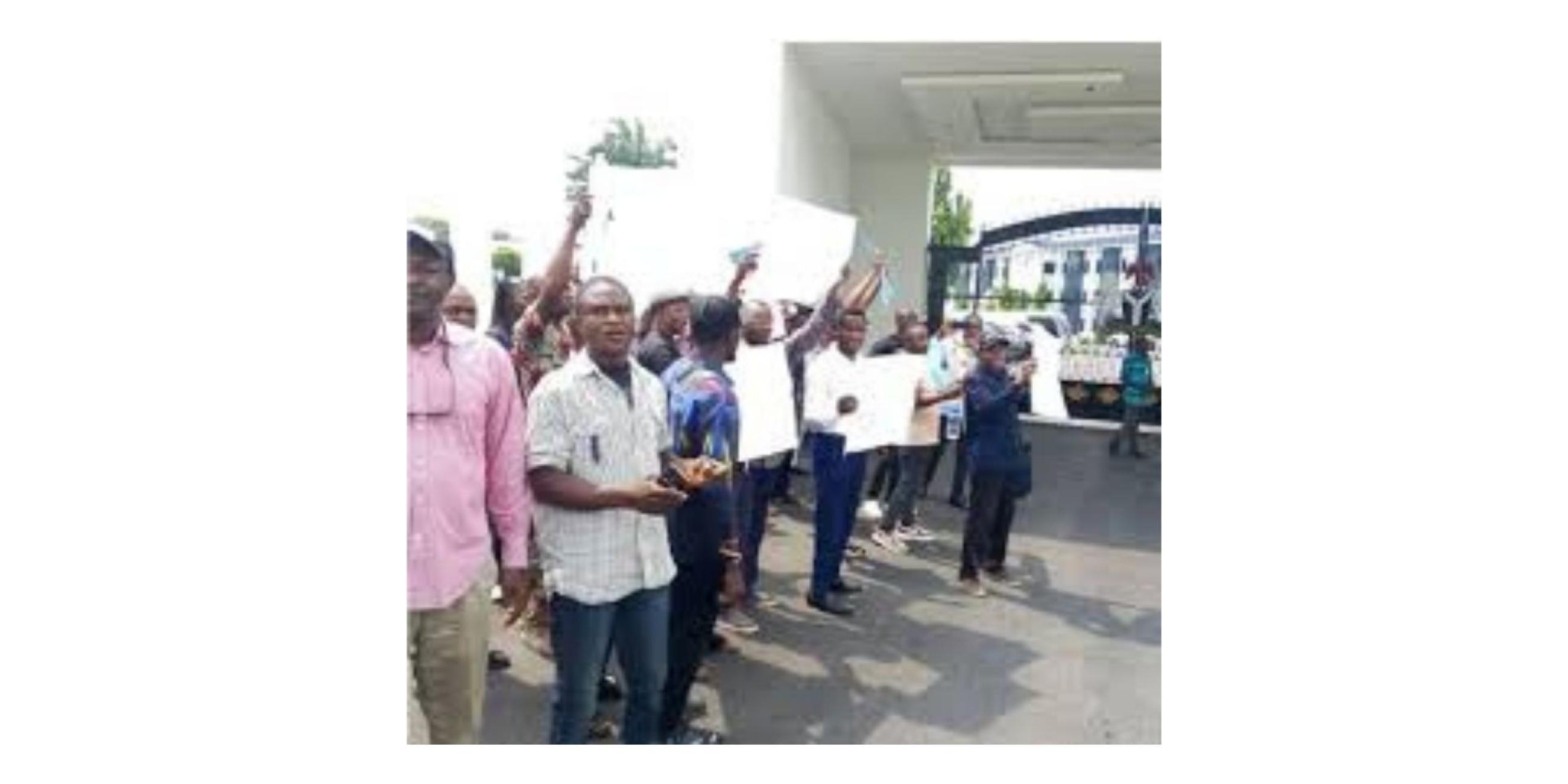
    Tension is rising in the Cross River State civil service as frustrated workers have threatened to picket the office of the state Accountant-General over the continued non-payment of their salaries.

    Speaking in Calabar on Friday, the workers told the News Agency of Nigeria (NAN) that their financial situation has become unbearable, alleging that they were last paid in December 2025.

    They say the delay has pushed many staff into hardship, and warned that if urgent action is not taken, they will stage a protest at the Accountant-General’s office to demand their entitlements.#BreakingNews, #CrossRiver, #SalaryCrisis, #NigeriaNews
    BREAKING Cross River Workers Threaten Picket Over Unpaid Salaries Since December 2025 Tension is rising in the Cross River State civil service as frustrated workers have threatened to picket the office of the state Accountant-General over the continued non-payment of their salaries. Speaking in Calabar on Friday, the workers told the News Agency of Nigeria (NAN) that their financial situation has become unbearable, alleging that they were last paid in December 2025. They say the delay has pushed many staff into hardship, and warned that if urgent action is not taken, they will stage a protest at the Accountant-General’s office to demand their entitlements.#BreakingNews, #CrossRiver, #SalaryCrisis, #NigeriaNews
    like
    love
    2
    · 0 Commentarii ·0 Distribuiri ·3K Views
  • JOHESU Asks Nigerians To Blame FG Over Healthcare Disruption

    The Joint Health Sector Union (JOHESU) has urged Nigerians to hold the Federal Government responsible for the hardship being experienced across the country’s healthcare system following its ongoing strike.

    According to the union, the strike became inevitable after the government failed to address longstanding demands despite several engagements. JOHESU recalled that President Bola Tinubu had, in 2023, assured the union that he would mandate the appropriate ministry, department, or agency to resolve the issues raised.

    However, the union lamented that no concrete action has been taken since then, leaving health workers with no option but to withdraw their services.

    JOHESU maintained that the suffering of patients and other Nigerians in need of medical attention could have been avoided if the Federal Government had honoured its commitments, stressing that responsibility for the disruption lies squarely with the authorities.

    #JOHESU #NigeriaHealthcare #FGResponsibility #HealthSectorCrisis
    JOHESU Asks Nigerians To Blame FG Over Healthcare Disruption The Joint Health Sector Union (JOHESU) has urged Nigerians to hold the Federal Government responsible for the hardship being experienced across the country’s healthcare system following its ongoing strike. According to the union, the strike became inevitable after the government failed to address longstanding demands despite several engagements. JOHESU recalled that President Bola Tinubu had, in 2023, assured the union that he would mandate the appropriate ministry, department, or agency to resolve the issues raised. However, the union lamented that no concrete action has been taken since then, leaving health workers with no option but to withdraw their services. JOHESU maintained that the suffering of patients and other Nigerians in need of medical attention could have been avoided if the Federal Government had honoured its commitments, stressing that responsibility for the disruption lies squarely with the authorities. #JOHESU #NigeriaHealthcare #FGResponsibility #HealthSectorCrisis
    0 Commentarii ·0 Distribuiri ·4K Views
  • Lady Cries Out Over Lagos Transport Woes After 4am Queue With No Bus…..

    A working-class lady has taken to social media to lament the daily hardship faced by Lagos commuters after arriving at a bus stop by 4am, only to meet a long queue and no buses available. She said waking early to avoid traffic no longer helps, as commuters still wait endlessly. The lady questioned why workers must leave home before dawn and urged the government to deploy more buses to ease commuters’ suffering.
    Lady Cries Out Over Lagos Transport Woes After 4am Queue With No Bus….. A working-class lady has taken to social media to lament the daily hardship faced by Lagos commuters after arriving at a bus stop by 4am, only to meet a long queue and no buses available. She said waking early to avoid traffic no longer helps, as commuters still wait endlessly. The lady questioned why workers must leave home before dawn and urged the government to deploy more buses to ease commuters’ suffering.
    love
    1
    · 0 Commentarii ·0 Distribuiri ·1K Views ·2 Plays
  • Anambra Begins Pro-Rata Salary Payments to Curb Monday Sit-at-Home………..


    The Anambra State Government has announced the introduction of pro-rata salary payments for workers across the state as part of measures to end the Monday sit-at-home. According to the government, effective February 2026, civil servants will be paid salaries based on days worked, a move aimed at discouraging absenteeism and restoring normal economic activities on Mondays.
    Anambra Begins Pro-Rata Salary Payments to Curb Monday Sit-at-Home……….. The Anambra State Government has announced the introduction of pro-rata salary payments for workers across the state as part of measures to end the Monday sit-at-home. According to the government, effective February 2026, civil servants will be paid salaries based on days worked, a move aimed at discouraging absenteeism and restoring normal economic activities on Mondays.
    love
    like
    4
    · 0 Commentarii ·0 Distribuiri ·1K Views
  • NLC Shuts Down Abuja, Backs Indefinite FCTA Workers’ Strike……


    Abuja was largely paralysed as the Nigeria Labour Congress (NLC) backed the indefinite strike by Federal Capital Territory Administration (FCTA) workers, accusing the administration of withholding wages, pension and housing funds and intimidating staff. The NLC ordered a citywide shutdown and mass mobilisation ahead of a court hearing amid rising tensions. 
    NLC Shuts Down Abuja, Backs Indefinite FCTA Workers’ Strike…… Abuja was largely paralysed as the Nigeria Labour Congress (NLC) backed the indefinite strike by Federal Capital Territory Administration (FCTA) workers, accusing the administration of withholding wages, pension and housing funds and intimidating staff. The NLC ordered a citywide shutdown and mass mobilisation ahead of a court hearing amid rising tensions. 
    love
    2
    · 0 Commentarii ·0 Distribuiri ·2K Views
  • We Clean Lagos, But They Treat Us Like Trash” — LAWMA Sweepers Lament

    Sweepers under the Lagos State Waste Management Authority (LAWMA) have cried out over alleged poor treatment and harsh working conditions. The workers said despite their critical role in keeping Lagos clean, they face irregular payments, lack of welfare support, and little respect. According to them, the situation has left many struggling to survive, even as they continue to work daily to maintain environmental hygiene across the state.
    We Clean Lagos, But They Treat Us Like Trash” — LAWMA Sweepers Lament Sweepers under the Lagos State Waste Management Authority (LAWMA) have cried out over alleged poor treatment and harsh working conditions. The workers said despite their critical role in keeping Lagos clean, they face irregular payments, lack of welfare support, and little respect. According to them, the situation has left many struggling to survive, even as they continue to work daily to maintain environmental hygiene across the state.
    love
    2
    · 0 Commentarii ·0 Distribuiri ·1K Views
  • FCTA Workers Shut Down Abuja Government Offices, Begin Indefinite Strike Over Unpaid Wages, Welfare Disputes

    Government offices across Abuja were deserted on Monday as workers under the Federal Capital Territory Administration (FCTA) commenced an indefinite strike, demanding resolution of long-standing labour and welfare issues. Declared by the Joint Union Action Congress (JUAC), the strike follows the expiration of a seven-day ultimatum to FCTA management. Key grievances include unpaid wage awards, promotion arrears, delayed promotions, retention of retired officials, unpaid pension contributions, and worsening working conditions. JUAC has vowed to maintain the strike until all demands are met, warning of continued paralysis of administrative activities across the territory.
    #fcta #Abuja
    FCTA Workers Shut Down Abuja Government Offices, Begin Indefinite Strike Over Unpaid Wages, Welfare Disputes Government offices across Abuja were deserted on Monday as workers under the Federal Capital Territory Administration (FCTA) commenced an indefinite strike, demanding resolution of long-standing labour and welfare issues. Declared by the Joint Union Action Congress (JUAC), the strike follows the expiration of a seven-day ultimatum to FCTA management. Key grievances include unpaid wage awards, promotion arrears, delayed promotions, retention of retired officials, unpaid pension contributions, and worsening working conditions. JUAC has vowed to maintain the strike until all demands are met, warning of continued paralysis of administrative activities across the territory. #fcta #Abuja
    love
    1
    · 0 Commentarii ·0 Distribuiri ·2K Views
  • China Steel Plant Explosion Kills Two, Injures 66 in Inner Mongolia Factory Blast

    A deadly explosion has rocked a steel factory in China’s Inner Mongolia region, killing two people and leaving 66 others hospitalised. The blast occurred around 3 p.m. on Sunday at a plate plant owned by Baogang United Steel in Baotou City, sending thick smoke into the sky and causing tremors in nearby areas. Chinese state media reported that three victims suffered serious injuries, while five workers remain missing. Emergency responders rushed to the scene as rescue operations continue. Authorities have yet to confirm the cause of the explosion, raising fresh concerns over industrial safety standards in the region.

    #ChinaExplosion
    #SteelPlantBlast
    #IndustrialAccident
    China Steel Plant Explosion Kills Two, Injures 66 in Inner Mongolia Factory Blast A deadly explosion has rocked a steel factory in China’s Inner Mongolia region, killing two people and leaving 66 others hospitalised. The blast occurred around 3 p.m. on Sunday at a plate plant owned by Baogang United Steel in Baotou City, sending thick smoke into the sky and causing tremors in nearby areas. Chinese state media reported that three victims suffered serious injuries, while five workers remain missing. Emergency responders rushed to the scene as rescue operations continue. Authorities have yet to confirm the cause of the explosion, raising fresh concerns over industrial safety standards in the region. #ChinaExplosion #SteelPlantBlast #IndustrialAccident
    love
    1
    · 0 Commentarii ·0 Distribuiri ·2K Views
  • Pregnant Women Deliver With Lanterns as Ebonyi Community’s Only Health Centre Rotts Away – Report

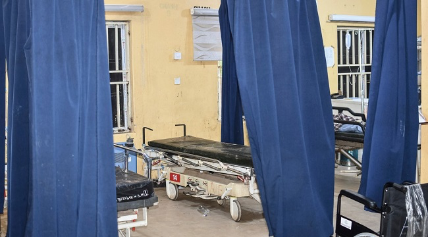
    More than 3,000 residents of Akpaka community in Ohaukwu LGA of Ebonyi State face grave health risks as their only Primary Health Care centre lies abandoned and in ruins. A report by MonITNG describes the facility as a failure of governance, with broken roofs, damaged beds, no equipment, no electricity and no qualified health workers. Pregnant women reportedly give birth under lantern light using unsterilised tools, while other patients travel long distances or rely on costly private clinics. The group has urged Governor Francis Nwifuru and federal authorities to urgently rehabilitate, equip and staff the centre.

    Pregnant Women Deliver With Lanterns as Ebonyi Community’s Only Health Centre Rotts Away – Report More than 3,000 residents of Akpaka community in Ohaukwu LGA of Ebonyi State face grave health risks as their only Primary Health Care centre lies abandoned and in ruins. A report by MonITNG describes the facility as a failure of governance, with broken roofs, damaged beds, no equipment, no electricity and no qualified health workers. Pregnant women reportedly give birth under lantern light using unsterilised tools, while other patients travel long distances or rely on costly private clinics. The group has urged Governor Francis Nwifuru and federal authorities to urgently rehabilitate, equip and staff the centre.
    0 Commentarii ·0 Distribuiri ·1K Views
  • Nigeria’s health system is not just underperforming — in many cases, it is dangerously broken.

    As I mourned my mother, I read about the tragic death of Nkanu, one of Chimamanda Ngozi Adichie’s twins. That news reopened wounds that were still raw. My late mother was also a twin, and the loss struck painfully close to home.

    This is no longer just grief. It is anger — and a demand to speak out.

    Over the years, my family and I have narrowly escaped medical disasters:
    • A wrong diagnosis that almost led to my young child undergoing an unnecessary, life-altering surgery.
    • My father’s near-death experience caused by poor coordination, faulty equipment, and a collapsed public hospital system.
    • My own escape from a dangerous misdiagnosis that could have placed me on insulin for life.
    • And finally, my mother’s last battle with cancer — marked not only by illness, but by avoidable pain, procedural neglect, and indignity.

    These experiences are not shared to attack individual hospitals or doctors, but to expose a systemic failure that continues to cost Nigerians their lives quietly and without accountability.

    Broken equipment, obsolete diagnostics, strikes, underpaid health workers, and weak regulation have turned hospitals into places of fear rather than healing. Meanwhile, our best doctors flee abroad, and ordinary Nigerians are left to gamble with their lives.

    Healthcare must be treated as critical national infrastructure — not a budgetary afterthought. Until government acts decisively and accountability is enforced, more families will continue to suffer in silence.

    Silence is no longer an option.

    #NigeriaHealthCrisis #Opinion #HealthcareInNigeria #MedicalNegligence #PatientSafety #HealthReform #NigeriaNews
    Nigeria’s health system is not just underperforming — in many cases, it is dangerously broken. As I mourned my mother, I read about the tragic death of Nkanu, one of Chimamanda Ngozi Adichie’s twins. That news reopened wounds that were still raw. My late mother was also a twin, and the loss struck painfully close to home. This is no longer just grief. It is anger — and a demand to speak out. Over the years, my family and I have narrowly escaped medical disasters: • A wrong diagnosis that almost led to my young child undergoing an unnecessary, life-altering surgery. • My father’s near-death experience caused by poor coordination, faulty equipment, and a collapsed public hospital system. • My own escape from a dangerous misdiagnosis that could have placed me on insulin for life. • And finally, my mother’s last battle with cancer — marked not only by illness, but by avoidable pain, procedural neglect, and indignity. These experiences are not shared to attack individual hospitals or doctors, but to expose a systemic failure that continues to cost Nigerians their lives quietly and without accountability. Broken equipment, obsolete diagnostics, strikes, underpaid health workers, and weak regulation have turned hospitals into places of fear rather than healing. Meanwhile, our best doctors flee abroad, and ordinary Nigerians are left to gamble with their lives. Healthcare must be treated as critical national infrastructure — not a budgetary afterthought. Until government acts decisively and accountability is enforced, more families will continue to suffer in silence. Silence is no longer an option. #NigeriaHealthCrisis #Opinion #HealthcareInNigeria #MedicalNegligence #PatientSafety #HealthReform #NigeriaNews
    0 Commentarii ·0 Distribuiri ·3K Views
  • Workers Wahala Don Set! Federal Workers Threaten Nationwide Protest Over Doctors’ Strike, Unpaid Salaries, Tinubu Wage Crisis

    Serious tension don grip the country as the Federal Workers Forum (FWF) has threatened nationwide protests and solidarity strikes if the Federal Government fails to meet the demands of striking health workers and clear unpaid arrears within seven days. In a statement signed by its leaders, the group said federal workers are “paralysed” by poor wages, unpaid entitlements and harsh policies under President Bola Tinubu’s administration. The forum revealed that some workers have not been paid since December 2025, while others are still owed wage award arrears promised since 2023. It slammed the “no work, no pay” stance as anti-worker and accused government of ignoring the health sector strike while Nigerians suffer without access to care. FWF also rejected the new tax regime, saying it only worsens hardship. The group warned that if government fails to act by January 19, workers will occupy federal secretariats nationwide. According to them, “Tinubu don fail federal workers,” and unless urgent action is taken, nationwide protest wahala go burst.

    Workers Wahala Don Set! Federal Workers Threaten Nationwide Protest Over Doctors’ Strike, Unpaid Salaries, Tinubu Wage Crisis Serious tension don grip the country as the Federal Workers Forum (FWF) has threatened nationwide protests and solidarity strikes if the Federal Government fails to meet the demands of striking health workers and clear unpaid arrears within seven days. In a statement signed by its leaders, the group said federal workers are “paralysed” by poor wages, unpaid entitlements and harsh policies under President Bola Tinubu’s administration. The forum revealed that some workers have not been paid since December 2025, while others are still owed wage award arrears promised since 2023. It slammed the “no work, no pay” stance as anti-worker and accused government of ignoring the health sector strike while Nigerians suffer without access to care. FWF also rejected the new tax regime, saying it only worsens hardship. The group warned that if government fails to act by January 19, workers will occupy federal secretariats nationwide. According to them, “Tinubu don fail federal workers,” and unless urgent action is taken, nationwide protest wahala go burst.
    like
    1
    · 0 Commentarii ·0 Distribuiri ·1K Views
  • CBN Wahala Burst! 62 Sacked Workers Tell Court: Dismiss Bank’s Motion, Restore Our Jobs

    Wahala don enter court as 62 former staff of the Central Bank of Nigeria (CBN) have asked the National Industrial Court in Abuja to throw out the bank’s application seeking to change the procedure of their suit challenging their sack. The ex-workers opposed a motion by CBN’s lawyer, Wilson Inam, SAN, who asked the court to convert their originating summons to a writ of summons, arguing that the case involved disputed facts requiring oral evidence. But the claimants’ counsel, Ola Olanipekun, SAN, insisted that the bank had not filed a counter affidavit, making its request legally defective. He told the court that until pleadings are completed, the matter cannot be converted, adding that only the workers’ processes were properly before the court. The workers are seeking to nullify their termination letters issued under a “Re-Organisation” exercise in 2024, describing the sack as unlawful and contrary to the CBN Act and internal policies. They also want reinstatement and full payment of salaries and entitlements. Justice Osatohanmwen Obaseki-Osaghae adjourned the case to February 10 for ruling.

    CBN Wahala Burst! 62 Sacked Workers Tell Court: Dismiss Bank’s Motion, Restore Our Jobs Wahala don enter court as 62 former staff of the Central Bank of Nigeria (CBN) have asked the National Industrial Court in Abuja to throw out the bank’s application seeking to change the procedure of their suit challenging their sack. The ex-workers opposed a motion by CBN’s lawyer, Wilson Inam, SAN, who asked the court to convert their originating summons to a writ of summons, arguing that the case involved disputed facts requiring oral evidence. But the claimants’ counsel, Ola Olanipekun, SAN, insisted that the bank had not filed a counter affidavit, making its request legally defective. He told the court that until pleadings are completed, the matter cannot be converted, adding that only the workers’ processes were properly before the court. The workers are seeking to nullify their termination letters issued under a “Re-Organisation” exercise in 2024, describing the sack as unlawful and contrary to the CBN Act and internal policies. They also want reinstatement and full payment of salaries and entitlements. Justice Osatohanmwen Obaseki-Osaghae adjourned the case to February 10 for ruling.
    0 Commentarii ·0 Distribuiri ·915 Views
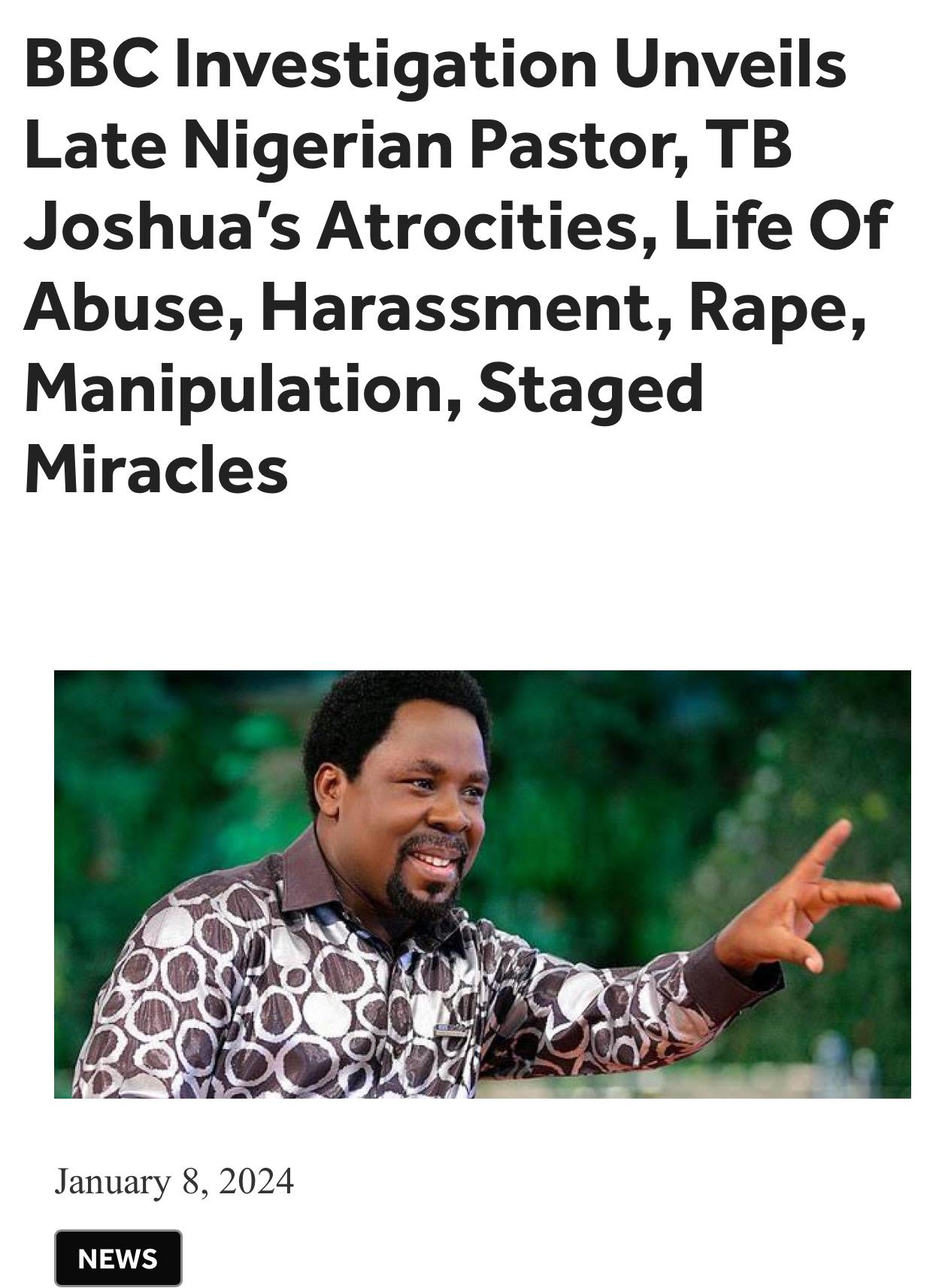
  • The BBC is set to release a 3-part investigative documentary alleging decades of abuse, sexual crimes, manipulation, and cover-ups linked to the late founder of SCOAN, TB Joshua.

    According to the BBC, more than 30 former members and workers described a hidden world of intimidation, rape, staged miracles, and silence enforced through fear and money. Some allege the abuse began when they were teenagers, continued for years, and was justified to them as being “for their salvation.”

    The documentary also reopens wounds from the 2014 SCOAN guesthouse collapse, where over 100 people died. Former insiders claim the church knew the building was structurally unsafe, ignored professional warnings, and later misled members with a false aircraft-bombing narrative. Families reportedly received cash payments allegedly meant to keep them quiet.

    Survivors say miracles were scripted, suffering was exaggerated for TV, and dissent was punished. Even TB Joshua’s own daughter reportedly says she was beaten, isolated, and thrown out after questioning allegations against him.

    With international figures, former disciples, and victims now speaking openly, many are asking uncomfortable questions Nigeria avoided while TB Joshua was alive.

    If these allegations were known for years, why was nothing done?
    Was this faith, power, or a carefully protected system of abuse?
    And should religious institutions be beyond scrutiny simply because of miracles and popularity?

    The BBC will air the documentary over three consecutive weeks.

    What’s your take — truth finally coming out, or another controversy too late?

    #TBJoshua #BBCDocumentary #SCOAN #FaithAndAccountability
    The BBC is set to release a 3-part investigative documentary alleging decades of abuse, sexual crimes, manipulation, and cover-ups linked to the late founder of SCOAN, TB Joshua. According to the BBC, more than 30 former members and workers described a hidden world of intimidation, rape, staged miracles, and silence enforced through fear and money. Some allege the abuse began when they were teenagers, continued for years, and was justified to them as being “for their salvation.” The documentary also reopens wounds from the 2014 SCOAN guesthouse collapse, where over 100 people died. Former insiders claim the church knew the building was structurally unsafe, ignored professional warnings, and later misled members with a false aircraft-bombing narrative. Families reportedly received cash payments allegedly meant to keep them quiet. Survivors say miracles were scripted, suffering was exaggerated for TV, and dissent was punished. Even TB Joshua’s own daughter reportedly says she was beaten, isolated, and thrown out after questioning allegations against him. With international figures, former disciples, and victims now speaking openly, many are asking uncomfortable questions Nigeria avoided while TB Joshua was alive. If these allegations were known for years, why was nothing done? Was this faith, power, or a carefully protected system of abuse? And should religious institutions be beyond scrutiny simply because of miracles and popularity? The BBC will air the documentary over three consecutive weeks. What’s your take — truth finally coming out, or another controversy too late? #TBJoshua #BBCDocumentary #SCOAN #FaithAndAccountability
    like
    love
    2
    · 0 Commentarii ·0 Distribuiri ·2K Views
  • Are Iran’s Hospitals Collapsing Under Protest Violence? Doctors Say Wards Are Overwhelmed as Death Toll Rises and Global Leaders Warn Tehran

    Are Iran’s healthcare systems being pushed to the brink as nationwide protests intensify? Medical workers in Tehran and other cities say hospitals are overwhelmed by a surge of injured protesters, many suffering gunshot wounds to the head and eyes, raising urgent questions about the state’s handling of civil unrest.

    According to doctors who contacted international media through satellite internet amid a near-total blackout, Tehran’s Farabi Hospital—one of the country’s main eye specialist centres—has entered crisis mode. Non-urgent surgeries have been suspended, emergency staff recalled, and facilities stretched beyond capacity. A medic in Shiraz reported that hospitals lack enough surgeons to cope with the growing number of casualties.

    Human rights organisations estimate that at least 50 protesters have been killed since demonstrations began on December 28, with more than 2,300 arrests nationwide. The Norway-based Iran Human Rights group says the death toll includes children, while families of victims continue to speak out despite heavy restrictions on media and internet access. With most foreign journalists barred and communications cut, verifying events inside Iran has become increasingly difficult.

    International pressure is mounting. The United Nations has expressed deep concern over the loss of life, stressing that citizens have the right to peaceful protest and that governments must protect that right. Leaders from France, the UK and Germany issued a joint statement urging Iranian authorities to allow freedom of expression and assembly without fear of reprisals. Meanwhile, the United States warned Tehran against further violence, while Iran accused Washington of fuelling what it called “subversive acts.”

    Iran’s Supreme Leader, Ayatollah Ali Khamenei, has remained defiant, declaring that the Islamic Republic will not retreat in the face of unrest and vowing to confront what he described as “destructive elements.” In contrast, opposition voices abroad, including Reza Pahlavi, son of Iran’s last shah, praised the protests and called for continued demonstrations.

    As hospitals struggle, internet blackouts deepen, and casualty numbers climb, the crisis raises urgent questions: Is Iran’s health system reaching a breaking point? Can the government contain the unrest without further bloodshed? And how will international pressure shape what happens next?


    Are Iran’s Hospitals Collapsing Under Protest Violence? Doctors Say Wards Are Overwhelmed as Death Toll Rises and Global Leaders Warn Tehran Are Iran’s healthcare systems being pushed to the brink as nationwide protests intensify? Medical workers in Tehran and other cities say hospitals are overwhelmed by a surge of injured protesters, many suffering gunshot wounds to the head and eyes, raising urgent questions about the state’s handling of civil unrest. According to doctors who contacted international media through satellite internet amid a near-total blackout, Tehran’s Farabi Hospital—one of the country’s main eye specialist centres—has entered crisis mode. Non-urgent surgeries have been suspended, emergency staff recalled, and facilities stretched beyond capacity. A medic in Shiraz reported that hospitals lack enough surgeons to cope with the growing number of casualties. Human rights organisations estimate that at least 50 protesters have been killed since demonstrations began on December 28, with more than 2,300 arrests nationwide. The Norway-based Iran Human Rights group says the death toll includes children, while families of victims continue to speak out despite heavy restrictions on media and internet access. With most foreign journalists barred and communications cut, verifying events inside Iran has become increasingly difficult. International pressure is mounting. The United Nations has expressed deep concern over the loss of life, stressing that citizens have the right to peaceful protest and that governments must protect that right. Leaders from France, the UK and Germany issued a joint statement urging Iranian authorities to allow freedom of expression and assembly without fear of reprisals. Meanwhile, the United States warned Tehran against further violence, while Iran accused Washington of fuelling what it called “subversive acts.” Iran’s Supreme Leader, Ayatollah Ali Khamenei, has remained defiant, declaring that the Islamic Republic will not retreat in the face of unrest and vowing to confront what he described as “destructive elements.” In contrast, opposition voices abroad, including Reza Pahlavi, son of Iran’s last shah, praised the protests and called for continued demonstrations. As hospitals struggle, internet blackouts deepen, and casualty numbers climb, the crisis raises urgent questions: Is Iran’s health system reaching a breaking point? Can the government contain the unrest without further bloodshed? And how will international pressure shape what happens next?
    0 Commentarii ·0 Distribuiri ·3K Views
  • Is Nigeria’s Health System Heading for Shutdown? JOHESU Orders Total Work Stoppage Over Tinubu Government’s ‘No Work, No Pay’ Policy

    Is Nigeria on the brink of another nationwide healthcare crisis? The Joint Health Sector Unions (JOHESU) has directed its members across federal health institutions to withdraw their services indefinitely, escalating its standoff with the Tinubu administration over a newly enforced “No Work, No Pay” directive from the Federal Ministry of Health.

    According to a statement issued by JOHESU leader Comrade Abubakar Sani Aminu, the policy was introduced without consultation or dialogue, a move the union describes as a direct violation of workers’ rights and collective bargaining principles. Why, the union asks, would the government impose such a far-reaching directive at a time when negotiations are still ongoing?

    JOHESU says hospital chief executives have been instructed to enforce the policy, which the union believes is a deliberate attempt to weaken organised labour and fracture solidarity among health workers. Aminu warned members that the directive represents “the final weapon” being deployed by the government to break the union’s resolve. Could this mark a turning point in labour relations within Nigeria’s health sector?

    In response, the union has ordered a total work stoppage, explicitly rejecting skeleton services, partial compliance, or compromise of any kind. “There should be no skeleton services, no attempt to help out, or compromise in any way,” the statement declared. JOHESU insists that only collective action can protect workers’ rights and prevent what it calls a dangerous precedent that could affect future industrial disputes.

    What does this mean for patients and public hospitals already struggling with limited resources? While the full impact on healthcare delivery remains uncertain, past JOHESU strikes have caused widespread disruptions across federal medical institutions, raising fears of another wave of service paralysis.

    The union has reaffirmed its commitment to what it describes as a fight for fair treatment, respect for dialogue, and protection of labour rights, urging members nationwide to remain united until its demands are addressed. As of the time of reporting, the Federal Ministry of Health has not issued an official response.

    Will the government reconsider its stance, or is Nigeria heading toward another prolonged healthcare shutdown? And in a sector where lives depend on continuity of care, who ultimately bears the cost of this policy standoff—workers, patients, or the state itself?

    Is Nigeria’s Health System Heading for Shutdown? JOHESU Orders Total Work Stoppage Over Tinubu Government’s ‘No Work, No Pay’ Policy Is Nigeria on the brink of another nationwide healthcare crisis? The Joint Health Sector Unions (JOHESU) has directed its members across federal health institutions to withdraw their services indefinitely, escalating its standoff with the Tinubu administration over a newly enforced “No Work, No Pay” directive from the Federal Ministry of Health. According to a statement issued by JOHESU leader Comrade Abubakar Sani Aminu, the policy was introduced without consultation or dialogue, a move the union describes as a direct violation of workers’ rights and collective bargaining principles. Why, the union asks, would the government impose such a far-reaching directive at a time when negotiations are still ongoing? JOHESU says hospital chief executives have been instructed to enforce the policy, which the union believes is a deliberate attempt to weaken organised labour and fracture solidarity among health workers. Aminu warned members that the directive represents “the final weapon” being deployed by the government to break the union’s resolve. Could this mark a turning point in labour relations within Nigeria’s health sector? In response, the union has ordered a total work stoppage, explicitly rejecting skeleton services, partial compliance, or compromise of any kind. “There should be no skeleton services, no attempt to help out, or compromise in any way,” the statement declared. JOHESU insists that only collective action can protect workers’ rights and prevent what it calls a dangerous precedent that could affect future industrial disputes. What does this mean for patients and public hospitals already struggling with limited resources? While the full impact on healthcare delivery remains uncertain, past JOHESU strikes have caused widespread disruptions across federal medical institutions, raising fears of another wave of service paralysis. The union has reaffirmed its commitment to what it describes as a fight for fair treatment, respect for dialogue, and protection of labour rights, urging members nationwide to remain united until its demands are addressed. As of the time of reporting, the Federal Ministry of Health has not issued an official response. Will the government reconsider its stance, or is Nigeria heading toward another prolonged healthcare shutdown? And in a sector where lives depend on continuity of care, who ultimately bears the cost of this policy standoff—workers, patients, or the state itself?
    0 Commentarii ·0 Distribuiri ·2K Views
  • Ondo State Judiciary Paralyzed: Governor Aiyedatiwa Accused of Budget Cuts, Half-Autonomy, and Welfare Neglect Amid Ongoing Court Strike

    The Ondo State judiciary has come to a near-total halt as Governor Lucky Aiyedatiwa faces accusations of deliberately strangling the courts through severe budget cuts, partial financial autonomy, and neglect of judicial welfare. The state’s judiciary budget was slashed from ₦17 billion in 2025 to ₦9.5 billion in 2026, nearly a 45% reduction, prompting concerns over staff salaries, court operations, and infrastructure decay.

    Judicial workers allege that the governor granted only 80% autonomy limited to recurrent expenditure, leaving capital projects unfunded. Courtrooms reportedly leak during rainfall, forcing the suspension of hearings, while magistrates and officers rely on commercial motorcycles (okada) or shared rides with litigants due to lack of official vehicles.

    Despite repeated appeals, ₦400 million previously approved for judicial needs remains unpaid, worsening the crisis. The situation has triggered an indefinite strike by magistrates, legal officers, and members of the Judiciary Staff Union of Nigeria (JUSUN), physically locking judges out of court premises in Akure.

    Observers warn that the prolonged paralysis undermines judicial independence, public confidence in the justice system, and rule of law in Ondo State. Legal analysts describe the governor’s approach as a systematic humiliation and underfunding of the judiciary, drawing parallels with similar crises in other Nigerian states.

    With courts shut, staff unions united, and the public left without access to justice, pressure is mounting on Governor Aiyedatiwa to restore full financial autonomy, fund infrastructure projects, and address welfare challenges to prevent further erosion of democratic governance in the state.


    Ondo State Judiciary Paralyzed: Governor Aiyedatiwa Accused of Budget Cuts, Half-Autonomy, and Welfare Neglect Amid Ongoing Court Strike The Ondo State judiciary has come to a near-total halt as Governor Lucky Aiyedatiwa faces accusations of deliberately strangling the courts through severe budget cuts, partial financial autonomy, and neglect of judicial welfare. The state’s judiciary budget was slashed from ₦17 billion in 2025 to ₦9.5 billion in 2026, nearly a 45% reduction, prompting concerns over staff salaries, court operations, and infrastructure decay. Judicial workers allege that the governor granted only 80% autonomy limited to recurrent expenditure, leaving capital projects unfunded. Courtrooms reportedly leak during rainfall, forcing the suspension of hearings, while magistrates and officers rely on commercial motorcycles (okada) or shared rides with litigants due to lack of official vehicles. Despite repeated appeals, ₦400 million previously approved for judicial needs remains unpaid, worsening the crisis. The situation has triggered an indefinite strike by magistrates, legal officers, and members of the Judiciary Staff Union of Nigeria (JUSUN), physically locking judges out of court premises in Akure. Observers warn that the prolonged paralysis undermines judicial independence, public confidence in the justice system, and rule of law in Ondo State. Legal analysts describe the governor’s approach as a systematic humiliation and underfunding of the judiciary, drawing parallels with similar crises in other Nigerian states. With courts shut, staff unions united, and the public left without access to justice, pressure is mounting on Governor Aiyedatiwa to restore full financial autonomy, fund infrastructure projects, and address welfare challenges to prevent further erosion of democratic governance in the state.
    like
    1
    · 0 Commentarii ·0 Distribuiri ·2K Views
  • Why Did a Nigerian Court Stop Resident Doctors’ Planned Nationwide Strike—Is the Tinubu Government Using Legal Power to Silence Protests Over Salaries, Welfare, and Broken Agreements?

    Is the Nigerian government turning to the courts to prevent another healthcare shutdown—and what does it mean for doctors’ rights to protest? The National Industrial Court in Abuja has issued an interim injunction restraining the National Association of Resident Doctors (NARD) and its members from embarking on any form of industrial action across the country.

    The order, delivered by Justice Emmanuel Danjuma Subilim, followed an ex parte application filed by the Federal Government through the Office of the Attorney General of the Federation and Minister of Justice, Lateef Fagbemi (SAN). The court barred resident doctors from calling, organizing, directing, or participating in strikes, work stoppages, go-slows, picketing, or any other actions capable of disrupting healthcare services nationwide.

    In addition, the court prohibited NARD from taking any steps preparatory to industrial action with effect from January 12, 2026, ruling that the injunction would remain in force pending the hearing and determination of the motion on notice, scheduled for January 21, 2026.

    The ruling comes just days after the association threatened a nationwide strike over unresolved grievances related to welfare, salaries, and working conditions. NARD accused the Bola Tinubu-led administration of failing to honor previous agreements, stating that signed memoranda had been “totally neglected, altered or half implemented,” while earlier gains had been “overtaken by events of the government’s own making.”

    The association maintained that it had exhausted all avenues of dialogue, saying it had engaged respectfully, called attention to the issues, sought advice, and appealed for implementation—yet received no meaningful response. Defending its members against public criticism, NARD rejected portrayals of resident doctors as unpatriotic agitators, insisting that doctors have not committed any wrongdoing by demanding better conditions for healthcare workers who form “the backbone of service delivery in Nigeria.”

    In a strongly worded statement, the group argued that its members were “experienced enough to understand that merit doesn’t fetch a lot in Nigeria” and “militant enough to agitate for our legitimate rights, including signed and agreed MoUs.”

    While the government’s legal move is aimed at preventing disruptions in essential medical services, it raises pressing questions: Is the court order protecting patients—or curtailing workers’ rights to protest unfair conditions? Can judicial intervention resolve deep-rooted problems in Nigeria’s healthcare system, or will it merely postpone a larger confrontation? As the case returns to court later in January, Nigerians will be watching closely to see whether dialogue replaces confrontation—or whether tensions between the government and resident doctors escalate further.


    Why Did a Nigerian Court Stop Resident Doctors’ Planned Nationwide Strike—Is the Tinubu Government Using Legal Power to Silence Protests Over Salaries, Welfare, and Broken Agreements? Is the Nigerian government turning to the courts to prevent another healthcare shutdown—and what does it mean for doctors’ rights to protest? The National Industrial Court in Abuja has issued an interim injunction restraining the National Association of Resident Doctors (NARD) and its members from embarking on any form of industrial action across the country. The order, delivered by Justice Emmanuel Danjuma Subilim, followed an ex parte application filed by the Federal Government through the Office of the Attorney General of the Federation and Minister of Justice, Lateef Fagbemi (SAN). The court barred resident doctors from calling, organizing, directing, or participating in strikes, work stoppages, go-slows, picketing, or any other actions capable of disrupting healthcare services nationwide. In addition, the court prohibited NARD from taking any steps preparatory to industrial action with effect from January 12, 2026, ruling that the injunction would remain in force pending the hearing and determination of the motion on notice, scheduled for January 21, 2026. The ruling comes just days after the association threatened a nationwide strike over unresolved grievances related to welfare, salaries, and working conditions. NARD accused the Bola Tinubu-led administration of failing to honor previous agreements, stating that signed memoranda had been “totally neglected, altered or half implemented,” while earlier gains had been “overtaken by events of the government’s own making.” The association maintained that it had exhausted all avenues of dialogue, saying it had engaged respectfully, called attention to the issues, sought advice, and appealed for implementation—yet received no meaningful response. Defending its members against public criticism, NARD rejected portrayals of resident doctors as unpatriotic agitators, insisting that doctors have not committed any wrongdoing by demanding better conditions for healthcare workers who form “the backbone of service delivery in Nigeria.” In a strongly worded statement, the group argued that its members were “experienced enough to understand that merit doesn’t fetch a lot in Nigeria” and “militant enough to agitate for our legitimate rights, including signed and agreed MoUs.” While the government’s legal move is aimed at preventing disruptions in essential medical services, it raises pressing questions: Is the court order protecting patients—or curtailing workers’ rights to protest unfair conditions? Can judicial intervention resolve deep-rooted problems in Nigeria’s healthcare system, or will it merely postpone a larger confrontation? As the case returns to court later in January, Nigerians will be watching closely to see whether dialogue replaces confrontation—or whether tensions between the government and resident doctors escalate further.
    0 Commentarii ·0 Distribuiri ·3K Views
  • Is Abuja Safe Anymore? NBA Raises Alarm Over Return of ‘One-Chance’ Killings After Murder of Nurse and Lawyer

    The Nigerian Bar Association (NBA) has raised a grave alarm over what it described as the disturbing return of “one-chance” criminal operations in Abuja following the brutal killing of two professionals in separate incidents across the Federal Capital Territory (FCT). In a statement signed by its President, Mazi Afam Osigwe, SAN, the association warned that insecurity is once again tightening its grip on Nigeria’s seat of power.

    According to the NBA, the victims were Ms. Chinemerem Pascalina Chuwumeziem, a nurse, and Princess Chigbo Mediatrix, a lawyer and former Treasurer of the NBA Abuja Branch. Both women were allegedly murdered after falling prey to criminals posing as commercial transport operators—an infamous tactic known locally as “one-chance.” Their bodies were later discovered in different parts of the city, sparking widespread fear among residents.

    The association described the killings as a chilling reminder of the growing vulnerability of Abuja residents, stressing that the victims were not faceless individuals but professionals who simply intended to return home safely from their daily engagements. The NBA said the incidents had plunged the capital into grief and exposed a dangerous deterioration in public safety.

    Condemning the attacks in the strongest terms, the NBA warned that the pattern of “one-chance” crimes could no longer be ignored. It stated that criminal gangs masquerading as transport operators have turned routine commuting into a life-threatening gamble, making ordinary citizens, workers, and professionals targets on the city’s roads.

    Osigwe described the killing of Princess Chigbo Mediatrix as particularly painful for the legal community, noting that she was a committed member of the Bar whom he knew personally. He said her death was not only a professional loss but a deeply personal blow, underscoring that lawyers—like all Nigerians—remain dangerously exposed in an environment where criminals operate with impunity.

    The NBA warned that the murders represent more than individual tragedies, arguing that they signal a broader erosion of security in the FCT. It stressed that when citizens cannot commute safely, when professionals are attacked in plain sight, and when criminal networks act unchecked in the nation’s capital, the foundations of social order are severely threatened.

    Calling for urgent action, the association urged the Minister of the Federal Capital Territory, the Nigeria Police Force, and other security agencies to treat the situation as a full-scale security emergency. It demanded immediate, visible, and coordinated measures to dismantle “one-chance” syndicates, including intensified intelligence gathering, surveillance, policing of transport corridors, and targeted operations against known criminal networks.

    The NBA also insisted on thorough, transparent, and time-bound investigations into the killings, warning that failure to deliver justice would deepen public fear and embolden criminal elements. It emphasized that justice must not only be promised but must be seen to be done, with perpetrators, collaborators, and enablers identified, arrested, and prosecuted.

    Reaffirming the state’s duty to protect lives, the association said citizens should not have to choose between earning a living and staying alive. It warned that Abuja must not become a hunting ground where criminals prey on the vulnerable while law enforcement appears distant or reactive.

    The NBA extended condolences to the families of the victims, the healthcare community, the NBA Abuja Branch, and residents of the FCT. The killings have reignited public debate over safety in Nigeria’s capital, raising urgent questions about urban security, policing, public transport safety, and government accountability in protecting citizens from organized street crime.

    Is Abuja Safe Anymore? NBA Raises Alarm Over Return of ‘One-Chance’ Killings After Murder of Nurse and Lawyer The Nigerian Bar Association (NBA) has raised a grave alarm over what it described as the disturbing return of “one-chance” criminal operations in Abuja following the brutal killing of two professionals in separate incidents across the Federal Capital Territory (FCT). In a statement signed by its President, Mazi Afam Osigwe, SAN, the association warned that insecurity is once again tightening its grip on Nigeria’s seat of power. According to the NBA, the victims were Ms. Chinemerem Pascalina Chuwumeziem, a nurse, and Princess Chigbo Mediatrix, a lawyer and former Treasurer of the NBA Abuja Branch. Both women were allegedly murdered after falling prey to criminals posing as commercial transport operators—an infamous tactic known locally as “one-chance.” Their bodies were later discovered in different parts of the city, sparking widespread fear among residents. The association described the killings as a chilling reminder of the growing vulnerability of Abuja residents, stressing that the victims were not faceless individuals but professionals who simply intended to return home safely from their daily engagements. The NBA said the incidents had plunged the capital into grief and exposed a dangerous deterioration in public safety. Condemning the attacks in the strongest terms, the NBA warned that the pattern of “one-chance” crimes could no longer be ignored. It stated that criminal gangs masquerading as transport operators have turned routine commuting into a life-threatening gamble, making ordinary citizens, workers, and professionals targets on the city’s roads. Osigwe described the killing of Princess Chigbo Mediatrix as particularly painful for the legal community, noting that she was a committed member of the Bar whom he knew personally. He said her death was not only a professional loss but a deeply personal blow, underscoring that lawyers—like all Nigerians—remain dangerously exposed in an environment where criminals operate with impunity. The NBA warned that the murders represent more than individual tragedies, arguing that they signal a broader erosion of security in the FCT. It stressed that when citizens cannot commute safely, when professionals are attacked in plain sight, and when criminal networks act unchecked in the nation’s capital, the foundations of social order are severely threatened. Calling for urgent action, the association urged the Minister of the Federal Capital Territory, the Nigeria Police Force, and other security agencies to treat the situation as a full-scale security emergency. It demanded immediate, visible, and coordinated measures to dismantle “one-chance” syndicates, including intensified intelligence gathering, surveillance, policing of transport corridors, and targeted operations against known criminal networks. The NBA also insisted on thorough, transparent, and time-bound investigations into the killings, warning that failure to deliver justice would deepen public fear and embolden criminal elements. It emphasized that justice must not only be promised but must be seen to be done, with perpetrators, collaborators, and enablers identified, arrested, and prosecuted. Reaffirming the state’s duty to protect lives, the association said citizens should not have to choose between earning a living and staying alive. It warned that Abuja must not become a hunting ground where criminals prey on the vulnerable while law enforcement appears distant or reactive. The NBA extended condolences to the families of the victims, the healthcare community, the NBA Abuja Branch, and residents of the FCT. The killings have reignited public debate over safety in Nigeria’s capital, raising urgent questions about urban security, policing, public transport safety, and government accountability in protecting citizens from organized street crime.
    0 Commentarii ·0 Distribuiri ·3K Views
  • Can a Business Owner Detain Drivers Without a Court Order? How an Abia Solar Panel Dispute Turned Into Alleged Illegal Detention, Vehicle Seizure and a Growing Human Rights Outcry

    A commercial disagreement over damaged solar panels has escalated into a potential human rights controversy in Bende, Abia State, after two drivers were allegedly held for more than 10 days without a court order by a company executive demanding compensation. The case has raised troubling questions about the legality of “self-help” in business disputes and whether private citizens can lawfully restrict movement or seize property outside the courts.

    The drivers, Michael and Mutiu Ade, say they have been confined since December 28, 2025, at the private residence of Martin Mbaka, Managing Director and CEO of Quietstorm Group, after seven solar panels delivered to the premises were found cracked. They allege their vehicle—belonging to Dr. Adeleke Oshin—was immobilised, tyres deflated, keys taken, and that they were forced to sleep inside the bus under harsh conditions, with their freedom of movement restricted.

    According to the drivers, the panels were already cracked during loading in Lagos, and they were assured by the sender that the owner was aware. However, upon arrival in Abia, they claim the gate was locked after offloading and they were told they would not be allowed to leave unless the damaged panels were replaced or paid for. “This is a civil issue, but we are being detained like criminals,” Michael said, adding that appeals, pleas and even attempts at police intervention have not secured their release.

    Mr. Mbaka confirmed that the vehicle remains in his custody, insisting that ₦840,000 must be paid or replacement panels provided before it is released. His personal assistant, Franklin Azubike, rejected allegations of unlawful detention, arguing that the transporter was negligent, that the solar equipment was worth ₦30–40 million, and that the damaged panels resulted from improper loading alongside other goods. The company says it merely seeks compensation for losses and denies any wrongdoing.

    However, human rights lawyers and civil society advocates strongly dispute that position. Legal experts stress that no private individual has the authority to detain another person, restrict movement, or seize property over a civil dispute. Claims for damages, they argue, must be pursued through the courts, not by force or confinement. The drivers maintain that they do not own the vehicle and should not be punished for a disagreement between buyer and sender.

    As of the time of reporting, there has been no official statement from the Abia State Police Command on whether the continued detention is under investigation. Rights groups are now calling for urgent intervention to secure the drivers’ freedom and ensure that any compensation claims are resolved strictly within the law.

    The case has sparked wider concern about a dangerous trend of turning business disputes into extrajudicial punishment. It raises critical questions: Can a company executive legally hold people and property over a commercial disagreement? Where does civil liability end and unlawful detention begin? And what protections exist for ordinary workers caught between powerful interests? As the drivers continue to plead for their liberty, the incident has become a test of rule of law, personal freedom, and accountability in Nigeria’s commercial and security landscape.


    Can a Business Owner Detain Drivers Without a Court Order? How an Abia Solar Panel Dispute Turned Into Alleged Illegal Detention, Vehicle Seizure and a Growing Human Rights Outcry A commercial disagreement over damaged solar panels has escalated into a potential human rights controversy in Bende, Abia State, after two drivers were allegedly held for more than 10 days without a court order by a company executive demanding compensation. The case has raised troubling questions about the legality of “self-help” in business disputes and whether private citizens can lawfully restrict movement or seize property outside the courts. The drivers, Michael and Mutiu Ade, say they have been confined since December 28, 2025, at the private residence of Martin Mbaka, Managing Director and CEO of Quietstorm Group, after seven solar panels delivered to the premises were found cracked. They allege their vehicle—belonging to Dr. Adeleke Oshin—was immobilised, tyres deflated, keys taken, and that they were forced to sleep inside the bus under harsh conditions, with their freedom of movement restricted. According to the drivers, the panels were already cracked during loading in Lagos, and they were assured by the sender that the owner was aware. However, upon arrival in Abia, they claim the gate was locked after offloading and they were told they would not be allowed to leave unless the damaged panels were replaced or paid for. “This is a civil issue, but we are being detained like criminals,” Michael said, adding that appeals, pleas and even attempts at police intervention have not secured their release. Mr. Mbaka confirmed that the vehicle remains in his custody, insisting that ₦840,000 must be paid or replacement panels provided before it is released. His personal assistant, Franklin Azubike, rejected allegations of unlawful detention, arguing that the transporter was negligent, that the solar equipment was worth ₦30–40 million, and that the damaged panels resulted from improper loading alongside other goods. The company says it merely seeks compensation for losses and denies any wrongdoing. However, human rights lawyers and civil society advocates strongly dispute that position. Legal experts stress that no private individual has the authority to detain another person, restrict movement, or seize property over a civil dispute. Claims for damages, they argue, must be pursued through the courts, not by force or confinement. The drivers maintain that they do not own the vehicle and should not be punished for a disagreement between buyer and sender. As of the time of reporting, there has been no official statement from the Abia State Police Command on whether the continued detention is under investigation. Rights groups are now calling for urgent intervention to secure the drivers’ freedom and ensure that any compensation claims are resolved strictly within the law. The case has sparked wider concern about a dangerous trend of turning business disputes into extrajudicial punishment. It raises critical questions: Can a company executive legally hold people and property over a commercial disagreement? Where does civil liability end and unlawful detention begin? And what protections exist for ordinary workers caught between powerful interests? As the drivers continue to plead for their liberty, the incident has become a test of rule of law, personal freedom, and accountability in Nigeria’s commercial and security landscape.
    0 Commentarii ·0 Distribuiri ·1K Views
Sponsorizeaza Paginile
Fintter https://fintter.com