Site içinde arama yapın
  • Why Is Tinubu Budgeting ₦6.1 Billion for Foreign Trips in 2026? What Nigeria’s Travel Spending Reveals About Presidential Priorities

    A review of Nigeria’s 2026 budget has revealed that President Bola Tinubu plans to spend ₦6.1 billion on foreign travels in the coming fiscal year, raising fresh questions about government priorities amid economic strain. The figure, listed under “State House operations – President,” also shows an additional ₦873 million earmarked for local travel. When combined with the Vice President’s projected foreign travel costs of ₦1.3 billion, total international trip spending by the Presidency in 2026 is expected to reach ₦7.4 billion.

    The budget breakdown comes as Nigerians continue to grapple with rising living costs and fiscal pressures. According to the documents, travel expenses remain a major component of State House spending, with another ₦375 million allocated for foodstuffs and catering materials alone. While the Presidency has not released a detailed justification for the travel budget, officials insist the trips are essential for diplomacy, investment, and international engagement.

    Recent movements by the President have already drawn public attention. President Tinubu recently departed Lagos for Europe before heading to Abu Dhabi at the invitation of UAE President Sheikh Mohamed bin Zayed Al Nahyan to attend the Abu Dhabi Sustainability Week Summit (ADSW 2026). The Presidency described the summit as a high-level global forum bringing together leaders from government, business, and civil society to discuss sustainable development. Officials also confirmed that the President would return to Nigeria after the event.

    However, critics argue that the scale of spending on foreign trips is difficult to justify, especially in light of past expenditure. Although comprehensive 2025 data is unavailable, records from the Open Treasury Portal show that in 2024 alone, the State House spent over ₦36.3 billion on international travel. This included ₦12.2 billion for “international travel and transport (training)” and ₦24.19 billion for “international travel and transport (others).” Local travel was even more costly, with ₦47 billion spent on training and other domestic trips. In total, travel expenses—both local and foreign—amounted to approximately ₦83 billion in 2024.

    Further reports revealed that between February and July 2024, the Presidency spent about ₦2.3 billion on foreign trips, while an additional ₦2.9 billion went toward foreign exchange for trips involving the President, Vice President, and First Lady across several countries. Payments running into hundreds of millions of naira were also recorded in individual months, fueling debate over transparency and fiscal discipline.

    Opposition figures, including former presidential candidate Peter Obi, have questioned the frequency and cost of the President’s travels. At the same time, government officials have defended the expenditure. Nigeria’s Minister of Foreign Affairs, Ambassador Yusuf Maitama Tuggar, has argued that the President should even travel more to advance Nigeria’s diplomatic and economic interests globally.

    With the 2026 budget now in focus, the key questions remain: Does the ₦6.1 billion allocation reflect necessary diplomacy or excessive spending? How does such expenditure align with Nigeria’s current economic challenges? And will the government provide clearer accountability for the rising cost of presidential travel? As public scrutiny intensifies, the debate over leadership priorities and fiscal responsibility is likely to continue.


    Why Is Tinubu Budgeting ₦6.1 Billion for Foreign Trips in 2026? What Nigeria’s Travel Spending Reveals About Presidential Priorities A review of Nigeria’s 2026 budget has revealed that President Bola Tinubu plans to spend ₦6.1 billion on foreign travels in the coming fiscal year, raising fresh questions about government priorities amid economic strain. The figure, listed under “State House operations – President,” also shows an additional ₦873 million earmarked for local travel. When combined with the Vice President’s projected foreign travel costs of ₦1.3 billion, total international trip spending by the Presidency in 2026 is expected to reach ₦7.4 billion. The budget breakdown comes as Nigerians continue to grapple with rising living costs and fiscal pressures. According to the documents, travel expenses remain a major component of State House spending, with another ₦375 million allocated for foodstuffs and catering materials alone. While the Presidency has not released a detailed justification for the travel budget, officials insist the trips are essential for diplomacy, investment, and international engagement. Recent movements by the President have already drawn public attention. President Tinubu recently departed Lagos for Europe before heading to Abu Dhabi at the invitation of UAE President Sheikh Mohamed bin Zayed Al Nahyan to attend the Abu Dhabi Sustainability Week Summit (ADSW 2026). The Presidency described the summit as a high-level global forum bringing together leaders from government, business, and civil society to discuss sustainable development. Officials also confirmed that the President would return to Nigeria after the event. However, critics argue that the scale of spending on foreign trips is difficult to justify, especially in light of past expenditure. Although comprehensive 2025 data is unavailable, records from the Open Treasury Portal show that in 2024 alone, the State House spent over ₦36.3 billion on international travel. This included ₦12.2 billion for “international travel and transport (training)” and ₦24.19 billion for “international travel and transport (others).” Local travel was even more costly, with ₦47 billion spent on training and other domestic trips. In total, travel expenses—both local and foreign—amounted to approximately ₦83 billion in 2024. Further reports revealed that between February and July 2024, the Presidency spent about ₦2.3 billion on foreign trips, while an additional ₦2.9 billion went toward foreign exchange for trips involving the President, Vice President, and First Lady across several countries. Payments running into hundreds of millions of naira were also recorded in individual months, fueling debate over transparency and fiscal discipline. Opposition figures, including former presidential candidate Peter Obi, have questioned the frequency and cost of the President’s travels. At the same time, government officials have defended the expenditure. Nigeria’s Minister of Foreign Affairs, Ambassador Yusuf Maitama Tuggar, has argued that the President should even travel more to advance Nigeria’s diplomatic and economic interests globally. With the 2026 budget now in focus, the key questions remain: Does the ₦6.1 billion allocation reflect necessary diplomacy or excessive spending? How does such expenditure align with Nigeria’s current economic challenges? And will the government provide clearer accountability for the rising cost of presidential travel? As public scrutiny intensifies, the debate over leadership priorities and fiscal responsibility is likely to continue.
    0 Yorumlar ·0 hisse senetleri ·3K Views
  • Is the Okada Ban Being Enforced Again in Abuja? Police Impound 21 Motorcycles, Arrest Riders as Security Agencies Crack Down on Restricted Roads

    Is the long-standing ban on commercial motorcycles finally being enforced with renewed force in Abuja—and what does it mean for commuters, riders, and public safety in the nation’s capital?

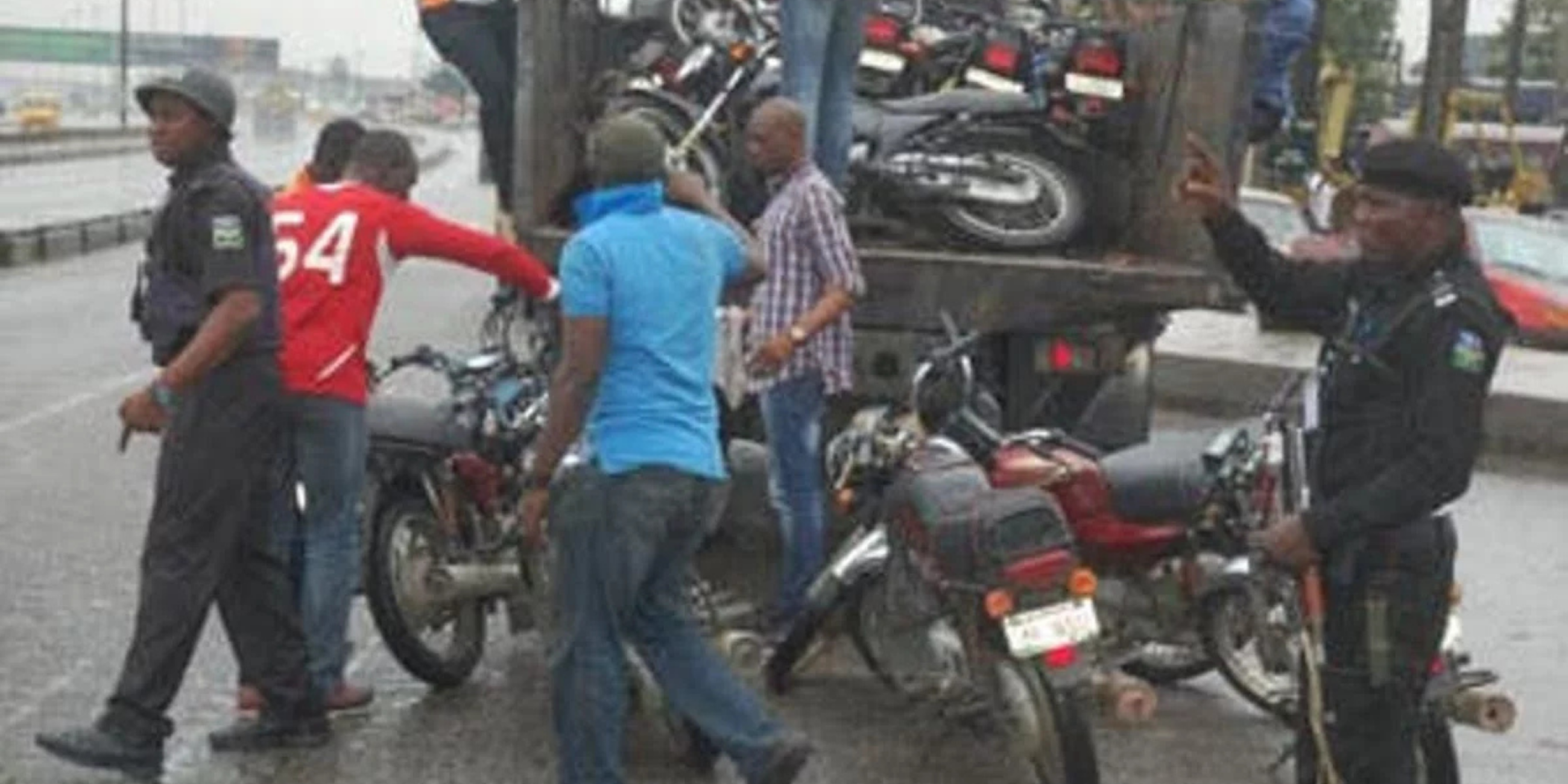
    The Federal Capital Territory (FCT) Police Command, working with other security agencies, has impounded 21 commercial motorcycles and arrested their riders for violating restrictions on motorcycle operations along major roads and highways in Abuja. The enforcement, carried out on Thursday under the Operation Sweep initiative alongside officials of the Vehicle Inspection Office (VIO), targeted key corridors where commercial motorcyclists—popularly known as okada riders—were found flouting existing traffic and security laws.

    According to a statement issued by the Police Public Relations Officer, Josephine Adeh, the arrested riders and seized motorcycles were apprehended strictly in line with “extant laws guiding traffic and security operations” in the FCT. The police described the action as part of a sustained inter-agency strategy aimed at curbing traffic-related crimes, preventing the use of commercial motorcycles for criminal activities, and strengthening public safety across Abuja.

    But is this operation merely routine traffic enforcement—or a signal of a broader security clampdown? Authorities say the ban on commercial motorcycles along major highways remains in force, citing persistent concerns over accidents, robbery, and the ease with which criminals can use motorcycles to evade arrest. By focusing on major roads and restricted routes, the agencies involved insist they are prioritizing both road safety and crime prevention.

    Reacting to the operation, the Commissioner of Police, FCT Command, Miller Dantawaye, reaffirmed the command’s commitment to strict enforcement of all traffic and security regulations designed to protect lives and property. He warned that continued defiance of the motorcycle ban would attract “decisive enforcement actions”, adding that similar operations would be intensified across the six Area Councils of the FCT.

    The police also urged residents to cooperate with security agencies, comply with traffic directives, and promptly report suspicious activities through official emergency lines. Yet, questions remain: Will sustained enforcement reduce crime and accidents, or will it deepen the economic hardship of riders who rely on commercial motorcycles for survival? How will commuters in underserved areas cope with limited transport options if restrictions tighten further?

    As Abuja grapples with balancing security, mobility, and livelihoods, the latest crackdown has reignited debate over the future of commercial motorcycles in the capital—testing whether enforcement alone can deliver safer roads without leaving thousands of riders stranded.

    Is the Okada Ban Being Enforced Again in Abuja? Police Impound 21 Motorcycles, Arrest Riders as Security Agencies Crack Down on Restricted Roads Is the long-standing ban on commercial motorcycles finally being enforced with renewed force in Abuja—and what does it mean for commuters, riders, and public safety in the nation’s capital? The Federal Capital Territory (FCT) Police Command, working with other security agencies, has impounded 21 commercial motorcycles and arrested their riders for violating restrictions on motorcycle operations along major roads and highways in Abuja. The enforcement, carried out on Thursday under the Operation Sweep initiative alongside officials of the Vehicle Inspection Office (VIO), targeted key corridors where commercial motorcyclists—popularly known as okada riders—were found flouting existing traffic and security laws. According to a statement issued by the Police Public Relations Officer, Josephine Adeh, the arrested riders and seized motorcycles were apprehended strictly in line with “extant laws guiding traffic and security operations” in the FCT. The police described the action as part of a sustained inter-agency strategy aimed at curbing traffic-related crimes, preventing the use of commercial motorcycles for criminal activities, and strengthening public safety across Abuja. But is this operation merely routine traffic enforcement—or a signal of a broader security clampdown? Authorities say the ban on commercial motorcycles along major highways remains in force, citing persistent concerns over accidents, robbery, and the ease with which criminals can use motorcycles to evade arrest. By focusing on major roads and restricted routes, the agencies involved insist they are prioritizing both road safety and crime prevention. Reacting to the operation, the Commissioner of Police, FCT Command, Miller Dantawaye, reaffirmed the command’s commitment to strict enforcement of all traffic and security regulations designed to protect lives and property. He warned that continued defiance of the motorcycle ban would attract “decisive enforcement actions”, adding that similar operations would be intensified across the six Area Councils of the FCT. The police also urged residents to cooperate with security agencies, comply with traffic directives, and promptly report suspicious activities through official emergency lines. Yet, questions remain: Will sustained enforcement reduce crime and accidents, or will it deepen the economic hardship of riders who rely on commercial motorcycles for survival? How will commuters in underserved areas cope with limited transport options if restrictions tighten further? As Abuja grapples with balancing security, mobility, and livelihoods, the latest crackdown has reignited debate over the future of commercial motorcycles in the capital—testing whether enforcement alone can deliver safer roads without leaving thousands of riders stranded.
    0 Yorumlar ·0 hisse senetleri ·2K Views
  • Who Is Illegally Selling Hostel Spaces at IBB University? Why IBBUL Is Warning Students, Investigating Racketeers, and Threatening Sanctions Over Exploitation of Freshers

    Who is behind the illegal sale of hostel spaces at Ibrahim Badamasi Babangida University (IBBUL), Lapai—and how are unsuspecting students being exploited? Why has the university stepped in with stern warnings, investigations, and threats of punishment? And what does this mean for students struggling to secure accommodation amid rising demand?

    IBB University, Niger State, has raised the alarm over what it describes as a growing and disturbing practice in which individuals and organised groups allegedly hijack hostel spaces and resell them to students at inflated prices. According to the institution, these activities typically target vulnerable students—especially freshers—who are desperate for accommodation at the beginning of academic sessions when hostel demand is highest.

    In a statement issued by the Deputy Registrar (Information), Alhaji Baba Akote, the university condemned the practice as exploitative and fraudulent. He explained that some individuals deliberately secure official hostel allocations only to turn around and sell them illegally at exorbitant rates, effectively profiting from students’ desperation and undermining the university’s accommodation system.

    How exactly does the scheme work? The university says these groups identify periods of high demand, corner available hostel spaces, and then offer them to students at prices far above approved rates—often misleading students into believing the transactions are legitimate. For many new students unfamiliar with campus processes, the trap is easy to fall into.

    What action is the university taking? IBBUL has directed its Student Affairs Division to launch a full investigation aimed at identifying and exposing those involved. University authorities insist that the matter will not be treated lightly and that all culprits will be held accountable.

    What are the consequences? In a strong warning, the management made it clear that both sellers and buyers of illegally traded hostel spaces will face disciplinary action. The university says “stringent measures” are being prepared to deter the practice and restore transparency and fairness in the hostel allocation process.

    But will this crackdown be enough to end racketeering on campus? As students continue to grapple with accommodation shortages, many are asking whether the investigation will uncover the networks behind the scheme—and whether enforcement will finally stop the exploitation that has quietly flourished for years.

    At the heart of the issue lies a pressing question for students and parents alike: can universities protect their communities from internal profiteering, or will desperate housing needs continue to be used as a tool for exploitation?
    Who Is Illegally Selling Hostel Spaces at IBB University? Why IBBUL Is Warning Students, Investigating Racketeers, and Threatening Sanctions Over Exploitation of Freshers Who is behind the illegal sale of hostel spaces at Ibrahim Badamasi Babangida University (IBBUL), Lapai—and how are unsuspecting students being exploited? Why has the university stepped in with stern warnings, investigations, and threats of punishment? And what does this mean for students struggling to secure accommodation amid rising demand? IBB University, Niger State, has raised the alarm over what it describes as a growing and disturbing practice in which individuals and organised groups allegedly hijack hostel spaces and resell them to students at inflated prices. According to the institution, these activities typically target vulnerable students—especially freshers—who are desperate for accommodation at the beginning of academic sessions when hostel demand is highest. In a statement issued by the Deputy Registrar (Information), Alhaji Baba Akote, the university condemned the practice as exploitative and fraudulent. He explained that some individuals deliberately secure official hostel allocations only to turn around and sell them illegally at exorbitant rates, effectively profiting from students’ desperation and undermining the university’s accommodation system. How exactly does the scheme work? The university says these groups identify periods of high demand, corner available hostel spaces, and then offer them to students at prices far above approved rates—often misleading students into believing the transactions are legitimate. For many new students unfamiliar with campus processes, the trap is easy to fall into. What action is the university taking? IBBUL has directed its Student Affairs Division to launch a full investigation aimed at identifying and exposing those involved. University authorities insist that the matter will not be treated lightly and that all culprits will be held accountable. What are the consequences? In a strong warning, the management made it clear that both sellers and buyers of illegally traded hostel spaces will face disciplinary action. The university says “stringent measures” are being prepared to deter the practice and restore transparency and fairness in the hostel allocation process. But will this crackdown be enough to end racketeering on campus? As students continue to grapple with accommodation shortages, many are asking whether the investigation will uncover the networks behind the scheme—and whether enforcement will finally stop the exploitation that has quietly flourished for years. At the heart of the issue lies a pressing question for students and parents alike: can universities protect their communities from internal profiteering, or will desperate housing needs continue to be used as a tool for exploitation?
    0 Yorumlar ·0 hisse senetleri ·2K Views
  • BREAKING: Gunmen Attack Mobile Police Checkpoint in Niger State Days After Kasuwar Daji Massacre That Killed Over 40, Torch Officers’ Quarters

    Barely two days after the deadly Kasuwar Daji market attack that left more than 40 people dead and scores abducted in Borgu Local Government Area of Niger State, gunmen have launched another assault in the same area, targeting a Mobile Police (MOPOL) checkpoint.

    According to SaharaReporters, the attack occurred around 12:30 a.m. on Sunday at New Kalli in Wawa Ward. The assailants reportedly stormed the MOPOL checkpoint, set fire to the officers’ living quarters, destroyed farm produce, and carted away personal belongings belonging to the police personnel stationed there. No casualties were recorded during the raid.

    A local source confirmed the incident, stating that the attackers burnt the officers’ rooms and looted some of their possessions before fleeing the scene.

    The renewed violence has heightened fears among residents, coming on the heels of the recent Kasuwar Daji market massacre in the same local government area, where armed attackers killed about 40 people and abducted many others, including children and elderly women. Most of the victims were said to be residents of rural communities in Borgu.

    The latest attack underscores growing insecurity in Niger State, particularly in Borgu Local Government Area, as residents and security operatives continue to grapple with repeated assaults by armed groups despite the heavy human toll recorded in recent days.
    BREAKING: Gunmen Attack Mobile Police Checkpoint in Niger State Days After Kasuwar Daji Massacre That Killed Over 40, Torch Officers’ Quarters Barely two days after the deadly Kasuwar Daji market attack that left more than 40 people dead and scores abducted in Borgu Local Government Area of Niger State, gunmen have launched another assault in the same area, targeting a Mobile Police (MOPOL) checkpoint. According to SaharaReporters, the attack occurred around 12:30 a.m. on Sunday at New Kalli in Wawa Ward. The assailants reportedly stormed the MOPOL checkpoint, set fire to the officers’ living quarters, destroyed farm produce, and carted away personal belongings belonging to the police personnel stationed there. No casualties were recorded during the raid. A local source confirmed the incident, stating that the attackers burnt the officers’ rooms and looted some of their possessions before fleeing the scene. The renewed violence has heightened fears among residents, coming on the heels of the recent Kasuwar Daji market massacre in the same local government area, where armed attackers killed about 40 people and abducted many others, including children and elderly women. Most of the victims were said to be residents of rural communities in Borgu. The latest attack underscores growing insecurity in Niger State, particularly in Borgu Local Government Area, as residents and security operatives continue to grapple with repeated assaults by armed groups despite the heavy human toll recorded in recent days.
    0 Yorumlar ·0 hisse senetleri ·719 Views
  • Kano State Allocates ₦2 Billion for Generator Maintenance and Servicing in 2026 Budget Amid Nigeria’s Worsening Electricity Crisis

    The Kano State Government has earmarked ₦2 billion in its 2026 budget for the servicing and maintenance of generating sets across government facilities, highlighting the state’s continued reliance on alternative power sources due to Nigeria’s unreliable electricity supply. The allocation was revealed in the 2026 appropriation document published on the Open States transparency platform owned by BudgIT and reviewed by SaharaReporters.

    The spending plan comes despite recent efforts by Kano State, alongside Katsina and Jigawa states, to establish Nigeria’s first regional electricity market with an initial ₦50 billion funding commitment. Kano has also invested in independent power projects, including the 10-megawatt Tiga Hydro Power Plant, which is already producing electricity, and another six-megawatt project that was about 65 percent completed as of late 2024.

    However, persistent national power challenges continue to undermine these initiatives. Nigeria’s electricity crisis deepened recently after the national grid collapsed, plunging power generation from over 2,000 megawatts to just 139.92MW within an hour and leaving most distribution companies without electricity supply. Kano was among several states that received zero allocation during the outage.

    The ₦2 billion generator maintenance budget underscores the harsh reality facing many Nigerian states as they grapple with frequent grid failures and inadequate power infrastructure, mirroring similar spending patterns elsewhere, including Plateau State’s ₦400 million allocation in 2025 for the purchase of thousands of generators.
    Kano State Allocates ₦2 Billion for Generator Maintenance and Servicing in 2026 Budget Amid Nigeria’s Worsening Electricity Crisis The Kano State Government has earmarked ₦2 billion in its 2026 budget for the servicing and maintenance of generating sets across government facilities, highlighting the state’s continued reliance on alternative power sources due to Nigeria’s unreliable electricity supply. The allocation was revealed in the 2026 appropriation document published on the Open States transparency platform owned by BudgIT and reviewed by SaharaReporters. The spending plan comes despite recent efforts by Kano State, alongside Katsina and Jigawa states, to establish Nigeria’s first regional electricity market with an initial ₦50 billion funding commitment. Kano has also invested in independent power projects, including the 10-megawatt Tiga Hydro Power Plant, which is already producing electricity, and another six-megawatt project that was about 65 percent completed as of late 2024. However, persistent national power challenges continue to undermine these initiatives. Nigeria’s electricity crisis deepened recently after the national grid collapsed, plunging power generation from over 2,000 megawatts to just 139.92MW within an hour and leaving most distribution companies without electricity supply. Kano was among several states that received zero allocation during the outage. The ₦2 billion generator maintenance budget underscores the harsh reality facing many Nigerian states as they grapple with frequent grid failures and inadequate power infrastructure, mirroring similar spending patterns elsewhere, including Plateau State’s ₦400 million allocation in 2025 for the purchase of thousands of generators.
    like
    1
    · 0 Yorumlar ·0 hisse senetleri ·1K Views
  • China Imposes 13% VAT on Condoms and Contraceptive Pills to Boost Birth Rate Amid Population Decline

    China has ended a three-decade exemption on contraceptives, introducing a 13% value-added tax (VAT) on condoms and contraceptive pills starting January 1, 2026. The move is part of Beijing’s efforts to reverse a sustained decline in the country’s birth rate, following three consecutive years of population decrease.

    The government has implemented multiple “fertility-friendly” initiatives in recent years, including childcare subsidies and programs promoting marriage and family life, as authorities confront the demographic challenges created by the legacy of the one-child policy, rapid urbanization, and economic pressures. Rising childcare costs, job insecurity, and economic uncertainty have also contributed to young people delaying marriage and family formation.

    Chinese authorities argue that the VAT policy is aimed at encouraging childbearing, even as the country grapples with an aging population and shrinking workforce, highlighting the tension between economic policy and social planning in addressing demographic decline.
    China Imposes 13% VAT on Condoms and Contraceptive Pills to Boost Birth Rate Amid Population Decline China has ended a three-decade exemption on contraceptives, introducing a 13% value-added tax (VAT) on condoms and contraceptive pills starting January 1, 2026. The move is part of Beijing’s efforts to reverse a sustained decline in the country’s birth rate, following three consecutive years of population decrease. The government has implemented multiple “fertility-friendly” initiatives in recent years, including childcare subsidies and programs promoting marriage and family life, as authorities confront the demographic challenges created by the legacy of the one-child policy, rapid urbanization, and economic pressures. Rising childcare costs, job insecurity, and economic uncertainty have also contributed to young people delaying marriage and family formation. Chinese authorities argue that the VAT policy is aimed at encouraging childbearing, even as the country grapples with an aging population and shrinking workforce, highlighting the tension between economic policy and social planning in addressing demographic decline.
    like
    1
    · 0 Yorumlar ·0 hisse senetleri ·753 Views
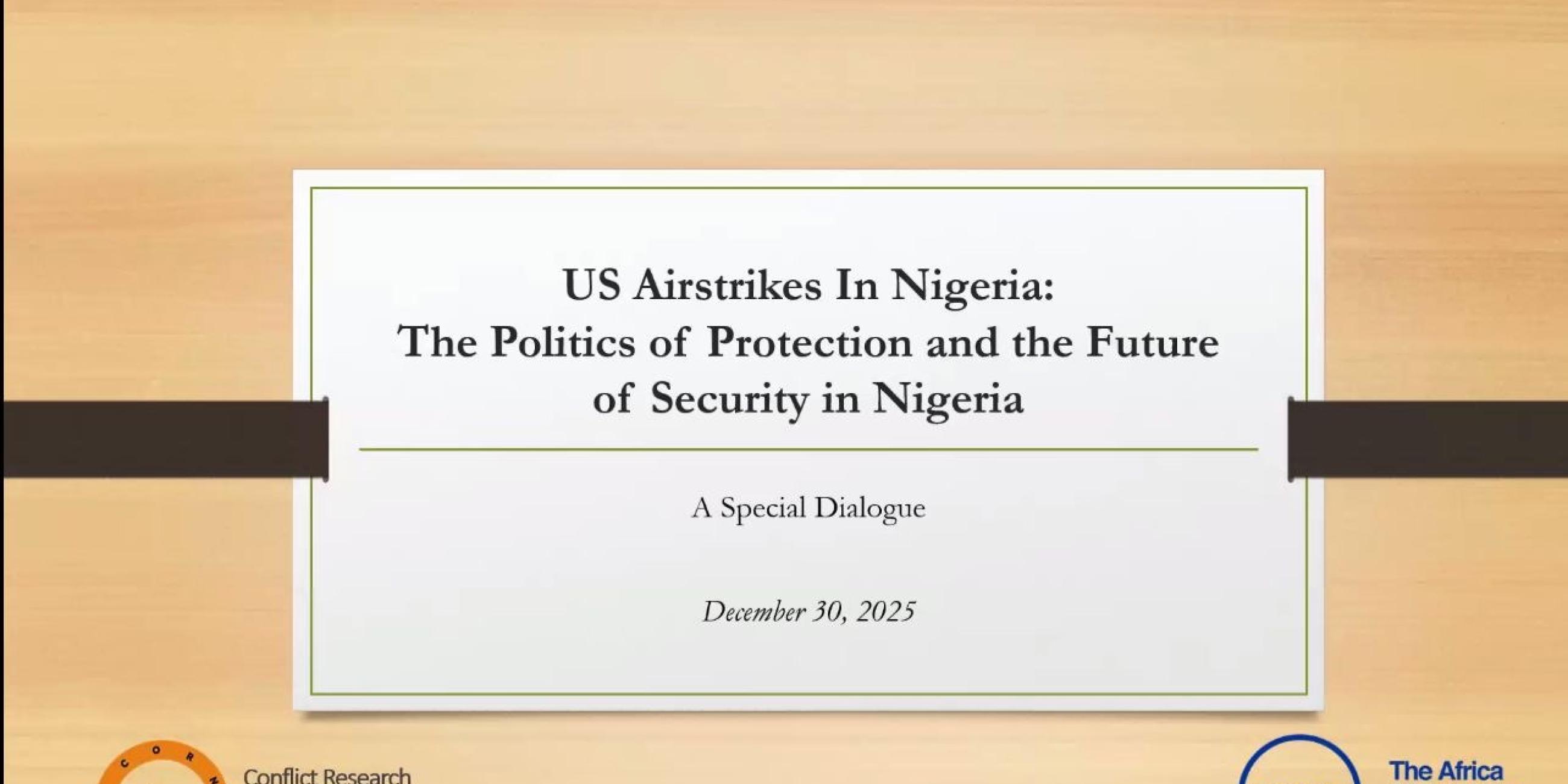
  • Scholars and Activists Hold Special Dialogue on US Christmas Airstrikes in Nigeria, Debate Foreign Military Intervention, Sovereignty, and Security Implications

    Civil society groups and scholars convened a special dialogue to examine the implications of recent US airstrikes in Nigeria, raising concerns about foreign military involvement, national sovereignty, and long-term security. The event, titled “US Airstrikes in Nigeria: The Politics of Protection and the Future of Security in Nigeria,” was organized by the Conflict Research Network (CORN) West Africa and The Africa TADLab Disruptions.
    Professor Mojubaolu O. Okome, chairing the session, argued that US intervention aligns with broader American strategic interests, including control of resources, rather than Nigeria’s security needs. She warned of potential collateral damage and the long-term entrenchment of foreign military presence. Other participants debated the moral and strategic implications, with some cautioning that military action could instill fear among civilians, while others highlighted the challenges of opposing foreign intervention in protecting Nigerian citizens.
    The dialogue aimed to foster critical reflection on foreign military engagement in Nigeria and its potential consequences as the country grapples with widespread insecurity.
    Scholars and Activists Hold Special Dialogue on US Christmas Airstrikes in Nigeria, Debate Foreign Military Intervention, Sovereignty, and Security Implications Civil society groups and scholars convened a special dialogue to examine the implications of recent US airstrikes in Nigeria, raising concerns about foreign military involvement, national sovereignty, and long-term security. The event, titled “US Airstrikes in Nigeria: The Politics of Protection and the Future of Security in Nigeria,” was organized by the Conflict Research Network (CORN) West Africa and The Africa TADLab Disruptions. Professor Mojubaolu O. Okome, chairing the session, argued that US intervention aligns with broader American strategic interests, including control of resources, rather than Nigeria’s security needs. She warned of potential collateral damage and the long-term entrenchment of foreign military presence. Other participants debated the moral and strategic implications, with some cautioning that military action could instill fear among civilians, while others highlighted the challenges of opposing foreign intervention in protecting Nigerian citizens. The dialogue aimed to foster critical reflection on foreign military engagement in Nigeria and its potential consequences as the country grapples with widespread insecurity.
    0 Yorumlar ·0 hisse senetleri ·561 Views
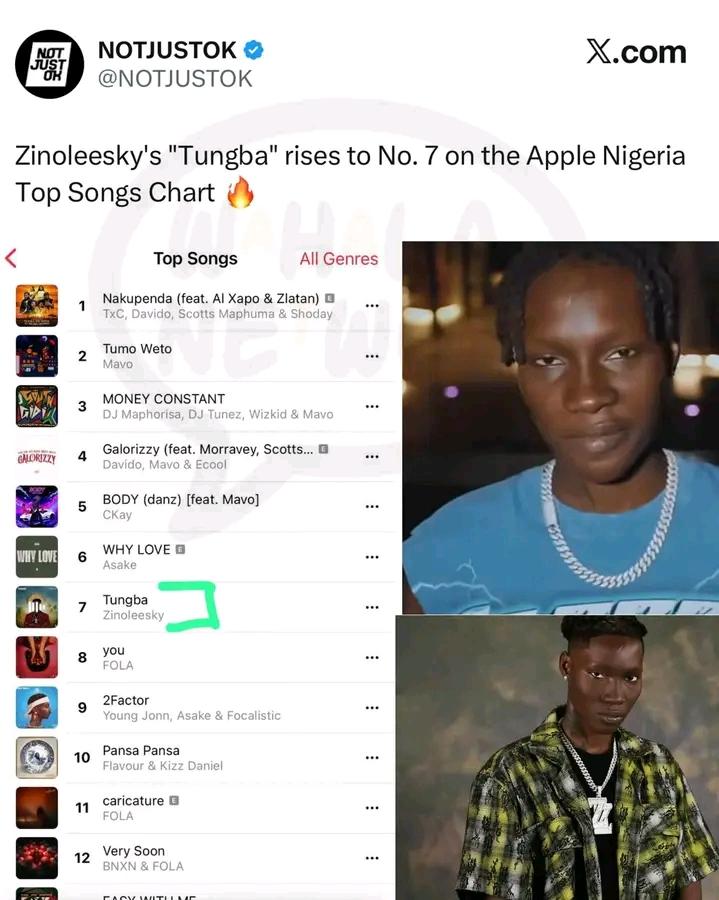
  • Wahala!! Zinoleesky’s “Tungba” rises to No. 7 on the Apple Nigeria Top Songs Chart
    Wahala!! Zinoleesky’s “Tungba” rises to No. 7 on the Apple Nigeria Top Songs Chart 🔥
    0 Yorumlar ·0 hisse senetleri ·342 Views

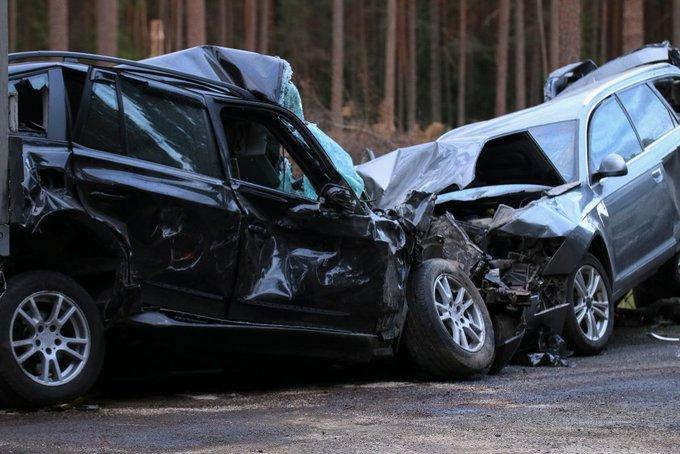
  • A woman and a man were involved in car accident.
    It was a bad one, caused by the woman's reckless driving.

    Both of their cars were badly damaged but amazingly neither of them was hurt.

    After they crawled out of ... cars, the woman says;
    “So, you're a man. That's interesting. I'm a woman.
    Wow, just look at our cars! There's nothing left, but fortunately we are unhurt.

    This must be a sign from God that we should meet and be friends and live together in peace for the rest of our days."

    The man replied," I agree with you completely. This must be a sign from God!
    The woman continued, "And look at this, here's another miracle.

    My car is completely damaged, but this bottle of wine didn't break.
    Surely God wants us to drink this wine and celebrate our good fortune."

    Then she handed the bottle over to the man.
    The man nodded his head in agreement, opens it, drinks half the bottle and then handed it back to the woman.

    The woman takes the bottle, immediately puts the cap back on, and handed it back to the man.

    The man asks, "Aren't you having any?"

    She replies, "Nah. I think I'll just wait for the police to come and collect their evidence."
    (drunk driver's offence)

    " Adam ate the apple again! "
    A woman and a man were involved in car accident. It was a bad one, caused by the woman's reckless driving.😭 Both of their cars were badly damaged but amazingly neither of them was hurt. After they crawled out of ... cars, the woman says; “So, you're a man. That's interesting. I'm a woman. Wow, just look at our cars! There's nothing left, but fortunately we are unhurt. This must be a sign from God that we should meet and be friends and live together in peace for the rest of our days." The man replied," I agree with you completely. This must be a sign from God! The woman continued, "And look at this, here's another miracle. My car is completely damaged, but this bottle of wine didn't break. Surely God wants us to drink this wine and celebrate our good fortune." Then she handed the bottle over to the man. The man nodded his head in agreement, opens it, drinks half the bottle and then handed it back to the woman. The woman takes the bottle, immediately puts the cap back on, and handed it back to the man. The man asks, "Aren't you having any?" She replies, "Nah. I think I'll just wait for the police to come and collect their evidence." (drunk driver's offence) " Adam ate the apple again! "😭
    0 Yorumlar ·0 hisse senetleri ·630 Views
  • World richest man, Elon Musk, Says He Looks Up To “The Creator,” Comments On Belief In God

    Elon Musk, the billionaire entrepreneur and CEO of Tesla and SpaceX, recently opened up about his views on faith and spirituality during an interview with Katie Miller. When asked “Who do you look up to the most,” Musk answered: “The Creator.”

    He was further asked if he believed in God, to which he replied: “Well i believe this universe came from something,” adding that “people have different labels.” His response reflects a philosophical perspective, acknowledging a creative force behind the universe while avoiding alignment with any specific religious doctrine.

    Musk has previously described himself as a “cultural Christian,” noting he was baptized and raised Anglican. However, he has often emphasized curiosity over traditional religious beliefs, stating that his guiding principle is exploration and expanding human consciousness. He has also highlighted the importance of moral teachings from religion, such as wisdom in compassion and restraint, without fully committing to organized faith.

    In this interview, Musk’s choice of words underscores his view that the origin of the universe is a mystery open to interpretation. By referring to “the Creator” instead of “God,” and noting that “people have different labels,” he signals openness to different philosophical or spiritual understandings rather than strictly religious ones. Musk’s remarks continue to fuel discussions on the intersection of science, technology, and spirituality, highlighting how leading figures grapple with questions about existence, purpose, and belief in the modern era.
    More at fintter.com
    #fintter
    World richest man, Elon Musk, Says He Looks Up To “The Creator,” Comments On Belief In God Elon Musk, the billionaire entrepreneur and CEO of Tesla and SpaceX, recently opened up about his views on faith and spirituality during an interview with Katie Miller. When asked “Who do you look up to the most,” Musk answered: “The Creator.” He was further asked if he believed in God, to which he replied: “Well i believe this universe came from something,” adding that “people have different labels.” His response reflects a philosophical perspective, acknowledging a creative force behind the universe while avoiding alignment with any specific religious doctrine. Musk has previously described himself as a “cultural Christian,” noting he was baptized and raised Anglican. However, he has often emphasized curiosity over traditional religious beliefs, stating that his guiding principle is exploration and expanding human consciousness. He has also highlighted the importance of moral teachings from religion, such as wisdom in compassion and restraint, without fully committing to organized faith. In this interview, Musk’s choice of words underscores his view that the origin of the universe is a mystery open to interpretation. By referring to “the Creator” instead of “God,” and noting that “people have different labels,” he signals openness to different philosophical or spiritual understandings rather than strictly religious ones. Musk’s remarks continue to fuel discussions on the intersection of science, technology, and spirituality, highlighting how leading figures grapple with questions about existence, purpose, and belief in the modern era. More at fintter.com #fintter
    0 Yorumlar ·0 hisse senetleri ·2K Views
  • A large group was spotted protesting outside the Midtown Manhattan Apple Store.
    A large group was spotted protesting outside the Midtown Manhattan Apple Store.
    0 Yorumlar ·0 hisse senetleri ·263 Views
  • Large Movement of Fulani Herdsmen Reportedly Leaving Nigeria for Cameroon via Adamawa Border.

    Reports from Fufore Local Government Area in Adamawa State indicate that a significant number of Fulani herdsmen, many traveling on motorbikes, are moving out of Nigeria across the border into Cameroon. According to eyewitness accounts, including that of local observer Patrick Anum, the movement has been steady and organized, with groups seen heading towards border communities in the early hours of the day.

    The movement is suspected to be an act of fleeing the country by the killer herdsmen due to the threat by the head of the American Government, President Donald Trump that the US could intervene in Northern Nigeria, killing terrorists allegedly persecuting Christians if the Nigerian Government refuses to ‘act fast’.

    What has drawn attention, however, is the apparent lack of interference by Nigerian security agencies stationed along the border routes. Sources suggest that the herdsmen are being allowed to cross freely, raising questions about whether the movement is coordinated or part of a broader security realignment in the region.

    This development comes amid renewed concerns over insecurity and shifting dynamics in Nigeria’s northern states. In recent months, the Nigerian security architecture has undergone multiple operations targeting banditry, terrorism, and cross-border criminal activities, particularly in the North East and North West regions. Military offensives in parts of Zamfara, Katsina, and Kaduna have reportedly displaced several armed groups, pushing some to seek refuge or reorganize in neighboring countries.

    Security analysts suggest that the movement of Fulani groups toward Cameroon could be linked to these intensified operations. Some observers fear that the exodus might not merely be pastoral migration but could involve elements retreating from ongoing military pressure or attempting to regroup across the border. Others, however, view it as part of the seasonal transhumance pattern traditional herding movements that have been complicated in recent years by conflict, climate change, and growing insecurity.

    The federal government has recently emphasized the need for tighter border surveillance and regional cooperation to manage such cross border movements. Yet, the apparent passivity of local security personnel in Adamawa has sparked debate over whether this current migration is being tacitly permitted or simply beyond the capacity of existing border control mechanisms.

    As northern Nigeria continues to grapple with overlapping security challenges from insurgency and banditry to farmer-herder tensions this latest development underscores the fragile nature of border management and the deep interconnection between internal security and regional mobility.
    Large Movement of Fulani Herdsmen Reportedly Leaving Nigeria for Cameroon via Adamawa Border. Reports from Fufore Local Government Area in Adamawa State indicate that a significant number of Fulani herdsmen, many traveling on motorbikes, are moving out of Nigeria across the border into Cameroon. According to eyewitness accounts, including that of local observer Patrick Anum, the movement has been steady and organized, with groups seen heading towards border communities in the early hours of the day. The movement is suspected to be an act of fleeing the country by the killer herdsmen due to the threat by the head of the American Government, President Donald Trump that the US could intervene in Northern Nigeria, killing terrorists allegedly persecuting Christians if the Nigerian Government refuses to ‘act fast’. What has drawn attention, however, is the apparent lack of interference by Nigerian security agencies stationed along the border routes. Sources suggest that the herdsmen are being allowed to cross freely, raising questions about whether the movement is coordinated or part of a broader security realignment in the region. This development comes amid renewed concerns over insecurity and shifting dynamics in Nigeria’s northern states. In recent months, the Nigerian security architecture has undergone multiple operations targeting banditry, terrorism, and cross-border criminal activities, particularly in the North East and North West regions. Military offensives in parts of Zamfara, Katsina, and Kaduna have reportedly displaced several armed groups, pushing some to seek refuge or reorganize in neighboring countries. Security analysts suggest that the movement of Fulani groups toward Cameroon could be linked to these intensified operations. Some observers fear that the exodus might not merely be pastoral migration but could involve elements retreating from ongoing military pressure or attempting to regroup across the border. Others, however, view it as part of the seasonal transhumance pattern traditional herding movements that have been complicated in recent years by conflict, climate change, and growing insecurity. The federal government has recently emphasized the need for tighter border surveillance and regional cooperation to manage such cross border movements. Yet, the apparent passivity of local security personnel in Adamawa has sparked debate over whether this current migration is being tacitly permitted or simply beyond the capacity of existing border control mechanisms. As northern Nigeria continues to grapple with overlapping security challenges from insurgency and banditry to farmer-herder tensions this latest development underscores the fragile nature of border management and the deep interconnection between internal security and regional mobility.
    0 Yorumlar ·0 hisse senetleri ·2K Views
  • Air Circus 61W USB-C Power Adapter for MacBook Pro/Air & iPad

    ₦25,000.00
    Charge your MacBook Pro, MacBook Air, or USB-C iPad efficiently with the Air Circus 61W USB-C Power Adapter. Designed for fast, stable power delivery, this premium charger offers reliable performance for work, travel, and everyday use.
    Compatible With:


    MacBook Pro (USB-C models)


    MacBook Air (USB-C models)


    iPad models with USB-C port


    Features:


    61W USB-C fast charging


    Stable and efficient power delivery


    Lightweight and travel-friendly design


    Durable build for everyday use


    A dependable, high-performance charging solution to keep your Apple devices powered up anywhere.
    Charge your MacBook Pro, MacBook Air, or USB-C iPad efficiently with the Air Circus 61W USB-C Power Adapter. Designed for fast, stable power delivery, this premium charger offers reliable performance for work, travel, and everyday use. Compatible With: MacBook Pro (USB-C models) MacBook Air (USB-C models) iPad models with USB-C port Features: 61W USB-C fast charging Stable and efficient power delivery Lightweight and travel-friendly design Durable build for everyday use A dependable, high-performance charging solution to keep your Apple devices powered up anywhere.
    In stock ·Yeni
    lagos Nigeria
    0 Yorumlar ·0 hisse senetleri ·664 Views
  • United States won’t be happy, Xiaomi has developed a chip so powerful that even China has praised it.

    Chinese electronics giant Xiaomi this week unveiled its first high-end processor, the Xring 01, a System-on-a-Chip (SoC) that clearly aims to rival the industry benchmarks of Qualcomm’s Snapdragon 8 and Apple’s A18 Pro. The result is such that the Chinese government itself has publicly hailed the performance.
    United States won’t be happy, Xiaomi has developed a chip so powerful that even China has praised it. Chinese electronics giant Xiaomi this week unveiled its first high-end processor, the Xring 01, a System-on-a-Chip (SoC) that clearly aims to rival the industry benchmarks of Qualcomm’s Snapdragon 8 and Apple’s A18 Pro. The result is such that the Chinese government itself has publicly hailed the performance.
    0 Yorumlar ·0 hisse senetleri ·489 Views
  • Alleged $4.5bn fraud: Emefiele’s phone forensic test stalled as EFCC, defence clash.

    The forensic examination of a mobile phone central to the $4.5 billion alleged fraud trial of former Central Bank of Nigeria, CBN, Governor, Godwin Emefiele, has stalled following a sharp disagreement between the Economic and Financial Crimes Commission, EFCC, and the defence team over how to carry out the court-ordered test.

    At the resumed hearing before Justice Rahman Oshodi of the Ikeja Special Offences Court on Tuesday, both parties traded accusations over who was responsible for the failure of the forensic process, which had been scheduled for September 24 and 25, 2025.

    Emefiele, alongside his co-defendant, Henry Omoile, is facing a 19-count charge of alleged fraud, corruption, and abuse of office.

    The EFCC had tendered an iPhone 12 containing WhatsApp messages as part of its evidence against the former apex bank chief.

    The court had earlier ordered that the device, marked as “iPhone 2”, be subjected to a scientific forensic analysis by experts representing both sides to determine the authenticity of the WhatsApp conversations in dispute.

    However, Emefiele’s lawyer, Olalekan Ojo, SAN, told the court that the exercise could not proceed because the EFCC repeatedly obstructed efforts to access the device.

    According to him, despite the presence of representatives from the prosecution, the defence, and the court’s Registrar, the commission refused to produce the phone for examination.

    Ojo said: “The first obstacle was that the EFCC insisted the device could not be fully exposed to the team.Then, on the second day, even when the Registrar clarified that your lordship’s order covered both the phone and its WhatsApp contents, the EFCC representatives refused to produce it when the Apple expert demanded it. We were told a categorical ‘No.’”

    Alleged $4.5bn fraud: Emefiele’s phone forensic test stalled as EFCC, defence clash. The forensic examination of a mobile phone central to the $4.5 billion alleged fraud trial of former Central Bank of Nigeria, CBN, Governor, Godwin Emefiele, has stalled following a sharp disagreement between the Economic and Financial Crimes Commission, EFCC, and the defence team over how to carry out the court-ordered test. At the resumed hearing before Justice Rahman Oshodi of the Ikeja Special Offences Court on Tuesday, both parties traded accusations over who was responsible for the failure of the forensic process, which had been scheduled for September 24 and 25, 2025. Emefiele, alongside his co-defendant, Henry Omoile, is facing a 19-count charge of alleged fraud, corruption, and abuse of office. The EFCC had tendered an iPhone 12 containing WhatsApp messages as part of its evidence against the former apex bank chief. The court had earlier ordered that the device, marked as “iPhone 2”, be subjected to a scientific forensic analysis by experts representing both sides to determine the authenticity of the WhatsApp conversations in dispute. However, Emefiele’s lawyer, Olalekan Ojo, SAN, told the court that the exercise could not proceed because the EFCC repeatedly obstructed efforts to access the device. According to him, despite the presence of representatives from the prosecution, the defence, and the court’s Registrar, the commission refused to produce the phone for examination. Ojo said: “The first obstacle was that the EFCC insisted the device could not be fully exposed to the team.Then, on the second day, even when the Registrar clarified that your lordship’s order covered both the phone and its WhatsApp contents, the EFCC representatives refused to produce it when the Apple expert demanded it. We were told a categorical ‘No.’”
    0 Yorumlar ·0 hisse senetleri ·958 Views


  • ADC Slams Tinubu Administration Over Insecurity Amid UN Security Council Push

    The African Democratic Congress (ADC) has strongly criticized President Bola Ahmed Tinubu’s administration over what it described as the worsening state of insecurity in Nigeria.

    In a statement reported by Vanguard on Monday, September 29, 2025, the party’s spokesperson, Bolaji Abdullahi, faulted the government’s priorities, questioning why it is seeking a permanent seat on the United Nations Security Council while Nigerians face increasing threats from bandits at home.

    According to Abdullahi, bandits have overrun some communities across the country, leaving citizens vulnerable to killings and displacement.

    “The ADC finds it absurd that the Tinubu administration could be requesting a permanent seat on the United Nations Security Council, even as bandits slaughter Nigerians at home and take control of some of the nation’s territories,” he said.

    The ADC emphasized that the government must focus on securing the lives and property of Nigerians first, stressing that no global recognition would hold meaning if the country continues to grapple with internal security crises.
    ADC Slams Tinubu Administration Over Insecurity Amid UN Security Council Push The African Democratic Congress (ADC) has strongly criticized President Bola Ahmed Tinubu’s administration over what it described as the worsening state of insecurity in Nigeria. In a statement reported by Vanguard on Monday, September 29, 2025, the party’s spokesperson, Bolaji Abdullahi, faulted the government’s priorities, questioning why it is seeking a permanent seat on the United Nations Security Council while Nigerians face increasing threats from bandits at home. According to Abdullahi, bandits have overrun some communities across the country, leaving citizens vulnerable to killings and displacement. “The ADC finds it absurd that the Tinubu administration could be requesting a permanent seat on the United Nations Security Council, even as bandits slaughter Nigerians at home and take control of some of the nation’s territories,” he said. The ADC emphasized that the government must focus on securing the lives and property of Nigerians first, stressing that no global recognition would hold meaning if the country continues to grapple with internal security crises.
    0 Yorumlar ·0 hisse senetleri ·879 Views
  • Sarz Drops Debut Album Protect Sarz at All Costs – Afrobeats Just Got Bigger

    Nigerian music producer Sarz has officially made his solo debut with the highly anticipated album Protect Sarz at All Costs, released under Sony Music Africa on Friday. The 14-track project marks a defining moment for a career that has been shaping Afrobeats for over a decade.

    The album is a masterful blend of Afrobeats, dancehall, and global sounds, featuring collaborations with heavyweights like Wizkid, Asake, Gunna, Shallipopi, Teni, Fireboy DML, Joeboy, and more.

    Its lead single, “Getting Paid”, which brings together Wizkid, Asake, and Jamaican star Skillibeng, debuted at #1 in Kano and is steadily climbing charts in other Nigerian cities and Sierra Leone, proving Sarz’s impact is both local and international.

    Protect Sarz at All Costs Tracklist:

    1. Grateful ft. Wurld, Ndlovu Choir


    2. Happiness ft. Asake, Gunna


    3. Getting Paid ft. Asake, Skillibeng, Wizkid


    4. Mademoiselle ft. Odumodublvck, Shallipopi, Theodora, Zeina


    5. BMF ft. Fireboy DML, Byron Messia


    6. Body ft. Joeboy


    7. In A Mustang ft. Qing Madi


    8. Nice n Slow ft. Wurld


    9. Loved Me Then ft. Lojay


    10. African Barbie ft. Teni, Libianca


    11. Up ft. Victony


    12. Billions ft. Lojay


    Sarz, the genius behind hits like Wizkid’s “Jaiye Jaiye” and Asake’s “Omo Ope”, described the album as “a manifesto to protect my legacy.” Rapper Olamide has also endorsed the project, hailing it as one of Sarz’s defining works.

    Already making waves, Protect Sarz at All Costs is sitting at #3 on the Apple Nigeria Top Albums Chart, proving that Sarz’s solo journey is off to an explosive start.

    Sarz Drops Debut Album Protect Sarz at All Costs – Afrobeats Just Got Bigger Nigerian music producer Sarz has officially made his solo debut with the highly anticipated album Protect Sarz at All Costs, released under Sony Music Africa on Friday. The 14-track project marks a defining moment for a career that has been shaping Afrobeats for over a decade. The album is a masterful blend of Afrobeats, dancehall, and global sounds, featuring collaborations with heavyweights like Wizkid, Asake, Gunna, Shallipopi, Teni, Fireboy DML, Joeboy, and more. Its lead single, “Getting Paid”, which brings together Wizkid, Asake, and Jamaican star Skillibeng, debuted at #1 in Kano and is steadily climbing charts in other Nigerian cities and Sierra Leone, proving Sarz’s impact is both local and international. 🎵 Protect Sarz at All Costs Tracklist: 1. Grateful ft. Wurld, Ndlovu Choir 2. Happiness ft. Asake, Gunna 3. Getting Paid ft. Asake, Skillibeng, Wizkid 4. Mademoiselle ft. Odumodublvck, Shallipopi, Theodora, Zeina 5. BMF ft. Fireboy DML, Byron Messia 6. Body ft. Joeboy 7. In A Mustang ft. Qing Madi 8. Nice n Slow ft. Wurld 9. Loved Me Then ft. Lojay 10. African Barbie ft. Teni, Libianca 11. Up ft. Victony 12. Billions ft. Lojay Sarz, the genius behind hits like Wizkid’s “Jaiye Jaiye” and Asake’s “Omo Ope”, described the album as “a manifesto to protect my legacy.” Rapper Olamide has also endorsed the project, hailing it as one of Sarz’s defining works. Already making waves, Protect Sarz at All Costs is sitting at #3 on the Apple Nigeria Top Albums Chart, proving that Sarz’s solo journey is off to an explosive start. 🔥
    0 Yorumlar ·0 hisse senetleri ·2K Views
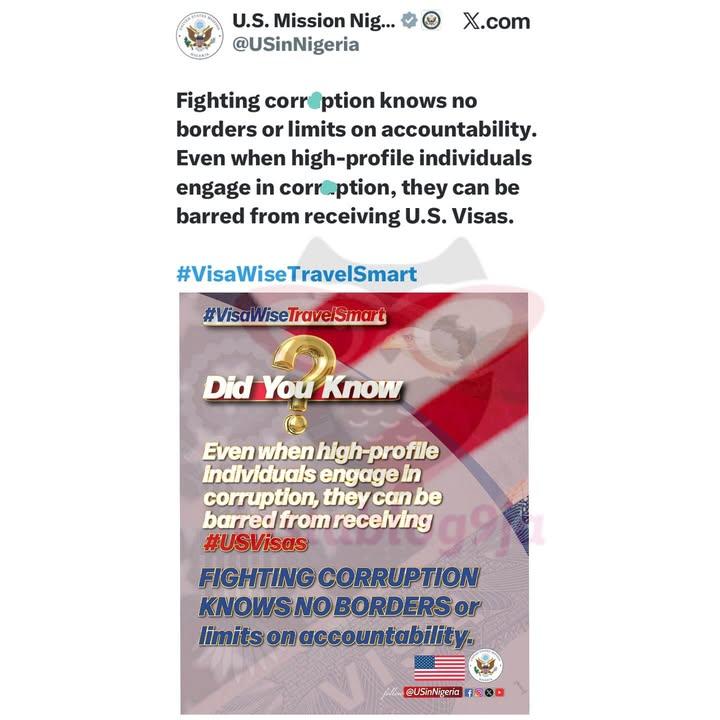
  • US Vows Visa Ban for Corrupt Nigerian Officials.

    The United States Mission in Nigeria has reaffirmed its commitment to tackling corruption, warning that no individual, regardless of their influence or position, will be exempt from sanctions.

    In a statement posted on its official X handle, the Mission stressed that the fight against corruption transcends borders and high-profile individuals found guilty of such practices could face strict consequences, including visa restrictions.

    “Fighting corruption knows no borders or limits on accountability. Even when high-profile individuals engage in corruption, they can be barred from receiving U.S. visas,” the Mission declared.

    The announcement is seen as part of Washington’s ongoing efforts to pressure Nigeria and other countries battling widespread corruption to strengthen accountability and governance systems.

    Over the years, the United States has imposed similar restrictions on government officials, politicians, and business figures linked to corrupt practices in Nigeria, often barring them and their families from entering U.S. territory.

    Observers say the latest warning signals Washington’s readiness to intensify scrutiny, especially at a time when Nigeria continues to grapple with corruption scandals cutting across various sectors.

    The move is also likely to serve as a deterrent, as the U.S. continues to position itself as a partner in promoting transparency, accountability, and good governance in Africa’s largest democracy.
    US Vows Visa Ban for Corrupt Nigerian Officials. The United States Mission in Nigeria has reaffirmed its commitment to tackling corruption, warning that no individual, regardless of their influence or position, will be exempt from sanctions. In a statement posted on its official X handle, the Mission stressed that the fight against corruption transcends borders and high-profile individuals found guilty of such practices could face strict consequences, including visa restrictions. “Fighting corruption knows no borders or limits on accountability. Even when high-profile individuals engage in corruption, they can be barred from receiving U.S. visas,” the Mission declared. The announcement is seen as part of Washington’s ongoing efforts to pressure Nigeria and other countries battling widespread corruption to strengthen accountability and governance systems. Over the years, the United States has imposed similar restrictions on government officials, politicians, and business figures linked to corrupt practices in Nigeria, often barring them and their families from entering U.S. territory. Observers say the latest warning signals Washington’s readiness to intensify scrutiny, especially at a time when Nigeria continues to grapple with corruption scandals cutting across various sectors. The move is also likely to serve as a deterrent, as the U.S. continues to position itself as a partner in promoting transparency, accountability, and good governance in Africa’s largest democracy.
    0 Yorumlar ·0 hisse senetleri ·494 Views
  • Trump Administration Imposes $100K Fee on H-1B Visa Applications.

    The Trump administration has announced a new $100,000 fee for H-1B visa applications, significantly raising costs for companies that rely on the program to recruit highly skilled foreign workers.

    President Donald Trump signed an executive order late Friday requiring the additional payment and barring H-1B holders from entering the U.S. without it. “We’re going to keep productive people in our country, and companies are prepared to pay for that — and they’re happy about it,” Trump said.

    The new fee will hit major employers such as Amazon, IBM, Microsoft, and Google, all of which have long depended on the program. H-1B visas already cost between $1,700 and $4,500 depending on processing time, costs usually borne by employers.

    Supporters of the move argue it will ensure only highly skilled workers enter the U.S. while protecting American jobs. A White House aide said the change would “guarantee that companies hire truly extraordinary people who cannot be easily replaced by American workers.”

    However, critics warn the policy could backfire. Stuart Anderson, executive director of the National Foundation for American Policy, cautioned that higher costs may push companies to move jobs abroad, especially in research and development. He also noted the move could discourage international students from enrolling in U.S. universities if post-graduation work opportunities shrink.

    H-1B visas, awarded by lottery, require at least a bachelor’s degree and a job offer from a U.S. employer. In 2024, Amazon was the largest recipient, securing over 10,000 visas, followed by Tata Consultancy, Microsoft, Apple, and Google. The most common job type for visa holders last year was software development.

    Bloomberg reported that Trump will also direct the Labor Secretary to revise wage rules for the program. Currently, employers must pay either the prevailing wage or the actual wage offered to similarly qualified workers, whichever is higher.
    Trump Administration Imposes $100K Fee on H-1B Visa Applications. The Trump administration has announced a new $100,000 fee for H-1B visa applications, significantly raising costs for companies that rely on the program to recruit highly skilled foreign workers. President Donald Trump signed an executive order late Friday requiring the additional payment and barring H-1B holders from entering the U.S. without it. “We’re going to keep productive people in our country, and companies are prepared to pay for that — and they’re happy about it,” Trump said. The new fee will hit major employers such as Amazon, IBM, Microsoft, and Google, all of which have long depended on the program. H-1B visas already cost between $1,700 and $4,500 depending on processing time, costs usually borne by employers. Supporters of the move argue it will ensure only highly skilled workers enter the U.S. while protecting American jobs. A White House aide said the change would “guarantee that companies hire truly extraordinary people who cannot be easily replaced by American workers.” However, critics warn the policy could backfire. Stuart Anderson, executive director of the National Foundation for American Policy, cautioned that higher costs may push companies to move jobs abroad, especially in research and development. He also noted the move could discourage international students from enrolling in U.S. universities if post-graduation work opportunities shrink. H-1B visas, awarded by lottery, require at least a bachelor’s degree and a job offer from a U.S. employer. In 2024, Amazon was the largest recipient, securing over 10,000 visas, followed by Tata Consultancy, Microsoft, Apple, and Google. The most common job type for visa holders last year was software development. Bloomberg reported that Trump will also direct the Labor Secretary to revise wage rules for the program. Currently, employers must pay either the prevailing wage or the actual wage offered to similarly qualified workers, whichever is higher.
    0 Yorumlar ·0 hisse senetleri ·794 Views
  • Meta Unveils Next-Gen AI Glasses With Built-In Displays

    Meta has expanded its smart eyewear lineup, unveiling new Ray-Ban and Oakley glasses that integrate artificial intelligence and augmented reality features, as the company continues its push toward the metaverse.

    At the annual Meta Connect conference in Menlo Park, CEO Mark Zuckerberg introduced the Ray-Ban Display, billed as the company’s most advanced AI glasses yet. The device features built-in screens that project messages, photos, and apps directly into the wearer’s field of vision. It is paired with “neural bands” — sensor-equipped wristbands that allow users to control the glasses with subtle hand and finger gestures. The glasses will retail at $799.

    “Our goal is to build great-looking glasses that deliver personal superintelligence and a feeling of presence using realistic holograms,” Zuckerberg said, describing AI glasses as the “next major computing platform” set to replace smartphones.

    Meta also launched Oakley Meta Vanguard, performance-focused smart glasses designed for sports and fitness. Priced at $499, they include an action-ready camera, fitness app integration, and immersive audio.

    Meanwhile, updated Ray-Ban Meta smart glasses — starting at $379 — expand on Meta’s partnership with EssilorLuxottica, the parent company of Ray-Ban and Oakley. The glasses, already the world’s best-selling AI eyewear, now feature real-time translation, hands-free cameras, and AI-powered digital assistant functions.

    Despite these innovations, Meta’s Reality Labs division continues to operate at a loss. It posted a $4.5 billion loss in Q2 2025 on revenues of just $370 million. Analysts say the push into AI eyewear is less about short-term profits and more about positioning Meta to break free from reliance on Apple and Google’s smartphone ecosystems.

    The global smart glasses market, valued at nearly $2 billion in 2024, is projected to grow more than fourfold by the end of the decade, according to Grand View Research.

    “AI glasses connect us to real-world superpowers as we move throughout the day, tapping into a wealth of information while staying present in the moment,” Meta said in a statement.

    Source: AFP / Channels Television
    Meta Unveils Next-Gen AI Glasses With Built-In Displays Meta has expanded its smart eyewear lineup, unveiling new Ray-Ban and Oakley glasses that integrate artificial intelligence and augmented reality features, as the company continues its push toward the metaverse. At the annual Meta Connect conference in Menlo Park, CEO Mark Zuckerberg introduced the Ray-Ban Display, billed as the company’s most advanced AI glasses yet. The device features built-in screens that project messages, photos, and apps directly into the wearer’s field of vision. It is paired with “neural bands” — sensor-equipped wristbands that allow users to control the glasses with subtle hand and finger gestures. The glasses will retail at $799. “Our goal is to build great-looking glasses that deliver personal superintelligence and a feeling of presence using realistic holograms,” Zuckerberg said, describing AI glasses as the “next major computing platform” set to replace smartphones. Meta also launched Oakley Meta Vanguard, performance-focused smart glasses designed for sports and fitness. Priced at $499, they include an action-ready camera, fitness app integration, and immersive audio. Meanwhile, updated Ray-Ban Meta smart glasses — starting at $379 — expand on Meta’s partnership with EssilorLuxottica, the parent company of Ray-Ban and Oakley. The glasses, already the world’s best-selling AI eyewear, now feature real-time translation, hands-free cameras, and AI-powered digital assistant functions. Despite these innovations, Meta’s Reality Labs division continues to operate at a loss. It posted a $4.5 billion loss in Q2 2025 on revenues of just $370 million. Analysts say the push into AI eyewear is less about short-term profits and more about positioning Meta to break free from reliance on Apple and Google’s smartphone ecosystems. The global smart glasses market, valued at nearly $2 billion in 2024, is projected to grow more than fourfold by the end of the decade, according to Grand View Research. “AI glasses connect us to real-world superpowers as we move throughout the day, tapping into a wealth of information while staying present in the moment,” Meta said in a statement. Source: AFP / Channels Television
    0 Yorumlar ·0 hisse senetleri ·2K Views
Arama Sonuçları
Fintter https://fintter.com