• Tinubu’s Aide Says “Oyo Empire Belongs to History” as Alaafin Urged to Embrace Modern Roles

    Amid debates over supremacy among Oyo State monarchs, Tinubu’s aide Temitope Ajayi stated that the Oyo Empire is history and urged the Alaafin to focus on modern leadership, peace, and development. The Olubadan of Ibadan, Alaafin of Oyo, and Soun of Ogbomosoland are set to rotate chairmanship of the State Council of Obas and Chiefs. However, the Alaafin’s Palace denied any consultation or endorsement of the rotational arrangement, sparking tension and public discussion about traditional authority in contemporary Yorubaland.

    #OyoEmpire #AlaafinOfOyo #TraditionalLeadership
    Tinubu’s Aide Says “Oyo Empire Belongs to History” as Alaafin Urged to Embrace Modern Roles Amid debates over supremacy among Oyo State monarchs, Tinubu’s aide Temitope Ajayi stated that the Oyo Empire is history and urged the Alaafin to focus on modern leadership, peace, and development. The Olubadan of Ibadan, Alaafin of Oyo, and Soun of Ogbomosoland are set to rotate chairmanship of the State Council of Obas and Chiefs. However, the Alaafin’s Palace denied any consultation or endorsement of the rotational arrangement, sparking tension and public discussion about traditional authority in contemporary Yorubaland. #OyoEmpire #AlaafinOfOyo #TraditionalLeadership
    love
    2
    · 0 Commentarios ·0 Acciones ·684 Views
  • Controversy Erupts as Olu of Warri Greets Governor Sanwo-Olu After Female Executive’s Handshake Blocked”

    A viral video has sparked widespread discussion after Olu of Warri, Ogiame Atuwatse III, visited Lagos State and was seen greeting Governor Babajide Sanwo-Olu with a handshake, contrasting a recent incident where a female executive’s handshake attempt was blocked by his aides. The event took place during the Storytellers Conference at the Wole Soyinka Centre for Culture and Creative Arts, with the governor also giving the traditional ruler a tour of the renovated National Theatre in Iganmu.
    The footage shows Olu of Warri standing to shake hands with Governor Sanwo-Olu, prompting social media users to comment on the apparent double standard regarding his interactions with men and women. Many pointed out that the king’s aides had previously prevented a woman from shaking his hand, a decision interpreted by some as cultural tradition, while others criticized it as outdated or unfair.
    Social media reactions captured the variety of opinions, with some defending the traditional protocol:
    tontolofabrics argued hierarchy should be respected, noting the king’s status versus the executive.
    defenderofjust cited African customs where kings typically avoid handshakes with women due to traditional beliefs about purity.
    Others highlighted perceived inconsistencies:
    _ismo99 and Jamesdeyemi pointed out the king shakes hands with prominent officials like the governor but blocks ordinary individuals, especially women.
    ashleightatti commented on the irony of cultural traditions intersecting with modern governance and social expectations.
    The incident reignited discussions on gender norms, protocol, and respect for traditional authority in Nigeria. It also followed previous highlights of Olu of Warri’s public appearances, including inspecting road projects on a scooter and hosting Big Brother Naija stars Kellyrae and Kassia, who donned Itsekiri-themed attire and posed with the traditional ruler.
    This episode underscores the public scrutiny of cultural leaders in modern Nigeria, especially when their actions intersect with official government figures and evolving social expectations. While some praise the adherence to tradition, others call for reconsideration of gendered protocols in public interactions.
    Controversy Erupts as Olu of Warri Greets Governor Sanwo-Olu After Female Executive’s Handshake Blocked” A viral video has sparked widespread discussion after Olu of Warri, Ogiame Atuwatse III, visited Lagos State and was seen greeting Governor Babajide Sanwo-Olu with a handshake, contrasting a recent incident where a female executive’s handshake attempt was blocked by his aides. The event took place during the Storytellers Conference at the Wole Soyinka Centre for Culture and Creative Arts, with the governor also giving the traditional ruler a tour of the renovated National Theatre in Iganmu. The footage shows Olu of Warri standing to shake hands with Governor Sanwo-Olu, prompting social media users to comment on the apparent double standard regarding his interactions with men and women. Many pointed out that the king’s aides had previously prevented a woman from shaking his hand, a decision interpreted by some as cultural tradition, while others criticized it as outdated or unfair. Social media reactions captured the variety of opinions, with some defending the traditional protocol: tontolofabrics argued hierarchy should be respected, noting the king’s status versus the executive. defenderofjust cited African customs where kings typically avoid handshakes with women due to traditional beliefs about purity. Others highlighted perceived inconsistencies: _ismo99 and Jamesdeyemi pointed out the king shakes hands with prominent officials like the governor but blocks ordinary individuals, especially women. ashleightatti commented on the irony of cultural traditions intersecting with modern governance and social expectations. The incident reignited discussions on gender norms, protocol, and respect for traditional authority in Nigeria. It also followed previous highlights of Olu of Warri’s public appearances, including inspecting road projects on a scooter and hosting Big Brother Naija stars Kellyrae and Kassia, who donned Itsekiri-themed attire and posed with the traditional ruler. This episode underscores the public scrutiny of cultural leaders in modern Nigeria, especially when their actions intersect with official government figures and evolving social expectations. While some praise the adherence to tradition, others call for reconsideration of gendered protocols in public interactions.
    0 Commentarios ·0 Acciones ·745 Views
  • Actor Dr Don Pedro Obaseki Abd¥cted, Str+pped, and H¥miliated while playing football

    Nigerian actor and cultural advocate, Dr Don Pedro Obaseki, has recounted a harrowing experience of abd¥ction, a+sa¥lt, and public h¥miliation by a group of men who dragged him to the Oba of Benin Palace on Sunday in Benin City.

    Speaking to African Independent Television (AIT), Obaseki said the incident occurred around 11:00–11:30 a.m. while playing football with Uwa All Stars at Uwa Primary School. He described how ass+ilants, some armed, suddenly invaded the ground, abd¥cted him, and forcibly dragged him through several streets including Igbesawan Street, Akpakpava Road, and Ring Road where he was stri+ped n@ked in public before being taken to the palace premises. Obaseki, a cousin of former Edo Governor Godwin Obaseki, said the att@ckers claimed they were sent by the palace but failed to show any form of identification when requested.

    “I begged them to show me some form of ID, of course not. I was dragged, beaten severely, manhandled… and taken into the palace,” he explained. The actor said the ordeal left him tra¥matized, especially given his lifelong contributions to Benin culture.

    Following the incident, he was taken to a police station along Oba Market Road, where the Edo State Commissioner of Police intervened, personally visiting him multiple times before ordering his release.

    Obaseki revealed that the alleged offence stemmed from comments he made during a recent visit to London, where he wished “Edo gha to’kperewa” (“May Edo people live long and prosper”) instead of “Oba gha to’kpere” (“May the Oba live long and prosper”), which he was told constituted a serious cultural violation.

    Public outrage has continued to grow, with calls for accountability and a full investigation into the actions of those involved in the as+a¥lt and abd¥ction. The incident occurs against the backdrop of long-standing tension between the Oba of Benin, Oba Ewuare II, and former Governor Godwin Obaseki, particularly over disputes surrounding cultural heritage, administration of Benin artifacts, and traditional authority in Edo State.
    Actor Dr Don Pedro Obaseki Abd¥cted, Str+pped, and H¥miliated while playing football Nigerian actor and cultural advocate, Dr Don Pedro Obaseki, has recounted a harrowing experience of abd¥ction, a+sa¥lt, and public h¥miliation by a group of men who dragged him to the Oba of Benin Palace on Sunday in Benin City. Speaking to African Independent Television (AIT), Obaseki said the incident occurred around 11:00–11:30 a.m. while playing football with Uwa All Stars at Uwa Primary School. He described how ass+ilants, some armed, suddenly invaded the ground, abd¥cted him, and forcibly dragged him through several streets including Igbesawan Street, Akpakpava Road, and Ring Road where he was stri+ped n@ked in public before being taken to the palace premises. Obaseki, a cousin of former Edo Governor Godwin Obaseki, said the att@ckers claimed they were sent by the palace but failed to show any form of identification when requested. “I begged them to show me some form of ID, of course not. I was dragged, beaten severely, manhandled… and taken into the palace,” he explained. The actor said the ordeal left him tra¥matized, especially given his lifelong contributions to Benin culture. Following the incident, he was taken to a police station along Oba Market Road, where the Edo State Commissioner of Police intervened, personally visiting him multiple times before ordering his release. Obaseki revealed that the alleged offence stemmed from comments he made during a recent visit to London, where he wished “Edo gha to’kperewa” (“May Edo people live long and prosper”) instead of “Oba gha to’kpere” (“May the Oba live long and prosper”), which he was told constituted a serious cultural violation. Public outrage has continued to grow, with calls for accountability and a full investigation into the actions of those involved in the as+a¥lt and abd¥ction. The incident occurs against the backdrop of long-standing tension between the Oba of Benin, Oba Ewuare II, and former Governor Godwin Obaseki, particularly over disputes surrounding cultural heritage, administration of Benin artifacts, and traditional authority in Edo State.
    0 Commentarios ·0 Acciones ·484 Views
  • VIDEO: Thugs Allegedly Acting for Benin Traditional Council Assault, Strip Actor Don Pedro Obaseki, Drag Him to Palace Over ‘Disrespect’ Claims

    Nigerian actor Dr Don Pedro Obaseki was allegedly seized, stripped, and assaulted by a group of youths said to be acting on behalf of the Benin Traditional Council over claims that he disrespected the Oba of Benin, Oba Ewuare II. The incident, captured in a viral video, showed the actor stripped to his boxers, forced to kneel and crawl within the Benin Kingdom Palace premises before being taken inside to meet palace officials. Sources said the action was linked to Obaseki’s recent participation in a London event organised in honour of his cousin, former Edo State Governor Godwin Obaseki, who has been at the centre of a long-running dispute with the Benin Palace. The controversy is rooted in years of tension between the former governor and the Oba over control of repatriated Benin artefacts, traditional authority, and alleged withholding of statutory allocations to the Benin Traditional Council. The incident has sparked public outrage and renewed debate over the use of mob action, traditional authority, and the limits of cultural enforcement in Nigeria.
    VIDEO: Thugs Allegedly Acting for Benin Traditional Council Assault, Strip Actor Don Pedro Obaseki, Drag Him to Palace Over ‘Disrespect’ Claims Nigerian actor Dr Don Pedro Obaseki was allegedly seized, stripped, and assaulted by a group of youths said to be acting on behalf of the Benin Traditional Council over claims that he disrespected the Oba of Benin, Oba Ewuare II. The incident, captured in a viral video, showed the actor stripped to his boxers, forced to kneel and crawl within the Benin Kingdom Palace premises before being taken inside to meet palace officials. Sources said the action was linked to Obaseki’s recent participation in a London event organised in honour of his cousin, former Edo State Governor Godwin Obaseki, who has been at the centre of a long-running dispute with the Benin Palace. The controversy is rooted in years of tension between the former governor and the Oba over control of repatriated Benin artefacts, traditional authority, and alleged withholding of statutory allocations to the Benin Traditional Council. The incident has sparked public outrage and renewed debate over the use of mob action, traditional authority, and the limits of cultural enforcement in Nigeria.
    love
    1
    · 0 Commentarios ·0 Acciones ·372 Views
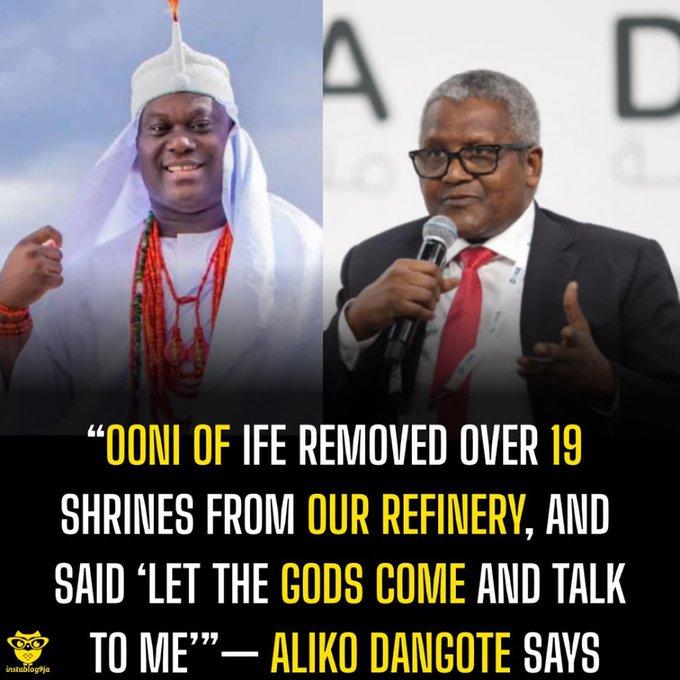
  • Ooni Of Ife Removed Over 19 Shrines From Our Refinery, And Said ‘Let The Gods Come And Talk To Me’”— Aliko Dangote Says

    Aliko Dangote, Nigeria’s business magnate, has revealed that the Ooni of Ife personally oversaw the removal of more than 19 shrines located on the Dangote refinery site. According to Dangote, the shrines had previously restricted access, preventing anyone from approaching or carrying out activities in the area.

    During the commissioning of a section of the Dangote refinery, he recounted that the Ooni instructed that all the shrines be removed, declaring that the gods should “come and talk to me,” signaling his direct involvement in the process.

    Dangote’s statement highlights the significant role traditional authority played in clearing the site for development and appreciated the Ooni of Ife for his support and providing easy access for the cite construction. The incident underscores the intersection of modern industrial projects with longstanding cultural and spiritual practices in Nigeria.
    Ooni Of Ife Removed Over 19 Shrines From Our Refinery, And Said ‘Let The Gods Come And Talk To Me’”— Aliko Dangote Says Aliko Dangote, Nigeria’s business magnate, has revealed that the Ooni of Ife personally oversaw the removal of more than 19 shrines located on the Dangote refinery site. According to Dangote, the shrines had previously restricted access, preventing anyone from approaching or carrying out activities in the area. During the commissioning of a section of the Dangote refinery, he recounted that the Ooni instructed that all the shrines be removed, declaring that the gods should “come and talk to me,” signaling his direct involvement in the process. Dangote’s statement highlights the significant role traditional authority played in clearing the site for development and appreciated the Ooni of Ife for his support and providing easy access for the cite construction. The incident underscores the intersection of modern industrial projects with longstanding cultural and spiritual practices in Nigeria.
    0 Commentarios ·0 Acciones ·456 Views
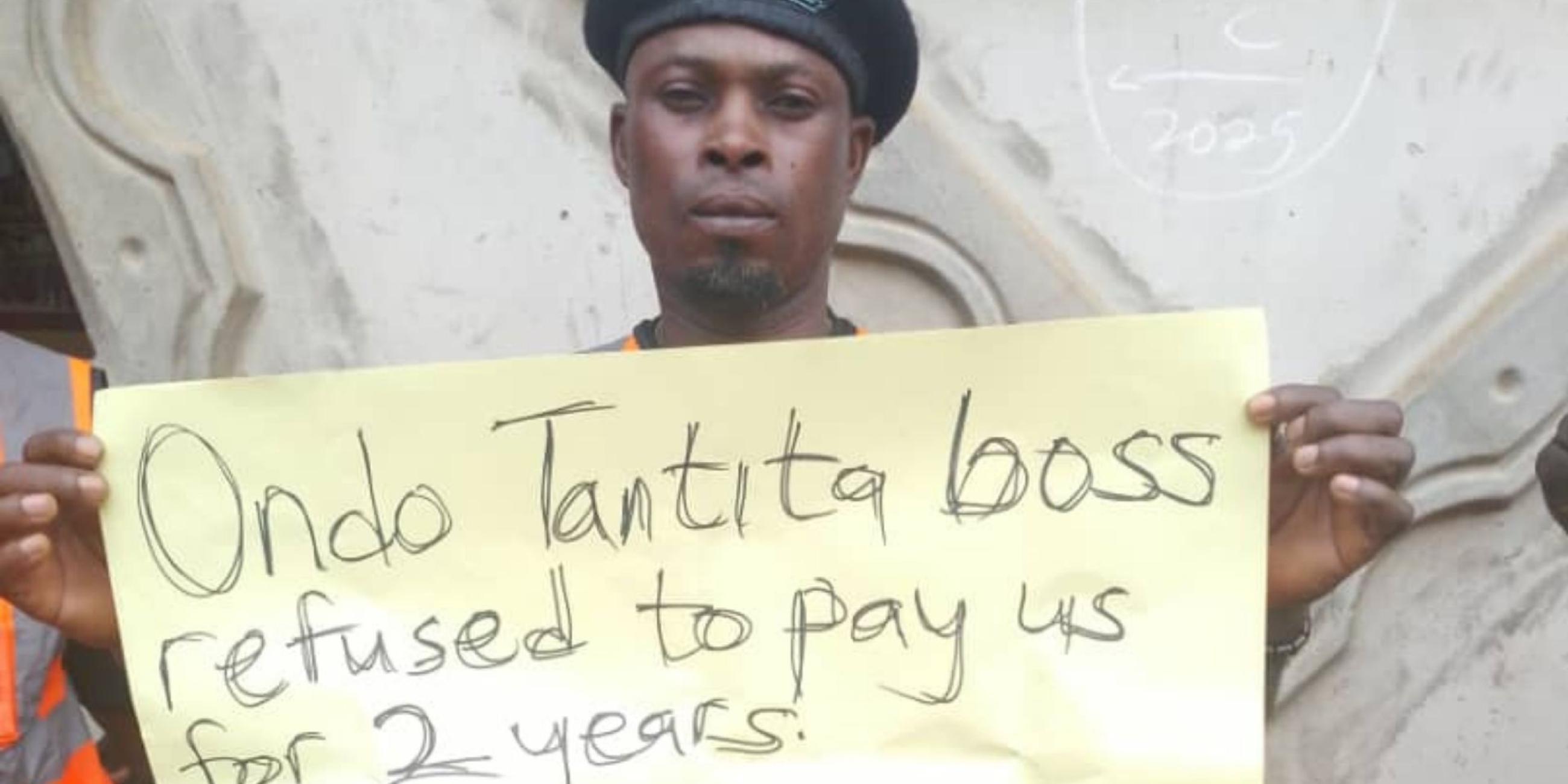
  • Tantita Security Boss in Ondo Accused of Salary Diversion as Workers Protest Two Years Unpaid Wages

    Tension is rising in Okitipupa, Ondo State, as Tantita Security workers protest two years of unpaid salaries and accuse the state coordinator, Chief Idowu Asonja, of payroll manipulation, salary diversion, and abuse of office. Aggrieved workers stormed the palace of the Lisa of Idepe-Okitipupa, pleading for intervention and alleging falsified staff lists and ghost workers. Youth groups in Ikale land also accuse Asonja of leading armed men to destroy a chief’s residence and disrespecting traditional authority. They are demanding a full probe, withdrawal of soldiers, relocation of Tantita's office, and an apology to the Jegun of Idepe. Community tension remains high as calls for Tompolo and federal authorities to intervene intensify.
    Tantita Security Boss in Ondo Accused of Salary Diversion as Workers Protest Two Years Unpaid Wages Tension is rising in Okitipupa, Ondo State, as Tantita Security workers protest two years of unpaid salaries and accuse the state coordinator, Chief Idowu Asonja, of payroll manipulation, salary diversion, and abuse of office. Aggrieved workers stormed the palace of the Lisa of Idepe-Okitipupa, pleading for intervention and alleging falsified staff lists and ghost workers. Youth groups in Ikale land also accuse Asonja of leading armed men to destroy a chief’s residence and disrespecting traditional authority. They are demanding a full probe, withdrawal of soldiers, relocation of Tantita's office, and an apology to the Jegun of Idepe. Community tension remains high as calls for Tompolo and federal authorities to intervene intensify.
    0 Commentarios ·0 Acciones ·287 Views
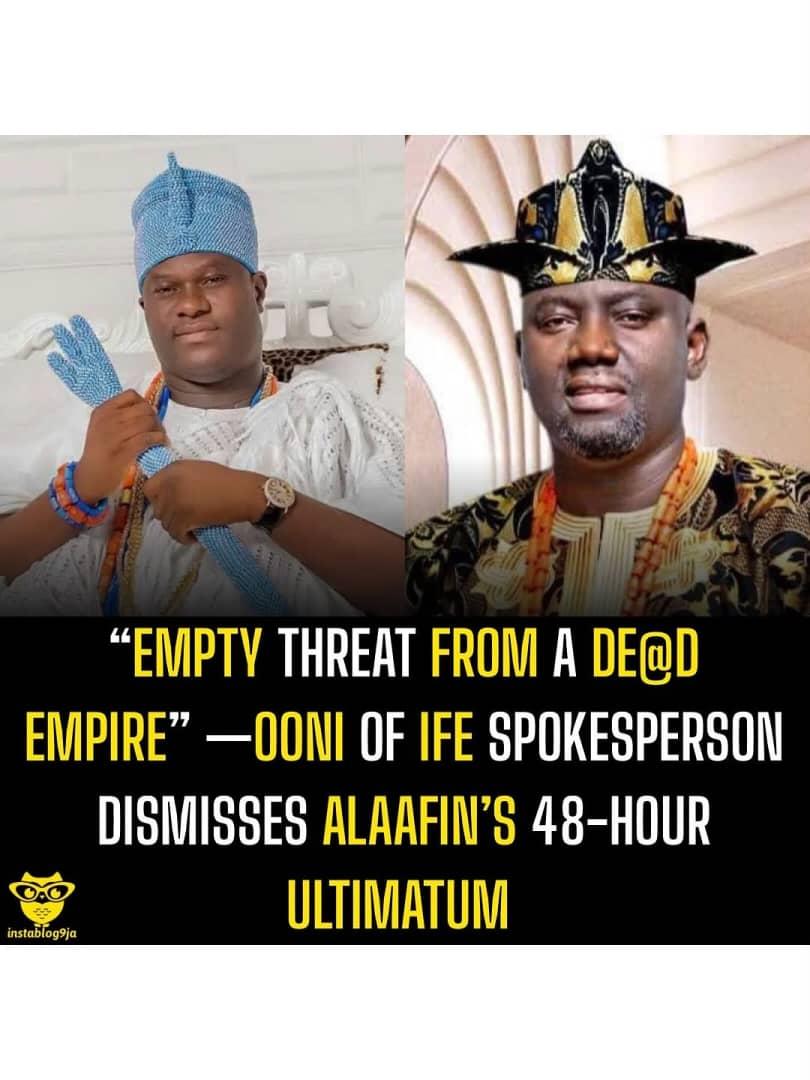
  • The Ooni of Ife, Oba Adeyeye Ogunwusi, has rejected a 48-hour ultimatum issued by the Alaafin of Oyo, Oba Abimbola Owoade, demanding the withdrawal of the Oluomo of Yorubaland title recently conferred on businessman Chief Dotun Sanusi.

    The Alaafin had accused the Ooni of overstepping traditional authority, insisting that only the Oyo throne holds the exclusive right to bestow titles covering the entire Yorubaland, a claim he said was backed by a Supreme Court ruling.

    In response, Ooni’s spokesperson, Moses Olafare, described the ultimatum as an “empty threat from a dead empire,” dismissing it as mere “supremacy hullabaloo.” He stressed that the Ooni was more focused on creating jobs and empowering youths, citing the planned Ojaja Smart City project in Ibadan, rather than engaging in what he called outdated supremacy battles.

    Olafare added that the alleged Oluomo of Yorubaland title in contention “does not even exist,” insisting that those issuing threats were simply “jokers.”
    The Ooni of Ife, Oba Adeyeye Ogunwusi, has rejected a 48-hour ultimatum issued by the Alaafin of Oyo, Oba Abimbola Owoade, demanding the withdrawal of the Oluomo of Yorubaland title recently conferred on businessman Chief Dotun Sanusi. The Alaafin had accused the Ooni of overstepping traditional authority, insisting that only the Oyo throne holds the exclusive right to bestow titles covering the entire Yorubaland, a claim he said was backed by a Supreme Court ruling. In response, Ooni’s spokesperson, Moses Olafare, described the ultimatum as an “empty threat from a dead empire,” dismissing it as mere “supremacy hullabaloo.” He stressed that the Ooni was more focused on creating jobs and empowering youths, citing the planned Ojaja Smart City project in Ibadan, rather than engaging in what he called outdated supremacy battles. Olafare added that the alleged Oluomo of Yorubaland title in contention “does not even exist,” insisting that those issuing threats were simply “jokers.”
    0 Commentarios ·0 Acciones ·1K Views
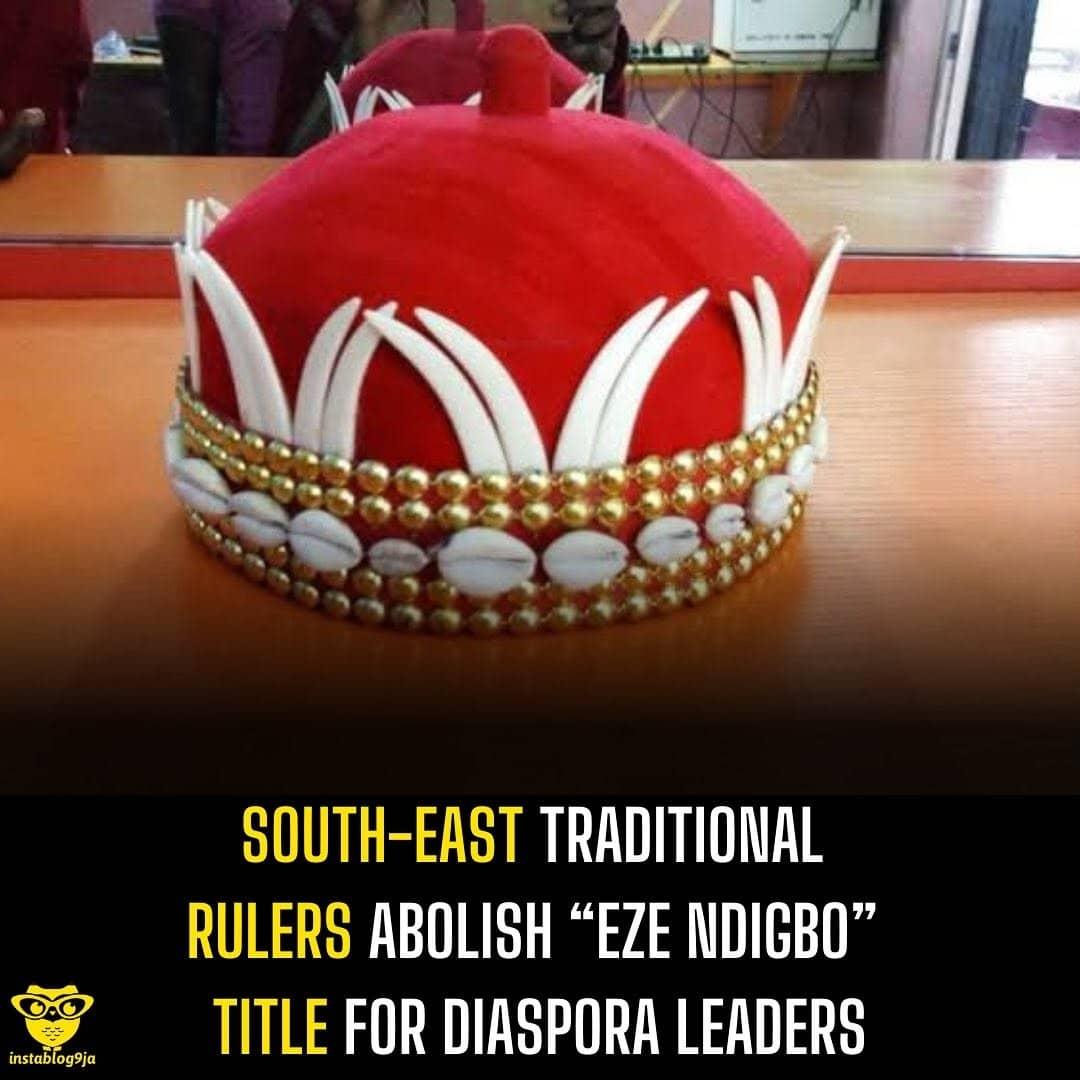
  • South-East Traditional Rulers Abolish “Eze Ndigbo” Title for Diaspora Leaders.

    The South-East Council of Traditional Rulers has officially abolished the use of the title “Eze Ndigbo” by Igbo leaders living outside Igbo land. In a communique obtained by SaharaReporters, the council announced the introduction of a new title, “Onyendu Ndigbo,” for leaders in the Diaspora and abroad.

    The statement was signed by key monarchs, including Eze E.C. Okeke (Eze Imo) and Igwe Nnaemeka Achebe, who chairs the council. The decision, they said, aims to preserve the sanctity of the “Eze” title, which is traditionally reserved for enthroned rulers with ancestral authority over a defined kingdom or community in Igbo land.

    The council emphasized that the “Eze” title is not honorary or political but deeply rooted in sacred rites and ancestral customs.

    While acknowledging the positive role of Igbo Diaspora leaders in unifying Ndigbo and promoting peace in host countries, the council insisted that the misuse of the “Eze Ndigbo” title dilutes traditional authority and cultural heritage.

    The newly introduced title, “Onyendu Ndigbo,” is to be used immediately across all platforms—official documents, signage, letterheads, and public engagements.

    Non-compliance, the council warned, would be regarded as an act of defiance and disrespect toward Igbo traditional authority. The council urged all Igbo leaders abroad to embrace this change in the interest of unity, cultural integrity, and mutual respect between the Diaspora and traditional institutions at home.

    This resolution comes in the wake of public uproar in Ghana following the crowning of Eze Chukwudi Ihenetu as “Eze Ndi Igbo Ghana.” The ceremony, which included the unveiling of a regal palace in Accra, triggered protests and debates about sovereignty, cultural boundaries, and foreign leadership roles within local communities. The council’s move is seen as a step toward preserving Igbo heritage while fostering better cooperation between traditional rulers and Igbo leaders across the globe.
    South-East Traditional Rulers Abolish “Eze Ndigbo” Title for Diaspora Leaders. The South-East Council of Traditional Rulers has officially abolished the use of the title “Eze Ndigbo” by Igbo leaders living outside Igbo land. In a communique obtained by SaharaReporters, the council announced the introduction of a new title, “Onyendu Ndigbo,” for leaders in the Diaspora and abroad. The statement was signed by key monarchs, including Eze E.C. Okeke (Eze Imo) and Igwe Nnaemeka Achebe, who chairs the council. The decision, they said, aims to preserve the sanctity of the “Eze” title, which is traditionally reserved for enthroned rulers with ancestral authority over a defined kingdom or community in Igbo land. The council emphasized that the “Eze” title is not honorary or political but deeply rooted in sacred rites and ancestral customs. While acknowledging the positive role of Igbo Diaspora leaders in unifying Ndigbo and promoting peace in host countries, the council insisted that the misuse of the “Eze Ndigbo” title dilutes traditional authority and cultural heritage. The newly introduced title, “Onyendu Ndigbo,” is to be used immediately across all platforms—official documents, signage, letterheads, and public engagements. Non-compliance, the council warned, would be regarded as an act of defiance and disrespect toward Igbo traditional authority. The council urged all Igbo leaders abroad to embrace this change in the interest of unity, cultural integrity, and mutual respect between the Diaspora and traditional institutions at home. This resolution comes in the wake of public uproar in Ghana following the crowning of Eze Chukwudi Ihenetu as “Eze Ndi Igbo Ghana.” The ceremony, which included the unveiling of a regal palace in Accra, triggered protests and debates about sovereignty, cultural boundaries, and foreign leadership roles within local communities. The council’s move is seen as a step toward preserving Igbo heritage while fostering better cooperation between traditional rulers and Igbo leaders across the globe.
    0 Commentarios ·0 Acciones ·1K Views
Fintter https://fintter.com