• Nigerian Group Condemns U.S. Strike on Venezuela, Mourns Cuban Losses, Demands Release of Maduro

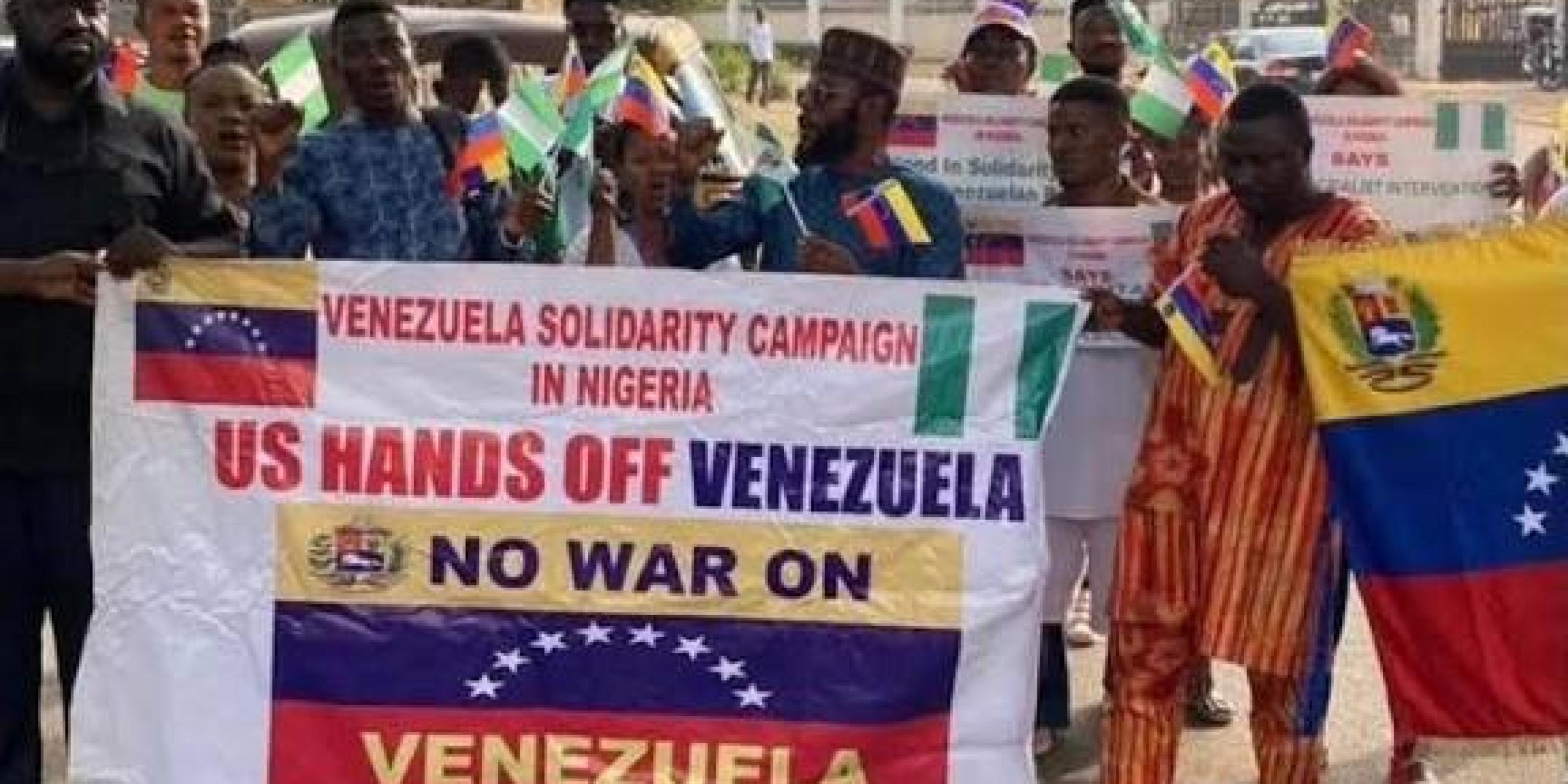
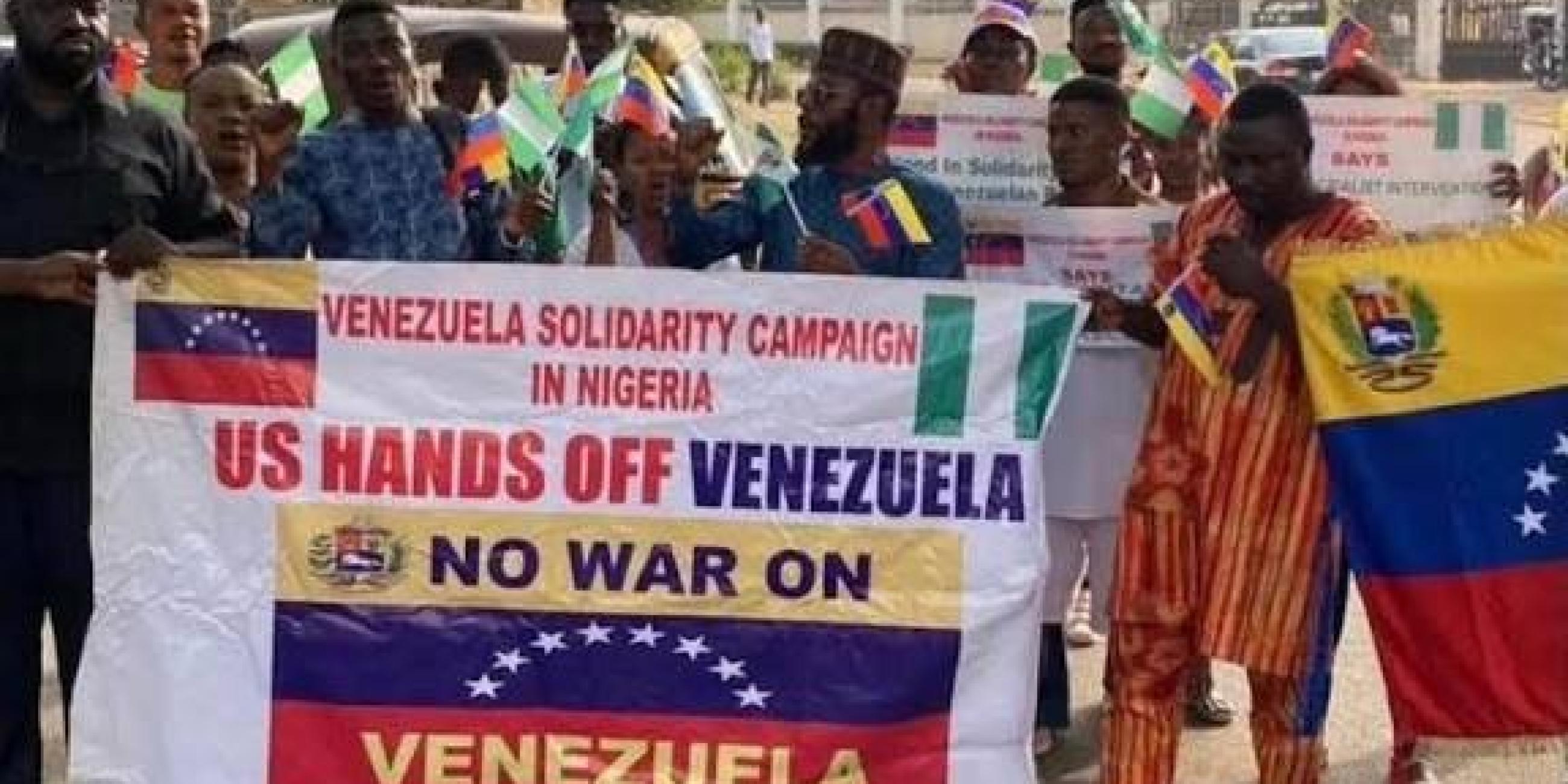
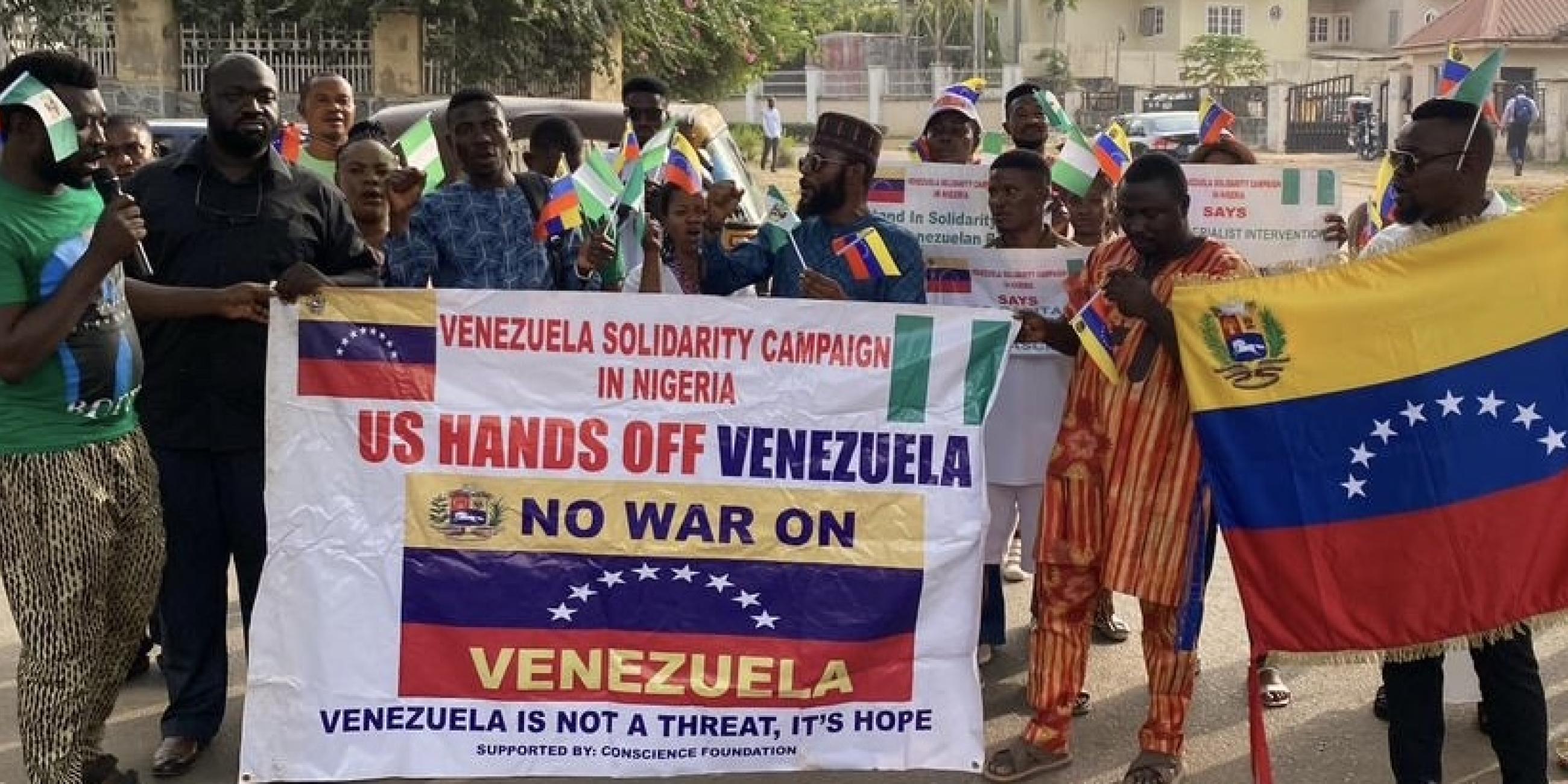
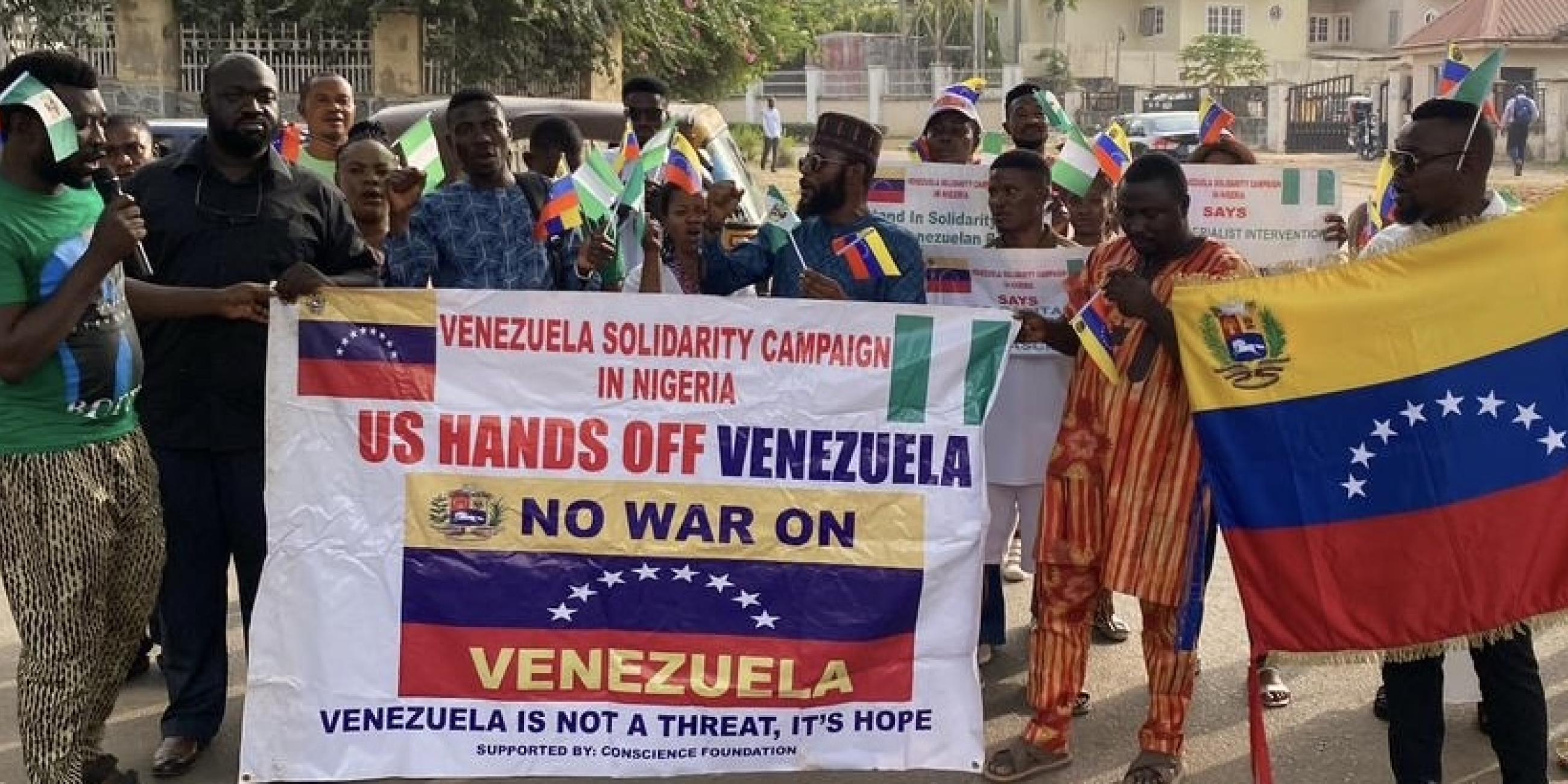
    The Venezuela Solidarity Campaign in Nigeria (VSCN) has condemned the recent U.S. military attack on Venezuela, describing it as a violation of international law and national sovereignty. The group mourned Venezuelan soldiers, Cuban officers and civilians killed in the strikes, calling their deaths a painful reminder of the human cost of foreign intervention. VSCN also decried the reported abduction of President Nicolás Maduro and First Combatant Cilia Flores, urging African nations and the global community to demand an immediate end to the aggression, respect for sovereignty, and the release of Venezuela’s leaders.

    #VenezuelaCrisis #USMilitaryStrike #InternationalLaw
    Nigerian Group Condemns U.S. Strike on Venezuela, Mourns Cuban Losses, Demands Release of Maduro The Venezuela Solidarity Campaign in Nigeria (VSCN) has condemned the recent U.S. military attack on Venezuela, describing it as a violation of international law and national sovereignty. The group mourned Venezuelan soldiers, Cuban officers and civilians killed in the strikes, calling their deaths a painful reminder of the human cost of foreign intervention. VSCN also decried the reported abduction of President Nicolás Maduro and First Combatant Cilia Flores, urging African nations and the global community to demand an immediate end to the aggression, respect for sovereignty, and the release of Venezuela’s leaders. #VenezuelaCrisis #USMilitaryStrike #InternationalLaw
    love
    3
    · 0 Commentaires ·0 Parts ·919 Vue
  • Nigerian Group Condemns U.S. Strike on Venezuela

    The Venezuela Solidarity Campaign in Nigeria (VSCN) has condemned the recent U.S. military attack on Venezuela, calling it a violation of international law and Venezuelan sovereignty. The group mourned Venezuelan soldiers, Cuban officers, and civilians killed in the strike, describing their deaths as sacrifices in defence of Venezuelan territory.

    VSCN demanded an immediate end to military actions and called for the release of President Nicolás Maduro, urging respect for Venezuela’s right to self-determination.

    #Venezuela #Nigeria #VSCN #USStrike #InternationalLaw #Solidarity #Maduro
    🇳🇬🤝🇻🇪 Nigerian Group Condemns U.S. Strike on Venezuela The Venezuela Solidarity Campaign in Nigeria (VSCN) has condemned the recent U.S. military attack on Venezuela, calling it a violation of international law and Venezuelan sovereignty. The group mourned Venezuelan soldiers, Cuban officers, and civilians killed in the strike, describing their deaths as sacrifices in defence of Venezuelan territory. VSCN demanded an immediate end to military actions and called for the release of President Nicolás Maduro, urging respect for Venezuela’s right to self-determination. #Venezuela #Nigeria #VSCN #USStrike #InternationalLaw #Solidarity #Maduro
    love
    2
    · 0 Commentaires ·0 Parts ·650 Vue
  • Chief Imam Abdullahi Abubakar, Hero Who Sheltered Christians During 2018 Plateau Killings, Dies at 92

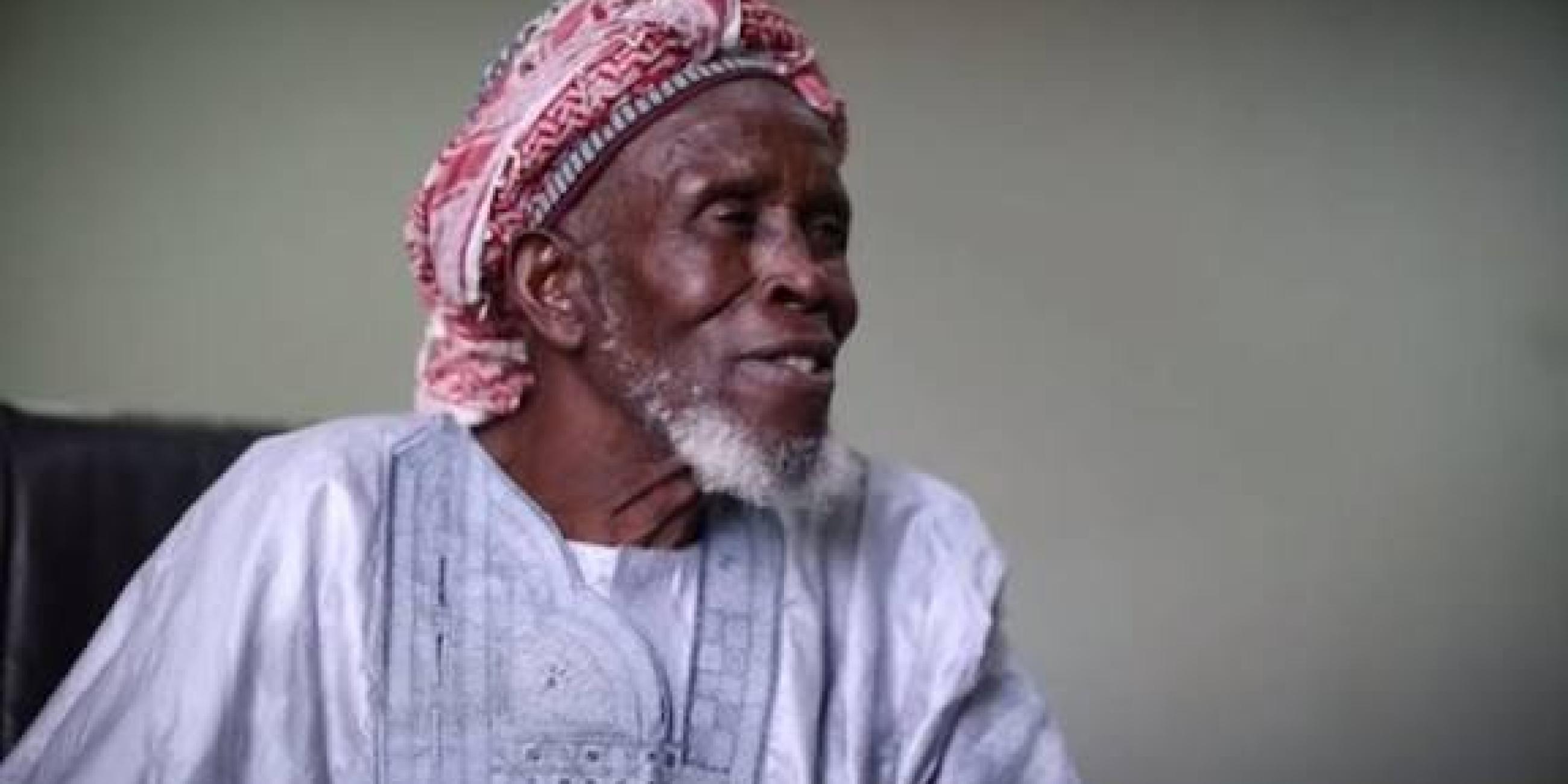
    Chief Imam Abdullahi Abubakar of Nghar village, Barkin Ladi LGA, Plateau State, has died at 92. The cleric gained national and international recognition for courageously sheltering over 260 Christians during the deadly 2018 attacks, protecting them from armed assailants. Honoured with Nigeria’s Member of the Order of the Niger (MON) and the US International Religious Freedom Award, Abubakar became a symbol of interfaith unity and humanity. Plateau Governor Caleb Mutfwang described his death as a significant loss, urging residents to uphold his legacy of compassion, peace, and solidarity.
    Chief Imam Abdullahi Abubakar, Hero Who Sheltered Christians During 2018 Plateau Killings, Dies at 92 Chief Imam Abdullahi Abubakar of Nghar village, Barkin Ladi LGA, Plateau State, has died at 92. The cleric gained national and international recognition for courageously sheltering over 260 Christians during the deadly 2018 attacks, protecting them from armed assailants. Honoured with Nigeria’s Member of the Order of the Niger (MON) and the US International Religious Freedom Award, Abubakar became a symbol of interfaith unity and humanity. Plateau Governor Caleb Mutfwang described his death as a significant loss, urging residents to uphold his legacy of compassion, peace, and solidarity.
    1 Commentaires ·0 Parts ·862 Vue
  • Whistleblower Oluwasanmi Arraigned in Lagos Over Alleged Corruption at Tinubu-Linked Alpha-Beta Firm

    Activist and whistleblower Segun Oluwasanmi has been arraigned at Ogba Magistrate Court, Lagos, following his arrest by the Nigeria Police over allegations linked to his exposure of corruption at Alpha-Beta Consulting Limited, a firm connected to President Tinubu. Oluwasanmi had accused the company of underpaying taxes, salary manipulations, inflated contracts, and internal fraud. The Committee for Defence of Human Rights (CDHR) called on supporters to rally in solidarity, describing his case as critical to justice. Oluwasanmi’s arraignment highlights growing tensions between whistleblowers and powerful corporate-political interests in Nigeria.
    Whistleblower Oluwasanmi Arraigned in Lagos Over Alleged Corruption at Tinubu-Linked Alpha-Beta Firm Activist and whistleblower Segun Oluwasanmi has been arraigned at Ogba Magistrate Court, Lagos, following his arrest by the Nigeria Police over allegations linked to his exposure of corruption at Alpha-Beta Consulting Limited, a firm connected to President Tinubu. Oluwasanmi had accused the company of underpaying taxes, salary manipulations, inflated contracts, and internal fraud. The Committee for Defence of Human Rights (CDHR) called on supporters to rally in solidarity, describing his case as critical to justice. Oluwasanmi’s arraignment highlights growing tensions between whistleblowers and powerful corporate-political interests in Nigeria.
    love
    1
    · 0 Commentaires ·0 Parts ·703 Vue
  • Workers Wahala Don Set! Federal Workers Threaten Nationwide Protest Over Doctors’ Strike, Unpaid Salaries, Tinubu Wage Crisis

    Serious tension don grip the country as the Federal Workers Forum (FWF) has threatened nationwide protests and solidarity strikes if the Federal Government fails to meet the demands of striking health workers and clear unpaid arrears within seven days. In a statement signed by its leaders, the group said federal workers are “paralysed” by poor wages, unpaid entitlements and harsh policies under President Bola Tinubu’s administration. The forum revealed that some workers have not been paid since December 2025, while others are still owed wage award arrears promised since 2023. It slammed the “no work, no pay” stance as anti-worker and accused government of ignoring the health sector strike while Nigerians suffer without access to care. FWF also rejected the new tax regime, saying it only worsens hardship. The group warned that if government fails to act by January 19, workers will occupy federal secretariats nationwide. According to them, “Tinubu don fail federal workers,” and unless urgent action is taken, nationwide protest wahala go burst.

    Workers Wahala Don Set! Federal Workers Threaten Nationwide Protest Over Doctors’ Strike, Unpaid Salaries, Tinubu Wage Crisis Serious tension don grip the country as the Federal Workers Forum (FWF) has threatened nationwide protests and solidarity strikes if the Federal Government fails to meet the demands of striking health workers and clear unpaid arrears within seven days. In a statement signed by its leaders, the group said federal workers are “paralysed” by poor wages, unpaid entitlements and harsh policies under President Bola Tinubu’s administration. The forum revealed that some workers have not been paid since December 2025, while others are still owed wage award arrears promised since 2023. It slammed the “no work, no pay” stance as anti-worker and accused government of ignoring the health sector strike while Nigerians suffer without access to care. FWF also rejected the new tax regime, saying it only worsens hardship. The group warned that if government fails to act by January 19, workers will occupy federal secretariats nationwide. According to them, “Tinubu don fail federal workers,” and unless urgent action is taken, nationwide protest wahala go burst.
    like
    1
    · 0 Commentaires ·0 Parts ·669 Vue
  • Wahala Don Set Oo! Chimamanda Adichie’s Son Dies, Editors Demand Probe Into Alleged Lagos Hospital Negligence

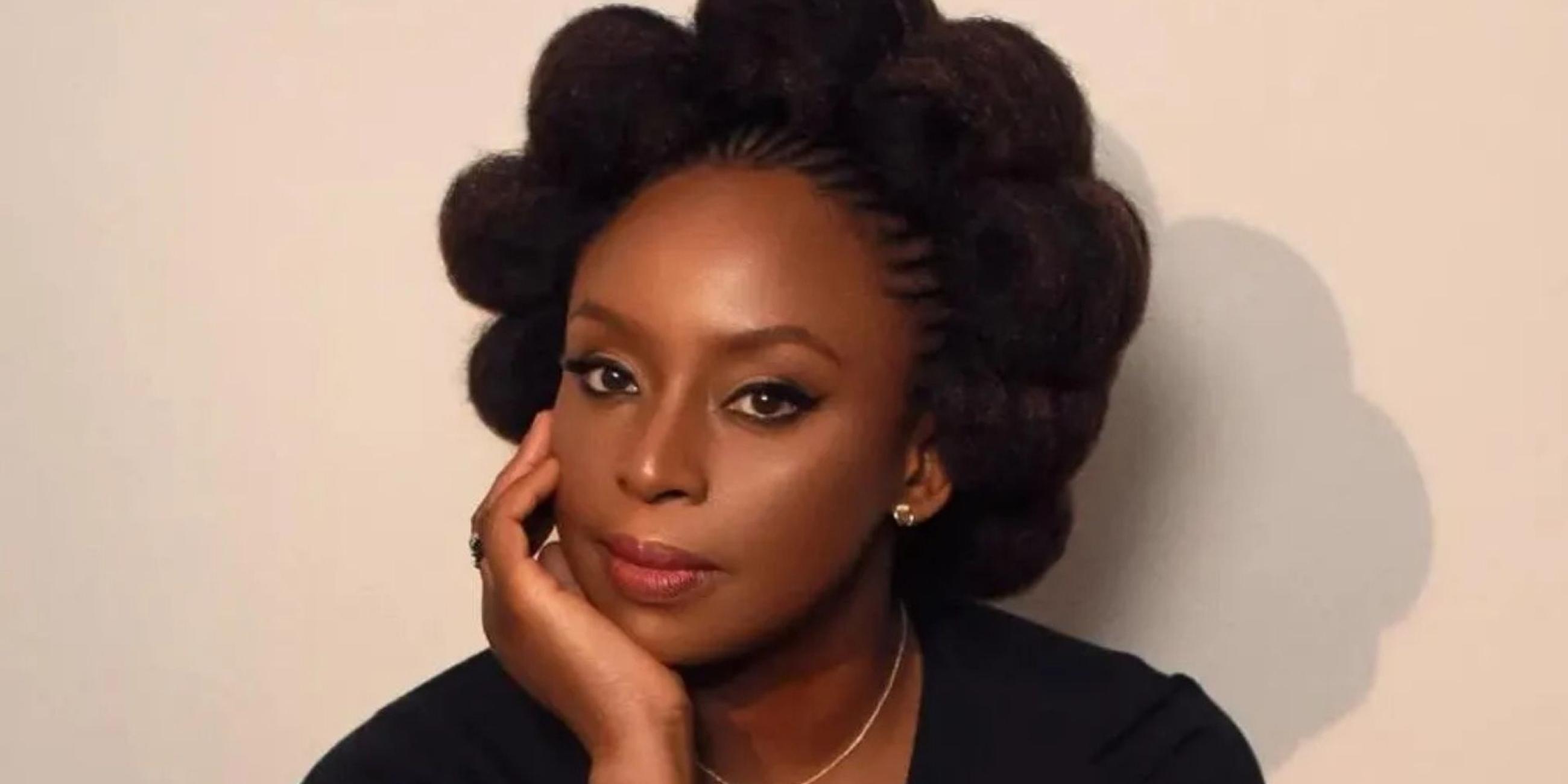
    Wahala don really set for Nigeria’s healthcare system oo! Literary editors and public intellectuals are mourning the tragic death of Chimamanda Ngozi Adichie’s 21-month-old son, Nnamdi, while demanding a full and transparent investigation into what they describe as possible medical negligence at a Lagos hospital.

    Co-editors of Camouflage: Best of Contemporary Writing from Nigeria, Professors Nduka Otiono and Odoh Diego Okenyodo, described the loss as “profoundly shattering,” joining Nigerians at home and abroad in sympathising with the award-winning author and her husband, Dr. Ivara Esege.

    “Losing a child is a pain no parent should ever experience,” the editors said, expressing deep condolences and standing in solidarity with Adichie in what they called her darkest hour.

    The statement followed Adichie’s emotional public account in which she alleged that her son’s death on January 6, 2026, was avoidable and resulted from negligence during what should have been routine medical procedures at a Lagos-based hospital.

    Quoting her directly, the editors stated: “My son would be alive today if not for an incident at Euracare Hospital on January 6th.”

    This revelation has sparked nationwide outrage, with many Nigerians asking tough questions about the safety of hospitals and accountability in the country’s healthcare system.

    In response to the public outcry, the Lagos State Government has ordered an independent investigation into the incident, promising that anyone found responsible would face justice. The editors, however, insisted that the probe must not be cosmetic.

    “We urge that the investigation be thorough, transparent, and impartial. Every detail must be uncovered so that the truth emerges,” they said.

    But this tragedy, they warned, is not just about one family.

    According to Otiono and Okenyodo, the death of little Nnamdi exposes deeper, long-standing problems in Nigeria’s healthcare sector—ranging from weak accountability to delays in care and unethical practices. They referenced findings from an anti-corruption survey by TAP Initiative and Dataphyte, which highlighted how informal payments and systemic failures often compromise patient safety.

    While clarifying that they were not directly accusing the hospital of such practices, the editors stressed that Nigeria must confront the culture that allows negligence to thrive.

    “It is intolerable that any patient—child or adult—should be denied timely care or placed in danger due to failure, indifference, or greed,” the statement read.

    They called for:

    A comprehensive, independent investigation into all medical and administrative actions surrounding Nnamdi’s death.

    Public disclosure of findings, as promised by the Lagos State Government.

    Immediate reforms in hospital oversight, with strict sanctions for any healthcare worker found guilty of negligence.


    “The people of Lagos have the right to know what happened. If anyone is guilty—whether individual or institution—they must be held fully responsible,” they said.

    Beyond justice for Adichie’s family, the editors said the case should become a turning point for Nigeria.

    “This should catalyse nationwide action. Our hospitals must be places of care and compassion, not sites of preventable tragedy,” they added.

    Paying tribute to the late child, they expressed hope that his death would not be in vain, and that truth, accountability, and reform would emerge from the pain.

    As Nigerians continue to mourn with one of Africa’s most celebrated writers, one thing is clear: wahala don set oo. This case has opened a national conversation about patient safety, hospital accountability, and whether ordinary Nigerians—and even global figures—are truly safe in the country’s healthcare system.


    Wahala Don Set Oo! Chimamanda Adichie’s Son Dies, Editors Demand Probe Into Alleged Lagos Hospital Negligence Wahala don really set for Nigeria’s healthcare system oo! Literary editors and public intellectuals are mourning the tragic death of Chimamanda Ngozi Adichie’s 21-month-old son, Nnamdi, while demanding a full and transparent investigation into what they describe as possible medical negligence at a Lagos hospital. Co-editors of Camouflage: Best of Contemporary Writing from Nigeria, Professors Nduka Otiono and Odoh Diego Okenyodo, described the loss as “profoundly shattering,” joining Nigerians at home and abroad in sympathising with the award-winning author and her husband, Dr. Ivara Esege. “Losing a child is a pain no parent should ever experience,” the editors said, expressing deep condolences and standing in solidarity with Adichie in what they called her darkest hour. The statement followed Adichie’s emotional public account in which she alleged that her son’s death on January 6, 2026, was avoidable and resulted from negligence during what should have been routine medical procedures at a Lagos-based hospital. Quoting her directly, the editors stated: “My son would be alive today if not for an incident at Euracare Hospital on January 6th.” This revelation has sparked nationwide outrage, with many Nigerians asking tough questions about the safety of hospitals and accountability in the country’s healthcare system. In response to the public outcry, the Lagos State Government has ordered an independent investigation into the incident, promising that anyone found responsible would face justice. The editors, however, insisted that the probe must not be cosmetic. “We urge that the investigation be thorough, transparent, and impartial. Every detail must be uncovered so that the truth emerges,” they said. But this tragedy, they warned, is not just about one family. According to Otiono and Okenyodo, the death of little Nnamdi exposes deeper, long-standing problems in Nigeria’s healthcare sector—ranging from weak accountability to delays in care and unethical practices. They referenced findings from an anti-corruption survey by TAP Initiative and Dataphyte, which highlighted how informal payments and systemic failures often compromise patient safety. While clarifying that they were not directly accusing the hospital of such practices, the editors stressed that Nigeria must confront the culture that allows negligence to thrive. “It is intolerable that any patient—child or adult—should be denied timely care or placed in danger due to failure, indifference, or greed,” the statement read. They called for: A comprehensive, independent investigation into all medical and administrative actions surrounding Nnamdi’s death. Public disclosure of findings, as promised by the Lagos State Government. Immediate reforms in hospital oversight, with strict sanctions for any healthcare worker found guilty of negligence. “The people of Lagos have the right to know what happened. If anyone is guilty—whether individual or institution—they must be held fully responsible,” they said. Beyond justice for Adichie’s family, the editors said the case should become a turning point for Nigeria. “This should catalyse nationwide action. Our hospitals must be places of care and compassion, not sites of preventable tragedy,” they added. Paying tribute to the late child, they expressed hope that his death would not be in vain, and that truth, accountability, and reform would emerge from the pain. As Nigerians continue to mourn with one of Africa’s most celebrated writers, one thing is clear: wahala don set oo. This case has opened a national conversation about patient safety, hospital accountability, and whether ordinary Nigerians—and even global figures—are truly safe in the country’s healthcare system.
    0 Commentaires ·0 Parts ·1KB Vue
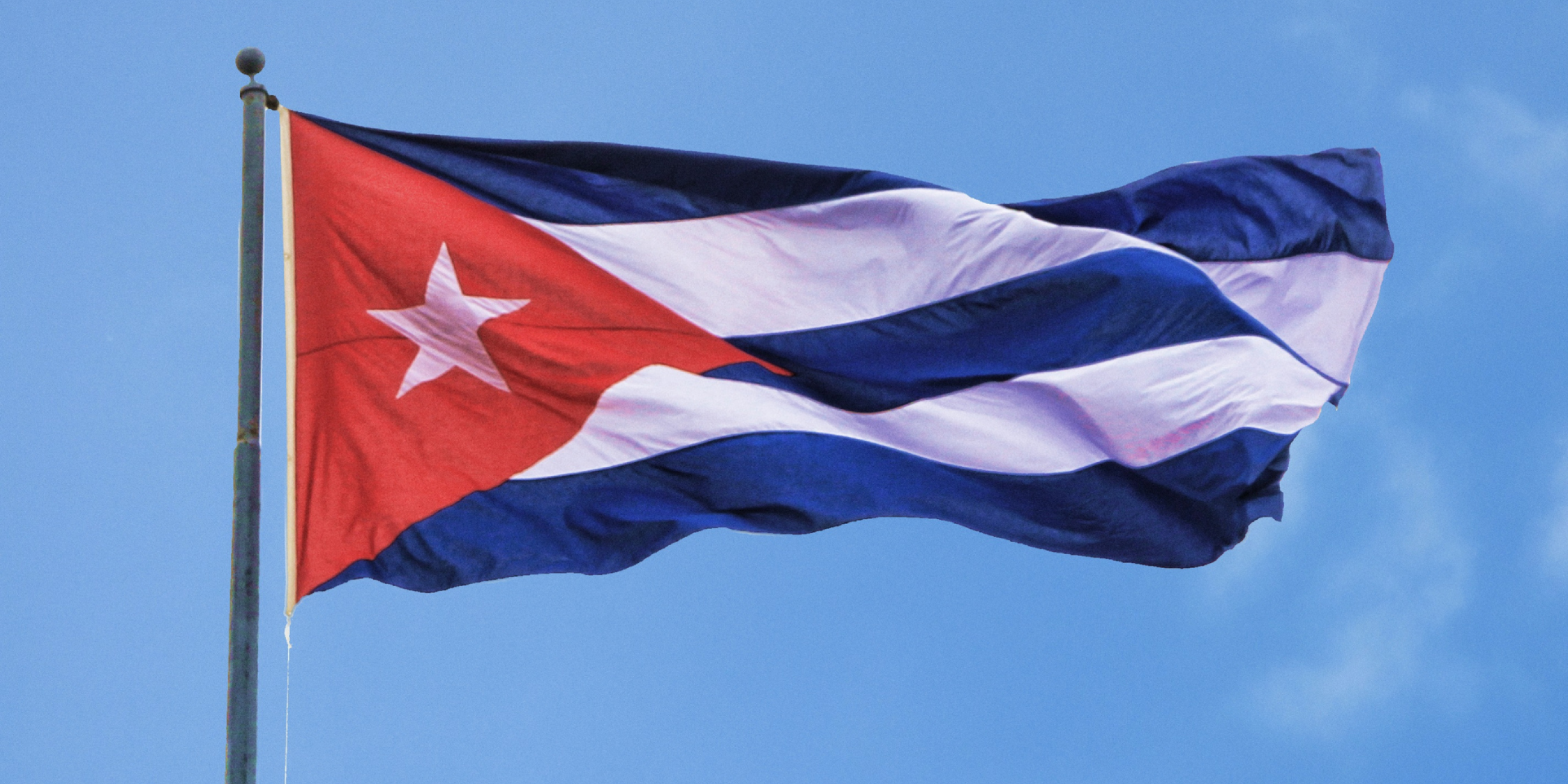
  • Nigerian Cuba Solidarity Group Condemns U.S. Raid in Venezuela That Killed 32 Cubans, Demands End to Sanctions and Release of Maduro

    The Nigeria Movement of Solidarity With Cuba (NMSC) has strongly condemned the United States’ military operation in Venezuela that reportedly led to the deaths of 32 Cuban nationals, describing the action as a violation of international law and an assault on national sovereignty.

    In a statement signed by labour activist Owei Lakemfa, the coalition said it stands in “deep condolence” with the Cuban people following the January 3 raid in Caracas, during which Venezuelan President Nicolás Maduro and his wife were captured. The Cuban government confirmed that those killed were members of its armed forces and intelligence services stationed in Venezuela.

    The Nigerian solidarity group accused Washington of engaging in “military aggression” and demanded the immediate release of President Maduro, respect for international law, and an end to what it called the United States’ pattern of “invasions of countries and territories.” Havana has since declared days of national mourning, praising the fallen for their “dignity and heroism” while denouncing the operation as state terrorism.

    Drawing on Cuba’s history of international solidarity, the NMSC cited the country’s role in anti-apartheid struggles in Africa, humanitarian missions across the globe, and its medical support during the COVID-19 pandemic as evidence of its commitment to global justice. The group also renewed calls for the lifting of long-standing U.S. sanctions on Cuba and demanded an end to punitive measures against Venezuela, warning that such policies inflict suffering on ordinary citizens.

    The incident has triggered widespread condemnation from labour organisations and political movements worldwide, with critics arguing that the raid represents a dangerous breach of sovereignty and the United Nations Charter.

    Nigerian Cuba Solidarity Group Condemns U.S. Raid in Venezuela That Killed 32 Cubans, Demands End to Sanctions and Release of Maduro The Nigeria Movement of Solidarity With Cuba (NMSC) has strongly condemned the United States’ military operation in Venezuela that reportedly led to the deaths of 32 Cuban nationals, describing the action as a violation of international law and an assault on national sovereignty. In a statement signed by labour activist Owei Lakemfa, the coalition said it stands in “deep condolence” with the Cuban people following the January 3 raid in Caracas, during which Venezuelan President Nicolás Maduro and his wife were captured. The Cuban government confirmed that those killed were members of its armed forces and intelligence services stationed in Venezuela. The Nigerian solidarity group accused Washington of engaging in “military aggression” and demanded the immediate release of President Maduro, respect for international law, and an end to what it called the United States’ pattern of “invasions of countries and territories.” Havana has since declared days of national mourning, praising the fallen for their “dignity and heroism” while denouncing the operation as state terrorism. Drawing on Cuba’s history of international solidarity, the NMSC cited the country’s role in anti-apartheid struggles in Africa, humanitarian missions across the globe, and its medical support during the COVID-19 pandemic as evidence of its commitment to global justice. The group also renewed calls for the lifting of long-standing U.S. sanctions on Cuba and demanded an end to punitive measures against Venezuela, warning that such policies inflict suffering on ordinary citizens. The incident has triggered widespread condemnation from labour organisations and political movements worldwide, with critics arguing that the raid represents a dangerous breach of sovereignty and the United Nations Charter.
    0 Commentaires ·0 Parts ·1KB Vue
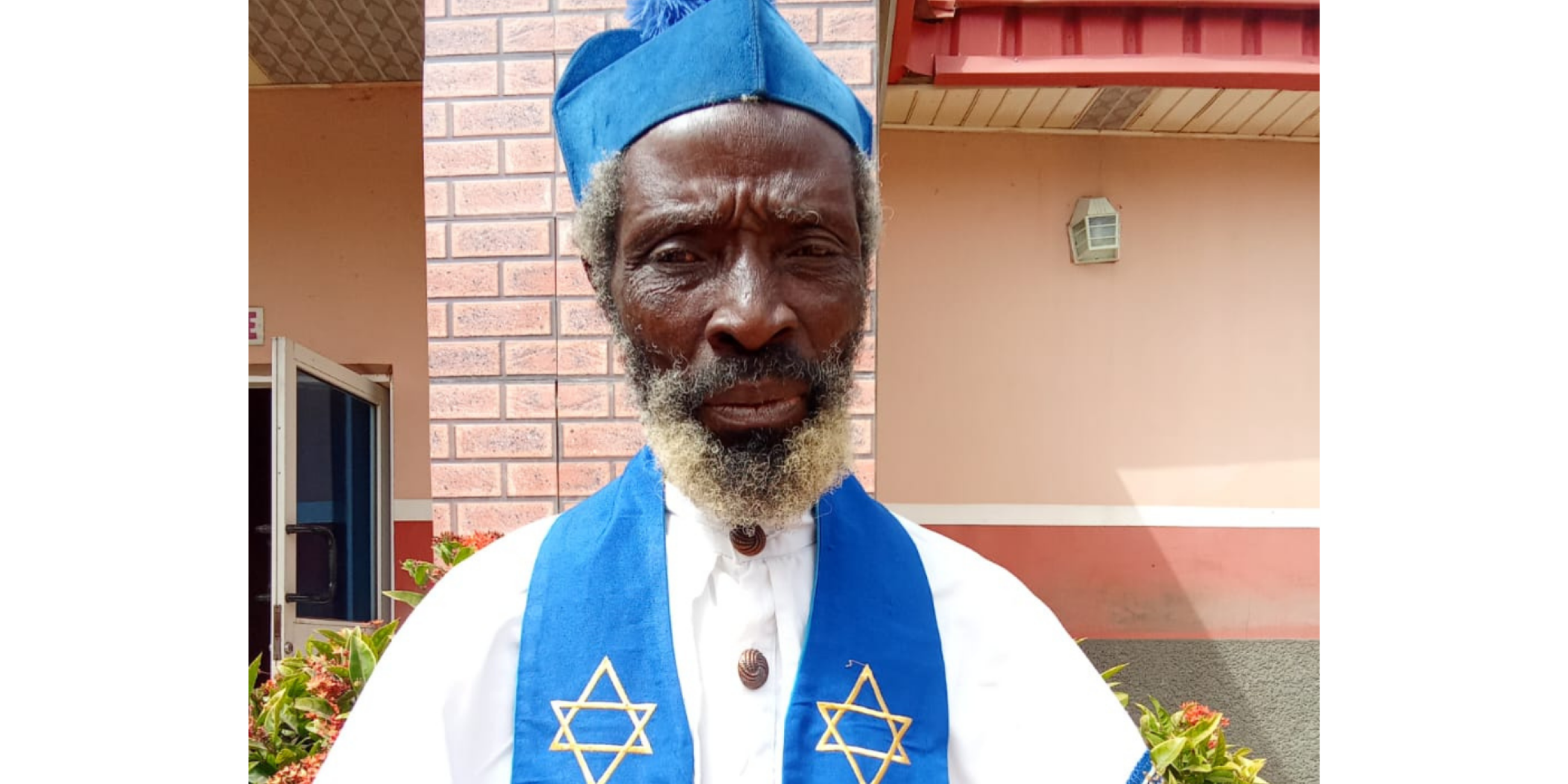
  • Is Nnamdi Kanu Being Illegally Detained? Nigerian Jewish Leader Visits IPOB Founder in Sokoto Prison, Rejects Terrorism Label and Demands His Immediate Release

    Is the continued detention of Mazi Nnamdi Kanu, leader of the Indigenous People of Biafra (IPOB), legally justified—or is it a violation of justice and human rights? This question has been reignited following a high-profile prison visit by Kohen Daniel Onuoha, a Nigerian Jewish cleric and spiritual leader of the Peace of Yahweh Synagogue and founder of Eastern Judaism, who met Kanu at the Sokoto Correctional Facility on January 10, 2026.

    Describing the visit as an act of spiritual and moral solidarity, Onuoha said he was accompanied by his wife and representatives of Jewish congregations in Nigeria’s former Eastern Region, whom he said “faithfully observe the Ten Commandments.” According to him, the visit symbolised years of prayers and sacrifices by his community for Kanu’s freedom.

    “For over five years, we have remained steadfast in daily sacrifices and prayers to Elohim without interruption,” Onuoha said, adding that the prison visit reaffirmed his commitment to justice and liberty.

    During the visit, the cleric directly challenged the legal foundation of Kanu’s continued incarceration, urging the international community, legal experts, and human rights organisations to examine what he described as questionable legal grounds for the case. He argued that Kanu’s prosecution was based on a repealed law, making the detention unlawful.

    Onuoha also rejected the designation of Kanu and IPOB as terrorists, insisting that neither the separatist leader nor the movement had committed violent acts. “Mazi Nnamdi Kanu is not a terrorist, and IPOB is not a terrorist organisation,” he declared, adding that Kanu’s ordeal stemmed from the peaceful exercise of self-determination and his public criticism of alleged abuses by political elites, foreign interests, and local power structures.

    He further contended that speech alone cannot justify criminal conviction, stressing that verbal expressions or broadcasts without evidence of violence should not result in imprisonment. Calling for Kanu’s “immediate and unconditional release,” the Jewish leader said such action was necessary to uphold justice and the rule of law.

    Beyond Kanu’s case, Onuoha appealed for broader international intervention, arguing that Biafrans continue to face marginalisation, oppression, and violence. He commended U.S. President Donald Trump for what he described as efforts to protect Christians in Nigeria and urged increased global pressure on Nigerian authorities over alleged human rights violations.

    In his closing remarks, Onuoha called on Kanu’s supporters, Biafrans, Jews, and human rights advocates to remain peaceful, resilient, and steadfast, expressing confidence that justice would ultimately prevail.

    The visit raises urgent questions: Is Nnamdi Kanu’s detention legally valid? Has the terrorism label been misapplied? And will international scrutiny finally force a reassessment of one of Nigeria’s most controversial political prosecutions?

    Is Nnamdi Kanu Being Illegally Detained? Nigerian Jewish Leader Visits IPOB Founder in Sokoto Prison, Rejects Terrorism Label and Demands His Immediate Release Is the continued detention of Mazi Nnamdi Kanu, leader of the Indigenous People of Biafra (IPOB), legally justified—or is it a violation of justice and human rights? This question has been reignited following a high-profile prison visit by Kohen Daniel Onuoha, a Nigerian Jewish cleric and spiritual leader of the Peace of Yahweh Synagogue and founder of Eastern Judaism, who met Kanu at the Sokoto Correctional Facility on January 10, 2026. Describing the visit as an act of spiritual and moral solidarity, Onuoha said he was accompanied by his wife and representatives of Jewish congregations in Nigeria’s former Eastern Region, whom he said “faithfully observe the Ten Commandments.” According to him, the visit symbolised years of prayers and sacrifices by his community for Kanu’s freedom. “For over five years, we have remained steadfast in daily sacrifices and prayers to Elohim without interruption,” Onuoha said, adding that the prison visit reaffirmed his commitment to justice and liberty. During the visit, the cleric directly challenged the legal foundation of Kanu’s continued incarceration, urging the international community, legal experts, and human rights organisations to examine what he described as questionable legal grounds for the case. He argued that Kanu’s prosecution was based on a repealed law, making the detention unlawful. Onuoha also rejected the designation of Kanu and IPOB as terrorists, insisting that neither the separatist leader nor the movement had committed violent acts. “Mazi Nnamdi Kanu is not a terrorist, and IPOB is not a terrorist organisation,” he declared, adding that Kanu’s ordeal stemmed from the peaceful exercise of self-determination and his public criticism of alleged abuses by political elites, foreign interests, and local power structures. He further contended that speech alone cannot justify criminal conviction, stressing that verbal expressions or broadcasts without evidence of violence should not result in imprisonment. Calling for Kanu’s “immediate and unconditional release,” the Jewish leader said such action was necessary to uphold justice and the rule of law. Beyond Kanu’s case, Onuoha appealed for broader international intervention, arguing that Biafrans continue to face marginalisation, oppression, and violence. He commended U.S. President Donald Trump for what he described as efforts to protect Christians in Nigeria and urged increased global pressure on Nigerian authorities over alleged human rights violations. In his closing remarks, Onuoha called on Kanu’s supporters, Biafrans, Jews, and human rights advocates to remain peaceful, resilient, and steadfast, expressing confidence that justice would ultimately prevail. The visit raises urgent questions: Is Nnamdi Kanu’s detention legally valid? Has the terrorism label been misapplied? And will international scrutiny finally force a reassessment of one of Nigeria’s most controversial political prosecutions?
    love
    1
    · 0 Commentaires ·0 Parts ·1KB Vue
  • Is Nigeria’s Health System Heading for Shutdown? JOHESU Orders Total Work Stoppage Over Tinubu Government’s ‘No Work, No Pay’ Policy

    Is Nigeria on the brink of another nationwide healthcare crisis? The Joint Health Sector Unions (JOHESU) has directed its members across federal health institutions to withdraw their services indefinitely, escalating its standoff with the Tinubu administration over a newly enforced “No Work, No Pay” directive from the Federal Ministry of Health.

    According to a statement issued by JOHESU leader Comrade Abubakar Sani Aminu, the policy was introduced without consultation or dialogue, a move the union describes as a direct violation of workers’ rights and collective bargaining principles. Why, the union asks, would the government impose such a far-reaching directive at a time when negotiations are still ongoing?

    JOHESU says hospital chief executives have been instructed to enforce the policy, which the union believes is a deliberate attempt to weaken organised labour and fracture solidarity among health workers. Aminu warned members that the directive represents “the final weapon” being deployed by the government to break the union’s resolve. Could this mark a turning point in labour relations within Nigeria’s health sector?

    In response, the union has ordered a total work stoppage, explicitly rejecting skeleton services, partial compliance, or compromise of any kind. “There should be no skeleton services, no attempt to help out, or compromise in any way,” the statement declared. JOHESU insists that only collective action can protect workers’ rights and prevent what it calls a dangerous precedent that could affect future industrial disputes.

    What does this mean for patients and public hospitals already struggling with limited resources? While the full impact on healthcare delivery remains uncertain, past JOHESU strikes have caused widespread disruptions across federal medical institutions, raising fears of another wave of service paralysis.

    The union has reaffirmed its commitment to what it describes as a fight for fair treatment, respect for dialogue, and protection of labour rights, urging members nationwide to remain united until its demands are addressed. As of the time of reporting, the Federal Ministry of Health has not issued an official response.

    Will the government reconsider its stance, or is Nigeria heading toward another prolonged healthcare shutdown? And in a sector where lives depend on continuity of care, who ultimately bears the cost of this policy standoff—workers, patients, or the state itself?

    Is Nigeria’s Health System Heading for Shutdown? JOHESU Orders Total Work Stoppage Over Tinubu Government’s ‘No Work, No Pay’ Policy Is Nigeria on the brink of another nationwide healthcare crisis? The Joint Health Sector Unions (JOHESU) has directed its members across federal health institutions to withdraw their services indefinitely, escalating its standoff with the Tinubu administration over a newly enforced “No Work, No Pay” directive from the Federal Ministry of Health. According to a statement issued by JOHESU leader Comrade Abubakar Sani Aminu, the policy was introduced without consultation or dialogue, a move the union describes as a direct violation of workers’ rights and collective bargaining principles. Why, the union asks, would the government impose such a far-reaching directive at a time when negotiations are still ongoing? JOHESU says hospital chief executives have been instructed to enforce the policy, which the union believes is a deliberate attempt to weaken organised labour and fracture solidarity among health workers. Aminu warned members that the directive represents “the final weapon” being deployed by the government to break the union’s resolve. Could this mark a turning point in labour relations within Nigeria’s health sector? In response, the union has ordered a total work stoppage, explicitly rejecting skeleton services, partial compliance, or compromise of any kind. “There should be no skeleton services, no attempt to help out, or compromise in any way,” the statement declared. JOHESU insists that only collective action can protect workers’ rights and prevent what it calls a dangerous precedent that could affect future industrial disputes. What does this mean for patients and public hospitals already struggling with limited resources? While the full impact on healthcare delivery remains uncertain, past JOHESU strikes have caused widespread disruptions across federal medical institutions, raising fears of another wave of service paralysis. The union has reaffirmed its commitment to what it describes as a fight for fair treatment, respect for dialogue, and protection of labour rights, urging members nationwide to remain united until its demands are addressed. As of the time of reporting, the Federal Ministry of Health has not issued an official response. Will the government reconsider its stance, or is Nigeria heading toward another prolonged healthcare shutdown? And in a sector where lives depend on continuity of care, who ultimately bears the cost of this policy standoff—workers, patients, or the state itself?
    0 Commentaires ·0 Parts ·862 Vue
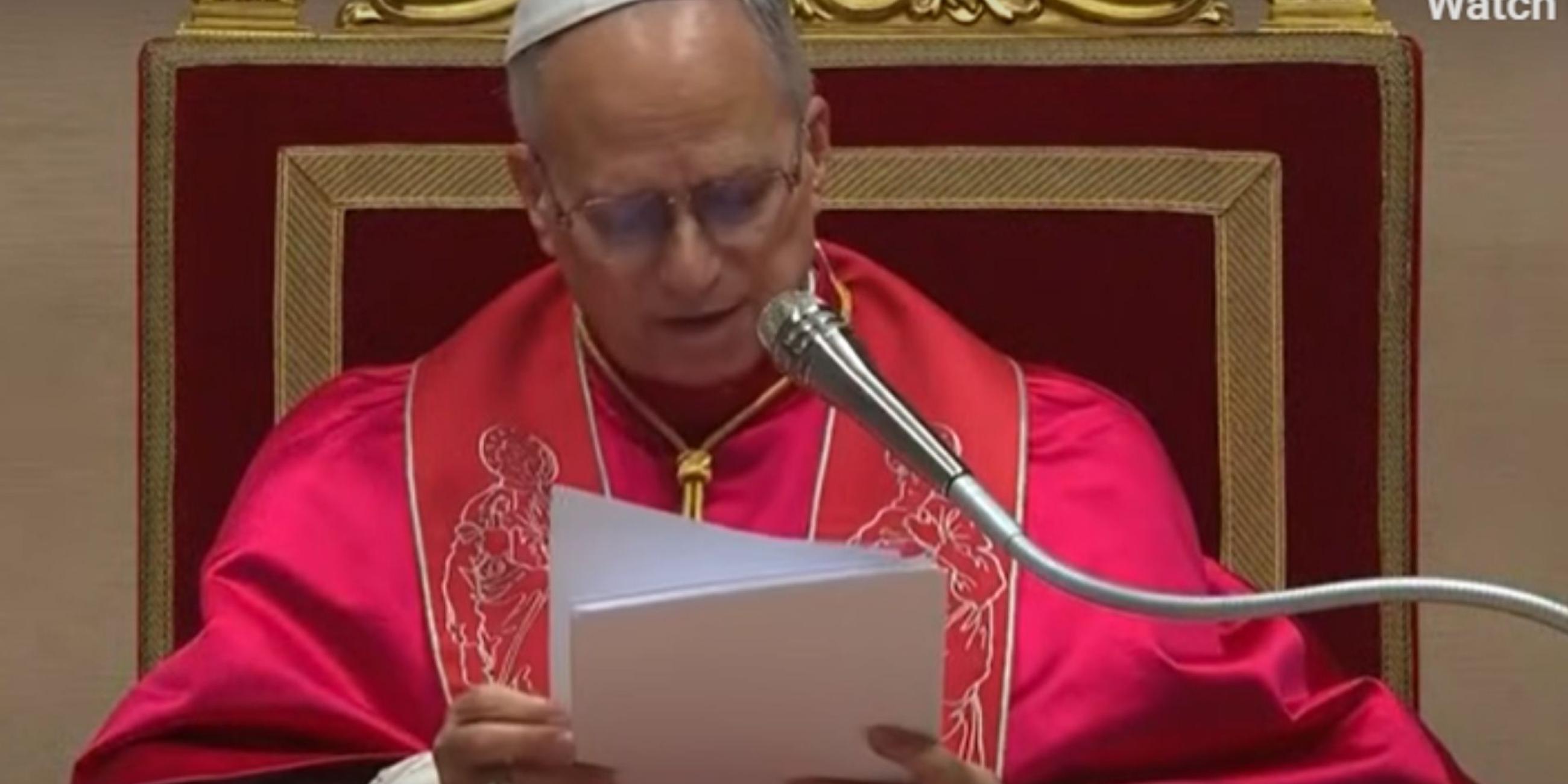
  • Is Abortion ‘Fake Compassion’? Why Pope Leo’s First Major Vatican Speech Condemning Abortion, Surrogacy and Euthanasia Is Reigniting a Global Moral Debate

    Is the world redefining compassion in a way that undermines human dignity? In his first major address at the Vatican, Pope Leo has taken a firm stance against abortion, surrogacy, and euthanasia, branding them as practices that distort the true meaning of compassion and threaten the sanctity of human life.

    Speaking on issues ranging from justice and prisoners’ rights to family life and the protection of vulnerable groups, the new pontiff described abortion as a direct rejection of life, stating that it “cuts short a growing life and refuses to welcome the gift of life.” He warned against what he called “deceptive forms of compassion” promoted by modern societies, arguing that true compassion must defend life rather than eliminate it.

    Pope Leo framed his message within a broader reflection on human dignity, emphasizing that human beings are created in the image and likeness of God and are called to love. According to him, this calling finds its clearest expression within the family—an institution he said is now under sustained pressure worldwide. He identified two major challenges facing families today: neglect by international systems and the rise of fragile, broken households afflicted by internal struggles, including domestic violence.

    Stressing the moral responsibility toward unborn children, the Pope said the union between a man and a woman carries an ethical obligation to protect life. He condemned growing international efforts to expand access to abortion across borders, expressing deep concern over projects that fund “cross-border mobility” for what he described as the “so-called right to safe abortion.” He called it “deplorable” that public resources are used to suppress life rather than support mothers and families, insisting that governments should prioritize protecting unborn children while providing concrete assistance to women facing difficult pregnancies.

    Beyond abortion, Pope Leo also denounced surrogacy, describing it as a practice that strips both women and children of dignity by turning pregnancy into a negotiable service. He argued that such arrangements reduce children to commodities and exploit women’s bodies, distorting the natural and relational foundation of the family.

    The pontiff further criticized euthanasia, again labeling it a misleading form of compassion, and urged states to invest in palliative care and authentic solidarity instead of policies that hasten death. In the same address, he spoke out on prisoners’ rights, political detainees, migrants, and the abolition of the death penalty, which he described as a punishment that “destroys all hope of forgiveness and renewal.”

    The speech marks the clearest articulation yet of Pope Leo’s moral priorities and signals what many observers see as a continuation—and possible intensification—of the Vatican’s opposition to abortion, surrogacy, and euthanasia. As governments, activists, and faith communities worldwide remain sharply divided on reproductive rights and end-of-life policies, the Pope’s remarks have reignited a global conversation: Is modern society redefining compassion in ways that contradict the protection of life, or is the Vatican standing against changing realities of human rights and personal choice?


    Is Abortion ‘Fake Compassion’? Why Pope Leo’s First Major Vatican Speech Condemning Abortion, Surrogacy and Euthanasia Is Reigniting a Global Moral Debate Is the world redefining compassion in a way that undermines human dignity? In his first major address at the Vatican, Pope Leo has taken a firm stance against abortion, surrogacy, and euthanasia, branding them as practices that distort the true meaning of compassion and threaten the sanctity of human life. Speaking on issues ranging from justice and prisoners’ rights to family life and the protection of vulnerable groups, the new pontiff described abortion as a direct rejection of life, stating that it “cuts short a growing life and refuses to welcome the gift of life.” He warned against what he called “deceptive forms of compassion” promoted by modern societies, arguing that true compassion must defend life rather than eliminate it. Pope Leo framed his message within a broader reflection on human dignity, emphasizing that human beings are created in the image and likeness of God and are called to love. According to him, this calling finds its clearest expression within the family—an institution he said is now under sustained pressure worldwide. He identified two major challenges facing families today: neglect by international systems and the rise of fragile, broken households afflicted by internal struggles, including domestic violence. Stressing the moral responsibility toward unborn children, the Pope said the union between a man and a woman carries an ethical obligation to protect life. He condemned growing international efforts to expand access to abortion across borders, expressing deep concern over projects that fund “cross-border mobility” for what he described as the “so-called right to safe abortion.” He called it “deplorable” that public resources are used to suppress life rather than support mothers and families, insisting that governments should prioritize protecting unborn children while providing concrete assistance to women facing difficult pregnancies. Beyond abortion, Pope Leo also denounced surrogacy, describing it as a practice that strips both women and children of dignity by turning pregnancy into a negotiable service. He argued that such arrangements reduce children to commodities and exploit women’s bodies, distorting the natural and relational foundation of the family. The pontiff further criticized euthanasia, again labeling it a misleading form of compassion, and urged states to invest in palliative care and authentic solidarity instead of policies that hasten death. In the same address, he spoke out on prisoners’ rights, political detainees, migrants, and the abolition of the death penalty, which he described as a punishment that “destroys all hope of forgiveness and renewal.” The speech marks the clearest articulation yet of Pope Leo’s moral priorities and signals what many observers see as a continuation—and possible intensification—of the Vatican’s opposition to abortion, surrogacy, and euthanasia. As governments, activists, and faith communities worldwide remain sharply divided on reproductive rights and end-of-life policies, the Pope’s remarks have reignited a global conversation: Is modern society redefining compassion in ways that contradict the protection of life, or is the Vatican standing against changing realities of human rights and personal choice?
    0 Commentaires ·0 Parts ·944 Vue
  • Is the ‘Christian Genocide’ in Nigeria a Political Narrative? Why Trump Admits Muslims Are Also Killed as Sowore Accuses the U.S. of Using Religion to Justify Power, Oil, and Military Influence

    Is the narrative of a “Christian genocide” in Nigeria an honest reflection of the country’s security crisis—or a political tool shaped by foreign interests? United States President Donald Trump has made a partial shift in his long-standing rhetoric on religious violence in Nigeria, acknowledging that Muslims are also being killed, even while maintaining that Christians remain the primary victims.

    Trump made the remarks during an interview with The New York Times following questions about Washington’s Christmas Day military strike in northwest Nigeria. The U.S. military said the operation, carried out at the request of the Nigerian government, targeted Islamic State West Africa Province (ISWAP), a Boko Haram splinter group responsible for years of deadly attacks across northern Nigeria.

    When asked about earlier comments from his own Africa adviser—who had stated that extremist groups in Nigeria kill more Muslims than Christians—Trump responded: “I think that Muslims are being killed also in Nigeria. But it’s mostly Christians.” The statement marked a rare acknowledgment that Nigeria’s victims of terrorism cut across religious lines, even as Trump continued to frame the conflict primarily through a Christian persecution lens.

    The comments immediately drew a sharp response from Omoyele Sowore, former Nigerian presidential candidate and prominent human rights activist. In a series of posts on X (formerly Twitter), Sowore dismissed the “Christian genocide” narrative as a calculated political construct, arguing that it is designed to stir emotion, mobilize conservative audiences abroad, and provide moral cover for foreign military, economic, and geopolitical agendas.

    Sowore accused Trump of using religion as a rhetorical device while pursuing what he described as imperial interests tied to oil, rare earth minerals, and strategic dominance. “The narrative used to justify it is secondary,” Sowore wrote, adding that such framing only needs to “match the gullibility of the intended audience.” According to him, claims of systematic religious genocide in Nigeria are not grounded in objective reality but are deliberately shaped to occupy a powerful emotional space in Western political discourse.

    He further challenged Trump’s moral authority to speak on Christian values, asserting that the former U.S. president does not embody the compassion, humility, or solidarity central to the faith he frequently invokes. Sowore argued that Trump’s selective concern for religious identity masks a broader indifference to human suffering—both abroad and at home—unless it aligns with his political interests.

    The controversy highlights a deeper question: Is Nigeria’s complex security crisis being oversimplified into a religious conflict for international consumption? While jihadist groups like ISWAP and Boko Haram have undeniably targeted Christian communities, they have also killed thousands of Muslims, including traditional leaders, clerics, villagers, and security personnel. Analysts have long warned that framing the violence as exclusively anti-Christian risks distorting reality, inflaming sectarian tensions, and obscuring the political, economic, and territorial dimensions of the conflict.

    Trump’s admission that Muslims are also victims, even if partial, challenges his earlier absolutist framing. Yet his insistence that Christians remain the main targets continues to fuel debate about whether U.S. policy toward Nigeria is being shaped by faith-based narratives rather than nuanced security analysis.

    As Nigeria battles insurgency, banditry, and transnational terrorism, the exchange between Trump and Sowore underscores how global power politics, religious identity, and media narratives intersect in shaping international responses to African conflicts. The key question remains: is the world seeing Nigeria’s crisis as it truly is—or as it is most politically useful to portray?


    Is the ‘Christian Genocide’ in Nigeria a Political Narrative? Why Trump Admits Muslims Are Also Killed as Sowore Accuses the U.S. of Using Religion to Justify Power, Oil, and Military Influence Is the narrative of a “Christian genocide” in Nigeria an honest reflection of the country’s security crisis—or a political tool shaped by foreign interests? United States President Donald Trump has made a partial shift in his long-standing rhetoric on religious violence in Nigeria, acknowledging that Muslims are also being killed, even while maintaining that Christians remain the primary victims. Trump made the remarks during an interview with The New York Times following questions about Washington’s Christmas Day military strike in northwest Nigeria. The U.S. military said the operation, carried out at the request of the Nigerian government, targeted Islamic State West Africa Province (ISWAP), a Boko Haram splinter group responsible for years of deadly attacks across northern Nigeria. When asked about earlier comments from his own Africa adviser—who had stated that extremist groups in Nigeria kill more Muslims than Christians—Trump responded: “I think that Muslims are being killed also in Nigeria. But it’s mostly Christians.” The statement marked a rare acknowledgment that Nigeria’s victims of terrorism cut across religious lines, even as Trump continued to frame the conflict primarily through a Christian persecution lens. The comments immediately drew a sharp response from Omoyele Sowore, former Nigerian presidential candidate and prominent human rights activist. In a series of posts on X (formerly Twitter), Sowore dismissed the “Christian genocide” narrative as a calculated political construct, arguing that it is designed to stir emotion, mobilize conservative audiences abroad, and provide moral cover for foreign military, economic, and geopolitical agendas. Sowore accused Trump of using religion as a rhetorical device while pursuing what he described as imperial interests tied to oil, rare earth minerals, and strategic dominance. “The narrative used to justify it is secondary,” Sowore wrote, adding that such framing only needs to “match the gullibility of the intended audience.” According to him, claims of systematic religious genocide in Nigeria are not grounded in objective reality but are deliberately shaped to occupy a powerful emotional space in Western political discourse. He further challenged Trump’s moral authority to speak on Christian values, asserting that the former U.S. president does not embody the compassion, humility, or solidarity central to the faith he frequently invokes. Sowore argued that Trump’s selective concern for religious identity masks a broader indifference to human suffering—both abroad and at home—unless it aligns with his political interests. The controversy highlights a deeper question: Is Nigeria’s complex security crisis being oversimplified into a religious conflict for international consumption? While jihadist groups like ISWAP and Boko Haram have undeniably targeted Christian communities, they have also killed thousands of Muslims, including traditional leaders, clerics, villagers, and security personnel. Analysts have long warned that framing the violence as exclusively anti-Christian risks distorting reality, inflaming sectarian tensions, and obscuring the political, economic, and territorial dimensions of the conflict. Trump’s admission that Muslims are also victims, even if partial, challenges his earlier absolutist framing. Yet his insistence that Christians remain the main targets continues to fuel debate about whether U.S. policy toward Nigeria is being shaped by faith-based narratives rather than nuanced security analysis. As Nigeria battles insurgency, banditry, and transnational terrorism, the exchange between Trump and Sowore underscores how global power politics, religious identity, and media narratives intersect in shaping international responses to African conflicts. The key question remains: is the world seeing Nigeria’s crisis as it truly is—or as it is most politically useful to portray?
    0 Commentaires ·0 Parts ·2KB Vue
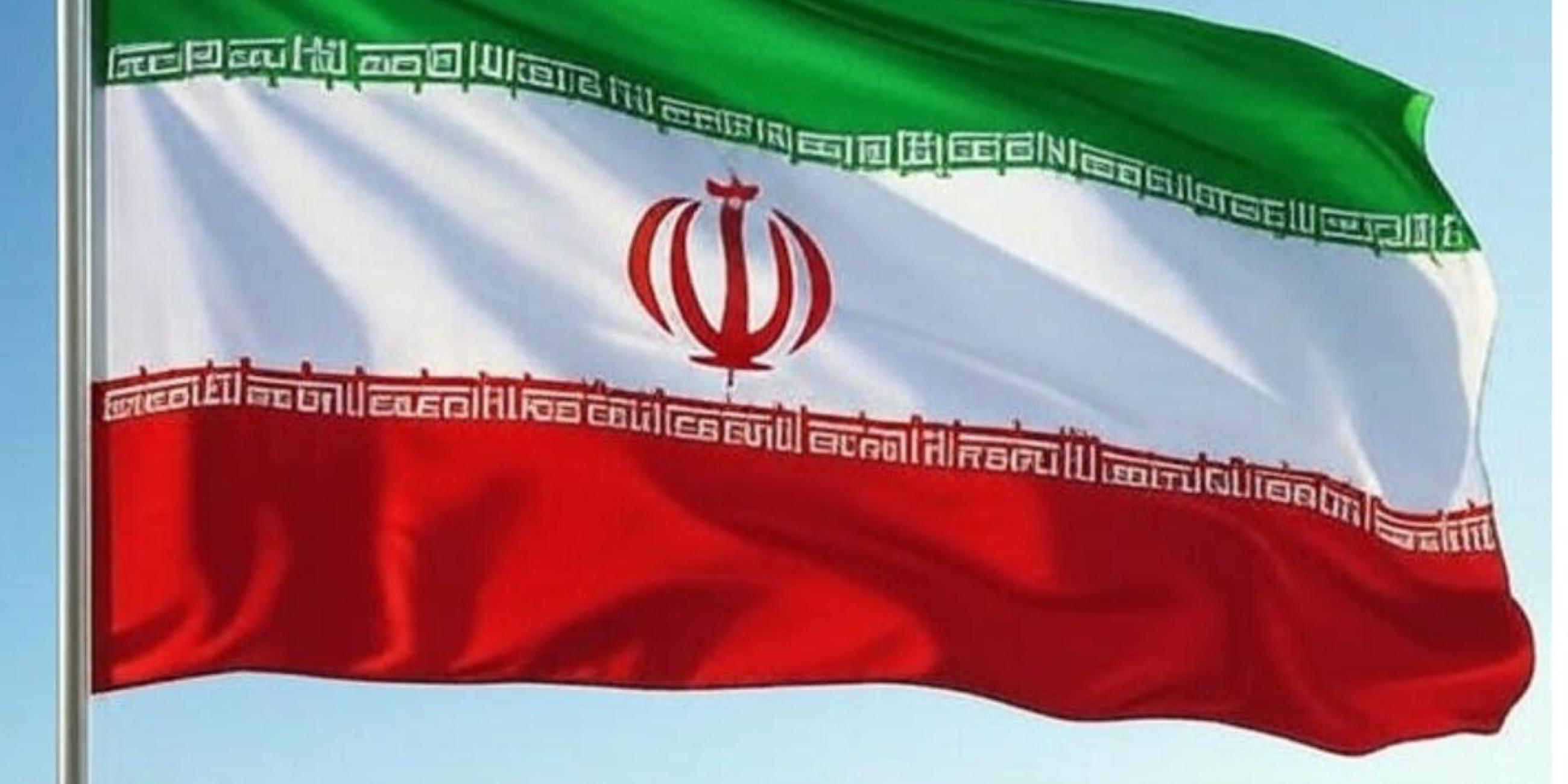
  • Is Iran Facing a New Uprising? How Nationwide Protests, Internet Blackouts and Reza Pahlavi’s Call Are Challenging Khamenei’s Rule

    Iran was gripped by renewed nationwide protests on Thursday night as demonstrators poured into the streets of Tehran and other cities following a call for mass action by exiled crown prince Reza Pahlavi. Witnesses reported chanting from rooftops and in neighbourhoods, while authorities quickly moved to cut internet access and telephone lines, a tactic historically used ahead of harsh crackdowns.

    The demonstrations marked a significant escalation in unrest driven largely by economic hardship, currency collapse, and public anger at Iran’s political system. They also represented the first major test of whether Pahlavi—whose father was overthrown in the 1979 Islamic Revolution—could mobilise meaningful opposition inside the country. Protests had already erupted the previous day in cities and rural towns, with markets and bazaars closing in solidarity.

    According to the U.S.-based Human Rights Activists News Agency, at least 41 people have been killed and more than 2,270 detained since the protests began. Monitoring groups such as Cloudflare and NetBlocks reported widespread digital shutdowns, attributing them to government interference. Calls to Iran from abroad reportedly failed, a sign often preceding intensified security operations.

    Despite the scale of the unrest, the movement has remained largely leaderless, prompting debate over whether it can sustain momentum or force political change. Analysts note that previous protest waves faltered due to the absence of a unified leadership structure, as Iran’s security apparatus has historically arrested, exiled, or silenced potential opposition figures.

    At the appointed protest hour, chants echoed across Tehran: “Death to the dictator!” “Death to the Islamic Republic!” and slogans calling for the return of the monarchy. In a statement, Pahlavi urged Iranians to continue demonstrating, declaring that “the eyes of the world are upon you,” and warning authorities that repression would not go unnoticed internationally.

    Iranian officials have not publicly acknowledged the full scope of the unrest, though state-linked media confirmed casualties among security forces. Reports from the judiciary and semi-official outlets said police officers and Revolutionary Guard members were killed in separate attacks in provinces including Kermanshah, Chaharmahal and Bakhtiari, and Khorasan Razavi. Hard-line media also circulated warnings that security agencies could use drones to identify protesters.

    The unrest comes amid deepening economic strain. Following tighter sanctions and the aftermath of a brief war, Iran’s currency collapsed in December to about 1.4 million rials to the U.S. dollar, triggering renewed demonstrations and calls for an end to clerical rule. U.S. President Donald Trump warned that Washington would respond if peaceful protesters were violently repressed, a statement Iran’s Foreign Ministry dismissed as “hypocritical interference.”

    Meanwhile, Nobel Peace Prize laureate Narges Mohammadi remains imprisoned, with her family saying the protests echo earlier uprisings in 2009 and 2019, each demanding an end to what they describe as a “dictatorial religious regime.”

    As unrest spreads and communication blackouts deepen, pressing questions remain: Can these protests break the cycle of repression? Will Reza Pahlavi emerge as a unifying figure or remain symbolic? And is Iran approaching a turning point—or another crackdown? With anger rising and the government tightening control, the unfolding crisis is shaping up as one of the most serious challenges to Iran’s leadership in years.


    Is Iran Facing a New Uprising? How Nationwide Protests, Internet Blackouts and Reza Pahlavi’s Call Are Challenging Khamenei’s Rule Iran was gripped by renewed nationwide protests on Thursday night as demonstrators poured into the streets of Tehran and other cities following a call for mass action by exiled crown prince Reza Pahlavi. Witnesses reported chanting from rooftops and in neighbourhoods, while authorities quickly moved to cut internet access and telephone lines, a tactic historically used ahead of harsh crackdowns. The demonstrations marked a significant escalation in unrest driven largely by economic hardship, currency collapse, and public anger at Iran’s political system. They also represented the first major test of whether Pahlavi—whose father was overthrown in the 1979 Islamic Revolution—could mobilise meaningful opposition inside the country. Protests had already erupted the previous day in cities and rural towns, with markets and bazaars closing in solidarity. According to the U.S.-based Human Rights Activists News Agency, at least 41 people have been killed and more than 2,270 detained since the protests began. Monitoring groups such as Cloudflare and NetBlocks reported widespread digital shutdowns, attributing them to government interference. Calls to Iran from abroad reportedly failed, a sign often preceding intensified security operations. Despite the scale of the unrest, the movement has remained largely leaderless, prompting debate over whether it can sustain momentum or force political change. Analysts note that previous protest waves faltered due to the absence of a unified leadership structure, as Iran’s security apparatus has historically arrested, exiled, or silenced potential opposition figures. At the appointed protest hour, chants echoed across Tehran: “Death to the dictator!” “Death to the Islamic Republic!” and slogans calling for the return of the monarchy. In a statement, Pahlavi urged Iranians to continue demonstrating, declaring that “the eyes of the world are upon you,” and warning authorities that repression would not go unnoticed internationally. Iranian officials have not publicly acknowledged the full scope of the unrest, though state-linked media confirmed casualties among security forces. Reports from the judiciary and semi-official outlets said police officers and Revolutionary Guard members were killed in separate attacks in provinces including Kermanshah, Chaharmahal and Bakhtiari, and Khorasan Razavi. Hard-line media also circulated warnings that security agencies could use drones to identify protesters. The unrest comes amid deepening economic strain. Following tighter sanctions and the aftermath of a brief war, Iran’s currency collapsed in December to about 1.4 million rials to the U.S. dollar, triggering renewed demonstrations and calls for an end to clerical rule. U.S. President Donald Trump warned that Washington would respond if peaceful protesters were violently repressed, a statement Iran’s Foreign Ministry dismissed as “hypocritical interference.” Meanwhile, Nobel Peace Prize laureate Narges Mohammadi remains imprisoned, with her family saying the protests echo earlier uprisings in 2009 and 2019, each demanding an end to what they describe as a “dictatorial religious regime.” As unrest spreads and communication blackouts deepen, pressing questions remain: Can these protests break the cycle of repression? Will Reza Pahlavi emerge as a unifying figure or remain symbolic? And is Iran approaching a turning point—or another crackdown? With anger rising and the government tightening control, the unfolding crisis is shaping up as one of the most serious challenges to Iran’s leadership in years.
    0 Commentaires ·0 Parts ·925 Vue
  • Nigeria-Based Venezuela Solidarity Group Condemns US Threats, Demands Release of President Maduro and Wife

    The Venezuela Solidarity Campaign in Nigeria (VSCN) has voiced strong opposition to alleged U.S. military and economic aggression against Venezuela, calling for the immediate release of President Nicolás Maduro and his wife, Cilia Flores, whom the group claims were “illegally abducted” by the Trump administration—a claim yet unverified.

    The coalition condemned attempts to justify foreign intervention in Venezuela under the guise of fighting drugs and arms smuggling, alleging that Venezuela’s oil and resources are the real targets. They also warned against similar threats to Greenland, Iran, and Nigeria, framing such actions as violations of international law and national sovereignty.

    The VSCN urged Nigerians committed to global peace and justice to join solidarity marches, strengthen national unity, and protect against potential imperialist interference in Nigeria. The statement emphasized dialogue, diplomacy, and respect for international law as the proper means of resolving disputes.
    Nigeria-Based Venezuela Solidarity Group Condemns US Threats, Demands Release of President Maduro and Wife The Venezuela Solidarity Campaign in Nigeria (VSCN) has voiced strong opposition to alleged U.S. military and economic aggression against Venezuela, calling for the immediate release of President Nicolás Maduro and his wife, Cilia Flores, whom the group claims were “illegally abducted” by the Trump administration—a claim yet unverified. The coalition condemned attempts to justify foreign intervention in Venezuela under the guise of fighting drugs and arms smuggling, alleging that Venezuela’s oil and resources are the real targets. They also warned against similar threats to Greenland, Iran, and Nigeria, framing such actions as violations of international law and national sovereignty. The VSCN urged Nigerians committed to global peace and justice to join solidarity marches, strengthen national unity, and protect against potential imperialist interference in Nigeria. The statement emphasized dialogue, diplomacy, and respect for international law as the proper means of resolving disputes.
    like
    1
    · 0 Commentaires ·0 Parts ·475 Vue
  • TUC Urges Nigerian Government to Review Workers’ Salaries and Allowances Amid Rising Inflation and Cost of Living in 2026

    The Trade Union Congress of Nigeria (TUC) has called on all levels of government to urgently review and increase workers’ salaries and allowances in response to the rising cost of living and persistent inflation affecting Nigerian workers.

    In a statement issued on Monday by President Festus Osifo and General Secretary Nuhu Toro, the TUC expressed concern that workers’ purchasing power has been significantly eroded, emphasizing that the review of allowances should serve as an immediate relief measure ahead of the implementation of the new National Minimum Wage in 2027.

    The union warned that workers should not bear the brunt of economic reforms without safeguards and urged them to remain united and vigilant in defending their rights and welfare. The TUC reaffirmed its commitment to building a strong, solidarity-based labour movement capable of advocating for workers and protecting their interests across Nigeria.
    TUC Urges Nigerian Government to Review Workers’ Salaries and Allowances Amid Rising Inflation and Cost of Living in 2026 The Trade Union Congress of Nigeria (TUC) has called on all levels of government to urgently review and increase workers’ salaries and allowances in response to the rising cost of living and persistent inflation affecting Nigerian workers. In a statement issued on Monday by President Festus Osifo and General Secretary Nuhu Toro, the TUC expressed concern that workers’ purchasing power has been significantly eroded, emphasizing that the review of allowances should serve as an immediate relief measure ahead of the implementation of the new National Minimum Wage in 2027. The union warned that workers should not bear the brunt of economic reforms without safeguards and urged them to remain united and vigilant in defending their rights and welfare. The TUC reaffirmed its commitment to building a strong, solidarity-based labour movement capable of advocating for workers and protecting their interests across Nigeria.
    0 Commentaires ·0 Parts ·556 Vue
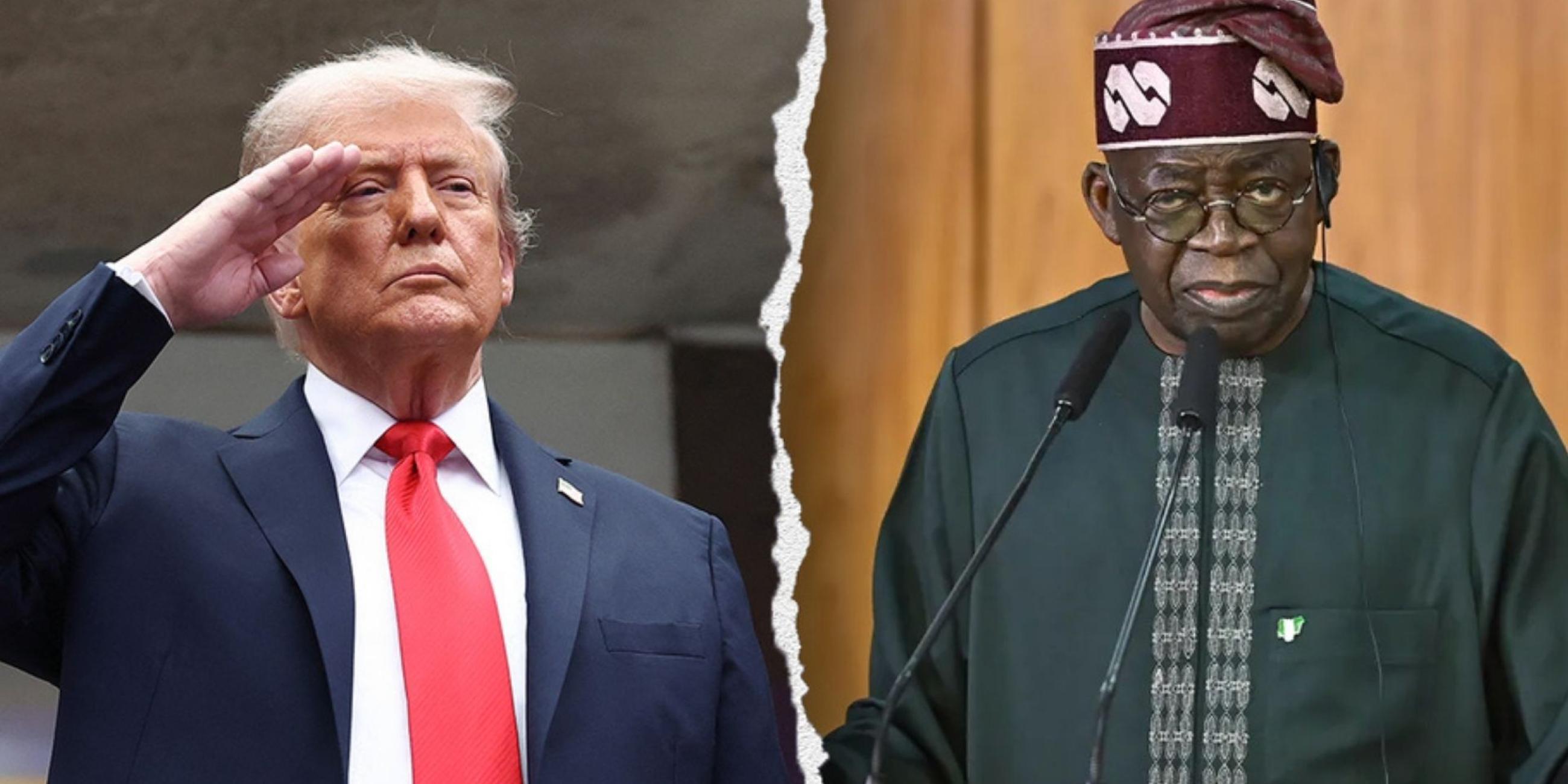
  • Nigerian Activist Agena Robert Warns ‘If U.S. Can Invade Venezuela, They Can Invade Nigeria,’ Criticizes Trump as Dictator

    Nigerian human rights activist Agena A. Robert has condemned the United States over its actions against Venezuela, labeling Washington’s foreign policy as hypocritical, imperialistic, and a threat to global sovereignty.

    In a statement titled “The Hypocrisy of Empire: Why the U.S. Assault on Venezuela Is a Threat to Us All,” Robert argued that U.S. claims of promoting democracy are a pretext for controlling Venezuela’s resources. He accused U.S. President Donald Trump of acting like a dictator and criticized double standards in international relations, including tolerance for elites and selective criminalization.

    Robert warned that developing nations, including Nigeria, are at risk of foreign intervention disguised as benevolence, citing U.S., Israeli, Chinese, Russian, and European influence under various pretexts. He called for countries in the Global South to resist domination and uphold sovereignty, stressing that Venezuela’s experience should serve as a wake-up call.

    The activist emphasized solidarity with Venezuela and the importance of defending self-determination against neocolonial exploitation.
    Nigerian Activist Agena Robert Warns ‘If U.S. Can Invade Venezuela, They Can Invade Nigeria,’ Criticizes Trump as Dictator Nigerian human rights activist Agena A. Robert has condemned the United States over its actions against Venezuela, labeling Washington’s foreign policy as hypocritical, imperialistic, and a threat to global sovereignty. In a statement titled “The Hypocrisy of Empire: Why the U.S. Assault on Venezuela Is a Threat to Us All,” Robert argued that U.S. claims of promoting democracy are a pretext for controlling Venezuela’s resources. He accused U.S. President Donald Trump of acting like a dictator and criticized double standards in international relations, including tolerance for elites and selective criminalization. Robert warned that developing nations, including Nigeria, are at risk of foreign intervention disguised as benevolence, citing U.S., Israeli, Chinese, Russian, and European influence under various pretexts. He called for countries in the Global South to resist domination and uphold sovereignty, stressing that Venezuela’s experience should serve as a wake-up call. The activist emphasized solidarity with Venezuela and the importance of defending self-determination against neocolonial exploitation.
    0 Commentaires ·0 Parts ·557 Vue
  • African Union Condemns US Airstrikes On Venezuela, Slams ‘Abduction’ Of President Nicolás Maduro, Warns Against Violation Of International Law And National Sovereignty

    The African Union (AU) has strongly condemned the United States’ military strikes on Venezuela and the reported capture of President Nicolás Maduro by US forces, describing the developments as deeply troubling and a serious threat to international law and national sovereignty.

    In an official communiqué issued on January 3, 2026, the AU said it was following the situation in Venezuela with grave concern amid reports of attacks on state institutions and what it termed the “abduction” of the Venezuelan president. The continental body warned that such actions undermine the principles of sovereignty, territorial integrity, and self-determination of nations as enshrined in the United Nations Charter.

    The AU reaffirmed its unwavering commitment to international law and stressed that Venezuela’s complex internal challenges can only be resolved through inclusive political dialogue among Venezuelans themselves, rather than through external military intervention. It emphasised the need for peaceful settlement of disputes, respect for constitutional order, and adherence to established institutional frameworks.

    Expressing solidarity with the Venezuelan people, the African Union called on all parties involved to exercise restraint, responsibility, and respect for international law to prevent further escalation. The AU warned that continued military actions could destabilise the region and threaten global peace, urging cooperation, good neighbourliness, and peaceful coexistence as the only sustainable path forward.
    African Union Condemns US Airstrikes On Venezuela, Slams ‘Abduction’ Of President Nicolás Maduro, Warns Against Violation Of International Law And National Sovereignty The African Union (AU) has strongly condemned the United States’ military strikes on Venezuela and the reported capture of President Nicolás Maduro by US forces, describing the developments as deeply troubling and a serious threat to international law and national sovereignty. In an official communiqué issued on January 3, 2026, the AU said it was following the situation in Venezuela with grave concern amid reports of attacks on state institutions and what it termed the “abduction” of the Venezuelan president. The continental body warned that such actions undermine the principles of sovereignty, territorial integrity, and self-determination of nations as enshrined in the United Nations Charter. The AU reaffirmed its unwavering commitment to international law and stressed that Venezuela’s complex internal challenges can only be resolved through inclusive political dialogue among Venezuelans themselves, rather than through external military intervention. It emphasised the need for peaceful settlement of disputes, respect for constitutional order, and adherence to established institutional frameworks. Expressing solidarity with the Venezuelan people, the African Union called on all parties involved to exercise restraint, responsibility, and respect for international law to prevent further escalation. The AU warned that continued military actions could destabilise the region and threaten global peace, urging cooperation, good neighbourliness, and peaceful coexistence as the only sustainable path forward.
    love
    1
    · 0 Commentaires ·0 Parts ·363 Vue
  • Nigeria-Based Venezuela Solidarity Group Condemns US Military Strikes, Demands Disclosure of President Nicolás Maduro’s Whereabouts

    The Venezuela Solidarity Campaign in Nigeria (VSCN) has strongly condemned recent U.S. military strikes against Venezuela, describing them as acts of imperialist aggression and violations of international law. In a statement issued on January 3, 2026, the group expressed deep concern over the safety and whereabouts of Venezuelan President Nicolás Maduro following the reported attacks.

    VSCN rejected claims that the strikes were aimed at promoting democracy or human rights, arguing instead that they were driven by economic and strategic interests, particularly control over resources. Drawing parallels with past U.S. interventions in countries such as Iraq, Libya, and Afghanistan, the group warned that such actions often result in instability and civilian suffering.

    The campaign demanded an immediate halt to U.S. military actions, full transparency on President Maduro’s condition and location, the lifting of sanctions on Venezuela, and accountability for alleged breaches of international law. It also called on the Nigerian government, the African Union, and progressive governments worldwide to speak out against the strikes and urged global solidarity movements to stand with Venezuela’s right to sovereignty and self-determination.
    Nigeria-Based Venezuela Solidarity Group Condemns US Military Strikes, Demands Disclosure of President Nicolás Maduro’s Whereabouts The Venezuela Solidarity Campaign in Nigeria (VSCN) has strongly condemned recent U.S. military strikes against Venezuela, describing them as acts of imperialist aggression and violations of international law. In a statement issued on January 3, 2026, the group expressed deep concern over the safety and whereabouts of Venezuelan President Nicolás Maduro following the reported attacks. VSCN rejected claims that the strikes were aimed at promoting democracy or human rights, arguing instead that they were driven by economic and strategic interests, particularly control over resources. Drawing parallels with past U.S. interventions in countries such as Iraq, Libya, and Afghanistan, the group warned that such actions often result in instability and civilian suffering. The campaign demanded an immediate halt to U.S. military actions, full transparency on President Maduro’s condition and location, the lifting of sanctions on Venezuela, and accountability for alleged breaches of international law. It also called on the Nigerian government, the African Union, and progressive governments worldwide to speak out against the strikes and urged global solidarity movements to stand with Venezuela’s right to sovereignty and self-determination.
    0 Commentaires ·0 Parts ·562 Vue
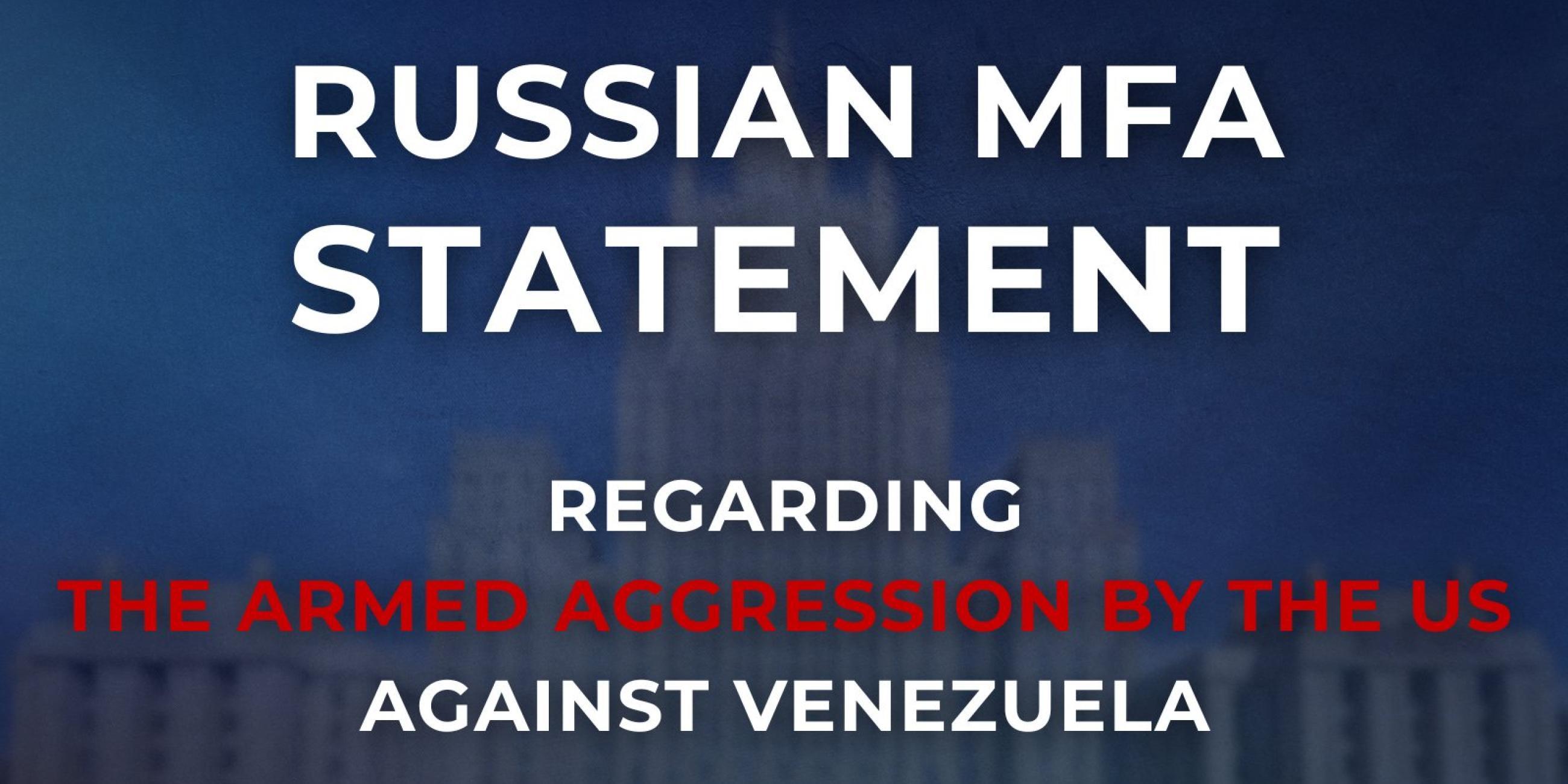
  • Russia Condemns US Military Strike on Venezuela, Calls for UN Security Council Meeting

    The Russian Federation has strongly condemned the United States’ military action against Venezuela, calling it unjustified and warning against further escalation. Russia’s Ministry of Foreign Affairs criticized Washington’s justification as “untenable” and said ideological animosity has overridden pragmatic engagement.

    Moscow emphasized that Venezuela must determine its own future without foreign interference and urged dialogue-based resolution of disputes. The ministry expressed solidarity with the Venezuelan people and support for the Bolivarian government, while backing calls for an urgent UN Security Council meeting to address the crisis. Russian authorities confirmed that their embassy in Caracas remains operational and no Russian citizens have been reported injured.
    Russia Condemns US Military Strike on Venezuela, Calls for UN Security Council Meeting The Russian Federation has strongly condemned the United States’ military action against Venezuela, calling it unjustified and warning against further escalation. Russia’s Ministry of Foreign Affairs criticized Washington’s justification as “untenable” and said ideological animosity has overridden pragmatic engagement. Moscow emphasized that Venezuela must determine its own future without foreign interference and urged dialogue-based resolution of disputes. The ministry expressed solidarity with the Venezuelan people and support for the Bolivarian government, while backing calls for an urgent UN Security Council meeting to address the crisis. Russian authorities confirmed that their embassy in Caracas remains operational and no Russian citizens have been reported injured.
    0 Commentaires ·0 Parts ·434 Vue
  • Kogi Youths Teargassed by Police While Protesting Rampant Killings, Kidnappings and Abandonment of 44 Communities in Kabba-Bunu Local Government Area

    Police operatives on Friday dispersed protesting youths from Kabba-Bunu Local Government Area of Kogi State with teargas as they demonstrated against worsening insecurity, frequent killings, kidnappings and the abandonment of dozens of communities in Bunuland. The protesters, mostly youths, blocked a major road during the peaceful protest, chanting solidarity songs and displaying placards with messages such as “Bunuland Bleeds” and “Why Should We Ask for Permission to Live?”

    One of the protesters said that out of 44 communities in Bunuland, many had been completely deserted as residents fled persistent attacks by armed groups. He cited communities such as Kayetoro, Kiri and Ole, where several people had reportedly been killed in recent incidents, forcing survivors to abandon their ancestral homes out of fear. Despite the presence of police and the firing of teargas, the protesters insisted they would not back down in their demand for urgent government intervention.

    However, the protest was eventually disrupted as police fired multiple rounds of teargas, forcing the demonstrators to disperse and clearing the road. Residents of Kabba-Bunu and neighbouring areas have repeatedly accused authorities of failing to protect lives and farmlands amid rising cases of killings, kidnappings and attacks on communities.

    The protest comes amid a series of recent security incidents in Kogi State, including reported abductions along the Omi-Odo Ara Road in Yagba West Local Government Area and a coordinated terrorist attack on Odo-Ere community, where at least four residents were kidnapped. The developments highlight growing frustration among local communities over insecurity and the perceived inaction of government and security agencies.
    Kogi Youths Teargassed by Police While Protesting Rampant Killings, Kidnappings and Abandonment of 44 Communities in Kabba-Bunu Local Government Area Police operatives on Friday dispersed protesting youths from Kabba-Bunu Local Government Area of Kogi State with teargas as they demonstrated against worsening insecurity, frequent killings, kidnappings and the abandonment of dozens of communities in Bunuland. The protesters, mostly youths, blocked a major road during the peaceful protest, chanting solidarity songs and displaying placards with messages such as “Bunuland Bleeds” and “Why Should We Ask for Permission to Live?” One of the protesters said that out of 44 communities in Bunuland, many had been completely deserted as residents fled persistent attacks by armed groups. He cited communities such as Kayetoro, Kiri and Ole, where several people had reportedly been killed in recent incidents, forcing survivors to abandon their ancestral homes out of fear. Despite the presence of police and the firing of teargas, the protesters insisted they would not back down in their demand for urgent government intervention. However, the protest was eventually disrupted as police fired multiple rounds of teargas, forcing the demonstrators to disperse and clearing the road. Residents of Kabba-Bunu and neighbouring areas have repeatedly accused authorities of failing to protect lives and farmlands amid rising cases of killings, kidnappings and attacks on communities. The protest comes amid a series of recent security incidents in Kogi State, including reported abductions along the Omi-Odo Ara Road in Yagba West Local Government Area and a coordinated terrorist attack on Odo-Ere community, where at least four residents were kidnapped. The developments highlight growing frustration among local communities over insecurity and the perceived inaction of government and security agencies.
    0 Commentaires ·0 Parts ·407 Vue
  • Info Min Mourns Gombe Journalists

    The Honourable Minister of Information and National Orientation, Mohammed Idris,, has expressed deep shock and sorrow over the tragic death of seven journalists who were confirmed killed in a lone road crash in the Gombe South area of Gombe State on Monday.

    The incident occurred on Monday evening as the journalists were returning from a wedding ceremony in the Gombe South Senatorial District. They were said to have travelled in solidarity with a colleague from the Nigerian Television Authority (NTA) who was getting married.

    In a statement the special assistant on media to the Minister, Rabiu Ibrahim said the Minister described the tragedy as a heartbreaking loss to the media community and the nation, noting that the journalists were committed voices who informed the public with courage, integrity, and professionalism.

    The Minister extended his condolences to the Nigeria Union of Journalists (NUJ), the Gombe State Council, and especially the families, friends, and colleagues of the deceased. He prayed that God would grant them the strength to bear the painful loss.

    Minister Idris assured that the Federal Government stands with the bereaved families and the media community during this moment of grief.
    Info Min Mourns Gombe Journalists The Honourable Minister of Information and National Orientation, Mohammed Idris,, has expressed deep shock and sorrow over the tragic death of seven journalists who were confirmed killed in a lone road crash in the Gombe South area of Gombe State on Monday. The incident occurred on Monday evening as the journalists were returning from a wedding ceremony in the Gombe South Senatorial District. They were said to have travelled in solidarity with a colleague from the Nigerian Television Authority (NTA) who was getting married. In a statement the special assistant on media to the Minister, Rabiu Ibrahim said the Minister described the tragedy as a heartbreaking loss to the media community and the nation, noting that the journalists were committed voices who informed the public with courage, integrity, and professionalism. The Minister extended his condolences to the Nigeria Union of Journalists (NUJ), the Gombe State Council, and especially the families, friends, and colleagues of the deceased. He prayed that God would grant them the strength to bear the painful loss. Minister Idris assured that the Federal Government stands with the bereaved families and the media community during this moment of grief.
    0 Commentaires ·0 Parts ·422 Vue
Plus de résultats
Fintter https://fintter.com