-
· 0 Commentaires ·0 Parts ·454 Vue1
-
JUST IN Naira Marley and Terry G react to alleged cultism in the entertainment industry, sparking fresh conversations online.
#NairaMarley #TerryG #EntertainmentNews #NaijaCelebsJUST IN‼️ Naira Marley and Terry G react to alleged cultism in the entertainment industry, sparking fresh conversations online. 👀🙆♂️🏃 #NairaMarley #TerryG #EntertainmentNews #NaijaCelebs· 0 Commentaires ·0 Parts ·601 Vue1
-
BREAKING!!!!
Peller has reportedly agreed to pay ₦10 million to collaborate with Jarvis so as to shoot a Valentine’s Day video in Tanzania.
While on a Livestream with jarvis, peller proposed the idea to Jarvis and she stated clearly that she won't be involved unless peller pays her 10 million naira.
Reportedly, peller agreed to pay the money. Why must it be Jarvis? peller really do love JarvisBREAKING!!!! Peller has reportedly agreed to pay ₦10 million to collaborate with Jarvis so as to shoot a Valentine’s Day video in Tanzania. While on a Livestream with jarvis, peller proposed the idea to Jarvis and she stated clearly that she won't be involved unless peller pays her 10 million naira. Reportedly, peller agreed to pay the money. Why must it be Jarvis? peller really do love Jarvis🥰· 2 Commentaires ·0 Parts ·405 Vue2
-
Seun Kuti Blasts Wizkid FC, Sparks Online Uproar…..
Afrobeat singer Seun Kuti has caused a stir online after calling out Wizkid FC, accusing them of being the same group that pushed the “Justice for Mohbad” movement and allegedly ruined Naira Marley’s career. According to him, anyone who questions them is quickly branded “jealous of Wizkid,” whom he mockingly compared to God, Jesus and Fela combined. His remarks have since scattered social media, triggering intense debates among fans and critics alike.
#fintternews
Seun Kuti Blasts Wizkid FC, Sparks Online Uproar….. Afrobeat singer Seun Kuti has caused a stir online after calling out Wizkid FC, accusing them of being the same group that pushed the “Justice for Mohbad” movement and allegedly ruined Naira Marley’s career. According to him, anyone who questions them is quickly branded “jealous of Wizkid,” whom he mockingly compared to God, Jesus and Fela combined. His remarks have since scattered social media, triggering intense debates among fans and critics alike. #fintternews· 0 Commentaires ·0 Parts ·667 Vue1
-
SERAP Sues Nigerian Governors, Wike Over Billions in Unaccounted Security Votes
The Socio-Economic Rights and Accountability Project (SERAP) has filed a lawsuit against Nigeria’s state governors and FCT Minister Nyesom Wike for failing to account for billions of naira spent as “security votes” since May 29, 2023. SERAP highlighted that despite over ₦400 billion allocated annually, insecurity persists, with some governors earmarking ₦140 billion in 2026 alone. The group seeks detailed disclosures on spending, project status, and plans to improve security infrastructure, warning that secrecy in security votes risks embezzlement and violates constitutional and human rights obligations.
#SERAP #SecurityVotes #NigeriaCorruption #Accountability #NigerianGovernorsSERAP Sues Nigerian Governors, Wike Over Billions in Unaccounted Security Votes The Socio-Economic Rights and Accountability Project (SERAP) has filed a lawsuit against Nigeria’s state governors and FCT Minister Nyesom Wike for failing to account for billions of naira spent as “security votes” since May 29, 2023. SERAP highlighted that despite over ₦400 billion allocated annually, insecurity persists, with some governors earmarking ₦140 billion in 2026 alone. The group seeks detailed disclosures on spending, project status, and plans to improve security infrastructure, warning that secrecy in security votes risks embezzlement and violates constitutional and human rights obligations. #SERAP #SecurityVotes #NigeriaCorruption #Accountability #NigerianGovernors· 0 Commentaires ·0 Parts ·1KB Vue2
-
Naira Strengthens Against US Dollar Amid Rising Reserves and Narrowing FX Gap
The Nigerian naira showed resilience against the US dollar, despite multiple economic pressures. Analysts attribute the development to rising external reserves and a narrowing gap between official and black-market foreign exchange rates.
Market watchers suggest that these factors may help stabilise the currency in the near term, offering some relief amid ongoing financial uncertainties.
#Naira #USDExchangeRate #NigeriaEconomy #ForexNaira Strengthens Against US Dollar Amid Rising Reserves and Narrowing FX Gap The Nigerian naira showed resilience against the US dollar, despite multiple economic pressures. Analysts attribute the development to rising external reserves and a narrowing gap between official and black-market foreign exchange rates. Market watchers suggest that these factors may help stabilise the currency in the near term, offering some relief amid ongoing financial uncertainties. #Naira #USDExchangeRate #NigeriaEconomy #Forex· 0 Commentaires ·0 Parts ·789 Vue1
-
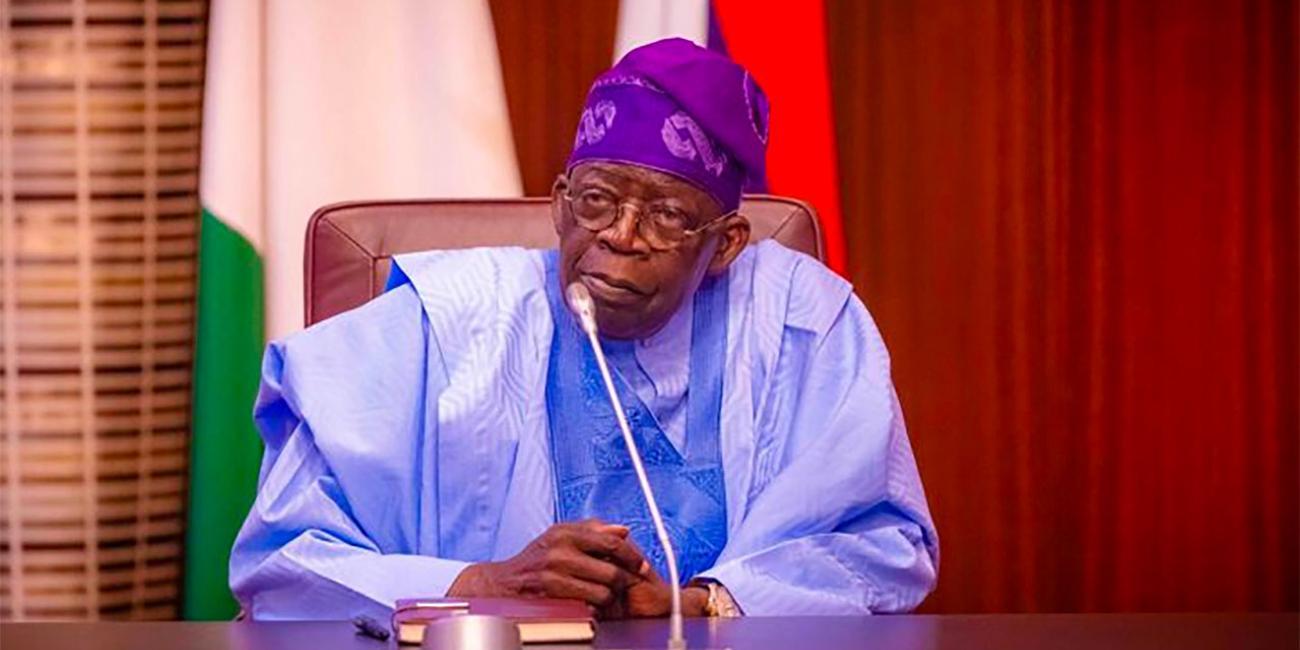
A fresh discovery in the 2026 Appropriation Bill presented by President Bola Tinubu has sparked concerns over transparency among some Ministries, Departments, and Agencies (MDAs)….
Findings from a preliminary review of the budget show questionable allocations, duplicated line items, and vague expenditure headings running into billions of naira. Civil society groups and lawmakers have raised alarms, calling for deeper scrutiny to prevent waste and misuse of public funds. They insist that the budget review process must ensure accountability and value for money, especially as Nigerians continue to face economic hardship and rising living costs. #fintternew
A fresh discovery in the 2026 Appropriation Bill presented by President Bola Tinubu has sparked concerns over transparency among some Ministries, Departments, and Agencies (MDAs)…. Findings from a preliminary review of the budget show questionable allocations, duplicated line items, and vague expenditure headings running into billions of naira. Civil society groups and lawmakers have raised alarms, calling for deeper scrutiny to prevent waste and misuse of public funds. They insist that the budget review process must ensure accountability and value for money, especially as Nigerians continue to face economic hardship and rising living costs. #fintternew· 0 Commentaires ·0 Parts ·768 Vue1
-
Kolu Begs Carter Efe for Millions to Bail Portable Out of Police Custody….
Kolu has publicly appealed to skit maker and singer Carter Efe for a multimillion-naira loan to help secure the release of his former boss, Portable, from police custody. According to Kolu, Portable played a major role in changing his life after bringing him to Lagos and giving him opportunities that shaped his career. He said he could not abandon the controversial singer in his time of trouble, stressing that gratitude and loyalty compelled him to seek help. The appeal has sparked mixed reactions online, with many Nigerians debating loyalty, responsibility, and the repeated legal troubles surrounding Portable. #fintternewsKolu Begs Carter Efe for Millions to Bail Portable Out of Police Custody…. Kolu has publicly appealed to skit maker and singer Carter Efe for a multimillion-naira loan to help secure the release of his former boss, Portable, from police custody. According to Kolu, Portable played a major role in changing his life after bringing him to Lagos and giving him opportunities that shaped his career. He said he could not abandon the controversial singer in his time of trouble, stressing that gratitude and loyalty compelled him to seek help. The appeal has sparked mixed reactions online, with many Nigerians debating loyalty, responsibility, and the repeated legal troubles surrounding Portable. #fintternews· 0 Commentaires ·1 Parts ·425 Vue1
-
Oyingbo Tragedy: Lagos Fire Outbreak Kills 103-Year-Old Woman, Destroys Homes, Shops
Tragedy struck the Oyingbo area of Lagos Mainland on Thursday as a devastating fire outbreak claimed the life of a 103-year-old woman and destroyed several homes and shops on Bola Street, off Kadara Street. The Lagos State Emergency Management Agency (LASEMA) said the inferno started from one of the rooms in a bungalow with two attached shops before spreading rapidly. Despite swift response after distress calls were received at 11:43am, emergency responders arrived to meet the building already engulfed in flames. The elderly woman died before she could be rescued. The fire destroyed eight room-and-parlour apartments, a mini flat, six shops, and properties worth millions of naira.
#oyingboOyingbo Tragedy: Lagos Fire Outbreak Kills 103-Year-Old Woman, Destroys Homes, Shops Tragedy struck the Oyingbo area of Lagos Mainland on Thursday as a devastating fire outbreak claimed the life of a 103-year-old woman and destroyed several homes and shops on Bola Street, off Kadara Street. The Lagos State Emergency Management Agency (LASEMA) said the inferno started from one of the rooms in a bungalow with two attached shops before spreading rapidly. Despite swift response after distress calls were received at 11:43am, emergency responders arrived to meet the building already engulfed in flames. The elderly woman died before she could be rescued. The fire destroyed eight room-and-parlour apartments, a mini flat, six shops, and properties worth millions of naira. #oyingbo· 1 Commentaires ·0 Parts ·543 Vue1
-
Bauchi Audit Exposes Universities, Polytechnics, Colleges, and Parastatals: How Did ₦Billions in Public Funds Go Unaccounted For, Why Were Revenues Unremitted, and Who Will Be Held Legally Responsible?
How did institutions meant to uphold discipline, transparency, and public trust become hubs of financial disorder? An audit investigation by WikkiTimes reveals widespread financial mismanagement across Bauchi State’s universities, polytechnics, colleges, hospitals, agencies, and parastatals, raising urgent questions about accountability, oversight, and the future of public finance in the state.
The Auditor-General’s report shows a consistent pattern: payments without documentation, unretired advances, missing revenue, inflated costs, forged or incomplete records, and expenditures without approval. These violations were not isolated to ministries or Government House—they extended deep into educational institutions and public agencies that are supposed to set standards in record-keeping, training, and ethical governance.
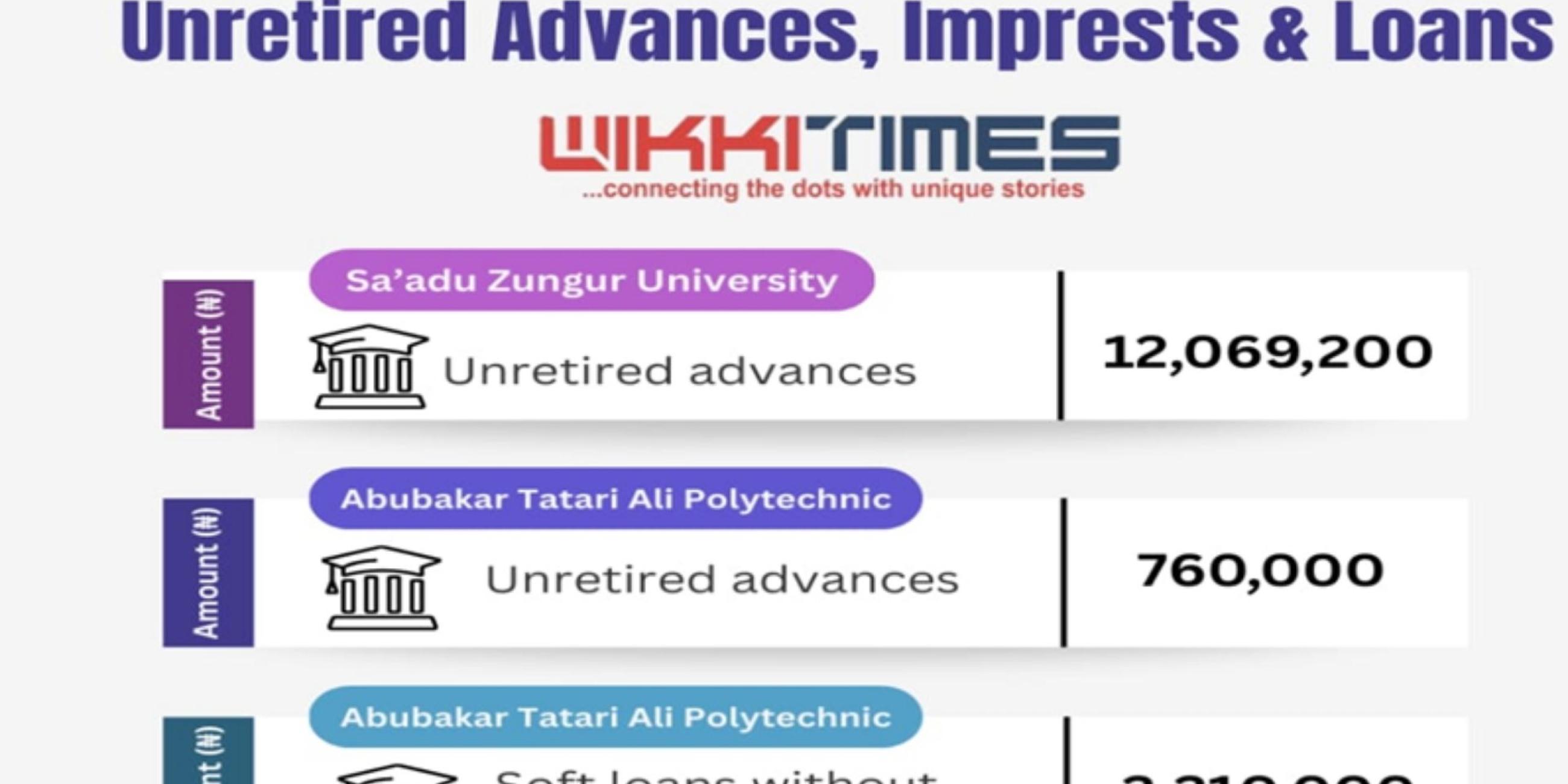
At Sa’adu Zungur University, the state’s flagship institution, auditors recorded ₦63.5 million in payments without supporting documents, ₦12 million in unretired advances, ₦48 million in vouchers not presented for audit, ₦9.1 million in receipt discrepancies, ₦14.5 million in inflated diesel costs, and ₦84.2 million in unremitted tax deductions. Another ₦101 million was not posted to the cash book, making the trail of funds impossible to trace. An institution named after a symbol of moral discipline now stands accused of systemic financial indiscipline.
At Abubakar Tatari Ali Polytechnic, auditors uncovered what they described as one of the most detailed cases of financial breakdown: ₦21.4 million in government revenue with no evidence of remittance, ₦13.4 million in undocumented payments, ₦15.1 million in vouchers withheld from audit, ₦28.6 million in store purchases not entered into ledgers, and multiple unretired advances and imprests. Additional red flags included ₦32.8 million in unauthorised payments, ₦5.7 million paid without documentation, and ₦5.2 million in soft loans without proof of recovery.
Other institutions followed the same pattern. A.D. Rufa’i College of Legal Studies recorded millions in undocumented, unauthorised, and unacknowledged payments, alongside major store ledger discrepancies—echoing earlier reports of student exploitation. At the Bill and Melinda Gates College of Health Sciences, auditors flagged bank reconciliation gaps, voucher irregularities, and cash-book discrepancies. Health agencies, including the Specialist Hospital Board and Bauchi State Health Contributory Management Agency, were cited for diesel payments without retirement records and funds disbursed without approval.
The audit further exposed revenue losses in parastatals. At Yankari Express Corporation, auditors recorded a staggering ₦165.5 million gap between revenue collected and bank lodgements, alongside missing vehicles, undocumented spare parts purchases, and multiple unsubmitted vouchers. At Yankari Game Reserve, findings included unauthorised payments, ghost beneficiaries, unaccounted revenue, undocumented diesel purchases, and unexplained bank withdrawals—suggesting deep-seated weaknesses in financial controls.
Perhaps most alarming is what did not happen. According to the audit, missing vouchers remained missing, unremitted revenue was not accounted for, advances were not recovered, and disputed sums were not refunded. Explanations submitted by institutions failed to resolve the issues, leaving large portions of public funds in limbo.
The report also outlines the legal consequences. Under the 1999 Constitution, all public spending must be authorised by law, with the Auditor-General empowered under Section 125 to refer violations to the House of Assembly. The ICPC Act criminalises abuse of office, while the EFCC Act classifies tax non-remittance and fund diversion as economic crimes—offences that remain prosecutable even after restitution.
This investigation forces urgent questions: How did so many institutions operate for years without basic financial controls? Why were revenues collected but never remitted? Who authorised payments without records? And will the ICPC, EFCC, and lawmakers move from exposure to prosecution? As billions of naira remain unaccounted for, Bauchi’s audit report is no longer just a financial document—it is a test of whether public office will finally be matched with public accountability.
Bauchi Audit Exposes Universities, Polytechnics, Colleges, and Parastatals: How Did ₦Billions in Public Funds Go Unaccounted For, Why Were Revenues Unremitted, and Who Will Be Held Legally Responsible? How did institutions meant to uphold discipline, transparency, and public trust become hubs of financial disorder? An audit investigation by WikkiTimes reveals widespread financial mismanagement across Bauchi State’s universities, polytechnics, colleges, hospitals, agencies, and parastatals, raising urgent questions about accountability, oversight, and the future of public finance in the state. The Auditor-General’s report shows a consistent pattern: payments without documentation, unretired advances, missing revenue, inflated costs, forged or incomplete records, and expenditures without approval. These violations were not isolated to ministries or Government House—they extended deep into educational institutions and public agencies that are supposed to set standards in record-keeping, training, and ethical governance. At Sa’adu Zungur University, the state’s flagship institution, auditors recorded ₦63.5 million in payments without supporting documents, ₦12 million in unretired advances, ₦48 million in vouchers not presented for audit, ₦9.1 million in receipt discrepancies, ₦14.5 million in inflated diesel costs, and ₦84.2 million in unremitted tax deductions. Another ₦101 million was not posted to the cash book, making the trail of funds impossible to trace. An institution named after a symbol of moral discipline now stands accused of systemic financial indiscipline. At Abubakar Tatari Ali Polytechnic, auditors uncovered what they described as one of the most detailed cases of financial breakdown: ₦21.4 million in government revenue with no evidence of remittance, ₦13.4 million in undocumented payments, ₦15.1 million in vouchers withheld from audit, ₦28.6 million in store purchases not entered into ledgers, and multiple unretired advances and imprests. Additional red flags included ₦32.8 million in unauthorised payments, ₦5.7 million paid without documentation, and ₦5.2 million in soft loans without proof of recovery. Other institutions followed the same pattern. A.D. Rufa’i College of Legal Studies recorded millions in undocumented, unauthorised, and unacknowledged payments, alongside major store ledger discrepancies—echoing earlier reports of student exploitation. At the Bill and Melinda Gates College of Health Sciences, auditors flagged bank reconciliation gaps, voucher irregularities, and cash-book discrepancies. Health agencies, including the Specialist Hospital Board and Bauchi State Health Contributory Management Agency, were cited for diesel payments without retirement records and funds disbursed without approval. The audit further exposed revenue losses in parastatals. At Yankari Express Corporation, auditors recorded a staggering ₦165.5 million gap between revenue collected and bank lodgements, alongside missing vehicles, undocumented spare parts purchases, and multiple unsubmitted vouchers. At Yankari Game Reserve, findings included unauthorised payments, ghost beneficiaries, unaccounted revenue, undocumented diesel purchases, and unexplained bank withdrawals—suggesting deep-seated weaknesses in financial controls. Perhaps most alarming is what did not happen. According to the audit, missing vouchers remained missing, unremitted revenue was not accounted for, advances were not recovered, and disputed sums were not refunded. Explanations submitted by institutions failed to resolve the issues, leaving large portions of public funds in limbo. The report also outlines the legal consequences. Under the 1999 Constitution, all public spending must be authorised by law, with the Auditor-General empowered under Section 125 to refer violations to the House of Assembly. The ICPC Act criminalises abuse of office, while the EFCC Act classifies tax non-remittance and fund diversion as economic crimes—offences that remain prosecutable even after restitution. This investigation forces urgent questions: How did so many institutions operate for years without basic financial controls? Why were revenues collected but never remitted? Who authorised payments without records? And will the ICPC, EFCC, and lawmakers move from exposure to prosecution? As billions of naira remain unaccounted for, Bauchi’s audit report is no longer just a financial document—it is a test of whether public office will finally be matched with public accountability.· 0 Commentaires ·0 Parts ·1KB Vue1
-
Why Is Tinubu Budgeting ₦6.1 Billion for Foreign Trips in 2026? What Nigeria’s Travel Spending Reveals About Presidential Priorities
A review of Nigeria’s 2026 budget has revealed that President Bola Tinubu plans to spend ₦6.1 billion on foreign travels in the coming fiscal year, raising fresh questions about government priorities amid economic strain. The figure, listed under “State House operations – President,” also shows an additional ₦873 million earmarked for local travel. When combined with the Vice President’s projected foreign travel costs of ₦1.3 billion, total international trip spending by the Presidency in 2026 is expected to reach ₦7.4 billion.
The budget breakdown comes as Nigerians continue to grapple with rising living costs and fiscal pressures. According to the documents, travel expenses remain a major component of State House spending, with another ₦375 million allocated for foodstuffs and catering materials alone. While the Presidency has not released a detailed justification for the travel budget, officials insist the trips are essential for diplomacy, investment, and international engagement.
Recent movements by the President have already drawn public attention. President Tinubu recently departed Lagos for Europe before heading to Abu Dhabi at the invitation of UAE President Sheikh Mohamed bin Zayed Al Nahyan to attend the Abu Dhabi Sustainability Week Summit (ADSW 2026). The Presidency described the summit as a high-level global forum bringing together leaders from government, business, and civil society to discuss sustainable development. Officials also confirmed that the President would return to Nigeria after the event.
However, critics argue that the scale of spending on foreign trips is difficult to justify, especially in light of past expenditure. Although comprehensive 2025 data is unavailable, records from the Open Treasury Portal show that in 2024 alone, the State House spent over ₦36.3 billion on international travel. This included ₦12.2 billion for “international travel and transport (training)” and ₦24.19 billion for “international travel and transport (others).” Local travel was even more costly, with ₦47 billion spent on training and other domestic trips. In total, travel expenses—both local and foreign—amounted to approximately ₦83 billion in 2024.
Further reports revealed that between February and July 2024, the Presidency spent about ₦2.3 billion on foreign trips, while an additional ₦2.9 billion went toward foreign exchange for trips involving the President, Vice President, and First Lady across several countries. Payments running into hundreds of millions of naira were also recorded in individual months, fueling debate over transparency and fiscal discipline.
Opposition figures, including former presidential candidate Peter Obi, have questioned the frequency and cost of the President’s travels. At the same time, government officials have defended the expenditure. Nigeria’s Minister of Foreign Affairs, Ambassador Yusuf Maitama Tuggar, has argued that the President should even travel more to advance Nigeria’s diplomatic and economic interests globally.
With the 2026 budget now in focus, the key questions remain: Does the ₦6.1 billion allocation reflect necessary diplomacy or excessive spending? How does such expenditure align with Nigeria’s current economic challenges? And will the government provide clearer accountability for the rising cost of presidential travel? As public scrutiny intensifies, the debate over leadership priorities and fiscal responsibility is likely to continue.
Why Is Tinubu Budgeting ₦6.1 Billion for Foreign Trips in 2026? What Nigeria’s Travel Spending Reveals About Presidential Priorities A review of Nigeria’s 2026 budget has revealed that President Bola Tinubu plans to spend ₦6.1 billion on foreign travels in the coming fiscal year, raising fresh questions about government priorities amid economic strain. The figure, listed under “State House operations – President,” also shows an additional ₦873 million earmarked for local travel. When combined with the Vice President’s projected foreign travel costs of ₦1.3 billion, total international trip spending by the Presidency in 2026 is expected to reach ₦7.4 billion. The budget breakdown comes as Nigerians continue to grapple with rising living costs and fiscal pressures. According to the documents, travel expenses remain a major component of State House spending, with another ₦375 million allocated for foodstuffs and catering materials alone. While the Presidency has not released a detailed justification for the travel budget, officials insist the trips are essential for diplomacy, investment, and international engagement. Recent movements by the President have already drawn public attention. President Tinubu recently departed Lagos for Europe before heading to Abu Dhabi at the invitation of UAE President Sheikh Mohamed bin Zayed Al Nahyan to attend the Abu Dhabi Sustainability Week Summit (ADSW 2026). The Presidency described the summit as a high-level global forum bringing together leaders from government, business, and civil society to discuss sustainable development. Officials also confirmed that the President would return to Nigeria after the event. However, critics argue that the scale of spending on foreign trips is difficult to justify, especially in light of past expenditure. Although comprehensive 2025 data is unavailable, records from the Open Treasury Portal show that in 2024 alone, the State House spent over ₦36.3 billion on international travel. This included ₦12.2 billion for “international travel and transport (training)” and ₦24.19 billion for “international travel and transport (others).” Local travel was even more costly, with ₦47 billion spent on training and other domestic trips. In total, travel expenses—both local and foreign—amounted to approximately ₦83 billion in 2024. Further reports revealed that between February and July 2024, the Presidency spent about ₦2.3 billion on foreign trips, while an additional ₦2.9 billion went toward foreign exchange for trips involving the President, Vice President, and First Lady across several countries. Payments running into hundreds of millions of naira were also recorded in individual months, fueling debate over transparency and fiscal discipline. Opposition figures, including former presidential candidate Peter Obi, have questioned the frequency and cost of the President’s travels. At the same time, government officials have defended the expenditure. Nigeria’s Minister of Foreign Affairs, Ambassador Yusuf Maitama Tuggar, has argued that the President should even travel more to advance Nigeria’s diplomatic and economic interests globally. With the 2026 budget now in focus, the key questions remain: Does the ₦6.1 billion allocation reflect necessary diplomacy or excessive spending? How does such expenditure align with Nigeria’s current economic challenges? And will the government provide clearer accountability for the rising cost of presidential travel? As public scrutiny intensifies, the debate over leadership priorities and fiscal responsibility is likely to continue.0 Commentaires ·0 Parts ·1KB Vue -
Ekiti Assembly to Spend ₦1.2 Billion on Chairs, Tables and Vehicles in 2026—While Key Ministries Get Zero Funding: Is This Governance or Misplaced Priorities?
A review of the Ekiti State House of Assembly’s 2026 budget estimates by SaharaReporters has revealed a controversial plan to spend ₦1.2 billion on executive chairs, tables, cabinets and office furniture, despite the fact that ₦470 million was already spent on similar items in 2025. The proposed expenditure includes 700 executive chairs, 600 tables, 200 chamber tables, 100 cabinets, 50 office shelves and 12 chair sets, raising questions about fiscal responsibility and government priorities.
In addition to furniture, the Assembly is seeking ₦800 million to procure three 2025 Toyota Land Cruiser Prado SUVs and 30 Toyota Corolla vehicles, further fueling concerns about luxury spending amid economic challenges facing the state.
This development follows earlier revelations that ₦300 million was budgeted for the construction of a governor’s and deputy governor’s lodge in Asokoro, Abuja, even though ₦470 million had already been spent on similar projects between January and September 2025. Another contract worth ₦320 million was reportedly awarded for the construction of a guest house chalet within the Government House, allegedly to a permanent secretary, raising transparency concerns.
While billions are allocated to official residences, vehicles and office furniture, a review of Ekiti State’s audited financial statements for 2024 shows that 35 government agencies received zero funding for capital projects, despite having a combined capital budget of ₦3.3 billion. Affected institutions include the Ministry of Education, Science and Technology, Ekiti State Pensions Board, Civil Service Commission, Housing Corporation, Fiscal Responsibility Commission, Office of Public Defender, Teaching Service Commission, University Teaching Hospital, and several others critical to governance, education, healthcare and public welfare.
The report also highlights a troubling pattern in public procurement, with multiple contracts worth billions of naira reportedly awarded to individuals listed as “Permanent Secretary.” These include airport-related projects such as the ₦3.3 billion Instrument Landing System, electrification works, transformer installations, floodlight systems, and road extensions, along with smaller procurements like buses and motorcycles.
Critics argue that the growing gap between lavish government spending and the chronic underfunding of essential agencies reflects a governance crisis. As calls for transparency, accountability and prudent use of public funds intensify, the question remains: Why are billions being committed to furniture, vehicles and government lodges while critical ministries and public institutions are left unfunded?
This controversy has once again placed Ekiti State’s budgeting priorities under national scrutiny, raising fundamental concerns about public trust, fiscal discipline and whether state resources are truly being used in the best interest of citizens.
Ekiti Assembly to Spend ₦1.2 Billion on Chairs, Tables and Vehicles in 2026—While Key Ministries Get Zero Funding: Is This Governance or Misplaced Priorities? A review of the Ekiti State House of Assembly’s 2026 budget estimates by SaharaReporters has revealed a controversial plan to spend ₦1.2 billion on executive chairs, tables, cabinets and office furniture, despite the fact that ₦470 million was already spent on similar items in 2025. The proposed expenditure includes 700 executive chairs, 600 tables, 200 chamber tables, 100 cabinets, 50 office shelves and 12 chair sets, raising questions about fiscal responsibility and government priorities. In addition to furniture, the Assembly is seeking ₦800 million to procure three 2025 Toyota Land Cruiser Prado SUVs and 30 Toyota Corolla vehicles, further fueling concerns about luxury spending amid economic challenges facing the state. This development follows earlier revelations that ₦300 million was budgeted for the construction of a governor’s and deputy governor’s lodge in Asokoro, Abuja, even though ₦470 million had already been spent on similar projects between January and September 2025. Another contract worth ₦320 million was reportedly awarded for the construction of a guest house chalet within the Government House, allegedly to a permanent secretary, raising transparency concerns. While billions are allocated to official residences, vehicles and office furniture, a review of Ekiti State’s audited financial statements for 2024 shows that 35 government agencies received zero funding for capital projects, despite having a combined capital budget of ₦3.3 billion. Affected institutions include the Ministry of Education, Science and Technology, Ekiti State Pensions Board, Civil Service Commission, Housing Corporation, Fiscal Responsibility Commission, Office of Public Defender, Teaching Service Commission, University Teaching Hospital, and several others critical to governance, education, healthcare and public welfare. The report also highlights a troubling pattern in public procurement, with multiple contracts worth billions of naira reportedly awarded to individuals listed as “Permanent Secretary.” These include airport-related projects such as the ₦3.3 billion Instrument Landing System, electrification works, transformer installations, floodlight systems, and road extensions, along with smaller procurements like buses and motorcycles. Critics argue that the growing gap between lavish government spending and the chronic underfunding of essential agencies reflects a governance crisis. As calls for transparency, accountability and prudent use of public funds intensify, the question remains: Why are billions being committed to furniture, vehicles and government lodges while critical ministries and public institutions are left unfunded? This controversy has once again placed Ekiti State’s budgeting priorities under national scrutiny, raising fundamental concerns about public trust, fiscal discipline and whether state resources are truly being used in the best interest of citizens.0 Commentaires ·0 Parts ·753 Vue -
Did Anyone Try to Bribe the Judge in Malami’s ₦8.7 Billion Money Laundering Trial? Why the Former AGF Is Denying Influence Claims, Accusing EFCC of a ‘Media Trial,’ and Insisting on Judicial Integrity
Did anyone attempt to bribe or improperly influence the judge handling Abubakar Malami’s high-profile ₦8.7 billion money laundering case? Why did the former Attorney-General of the Federation feel compelled to issue a public denial? And is the Economic and Financial Crimes Commission (EFCC) conducting a legitimate prosecution—or, as Malami claims, waging a “media trial” aimed at damaging his reputation?
Following a Federal High Court ruling in Maitama, Abuja, which granted bail to Malami, his wife, and their son, reports circulated suggesting that the presiding judge, Justice Emeka Nwite, had raised concerns about attempts to compromise the court. In response, Malami strongly rejected any insinuation that he—or anyone acting on his behalf—sought to influence the judge in any form.
In a statement signed by his media aide, Mohammed Bello Doka, Malami described the allegation as “mischievous, false, and deliberately misleading.” He categorically stated that no member of his legal team, family, or associates approached or contemplated approaching the court for any favour. Any suggestion otherwise, he said, was reckless and intended to tarnish his public image.
But what exactly did the judge say? According to Malami, Justice Nwite’s remarks were a routine judicial warning delivered to all counsel and litigants appearing before the court—not a statement directed at him or his co-defendants. He noted that the judge is known for consistently cautioning lawyers against any attempt to contact him outside formal proceedings, as part of his commitment to judicial probity.
Why then did the controversy erupt? Malami accused the EFCC of “weaponising” a standard courtroom admonition and presenting it to the public as evidence of attempted interference. He argued that this narrative was crafted to prejudice public opinion and undermine due process rather than allow the case to be determined strictly on evidence.
“The proper place to prove allegations is in the courtroom, not in the media,” Malami said, reiterating that neither he nor his family had offered any bribe or sought any special treatment. He maintained that he respects the sanctity of the judiciary, emphasising both his status as a Senior Advocate of Nigeria and his past role as the nation’s chief law officer.
What is at stake? The case involves serious allegations of money laundering running into billions of naira against Malami, his wife, Hajia Bashir Asabe, and their son, Abubakar Abdulaziz Malami. During proceedings, Justice Nwite openly warned all parties not to attempt any personal approaches, stressing that legal representation—not backdoor contacts—is the only acceptable means of advocacy before his court.
As the trial continues, a critical question remains for Nigerians: is this a straightforward judicial caution being misrepresented for headlines, or does the dispute reflect a deeper battle between a former top legal official and the country’s anti-graft agency over credibility, due process, and public perception?
Did Anyone Try to Bribe the Judge in Malami’s ₦8.7 Billion Money Laundering Trial? Why the Former AGF Is Denying Influence Claims, Accusing EFCC of a ‘Media Trial,’ and Insisting on Judicial Integrity Did anyone attempt to bribe or improperly influence the judge handling Abubakar Malami’s high-profile ₦8.7 billion money laundering case? Why did the former Attorney-General of the Federation feel compelled to issue a public denial? And is the Economic and Financial Crimes Commission (EFCC) conducting a legitimate prosecution—or, as Malami claims, waging a “media trial” aimed at damaging his reputation? Following a Federal High Court ruling in Maitama, Abuja, which granted bail to Malami, his wife, and their son, reports circulated suggesting that the presiding judge, Justice Emeka Nwite, had raised concerns about attempts to compromise the court. In response, Malami strongly rejected any insinuation that he—or anyone acting on his behalf—sought to influence the judge in any form. In a statement signed by his media aide, Mohammed Bello Doka, Malami described the allegation as “mischievous, false, and deliberately misleading.” He categorically stated that no member of his legal team, family, or associates approached or contemplated approaching the court for any favour. Any suggestion otherwise, he said, was reckless and intended to tarnish his public image. But what exactly did the judge say? According to Malami, Justice Nwite’s remarks were a routine judicial warning delivered to all counsel and litigants appearing before the court—not a statement directed at him or his co-defendants. He noted that the judge is known for consistently cautioning lawyers against any attempt to contact him outside formal proceedings, as part of his commitment to judicial probity. Why then did the controversy erupt? Malami accused the EFCC of “weaponising” a standard courtroom admonition and presenting it to the public as evidence of attempted interference. He argued that this narrative was crafted to prejudice public opinion and undermine due process rather than allow the case to be determined strictly on evidence. “The proper place to prove allegations is in the courtroom, not in the media,” Malami said, reiterating that neither he nor his family had offered any bribe or sought any special treatment. He maintained that he respects the sanctity of the judiciary, emphasising both his status as a Senior Advocate of Nigeria and his past role as the nation’s chief law officer. What is at stake? The case involves serious allegations of money laundering running into billions of naira against Malami, his wife, Hajia Bashir Asabe, and their son, Abubakar Abdulaziz Malami. During proceedings, Justice Nwite openly warned all parties not to attempt any personal approaches, stressing that legal representation—not backdoor contacts—is the only acceptable means of advocacy before his court. As the trial continues, a critical question remains for Nigerians: is this a straightforward judicial caution being misrepresented for headlines, or does the dispute reflect a deeper battle between a former top legal official and the country’s anti-graft agency over credibility, due process, and public perception?0 Commentaires ·0 Parts ·594 Vue -
How Did Ex-AGF Abubakar Malami, His Sons Amass 57 Luxury Homes, Hotels, University Assets Worth ₦213 Billion? Inside the EFCC Money Laundering Case, Court Forfeiture Order, and Full Property List Shaking Nigeria
How did a former Attorney-General of the Federation and Minister of Justice allegedly acquire 57 high-value properties across Abuja, Kebbi, Kano, and Kaduna? What explains the sudden emergence of luxury hotels, vast landed estates, factories, schools, filling stations, shopping complexes, and an entire private university tied to Abubakar Malami (SAN) and his two sons? And why has a Federal High Court now ordered the interim forfeiture of assets valued at a staggering ₦213.2 billion?
In a dramatic legal move that has reignited national debate on corruption and elite wealth in Nigeria, Justice Emeka Nwite of the Federal High Court, Abuja, granted an ex-parte application filed by the Economic and Financial Crimes Commission (EFCC), authorising the temporary seizure of 57 properties allegedly linked to Malami and his sons, Abdulaziz and Abiru-Rahman. The court ruled that the assets are reasonably suspected to be proceeds of unlawful activity and should be preserved pending full investigation and trial.
What exactly did investigators uncover? The forfeited properties include luxury duplexes in Maitama and Asokoro, high-end hotels in Abuja and Kano, shopping malls, warehouses, petrol stations, plazas, and sprawling estates across Kebbi State. Among the most striking assets are massive institutional holdings under the “Rayhaan” brand: Rayhaan University with multiple sites reportedly worth tens of billions of naira, agro-allied factories with heavy machinery, staff quarters, mosques, media outlets, model academies, and large commercial hubs such as Azbir Arena and Zeennoor Hotel in Kano.
Why are these properties raising alarm? According to the EFCC, the scale, speed, and structure of the acquisitions—many made while Malami served as Nigeria’s chief law officer—point to potential money laundering and abuse of office. Several assets were allegedly purchased at relatively low values and later upgraded into multi-billion-naira developments. Others are held through foundations, companies, and educational or religious fronts, prompting questions about whether public office was leveraged to build a vast private empire.
What happens next? The interim forfeiture does not yet mean permanent confiscation. The court has ordered that the assets be preserved while legal proceedings continue. Interested parties may be invited to show cause why the properties should not be finally forfeited to the Federal Government. Meanwhile, civil society groups and anti-corruption advocates are asking: will this case mark a turning point in Nigeria’s fight against high-level corruption, or will it join the long list of stalled elite prosecutions?
As Nigerians digest the full list of 57 properties—ranging from luxury residences and hotels to universities, factories, schools, filling stations, and commercial plazas—the central question remains: how did a public official and his immediate family come to control assets worth over ₦213 billion, and will the courts finally provide answers that restore public trust?
How Did Ex-AGF Abubakar Malami, His Sons Amass 57 Luxury Homes, Hotels, University Assets Worth ₦213 Billion? Inside the EFCC Money Laundering Case, Court Forfeiture Order, and Full Property List Shaking Nigeria How did a former Attorney-General of the Federation and Minister of Justice allegedly acquire 57 high-value properties across Abuja, Kebbi, Kano, and Kaduna? What explains the sudden emergence of luxury hotels, vast landed estates, factories, schools, filling stations, shopping complexes, and an entire private university tied to Abubakar Malami (SAN) and his two sons? And why has a Federal High Court now ordered the interim forfeiture of assets valued at a staggering ₦213.2 billion? In a dramatic legal move that has reignited national debate on corruption and elite wealth in Nigeria, Justice Emeka Nwite of the Federal High Court, Abuja, granted an ex-parte application filed by the Economic and Financial Crimes Commission (EFCC), authorising the temporary seizure of 57 properties allegedly linked to Malami and his sons, Abdulaziz and Abiru-Rahman. The court ruled that the assets are reasonably suspected to be proceeds of unlawful activity and should be preserved pending full investigation and trial. What exactly did investigators uncover? The forfeited properties include luxury duplexes in Maitama and Asokoro, high-end hotels in Abuja and Kano, shopping malls, warehouses, petrol stations, plazas, and sprawling estates across Kebbi State. Among the most striking assets are massive institutional holdings under the “Rayhaan” brand: Rayhaan University with multiple sites reportedly worth tens of billions of naira, agro-allied factories with heavy machinery, staff quarters, mosques, media outlets, model academies, and large commercial hubs such as Azbir Arena and Zeennoor Hotel in Kano. Why are these properties raising alarm? According to the EFCC, the scale, speed, and structure of the acquisitions—many made while Malami served as Nigeria’s chief law officer—point to potential money laundering and abuse of office. Several assets were allegedly purchased at relatively low values and later upgraded into multi-billion-naira developments. Others are held through foundations, companies, and educational or religious fronts, prompting questions about whether public office was leveraged to build a vast private empire. What happens next? The interim forfeiture does not yet mean permanent confiscation. The court has ordered that the assets be preserved while legal proceedings continue. Interested parties may be invited to show cause why the properties should not be finally forfeited to the Federal Government. Meanwhile, civil society groups and anti-corruption advocates are asking: will this case mark a turning point in Nigeria’s fight against high-level corruption, or will it join the long list of stalled elite prosecutions? As Nigerians digest the full list of 57 properties—ranging from luxury residences and hotels to universities, factories, schools, filling stations, and commercial plazas—the central question remains: how did a public official and his immediate family come to control assets worth over ₦213 billion, and will the courts finally provide answers that restore public trust?0 Commentaires ·0 Parts ·758 Vue -
BREAKING: Abuja Court Orders Interim Forfeiture of 57 Properties Linked to Former AGF Malami
January 7, 2026 – Legal / Nigeria
The Federal High Court in Abuja has ordered the interim forfeiture of 57 properties linked to former Attorney-General of the Federation, Abubakar Malami, SAN, following an ex-parte application by the EFCC.
Justice Emeka Nwite granted the order, temporarily vesting control of the multi-billion-naira real estate assets in the Federal Government. The properties, spread across Abuja, Kebbi, Kano, and Kaduna, include luxury hotels, duplexes, plazas, warehouses, shopping units, and residential estates.
The EFCC suspects these assets are proceeds of unlawful activities carried out between 2015 and 2025 during Malami’s tenure as AGF. The court has directed that the forfeiture order be published in a national newspaper to allow third parties to contest the action within 14 days.
This interim forfeiture is linked to ongoing criminal proceedings against Malami, his wife, and son, who face a N8.7 billion money laundering charge. The EFCC alleges that they used bank accounts and extensive property acquisitions to conceal illicit funds.
Malami has denied any wrongdoing and was granted N500 million bail.
BREAKING: Abuja Court Orders Interim Forfeiture of 57 Properties Linked to Former AGF Malami January 7, 2026 – Legal / Nigeria The Federal High Court in Abuja has ordered the interim forfeiture of 57 properties linked to former Attorney-General of the Federation, Abubakar Malami, SAN, following an ex-parte application by the EFCC. Justice Emeka Nwite granted the order, temporarily vesting control of the multi-billion-naira real estate assets in the Federal Government. The properties, spread across Abuja, Kebbi, Kano, and Kaduna, include luxury hotels, duplexes, plazas, warehouses, shopping units, and residential estates. The EFCC suspects these assets are proceeds of unlawful activities carried out between 2015 and 2025 during Malami’s tenure as AGF. The court has directed that the forfeiture order be published in a national newspaper to allow third parties to contest the action within 14 days. This interim forfeiture is linked to ongoing criminal proceedings against Malami, his wife, and son, who face a N8.7 billion money laundering charge. The EFCC alleges that they used bank accounts and extensive property acquisitions to conceal illicit funds. Malami has denied any wrongdoing and was granted N500 million bail.0 Commentaires ·0 Parts ·705 Vue -
Bauchi State Pensioners Suffer Delays as Auditor-General Reveals ₦1.2 Billion in Undocumented Payments Across Ministries
Bauchi State pensioners continue to face severe financial hardship as delays in pension and gratuity payments persist. Danjuma Babaji, who retired in November 2022, went nine months without salary or pension, surviving on subsistence farming and livestock rearing. While he eventually began receiving monthly pension in July 2023, his ₦3.7 million gratuity remains unpaid. Similarly, Adamu Ibrahim, retired in 2017, endured months without income and now relies on his children for support.
An analysis of the Bauchi State Auditor-General’s 2024 report reveals widespread failures in financial accountability, with millions of naira spent across ministries without proper documentation, approval, or authorisation. Notable figures include ₦182.8 million spent without supporting documents, ₦104.5 million paid without approval, and ₦261.7 million disbursed without Accounting Officer authorisation. Ministries affected include the Office of the Chief of Staff, Finance, Budget, Women Affairs, Religious Affairs, Education, and Housing & Environment, with the largest undocumented payment totaling ₦565 million in the latter.
The findings underscore systemic lapses in public finance management, leaving pensioners and citizens unable to hold officials accountable and raising further questions about corruption and institutional oversight in Bauchi State.Bauchi State Pensioners Suffer Delays as Auditor-General Reveals ₦1.2 Billion in Undocumented Payments Across Ministries Bauchi State pensioners continue to face severe financial hardship as delays in pension and gratuity payments persist. Danjuma Babaji, who retired in November 2022, went nine months without salary or pension, surviving on subsistence farming and livestock rearing. While he eventually began receiving monthly pension in July 2023, his ₦3.7 million gratuity remains unpaid. Similarly, Adamu Ibrahim, retired in 2017, endured months without income and now relies on his children for support. An analysis of the Bauchi State Auditor-General’s 2024 report reveals widespread failures in financial accountability, with millions of naira spent across ministries without proper documentation, approval, or authorisation. Notable figures include ₦182.8 million spent without supporting documents, ₦104.5 million paid without approval, and ₦261.7 million disbursed without Accounting Officer authorisation. Ministries affected include the Office of the Chief of Staff, Finance, Budget, Women Affairs, Religious Affairs, Education, and Housing & Environment, with the largest undocumented payment totaling ₦565 million in the latter. The findings underscore systemic lapses in public finance management, leaving pensioners and citizens unable to hold officials accountable and raising further questions about corruption and institutional oversight in Bauchi State.· 0 Commentaires ·0 Parts ·419 Vue1
-
Sokoto Court Jails Three for Spraying Naira Notes at Social Events, Orders Community Service
Justice Ahmad Mahmud of the Federal High Court in Sokoto has sentenced Ahmad Abdullahi Buhari, Jamilu Bello, and Yasir Muhammad Bala to five years imprisonment for offences related to Naira mutilation. The trio pleaded guilty to charges under Section 21(1) of the Central Bank of Nigeria Act, 2007, for spraying Naira notes at birthday parties in Sokoto. Each convict received one-year jail terms per count, with an option to pay N100,000 fine per count. Additionally, they are required to depose to affidavits of good behaviour with the EFCC and carry out community sensitization in secondary schools against cybercrime and other fraudulent activities. The case highlights Nigeria’s strict stance against currency mutilation and misuse.
#SokotoCourt #NairaMutilation #CBNAct #NigeriaNews #SocialEventDrama #EFCC #CommunityService #FraudAwareness #Legitng #TrendingNewsSokoto Court Jails Three for Spraying Naira Notes at Social Events, Orders Community Service Justice Ahmad Mahmud of the Federal High Court in Sokoto has sentenced Ahmad Abdullahi Buhari, Jamilu Bello, and Yasir Muhammad Bala to five years imprisonment for offences related to Naira mutilation. The trio pleaded guilty to charges under Section 21(1) of the Central Bank of Nigeria Act, 2007, for spraying Naira notes at birthday parties in Sokoto. Each convict received one-year jail terms per count, with an option to pay N100,000 fine per count. Additionally, they are required to depose to affidavits of good behaviour with the EFCC and carry out community sensitization in secondary schools against cybercrime and other fraudulent activities. The case highlights Nigeria’s strict stance against currency mutilation and misuse. #SokotoCourt #NairaMutilation #CBNAct #NigeriaNews #SocialEventDrama #EFCC #CommunityService #FraudAwareness #Legitng #TrendingNews· 0 Commentaires ·0 Parts ·1KB Vue1
-
Chinese Lady Cries Out After Alleged Theft and Assault by Nigerian Nanny, Issues 3-Day Ultimatum
A Chinese national residing in Nigeria has publicly accused her former Nigerian nanny of stealing items worth millions of naira and physically assaulting her. Speaking tearfully on TikTok, she explained that despite having video evidence, she initially chose not to report the incident or tarnish the nanny’s reputation. The conflict resurfaced when the ex-nanny began posting videos online, prompting the woman to issue a three-day ultimatum demanding an apology and deletion of the content. She also called on Nigerians to help her seek justice. The matter has sparked mixed reactions online, with many sympathising with her plight while others discuss the broader challenges of domestic employment disputes in Nigeria.
#ChineseInNigeria #NigerianNanny #TheftAndAssault #DomesticWorkers #IkejaIncident #JusticeForAll #ViralNews #Legitng #HumanInterest #SocialMediaDramaChinese Lady Cries Out After Alleged Theft and Assault by Nigerian Nanny, Issues 3-Day Ultimatum A Chinese national residing in Nigeria has publicly accused her former Nigerian nanny of stealing items worth millions of naira and physically assaulting her. Speaking tearfully on TikTok, she explained that despite having video evidence, she initially chose not to report the incident or tarnish the nanny’s reputation. The conflict resurfaced when the ex-nanny began posting videos online, prompting the woman to issue a three-day ultimatum demanding an apology and deletion of the content. She also called on Nigerians to help her seek justice. The matter has sparked mixed reactions online, with many sympathising with her plight while others discuss the broader challenges of domestic employment disputes in Nigeria. #ChineseInNigeria #NigerianNanny #TheftAndAssault #DomesticWorkers #IkejaIncident #JusticeForAll #ViralNews #Legitng #HumanInterest #SocialMediaDrama· 0 Commentaires ·0 Parts ·882 Vue1
Plus de résultats