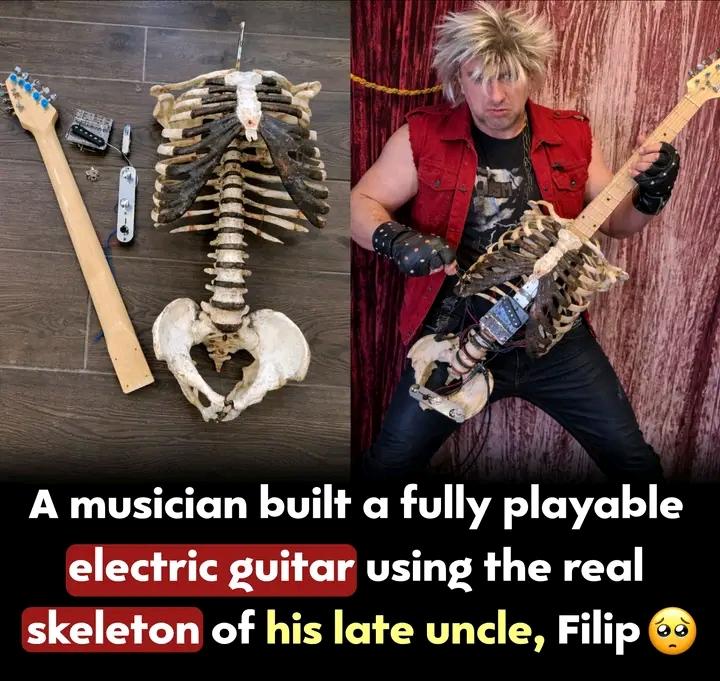
• A musician known as Prince Midnight created a unique electric guitar called the “Skelecaster” using the real skeleton of his late uncle, Filip. The unusual instrument was made as a tribute to the man who first introduced him to heavy metal music.

    After Filip’s remains were sent from Greece to the United States, Prince Midnight decided to honor his memory in a creative and unconventional way. He carefully transformed the skeleton into a fully functional guitar, combining art, music, and remembrance.

    The Skelecaster quickly gained attention online for its shocking design and emotional backstory. For Prince Midnight, it was more than just an instrument it was a personal tribute to family, music, and the bond they shared through heavy metal.
    A musician known as Prince Midnight created a unique electric guitar called the “Skelecaster” using the real skeleton of his late uncle, Filip. The unusual instrument was made as a tribute to the man who first introduced him to heavy metal music. After Filip’s remains were sent from Greece to the United States, Prince Midnight decided to honor his memory in a creative and unconventional way. He carefully transformed the skeleton into a fully functional guitar, combining art, music, and remembrance. The Skelecaster quickly gained attention online for its shocking design and emotional backstory. For Prince Midnight, it was more than just an instrument it was a personal tribute to family, music, and the bond they shared through heavy metal.
    like
    1
    · 0 Comments ·0 Shares ·769 Views


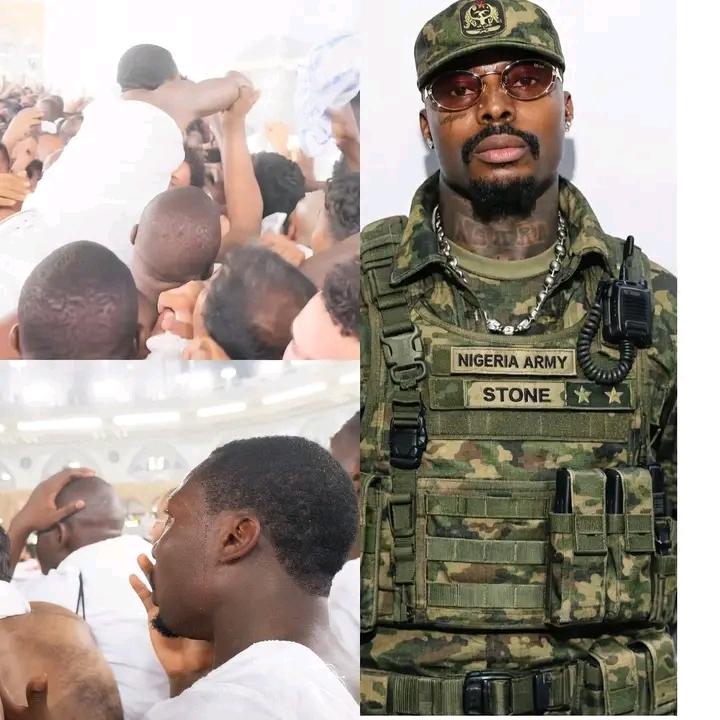
  • Photos of Nigerian music star Asake praying and shedding tears while facing the Kaaba have gone viral

    Despite his fame, wealth, and global success, the singer was seen deeply emotional and even trying to touch the sacred site during his spiritual moment.

    lesson: No matter how successful someone becomes, everyone still seeks guidance, peace, and blessings from God.
    Photos of Nigerian music star Asake praying and shedding tears while facing the Kaaba have gone viral Despite his fame, wealth, and global success, the singer was seen deeply emotional and even trying to touch the sacred site during his spiritual moment. lesson: No matter how successful someone becomes, everyone still seeks guidance, peace, and blessings from God.
    like
    2
    · 0 Comments ·0 Shares ·845 Views
  • Gorée Island in Senegal is a powerful place of remembrance. The Slave House and its “Door of No Return” symbolize the pain of the transatlantic slave trade — a final doorway many enslaved Africans passed through, leaving home forever. Visiting is emotional, but important, because history must never be forgotten.

    #GoreeIsland #Senegal #AfricanHistory #NeverForget
    Gorée Island in Senegal is a powerful place of remembrance. The Slave House and its “Door of No Return” symbolize the pain of the transatlantic slave trade — a final doorway many enslaved Africans passed through, leaving home forever. Visiting is emotional, but important, because history must never be forgotten. 🇸🇳🕊️ #GoreeIsland #Senegal #AfricanHistory #NeverForget
    love
    1
    · 0 Comments ·0 Shares ·717 Views
  • I’m Alive and Strong Actor Itele Finally Speaks as Sickbed Rumours, Emotional Video Trend Online

    Nollywood actor and filmmaker Ibrahim Yekini, popularly known as Itele D Icon, has broken his silence following viral rumours that he was critically ill and confined to a sickbed. The rumours gained traction after an emotional video surfaced online showing his colleague, Kemity, crying and claiming the actor could no longer walk. Addressing the claims in a fresh video, Itele reassured fans that he is hale, healthy, and actively working. He clarified that the viral clip was recorded years ago during a previous illness and urged the public to ignore fake news spread for attention. His response brought relief to colleagues and fans across the entertainment industry.

    #IteleDIcon, #NollywoodNews, #FakeNews
    I’m Alive and Strong Actor Itele Finally Speaks as Sickbed Rumours, Emotional Video Trend Online Nollywood actor and filmmaker Ibrahim Yekini, popularly known as Itele D Icon, has broken his silence following viral rumours that he was critically ill and confined to a sickbed. The rumours gained traction after an emotional video surfaced online showing his colleague, Kemity, crying and claiming the actor could no longer walk. Addressing the claims in a fresh video, Itele reassured fans that he is hale, healthy, and actively working. He clarified that the viral clip was recorded years ago during a previous illness and urged the public to ignore fake news spread for attention. His response brought relief to colleagues and fans across the entertainment industry. #IteleDIcon, #NollywoodNews, #FakeNews
    love
    2
    · 0 Comments ·0 Shares ·1K Views
  • Oga ooo… I am deeply disappointed,” Dr. Kemi Olunloyo said emotionally.

    She expressed shock and disappointment at Dr. Adedeji Adeleke for publicly referring to her—an investigative journalist—as a mad woman.

    According to her, she expected Dr. Adeleke to address serious unresolved issues, including what truly caused the death of Davido’s mother and the circumstances surrounding the deaths of some of Davido’s close friends. Instead, she said he chose to hold a press conference to insult her and deny the existence of his alleged biological granddaughter.

    Dr. Kemi stated that the denial was based on claims that Ayo, Anu’s mother, is a prostitute—an allegation she strongly condemned.

    She explained that her passion for Anu comes from a place of concern, saying she does not want the child to suffer or be abandoned.

    Dr. Kemi further revealed that she was the one who initially opened Anu’s Instagram page to create awareness after Davido allegedly attempted to silence the girl’s family. She said she later handed over control of the account to Anu’s mother. Now 13 years old, Anu, she said, only wants to be acknowledged and treated as one of the Adeleke daughters.

    Addressing another controversy, Dr. Kemi clarified that her own son never denied her on social media, explaining that individuals impersonating him online were actually her cousins.

    She concluded by vowing to continue fighting for Anu until the Adeleke family acknowledges the child, insisting that Anu does not deserve the hardship she is currently facing.

    Dr. Kemi Olunloyo reportedly broke down in tears while sharing her side of the ongoing Anu vs. the Adeleke family controversy.


    Oga ooo… I am deeply disappointed,” Dr. Kemi Olunloyo said emotionally. She expressed shock and disappointment at Dr. Adedeji Adeleke for publicly referring to her—an investigative journalist—as a mad woman. According to her, she expected Dr. Adeleke to address serious unresolved issues, including what truly caused the death of Davido’s mother and the circumstances surrounding the deaths of some of Davido’s close friends. Instead, she said he chose to hold a press conference to insult her and deny the existence of his alleged biological granddaughter. Dr. Kemi stated that the denial was based on claims that Ayo, Anu’s mother, is a prostitute—an allegation she strongly condemned. She explained that her passion for Anu comes from a place of concern, saying she does not want the child to suffer or be abandoned. Dr. Kemi further revealed that she was the one who initially opened Anu’s Instagram page to create awareness after Davido allegedly attempted to silence the girl’s family. She said she later handed over control of the account to Anu’s mother. Now 13 years old, Anu, she said, only wants to be acknowledged and treated as one of the Adeleke daughters. Addressing another controversy, Dr. Kemi clarified that her own son never denied her on social media, explaining that individuals impersonating him online were actually her cousins. She concluded by vowing to continue fighting for Anu until the Adeleke family acknowledges the child, insisting that Anu does not deserve the hardship she is currently facing. Dr. Kemi Olunloyo reportedly broke down in tears while sharing her side of the ongoing Anu vs. the Adeleke family controversy.
    0 Comments ·0 Shares ·829 Views
  • Heartbreaking Moment: A video showing Destiny Boy’s father mourning uncontrollably has gone viral, touching the hearts of social media users.

    His emotional words about his late son have stirred deep sympathy online. Full video and details available in the comments.

    #BreakingNews #DestinyBoy #ViralVideo #Emotional #Nigeria #Tragedy
    💔 Heartbreaking Moment: A video showing Destiny Boy’s father mourning uncontrollably has gone viral, touching the hearts of social media users. His emotional words about his late son have stirred deep sympathy online. Full video and details available in the comments. #BreakingNews #DestinyBoy #ViralVideo #Emotional #Nigeria #Tragedy
    Pain
    1
    · 0 Comments ·0 Shares ·528 Views
  • Mercy Johnson Drops Charges, Issues Strong Warning in Viral Video


    A heartfelt video of Nollywood actress Mercy Johnson has gone viral after she confirmed dropping charges against a TikToker who allegedly defamed her. In the emotional clip, she issued a stern warning while also exposing faceless blogs and those behind them, sparking widespread reactions online. Mercy revealed how false narratives about her deeply affected her family, saying some parents stopped their children from touching her kids’ school bags because she was branded a witch.#fintternews
    Mercy Johnson Drops Charges, Issues Strong Warning in Viral Video A heartfelt video of Nollywood actress Mercy Johnson has gone viral after she confirmed dropping charges against a TikToker who allegedly defamed her. In the emotional clip, she issued a stern warning while also exposing faceless blogs and those behind them, sparking widespread reactions online. Mercy revealed how false narratives about her deeply affected her family, saying some parents stopped their children from touching her kids’ school bags because she was branded a witch.#fintternews
    love
    1
    · 0 Comments ·0 Shares ·680 Views
  • Layal Tinubu Celebrates Mum’s 60th Birthday in Morocco…..


    Layal Tinubu, wife of Seyi Tinubu, has celebrated her mother, Nkechi Holm, as she turned 60. The colourful birthday celebration took place over the weekend in Marrakech, Morocco. Sharing her joy online, Layal described the moment as special and emotional, saying she spent the most beautiful weekend honouring her mum at 60 and expressed deep gratitude, adding that her heart is full and thankful for the milestone.#fintternews

    Layal Tinubu Celebrates Mum’s 60th Birthday in Morocco….. Layal Tinubu, wife of Seyi Tinubu, has celebrated her mother, Nkechi Holm, as she turned 60. The colourful birthday celebration took place over the weekend in Marrakech, Morocco. Sharing her joy online, Layal described the moment as special and emotional, saying she spent the most beautiful weekend honouring her mum at 60 and expressed deep gratitude, adding that her heart is full and thankful for the milestone.#fintternews
    love
    1
    · 0 Comments ·0 Shares ·601 Views
  • Davido’s Alleged Daughter Fires Back: Questions Singer’s 5 DNA Test Claims, Alleges Fake Result

    The paternity drama between Davido and teenager Anu Adeleke intensifies as Anu questions the singer’s claim of undergoing five DNA tests, alleging only one was done and that it was doctored. She expressed devastation over Davido’s public outbursts, claiming he cursed her and threatened her mother despite never meeting them. The singer insists all tests returned negative and vows to hold her mother accountable. Social media users are divided, with some urging a fresh test for closure, while others encourage Anu to focus on her future, highlighting the emotional toll the controversy has taken on the teenager.

    Davido’s Alleged Daughter Fires Back: Questions Singer’s 5 DNA Test Claims, Alleges Fake Result The paternity drama between Davido and teenager Anu Adeleke intensifies as Anu questions the singer’s claim of undergoing five DNA tests, alleging only one was done and that it was doctored. She expressed devastation over Davido’s public outbursts, claiming he cursed her and threatened her mother despite never meeting them. The singer insists all tests returned negative and vows to hold her mother accountable. Social media users are divided, with some urging a fresh test for closure, while others encourage Anu to focus on her future, highlighting the emotional toll the controversy has taken on the teenager.
    0 Comments ·0 Shares ·600 Views
  • Today Is My Last Day as a Christian Catholic Man Reacts to Ifeanyi Ubah’s Omission at Nnewi Cathedral Dedication

    A Catholic man from Nnewi, James Louise Okoye, has sparked intense debate after publicly renouncing Christianity over the Catholic Church’s failure to acknowledge the late Senator Ifeanyi Ubah during the dedication of the Nnewi Catholic Diocese Cathedral.

    In a viral video recorded within the church compound, Okoye expressed deep anger and disappointment, questioning why Ubah—whom he described as a major contributor and pioneer supporter of the cathedral project—was not mentioned during prayers for the faithful departed.

    “Did you hear them say, ‘May the soul of Ifeanyi Ubah rest in peace’?” he asked those around him.

    According to Okoye, the omission was unfair and painful, especially given Ubah’s alleged role in supporting the cathedral before his death. He described the silence as injustice, repeatedly saying, “Evil is evil.”

    Visibly emotional, Okoye apologised to Ubah’s spirit in Igbo, repeatedly saying, “Ifeanyi Ubah, sorry.”
    He then made a shocking declaration:
    “I’m done with religion. Today is my last day as a Christian.”

    Should the Church have acknowledged Ifeanyi Ubah?
    Was this a justified protest or an emotional overreaction?

    #IfeanyiUbah #CatholicChurch #Nnewi #NigeriaNews
    Today Is My Last Day as a Christian Catholic Man Reacts to Ifeanyi Ubah’s Omission at Nnewi Cathedral Dedication A Catholic man from Nnewi, James Louise Okoye, has sparked intense debate after publicly renouncing Christianity over the Catholic Church’s failure to acknowledge the late Senator Ifeanyi Ubah during the dedication of the Nnewi Catholic Diocese Cathedral. In a viral video recorded within the church compound, Okoye expressed deep anger and disappointment, questioning why Ubah—whom he described as a major contributor and pioneer supporter of the cathedral project—was not mentioned during prayers for the faithful departed. “Did you hear them say, ‘May the soul of Ifeanyi Ubah rest in peace’?” he asked those around him. According to Okoye, the omission was unfair and painful, especially given Ubah’s alleged role in supporting the cathedral before his death. He described the silence as injustice, repeatedly saying, “Evil is evil.” Visibly emotional, Okoye apologised to Ubah’s spirit in Igbo, repeatedly saying, “Ifeanyi Ubah, sorry.” He then made a shocking declaration: “I’m done with religion. Today is my last day as a Christian.” 👉 Should the Church have acknowledged Ifeanyi Ubah? 👉 Was this a justified protest or an emotional overreaction? #IfeanyiUbah #CatholicChurch #Nnewi #NigeriaNews
    love
    1
    · 0 Comments ·0 Shares ·642 Views
  • KEY THINGS PEOPLE IGNORE BEFORE MARRIAGE
    1. Communication Style
    How you talk during peace is different from how you talk during conflict.
    2. Conflict Resolution
    Do you resolve issues or sweep them under the carpet?
    3. Money Mindset
    Spending habits, debt, saving culture, and financial transparency.
    4. Emotional Maturity
    Can your partner apologize, accept correction, and take responsibility?
    5. Expectations in Marriage
    Roles, responsibilities, lifestyle, and standards.
    6. Family Boundaries & In-Laws
    Who comes first — spouse or parents?
    7. Values & Beliefs
    Faith, morals, principles, and life priorities.
    8. Life Goals & Direction
    Career plans, relocation, children, and long-term vision.
    9. Anger & Temperament
    How your partner reacts when upset or stressed.
    10. Respect (Not Just Love)
    Love can fade temporarily, but respect must remain constant.
    11. Handling Stress & Pressure
    How they act during hardship, not comfort.
    12. Sexual Expectations & Intimacy
    Needs, boundaries, and openness (without details).
    13. Health & Genetics
    Physical, mental health history, and genotype discussions.
    14. Past Trauma & Baggage
    Unhealed wounds can show up in marriage.
    15. Parenting Style
    Discipline, education, and values for children.
    16. Friendships & Influences
    Who has access and influence over your partner?
    17. Honesty & Transparency
    Secrets before marriage often become scandals after.
    18. Growth Mindset
    Are you both willing to learn and change?
    19. Decision-Making Style
    Who decides what, and how?
    20. Definition of Love & Commitment
    What does cheating, loyalty, and commitment mean to each of you?
    🔑 KEY THINGS PEOPLE IGNORE BEFORE MARRIAGE 1. Communication Style How you talk during peace is different from how you talk during conflict. 2. Conflict Resolution Do you resolve issues or sweep them under the carpet? 3. Money Mindset Spending habits, debt, saving culture, and financial transparency. 4. Emotional Maturity Can your partner apologize, accept correction, and take responsibility? 5. Expectations in Marriage Roles, responsibilities, lifestyle, and standards. 6. Family Boundaries & In-Laws Who comes first — spouse or parents? 7. Values & Beliefs Faith, morals, principles, and life priorities. 8. Life Goals & Direction Career plans, relocation, children, and long-term vision. 9. Anger & Temperament How your partner reacts when upset or stressed. 10. Respect (Not Just Love) Love can fade temporarily, but respect must remain constant. 11. Handling Stress & Pressure How they act during hardship, not comfort. 12. Sexual Expectations & Intimacy Needs, boundaries, and openness (without details). 13. Health & Genetics Physical, mental health history, and genotype discussions. 14. Past Trauma & Baggage Unhealed wounds can show up in marriage. 15. Parenting Style Discipline, education, and values for children. 16. Friendships & Influences Who has access and influence over your partner? 17. Honesty & Transparency Secrets before marriage often become scandals after. 18. Growth Mindset Are you both willing to learn and change? 19. Decision-Making Style Who decides what, and how? 20. Definition of Love & Commitment What does cheating, loyalty, and commitment mean to each of you?
    0 Comments ·0 Shares ·1K Views
  • Wahala Burst for Edo Oo! Ekpoma DPO Under Fire Over ‘Hausa Officer Who Won’t Listen’ Remark Amid Protest

    Wahala don set for Edo State oo! A Divisional Police Officer (DPO) in Ekpoma, Esan West Local Government Area, is currently facing heavy backlash after a video surfaced online in which he allegedly made an ethnically charged statement while addressing protesters.

    In the viral footage circulating on social media, the officer—whose identity is yet to be officially confirmed—is heard telling demonstrators:
    “Don’t worry, I will leave Ekpoma, and they will bring a Hausa officer who won’t listen to anybody.”

    The remark was reportedly made during a protest sparked by the killing of a young medical graduate, who was abducted and later murdered by kidnappers even after a ransom had been paid. The tragic incident had triggered anger and frustration among residents, who took to the streets to demand improved security and accountability.

    However, instead of calming tensions, the DPO’s comment has now set social media on fire, with many Nigerians describing it as insensitive, divisive, and ethnically provocative.

    Nigerians React: “This One No Pure At All”

    Following the video’s circulation, reactions poured in from across the country, with many users condemning what they described as ethnic stereotyping and unprofessional conduct by a senior police officer.

    One X user, Mr Gerald (@Mr_Gerrie01), wrote:

    > “A very insensitive police officer.”


    Another user, Everything Politics (@Everypolitics1), said:

    > “This statement is troubling because it unfairly stereotypes and dehumanises Hausa people, implying they are incapable of empathy or dialogue. Ethnicity should never be used as a threat or a tool of intimidation.”


    Ekong De Superstar (@EkongGodson) added:

    > “Imagine what a supposed DPO is spewing. Protecting the lives of the people you swore to serve has now turned to ethnic tirade.”


    Similarly, Mister Balo (@MubarakBalogun) described the comment as irresponsible, while Iamowolabi (@Iamowolabi01) urged the officer to focus on his duty:

    > “Oga, do your job to protect people, no deh threaten them.”


    “We Need Security, Not Ethnic Talk”

    Other Nigerians acknowledged the emotional tension surrounding the protest but insisted that bringing ethnicity into the matter only worsens divisions.

    Hephzibah Behulah (@HephzibaBehulah) wrote:

    > “No one should have to live in fear of kidnapping every day, especially students just trying to get an education. That case where the young medical graduate was killed even after ransom was paid is tragic and shows how bad things have gotten.”


    She added that while the DPO may have sounded frustrated, invoking ethnicity was unnecessary and harmful:

    > “The protesters are right to demand better security. Threatening to replace one officer with another who ‘won’t listen’ doesn’t solve the real problem.”


    Calls for Accountability Grow Louder

    As the controversy continues, many Nigerians are now calling on the Edo State Police Command and the Nigeria Police Force headquarters to address the matter, investigate the officer’s conduct, and reaffirm their commitment to professionalism and unity.

    For many observers, the incident reflects a deeper frustration with insecurity, police-community relations, and the handling of public anger over kidnappings and violent crime.

    Wahala don burst oo — because when people dey cry for protection, na unity dem expect, not ethnic threats. Nigerians dey watch wetin go happen next.

    Wahala Burst for Edo Oo! Ekpoma DPO Under Fire Over ‘Hausa Officer Who Won’t Listen’ Remark Amid Protest Wahala don set for Edo State oo! A Divisional Police Officer (DPO) in Ekpoma, Esan West Local Government Area, is currently facing heavy backlash after a video surfaced online in which he allegedly made an ethnically charged statement while addressing protesters. In the viral footage circulating on social media, the officer—whose identity is yet to be officially confirmed—is heard telling demonstrators: “Don’t worry, I will leave Ekpoma, and they will bring a Hausa officer who won’t listen to anybody.” The remark was reportedly made during a protest sparked by the killing of a young medical graduate, who was abducted and later murdered by kidnappers even after a ransom had been paid. The tragic incident had triggered anger and frustration among residents, who took to the streets to demand improved security and accountability. However, instead of calming tensions, the DPO’s comment has now set social media on fire, with many Nigerians describing it as insensitive, divisive, and ethnically provocative. Nigerians React: “This One No Pure At All” Following the video’s circulation, reactions poured in from across the country, with many users condemning what they described as ethnic stereotyping and unprofessional conduct by a senior police officer. One X user, Mr Gerald (@Mr_Gerrie01), wrote: > “A very insensitive police officer.” Another user, Everything Politics (@Everypolitics1), said: > “This statement is troubling because it unfairly stereotypes and dehumanises Hausa people, implying they are incapable of empathy or dialogue. Ethnicity should never be used as a threat or a tool of intimidation.” Ekong De Superstar (@EkongGodson) added: > “Imagine what a supposed DPO is spewing. Protecting the lives of the people you swore to serve has now turned to ethnic tirade.” Similarly, Mister Balo (@MubarakBalogun) described the comment as irresponsible, while Iamowolabi (@Iamowolabi01) urged the officer to focus on his duty: > “Oga, do your job to protect people, no deh threaten them.” “We Need Security, Not Ethnic Talk” Other Nigerians acknowledged the emotional tension surrounding the protest but insisted that bringing ethnicity into the matter only worsens divisions. Hephzibah Behulah (@HephzibaBehulah) wrote: > “No one should have to live in fear of kidnapping every day, especially students just trying to get an education. That case where the young medical graduate was killed even after ransom was paid is tragic and shows how bad things have gotten.” She added that while the DPO may have sounded frustrated, invoking ethnicity was unnecessary and harmful: > “The protesters are right to demand better security. Threatening to replace one officer with another who ‘won’t listen’ doesn’t solve the real problem.” Calls for Accountability Grow Louder As the controversy continues, many Nigerians are now calling on the Edo State Police Command and the Nigeria Police Force headquarters to address the matter, investigate the officer’s conduct, and reaffirm their commitment to professionalism and unity. For many observers, the incident reflects a deeper frustration with insecurity, police-community relations, and the handling of public anger over kidnappings and violent crime. Wahala don burst oo — because when people dey cry for protection, na unity dem expect, not ethnic threats. Nigerians dey watch wetin go happen next.
    like
    1
    · 0 Comments ·0 Shares ·1K Views
  • Wahala Don Set Oo! Jarvis Breaks Down in Tears After Seeing Peller’s New Girlfriend


    Wahala don burst for social media again oo! Content creator Jarvis has reportedly broken down in tears after seeing her ex-lover, Peller, proudly show off his new girlfriend online.

    In a live session that has now gone viral, Jarvis was spotted looking emotional and visibly regretful, as she reacted to Peller’s new relationship. According to viewers, she admitted that she never expected things to go this far, hinting that she didn’t truly mean for him to walk away completely.

    “I didn’t mean for you to actually leave,” she was heard saying, as emotions clearly got the better of her.

    Many Nigerians will remember how Peller was completely shattered when Jarvis ended their relationship. At the time, he appeared devastated, with fans saying he was almost “at the point of no return” after the breakup.

    But now, tables don turn.

    Peller has since moved on and is reportedly dating a beautiful new woman who has openly declared her love for him on social media. The fresh romance has been drawing attention online, with fans praising his glow-up and new happiness.

    For Jarvis, however, seeing her former partner move on so boldly seems to have reopened old wounds.

    As clips and screenshots continue to circulate online, netizens are divided—some expressing sympathy for Jarvis, others insisting that “you can’t block person and still dey expect make dem wait.”

    One thing is clear: love matter don scatter internet again oo! Wahala don set for this Peller and Jarvis saga!

    Evidence below


    Wahala Don Set Oo! Jarvis Breaks Down in Tears After Seeing Peller’s New Girlfriend Wahala don burst for social media again oo! Content creator Jarvis has reportedly broken down in tears after seeing her ex-lover, Peller, proudly show off his new girlfriend online. In a live session that has now gone viral, Jarvis was spotted looking emotional and visibly regretful, as she reacted to Peller’s new relationship. According to viewers, she admitted that she never expected things to go this far, hinting that she didn’t truly mean for him to walk away completely. “I didn’t mean for you to actually leave,” she was heard saying, as emotions clearly got the better of her. Many Nigerians will remember how Peller was completely shattered when Jarvis ended their relationship. At the time, he appeared devastated, with fans saying he was almost “at the point of no return” after the breakup. But now, tables don turn. Peller has since moved on and is reportedly dating a beautiful new woman who has openly declared her love for him on social media. The fresh romance has been drawing attention online, with fans praising his glow-up and new happiness. For Jarvis, however, seeing her former partner move on so boldly seems to have reopened old wounds. As clips and screenshots continue to circulate online, netizens are divided—some expressing sympathy for Jarvis, others insisting that “you can’t block person and still dey expect make dem wait.” One thing is clear: love matter don scatter internet again oo! Wahala don set for this Peller and Jarvis saga! Evidence below 👇👇👇
    0 Comments ·0 Shares ·828 Views
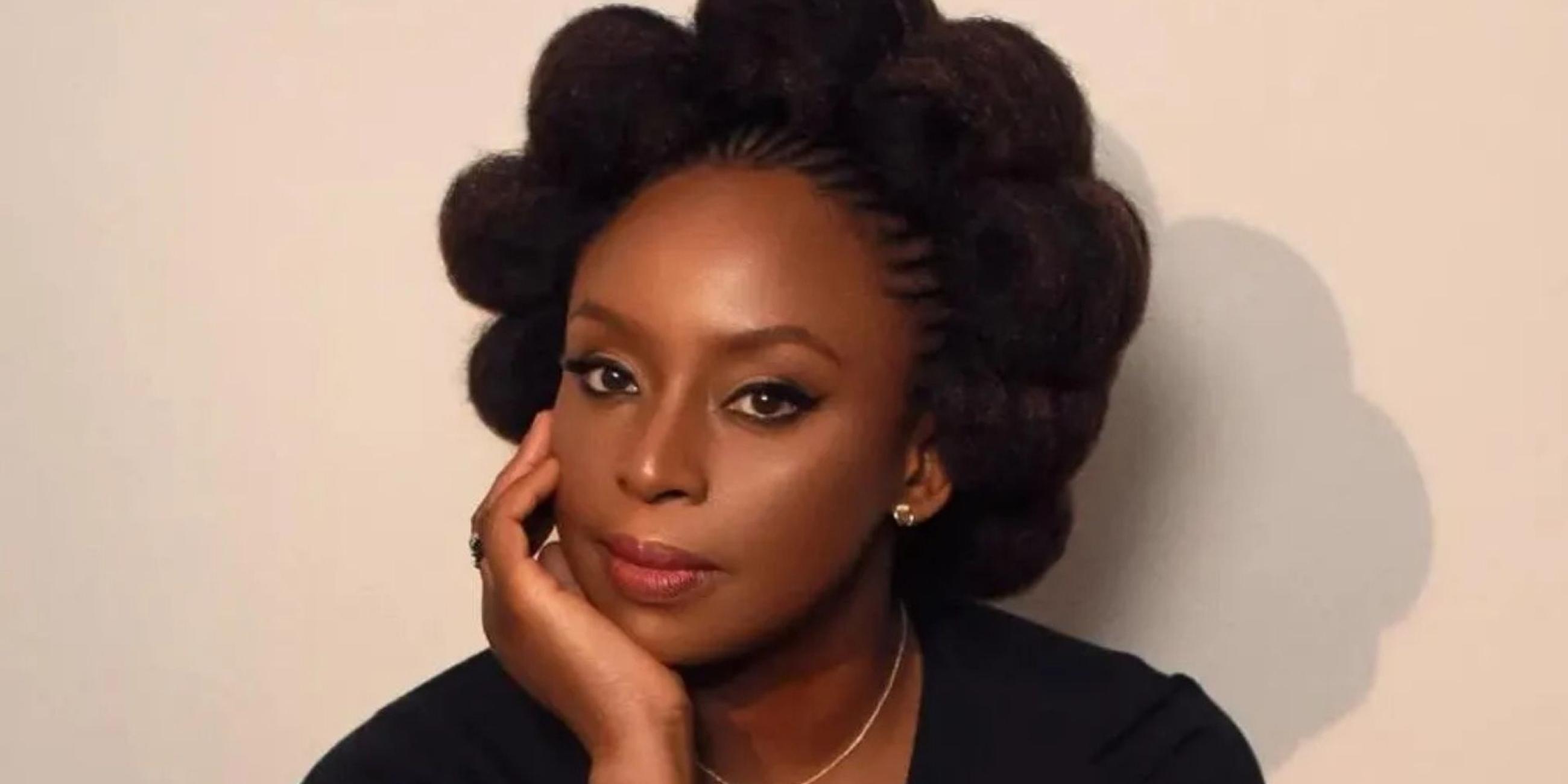
  • Wahala Don Set Oo! Chimamanda Adichie’s Son Dies, Editors Demand Probe Into Alleged Lagos Hospital Negligence

    Wahala don really set for Nigeria’s healthcare system oo! Literary editors and public intellectuals are mourning the tragic death of Chimamanda Ngozi Adichie’s 21-month-old son, Nnamdi, while demanding a full and transparent investigation into what they describe as possible medical negligence at a Lagos hospital.

    Co-editors of Camouflage: Best of Contemporary Writing from Nigeria, Professors Nduka Otiono and Odoh Diego Okenyodo, described the loss as “profoundly shattering,” joining Nigerians at home and abroad in sympathising with the award-winning author and her husband, Dr. Ivara Esege.

    “Losing a child is a pain no parent should ever experience,” the editors said, expressing deep condolences and standing in solidarity with Adichie in what they called her darkest hour.

    The statement followed Adichie’s emotional public account in which she alleged that her son’s death on January 6, 2026, was avoidable and resulted from negligence during what should have been routine medical procedures at a Lagos-based hospital.

    Quoting her directly, the editors stated: “My son would be alive today if not for an incident at Euracare Hospital on January 6th.”

    This revelation has sparked nationwide outrage, with many Nigerians asking tough questions about the safety of hospitals and accountability in the country’s healthcare system.

    In response to the public outcry, the Lagos State Government has ordered an independent investigation into the incident, promising that anyone found responsible would face justice. The editors, however, insisted that the probe must not be cosmetic.

    “We urge that the investigation be thorough, transparent, and impartial. Every detail must be uncovered so that the truth emerges,” they said.

    But this tragedy, they warned, is not just about one family.

    According to Otiono and Okenyodo, the death of little Nnamdi exposes deeper, long-standing problems in Nigeria’s healthcare sector—ranging from weak accountability to delays in care and unethical practices. They referenced findings from an anti-corruption survey by TAP Initiative and Dataphyte, which highlighted how informal payments and systemic failures often compromise patient safety.

    While clarifying that they were not directly accusing the hospital of such practices, the editors stressed that Nigeria must confront the culture that allows negligence to thrive.

    “It is intolerable that any patient—child or adult—should be denied timely care or placed in danger due to failure, indifference, or greed,” the statement read.

    They called for:

    A comprehensive, independent investigation into all medical and administrative actions surrounding Nnamdi’s death.

    Public disclosure of findings, as promised by the Lagos State Government.

    Immediate reforms in hospital oversight, with strict sanctions for any healthcare worker found guilty of negligence.


    “The people of Lagos have the right to know what happened. If anyone is guilty—whether individual or institution—they must be held fully responsible,” they said.

    Beyond justice for Adichie’s family, the editors said the case should become a turning point for Nigeria.

    “This should catalyse nationwide action. Our hospitals must be places of care and compassion, not sites of preventable tragedy,” they added.

    Paying tribute to the late child, they expressed hope that his death would not be in vain, and that truth, accountability, and reform would emerge from the pain.

    As Nigerians continue to mourn with one of Africa’s most celebrated writers, one thing is clear: wahala don set oo. This case has opened a national conversation about patient safety, hospital accountability, and whether ordinary Nigerians—and even global figures—are truly safe in the country’s healthcare system.


    Wahala Don Set Oo! Chimamanda Adichie’s Son Dies, Editors Demand Probe Into Alleged Lagos Hospital Negligence Wahala don really set for Nigeria’s healthcare system oo! Literary editors and public intellectuals are mourning the tragic death of Chimamanda Ngozi Adichie’s 21-month-old son, Nnamdi, while demanding a full and transparent investigation into what they describe as possible medical negligence at a Lagos hospital. Co-editors of Camouflage: Best of Contemporary Writing from Nigeria, Professors Nduka Otiono and Odoh Diego Okenyodo, described the loss as “profoundly shattering,” joining Nigerians at home and abroad in sympathising with the award-winning author and her husband, Dr. Ivara Esege. “Losing a child is a pain no parent should ever experience,” the editors said, expressing deep condolences and standing in solidarity with Adichie in what they called her darkest hour. The statement followed Adichie’s emotional public account in which she alleged that her son’s death on January 6, 2026, was avoidable and resulted from negligence during what should have been routine medical procedures at a Lagos-based hospital. Quoting her directly, the editors stated: “My son would be alive today if not for an incident at Euracare Hospital on January 6th.” This revelation has sparked nationwide outrage, with many Nigerians asking tough questions about the safety of hospitals and accountability in the country’s healthcare system. In response to the public outcry, the Lagos State Government has ordered an independent investigation into the incident, promising that anyone found responsible would face justice. The editors, however, insisted that the probe must not be cosmetic. “We urge that the investigation be thorough, transparent, and impartial. Every detail must be uncovered so that the truth emerges,” they said. But this tragedy, they warned, is not just about one family. According to Otiono and Okenyodo, the death of little Nnamdi exposes deeper, long-standing problems in Nigeria’s healthcare sector—ranging from weak accountability to delays in care and unethical practices. They referenced findings from an anti-corruption survey by TAP Initiative and Dataphyte, which highlighted how informal payments and systemic failures often compromise patient safety. While clarifying that they were not directly accusing the hospital of such practices, the editors stressed that Nigeria must confront the culture that allows negligence to thrive. “It is intolerable that any patient—child or adult—should be denied timely care or placed in danger due to failure, indifference, or greed,” the statement read. They called for: A comprehensive, independent investigation into all medical and administrative actions surrounding Nnamdi’s death. Public disclosure of findings, as promised by the Lagos State Government. Immediate reforms in hospital oversight, with strict sanctions for any healthcare worker found guilty of negligence. “The people of Lagos have the right to know what happened. If anyone is guilty—whether individual or institution—they must be held fully responsible,” they said. Beyond justice for Adichie’s family, the editors said the case should become a turning point for Nigeria. “This should catalyse nationwide action. Our hospitals must be places of care and compassion, not sites of preventable tragedy,” they added. Paying tribute to the late child, they expressed hope that his death would not be in vain, and that truth, accountability, and reform would emerge from the pain. As Nigerians continue to mourn with one of Africa’s most celebrated writers, one thing is clear: wahala don set oo. This case has opened a national conversation about patient safety, hospital accountability, and whether ordinary Nigerians—and even global figures—are truly safe in the country’s healthcare system.
    0 Comments ·0 Shares ·1K Views
  • Wahala Don Set Oo! Nigerian BEA Scholar in Hungary Faces Expulsion Over Unpaid $10,450 Allowance

    Wahala don really set for abroad oo! A Nigerian postgraduate student studying in Hungary under the Federal Government’s Bilateral Education Agreement (BEA) scholarship has raised alarm after spending over one year without receiving a single kobo of his approved allowances. Now, he is facing possible expulsion and homelessness because his residence permit is about to expire.

    The student, Oluwasegun Michael Ogundele of the University of Pannonia, has petitioned the House of Representatives Committee on Student Loans, Scholarships, and Higher Education Financing, crying out that since he resumed studies in September 2024, the Federal Scholarship Board (FSB) and the Federal Ministry of Education have failed to pay any of the funds promised under his scholarship.

    According to him, the agreement between the Nigerian and Hungarian governments clearly stated his entitlements, yet nothing has been paid till date. These include a $6,000 yearly allowance, $250 for warm clothing, $200 for health insurance, a N100,000 take-off grant, a $1,000 postgraduate research grant, and a return ticket to Nigeria. In total, the unpaid money now stands at $10,450.

    Ogundele said the situation has pushed him into serious hardship. For the past 18 months, he has survived only on a small monthly stipend of about €110 from Hungary’s Tempus Scholarship Foundation. He described his condition as one of illness, emotional trauma, and constant anxiety about basic survival.

    “My academic performance and mental health have suffered. I am constantly worried about how to eat, pay bills, and remain legal in this country,” he said.

    The wahala no end there. His programme is expected to finish by January 30, 2026, while his residence permit expires the very next day. Yet, he has no money to buy a ticket back to Nigeria. His passage allowance of $2,500, which should help him return home, has also not been paid.

    He further revealed that he has not taken up any paid job because scholarship rules forbid it. Still, despite obeying all conditions, the government has failed to honour its own agreement.

    In his petition, Ogundele begged the House Committee to urgently intervene and ensure immediate payment of all outstanding entitlements. He warned that his case is not isolated, stating that many Nigerian students abroad under the BEA scheme are suffering in silence. Some, according to him, have taken degrading jobs to survive, while others have reportedly died due to stress and untreated illnesses.

    “Many of us are being treated like beggars abroad. We are looked down upon, and it has destroyed our dignity as Nigerians. The suffering imposed on us is unimaginable,” he wrote.

    The matter has also drawn political attention. Former Vice President Atiku Abubakar recently accused the Tinubu administration of abandoning Nigerian students under the BEA programme, saying over 1,600 students abroad are owed stipends and have been left stranded.

    However, the Federal Government has denied abandoning students, stating that funding delays were due to fiscal constraints and that it remains committed to students already enrolled. The Ministry of Education also disclosed that no new bilateral scholarships were awarded in 2025, as Nigeria now claims it has enough local capacity to train students at home.

    But for students like Ogundele, policy explanations no dey stop hunger.

    As his deadline approaches and eviction looms, Nigerians are now asking: how can a government send students abroad in the name of national development, then leave them to suffer alone?

    One thing be sure: wahala don set oo for this BEA scholarship matter—and everybody dey watch how government go respond.
    Wahala Don Set Oo! Nigerian BEA Scholar in Hungary Faces Expulsion Over Unpaid $10,450 Allowance Wahala don really set for abroad oo! A Nigerian postgraduate student studying in Hungary under the Federal Government’s Bilateral Education Agreement (BEA) scholarship has raised alarm after spending over one year without receiving a single kobo of his approved allowances. Now, he is facing possible expulsion and homelessness because his residence permit is about to expire. The student, Oluwasegun Michael Ogundele of the University of Pannonia, has petitioned the House of Representatives Committee on Student Loans, Scholarships, and Higher Education Financing, crying out that since he resumed studies in September 2024, the Federal Scholarship Board (FSB) and the Federal Ministry of Education have failed to pay any of the funds promised under his scholarship. According to him, the agreement between the Nigerian and Hungarian governments clearly stated his entitlements, yet nothing has been paid till date. These include a $6,000 yearly allowance, $250 for warm clothing, $200 for health insurance, a N100,000 take-off grant, a $1,000 postgraduate research grant, and a return ticket to Nigeria. In total, the unpaid money now stands at $10,450. Ogundele said the situation has pushed him into serious hardship. For the past 18 months, he has survived only on a small monthly stipend of about €110 from Hungary’s Tempus Scholarship Foundation. He described his condition as one of illness, emotional trauma, and constant anxiety about basic survival. “My academic performance and mental health have suffered. I am constantly worried about how to eat, pay bills, and remain legal in this country,” he said. The wahala no end there. His programme is expected to finish by January 30, 2026, while his residence permit expires the very next day. Yet, he has no money to buy a ticket back to Nigeria. His passage allowance of $2,500, which should help him return home, has also not been paid. He further revealed that he has not taken up any paid job because scholarship rules forbid it. Still, despite obeying all conditions, the government has failed to honour its own agreement. In his petition, Ogundele begged the House Committee to urgently intervene and ensure immediate payment of all outstanding entitlements. He warned that his case is not isolated, stating that many Nigerian students abroad under the BEA scheme are suffering in silence. Some, according to him, have taken degrading jobs to survive, while others have reportedly died due to stress and untreated illnesses. “Many of us are being treated like beggars abroad. We are looked down upon, and it has destroyed our dignity as Nigerians. The suffering imposed on us is unimaginable,” he wrote. The matter has also drawn political attention. Former Vice President Atiku Abubakar recently accused the Tinubu administration of abandoning Nigerian students under the BEA programme, saying over 1,600 students abroad are owed stipends and have been left stranded. However, the Federal Government has denied abandoning students, stating that funding delays were due to fiscal constraints and that it remains committed to students already enrolled. The Ministry of Education also disclosed that no new bilateral scholarships were awarded in 2025, as Nigeria now claims it has enough local capacity to train students at home. But for students like Ogundele, policy explanations no dey stop hunger. As his deadline approaches and eviction looms, Nigerians are now asking: how can a government send students abroad in the name of national development, then leave them to suffer alone? One thing be sure: wahala don set oo for this BEA scholarship matter—and everybody dey watch how government go respond.
    like
    1
    · 0 Comments ·0 Shares ·1K Views
  • Ahhhh wahala don set oo! Northern Nigeria don scatter. bandits don turn wahala full ground, from cattle rustling to kidnapping, village burnings, even sex slavery. Samuel Aruwan don break am down say this one no be small small grievance matter again—na full-blown criminal enterprise wey dey make money, control land, weapons, and even terror networks cross borders.

    E don reach point wey dialogue dey soft for some, but bandits dey exploit am for cash. North-West dey record over 400 kidnapping cases, ransom don reach trillions, people dey die by hundreds of thousands.

    E get two sides of the story:
    1️⃣ Low-risk actors wey na just defend themselves, maybe small dialogue fit work.
    2️⃣ High-risk, AK-47 carrying bandit networks wey dey profit from terror—these ones na target-only matter, force plus intelligence, no time for political drama.

    If state no sharp, these criminal networks fit turn full-scale terrorist groups, like Boko Haram round two. Nigeria must classify the threat, cut their cash flow, enforce law, and no dey play emotional card.

    TL;DR: Banditry don change level! Na criminal economy, not ethnic fight. Dialogue dey place, but only for those wey no dey kidnap, kill, or enslave people. For serious bandits, force + intelligence + law dey mandatory.

    Ahhhh wahala don set oo! 😱 Northern Nigeria don scatter. bandits don turn wahala full ground, from cattle rustling to kidnapping, village burnings, even sex slavery. Samuel Aruwan don break am down say this one no be small small grievance matter again—na full-blown criminal enterprise wey dey make money, control land, weapons, and even terror networks cross borders. E don reach point wey dialogue dey soft for some, but bandits dey exploit am for cash. North-West dey record over 400 kidnapping cases, ransom don reach trillions, people dey die by hundreds of thousands. 😬 E get two sides of the story: 1️⃣ Low-risk actors wey na just defend themselves, maybe small dialogue fit work. 2️⃣ High-risk, AK-47 carrying bandit networks wey dey profit from terror—these ones na target-only matter, force plus intelligence, no time for political drama. If state no sharp, these criminal networks fit turn full-scale terrorist groups, like Boko Haram round two. Nigeria must classify the threat, cut their cash flow, enforce law, and no dey play emotional card. TL;DR: Banditry don change level! Na criminal economy, not ethnic fight. Dialogue dey place, but only for those wey no dey kidnap, kill, or enslave people. For serious bandits, force + intelligence + law dey mandatory.
    0 Comments ·0 Shares ·1K Views
  • Is the ‘Christian Genocide’ in Nigeria a Political Narrative? Why Trump Admits Muslims Are Also Killed as Sowore Accuses the U.S. of Using Religion to Justify Power, Oil, and Military Influence

    Is the narrative of a “Christian genocide” in Nigeria an honest reflection of the country’s security crisis—or a political tool shaped by foreign interests? United States President Donald Trump has made a partial shift in his long-standing rhetoric on religious violence in Nigeria, acknowledging that Muslims are also being killed, even while maintaining that Christians remain the primary victims.

    Trump made the remarks during an interview with The New York Times following questions about Washington’s Christmas Day military strike in northwest Nigeria. The U.S. military said the operation, carried out at the request of the Nigerian government, targeted Islamic State West Africa Province (ISWAP), a Boko Haram splinter group responsible for years of deadly attacks across northern Nigeria.

    When asked about earlier comments from his own Africa adviser—who had stated that extremist groups in Nigeria kill more Muslims than Christians—Trump responded: “I think that Muslims are being killed also in Nigeria. But it’s mostly Christians.” The statement marked a rare acknowledgment that Nigeria’s victims of terrorism cut across religious lines, even as Trump continued to frame the conflict primarily through a Christian persecution lens.

    The comments immediately drew a sharp response from Omoyele Sowore, former Nigerian presidential candidate and prominent human rights activist. In a series of posts on X (formerly Twitter), Sowore dismissed the “Christian genocide” narrative as a calculated political construct, arguing that it is designed to stir emotion, mobilize conservative audiences abroad, and provide moral cover for foreign military, economic, and geopolitical agendas.

    Sowore accused Trump of using religion as a rhetorical device while pursuing what he described as imperial interests tied to oil, rare earth minerals, and strategic dominance. “The narrative used to justify it is secondary,” Sowore wrote, adding that such framing only needs to “match the gullibility of the intended audience.” According to him, claims of systematic religious genocide in Nigeria are not grounded in objective reality but are deliberately shaped to occupy a powerful emotional space in Western political discourse.

    He further challenged Trump’s moral authority to speak on Christian values, asserting that the former U.S. president does not embody the compassion, humility, or solidarity central to the faith he frequently invokes. Sowore argued that Trump’s selective concern for religious identity masks a broader indifference to human suffering—both abroad and at home—unless it aligns with his political interests.

    The controversy highlights a deeper question: Is Nigeria’s complex security crisis being oversimplified into a religious conflict for international consumption? While jihadist groups like ISWAP and Boko Haram have undeniably targeted Christian communities, they have also killed thousands of Muslims, including traditional leaders, clerics, villagers, and security personnel. Analysts have long warned that framing the violence as exclusively anti-Christian risks distorting reality, inflaming sectarian tensions, and obscuring the political, economic, and territorial dimensions of the conflict.

    Trump’s admission that Muslims are also victims, even if partial, challenges his earlier absolutist framing. Yet his insistence that Christians remain the main targets continues to fuel debate about whether U.S. policy toward Nigeria is being shaped by faith-based narratives rather than nuanced security analysis.

    As Nigeria battles insurgency, banditry, and transnational terrorism, the exchange between Trump and Sowore underscores how global power politics, religious identity, and media narratives intersect in shaping international responses to African conflicts. The key question remains: is the world seeing Nigeria’s crisis as it truly is—or as it is most politically useful to portray?


    Is the ‘Christian Genocide’ in Nigeria a Political Narrative? Why Trump Admits Muslims Are Also Killed as Sowore Accuses the U.S. of Using Religion to Justify Power, Oil, and Military Influence Is the narrative of a “Christian genocide” in Nigeria an honest reflection of the country’s security crisis—or a political tool shaped by foreign interests? United States President Donald Trump has made a partial shift in his long-standing rhetoric on religious violence in Nigeria, acknowledging that Muslims are also being killed, even while maintaining that Christians remain the primary victims. Trump made the remarks during an interview with The New York Times following questions about Washington’s Christmas Day military strike in northwest Nigeria. The U.S. military said the operation, carried out at the request of the Nigerian government, targeted Islamic State West Africa Province (ISWAP), a Boko Haram splinter group responsible for years of deadly attacks across northern Nigeria. When asked about earlier comments from his own Africa adviser—who had stated that extremist groups in Nigeria kill more Muslims than Christians—Trump responded: “I think that Muslims are being killed also in Nigeria. But it’s mostly Christians.” The statement marked a rare acknowledgment that Nigeria’s victims of terrorism cut across religious lines, even as Trump continued to frame the conflict primarily through a Christian persecution lens. The comments immediately drew a sharp response from Omoyele Sowore, former Nigerian presidential candidate and prominent human rights activist. In a series of posts on X (formerly Twitter), Sowore dismissed the “Christian genocide” narrative as a calculated political construct, arguing that it is designed to stir emotion, mobilize conservative audiences abroad, and provide moral cover for foreign military, economic, and geopolitical agendas. Sowore accused Trump of using religion as a rhetorical device while pursuing what he described as imperial interests tied to oil, rare earth minerals, and strategic dominance. “The narrative used to justify it is secondary,” Sowore wrote, adding that such framing only needs to “match the gullibility of the intended audience.” According to him, claims of systematic religious genocide in Nigeria are not grounded in objective reality but are deliberately shaped to occupy a powerful emotional space in Western political discourse. He further challenged Trump’s moral authority to speak on Christian values, asserting that the former U.S. president does not embody the compassion, humility, or solidarity central to the faith he frequently invokes. Sowore argued that Trump’s selective concern for religious identity masks a broader indifference to human suffering—both abroad and at home—unless it aligns with his political interests. The controversy highlights a deeper question: Is Nigeria’s complex security crisis being oversimplified into a religious conflict for international consumption? While jihadist groups like ISWAP and Boko Haram have undeniably targeted Christian communities, they have also killed thousands of Muslims, including traditional leaders, clerics, villagers, and security personnel. Analysts have long warned that framing the violence as exclusively anti-Christian risks distorting reality, inflaming sectarian tensions, and obscuring the political, economic, and territorial dimensions of the conflict. Trump’s admission that Muslims are also victims, even if partial, challenges his earlier absolutist framing. Yet his insistence that Christians remain the main targets continues to fuel debate about whether U.S. policy toward Nigeria is being shaped by faith-based narratives rather than nuanced security analysis. As Nigeria battles insurgency, banditry, and transnational terrorism, the exchange between Trump and Sowore underscores how global power politics, religious identity, and media narratives intersect in shaping international responses to African conflicts. The key question remains: is the world seeing Nigeria’s crisis as it truly is—or as it is most politically useful to portray?
    0 Comments ·0 Shares ·2K Views
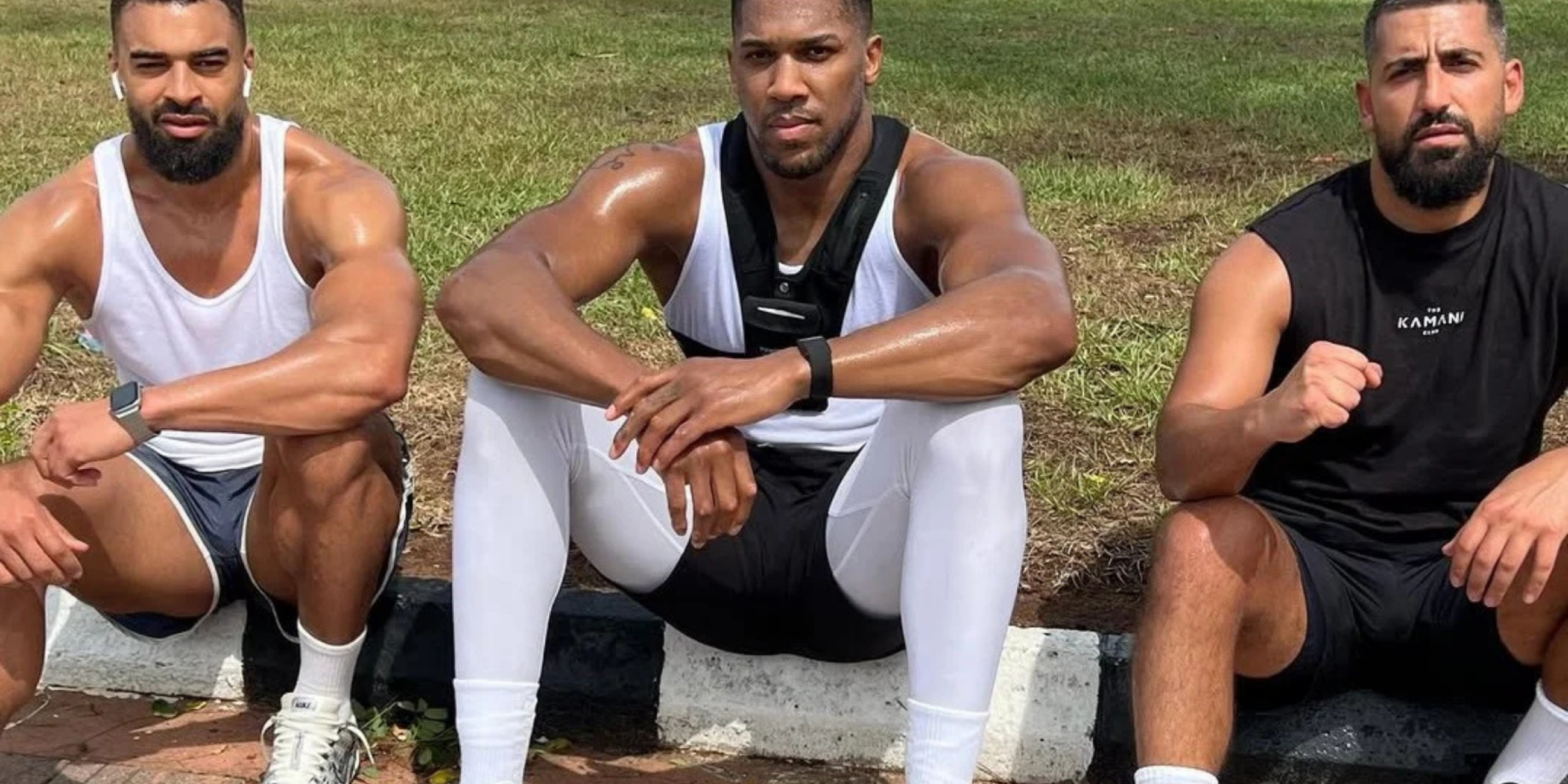
  • How Did Anthony Joshua Survive While His Friends Died? Boxer Breaks Silence After Tragic Crash, Mourns Sina Ghami and Latif ‘Latz’ Ayodele

    How does a world-famous champion come to terms with a tragedy that took the lives of those closest to him? And what does faith, grief, and survival mean when you are left behind?

    Former heavyweight boxing champion Anthony Joshua has finally broken his silence after the fatal crash that claimed the lives of his close friends, Sina Ghami and Latif “Latz” Ayodele, describing the moment as one of deep sorrow, reflection, and spiritual resolve. In his first public message since the incident, Joshua turned to X (formerly Twitter) to thank supporters and mourn the men he called his “brothers.”

    Their funeral prayers, held at the London Central Mosque, drew large crowds of mourners from both the Nigerian and British communities, including friends, associates, and supporters who gathered to pay their final respects. The turnout reflected not just the loss of two individuals, but the weight of a tragedy that has shaken Joshua’s inner circle.

    In his message, the boxer revealed how he had never fully understood the importance of those around him until it was too late. “I didn’t even realise how special they are… not even knowing God kept me in the presence of great men,” he wrote. His words captured the pain of hindsight—how ordinary moments of laughter and companionship suddenly became memories of irreplaceable lives.

    But was Joshua the true victim of the crash—or merely the survivor of a loss that families will carry forever? The boxer acknowledged that while the experience had been emotionally devastating for him, the burden on the parents and loved ones of the deceased was far heavier. “100% it’s tough for me, but I know it’s even tougher for their parents,” he said.

    Joshua also turned to faith for comfort, expressing his belief that God understood the hearts of the men who were lost. “I have a strong mind, and I believe God knows their hearts,” he wrote, before ending with a simple but powerful prayer: “May God have mercy on my brothers.”

    As investigations into the circumstances surrounding the crash continue, public attention has remained fixed not only on the tragedy itself but on Joshua’s survival. Why was the boxing star spared when those closest to him were not? And how does one move forward when fame, success, and strength cannot shield against grief?

    For fans around the world, Joshua’s message offers more than mourning—it reveals a deeply personal side of a global sports icon grappling with loss, faith, and the fragile nature of life. In the aftermath of the crash, his words stand as a reminder that even champions are not immune to heartbreak, and that survival can sometimes be the heaviest burden of all.


    How Did Anthony Joshua Survive While His Friends Died? Boxer Breaks Silence After Tragic Crash, Mourns Sina Ghami and Latif ‘Latz’ Ayodele How does a world-famous champion come to terms with a tragedy that took the lives of those closest to him? And what does faith, grief, and survival mean when you are left behind? Former heavyweight boxing champion Anthony Joshua has finally broken his silence after the fatal crash that claimed the lives of his close friends, Sina Ghami and Latif “Latz” Ayodele, describing the moment as one of deep sorrow, reflection, and spiritual resolve. In his first public message since the incident, Joshua turned to X (formerly Twitter) to thank supporters and mourn the men he called his “brothers.” Their funeral prayers, held at the London Central Mosque, drew large crowds of mourners from both the Nigerian and British communities, including friends, associates, and supporters who gathered to pay their final respects. The turnout reflected not just the loss of two individuals, but the weight of a tragedy that has shaken Joshua’s inner circle. In his message, the boxer revealed how he had never fully understood the importance of those around him until it was too late. “I didn’t even realise how special they are… not even knowing God kept me in the presence of great men,” he wrote. His words captured the pain of hindsight—how ordinary moments of laughter and companionship suddenly became memories of irreplaceable lives. But was Joshua the true victim of the crash—or merely the survivor of a loss that families will carry forever? The boxer acknowledged that while the experience had been emotionally devastating for him, the burden on the parents and loved ones of the deceased was far heavier. “100% it’s tough for me, but I know it’s even tougher for their parents,” he said. Joshua also turned to faith for comfort, expressing his belief that God understood the hearts of the men who were lost. “I have a strong mind, and I believe God knows their hearts,” he wrote, before ending with a simple but powerful prayer: “May God have mercy on my brothers.” As investigations into the circumstances surrounding the crash continue, public attention has remained fixed not only on the tragedy itself but on Joshua’s survival. Why was the boxing star spared when those closest to him were not? And how does one move forward when fame, success, and strength cannot shield against grief? For fans around the world, Joshua’s message offers more than mourning—it reveals a deeply personal side of a global sports icon grappling with loss, faith, and the fragile nature of life. In the aftermath of the crash, his words stand as a reminder that even champions are not immune to heartbreak, and that survival can sometimes be the heaviest burden of all.
    love
    1
    · 0 Comments ·0 Shares ·659 Views
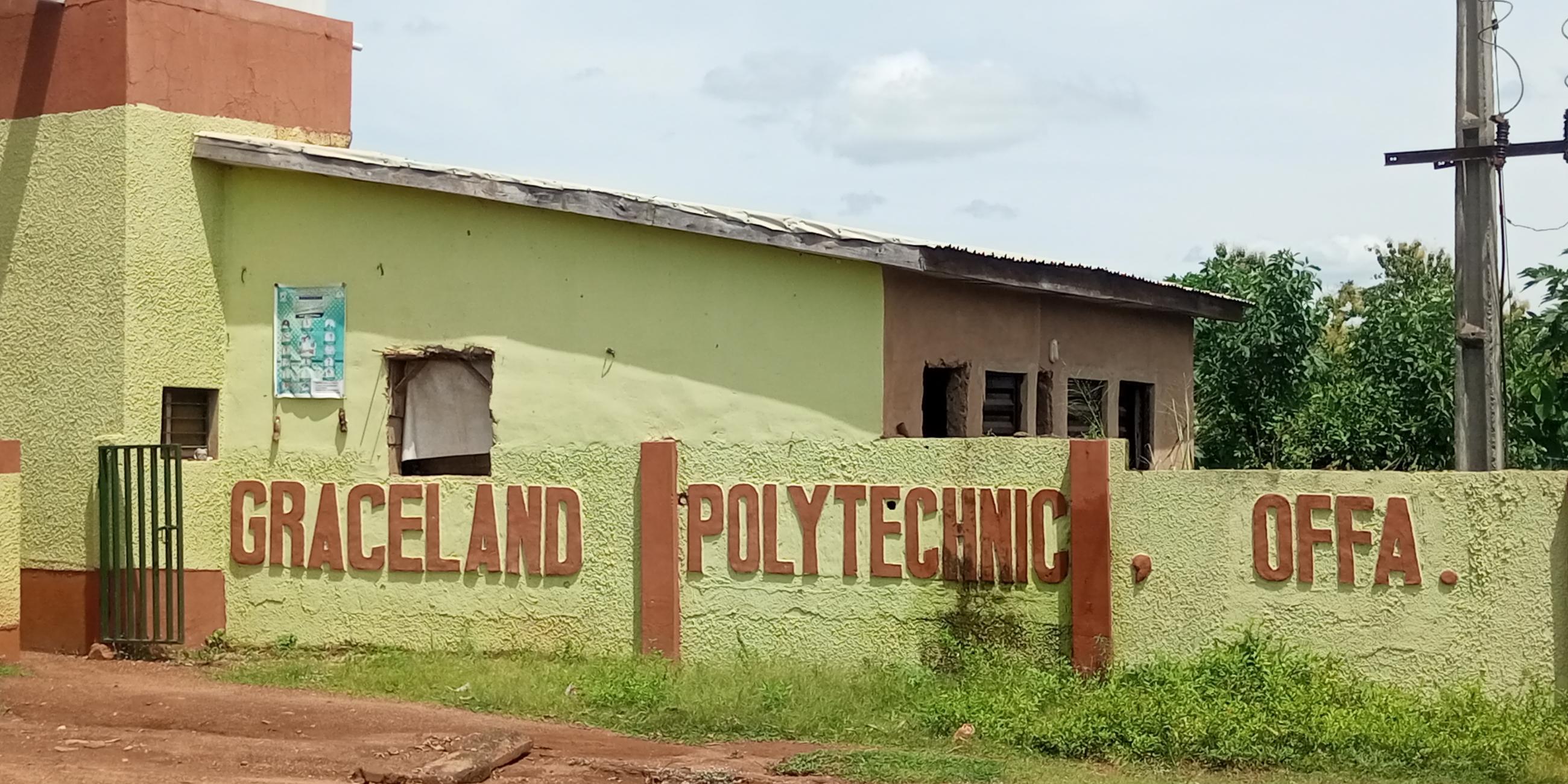
  • Did Graceland Polytechnic Scam Its Graduates? How Fake Admissions, Missing JAMB Records and Delayed Accreditation Are Destroying Students’ Futures in Kwara State

    How can a student graduate with a Distinction and a CGPA of 3.72—only to be told years later that his admission never officially existed? This troubling question now surrounds Graceland Polytechnic, Offa, Kwara State, where dozens of National Diploma (ND) graduates say their academic journeys have been invalidated by alleged fake admissions and unaccredited programmes.

    One Mass Communication graduate, who completed his studies in 2022, believed his strong performance would naturally lead to HND or Direct Entry admission into a university. But when he visited the Joint Admissions and Matriculation Board (JAMB) office in Ilorin, he was shocked to learn that his name was missing from CAPS and all official admission platforms. According to JAMB officials, the polytechnic had never uploaded his admission for validation—meaning, on paper, he had never been admitted at all.

    Was this an administrative oversight—or a systemic failure that misled students for years? The graduate said repeated attempts to seek clarification from his department and ICT unit led nowhere, forcing him to abandon his dream of further education.

    Other graduates tell similar stories. A student identified as Stephen described years of fear, uncertainty, and emotional exhaustion as his future remained frozen. Another, Kenny, said he gave up entirely on academics after realizing that his ND certificate lacked recognition, choosing business over a degree that institutions would not accept.

    The crisis appears to go beyond one department. Graduates from Science and Laboratory Technology (SLT) revealed that accreditation was only granted after many students had already graduated or attempted to progress, rendering their certificates useless for further studies. Students allege that despite repeated assurances from management that programmes such as Mass Communication, SLT, Accountancy, and Computer Science were fully accredited, many were not.

    Did students unknowingly spend years paying fees for programmes that had no official standing? A leaked audio recording deepened concerns, with a former Head of Department allegedly advising students to abandon hopes of HND or Direct Entry and to use their ND only for employment—or start afresh through JAMB.

    While the school was approved by the National Board for Technical Education (NBTE) in 2019 after being founded in 2013, the Registrar has admitted that accreditation for some courses only came in early 2025, excluding earlier graduates. He acknowledged the students’ suffering but described the situation as one inherited from past management.

    For affected graduates, the issue goes beyond paperwork. They speak of stolen years, broken trust, wasted finances, and futures unfairly placed on hold. Many are now calling on regulatory authorities to investigate the institution, warning that without accountability, more young Nigerians may fall victim to what they describe as an education scam disguised as opportunity.

    Is this merely a case of poor administration—or a deeper failure in Nigeria’s education oversight system?

    Did Graceland Polytechnic Scam Its Graduates? How Fake Admissions, Missing JAMB Records and Delayed Accreditation Are Destroying Students’ Futures in Kwara State How can a student graduate with a Distinction and a CGPA of 3.72—only to be told years later that his admission never officially existed? This troubling question now surrounds Graceland Polytechnic, Offa, Kwara State, where dozens of National Diploma (ND) graduates say their academic journeys have been invalidated by alleged fake admissions and unaccredited programmes. One Mass Communication graduate, who completed his studies in 2022, believed his strong performance would naturally lead to HND or Direct Entry admission into a university. But when he visited the Joint Admissions and Matriculation Board (JAMB) office in Ilorin, he was shocked to learn that his name was missing from CAPS and all official admission platforms. According to JAMB officials, the polytechnic had never uploaded his admission for validation—meaning, on paper, he had never been admitted at all. Was this an administrative oversight—or a systemic failure that misled students for years? The graduate said repeated attempts to seek clarification from his department and ICT unit led nowhere, forcing him to abandon his dream of further education. Other graduates tell similar stories. A student identified as Stephen described years of fear, uncertainty, and emotional exhaustion as his future remained frozen. Another, Kenny, said he gave up entirely on academics after realizing that his ND certificate lacked recognition, choosing business over a degree that institutions would not accept. The crisis appears to go beyond one department. Graduates from Science and Laboratory Technology (SLT) revealed that accreditation was only granted after many students had already graduated or attempted to progress, rendering their certificates useless for further studies. Students allege that despite repeated assurances from management that programmes such as Mass Communication, SLT, Accountancy, and Computer Science were fully accredited, many were not. Did students unknowingly spend years paying fees for programmes that had no official standing? A leaked audio recording deepened concerns, with a former Head of Department allegedly advising students to abandon hopes of HND or Direct Entry and to use their ND only for employment—or start afresh through JAMB. While the school was approved by the National Board for Technical Education (NBTE) in 2019 after being founded in 2013, the Registrar has admitted that accreditation for some courses only came in early 2025, excluding earlier graduates. He acknowledged the students’ suffering but described the situation as one inherited from past management. For affected graduates, the issue goes beyond paperwork. They speak of stolen years, broken trust, wasted finances, and futures unfairly placed on hold. Many are now calling on regulatory authorities to investigate the institution, warning that without accountability, more young Nigerians may fall victim to what they describe as an education scam disguised as opportunity. Is this merely a case of poor administration—or a deeper failure in Nigeria’s education oversight system?
    like
    1
    · 0 Comments ·0 Shares ·790 Views
  • Why Was a Woman’s Home Burnt for Worshipping Osun in Kwara, Why Were Suspects Freed, and Has Religious Extremism Now Replaced Justice in Ilorin?

    A disturbing case of alleged religious persecution has emerged from Ilorin, Kwara State, where a traditional worshipper, Mrs. T.A. Olorisha, says her home was deliberately set ablaze because of her faith, while suspects arrested over the incident were later released by the police. The traumatised woman has now issued a desperate plea for help, warning that she may take her own life if justice is not served.

    According to Olorisha, she had lived peacefully for years in the Isalẹ Koko area of Ilorin until community members allegedly targeted her over her devotion to Osun, a deity in Yoruba traditional religion. In an emotional video, she recounted how she was summoned to a meeting weeks before the incident, where nine men reportedly told her that an Islamic cleric (“Alfa”) had declared that traditional worshippers were no longer welcome in the community.

    She said she challenged the claim and demanded to meet the cleric face-to-face, insisting she had done nothing wrong. Instead, the men allegedly threatened her, warning that she should either comply or face consequences. Olorisha recalled that one man openly asked what would happen if her house was burnt, while a police officer present advised restraint and later warned the men against causing trouble.

    However, while Olorisha travelled to her hometown to attend a traditional festival, her house was allegedly set on fire on January 1, 2026. The blaze destroyed all her belongings, including livestock, leaving her homeless and destitute. She says she has since been moving around in a single piece of clothing, struggling to survive.

    Her anguish deepened when she learned that suspects initially arrested over the arson had been released, raising fears of intimidation and impunity. In a tearful appeal, she called on Nigerians—especially traditional worshippers—to intervene on her behalf, saying she has nowhere else to turn. She warned that continued abandonment and injustice could push her to suicide.

    SaharaReporters previously reported that three men were arrested in connection with the attack, and the Kwara State Police Command acknowledged awareness of the case. Yet the alleged release of suspects has intensified public concern about whether law enforcement is willing—or able—to confront religious extremism.

    The incident has drawn strong condemnation from Omoyele Sowore, human rights activist and publisher of SaharaReporters, who described the attack as part of a broader pattern of religious intolerance in Ilorin. He warned that extremists must be stopped immediately and reminded authorities that no individual or group has the right to impose religious beliefs on others. Sowore referenced a similar 2023 case involving traditional religion activist Tani Olohun, arguing that repeated failures to enforce the law embolden mobs and radical elements.

    This case has now become a national test of Nigeria’s commitment to religious freedom, constitutional rights, and the rule of law. Why was a woman’s home allegedly destroyed for her beliefs? Why were suspects reportedly freed? And how long will religious intolerance be allowed to override justice in a democratic society?

    For many Nigerians, Olorisha’s plea is not just about one victim—it is about whether the state can still protect citizens from persecution based on faith, or whether silence and inaction will continue to empower extremism.
    Why Was a Woman’s Home Burnt for Worshipping Osun in Kwara, Why Were Suspects Freed, and Has Religious Extremism Now Replaced Justice in Ilorin? A disturbing case of alleged religious persecution has emerged from Ilorin, Kwara State, where a traditional worshipper, Mrs. T.A. Olorisha, says her home was deliberately set ablaze because of her faith, while suspects arrested over the incident were later released by the police. The traumatised woman has now issued a desperate plea for help, warning that she may take her own life if justice is not served. According to Olorisha, she had lived peacefully for years in the Isalẹ Koko area of Ilorin until community members allegedly targeted her over her devotion to Osun, a deity in Yoruba traditional religion. In an emotional video, she recounted how she was summoned to a meeting weeks before the incident, where nine men reportedly told her that an Islamic cleric (“Alfa”) had declared that traditional worshippers were no longer welcome in the community. She said she challenged the claim and demanded to meet the cleric face-to-face, insisting she had done nothing wrong. Instead, the men allegedly threatened her, warning that she should either comply or face consequences. Olorisha recalled that one man openly asked what would happen if her house was burnt, while a police officer present advised restraint and later warned the men against causing trouble. However, while Olorisha travelled to her hometown to attend a traditional festival, her house was allegedly set on fire on January 1, 2026. The blaze destroyed all her belongings, including livestock, leaving her homeless and destitute. She says she has since been moving around in a single piece of clothing, struggling to survive. Her anguish deepened when she learned that suspects initially arrested over the arson had been released, raising fears of intimidation and impunity. In a tearful appeal, she called on Nigerians—especially traditional worshippers—to intervene on her behalf, saying she has nowhere else to turn. She warned that continued abandonment and injustice could push her to suicide. SaharaReporters previously reported that three men were arrested in connection with the attack, and the Kwara State Police Command acknowledged awareness of the case. Yet the alleged release of suspects has intensified public concern about whether law enforcement is willing—or able—to confront religious extremism. The incident has drawn strong condemnation from Omoyele Sowore, human rights activist and publisher of SaharaReporters, who described the attack as part of a broader pattern of religious intolerance in Ilorin. He warned that extremists must be stopped immediately and reminded authorities that no individual or group has the right to impose religious beliefs on others. Sowore referenced a similar 2023 case involving traditional religion activist Tani Olohun, arguing that repeated failures to enforce the law embolden mobs and radical elements. This case has now become a national test of Nigeria’s commitment to religious freedom, constitutional rights, and the rule of law. Why was a woman’s home allegedly destroyed for her beliefs? Why were suspects reportedly freed? And how long will religious intolerance be allowed to override justice in a democratic society? For many Nigerians, Olorisha’s plea is not just about one victim—it is about whether the state can still protect citizens from persecution based on faith, or whether silence and inaction will continue to empower extremism.
    like
    1
    · 0 Comments ·0 Shares ·1K Views
More Results
Fintter https://fintter.com