About
About
Did Graceland Polytechnic Scam Its Graduates? How Fake Admissions, Missing JAMB Records and Delayed Accreditation Are Destroying Students’ Futures in Kwara State
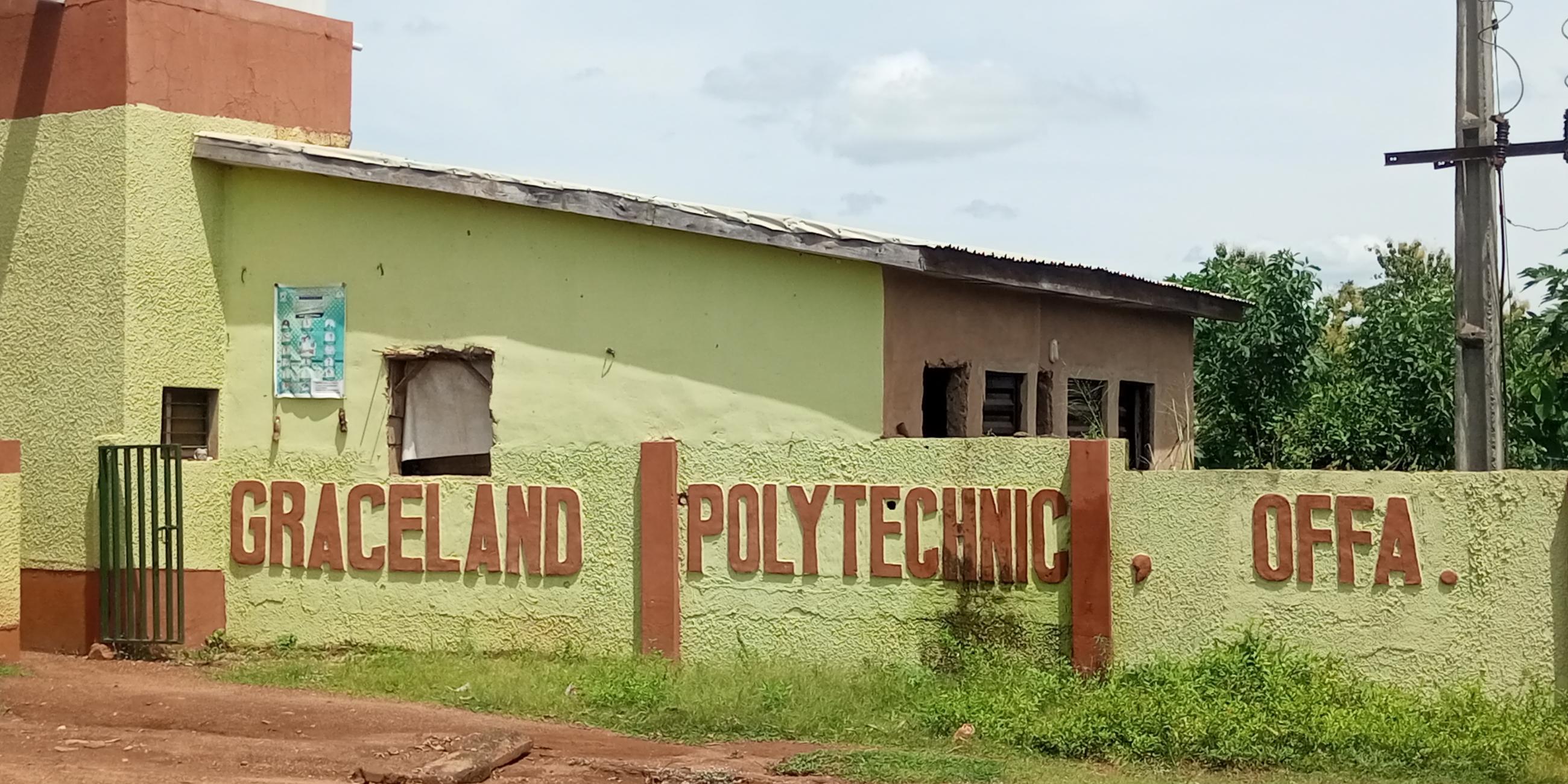
How can a student graduate with a Distinction and a CGPA of 3.72—only to be told years later that his admission never officially existed? This troubling question now surrounds Graceland Polytechnic, Offa, Kwara State, where dozens of National Diploma (ND) graduates say their academic journeys have been invalidated by alleged fake admissions and unaccredited programmes.
One Mass Communication graduate, who completed his studies in 2022, believed his strong performance would naturally lead to HND or Direct Entry admission into a university. But when he visited the Joint Admissions and Matriculation Board (JAMB) office in Ilorin, he was shocked to learn that his name was missing from CAPS and all official admission platforms. According to JAMB officials, the polytechnic had never uploaded his admission for validation—meaning, on paper, he had never been admitted at all.
Was this an administrative oversight—or a systemic failure that misled students for years? The graduate said repeated attempts to seek clarification from his department and ICT unit led nowhere, forcing him to abandon his dream of further education.
Other graduates tell similar stories. A student identified as Stephen described years of fear, uncertainty, and emotional exhaustion as his future remained frozen. Another, Kenny, said he gave up entirely on academics after realizing that his ND certificate lacked recognition, choosing business over a degree that institutions would not accept.
The crisis appears to go beyond one department. Graduates from Science and Laboratory Technology (SLT) revealed that accreditation was only granted after many students had already graduated or attempted to progress, rendering their certificates useless for further studies. Students allege that despite repeated assurances from management that programmes such as Mass Communication, SLT, Accountancy, and Computer Science were fully accredited, many were not.
Did students unknowingly spend years paying fees for programmes that had no official standing? A leaked audio recording deepened concerns, with a former Head of Department allegedly advising students to abandon hopes of HND or Direct Entry and to use their ND only for employment—or start afresh through JAMB.
While the school was approved by the National Board for Technical Education (NBTE) in 2019 after being founded in 2013, the Registrar has admitted that accreditation for some courses only came in early 2025, excluding earlier graduates. He acknowledged the students’ suffering but described the situation as one inherited from past management.
For affected graduates, the issue goes beyond paperwork. They speak of stolen years, broken trust, wasted finances, and futures unfairly placed on hold. Many are now calling on regulatory authorities to investigate the institution, warning that without accountability, more young Nigerians may fall victim to what they describe as an education scam disguised as opportunity.
Is this merely a case of poor administration—or a deeper failure in Nigeria’s education oversight system?
How can a student graduate with a Distinction and a CGPA of 3.72—only to be told years later that his admission never officially existed? This troubling question now surrounds Graceland Polytechnic, Offa, Kwara State, where dozens of National Diploma (ND) graduates say their academic journeys have been invalidated by alleged fake admissions and unaccredited programmes.
One Mass Communication graduate, who completed his studies in 2022, believed his strong performance would naturally lead to HND or Direct Entry admission into a university. But when he visited the Joint Admissions and Matriculation Board (JAMB) office in Ilorin, he was shocked to learn that his name was missing from CAPS and all official admission platforms. According to JAMB officials, the polytechnic had never uploaded his admission for validation—meaning, on paper, he had never been admitted at all.
Was this an administrative oversight—or a systemic failure that misled students for years? The graduate said repeated attempts to seek clarification from his department and ICT unit led nowhere, forcing him to abandon his dream of further education.
Other graduates tell similar stories. A student identified as Stephen described years of fear, uncertainty, and emotional exhaustion as his future remained frozen. Another, Kenny, said he gave up entirely on academics after realizing that his ND certificate lacked recognition, choosing business over a degree that institutions would not accept.
The crisis appears to go beyond one department. Graduates from Science and Laboratory Technology (SLT) revealed that accreditation was only granted after many students had already graduated or attempted to progress, rendering their certificates useless for further studies. Students allege that despite repeated assurances from management that programmes such as Mass Communication, SLT, Accountancy, and Computer Science were fully accredited, many were not.
Did students unknowingly spend years paying fees for programmes that had no official standing? A leaked audio recording deepened concerns, with a former Head of Department allegedly advising students to abandon hopes of HND or Direct Entry and to use their ND only for employment—or start afresh through JAMB.
While the school was approved by the National Board for Technical Education (NBTE) in 2019 after being founded in 2013, the Registrar has admitted that accreditation for some courses only came in early 2025, excluding earlier graduates. He acknowledged the students’ suffering but described the situation as one inherited from past management.
For affected graduates, the issue goes beyond paperwork. They speak of stolen years, broken trust, wasted finances, and futures unfairly placed on hold. Many are now calling on regulatory authorities to investigate the institution, warning that without accountability, more young Nigerians may fall victim to what they describe as an education scam disguised as opportunity.
Is this merely a case of poor administration—or a deeper failure in Nigeria’s education oversight system?
Did Graceland Polytechnic Scam Its Graduates? How Fake Admissions, Missing JAMB Records and Delayed Accreditation Are Destroying Students’ Futures in Kwara State
How can a student graduate with a Distinction and a CGPA of 3.72—only to be told years later that his admission never officially existed? This troubling question now surrounds Graceland Polytechnic, Offa, Kwara State, where dozens of National Diploma (ND) graduates say their academic journeys have been invalidated by alleged fake admissions and unaccredited programmes.
One Mass Communication graduate, who completed his studies in 2022, believed his strong performance would naturally lead to HND or Direct Entry admission into a university. But when he visited the Joint Admissions and Matriculation Board (JAMB) office in Ilorin, he was shocked to learn that his name was missing from CAPS and all official admission platforms. According to JAMB officials, the polytechnic had never uploaded his admission for validation—meaning, on paper, he had never been admitted at all.
Was this an administrative oversight—or a systemic failure that misled students for years? The graduate said repeated attempts to seek clarification from his department and ICT unit led nowhere, forcing him to abandon his dream of further education.
Other graduates tell similar stories. A student identified as Stephen described years of fear, uncertainty, and emotional exhaustion as his future remained frozen. Another, Kenny, said he gave up entirely on academics after realizing that his ND certificate lacked recognition, choosing business over a degree that institutions would not accept.
The crisis appears to go beyond one department. Graduates from Science and Laboratory Technology (SLT) revealed that accreditation was only granted after many students had already graduated or attempted to progress, rendering their certificates useless for further studies. Students allege that despite repeated assurances from management that programmes such as Mass Communication, SLT, Accountancy, and Computer Science were fully accredited, many were not.
Did students unknowingly spend years paying fees for programmes that had no official standing? A leaked audio recording deepened concerns, with a former Head of Department allegedly advising students to abandon hopes of HND or Direct Entry and to use their ND only for employment—or start afresh through JAMB.
While the school was approved by the National Board for Technical Education (NBTE) in 2019 after being founded in 2013, the Registrar has admitted that accreditation for some courses only came in early 2025, excluding earlier graduates. He acknowledged the students’ suffering but described the situation as one inherited from past management.
For affected graduates, the issue goes beyond paperwork. They speak of stolen years, broken trust, wasted finances, and futures unfairly placed on hold. Many are now calling on regulatory authorities to investigate the institution, warning that without accountability, more young Nigerians may fall victim to what they describe as an education scam disguised as opportunity.
Is this merely a case of poor administration—or a deeper failure in Nigeria’s education oversight system?