• Nigeria Revenue Service Chairman Spotted Wearing ₦25.5 Million Patek Philippe While Citizens Face New VAT

    As Nigerians struggle with inflation and a new 7.5% VAT on banking services, NRS Executive Chairman Zacch Adedeji was spotted wearing a ₦25.5 million Patek Philippe Golden Ellipse wristwatch. The luxury timepiece, featuring platinum casing and blue gold dial, highlights extreme wealth while citizens face economic hardship. The sighting has sparked outrage over the moral implications of public officials flaunting luxury amid rising taxes and financial strain.

    #NigeriaVAT #NRS #LuxuryWatch #PatekPhilippe #EconomicHardship #NigeriaNews #TaxBurden
    Nigeria Revenue Service Chairman Spotted Wearing ₦25.5 Million Patek Philippe While Citizens Face New VAT As Nigerians struggle with inflation and a new 7.5% VAT on banking services, NRS Executive Chairman Zacch Adedeji was spotted wearing a ₦25.5 million Patek Philippe Golden Ellipse wristwatch. The luxury timepiece, featuring platinum casing and blue gold dial, highlights extreme wealth while citizens face economic hardship. The sighting has sparked outrage over the moral implications of public officials flaunting luxury amid rising taxes and financial strain. #NigeriaVAT #NRS #LuxuryWatch #PatekPhilippe #EconomicHardship #NigeriaNews #TaxBurden
    like
    love
    2
    · 0 Commentarii ·0 Distribuiri ·1K Views
  • Midnight Fire Guts Adamawa Grains Market, Traders Count Heavy Losses As Foodstuffs Burn to Ashes

    A devastating midnight fire has razed Dumne’s popular grains market, Kasuwan Dadi, in Adamawa State, destroying large quantities of foodstuffs and traders’ goods. The inferno reportedly started around 1:22am, catching traders off guard as flames swept through key sections of the market. Though no lives were lost, many families suffered huge economic losses. Youths, mothers and elderly women bravely battled the fire to prevent further spread. Residents are urging government authorities to assess the damage and provide urgent relief, warning the incident could worsen food and economic hardship.

    #AdamawaFire #NigeriaNews #MarketInferno
    Midnight Fire Guts Adamawa Grains Market, Traders Count Heavy Losses As Foodstuffs Burn to Ashes A devastating midnight fire has razed Dumne’s popular grains market, Kasuwan Dadi, in Adamawa State, destroying large quantities of foodstuffs and traders’ goods. The inferno reportedly started around 1:22am, catching traders off guard as flames swept through key sections of the market. Though no lives were lost, many families suffered huge economic losses. Youths, mothers and elderly women bravely battled the fire to prevent further spread. Residents are urging government authorities to assess the damage and provide urgent relief, warning the incident could worsen food and economic hardship. #AdamawaFire #NigeriaNews #MarketInferno
    love
    1
    · 0 Commentarii ·0 Distribuiri ·1K Views
  • 2027: Getting Tinubu out of power only way to rescue Nigeria  —  ADC

    The African Democratic Congress (ADC) has declared that removing President Bola Tinubu from power in the 2027 general election is the only way to rescue Nigeria from its current challenges. The party blamed the Tinubu administration for worsening economic hardship, insecurity, and poor governance, insisting that Nigerians are suffering under present policies. ADC urged opposition parties to unite ahead of 2027, saying only a strong alternative government can restore hope, stabilize the economy, and deliver effective leadership to citizens.
    #fintternews
    2027: Getting Tinubu out of power only way to rescue Nigeria  —  ADC The African Democratic Congress (ADC) has declared that removing President Bola Tinubu from power in the 2027 general election is the only way to rescue Nigeria from its current challenges. The party blamed the Tinubu administration for worsening economic hardship, insecurity, and poor governance, insisting that Nigerians are suffering under present policies. ADC urged opposition parties to unite ahead of 2027, saying only a strong alternative government can restore hope, stabilize the economy, and deliver effective leadership to citizens. #fintternews
    love
    1
    · 0 Commentarii ·0 Distribuiri ·918 Views

  • A fresh discovery in the 2026 Appropriation Bill presented by President Bola Tinubu has sparked concerns over transparency among some Ministries, Departments, and Agencies (MDAs)….

    Findings from a preliminary review of the budget show questionable allocations, duplicated line items, and vague expenditure headings running into billions of naira. Civil society groups and lawmakers have raised alarms, calling for deeper scrutiny to prevent waste and misuse of public funds. They insist that the budget review process must ensure accountability and value for money, especially as Nigerians continue to face economic hardship and rising living costs. #fintternew
    A fresh discovery in the 2026 Appropriation Bill presented by President Bola Tinubu has sparked concerns over transparency among some Ministries, Departments, and Agencies (MDAs)…. Findings from a preliminary review of the budget show questionable allocations, duplicated line items, and vague expenditure headings running into billions of naira. Civil society groups and lawmakers have raised alarms, calling for deeper scrutiny to prevent waste and misuse of public funds. They insist that the budget review process must ensure accountability and value for money, especially as Nigerians continue to face economic hardship and rising living costs. #fintternew
    love
    1
    · 0 Commentarii ·0 Distribuiri ·839 Views
  • Documents Reveal Sokoto Lawmakers Spent ₦4.6bn on Vehicles Amid Rising Insecurity

    Documents reviewed by SaharaReporters have revealed that Sokoto State lawmakers spent ₦4.6 billion on the purchase of vehicles amid widespread insecurity and poverty in the state. Budget performance documents show that between January and September 2025, the state spent ₦1 billion on 30 vehicles for members of the House of Assembly and management staff. The expenditure has sparked criticism, coming at a time when residents continue to face worsening security challenges and economic hardship.

    #Sokoto #NigeriaPolitics #PublicFunds #Insecurity
    Documents Reveal Sokoto Lawmakers Spent ₦4.6bn on Vehicles Amid Rising Insecurity Documents reviewed by SaharaReporters have revealed that Sokoto State lawmakers spent ₦4.6 billion on the purchase of vehicles amid widespread insecurity and poverty in the state. Budget performance documents show that between January and September 2025, the state spent ₦1 billion on 30 vehicles for members of the House of Assembly and management staff. The expenditure has sparked criticism, coming at a time when residents continue to face worsening security challenges and economic hardship. #Sokoto #NigeriaPolitics #PublicFunds #Insecurity
    love
    1
    · 0 Commentarii ·0 Distribuiri ·855 Views
  • Is Iran’s Supreme Leader Blaming Protesters to Please Trump as Deadly Unrest, Internet Blackouts and Calls for Regime Change Shake Tehran?

    Iran’s Supreme Leader, Ayatollah Ali Khamenei, has accused anti-government protesters of “ruining their own streets to make the president of another country happy,” as nationwide unrest continues to grip Tehran and other major cities despite an unprecedented internet and telephone shutdown. His remarks come amid escalating demonstrations that began over economic hardship but have rapidly evolved into the most serious challenge to Iran’s leadership in years.

    Short videos circulating on social media before the blackout showed protesters chanting around bonfires, blocking roads, and leaving streets strewn with debris. Iranian state television later blamed the violence on “terrorist agents” backed by the United States and Israel, reporting unspecified “casualties” while offering few details. During a televised address, Khamenei warned of a hardline response, as crowds in the studio chanted “Death to America,” underscoring the regime’s narrative of foreign interference.

    According to analysts, the protests gained momentum after public appeals by exiled Crown Prince Reza Pahlavi, who urged Iranians to take to the streets at coordinated times. Holly Dagres of the Washington Institute for Near East Policy said the calls had a decisive impact, transforming scattered demonstrations into a nationwide movement aimed at toppling the Islamic Republic. Witnesses in Tehran reported chants of “Death to the dictator,” “Death to the Islamic Republic,” and slogans calling for the return of the Pahlavi monarchy.

    Pahlavi condemned the government’s decision to shut down communications, warning that cutting internet and landlines was intended to silence the protesters and prevent the world from seeing what was happening inside Iran. He urged international leaders to use “technical, financial, and diplomatic resources” to restore connectivity so that the voices of Iranians could be heard globally.

    Human rights groups report a growing toll. The U.S.-based Human Rights Activists News Agency says at least 42 people have been killed and more than 2,270 detained since the protests began. State media acknowledged that private vehicles, public transport, metro stations, and emergency vehicles had been set ablaze during demonstrations, reinforcing claims of widespread unrest.

    Former U.S. President Donald Trump has also weighed in, warning Tehran against violently suppressing peaceful protesters and threatening severe consequences if the crackdown continues. His comments have fueled speculation that Iran’s leadership is framing the protests as a foreign-backed campaign to delegitimize domestic dissent.

    As the internet blackout persists and security forces tighten their grip, questions remain: Are Iran’s leaders confronting a genuine popular uprising driven by economic despair and demands for freedom, or will the government succeed in recasting the movement as an externally orchestrated plot? With mounting deaths, mass arrests, and growing international attention, the unfolding crisis could redefine Iran’s political future.


    Is Iran’s Supreme Leader Blaming Protesters to Please Trump as Deadly Unrest, Internet Blackouts and Calls for Regime Change Shake Tehran? Iran’s Supreme Leader, Ayatollah Ali Khamenei, has accused anti-government protesters of “ruining their own streets to make the president of another country happy,” as nationwide unrest continues to grip Tehran and other major cities despite an unprecedented internet and telephone shutdown. His remarks come amid escalating demonstrations that began over economic hardship but have rapidly evolved into the most serious challenge to Iran’s leadership in years. Short videos circulating on social media before the blackout showed protesters chanting around bonfires, blocking roads, and leaving streets strewn with debris. Iranian state television later blamed the violence on “terrorist agents” backed by the United States and Israel, reporting unspecified “casualties” while offering few details. During a televised address, Khamenei warned of a hardline response, as crowds in the studio chanted “Death to America,” underscoring the regime’s narrative of foreign interference. According to analysts, the protests gained momentum after public appeals by exiled Crown Prince Reza Pahlavi, who urged Iranians to take to the streets at coordinated times. Holly Dagres of the Washington Institute for Near East Policy said the calls had a decisive impact, transforming scattered demonstrations into a nationwide movement aimed at toppling the Islamic Republic. Witnesses in Tehran reported chants of “Death to the dictator,” “Death to the Islamic Republic,” and slogans calling for the return of the Pahlavi monarchy. Pahlavi condemned the government’s decision to shut down communications, warning that cutting internet and landlines was intended to silence the protesters and prevent the world from seeing what was happening inside Iran. He urged international leaders to use “technical, financial, and diplomatic resources” to restore connectivity so that the voices of Iranians could be heard globally. Human rights groups report a growing toll. The U.S.-based Human Rights Activists News Agency says at least 42 people have been killed and more than 2,270 detained since the protests began. State media acknowledged that private vehicles, public transport, metro stations, and emergency vehicles had been set ablaze during demonstrations, reinforcing claims of widespread unrest. Former U.S. President Donald Trump has also weighed in, warning Tehran against violently suppressing peaceful protesters and threatening severe consequences if the crackdown continues. His comments have fueled speculation that Iran’s leadership is framing the protests as a foreign-backed campaign to delegitimize domestic dissent. As the internet blackout persists and security forces tighten their grip, questions remain: Are Iran’s leaders confronting a genuine popular uprising driven by economic despair and demands for freedom, or will the government succeed in recasting the movement as an externally orchestrated plot? With mounting deaths, mass arrests, and growing international attention, the unfolding crisis could redefine Iran’s political future.
    0 Commentarii ·0 Distribuiri ·1K Views
  • Iranian women light cigarettes with burning photo of their country’s supreme leader

    Iranian women have launched a striking new form of protest, lighting cigarettes with burning images of Supreme Leader Ayatollah Ali Khamenei in a bold act of defiance that has spread rapidly online.

    Videos and photographs of the protests have been shared thousands of times across social media platforms, showing women without headscarves smoking cigarettes ignited by portraits of the country’s most powerful figure. Burning images of the supreme leader is a serious criminal offence under Iranian law, while women smoking in public has long been restricted or discouraged.

    By combining both acts, and openly defying mandatory hijab laws,protesters are challenging not only Iran’s political authority but also its rigid social controls.

    Observers say the symbolism of the act makes it particularly difficult for authorities to suppress.

    “This kind of protest doesn’t rely on mass gatherings that can be dispersed,” one analyst noted. “It spreads digitally and privately, making enforcement far more complex.”

    The trend has emerged amid deepening economic hardship and renewed nationwide unrest. Iran has been gripped by protests over inflation, unemployment and the collapse of the rial, with demonstrations breaking out in cities across the country.

    While the current unrest has not yet reached the scale of the mass protests seen three years ago, human rights groups say dozens of people have been killed during clashes with security forces in recent weeks.

    Authorities imposed a nationwide internet and phone blackout on Thursday night as protests intensified, largely cutting Iran off from the outside world. The blackout followed days of growing demonstrations and reports of escalating violence.

    Ayatollah Khamenei has accused protesters of acting on behalf of foreign powers, particularly the United States and President Donald Trump. He said demonstrators were attacking public property and warned that Iran would not tolerate what he described as “mercenaries for foreigners.”
    Iranian women light cigarettes with burning photo of their country’s supreme leader Iranian women have launched a striking new form of protest, lighting cigarettes with burning images of Supreme Leader Ayatollah Ali Khamenei in a bold act of defiance that has spread rapidly online. Videos and photographs of the protests have been shared thousands of times across social media platforms, showing women without headscarves smoking cigarettes ignited by portraits of the country’s most powerful figure. Burning images of the supreme leader is a serious criminal offence under Iranian law, while women smoking in public has long been restricted or discouraged. By combining both acts, and openly defying mandatory hijab laws,protesters are challenging not only Iran’s political authority but also its rigid social controls. Observers say the symbolism of the act makes it particularly difficult for authorities to suppress. “This kind of protest doesn’t rely on mass gatherings that can be dispersed,” one analyst noted. “It spreads digitally and privately, making enforcement far more complex.” The trend has emerged amid deepening economic hardship and renewed nationwide unrest. Iran has been gripped by protests over inflation, unemployment and the collapse of the rial, with demonstrations breaking out in cities across the country. While the current unrest has not yet reached the scale of the mass protests seen three years ago, human rights groups say dozens of people have been killed during clashes with security forces in recent weeks. Authorities imposed a nationwide internet and phone blackout on Thursday night as protests intensified, largely cutting Iran off from the outside world. The blackout followed days of growing demonstrations and reports of escalating violence. Ayatollah Khamenei has accused protesters of acting on behalf of foreign powers, particularly the United States and President Donald Trump. He said demonstrators were attacking public property and warned that Iran would not tolerate what he described as “mercenaries for foreigners.”
    love
    1
    · 0 Commentarii ·0 Distribuiri ·721 Views
  • Is Iran Facing a New Uprising? How Nationwide Protests, Internet Blackouts and Reza Pahlavi’s Call Are Challenging Khamenei’s Rule

    Iran was gripped by renewed nationwide protests on Thursday night as demonstrators poured into the streets of Tehran and other cities following a call for mass action by exiled crown prince Reza Pahlavi. Witnesses reported chanting from rooftops and in neighbourhoods, while authorities quickly moved to cut internet access and telephone lines, a tactic historically used ahead of harsh crackdowns.

    The demonstrations marked a significant escalation in unrest driven largely by economic hardship, currency collapse, and public anger at Iran’s political system. They also represented the first major test of whether Pahlavi—whose father was overthrown in the 1979 Islamic Revolution—could mobilise meaningful opposition inside the country. Protests had already erupted the previous day in cities and rural towns, with markets and bazaars closing in solidarity.

    According to the U.S.-based Human Rights Activists News Agency, at least 41 people have been killed and more than 2,270 detained since the protests began. Monitoring groups such as Cloudflare and NetBlocks reported widespread digital shutdowns, attributing them to government interference. Calls to Iran from abroad reportedly failed, a sign often preceding intensified security operations.

    Despite the scale of the unrest, the movement has remained largely leaderless, prompting debate over whether it can sustain momentum or force political change. Analysts note that previous protest waves faltered due to the absence of a unified leadership structure, as Iran’s security apparatus has historically arrested, exiled, or silenced potential opposition figures.

    At the appointed protest hour, chants echoed across Tehran: “Death to the dictator!” “Death to the Islamic Republic!” and slogans calling for the return of the monarchy. In a statement, Pahlavi urged Iranians to continue demonstrating, declaring that “the eyes of the world are upon you,” and warning authorities that repression would not go unnoticed internationally.

    Iranian officials have not publicly acknowledged the full scope of the unrest, though state-linked media confirmed casualties among security forces. Reports from the judiciary and semi-official outlets said police officers and Revolutionary Guard members were killed in separate attacks in provinces including Kermanshah, Chaharmahal and Bakhtiari, and Khorasan Razavi. Hard-line media also circulated warnings that security agencies could use drones to identify protesters.

    The unrest comes amid deepening economic strain. Following tighter sanctions and the aftermath of a brief war, Iran’s currency collapsed in December to about 1.4 million rials to the U.S. dollar, triggering renewed demonstrations and calls for an end to clerical rule. U.S. President Donald Trump warned that Washington would respond if peaceful protesters were violently repressed, a statement Iran’s Foreign Ministry dismissed as “hypocritical interference.”

    Meanwhile, Nobel Peace Prize laureate Narges Mohammadi remains imprisoned, with her family saying the protests echo earlier uprisings in 2009 and 2019, each demanding an end to what they describe as a “dictatorial religious regime.”

    As unrest spreads and communication blackouts deepen, pressing questions remain: Can these protests break the cycle of repression? Will Reza Pahlavi emerge as a unifying figure or remain symbolic? And is Iran approaching a turning point—or another crackdown? With anger rising and the government tightening control, the unfolding crisis is shaping up as one of the most serious challenges to Iran’s leadership in years.


    Is Iran Facing a New Uprising? How Nationwide Protests, Internet Blackouts and Reza Pahlavi’s Call Are Challenging Khamenei’s Rule Iran was gripped by renewed nationwide protests on Thursday night as demonstrators poured into the streets of Tehran and other cities following a call for mass action by exiled crown prince Reza Pahlavi. Witnesses reported chanting from rooftops and in neighbourhoods, while authorities quickly moved to cut internet access and telephone lines, a tactic historically used ahead of harsh crackdowns. The demonstrations marked a significant escalation in unrest driven largely by economic hardship, currency collapse, and public anger at Iran’s political system. They also represented the first major test of whether Pahlavi—whose father was overthrown in the 1979 Islamic Revolution—could mobilise meaningful opposition inside the country. Protests had already erupted the previous day in cities and rural towns, with markets and bazaars closing in solidarity. According to the U.S.-based Human Rights Activists News Agency, at least 41 people have been killed and more than 2,270 detained since the protests began. Monitoring groups such as Cloudflare and NetBlocks reported widespread digital shutdowns, attributing them to government interference. Calls to Iran from abroad reportedly failed, a sign often preceding intensified security operations. Despite the scale of the unrest, the movement has remained largely leaderless, prompting debate over whether it can sustain momentum or force political change. Analysts note that previous protest waves faltered due to the absence of a unified leadership structure, as Iran’s security apparatus has historically arrested, exiled, or silenced potential opposition figures. At the appointed protest hour, chants echoed across Tehran: “Death to the dictator!” “Death to the Islamic Republic!” and slogans calling for the return of the monarchy. In a statement, Pahlavi urged Iranians to continue demonstrating, declaring that “the eyes of the world are upon you,” and warning authorities that repression would not go unnoticed internationally. Iranian officials have not publicly acknowledged the full scope of the unrest, though state-linked media confirmed casualties among security forces. Reports from the judiciary and semi-official outlets said police officers and Revolutionary Guard members were killed in separate attacks in provinces including Kermanshah, Chaharmahal and Bakhtiari, and Khorasan Razavi. Hard-line media also circulated warnings that security agencies could use drones to identify protesters. The unrest comes amid deepening economic strain. Following tighter sanctions and the aftermath of a brief war, Iran’s currency collapsed in December to about 1.4 million rials to the U.S. dollar, triggering renewed demonstrations and calls for an end to clerical rule. U.S. President Donald Trump warned that Washington would respond if peaceful protesters were violently repressed, a statement Iran’s Foreign Ministry dismissed as “hypocritical interference.” Meanwhile, Nobel Peace Prize laureate Narges Mohammadi remains imprisoned, with her family saying the protests echo earlier uprisings in 2009 and 2019, each demanding an end to what they describe as a “dictatorial religious regime.” As unrest spreads and communication blackouts deepen, pressing questions remain: Can these protests break the cycle of repression? Will Reza Pahlavi emerge as a unifying figure or remain symbolic? And is Iran approaching a turning point—or another crackdown? With anger rising and the government tightening control, the unfolding crisis is shaping up as one of the most serious challenges to Iran’s leadership in years.
    0 Commentarii ·0 Distribuiri ·1K Views
  • Is the Okada Ban Being Enforced Again in Abuja? Police Impound 21 Motorcycles, Arrest Riders as Security Agencies Crack Down on Restricted Roads

    Is the long-standing ban on commercial motorcycles finally being enforced with renewed force in Abuja—and what does it mean for commuters, riders, and public safety in the nation’s capital?

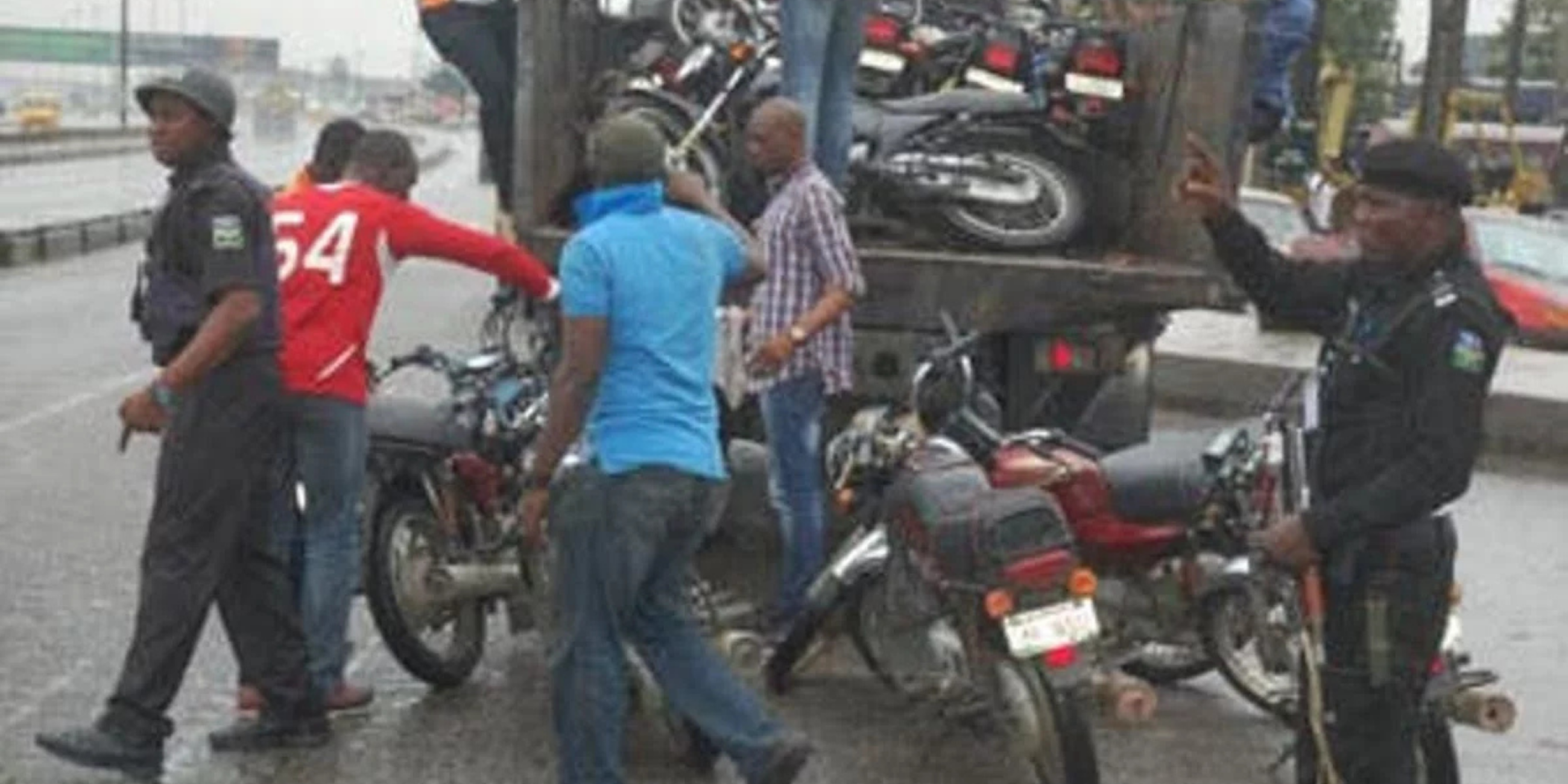
    The Federal Capital Territory (FCT) Police Command, working with other security agencies, has impounded 21 commercial motorcycles and arrested their riders for violating restrictions on motorcycle operations along major roads and highways in Abuja. The enforcement, carried out on Thursday under the Operation Sweep initiative alongside officials of the Vehicle Inspection Office (VIO), targeted key corridors where commercial motorcyclists—popularly known as okada riders—were found flouting existing traffic and security laws.

    According to a statement issued by the Police Public Relations Officer, Josephine Adeh, the arrested riders and seized motorcycles were apprehended strictly in line with “extant laws guiding traffic and security operations” in the FCT. The police described the action as part of a sustained inter-agency strategy aimed at curbing traffic-related crimes, preventing the use of commercial motorcycles for criminal activities, and strengthening public safety across Abuja.

    But is this operation merely routine traffic enforcement—or a signal of a broader security clampdown? Authorities say the ban on commercial motorcycles along major highways remains in force, citing persistent concerns over accidents, robbery, and the ease with which criminals can use motorcycles to evade arrest. By focusing on major roads and restricted routes, the agencies involved insist they are prioritizing both road safety and crime prevention.

    Reacting to the operation, the Commissioner of Police, FCT Command, Miller Dantawaye, reaffirmed the command’s commitment to strict enforcement of all traffic and security regulations designed to protect lives and property. He warned that continued defiance of the motorcycle ban would attract “decisive enforcement actions”, adding that similar operations would be intensified across the six Area Councils of the FCT.

    The police also urged residents to cooperate with security agencies, comply with traffic directives, and promptly report suspicious activities through official emergency lines. Yet, questions remain: Will sustained enforcement reduce crime and accidents, or will it deepen the economic hardship of riders who rely on commercial motorcycles for survival? How will commuters in underserved areas cope with limited transport options if restrictions tighten further?

    As Abuja grapples with balancing security, mobility, and livelihoods, the latest crackdown has reignited debate over the future of commercial motorcycles in the capital—testing whether enforcement alone can deliver safer roads without leaving thousands of riders stranded.

    Is the Okada Ban Being Enforced Again in Abuja? Police Impound 21 Motorcycles, Arrest Riders as Security Agencies Crack Down on Restricted Roads Is the long-standing ban on commercial motorcycles finally being enforced with renewed force in Abuja—and what does it mean for commuters, riders, and public safety in the nation’s capital? The Federal Capital Territory (FCT) Police Command, working with other security agencies, has impounded 21 commercial motorcycles and arrested their riders for violating restrictions on motorcycle operations along major roads and highways in Abuja. The enforcement, carried out on Thursday under the Operation Sweep initiative alongside officials of the Vehicle Inspection Office (VIO), targeted key corridors where commercial motorcyclists—popularly known as okada riders—were found flouting existing traffic and security laws. According to a statement issued by the Police Public Relations Officer, Josephine Adeh, the arrested riders and seized motorcycles were apprehended strictly in line with “extant laws guiding traffic and security operations” in the FCT. The police described the action as part of a sustained inter-agency strategy aimed at curbing traffic-related crimes, preventing the use of commercial motorcycles for criminal activities, and strengthening public safety across Abuja. But is this operation merely routine traffic enforcement—or a signal of a broader security clampdown? Authorities say the ban on commercial motorcycles along major highways remains in force, citing persistent concerns over accidents, robbery, and the ease with which criminals can use motorcycles to evade arrest. By focusing on major roads and restricted routes, the agencies involved insist they are prioritizing both road safety and crime prevention. Reacting to the operation, the Commissioner of Police, FCT Command, Miller Dantawaye, reaffirmed the command’s commitment to strict enforcement of all traffic and security regulations designed to protect lives and property. He warned that continued defiance of the motorcycle ban would attract “decisive enforcement actions”, adding that similar operations would be intensified across the six Area Councils of the FCT. The police also urged residents to cooperate with security agencies, comply with traffic directives, and promptly report suspicious activities through official emergency lines. Yet, questions remain: Will sustained enforcement reduce crime and accidents, or will it deepen the economic hardship of riders who rely on commercial motorcycles for survival? How will commuters in underserved areas cope with limited transport options if restrictions tighten further? As Abuja grapples with balancing security, mobility, and livelihoods, the latest crackdown has reignited debate over the future of commercial motorcycles in the capital—testing whether enforcement alone can deliver safer roads without leaving thousands of riders stranded.
    0 Commentarii ·0 Distribuiri ·753 Views
  • Jigawa 2026 Budget: Governor Umar Namadi to Receive ₦895 Million in Allowances as Government House Plans ₦50 Million Laundry Facility, ₦115 Million Recess Allowance, and Reports of Heavy Spending on Luxury Vehicles Emerge

    A review of the Jigawa State 2026 budget by SaharaReporters reveals that Governor Umar Namadi has been allocated ₦895 million for allowances for the coming fiscal year. The budget also includes ₦115 million for “members’ recess allowance,” raising concerns over the scale of recurrent spending amid economic pressures.

    The report further highlights previous and ongoing expenditure patterns at the Government House, including ₦50 million earmarked for the construction of a laundry facility and earlier allocations totaling ₦800 million in 2025 for the construction and furnishing of a Presidential Wing—₦500 million for construction and ₦300 million for furnishing.

    Budget performance documents for January to September 2025 show that the Government House spent ₦437 million on utility vehicles in just three months, with a total of ₦672 million on vehicles within the same period. These figures surfaced amid allegations that the state government procured new luxury vehicles for the governor’s convoy, including 2025 models of Toyota Hiace buses, a Land Cruiser, and an armored Lexus—claims the government has denied, insisting the governor still uses vehicles left by his predecessor.

    Sources, however, allege that the vehicle purchases were heavily inflated and marred by irregularities, noting discrepancies between official denials and documented spending. The budget documents separately itemize expenditures for the Government House, distinct from those of the deputy governor and other offices, intensifying public scrutiny.

    Overall, the disclosures have fueled debate over government priorities, fiscal discipline, and transparency, with critics questioning the justification for large allowances, luxury expenditures, and non-essential facilities at a time when many citizens face economic hardship.
    Jigawa 2026 Budget: Governor Umar Namadi to Receive ₦895 Million in Allowances as Government House Plans ₦50 Million Laundry Facility, ₦115 Million Recess Allowance, and Reports of Heavy Spending on Luxury Vehicles Emerge A review of the Jigawa State 2026 budget by SaharaReporters reveals that Governor Umar Namadi has been allocated ₦895 million for allowances for the coming fiscal year. The budget also includes ₦115 million for “members’ recess allowance,” raising concerns over the scale of recurrent spending amid economic pressures. The report further highlights previous and ongoing expenditure patterns at the Government House, including ₦50 million earmarked for the construction of a laundry facility and earlier allocations totaling ₦800 million in 2025 for the construction and furnishing of a Presidential Wing—₦500 million for construction and ₦300 million for furnishing. Budget performance documents for January to September 2025 show that the Government House spent ₦437 million on utility vehicles in just three months, with a total of ₦672 million on vehicles within the same period. These figures surfaced amid allegations that the state government procured new luxury vehicles for the governor’s convoy, including 2025 models of Toyota Hiace buses, a Land Cruiser, and an armored Lexus—claims the government has denied, insisting the governor still uses vehicles left by his predecessor. Sources, however, allege that the vehicle purchases were heavily inflated and marred by irregularities, noting discrepancies between official denials and documented spending. The budget documents separately itemize expenditures for the Government House, distinct from those of the deputy governor and other offices, intensifying public scrutiny. Overall, the disclosures have fueled debate over government priorities, fiscal discipline, and transparency, with critics questioning the justification for large allowances, luxury expenditures, and non-essential facilities at a time when many citizens face economic hardship.
    0 Commentarii ·0 Distribuiri ·324 Views
  • U.S. Senator Bernie Sanders Slams Trump’s Military Action in Venezuela as Illegal, Unconstitutional and Dangerous Violation of International Law

    U.S. Senator Bernie Sanders has strongly condemned President Donald Trump’s military action in Venezuela, describing it as illegal, unconstitutional, and a blatant violation of international law. In a statement issued on January 4, 2026, the Vermont senator accused Trump of overstepping his authority as commander-in-chief and showing “contempt for the Constitution and the rule of law” by launching military operations without congressional approval.

    Sanders stressed that the U.S. president does not have the constitutional right to unilaterally take the country to war, even against what he described as a corrupt and brutal dictator like Venezuelan President Nicolás Maduro. He also rejected Trump’s claim that the United States has the right to “run” Venezuela, insisting that such rhetoric reflects dangerous imperial thinking.

    Calling on Congress to act urgently, Sanders urged lawmakers to pass a War Powers Resolution to immediately end what he termed an illegal military operation and to reassert Congress’s constitutional responsibilities. He warned that the attack would have far-reaching global consequences, making both the United States and the world less safe, and setting a dangerous precedent in international relations.

    Sanders compared Trump’s justification for the Venezuela action to Russia’s invasion of Ukraine, arguing that it mirrors the same “logic of force” used by President Vladimir Putin. He further accused the Trump administration of reviving imperial ambitions in Latin America, citing references to the Monroe Doctrine and alleged interest in controlling Venezuela’s vast oil reserves, which he described as “rank imperialism.”

    Turning to domestic concerns, Sanders criticised Trump for focusing on foreign military adventures while major problems persist at home, including economic hardship, a struggling healthcare system, housing unaffordability, and job threats posed by artificial intelligence. He concluded that Trump was failing in his responsibility to govern the United States, stating that the president should focus on domestic crises rather than attempting to “run” Venezuela.
    U.S. Senator Bernie Sanders Slams Trump’s Military Action in Venezuela as Illegal, Unconstitutional and Dangerous Violation of International Law U.S. Senator Bernie Sanders has strongly condemned President Donald Trump’s military action in Venezuela, describing it as illegal, unconstitutional, and a blatant violation of international law. In a statement issued on January 4, 2026, the Vermont senator accused Trump of overstepping his authority as commander-in-chief and showing “contempt for the Constitution and the rule of law” by launching military operations without congressional approval. Sanders stressed that the U.S. president does not have the constitutional right to unilaterally take the country to war, even against what he described as a corrupt and brutal dictator like Venezuelan President Nicolás Maduro. He also rejected Trump’s claim that the United States has the right to “run” Venezuela, insisting that such rhetoric reflects dangerous imperial thinking. Calling on Congress to act urgently, Sanders urged lawmakers to pass a War Powers Resolution to immediately end what he termed an illegal military operation and to reassert Congress’s constitutional responsibilities. He warned that the attack would have far-reaching global consequences, making both the United States and the world less safe, and setting a dangerous precedent in international relations. Sanders compared Trump’s justification for the Venezuela action to Russia’s invasion of Ukraine, arguing that it mirrors the same “logic of force” used by President Vladimir Putin. He further accused the Trump administration of reviving imperial ambitions in Latin America, citing references to the Monroe Doctrine and alleged interest in controlling Venezuela’s vast oil reserves, which he described as “rank imperialism.” Turning to domestic concerns, Sanders criticised Trump for focusing on foreign military adventures while major problems persist at home, including economic hardship, a struggling healthcare system, housing unaffordability, and job threats posed by artificial intelligence. He concluded that Trump was failing in his responsibility to govern the United States, stating that the president should focus on domestic crises rather than attempting to “run” Venezuela.
    0 Commentarii ·0 Distribuiri ·794 Views
  • Trump Warns Iran of U.S. Military Action Amid Deadly Protests, Says America ‘Locked and Loaded’

    U.S. President Donald Trump issued a stern warning to Iran, stating that the United States is prepared to intervene militarily if Iranian authorities violently suppress peaceful protesters. Posting on Truth Social, Trump condemned Iran’s “custom” of targeting demonstrators, declaring that America is “locked and loaded and ready to go.”

    The remarks drew sharp responses from Iran, with senior adviser Ali Larijani warning that U.S. interference could destabilize the Middle East. The threats coincide with the largest wave of protests in Iran in three years, sparked by inflation, economic hardship, and government mismanagement.

    At least six people have reportedly been killed since the protests began, including a Basij paramilitary member, while dozens have been arrested. Iranian President Masoud Pezeshkian acknowledged government responsibility for the crisis and called for dialogue with protest leaders.

    Analysts note that escalating unrest, economic woes, and ongoing regional tensions, including U.S. and Israeli strikes, have heightened the risk of further violence and instability in Iran.
    Trump Warns Iran of U.S. Military Action Amid Deadly Protests, Says America ‘Locked and Loaded’ U.S. President Donald Trump issued a stern warning to Iran, stating that the United States is prepared to intervene militarily if Iranian authorities violently suppress peaceful protesters. Posting on Truth Social, Trump condemned Iran’s “custom” of targeting demonstrators, declaring that America is “locked and loaded and ready to go.” The remarks drew sharp responses from Iran, with senior adviser Ali Larijani warning that U.S. interference could destabilize the Middle East. The threats coincide with the largest wave of protests in Iran in three years, sparked by inflation, economic hardship, and government mismanagement. At least six people have reportedly been killed since the protests began, including a Basij paramilitary member, while dozens have been arrested. Iranian President Masoud Pezeshkian acknowledged government responsibility for the crisis and called for dialogue with protest leaders. Analysts note that escalating unrest, economic woes, and ongoing regional tensions, including U.S. and Israeli strikes, have heightened the risk of further violence and instability in Iran.
    0 Commentarii ·0 Distribuiri ·524 Views
  • Families of Domestic Workers Detained Since 2019 Over Alleged Patience Jonathan Jewellery Theft Slam Goodluck Jonathan’s New Year Message, Demand Immediate Release or Speedy Trial

    Families of domestic workers detained since 2019 over an alleged jewellery theft involving former First Lady, Patience Jonathan, have criticised former President Goodluck Jonathan’s New Year message to Nigerian leaders, describing it as hypocritical and insensitive. The families accused Jonathan of calling for people-centred leadership while remaining silent over the prolonged detention of workers linked to his household, who have been held in custody for more than five years without bail.

    Speaking on behalf of the families, a relative of one of the detainees said Jonathan’s appeal for leaders to prioritise citizens’ welfare rang hollow while the accused domestic workers continue to languish in prison amid repeated court delays. The families urged the former president to lead by example by ensuring either the release of the detained workers or the speedy conclusion of their long-running trial.

    The families lamented the slow pace of the case, noting that while the detainees are reportedly in good health, the prolonged detention has caused severe emotional and economic hardship. They expressed hope that the case would be concluded early in 2026, stressing that justice delayed continues to punish innocent families.

    Their reaction followed Jonathan’s New Year message in which he acknowledged Nigeria’s economic hardship and insecurity, urged leaders to adopt people-oriented governance, and called for leadership anchored on humility, integrity and service to the people.

    The controversy has once again drawn attention to the case of 15 domestic workers accused of stealing jewellery allegedly worth hundreds of millions of naira from Mrs. Jonathan’s residence. The defendants, who have been held at the Okaka Correctional Centre in Yenagoa since 2019, have consistently told the court that they were abducted, tortured and forced to make confessions. Some have named security personnel allegedly involved in their abuse, including claims of suspension, whipping and coercion.

    Despite repeated allegations of torture and police brutality linked to the case, no security operative has been investigated or charged, further fuelling public criticism and calls for justice, accountability and the release of the detained workers.
    Families of Domestic Workers Detained Since 2019 Over Alleged Patience Jonathan Jewellery Theft Slam Goodluck Jonathan’s New Year Message, Demand Immediate Release or Speedy Trial Families of domestic workers detained since 2019 over an alleged jewellery theft involving former First Lady, Patience Jonathan, have criticised former President Goodluck Jonathan’s New Year message to Nigerian leaders, describing it as hypocritical and insensitive. The families accused Jonathan of calling for people-centred leadership while remaining silent over the prolonged detention of workers linked to his household, who have been held in custody for more than five years without bail. Speaking on behalf of the families, a relative of one of the detainees said Jonathan’s appeal for leaders to prioritise citizens’ welfare rang hollow while the accused domestic workers continue to languish in prison amid repeated court delays. The families urged the former president to lead by example by ensuring either the release of the detained workers or the speedy conclusion of their long-running trial. The families lamented the slow pace of the case, noting that while the detainees are reportedly in good health, the prolonged detention has caused severe emotional and economic hardship. They expressed hope that the case would be concluded early in 2026, stressing that justice delayed continues to punish innocent families. Their reaction followed Jonathan’s New Year message in which he acknowledged Nigeria’s economic hardship and insecurity, urged leaders to adopt people-oriented governance, and called for leadership anchored on humility, integrity and service to the people. The controversy has once again drawn attention to the case of 15 domestic workers accused of stealing jewellery allegedly worth hundreds of millions of naira from Mrs. Jonathan’s residence. The defendants, who have been held at the Okaka Correctional Centre in Yenagoa since 2019, have consistently told the court that they were abducted, tortured and forced to make confessions. Some have named security personnel allegedly involved in their abuse, including claims of suspension, whipping and coercion. Despite repeated allegations of torture and police brutality linked to the case, no security operative has been investigated or charged, further fuelling public criticism and calls for justice, accountability and the release of the detained workers.
    like
    1
    · 0 Commentarii ·0 Distribuiri ·622 Views
  • BREAKING: Kwara Public School Teachers Protest Salary Disparity, Accuse Government and NUT of Excluding Them From 30% Peculiar Allowance Amid Growing Economic Hardship

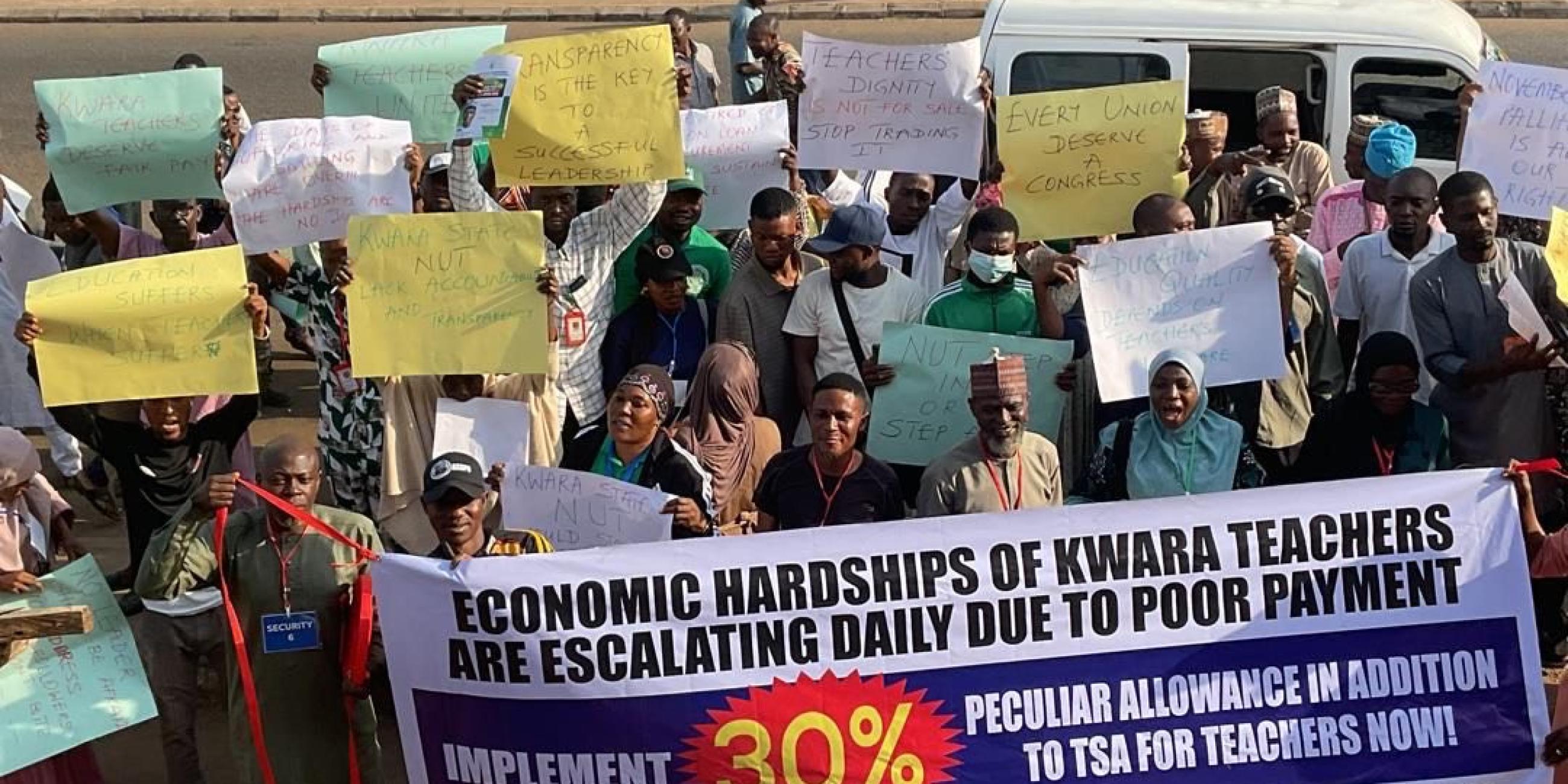
    Public school teachers in Kwara State on Friday staged a protest over their exclusion from the recently approved 30% peculiar salary allowance granted to other categories of state workers. The protesting teachers accused the Kwara State Government and the leadership of the Nigeria Union of Teachers (NUT) of neglect, betrayal and failure to protect their welfare amid rising economic hardship.

    During the protest, teachers carried placards lamenting poor pay, widening salary disparities and worsening living conditions, with some stating they were “surviving on loans” to meet basic needs. The protesters demanded the immediate implementation of the 30% peculiar allowance for teachers, arguing that their exclusion leaves them earning less than other civil servants in the state.

    The teachers also targeted the NUT leadership, accusing it of complacency and inaction. Some protesters noted that the 27% Teachers’ Specific Allowance being referenced by authorities was not new and had been implemented in other states since 2018, while other state workers had already begun receiving the 30% allowance in December 2025.

    Meanwhile, the NUT Kwara State leadership distanced itself from the protest, insisting it neither authorised nor endorsed the action. In a statement, the union warned that anyone protesting in the name of teachers did so at their own risk, while also praising the state government for approving teacher-related allowances. The development highlights growing tension between teachers, their union and the state government over pay equity and economic survival.
    BREAKING: Kwara Public School Teachers Protest Salary Disparity, Accuse Government and NUT of Excluding Them From 30% Peculiar Allowance Amid Growing Economic Hardship Public school teachers in Kwara State on Friday staged a protest over their exclusion from the recently approved 30% peculiar salary allowance granted to other categories of state workers. The protesting teachers accused the Kwara State Government and the leadership of the Nigeria Union of Teachers (NUT) of neglect, betrayal and failure to protect their welfare amid rising economic hardship. During the protest, teachers carried placards lamenting poor pay, widening salary disparities and worsening living conditions, with some stating they were “surviving on loans” to meet basic needs. The protesters demanded the immediate implementation of the 30% peculiar allowance for teachers, arguing that their exclusion leaves them earning less than other civil servants in the state. The teachers also targeted the NUT leadership, accusing it of complacency and inaction. Some protesters noted that the 27% Teachers’ Specific Allowance being referenced by authorities was not new and had been implemented in other states since 2018, while other state workers had already begun receiving the 30% allowance in December 2025. Meanwhile, the NUT Kwara State leadership distanced itself from the protest, insisting it neither authorised nor endorsed the action. In a statement, the union warned that anyone protesting in the name of teachers did so at their own risk, while also praising the state government for approving teacher-related allowances. The development highlights growing tension between teachers, their union and the state government over pay equity and economic survival.
    like
    1
    · 0 Commentarii ·0 Distribuiri ·575 Views
  • Revolutionary Socialist Movement Urges Nigerians to Resist Tinubu’s ‘Anti-Poor’ Tax Policies, Warns of Rising Hardship, Inflation, Fuel Hikes, and Growing Economic Inequality in 2026

    The Revolutionary Socialist Movement (RSM) has called on Nigerians to actively resist what it describes as “anti-poor tax policies” introduced by President Bola Tinubu’s administration, warning that the measures will deepen economic hardship for workers and low-income earners. In a New Year message issued by its Publicity Secretary, Comrade Salako Kayode, the group said Nigerians are entering 2026 under intense economic pressure driven by high inflation, soaring food prices, unemployment, repeated fuel price increases, and declining public services.

    RSM accused the federal government of responding to the economic crisis by shifting the burden onto ordinary citizens through new and increased taxes, while protecting wealthy individuals, big corporations, and political elites. According to the group, the current tax system has failed to improve essential services such as healthcare, education, housing, and employment, instead sustaining corruption, heavy debt servicing, and what it termed extravagant lifestyles among those in power.

    The movement argued that Nigerians should not be forced to pay for an economic crisis they did not create and proposed alternatives including recovering stolen public funds, ending wasteful governance and jumbo salaries, taxing big businesses and the super-rich, and investing more in public services and decent jobs. RSM also called on trade unions, civil society groups, students, and communities to form a united front and engage in peaceful mass resistance to defend living standards and democratic rights, expressing optimism that a more equitable Nigeria is achievable.
    Revolutionary Socialist Movement Urges Nigerians to Resist Tinubu’s ‘Anti-Poor’ Tax Policies, Warns of Rising Hardship, Inflation, Fuel Hikes, and Growing Economic Inequality in 2026 The Revolutionary Socialist Movement (RSM) has called on Nigerians to actively resist what it describes as “anti-poor tax policies” introduced by President Bola Tinubu’s administration, warning that the measures will deepen economic hardship for workers and low-income earners. In a New Year message issued by its Publicity Secretary, Comrade Salako Kayode, the group said Nigerians are entering 2026 under intense economic pressure driven by high inflation, soaring food prices, unemployment, repeated fuel price increases, and declining public services. RSM accused the federal government of responding to the economic crisis by shifting the burden onto ordinary citizens through new and increased taxes, while protecting wealthy individuals, big corporations, and political elites. According to the group, the current tax system has failed to improve essential services such as healthcare, education, housing, and employment, instead sustaining corruption, heavy debt servicing, and what it termed extravagant lifestyles among those in power. The movement argued that Nigerians should not be forced to pay for an economic crisis they did not create and proposed alternatives including recovering stolen public funds, ending wasteful governance and jumbo salaries, taxing big businesses and the super-rich, and investing more in public services and decent jobs. RSM also called on trade unions, civil society groups, students, and communities to form a united front and engage in peaceful mass resistance to defend living standards and democratic rights, expressing optimism that a more equitable Nigeria is achievable.
    like
    1
    · 0 Commentarii ·0 Distribuiri ·789 Views
  • PRP Urges Nationwide Protests as Party Calls on Nigerians to Resist Tinubu’s New Tax Policies, Fuel Subsidy Removal, and Economic Hardship

    The Peoples Redemption Party (PRP) has called on Nigerians to embark on nationwide, lawful, and peaceful protests against what it described as oppressive tax policies and economic decisions of President Bola Ahmed Tinubu’s administration. In a New Year statement signed by its National Chairman, Falalu Bello, the party said Nigerians are already grappling with severe hardship caused by insecurity, hunger, poverty, and poor governance under the APC-led government.

    The PRP strongly criticised the introduction and enforcement of new tax laws, accusing the government of ignoring public opposition and pushing policies that allegedly lack transparency and were altered at the point of gazetting. According to the party, the taxes are designed to benefit a few while further impoverishing ordinary Nigerians who are struggling to survive.

    The opposition party also condemned the removal of fuel subsidy on Tinubu’s first day in office, noting that promised investments in social services have failed to materialise. Instead, it alleged that increased borrowing without visible improvements in social infrastructure has worsened the economic situation across the country.

    Calling for collective action, the PRP urged Nigerians to organise protests and strike actions to resist unjust taxation and governance failures, stressing that mass unity remains the strongest tool against oppression. The party warned citizens not to be discouraged by political defections, describing such moves as self-serving and insignificant compared to the power of the people.

    Looking ahead to the 2027 general elections, the PRP said sustained resistance should translate into political change, urging Nigerians to remain steadfast in their quest to end what it termed an incompetent and non-transparent administration. The statement concluded with a call for peaceful but determined resistance to reclaim Nigeria and build a system rooted in accountability, transparency, and citizen-focused governance.
    PRP Urges Nationwide Protests as Party Calls on Nigerians to Resist Tinubu’s New Tax Policies, Fuel Subsidy Removal, and Economic Hardship The Peoples Redemption Party (PRP) has called on Nigerians to embark on nationwide, lawful, and peaceful protests against what it described as oppressive tax policies and economic decisions of President Bola Ahmed Tinubu’s administration. In a New Year statement signed by its National Chairman, Falalu Bello, the party said Nigerians are already grappling with severe hardship caused by insecurity, hunger, poverty, and poor governance under the APC-led government. The PRP strongly criticised the introduction and enforcement of new tax laws, accusing the government of ignoring public opposition and pushing policies that allegedly lack transparency and were altered at the point of gazetting. According to the party, the taxes are designed to benefit a few while further impoverishing ordinary Nigerians who are struggling to survive. The opposition party also condemned the removal of fuel subsidy on Tinubu’s first day in office, noting that promised investments in social services have failed to materialise. Instead, it alleged that increased borrowing without visible improvements in social infrastructure has worsened the economic situation across the country. Calling for collective action, the PRP urged Nigerians to organise protests and strike actions to resist unjust taxation and governance failures, stressing that mass unity remains the strongest tool against oppression. The party warned citizens not to be discouraged by political defections, describing such moves as self-serving and insignificant compared to the power of the people. Looking ahead to the 2027 general elections, the PRP said sustained resistance should translate into political change, urging Nigerians to remain steadfast in their quest to end what it termed an incompetent and non-transparent administration. The statement concluded with a call for peaceful but determined resistance to reclaim Nigeria and build a system rooted in accountability, transparency, and citizen-focused governance.
    0 Commentarii ·0 Distribuiri ·723 Views
  • Atiku Abubakar Says 2025 Exposed Tinubu’s Incompetence and Policy Bankruptcy, Describes Year as One of Nigeria’s Most Punishing Amid Economic Hardship and Insecurity

    Former Vice-President Atiku Abubakar has described 2025 as one of the most punishing years in Nigeria’s recent history, blaming widespread hardship on what he called the incompetence and policy bankruptcy of President Bola Tinubu’s APC-led administration.

    In a New Year message to Nigerians, Atiku said the year was marked by economic suffocation, political recklessness, worsening insecurity, and governance without empathy. He accused the Tinubu government of mismanaging the economy, governing for months without a functional budget, and relying on reckless borrowing and propaganda, which he said pushed the country to the brink of economic collapse.

    Atiku also criticised the handling of a controversial tax law, describing it as a forged document disguised as reform, and faulted the President for allegedly refusing to allow proper legislative and legal scrutiny. He warned that a government that begins reforms with forgery cannot deliver prosperity.

    On democracy, the former vice-president accused the APC of weakening Nigeria’s democratic institutions and attempting to turn the country into a de facto one-party state through intimidation, coercion, and state capture. He further highlighted rising national debt, worsening insecurity, increased kidnappings and violent crimes, and the devastating impact on lives, livelihoods, and communities.

    Despite these challenges, Atiku said Nigeria survived the year not because of government competence but due to the resilience of its people, whom he praised for enduring hardship amid what he described as failed leadership and poor governance.
    Atiku Abubakar Says 2025 Exposed Tinubu’s Incompetence and Policy Bankruptcy, Describes Year as One of Nigeria’s Most Punishing Amid Economic Hardship and Insecurity Former Vice-President Atiku Abubakar has described 2025 as one of the most punishing years in Nigeria’s recent history, blaming widespread hardship on what he called the incompetence and policy bankruptcy of President Bola Tinubu’s APC-led administration. In a New Year message to Nigerians, Atiku said the year was marked by economic suffocation, political recklessness, worsening insecurity, and governance without empathy. He accused the Tinubu government of mismanaging the economy, governing for months without a functional budget, and relying on reckless borrowing and propaganda, which he said pushed the country to the brink of economic collapse. Atiku also criticised the handling of a controversial tax law, describing it as a forged document disguised as reform, and faulted the President for allegedly refusing to allow proper legislative and legal scrutiny. He warned that a government that begins reforms with forgery cannot deliver prosperity. On democracy, the former vice-president accused the APC of weakening Nigeria’s democratic institutions and attempting to turn the country into a de facto one-party state through intimidation, coercion, and state capture. He further highlighted rising national debt, worsening insecurity, increased kidnappings and violent crimes, and the devastating impact on lives, livelihoods, and communities. Despite these challenges, Atiku said Nigeria survived the year not because of government competence but due to the resilience of its people, whom he praised for enduring hardship amid what he described as failed leadership and poor governance.
    0 Commentarii ·0 Distribuiri ·773 Views
  • Northern Coalition Rejects Tinubu’s Tax Reforms, Accuses President of Executive Overreach

    The Coalition of Northern Groups (CNG) has criticized President Bola Tinubu for attempting to enforce new tax reform laws from January 1, 2026, claiming the gazetted versions were materially altered after parliamentary approval. The coalition described this as a “reckless assault on democracy” and “executive overreach,” asserting that the changes undermine legislative authority and constitutional order.

    CNG accused the Presidency and tax reform committee chairman Taiwo Oyedele of pushing reforms that could worsen economic hardship, while also criticizing the National Assembly for failing to defend the integrity of the laws. The group rejected any enforcement of the reforms, warning that implementing disputed taxes amid public opposition risks deepening economic distress, eroding trust in government, and violating democratic principles.
    Northern Coalition Rejects Tinubu’s Tax Reforms, Accuses President of Executive Overreach The Coalition of Northern Groups (CNG) has criticized President Bola Tinubu for attempting to enforce new tax reform laws from January 1, 2026, claiming the gazetted versions were materially altered after parliamentary approval. The coalition described this as a “reckless assault on democracy” and “executive overreach,” asserting that the changes undermine legislative authority and constitutional order. CNG accused the Presidency and tax reform committee chairman Taiwo Oyedele of pushing reforms that could worsen economic hardship, while also criticizing the National Assembly for failing to defend the integrity of the laws. The group rejected any enforcement of the reforms, warning that implementing disputed taxes amid public opposition risks deepening economic distress, eroding trust in government, and violating democratic principles.
    0 Commentarii ·0 Distribuiri ·499 Views
  • Africa’s Weakest Currencies in 2025: Why South Sudan and Ethiopia Crashed, Investor Fears Grew, and the Naira Escaped Africa’s Bottom 10

    In 2025, currency weakness across Africa deepened economic hardship for millions, as sharp devaluations translated into soaring inflation, higher living costs, and reduced investor confidence. An end-of-year assessment shows that the South Sudanese pound and the Ethiopian birr emerged as Africa’s weakest currencies, each losing more than 10% of their value against the US dollar, underscoring persistent structural and macroeconomic vulnerabilities across the continent.

    South Sudan’s currency collapse was largely driven by its heavy dependence on crude oil, which accounts for over 90% of foreign exchange earnings. Disruptions to oil exports following conflict in neighbouring Sudan severely reduced dollar inflows, triggering a steep depreciation of the pound. The fallout was devastating, with inflation surging to nearly 108% by September 2025, eroding purchasing power and worsening poverty.

    Ethiopia’s birr also suffered a brutal year, ranking among the world’s weakest currencies alongside the Argentine peso and Turkish lira. Dollar shortages, high inflation, mounting debt pressures, and investor anxiety combined to push the birr down by over 15%, complicating economic stabilisation efforts and debt restructuring plans.

    Across Africa, weak and volatile currencies continue to deter both foreign and local investment, as exchange-rate instability makes long-term business planning nearly impossible. Economies with limited export diversification, persistent inflation, and political or fiscal instability remain the most exposed to global shocks.

    Notably, Nigeria’s naira was absent from Africa’s bottom 10 weakest currencies in 2025, despite its own struggles and ending the year around ₦1,445 to the dollar. Analysts say this highlights that currency strength is not determined by central bank policy alone but reflects deeper economic resilience, diversification, and stability. As Africa moves into 2026, the performance of its currencies remains a key signal of broader economic health across the continent.
    Africa’s Weakest Currencies in 2025: Why South Sudan and Ethiopia Crashed, Investor Fears Grew, and the Naira Escaped Africa’s Bottom 10 In 2025, currency weakness across Africa deepened economic hardship for millions, as sharp devaluations translated into soaring inflation, higher living costs, and reduced investor confidence. An end-of-year assessment shows that the South Sudanese pound and the Ethiopian birr emerged as Africa’s weakest currencies, each losing more than 10% of their value against the US dollar, underscoring persistent structural and macroeconomic vulnerabilities across the continent. South Sudan’s currency collapse was largely driven by its heavy dependence on crude oil, which accounts for over 90% of foreign exchange earnings. Disruptions to oil exports following conflict in neighbouring Sudan severely reduced dollar inflows, triggering a steep depreciation of the pound. The fallout was devastating, with inflation surging to nearly 108% by September 2025, eroding purchasing power and worsening poverty. Ethiopia’s birr also suffered a brutal year, ranking among the world’s weakest currencies alongside the Argentine peso and Turkish lira. Dollar shortages, high inflation, mounting debt pressures, and investor anxiety combined to push the birr down by over 15%, complicating economic stabilisation efforts and debt restructuring plans. Across Africa, weak and volatile currencies continue to deter both foreign and local investment, as exchange-rate instability makes long-term business planning nearly impossible. Economies with limited export diversification, persistent inflation, and political or fiscal instability remain the most exposed to global shocks. Notably, Nigeria’s naira was absent from Africa’s bottom 10 weakest currencies in 2025, despite its own struggles and ending the year around ₦1,445 to the dollar. Analysts say this highlights that currency strength is not determined by central bank policy alone but reflects deeper economic resilience, diversification, and stability. As Africa moves into 2026, the performance of its currencies remains a key signal of broader economic health across the continent.
    0 Commentarii ·0 Distribuiri ·824 Views
  • Human Rights Lawyer Ejiofor Criticizes Tinubu Govt Over Widespread Hunger, Poverty, and Security Failures in 2025

    Human rights lawyer Barrister Ifeanyi Ejiofor has condemned Nigeria’s socio-economic and security situation under President Bola Tinubu in 2025, citing insecurity, economic hardship, and legislative failure as defining issues. He described hunger and poverty as “democratised” and no longer selective, attributing worsening conditions to inflation, stagnant wages, and poorly conceived policies.

    Ejiofor criticized the National Assembly for rubber-stamping bills like the Tax Reform Act without proper oversight and accused the government of selective responses to violent attacks, worsening inequality and shrinking the middle class. Despite the grim assessment, he expressed gratitude for survival and urged the emergence of compassionate leadership, people-centered policies, and a security architecture rooted in justice as Nigeria enters 2026.
    Human Rights Lawyer Ejiofor Criticizes Tinubu Govt Over Widespread Hunger, Poverty, and Security Failures in 2025 Human rights lawyer Barrister Ifeanyi Ejiofor has condemned Nigeria’s socio-economic and security situation under President Bola Tinubu in 2025, citing insecurity, economic hardship, and legislative failure as defining issues. He described hunger and poverty as “democratised” and no longer selective, attributing worsening conditions to inflation, stagnant wages, and poorly conceived policies. Ejiofor criticized the National Assembly for rubber-stamping bills like the Tax Reform Act without proper oversight and accused the government of selective responses to violent attacks, worsening inequality and shrinking the middle class. Despite the grim assessment, he expressed gratitude for survival and urged the emergence of compassionate leadership, people-centered policies, and a security architecture rooted in justice as Nigeria enters 2026.
    0 Commentarii ·0 Distribuiri ·743 Views
Sponsorizeaza Paginile
Fintter https://fintter.com