Sobre
Sobre
CHUKWUEMEKA OJUKWU: Nigerian Military officer, and Political Leader
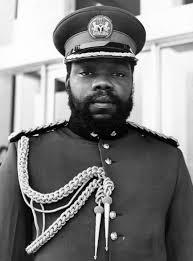
Chukwuemeka Odumegwu Ojukwu
Chukwuemeka Odumegwu Ojukwu was a Nigerian military officer and political leader best known as the leader of the secessionist state of Biafra during the Nigerian Civil War. He was one of the most influential and controversial figures in Nigeria’s history. Born on November 4, 1933, in Zungeru, Niger State, Nigeria, Ojukwu later became a central figure in the events that shaped Nigeria during the late 1960s.
Early Life and Background
Chukwuemeka Odumegwu Ojukwu was born into a wealthy and influential family. His father, Sir Louis Odumegwu Ojukwu, was one of the richest businessmen in Nigeria during the colonial period.
Growing up in a privileged environment allowed him access to some of the best education available at the time.
Education
Ojukwu received his early education in Nigeria before traveling abroad for further studies. He attended prestigious schools in the United Kingdom.
He later studied history at the University of Oxford, one of the world’s most respected universities.
After completing his education, he returned to Nigeria to begin a career in public service.
Entry Into the Nigerian Army
Despite his wealthy background, Ojukwu chose to join the Nigerian Army in the late 1950s. At that time, the Nigerian military was gradually transitioning from colonial control to Nigerian leadership.
He quickly gained respect among his colleagues due to his education, intelligence, and leadership qualities.
Military Leadership
By the mid 1960s, Ojukwu had risen to become the Military Governor of the Eastern Region of Nigeria.
During this period, Nigeria was experiencing serious political instability following the military coups of 1966.
After the assassination of Johnson Aguiyi Ironsi during the July 1966 counter coup, tensions between different regions of Nigeria increased significantly.
Declaration of Biafra
In 1967, following political crises, ethnic tensions, and violence against Igbo people in northern Nigeria, Ojukwu declared the Eastern Region independent.
The new state was called the Republic of Biafra.
This declaration led to the Nigerian Civil War, which lasted from 1967 to 1970.
Nigerian Civil War
During the war, Ojukwu served as the leader and commander in chief of Biafran forces.
The conflict caused massive destruction, economic hardship, and humanitarian crises. Millions of people were affected by famine and displacement.
The war eventually ended in January 1970 when Biafran forces surrendered to the Nigerian federal government led by Yakubu Gowon.
Exile
Before the war ended, Ojukwu left Biafra and went into exile in Ivory Coast where he was granted asylum.
He remained in exile for many years while Nigeria rebuilt after the war.
Return to Nigeria
In 1982, the Nigerian government granted Ojukwu a presidential pardon, allowing him to return home.
After returning to Nigeria, he became involved in politics and later contested presidential elections.
Legacy
Chukwuemeka Odumegwu Ojukwu remains one of the most significant and debated figures in Nigerian history. Some people view him as a hero who defended the rights of his people, while others see his actions as responsible for a devastating war.
Regardless of these differing views, his role in Nigerian history is undeniable. His leadership during the Nigerian Civil War continues to shape discussions about national unity, identity, and political power in Nigeria.

Categorias
Leia mais
Protest burst for Minneapolis after ICE officer shoot one Venezuelan man during traffic stop, just one week after another ICE agent kill Renee Good. According to DHS, dem stop the man, he run, crash motor, and run on foot. When officer catch am, two other people come out and all three attack the officer. ICE talk say officer fear for him life and fire defensive shot. The man get wound for leg,...

Tewodros II Early Life and Background Tewodros II was born around 1818 in Ethiopia with the name Kassa Hailu. He did not grow up as a prince or in a royal palace. Instead, his childhood was simple and sometimes difficult. He lost his father at a young age and faced many struggles while growing up. Because of this, he learned to be strong, independent, and determined very early...
For players looking to deepen their understanding of Grow A Garden, few resources are as valuable as the insights shared by pro streamers. These experienced players not only excel in gameplay but also provide nuanced perspectives on managing resources, especially Grow a Garden Sheckles, which is crucial for progression. Here are 24 key insights from top streamers that can help you optimize your...

PDP member and Peter Obi supporter, Dickson Iroegbu, has accused President Bola Tinubu of “waking up very late” to Nigeria’s spiralling insecurity, saying the government has been distracted by political manoeuvring for 2027 instead of protecting citizens. Iroegbu, a public affairs analyst and member of the Peoples Democratic Party, spoke on Arise News on Friday during...

NokCivilization The Land Before the Fire Long before the rise of many kingdoms that would later define the history of West Africa, there existed a mysterious and remarkable civilization in what is today central Nigeria. This ancient society is known today as the Nok Civilization. It flourished roughly between 1000 BCE and 300 CE across parts of present day Kaduna, Plateau, and Niger...