About
About
Edmund Wessels and FlexiGyn: The South African Engineer Who Set Out to Bring Uterine Care Closer to Women
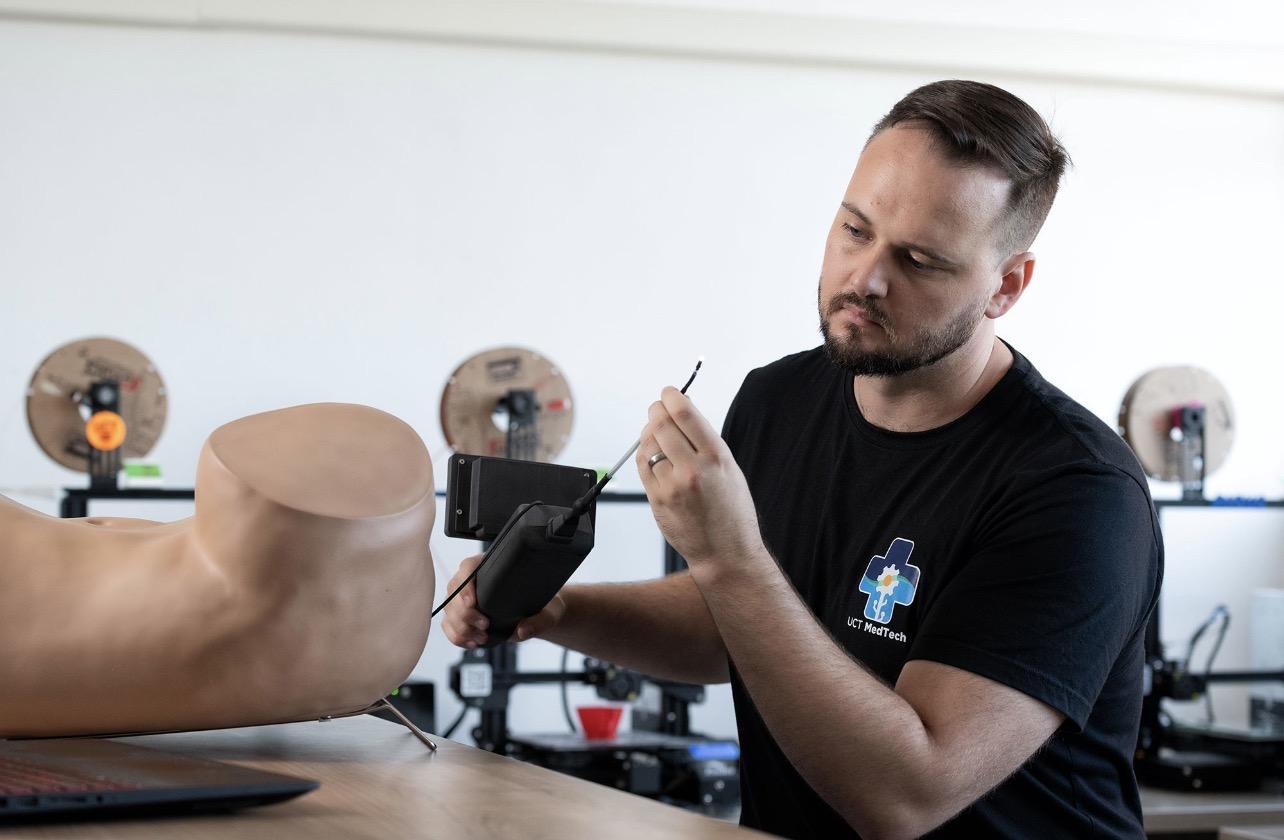
Edmund Wessels and FlexiGyn
Some inventions begin with a flash of genius. Others begin with a quiet frustration that refuses to go away. The story of Edmund Wessels and FlexiGyn belongs to the second kind. It is the story of a South African biomedical engineer who looked at a painful gap in women’s healthcare and decided that the gap itself was the real problem to solve. Instead of accepting that good gynaecological care must remain locked inside specialist centres, expensive theatres, and urban hospitals, he worked toward a device that could move care closer to where women actually live.
Edmund Wessels is a South African biomedical engineer who built his work around a practical question: how can medical technology serve people who are too often left waiting, travelling, or suffering because the right equipment is too costly, too rigid, or too far away? He studied mechatronics engineering at Stellenbosch University, then moved into biomedical devices at the University of Cape Town in 2016, later continuing through advanced research that led to the FlexiGyn project. Sources also describe him as a PhD student and later as Dr Edmund Wessels, reflecting his progression through the academic and innovation journey over time.
That path matters because FlexiGyn did not emerge from business ambition alone. It came out of a medical need identified inside a university research environment where students and clinicians worked together on real health problems. According to the University of Cape Town, the idea for the device took shape after the late Dr Carol Thomas, a specialist gynaecologist, alerted the MedTech team to an unmet clinical need involving outdated equipment. Wessels was also working with Professor Sudesh Sivarasu, director of UCT’s Biomedical Engineering Research Centre, and UCT says FlexiGyn was co invented with him. In other words, this was not a random gadget searching for a market. It was a response to a problem that doctors had already seen, patients had already felt, and the health system had not yet solved well enough.
To understand why FlexiGyn matters, it helps to understand the procedure it was built around. Hysteroscopy is a way for clinicians to examine the uterus and investigate conditions that may be causing abnormal bleeding, pain, fibroids, or other uterine problems. Traditional hysteroscopy systems can be rigid and uncomfortable. They may also depend on bulky visualisation systems and other expensive infrastructure. In many places, especially in lower resource settings, this can push care into specialist facilities and create delays that are hard on patients and hard on healthcare providers. The Royal Academy of Engineering noted that conventional systems are rigid and can cause high levels of discomfort, while also needing additional equipment for visualisation.
Now imagine what that means for a woman who lives far from a major city, or for a clinic that lacks specialist equipment, or for a public health system where waiting times keep stretching. A delay in uterine diagnosis is not just a scheduling problem. It can mean prolonged bleeding, unmanaged pain, anxiety, missed work, repeated clinic visits, and worsening uncertainty. The current FlexiGyn company material says women can wait up to nine months before the cause of abnormal uterine bleeding is seen and treated, and that unusual uterine bleeding touches a very large number of women during their lives. The mission behind the device is to shrink that delay and move answers forward in time.
This is where Wessels’ invention becomes more than engineering. FlexiGyn is described as a battery powered, portable handheld gynaecological device with a built in camera and a small diameter flexible scope. The device was designed with user controlled bending in multiple directions, allowing clinicians to navigate more gently and obtain a clear view of the uterus. The built in display screen gives the clinician a direct view, and the design aims to reduce the pain and discomfort that can come with older rigid systems. In plain language, the idea was to make the procedure easier to carry out, easier to bring to more settings, and easier on the patient herself.
That balance between portability and comfort is one of the most important parts of the FlexiGyn story. Many technologies claim to be advanced because they are more complex. FlexiGyn tries to be powerful by becoming more adaptable. It is meant to deliver uterine imaging and treatment support outside the classic model of a specialist operating theatre. Vas MedTech, the company founded around the innovation, now describes it as a world first flexible, portable, reusable hysteroscope built for neighbourhood based care. The company also states that the device is designed to reduce dependency on expensive theatre infrastructure and aims for dramatically lower costs than traditional systems.
That word reusable is important too. In many healthcare systems, sustainability is not only about cost at the moment of purchase. It is also about how often a device can be used, how easily it can be maintained, and whether it fits the realities of daily clinical work. FlexiGyn’s visualisation approach is described as reusable, and the broader platform vision includes media support, documentation, and integrated digital workflows. The Royal Academy of Engineering reported that Wessels and his team were also developing software to connect the device with existing medical practice systems, linking specialists and general practitioners, streamlining patient scheduling, syncing electronic health records, and even exploring AI assisted diagnosis. That shows the invention was never only about a physical instrument. It was about building a care pathway.
In many stories of invention, the hardest stage is not building the first prototype. The hardest stage is proving that the prototype deserves a future. Wessels pushed FlexiGyn through that difficult territory by combining engineering with entrepreneurship. Together with Chris Meunier, he co founded Vas MedTech, the company advancing the product. The firm positions FlexiGyn as its flagship technology and has built an identity around making uterine care more local, more humane, and more affordable. Vas MedTech lists Dr Edmund Wessels as Chief Technology Officer and Chris K Meunier as Chief Executive Officer, with Professor Sudesh Sivarasu serving in an advisory role.
That kind of transition from laboratory idea to venture is often where African health innovation either begins to scale or fades into obscurity. Many promising devices never reach patients because the leap from design to manufacturing, regulation, distribution, and adoption is brutally hard. Wessels’ progress stands out because FlexiGyn did not stop at the level of concept. It moved into recognition, commercial development, and broader public attention. One of the biggest milestones came when the device was shortlisted and then selected as a finalist for the Royal Academy of Engineering’s Africa Prize for Engineering Innovation in 2023, one of the continent’s best known engineering innovation awards.
Then came the breakthrough. In July 2023, Edmund Wessels was announced as one of the two winners of the Africa Prize for Engineering Innovation. The Royal Academy of Engineering said he won with FlexiGyn, a battery powered portable handheld device that enables gynaecologists to diagnose and treat women’s uterine problems without anaesthetic or expensive equipment. The award came with major visibility and prize funding, but more than that, it validated the central argument behind the invention: that women’s healthcare does not have to wait for perfect hospitals in order to improve.
Recognition followed from other quarters as well. FlexiGyn and its founders were highlighted in innovation and healthcare circles, and Wessels and Meunier were identified as co founders developing a technology intended to move uterine health checks from specialist theatres into local clinics, while reducing costs and wait times. UCT related sources and public innovation profiles also described the invention as a game changer. These recognitions matter because health technology is built on trust. Doctors need to trust it. Investors need to trust it. Regulators need to trust it. Most of all, patients need to trust that the person holding a new device is not experimenting on them, but offering them a better standard of care.
Still, awards alone do not explain why this story has emotional weight. What gives it power is the kind of problem FlexiGyn tries to solve. Women’s reproductive and uterine health has often been treated as something to be delayed, normalised, or endured. Heavy bleeding becomes something to manage in silence. Pain becomes something to work around. Long waiting times become something to accept. In many parts of Africa and the wider world, the gap between symptoms and diagnosis can stretch for months. FlexiGyn’s whole logic pushes against that acceptance. It says that the first point of care should not be a dead end. It should be the beginning of answers. That philosophy is visible in the company’s own language, which imagines a world where answers come early, close to home, and the first time a woman seeks help.
There is also something distinctly African about the story, not just because Wessels is South African, but because the invention was shaped by conditions common across the continent. In wealthy settings, many medical solutions are designed around hospitals that already have infrastructure, steady budgets, dense specialist networks, and well resourced referral pathways. In many African settings, innovators must design around scarcity, distance, uneven access, and a shortage of specialised services. That pressure can produce what some call frugal innovation, which aims not to make a cheap version of an existing product, but to rethink the product entirely around real world constraints. A 2024 feature on African impact innovation said FlexiGyn began as part of Wessels’ PhD work under a frugal buyer design approach.
That framing helps explain why portability is not a side feature here. It is the heart of the invention. A battery powered device can travel. A handheld device can fit into new workflows. A gentler flexible scope can change patient experience. A built in screen can reduce dependency on extra equipment. A reusable system can improve affordability over time. Software integration can connect local clinics with specialist expertise. Each design choice is really an argument about access. Together, those choices say that care should follow the patient, rather than forcing the patient to chase care across distance and delay.
Wessels himself has spoken in ways that reflect this mission clearly. In comments quoted by the Royal Academy of Engineering, he said he and his co founder aimed to bring healthcare to a woman’s doorstep, precisely when and where she needs it. UCT reported that he saw FlexiGyn as part of a network that connects gynaecologists and obstetricians with general practitioners to expand access and provide essential screenings in remote areas. Those statements reveal a worldview that goes beyond product design. He is not simply trying to sell a machine. He is trying to rearrange the geography of care.
There is also a deeply human dimension in the origin story through Dr Carol Thomas. Medical innovation often becomes impersonal in the way it is told, as though it were born from market research and engineering diagrams alone. But here, a clinician identified a need, a research team listened, and a student engineer took the problem seriously. UCT explicitly credits Thomas’ role in highlighting the unmet need. That connection between doctor and engineer is one reason the FlexiGyn story feels grounded. It was born out of clinical reality, not abstract speculation.
As the years moved on, the invention also matured in how it was presented. Early descriptions focused strongly on the ability to diagnose and treat uterine problems without anaesthetic or bulky expensive systems. Later company descriptions expand the picture into a broader user guided hysteroscopy platform and neighbourhood gynaecology model, suggesting a long term strategy that includes not only diagnosis but workflow transformation and first line care reform. Public profiles in 2024 and 2025 increasingly talk about a platform redefining access to gynaecological care, rather than only a single handheld tool. That suggests FlexiGyn is evolving from an impressive device into a larger healthcare delivery vision.
Another part of the story is timing. The world has become far more aware of how important women’s health is to social and economic life, yet many systems still underinvest in it. Vas MedTech’s current mission statement argues that women’s health strengthens every home and every economy, and it has set a target of bringing uterine care to three million women by 2030. Whether the company fully reaches that number remains to be seen, but the ambition itself tells us something important. Wessels’ work is not framed as niche medicine for a small group. It is framed as infrastructure for human wellbeing.
And that may be the truest measure of his invention. FlexiGyn is not remarkable only because it won prizes or because it came out of a respected university. It is remarkable because it addresses a problem that many women know intimately but many systems still handle poorly. It tries to shorten the distance between symptom and answer. It tries to replace discomfort with gentler design. It tries to replace delay with portability. It tries to replace medical centralisation with accessible frontline care. Those are not small ambitions. They go to the core of what healthcare should be.
In South Africa, the invention also represents the strength of local engineering talent when given a clinically relevant problem and room to build. Too often, African innovation stories are told as though the continent’s role is mainly to adopt technologies from elsewhere. Wessels’ journey pushes against that narrative. He is part of a generation of African innovators designing original solutions for African conditions, and in doing so, producing ideas with global relevance. Abnormal uterine bleeding, delayed diagnosis, procedural discomfort, and infrastructure bottlenecks are not problems limited to one country. A device first shaped in Cape Town can speak to healthcare systems far beyond South Africa.
It is also worth noting that, based on available public sources, detailed personal biographical information about Edmund Wessels outside his education, role, and FlexiGyn work is limited. Most reliable reporting focuses on the invention, its medical purpose, and its awards rather than on his private life. What stands out publicly is not celebrity, but mission. He appears in the record as an engineer who kept his attention on the work itself.
That may be fitting. Some people change a field by becoming larger than the thing they built. Others change a field by making the thing they built impossible to ignore. FlexiGyn seems to belong to the second category. It asks a serious question of healthcare systems: if uterine care can be made more portable, more comfortable, more affordable, and closer to home, then why should women continue to wait so long for answers?
So the full story of Edmund Wessels is, in many ways, the story of a refusal. A refusal to accept that specialist care must stay distant. A refusal to accept that outdated tools are good enough. A refusal to accept that women in remote or under resourced communities should have to endure longer waits and greater discomfort simply because infrastructure is uneven. From Stellenbosch to UCT, from clinical need to prototype, from prototype to company, from company to continental recognition, Wessels built a path that joined engineering precision with social purpose.
FlexiGyn itself is the physical proof of that refusal. It is a handheld, battery powered, flexible, camera equipped device created to make uterine diagnosis and treatment easier to deliver and easier to tolerate. Around it has grown a wider vision of digital integration, neighbourhood gynaecology, and earlier answers for women seeking care. That is the invention he is most strongly associated with, and it is the reason his name has become linked with one of the most promising women’s health innovations to emerge from South Africa in recent years.
In the end, Edmund Wessels’ story is not only about what he invented. It is about what he saw. He saw that the real challenge was not merely technical visibility inside the uterus. The deeper challenge was visibility inside the system itself. Women’s pain, women’s delays, women’s distance from care, women’s repeated waiting, all of these had become too easy to overlook. FlexiGyn is his answer to that blindness. It is an invention made to help clinicians see better, but it is also an invention that asks healthcare to see women better. And that is why the story matters.

Categorieën
Read More
A Louisiana man who spent nearly 30 years on death row walked out of prison Wednesday after a judge overturned his conviction and granted him bail. Jimmie Duncan, now in his 60s, was sentenced to death in 1998 for the alleged rape and drowning of his girlfriend’s 23-month-old daughter, Haley Oliveaux — a case long clouded by disputed forensic testimony. His release comes months...

Osei Tutu Long before Ghana became the nation the world knows today, the forests of the Akan lands were alive with rival states, old loyalties, trade routes, fear, courage, and ambition. In that world, one name rose until it became larger than a man and almost as powerful as memory itself. That name was Osei Tutu. In Ashanti tradition, he is remembered as the ruler who brought...

Heavily armed police officers allegedly deployed from Abuja on Friday arrested Muhuyi Magaji, the lead prosecutor in the high-profile corruption case involving former Kano governor Abdullahi Ganduje and his family. Magaji, a former anti-corruption commission chairman, was taken from his law office in what witnesses described as a “Gestapo-style” operation before being moved to an...

Justice James Omotosho of the Federal High Court, Abuja, has dismissed the no-case submission filed by the lawyers of Nnamdi Kanu, leader of the Indigenous People of Biafra (IPOB). The ruling came after the Federal Government presented witnesses, evidence, and closed its case against the separatist leader. Following the decision, Justice Omotosho directed Kanu to open his defence. Kanu, who...

El Jem Amphitheatre In the heart of Tunisia, surrounded by olive groves and quiet desert winds, stands one of the most powerful reminders of ancient history in Africa. Massive stone walls rise toward the sky, arches stretch endlessly around a circular structure, and beneath the ground lie dark corridors that once held animals and gladiators waiting for battle. This is the El Jem Amphitheatre,...