About
About
Osei Tutu and the Golden Rise of the Ashanti Empire
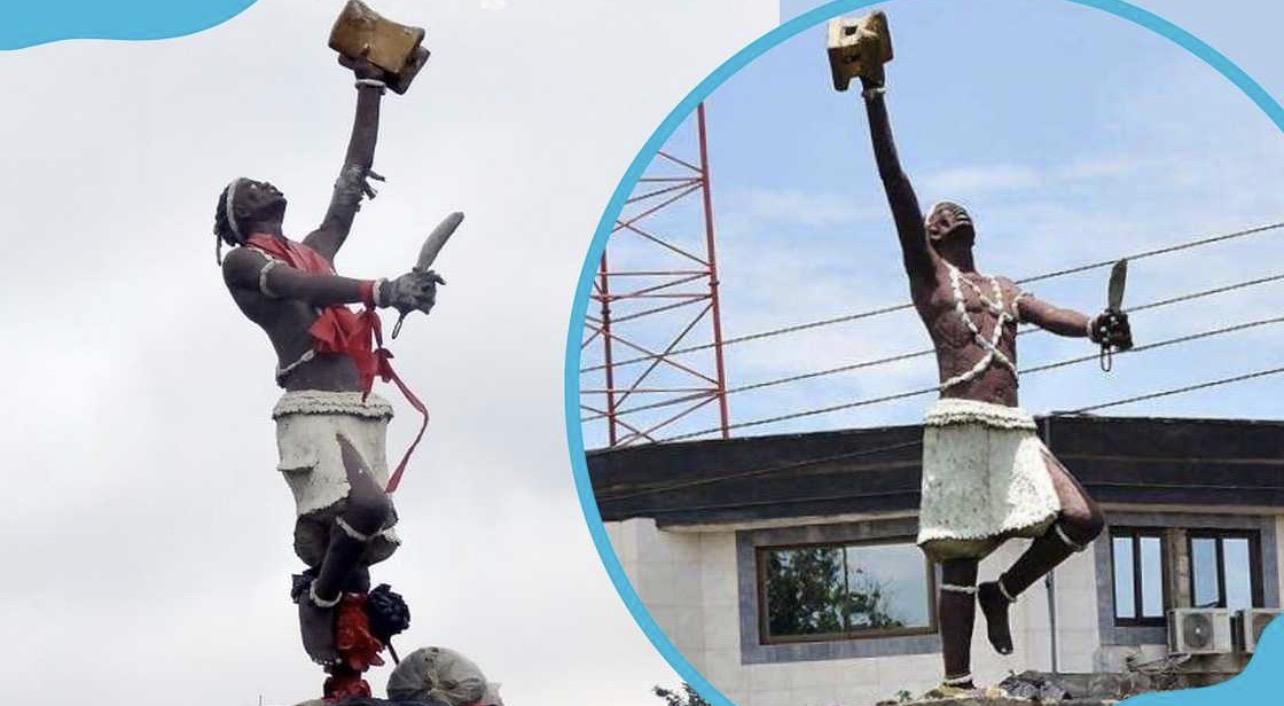
Osei Tutu
Long before Ghana became the nation the world knows today, the forests of the Akan lands were alive with rival states, old loyalties, trade routes, fear, courage, and ambition. In that world, one name rose until it became larger than a man and almost as powerful as memory itself. That name was Osei Tutu. In Ashanti tradition, he is remembered as the ruler who brought scattered states together and, with the spiritual guidance of Komfo Anokye, laid the foundation of the Ashanti Empire. Historians and tradition both place him at the center of one of West Africa’s greatest political creations.
The story of Osei Tutu does not begin with an empire already standing in splendor. It begins in a region of many small Akan polities, each proud, each protective of its own power, and each aware of the pressure of stronger neighbors. Among those neighbors, Denkyera stood as a major power in the south, and its shadow was heavy. Osei Tutu, who later became the first Asantehene, is described by Britannica as the chief of the small state of Kumasi who realized that the separate Asante kingdoms had to be fused if they were to survive and grow. That idea alone was revolutionary, because unity is often harder to build than victory in war.
Imagine him as a young leader moving through a land rich in gold, trade, ritual, and political tension. He would have seen that courage without organization could not build a lasting state. He would have understood that a kingdom made only by force would remain fragile, always at risk of splitting apart. What he needed was not only military strength, but belief. He needed people to feel that they belonged to something greater than their own town, stool, clan, or immediate ruler. In the traditions of Asante history, this is where the partnership between Osei Tutu and Komfo Anokye becomes unforgettable. Komfo Anokye is remembered as a spiritual leader, lawgiver, and cofounder of the Asante state, while Osei Tutu is remembered as the ruler who gave that vision political form.
Their partnership has the shape of legend because it joined two kinds of authority. Osei Tutu represented kingship, statecraft, and leadership in battle. Komfo Anokye represented spiritual legitimacy, sacred law, and the power to turn many communities into one moral community. Britannica notes that by about 1695 they had created a capital region at Kumasi, organized state councils, reorganized the army, and sworn unity with minor kings of the region. That means the rise of Ashanti was not an accident and not merely a battlefield event. It was a patient act of political engineering.
Kumasi itself became part of the story. Britannica records that Osei Tutu chose the site for his capital and conducted land negotiations under a kum tree, from which the city’s name is said to come. There is something beautiful in that image. A tree, a negotiation, a decision, and from that decision a capital. Many capitals are born from conquest alone, but Kumasi entered memory as a chosen center, a place around which a people could gather. In time it became not just a seat of power but a heartbeat of identity.
Yet no great state can live on structure alone. It needs a symbol. In Asante tradition, the most powerful symbol of all descended through the actions of Komfo Anokye and the destiny of Osei Tutu: the Golden Stool. According to court histories and long standing tradition, the stool came down from the sky and rested in the lap of Osei Tutu, marking divine approval of his rule and embodying the soul of the Asante nation. Modern museum and scholarly sources continue to describe the Golden Stool as the central symbol of Asante unity and sovereignty. Whether one approaches that account as sacred history, royal tradition, or political myth with deep nation building power, its importance is beyond dispute.
That moment changed everything. A stool in Akan culture is never just furniture. It is tied to soul, office, ancestry, and legitimacy. So when the Golden Stool became associated with Osei Tutu’s kingship, it did more than honor one ruler. It announced that the emerging nation itself had a spirit that stood above any one town or faction. This was brilliant statecraft wrapped in sacred meaning. It told the chiefs that unity was not surrender. It told the people that they were becoming one body. It told enemies that something new had appeared in the forest and would not easily disappear.
Still, symbols must survive the test of war. The Denkyera kingdom remained the great obstacle. Britannica and other reference works describe how the Asante, under Osei Tutu and with Komfo Anokye’s influence, went to war against Denkyera around 1699, with the conflict lasting about two years. Tradition holds that the struggle was fierce and at points dangerous for the Asante side. Yet the alliance held. The army, reorganized under new principles, did not collapse. And when the tide turned, it turned decisively. The Asante victory over Denkyera established Asante as the dominant power in the region and opened the way for imperial expansion.
One can picture the mood after that victory. The drums would have sounded differently. Chiefs who once doubted the union would now see proof in survival. Traders would begin to understand that a new power controlled an important part of the forest belt and its wealth. Soldiers would carry home stories of battle and destiny. Priests and elders would interpret events through the language of favor, wisdom, and national calling. This is how an empire starts to feel real. First it is a hope. Then it is a compact. Then it is a battlefield fact. Finally it becomes a story everyone can tell.
Osei Tutu’s greatness was not simply that he defeated an enemy. Many rulers win wars and are forgotten. He is remembered because he built institutions that outlived him. Sources on Asante history note that he and Komfo Anokye established rituals and customs meant to reduce local divisions, created a state council of chiefs, and strengthened the military organization of the union. These institutions gave the Asante state durability. They allowed it to become more than a temporary alliance. They made it governable. They made it memorable.
There is also something important in the way tradition remembers him. Osei Tutu is not usually portrayed as a lonely hero. He is remembered within relationships: with Komfo Anokye, with Kumasi, with the Golden Stool, with the chiefs he persuaded, and with the people whose loyalty had to be won. That makes his story richer. It is the story of a founder who knew that real power is shared through institutions, rituals, symbols, and trust. Even his authority as first Asantehene was bound to a larger sacred and political order. In that way, his story carries a lesson that still feels modern. A state becomes strong not when one man is feared, but when many people believe they belong to it.
His death, like parts of his life, is touched by uncertainty in the historical record. Britannica gives his death as 1712 or 1717, showing that even major founders sometimes leave behind dates that are debated. Yet the uncertainty of the year does not weaken the certainty of his legacy. By the time he was gone, the framework of Asante power had been set. Successors inherited not a fragile village throne, but a kingdom with a sacred center, a capital, a stronger military, and a unifying political culture. The empire that developed after him would become one of the most formidable states in West African history.
And so Osei Tutu remains one of those rare figures who stand with one foot in history and the other in legend. Remove the legend and he is still monumental. Remove the history and the legend still reveals what his people believed mattered most: unity, courage, sacred legitimacy, wise leadership, and the joining of many voices into one nation. He was not remembered simply because he wore a crown. He was remembered because he helped create the idea behind the crown.
Today, when people speak of Ashanti greatness, they are also speaking of the foundation laid in his time. They are speaking of Kumasi, of the Golden Stool, of the partnership with Komfo Anokye, and of the moment when scattered states became a confederacy powerful enough to shape regional history. Museums, heritage institutions, and historical reference works still place Osei Tutu at the center of that beginning. His memory survives not only in books, but in ceremonial life, public history, and the continuing respect attached to the Ashanti stool and kingship.
In the end, the story of Osei Tutu feels larger than one reign. It is the story of how vision can gather fragments into strength. It is the story of how a ruler and a spiritual adviser can reshape a people’s future. It is the story of a forest kingdom that refused to remain small. And at the center of it stands Osei Tutu, remembered in Ghanaian tradition as a founder, a unifier, and the king whose name rose with an empire.

Categorie
Leggi tutto
Mo Abudu In a world where stories shape perception and perception shapes power, one woman decided that Africa would no longer wait for others to tell its story. She would build the platform herself. Her name is Mo Abudu, born Mosunmola Abudu, a woman whose journey from corporate boardrooms to global film deals transformed African media. Early Life Between Continents Mo Abudu was...

In Grow A Garden, one of the most thrilling aspects of gameplay is taking on challenging boss battles. While mastering your own character’s abilities is essential, a well-chosen pet can make a huge difference in surviving and even countering a boss’s most devastating attacks. In this guide, we’ll break down strategies for using pets effectively and share tips on how to...

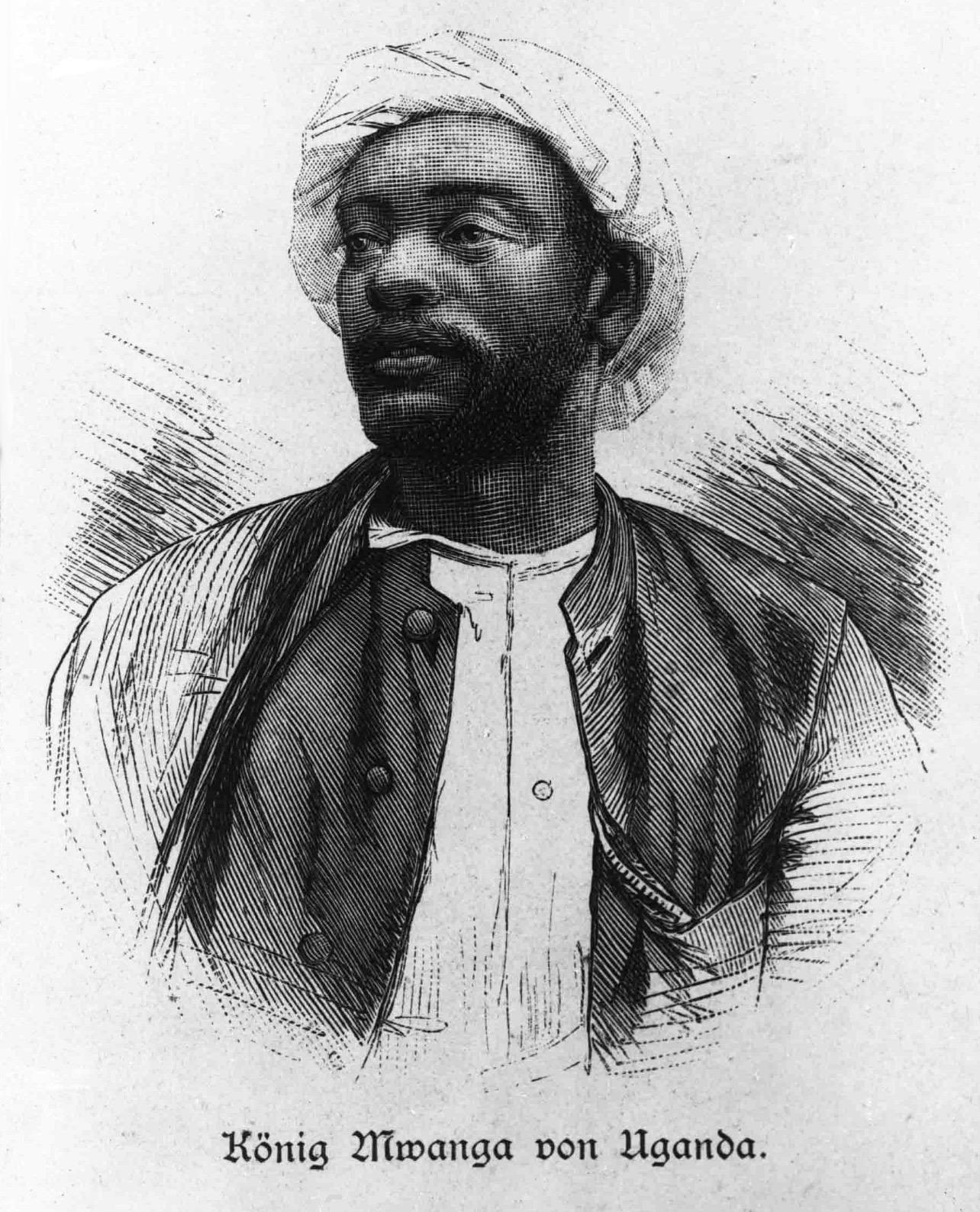
Mwanga II Mwanga II The King Caught Between Faith and Empire Mwanga II was one of the most talked about kings in East African history. He ruled Buganda at a time when foreign powers were arriving, bringing new religions, new ideas, and new control. His life was filled with power, fear, resistance, and tragedy. Some people see him as a cruel ruler, while others see him as a young...
In a groundbreaking move, Rotary International District 9112 has officially chartered Nigeria’s first-ever Passport Club—and potentially the first in Africa—under the banner of the Rotary Club of Nigeria Globetrotters. This marks a significant milestone for Rotary in Nigeria, embracing the innovative Passport Club model that offers greater flexibility and inclusivity for...

Satguru Maharaj Ji Introduction In the quiet corners of Ibadan, a spiritual figure emerged whose name would travel far beyond his immediate environment. Satguru Maharaj Ji is known by his followers as a divine teacher, a guide sent to bring peace, unity, and truth to humanity. His life is surrounded by devotion, mystery, and strong belief from his followers, while others see...