About
About
Lamido Sanusi The Fearless Mind Who Challenged Power and Carried a Crown
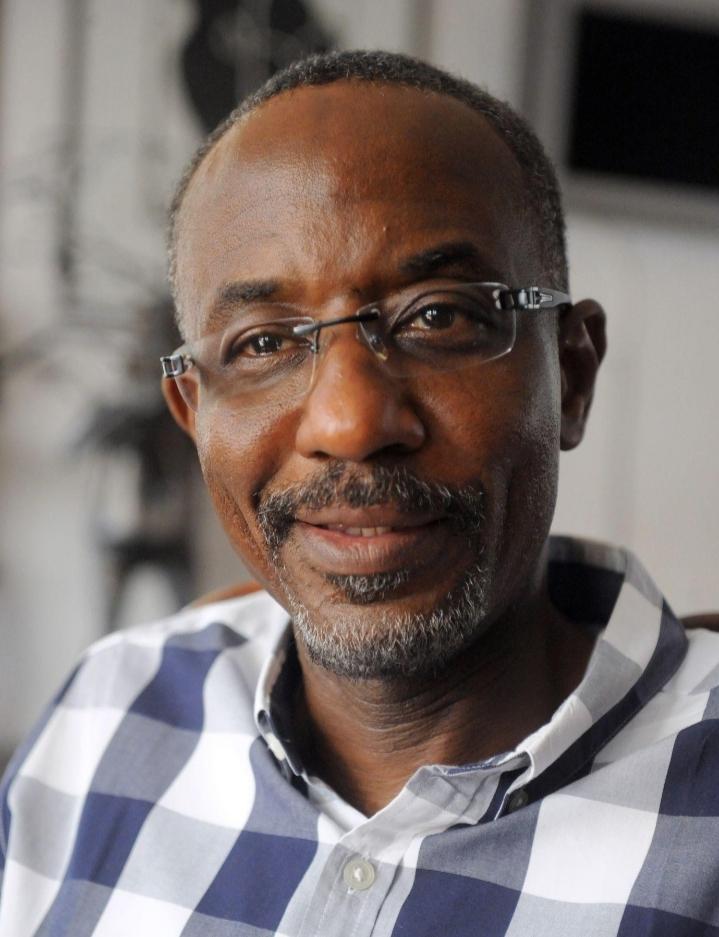
Lamido Sanusi
In the ancient northern city of Kano, where history is layered in sandstone walls and royal drums echo across centuries, a child was born into a lineage that understood both power and its price. His name was Sanusi Lamido Sanusi.
He would grow to become an economist of global reputation, a banking reformer who shook Nigeria’s financial system, and later a monarch whose voice could not be confined to palace walls. The world would come to know him formally as Muhammadu Sanusi II. But before the crown, there was the scholar. Before the throne, there was the rebel intellect.
A Royal Beginning
Sanusi Lamido Sanusi was born on July 31, 1961, into the Fulani aristocracy of Kano. His grandfather, Muhammadu Sanusi I, once ruled as Emir of Kano before being deposed in 1963. That family history of power and removal would later cast a long shadow over his own destiny.
His father, Aminu Sanusi, was a respected diplomat and Islamic scholar. The household valued learning, discipline, and faith. Books were companions. Debate was encouraged. Tradition was sacred but inquiry was not forbidden.
From an early age, young Sanusi displayed unusual curiosity. He was not content with memorizing facts. He questioned them.
Education and the Making of an Intellectual
He attended King’s College Lagos, one of Nigeria’s most prestigious secondary schools, known for producing leaders in politics, business, and academia. There, he sharpened his analytical skills and developed a confidence that would later define his public life.
He proceeded to Ahmadu Bello University in Zaria, where he studied Economics, graduating in 1981. He later earned a master’s degree in Economics from the same institution.
But Sanusi’s education was not confined to Western economics. He immersed himself deeply in Islamic jurisprudence and philosophy. He studied classical Arabic texts and explored Islamic intellectual traditions alongside modern economic theory.
This rare combination shaped his worldview. He could quote economists and Quranic scholars in the same breath.
The Banker Who Refused Silence
Sanusi began his career in banking, working at Icon Limited and later at United Bank for Africa. He rose through the ranks steadily, building a reputation for integrity and strategic thinking.
In 2009, during a severe banking crisis in Nigeria, he was appointed Governor of the Central Bank of Nigeria.
The financial system was unstable. Banks were collapsing under bad loans and reckless management. Confidence was evaporating.
Sanusi moved quickly.
He ordered audits of major banks. He dismissed several powerful bank executives. He injected liquidity into failing institutions to prevent systemic collapse.
His actions were bold. Some called him courageous. Others called him disruptive.
He did not appear concerned with popularity. His focus was reform.
The Oil Revenue Storm
In 2013, Sanusi dropped a bombshell. He alleged that billions of dollars in oil revenue were missing from national accounts. His claims ignited political tension at the highest levels.
He insisted that transparency was non negotiable.
In February 2014, he was suspended as Central Bank Governor by President Goodluck Jonathan. The official reasons cited financial recklessness. Many believed the suspension was linked to his whistleblowing.
For Sanusi, it was another lesson in the cost of speaking openly.
But destiny was already unfolding elsewhere.
The Crown Returns
In June 2014, following the death of Emir Ado Bayero, Sanusi Lamido Sanusi was appointed Emir of Kano.
History had turned full circle. The grandson of a deposed emir now ascended the same throne.
His coronation marked a dramatic transformation. The economist became a king. He adopted the title Muhammadu Sanusi II.
Yet the crown did not silence him.
A Monarch Who Challenged His Own People
As Emir, Sanusi continued to speak boldly.
He criticized poverty and illiteracy in Northern Nigeria. He urged families to prioritize education, especially for girls. He challenged cultural practices that he believed contributed to economic hardship.
He spoke about population growth and economic responsibility. He emphasized that faith should inspire progress, not stagnation.
His speeches resonated widely, particularly among young Nigerians who admired his courage.
But his frankness also created tension within political circles.
Clash and Dethronement
Over time, disagreements emerged between the Emir and the Kano State government. Political tensions escalated.
In March 2020, he was dethroned by the state government, officially accused of insubordination.
Images of the former central banker and emir being escorted into exile shocked many Nigerians.
It was a familiar story.
Like his grandfather decades earlier, he had been removed from the throne.
Yet exile did not silence him.
Life Beyond the Palace
After his dethronement, Sanusi returned to intellectual and global platforms. He accepted academic fellowships and continued speaking at international forums.
He addressed issues of governance, Islamic reform, economic justice, and African development.
His identity was no longer limited to a throne.
He had become a global thought leader.
Return to Kano
In 2024, political changes in Kano led to his reinstatement as Emir. The return symbolized resilience and the unpredictable nature of power.
He had worn the crown, lost it, and worn it again.
Few leaders experience such dramatic cycles within one lifetime.
The Man Behind the Public Image
Sanusi Lamido Sanusi is known for his disciplined lifestyle and intellectual rigor. He is fluent in English and Arabic. He reads widely across theology, economics, and political philosophy.
He is married and has children, maintaining a family structure aligned with Islamic tradition.
Those who meet him often describe him as sharp, direct, and reflective. He listens carefully, then responds with precision.
His critics view him as controversial. His supporters see him as necessary.
Legacy of Fearless Thought
Lamido Sanusi’s life is defined by a refusal to conform to silence.
As a banker, he confronted corruption.
As an emir, he confronted social stagnation.
As an intellectual, he confronts uncomfortable truths.
He represents a rare fusion of technocratic expertise and traditional authority.
In a country where many leaders avoid confrontation, he often steps directly into it.
The Mind That Would Not Bow
In Kano’s ancient palace, tradition demands reverence. But Lamido Sanusi’s legacy extends beyond ceremonial ritual.
He challenges his own community to evolve. He challenges political leaders to act with integrity. He challenges religious institutions to embrace reform.
His story is not one of smooth ascent.
It is a story of conflict, conviction, dethronement, and return.
He has stood in financial boardrooms and royal courts. He has addressed global elites and village audiences.
Through it all, one trait remains constant.
He speaks.
And whether applauded or criticized, Lamido Sanusi continues to shape Nigeria’s conversation about leadership, faith, and accountability.


Categorii
Citeste mai mult
Troops have intensified the crackdown on oil theft in the Niger Delta, dismantling nine makeshift refineries and seizing over 45,000 litres of stolen petroleum products in two weeks. According to Army spokesperson Lieutenant Colonel Danjuma Jonah Danjuma, 17 suspects were arrested in coordinated operations across Rivers, Delta, Bayelsa, and Akwa Ibom States. In Rivers, troops intercepted a...

A parade of culture, style, glitz, and glamour once again graces the city of Ijebu Ode, Ogun State, as the annual Ojude Oba Festival takes center stage today. The Ojude Oba Festival is a vibrant celebration held each year by the Ijebu people in Ogun State, Nigeria. It remains one of the country’s most cherished cultural events, steeped in rich history and tradition. Ojude...
Idris Wada Idris Wada is a Nigerian retired pilot and politician best known for serving as the governor of Kogi State from 27 January 2012 to 27 January 2016. He became widely known in Nigerian politics after moving from a long aviation career into public office. Early Life and Background Idris Wada, whose full name is Idris Ichala Wada, was born on 26 August 1950 in Dekina, in present day...
An 18-year-old girl was accused of sleeping around with men and contracting HIV in the process. Her family, the community, and everyone around her disowned her. In addition to her illness, she was forced to grapple with the stigmatization. When she presented to a PHC on account of her worsening symptoms—progressive weight loss, lack of appetite, and stomach...
Kemity Kemity is a Nigerian actress, comedian, content creator, and social media personality. She is well known for her comic roles in Yoruba Nollywood movies and comedy skits. Early Life and Background Kemity whose real name is Ariyo Oluwakemisola Apesin was born in Nigeria and comes from a Yoruba background. She grew up in a lively environment where humor and storytelling were...