Site içinde arama yapın
  • Nigeria’s inflation eases to 14.45% in November - NBS

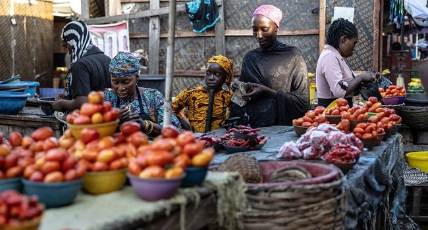
    Nigeria’s headline inflation rate has dropped further to 14.45% in November 2025 relative to the october 2025 headline inflation rate of 16.05% as consumer price pressures moderated under the new base year aligning with the President Tinubu’s projected target of 15 percent at the end of the 2025 and budget projected target.

    Data released by the national bureau of statistics this monday shows that in november 2025, the headline inflation rate eased to 14.45% on a month-on-month basis.

    The food inflation rate in november 2025 was 1.13% up by 1.5% compared to the rate in october 2025 which was -0.37% on a month-on-month basis.
    The report it added that on a year-on-year basis, the headline inflation rate was 20.15% lower than the rate recorded in november 2024 (34.60%).

    This shows that the headline inflation rate on year-on-year basis decreased in November 2025 compared to the same month in the preceding year.
    Nigeria’s inflation eases to 14.45% in November - NBS Nigeria’s headline inflation rate has dropped further to 14.45% in November 2025 relative to the october 2025 headline inflation rate of 16.05% as consumer price pressures moderated under the new base year aligning with the President Tinubu’s projected target of 15 percent at the end of the 2025 and budget projected target. Data released by the national bureau of statistics this monday shows that in november 2025, the headline inflation rate eased to 14.45% on a month-on-month basis. The food inflation rate in november 2025 was 1.13% up by 1.5% compared to the rate in october 2025 which was -0.37% on a month-on-month basis. The report it added that on a year-on-year basis, the headline inflation rate was 20.15% lower than the rate recorded in november 2024 (34.60%). This shows that the headline inflation rate on year-on-year basis decreased in November 2025 compared to the same month in the preceding year.
    0 Yorumlar ·0 hisse senetleri ·377 Views
  • Bakers Dismiss Claims of Flour Price Crash as Bread Prices Rise Over 200% Nationwide

    Despite viral reports suggesting a major drop in flour prices, Nigerian bakers insist there has been no meaningful reduction, keeping bread prices at record highs. Over the past two years, the cost of bread has surged by more than 200% due to soaring prices of flour, sugar, yeast, butter, and energy. A family-sized loaf now sells for N2,000 or more, while smaller loaves have tripled in price.
    Bakers say production costs remain overwhelming despite slight reductions in flour from over N80,000 per 50kg bag to around N58,000. They warn that unless ingredient and energy prices fall significantly, bread prices will not come down. Meanwhile, consumers continue to pressure bakers for relief, with many households struggling under rising food inflation. Industry operators say several bakeries may shut down if costs persist.


    #BreadPrices

    #BakersAssociation

    #FlourCost
    Bakers Dismiss Claims of Flour Price Crash as Bread Prices Rise Over 200% Nationwide Despite viral reports suggesting a major drop in flour prices, Nigerian bakers insist there has been no meaningful reduction, keeping bread prices at record highs. Over the past two years, the cost of bread has surged by more than 200% due to soaring prices of flour, sugar, yeast, butter, and energy. A family-sized loaf now sells for N2,000 or more, while smaller loaves have tripled in price. Bakers say production costs remain overwhelming despite slight reductions in flour from over N80,000 per 50kg bag to around N58,000. They warn that unless ingredient and energy prices fall significantly, bread prices will not come down. Meanwhile, consumers continue to pressure bakers for relief, with many households struggling under rising food inflation. Industry operators say several bakeries may shut down if costs persist. #BreadPrices #BakersAssociation #FlourCost
    0 Yorumlar ·0 hisse senetleri ·232 Views
  • Nigeria Records First Monthly Food Price Drop in Over 13 Years.

    Nigeria experienced a rare reversal in its inflation trend in September 2025, as data from the National Bureau of Statistics (NBS) revealed the nation’s first month-on-month food deflation in more than 13 years.

    According to the latest Consumer Price Index (CPI) report, headline inflation eased significantly to 18.02%, down from 20.12% in August, one of the sharpest monthly declines in recent times.

    The slowdown was largely driven by a notable drop in food inflation, which fell to 16.87% in September from 21.87% the previous month. Even more striking was the -1.57% month-on-month food inflation rate, indicating an actual fall in food prices — the first negative reading since February 2012, when it stood at -0.13%.

    Analysts attribute this moderation to several factors, including seasonal harvest trends, statistical base effects, and the recent rebazing of the inflation basket by the NBS.

    The ongoing harvest season across key agricultural regions boosted the supply of staples such as maize, yam, rice, and vegetables, commodities that typically experience price drops during this period.

    Additionally, the rebazing of the inflation basket, which updates the list of goods and services used to measure inflation to reflect current consumption habits, helped realign price weightings across categories. This adjustment, combined with a high comparative base from last year, amplified the overall slowdown.

    The consistent fall in prices of major food items highlights the impact of improved market supply and seasonal factors, underscoring a temporary but welcome relief in Nigeria’s persistent inflationary pressures.
    Nigeria Records First Monthly Food Price Drop in Over 13 Years. Nigeria experienced a rare reversal in its inflation trend in September 2025, as data from the National Bureau of Statistics (NBS) revealed the nation’s first month-on-month food deflation in more than 13 years. According to the latest Consumer Price Index (CPI) report, headline inflation eased significantly to 18.02%, down from 20.12% in August, one of the sharpest monthly declines in recent times. The slowdown was largely driven by a notable drop in food inflation, which fell to 16.87% in September from 21.87% the previous month. Even more striking was the -1.57% month-on-month food inflation rate, indicating an actual fall in food prices — the first negative reading since February 2012, when it stood at -0.13%. Analysts attribute this moderation to several factors, including seasonal harvest trends, statistical base effects, and the recent rebazing of the inflation basket by the NBS. The ongoing harvest season across key agricultural regions boosted the supply of staples such as maize, yam, rice, and vegetables, commodities that typically experience price drops during this period. Additionally, the rebazing of the inflation basket, which updates the list of goods and services used to measure inflation to reflect current consumption habits, helped realign price weightings across categories. This adjustment, combined with a high comparative base from last year, amplified the overall slowdown. The consistent fall in prices of major food items highlights the impact of improved market supply and seasonal factors, underscoring a temporary but welcome relief in Nigeria’s persistent inflationary pressures.
    0 Yorumlar ·0 hisse senetleri ·684 Views
  • Nigeria’s Inflation Rate Drops to 20.12% in August — NBS

    Nigeria’s headline inflation rate eased to 20.12% in August 2025, down from 21.88% in July 2025, according to the latest data from the National Bureau of Statistics (NBS).

    The decline represents a 1.76% decrease compared to the July rate.

    In its report, the NBS noted that the month-on-month headline inflation rate stood at 0.74% in August, significantly lower than the 1.99% recorded in July, indicating a slower rate of increase in average prices.

    Food inflation on a monthly basis was reported at 1.65%.

    On a year-on-year basis, the inflation rate dropped by 12.03% from 32.15% in August 2024 to 20.12% in August 2025, reflecting a notable decline.

    The NBS further revealed that the Consumer Price Index (CPI) rose to 126.8 in August 2025, up from 125.9 in July, representing a 0.9-point increase.
    NigeriaEconomy #InflationUpdate #NBSSurvey
    Nigeria’s Inflation Rate Drops to 20.12% in August — NBS Nigeria’s headline inflation rate eased to 20.12% in August 2025, down from 21.88% in July 2025, according to the latest data from the National Bureau of Statistics (NBS). The decline represents a 1.76% decrease compared to the July rate. In its report, the NBS noted that the month-on-month headline inflation rate stood at 0.74% in August, significantly lower than the 1.99% recorded in July, indicating a slower rate of increase in average prices. Food inflation on a monthly basis was reported at 1.65%. On a year-on-year basis, the inflation rate dropped by 12.03% from 32.15% in August 2024 to 20.12% in August 2025, reflecting a notable decline. The NBS further revealed that the Consumer Price Index (CPI) rose to 126.8 in August 2025, up from 125.9 in July, representing a 0.9-point increase. NigeriaEconomy #InflationUpdate #NBSSurvey
    0 Yorumlar ·0 hisse senetleri ·1K Views
  • States Revenues Have Doubled Since Fuel Subsidy Removal — FG.

    The Federal Government says state governments now earn significantly more following the removal of petrol subsidy by President Bola Tinubu’s administration in May 2023.

    Coordinating Minister of Finance, Wale Edun, disclosed this on Thursday at the National Health Financing Dialogue in Abuja. He explained that although ending the subsidy on Premium Motor Spirit (PMS) was a tough decision, it has yielded positive results.

    According to him, the reform has boosted states’ finances, giving them more than double the funds they previously had, enabling them to contribute meaningfully to critical sectors.

    Edun noted that the subsidy regime only enriched a few individuals, including foreigners, while consuming about 2.5% of the country’s GDP.

    He stressed that its removal has freed up resources for investment in education, healthcare, and infrastructure.

    While fuel prices initially surged above ₦1,000 per litre and later dropped below ₦900, Edun said inflation has also begun to ease, falling to 21.88% in July from 22.22% in June, after peaking around 27% last year. Food inflation also declined to 22.74% year-on-year in July, compared to 39.53% in the same period last year.

    He maintained that the reforms, though painful, are designed to rebuild the economy, restore investor confidence, and create opportunities across all sectors.
    States Revenues Have Doubled Since Fuel Subsidy Removal — FG. The Federal Government says state governments now earn significantly more following the removal of petrol subsidy by President Bola Tinubu’s administration in May 2023. Coordinating Minister of Finance, Wale Edun, disclosed this on Thursday at the National Health Financing Dialogue in Abuja. He explained that although ending the subsidy on Premium Motor Spirit (PMS) was a tough decision, it has yielded positive results. According to him, the reform has boosted states’ finances, giving them more than double the funds they previously had, enabling them to contribute meaningfully to critical sectors. Edun noted that the subsidy regime only enriched a few individuals, including foreigners, while consuming about 2.5% of the country’s GDP. He stressed that its removal has freed up resources for investment in education, healthcare, and infrastructure. While fuel prices initially surged above ₦1,000 per litre and later dropped below ₦900, Edun said inflation has also begun to ease, falling to 21.88% in July from 22.22% in June, after peaking around 27% last year. Food inflation also declined to 22.74% year-on-year in July, compared to 39.53% in the same period last year. He maintained that the reforms, though painful, are designed to rebuild the economy, restore investor confidence, and create opportunities across all sectors.
    like
    1
    · 0 Yorumlar ·0 hisse senetleri ·1K Views
  • From Renewed Hope to Renewed Hardship: Life Under Tinubu
    Many Nigerians describe President Bola Ahmed Tinubu’s regime as “the worst” because of the following issues that have hit people hard:

    1. Economic Hardship
    • Fuel Subsidy Removal: The sudden removal of fuel subsidy in May 2023 caused fuel prices to triple, leading to skyrocketing transport and food costs.
    • Naira Depreciation: The naira lost much of its value after Tinubu floated the currency. This made imports more expensive, driving inflation.
    • High Inflation: Inflation has reached record highs, with food inflation especially severe, pushing millions deeper into poverty.

    2. Cost of Living Crisis
    • Rising electricity tariffs, fuel prices, and basic commodity costs have made life extremely difficult for ordinary Nigerians.
    • The middle class is shrinking, and many families can no longer afford essentials like education, healthcare, and even food.

    3. Poor Governance & Corruption Concerns
    • Critics argue Tinubu’s appointments are heavily tilted towards loyalists rather than competence.
    • Perceived lack of transparency in government contracts, loans, and policies has fueled distrust.

    4. Insecurity
    • Banditry, kidnapping, and insurgency continue despite promises of improved security.
    • Many communities in the North and Middle Belt still face regular attacks.

    5. Public Outrage & Protests
    • Widespread protests (like #EndBadGovernance in 2024–2025) have erupted over hardship.
    • Tinubu’s administration has been accused of using excessive force and intimidation against protesters.

    6. Erosion of Trust
    • Many Nigerians feel Tinubu came to power through a controversial election with allegations of rigging and manipulation.
    • Promises of “renewed hope” have turned into what many call “renewed hardship.”


    In short: Nigerians see Tinubu’s government as “the worst” because it combined sharp economic decline, high living costs, insecurity, and governance concerns—with little visible relief for the suffering majority.
    From Renewed Hope to Renewed Hardship: Life Under Tinubu Many Nigerians describe President Bola Ahmed Tinubu’s regime as “the worst” because of the following issues that have hit people hard: 1. Economic Hardship • Fuel Subsidy Removal: The sudden removal of fuel subsidy in May 2023 caused fuel prices to triple, leading to skyrocketing transport and food costs. • Naira Depreciation: The naira lost much of its value after Tinubu floated the currency. This made imports more expensive, driving inflation. • High Inflation: Inflation has reached record highs, with food inflation especially severe, pushing millions deeper into poverty. 2. Cost of Living Crisis • Rising electricity tariffs, fuel prices, and basic commodity costs have made life extremely difficult for ordinary Nigerians. • The middle class is shrinking, and many families can no longer afford essentials like education, healthcare, and even food. 3. Poor Governance & Corruption Concerns • Critics argue Tinubu’s appointments are heavily tilted towards loyalists rather than competence. • Perceived lack of transparency in government contracts, loans, and policies has fueled distrust. 4. Insecurity • Banditry, kidnapping, and insurgency continue despite promises of improved security. • Many communities in the North and Middle Belt still face regular attacks. 5. Public Outrage & Protests • Widespread protests (like #EndBadGovernance in 2024–2025) have erupted over hardship. • Tinubu’s administration has been accused of using excessive force and intimidation against protesters. 6. Erosion of Trust • Many Nigerians feel Tinubu came to power through a controversial election with allegations of rigging and manipulation. • Promises of “renewed hope” have turned into what many call “renewed hardship.” ⸻ 👉 In short: Nigerians see Tinubu’s government as “the worst” because it combined sharp economic decline, high living costs, insecurity, and governance concerns—with little visible relief for the suffering majority.
    0 Yorumlar ·0 hisse senetleri ·2K Views
  • Nigerians Jubilate as NBS reveals Inflation Rate Dropped to 21.88%.

    Nigeria’s headline inflation rate eased to 21.88% in July 2025 from 22.22% in June, according to the National Bureau of Statistics (NBS) Consumer Price Index report released Friday.

    This marks the fourth consecutive month of disinflation this year. The NBS said the July figure reflects a 0.34 percentage point drop from June. Year-on-year, it was 11.52 points lower than July 2024’s 33.40%.

    On a month-on-month basis, however, headline inflation rose to 1.99% in July, up from 1.68% in June — indicating prices increased at a slightly faster pace. Top contributors to the CPI were food and non-alcoholic beverages, restaurants and accommodation services, and transport.

    Food inflation stood at 22.74% year-on-year in July, up from 21.97% in June but 16.79 points lower than July 2024’s 39.53%. The NBS attributed the sharp annual drop partly to a change in the base year.

    Month-on-month food inflation was 3.12%, slightly lower than June’s 3.25%, due to declining prices in items like vegetable oil, beans, local rice, maize flour, sorghum, wheat flour, and millet.

    The average annual food inflation rate for the 12 months ending July 2025 was 26.97%, down 9.39 points from the 36.36% recorded in the same period ending July 2024.
    Nigerians Jubilate as NBS reveals Inflation Rate Dropped to 21.88%. Nigeria’s headline inflation rate eased to 21.88% in July 2025 from 22.22% in June, according to the National Bureau of Statistics (NBS) Consumer Price Index report released Friday. This marks the fourth consecutive month of disinflation this year. The NBS said the July figure reflects a 0.34 percentage point drop from June. Year-on-year, it was 11.52 points lower than July 2024’s 33.40%. On a month-on-month basis, however, headline inflation rose to 1.99% in July, up from 1.68% in June — indicating prices increased at a slightly faster pace. Top contributors to the CPI were food and non-alcoholic beverages, restaurants and accommodation services, and transport. Food inflation stood at 22.74% year-on-year in July, up from 21.97% in June but 16.79 points lower than July 2024’s 39.53%. The NBS attributed the sharp annual drop partly to a change in the base year. Month-on-month food inflation was 3.12%, slightly lower than June’s 3.25%, due to declining prices in items like vegetable oil, beans, local rice, maize flour, sorghum, wheat flour, and millet. The average annual food inflation rate for the 12 months ending July 2025 was 26.97%, down 9.39 points from the 36.36% recorded in the same period ending July 2024.
    0 Yorumlar ·0 hisse senetleri ·755 Views
  • Aregbesola urges ADC supporters to focus on facts, not insults.

    Interim national secretary of the African Democratic Congress (ADC), Rauf Aregbesola, has called on party supporters to avoid insults and attacks against members of the All Progressives Congress (APC).

    He urged them instead to challenge opponents with facts and focus on real issues affecting Nigerians.

    Aregbesola issued the advice via a statement on his social media platforms following his arrival in Lagos where members received him.

    “I sincerely thank our supporters and members of the African Democratic Congress (ADC) who came out to receive me on my arrival in Lagos,” Aregbesola wrote.

    He cautioned that the task ahead was significant and must be approached with civility and substance, especially as the ADC aims to unseat the Tinubu-led APC in the 2027 general elections.

    “We do not need to fight, insult, or attack anyone. When others resort to abuse or name-calling, we must rise above it. Instead, ask them one simple question: Are Nigerians better off today than they were before?

    “Challenge them with facts — on food inflation, the economy, the rising cost of living, and the deepening poverty affecting millions.”

    “Let our debates remain focused on the issues that matter. Articulate our position clearly and confidently. Explain why our new political home, the ADC, represents a credible and necessary alternative for Nigeria’s progress and long-term sustainability.
    Aregbesola urges ADC supporters to focus on facts, not insults. Interim national secretary of the African Democratic Congress (ADC), Rauf Aregbesola, has called on party supporters to avoid insults and attacks against members of the All Progressives Congress (APC). He urged them instead to challenge opponents with facts and focus on real issues affecting Nigerians. Aregbesola issued the advice via a statement on his social media platforms following his arrival in Lagos where members received him. “I sincerely thank our supporters and members of the African Democratic Congress (ADC) who came out to receive me on my arrival in Lagos,” Aregbesola wrote. He cautioned that the task ahead was significant and must be approached with civility and substance, especially as the ADC aims to unseat the Tinubu-led APC in the 2027 general elections. “We do not need to fight, insult, or attack anyone. When others resort to abuse or name-calling, we must rise above it. Instead, ask them one simple question: Are Nigerians better off today than they were before? “Challenge them with facts — on food inflation, the economy, the rising cost of living, and the deepening poverty affecting millions.” “Let our debates remain focused on the issues that matter. Articulate our position clearly and confidently. Explain why our new political home, the ADC, represents a credible and necessary alternative for Nigeria’s progress and long-term sustainability.
    0 Yorumlar ·0 hisse senetleri ·365 Views
  • Food Inflation: Governors Move Against Illegal Checkpoints, Excessive Taxes.

    The Nigeria Governors’ Forum (NGF) has identified illegal checkpoints, multiple taxation, and poor infrastructure as major factors driving up the cost of food and livestock transportation across the country

    This position was made known in a communiqué issued at the end of the Forum’s third meeting for 2025, held on Wednesday night and read by Lagos State Governor Babajide Sanwo-Olu.

    During the meeting, the governors received a detailed briefing from the national security adviser (NSA) who was accompanied by the ministers of defence, agriculture, livestock development, and transportation.

    The officials presented findings that showed how various actors’ proliferation of unauthorised roadblocks and extortion along transportation corridors has contributed significantly to food price inflation and inefficiencies in the supply chain.
    Food Inflation: Governors Move Against Illegal Checkpoints, Excessive Taxes. The Nigeria Governors’ Forum (NGF) has identified illegal checkpoints, multiple taxation, and poor infrastructure as major factors driving up the cost of food and livestock transportation across the country This position was made known in a communiqué issued at the end of the Forum’s third meeting for 2025, held on Wednesday night and read by Lagos State Governor Babajide Sanwo-Olu. During the meeting, the governors received a detailed briefing from the national security adviser (NSA) who was accompanied by the ministers of defence, agriculture, livestock development, and transportation. The officials presented findings that showed how various actors’ proliferation of unauthorised roadblocks and extortion along transportation corridors has contributed significantly to food price inflation and inefficiencies in the supply chain.
    like
    1
    · 0 Yorumlar ·0 hisse senetleri ·617 Views
Fintter https://fintter.com