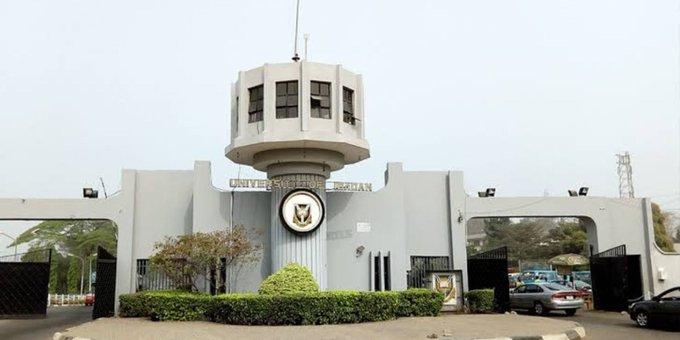
• UI Law Graduate Sues Nigerian Law School, Seeks Readmission Eight Years After 2017 Expulsion, Demands N100m Damages

    A University of Ibadan (UI) law graduate and activist, Kayode Bello, has filed a suit at the Federal High Court in Ibadan seeking an order compelling the Nigerian Law School and the Council of Legal Education to readmit him after his 2017 expulsion. Bello argues that the Law School’s regulations do not permanently bar his return and that new evidence, including an alleged withheld pardon letter, undermines the basis of his expulsion. He accused Law School authorities of disobeying a court order that allowed him to sit for Bar finals and named multiple respondents, including the Minister of Education and UI officials. The case, slated for hearing on January 27, 2026, also includes a N100 million damages claim for alleged denial of justice, psychological trauma, and prolonged hardship.
    UI Law Graduate Sues Nigerian Law School, Seeks Readmission Eight Years After 2017 Expulsion, Demands N100m Damages A University of Ibadan (UI) law graduate and activist, Kayode Bello, has filed a suit at the Federal High Court in Ibadan seeking an order compelling the Nigerian Law School and the Council of Legal Education to readmit him after his 2017 expulsion. Bello argues that the Law School’s regulations do not permanently bar his return and that new evidence, including an alleged withheld pardon letter, undermines the basis of his expulsion. He accused Law School authorities of disobeying a court order that allowed him to sit for Bar finals and named multiple respondents, including the Minister of Education and UI officials. The case, slated for hearing on January 27, 2026, also includes a N100 million damages claim for alleged denial of justice, psychological trauma, and prolonged hardship.
    like
    1
    · 0 Комментарии ·0 Поделились ·245 Просмотры
  • University of Nigeria Spends Over N1 Billion on Honorarium and Refreshments in 2024, Allocates Just N41 Million to Teaching Aids

    The University of Nigeria, Nsukka (UNN) reportedly spent N773 million on honorarium and stipends and an additional N240 million on refreshments in 2024, bringing total non-academic spending to N1.013 billion. In contrast, only N41 million was allocated to teaching aids, and N83 million to direct teaching and laboratory costs. General research received N265.4 million. The financial review highlights a significant imbalance, prioritizing administrative perks over core academic functions. A similar pattern was noted at the University of Ibadan, where non-academic expenses exceeded spending on research and teaching materials in 2023.
    University of Nigeria Spends Over N1 Billion on Honorarium and Refreshments in 2024, Allocates Just N41 Million to Teaching Aids The University of Nigeria, Nsukka (UNN) reportedly spent N773 million on honorarium and stipends and an additional N240 million on refreshments in 2024, bringing total non-academic spending to N1.013 billion. In contrast, only N41 million was allocated to teaching aids, and N83 million to direct teaching and laboratory costs. General research received N265.4 million. The financial review highlights a significant imbalance, prioritizing administrative perks over core academic functions. A similar pattern was noted at the University of Ibadan, where non-academic expenses exceeded spending on research and teaching materials in 2023.
    0 Комментарии ·0 Поделились ·415 Просмотры
  • Law Graduate Sues Education Minister, Nigerian Law School, UI Over Four-Year Readmission Denial, Seeks ₦100m Damages

    A University of Ibadan law graduate, Kayode Bello, has filed a suit at the Federal High Court in Ibadan against the Education Minister, Nigerian Law School authorities, the Council of Legal Education and UI officials over alleged unlawful denial of his readmission for four years. He is demanding ₦100 million in damages, citing violation of fair hearing, psychological trauma and disobedience of court orders.
    Law Graduate Sues Education Minister, Nigerian Law School, UI Over Four-Year Readmission Denial, Seeks ₦100m Damages A University of Ibadan law graduate, Kayode Bello, has filed a suit at the Federal High Court in Ibadan against the Education Minister, Nigerian Law School authorities, the Council of Legal Education and UI officials over alleged unlawful denial of his readmission for four years. He is demanding ₦100 million in damages, citing violation of fair hearing, psychological trauma and disobedience of court orders.
    Dislike
    1
    · 0 Комментарии ·0 Поделились ·270 Просмотры
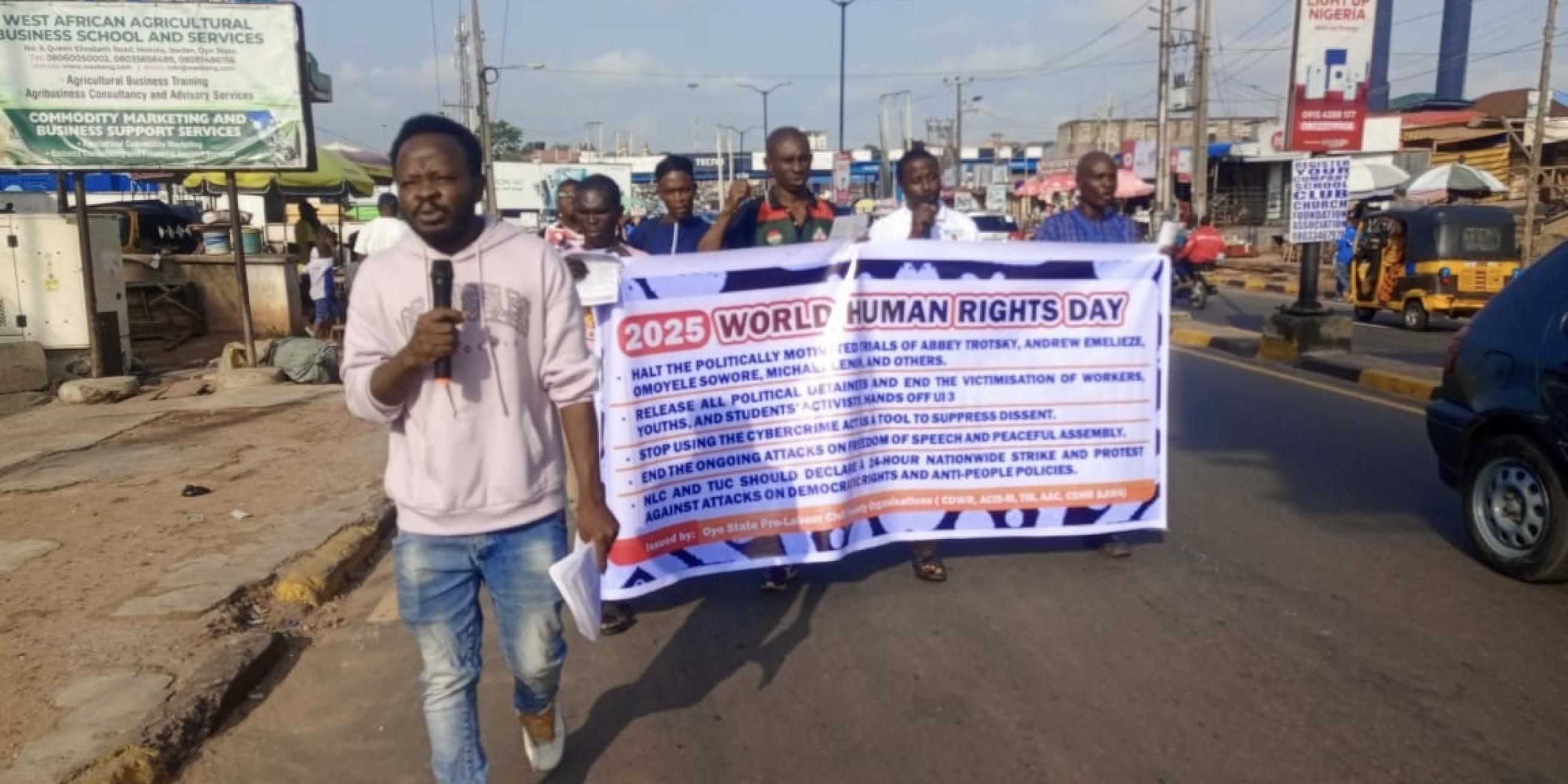
  • Human Rights Day: Activists Protest in Oyo, Accuse Tinubu Government of Rising Repression

    A coalition of labour and civil society groups staged a major Human Rights Day protest in Ibadan, accusing President Bola Tinubu’s administration of intensifying repression against activists and critics. Marching to the Oyo State House of Assembly and the National Human Rights Commission office, the protesters condemned alleged victimisation, arbitrary arrests, and harassment of figures like Andrew Emelieze, Abbey Trotsky, Omoyele Sowore, and the “University of Ibadan Three.” They criticised the government’s use of the Cybercrime Act to silence dissent and demanded an end to political persecution, unconditional release of detained activists, and protection of workers' rights. The coalition warned that Nigeria is slipping into authoritarianism and urged authorities to respect democratic freedoms.
    Human Rights Day: Activists Protest in Oyo, Accuse Tinubu Government of Rising Repression A coalition of labour and civil society groups staged a major Human Rights Day protest in Ibadan, accusing President Bola Tinubu’s administration of intensifying repression against activists and critics. Marching to the Oyo State House of Assembly and the National Human Rights Commission office, the protesters condemned alleged victimisation, arbitrary arrests, and harassment of figures like Andrew Emelieze, Abbey Trotsky, Omoyele Sowore, and the “University of Ibadan Three.” They criticised the government’s use of the Cybercrime Act to silence dissent and demanded an end to political persecution, unconditional release of detained activists, and protection of workers' rights. The coalition warned that Nigeria is slipping into authoritarianism and urged authorities to respect democratic freedoms.
    0 Комментарии ·0 Поделились ·437 Просмотры
  • FG not sincere with collective bargaining, says UI ASUU.

    The Academic Staff Union of Universities has accused the Federal Government of insincerity in its approach to collective bargaining and the welfare of academic staff in public universities.

    The union lamented that the government had not shown genuine regard for tertiary education judging by the way it handles the welfare and conditions of service of intellectuals in public institutions.

    It, however, vowed not to abandon its struggle for decent working conditions and improved funding for the revitalisation of public universities in the interest of the children of the masses.

    ASUU Chairman, University of Ibadan chapter, Dr Adefemi Afolabi, stated this while featuring on Situation Room, a radio programme in Ibadan, the Oyo State capital.

    The PUNCH reports that ASUU, on Monday, began a two-week warning strike to protest the Federal Government’s failure to sign the renegotiated draft agreement reached by the Yayale Ahmed-led committee, which concluded its sittings over eight months ago.

    Afolabi said the Federal Government had taken ASUU for granted for too long, noting that the union was forced into the warning strike due to what he described as government’s “delay tactics” and disregard for the principles of collective bargaining.

    He said, “The Federal Government took ASUU for granted for over eight months. The union was not happy to proceed on the warning strike but was forced to do so because of the delay tactics adopted by the government and its posture towards jettisoning the principle of collective bargaining.”

    According to him, the union waited patiently for eight months and even organised protests to sensitise Nigerians on the need for the government to sign the renegotiated agreement.

    FG not sincere with collective bargaining, says UI ASUU. The Academic Staff Union of Universities has accused the Federal Government of insincerity in its approach to collective bargaining and the welfare of academic staff in public universities. The union lamented that the government had not shown genuine regard for tertiary education judging by the way it handles the welfare and conditions of service of intellectuals in public institutions. It, however, vowed not to abandon its struggle for decent working conditions and improved funding for the revitalisation of public universities in the interest of the children of the masses. ASUU Chairman, University of Ibadan chapter, Dr Adefemi Afolabi, stated this while featuring on Situation Room, a radio programme in Ibadan, the Oyo State capital. The PUNCH reports that ASUU, on Monday, began a two-week warning strike to protest the Federal Government’s failure to sign the renegotiated draft agreement reached by the Yayale Ahmed-led committee, which concluded its sittings over eight months ago. Afolabi said the Federal Government had taken ASUU for granted for too long, noting that the union was forced into the warning strike due to what he described as government’s “delay tactics” and disregard for the principles of collective bargaining. He said, “The Federal Government took ASUU for granted for over eight months. The union was not happy to proceed on the warning strike but was forced to do so because of the delay tactics adopted by the government and its posture towards jettisoning the principle of collective bargaining.” According to him, the union waited patiently for eight months and even organised protests to sensitise Nigerians on the need for the government to sign the renegotiated agreement.
    0 Комментарии ·0 Поделились ·553 Просмотры
  • Universities Shut Down Nationwide as Lecturers Dare Tinubu Government.

    According to a report by The Punch on Tuesday, October 14, 2025, academic activities were paralysed across public universities nationwide on Monday as the Academic Staff Union of Universities commenced a two-week warning strike over unmet demands by the Federal Government.

    ASUU president, Prof. Chris Piwuna, announced the strike in Abuja on Sunday, following a breakdown in negotiations.

    In immediate response, the Minister of Education, Tunji Alausa, ordered vice-chancellors to enforce a no-work-no-pay policy and submit attendance lists of academic staff within seven days.

    The Nigeria Labour Congress rejected the directive, describing it as intimidation. NLC president, Joe Ajaero, warned that failure to heed ASUU’s demands after the strike would trigger broader labour action.

    Universities nationwide reported total compliance. At Ahmadu Bello University, Zaria, branch chairman Haruna Jibril said the strike reflected years of accumulated frustration. Lecture halls were deserted, with students seen loitering in groups.

    A similar situation played out at Usmanu Danfodiyo University, Sokoto; Adekunle Ajasin University, Akungba; the University of Uyo; University of Ibadan; Nnamdi Azikiwe University, Awka; University of Jos and Plateau State University, Bokkos.

    At some institutions, examinations were disrupted. At Joseph Sarwuan Tarka University, Makurdi, only Veterinary Medicine students had pending papers. At Olabisi Onabanjo University and Tai Solarin University of Education, lecturers vowed to remain off duty until their demands were met.

    Despite threats of withheld salaries, ASUU members insisted they were prepared to endure hardship to protect the future of public education. Piwuna dismissed attempts at division, stating: “Nobody can threaten us. We are victims, just like students.”
    Universities Shut Down Nationwide as Lecturers Dare Tinubu Government. According to a report by The Punch on Tuesday, October 14, 2025, academic activities were paralysed across public universities nationwide on Monday as the Academic Staff Union of Universities commenced a two-week warning strike over unmet demands by the Federal Government. ASUU president, Prof. Chris Piwuna, announced the strike in Abuja on Sunday, following a breakdown in negotiations. In immediate response, the Minister of Education, Tunji Alausa, ordered vice-chancellors to enforce a no-work-no-pay policy and submit attendance lists of academic staff within seven days. The Nigeria Labour Congress rejected the directive, describing it as intimidation. NLC president, Joe Ajaero, warned that failure to heed ASUU’s demands after the strike would trigger broader labour action. Universities nationwide reported total compliance. At Ahmadu Bello University, Zaria, branch chairman Haruna Jibril said the strike reflected years of accumulated frustration. Lecture halls were deserted, with students seen loitering in groups. A similar situation played out at Usmanu Danfodiyo University, Sokoto; Adekunle Ajasin University, Akungba; the University of Uyo; University of Ibadan; Nnamdi Azikiwe University, Awka; University of Jos and Plateau State University, Bokkos. At some institutions, examinations were disrupted. At Joseph Sarwuan Tarka University, Makurdi, only Veterinary Medicine students had pending papers. At Olabisi Onabanjo University and Tai Solarin University of Education, lecturers vowed to remain off duty until their demands were met. Despite threats of withheld salaries, ASUU members insisted they were prepared to endure hardship to protect the future of public education. Piwuna dismissed attempts at division, stating: “Nobody can threaten us. We are victims, just like students.”
    0 Комментарии ·0 Поделились ·881 Просмотры
  • University of Ibadan Emerges Best Nigerian University for 2026.

    The University of Ibadan in Oyo State has been ranked Nigeria’s top university in the Times Higher Education World University Rankings 2026.

    The ranking, released on THE’s website on Thursday, placed the university- located in Ibadan- between 801 and 1,000 globally, ranking it above other leading Nigerian universities, a position it last held in 2023.

    THE examined 2,191 institutions from 115 countries using 18 performance indicators across five main areas: teaching, research environment, research quality, industry connections, and international outlook.

    UI improved from fourth place in 2025 to become Nigeria’s best in 2026, surpassing Covenant University, which held the top spot in 2024 and 2025.

    BUK is recognised as Nigeria’s top university for international outlook, while Covenant has the highest industry score, reflecting its strong industry links.

    Among 51 Nigerian schools in THE 2026 rankings, only UI and UNILAG are between 801–1000; BUK, CU, and Landmark University are between 1001–1200; five universities—Ahmadu Bello University, Federal University of Technology Minna, University of Ilorin, University of Jos, and University of Nigeria—rank between 1201–1500.

    Additionally, 14 Nigerian universities are ranked above 1501, and 27 institutions are unranked.
    University of Ibadan Emerges Best Nigerian University for 2026. The University of Ibadan in Oyo State has been ranked Nigeria’s top university in the Times Higher Education World University Rankings 2026. The ranking, released on THE’s website on Thursday, placed the university- located in Ibadan- between 801 and 1,000 globally, ranking it above other leading Nigerian universities, a position it last held in 2023. THE examined 2,191 institutions from 115 countries using 18 performance indicators across five main areas: teaching, research environment, research quality, industry connections, and international outlook. UI improved from fourth place in 2025 to become Nigeria’s best in 2026, surpassing Covenant University, which held the top spot in 2024 and 2025. BUK is recognised as Nigeria’s top university for international outlook, while Covenant has the highest industry score, reflecting its strong industry links. Among 51 Nigerian schools in THE 2026 rankings, only UI and UNILAG are between 801–1000; BUK, CU, and Landmark University are between 1001–1200; five universities—Ahmadu Bello University, Federal University of Technology Minna, University of Ilorin, University of Jos, and University of Nigeria—rank between 1201–1500. Additionally, 14 Nigerian universities are ranked above 1501, and 27 institutions are unranked.
    0 Комментарии ·0 Поделились ·424 Просмотры
  • Nigeria @ 65: The worst is over, we’ve turned a new corner Tinubu.

    Remembering the founding fathers, Tinubu recalled the sacrifices and vision of the country’s founding fathers, Herbert Macaulay, Nnamdi Azikiwe, Tafawa Balewa, Obafemi Awolowo, Ahmadu Bello, Margaret Ekpo, Anthony Enahoro, Michael Okpara, Aminu Kano, Funmilayo Ransome-Kuti and others, saying “they believed it was Nigeria’s manifest destiny to lead the entire black race as the largest black nation on earth.”

    We have not strayed too far

    Reflecting on Nigeria’s journey since October 1, 1960, Tinubu said: “While we may not have achieved all the lofty dreams of our forebears, we have not strayed too far from them. In 65 years, we have made tremendous progress in economic growth, social cohesion, and physical development.

    “At independence, Nigeria had 120 secondary schools and two tertiary institutions. Today, we have over 23,000 secondary schools, 274 universities, 183 polytechnics and 236 colleges of education. We have witnessed a significant surge in healthcare, infrastructure, telecommunications, aviation, and defence.’’

    Civil war, military rule, resilience
    The President acknowledged Nigeria’s turbulent history but noted that Nigerians weathered the storm and kept hope alive.

    “We fought a bitter civil war, endured military dictatorships and political crises. But in all, we weathered every storm and overcame every challenge with courage and grit,” he said.

    According to him, for 65 years, Nigeria has endured profound social, economic, and political trials.

    He said: ‘’We survived a civil war, military dictatorships, and recurring political crises. In spite of these setbacks, we have recorded progress in economic growth, education, healthcare, infrastructure, and social cohesion.

    ‘’At Independence, Nigeria had just 120 secondary schools with 130,000 students. Today, there are over 23,000 secondary schools. In 1960, we had only the University of Ibadan and Yaba College of Technology. As of 2024, Nigeria boasts 274 universities, 183 polytechnics, and 236 colleges of education. Healthcare, telecommunications, aviation, and financial services have all expanded remarkably.

    Unfinished business
    Declaring that like the founding leaders, he had committed himself irrevocably to the unfinished business of nation-building, President Tinubu said he inherited a near-collapsed economy, distorted by decades of bad policies.

    Nigeria @ 65: The worst is over, we’ve turned a new corner Tinubu. Remembering the founding fathers, Tinubu recalled the sacrifices and vision of the country’s founding fathers, Herbert Macaulay, Nnamdi Azikiwe, Tafawa Balewa, Obafemi Awolowo, Ahmadu Bello, Margaret Ekpo, Anthony Enahoro, Michael Okpara, Aminu Kano, Funmilayo Ransome-Kuti and others, saying “they believed it was Nigeria’s manifest destiny to lead the entire black race as the largest black nation on earth.” We have not strayed too far Reflecting on Nigeria’s journey since October 1, 1960, Tinubu said: “While we may not have achieved all the lofty dreams of our forebears, we have not strayed too far from them. In 65 years, we have made tremendous progress in economic growth, social cohesion, and physical development. “At independence, Nigeria had 120 secondary schools and two tertiary institutions. Today, we have over 23,000 secondary schools, 274 universities, 183 polytechnics and 236 colleges of education. We have witnessed a significant surge in healthcare, infrastructure, telecommunications, aviation, and defence.’’ Civil war, military rule, resilience The President acknowledged Nigeria’s turbulent history but noted that Nigerians weathered the storm and kept hope alive. “We fought a bitter civil war, endured military dictatorships and political crises. But in all, we weathered every storm and overcame every challenge with courage and grit,” he said. According to him, for 65 years, Nigeria has endured profound social, economic, and political trials. He said: ‘’We survived a civil war, military dictatorships, and recurring political crises. In spite of these setbacks, we have recorded progress in economic growth, education, healthcare, infrastructure, and social cohesion. ‘’At Independence, Nigeria had just 120 secondary schools with 130,000 students. Today, there are over 23,000 secondary schools. In 1960, we had only the University of Ibadan and Yaba College of Technology. As of 2024, Nigeria boasts 274 universities, 183 polytechnics, and 236 colleges of education. Healthcare, telecommunications, aviation, and financial services have all expanded remarkably. Unfinished business Declaring that like the founding leaders, he had committed himself irrevocably to the unfinished business of nation-building, President Tinubu said he inherited a near-collapsed economy, distorted by decades of bad policies.
    0 Комментарии ·0 Поделились ·888 Просмотры
  • Abiola’s Wife, Doyin, Is Dead.

    Wife of the Concord Publisher and winner of the June 12, 1993, presidential election, Moshood Abiola, Doyin, has passed away.

    Naija News learnt that the eminent journalist died at 9.15 pm on Tuesday, August 5, 2025.

    According to the Nation, Doyin’s death resulted from an illness.

    Doyin was the former managing director and publisher of National Concord.

    She was also the first Nigerian woman to be an editor of a Nigerian daily newspaper.

    Like the numerous wives of the late Abiola, Doyin endured the storm and stress triggered by the annulment of the historic poll and the tribulations that followed on the home front and in Concord.

    Doyin Abiola attended the University of Ibadan, Nigeria, where she earned a degree in English and Drama in 1969. After graduation, she started working with the Daily Sketch Newspaper and also wrote a column in the newspaper called ‘Tiro,’ which addressed sundry issues of public concern, including gender matters.

    In 1970, Doyin left Daily Sketch Newspaper and travelled to the United States to pursue a master’s degree programme in Journalism. Upon her return, she was employed as a Features Writer at Daily Times and rose to become the Group Features Editor. She later attended New York University and obtained a PhD in communications and political science in 1979.

    After Doyin’s Ph.d. programme, she returned to the Daily Times and was deployed to the editorial board, where she worked with other experienced editors like Stanley Macebuh, Dele Giwa, and Amma Ogan. However, it was to be a short stay as the newly formed National Concord newspaper invited her to be its pioneer daily editor.

    Abiola’s Wife, Doyin, Is Dead. Wife of the Concord Publisher and winner of the June 12, 1993, presidential election, Moshood Abiola, Doyin, has passed away. Naija News learnt that the eminent journalist died at 9.15 pm on Tuesday, August 5, 2025. According to the Nation, Doyin’s death resulted from an illness. Doyin was the former managing director and publisher of National Concord. She was also the first Nigerian woman to be an editor of a Nigerian daily newspaper. Like the numerous wives of the late Abiola, Doyin endured the storm and stress triggered by the annulment of the historic poll and the tribulations that followed on the home front and in Concord. Doyin Abiola attended the University of Ibadan, Nigeria, where she earned a degree in English and Drama in 1969. After graduation, she started working with the Daily Sketch Newspaper and also wrote a column in the newspaper called ‘Tiro,’ which addressed sundry issues of public concern, including gender matters. In 1970, Doyin left Daily Sketch Newspaper and travelled to the United States to pursue a master’s degree programme in Journalism. Upon her return, she was employed as a Features Writer at Daily Times and rose to become the Group Features Editor. She later attended New York University and obtained a PhD in communications and political science in 1979. After Doyin’s Ph.d. programme, she returned to the Daily Times and was deployed to the editorial board, where she worked with other experienced editors like Stanley Macebuh, Dele Giwa, and Amma Ogan. However, it was to be a short stay as the newly formed National Concord newspaper invited her to be its pioneer daily editor.
    0 Комментарии ·0 Поделились ·662 Просмотры
  • Education Rights Campaign Demands Reversal of UI's Drastic Fee Hike

    The Education Rights Campaign (ERC) has condemned the University of Ibadan's (UI) recent decision to increase tuition fees for the 2023/2024 academic session. The new fees, ranging from ₦230,000 to ₦412,000, represent a staggering 453% to 750% increase from the previous session's fees of ₦64,600 to ₦69,600 .


    ERC describes the hike as "callous, unjustifiable, and anti-poor," highlighting that previous fee increases have not led to improvements in students' learning and living conditions. The group also criticizes the Students' Union's approach to the issue, urging for a more democratic and inclusive response from student leadership .

    In response to the administration's actions, ERC has called for mass mobilization and peaceful protests to pressure the university management to reverse the fee hike. The group emphasizes the importance of student unity and collective action in defending the right to affordable education.

    This development has sparked widespread discussions about the accessibility of higher education in Nigeria and the need for policies that prioritize students' welfare.

    #EducationRights #UIFeeHike #StudentProtests #AffordableEducation
    Education Rights Campaign Demands Reversal of UI's Drastic Fee Hike The Education Rights Campaign (ERC) has condemned the University of Ibadan's (UI) recent decision to increase tuition fees for the 2023/2024 academic session. The new fees, ranging from ₦230,000 to ₦412,000, represent a staggering 453% to 750% increase from the previous session's fees of ₦64,600 to ₦69,600 . ERC describes the hike as "callous, unjustifiable, and anti-poor," highlighting that previous fee increases have not led to improvements in students' learning and living conditions. The group also criticizes the Students' Union's approach to the issue, urging for a more democratic and inclusive response from student leadership . In response to the administration's actions, ERC has called for mass mobilization and peaceful protests to pressure the university management to reverse the fee hike. The group emphasizes the importance of student unity and collective action in defending the right to affordable education. This development has sparked widespread discussions about the accessibility of higher education in Nigeria and the need for policies that prioritize students' welfare. #EducationRights #UIFeeHike #StudentProtests #AffordableEducation
    0 Комментарии ·0 Поделились ·2Кб Просмотры
Fintter https://fintter.com