• Nigeria Faces Education Emergency as 45 Million Children Suffer Severe Learning Poverty — Alausa Warns


    Nigeria is facing a nationwide learning crisis, with 45 million children aged 7–14 unable to read a simple sentence despite high school enrollment rates, according to Education Minister Dr. Tunji Alausa. Citing UNICEF data, the minister revealed alarming disparities in literacy and numeracy across regions, with the North-west and North-east worst affected.

    Alausa described the situation as a “learning emergency” driven by low-quality teaching, inadequate materials, and inconsistent implementation of mother-tongue education policies. He outlined sweeping reforms by the Federal Ministry of Education, including teacher training upgrades, digital learning initiatives, school grading, strengthened monitoring, and partnerships to reduce out-of-school children.

    The minister emphasized that Nigeria’s multilingual landscape complicates policy execution, with many teachers unable to teach in local languages and limited instructional materials available. He called for a harmonized language-in-education strategy that improves foundational learning while ensuring fair access to national examinations and future opportunities.


    #Nigeriaeducationcrisis

    #learningpovertyNigeria

    #TunjiAlausaeducationreforms

    #UNICEFNigerialiteracyreport

    #Nigerianschoolsystem

    Nigeria Faces Education Emergency as 45 Million Children Suffer Severe Learning Poverty — Alausa Warns Nigeria is facing a nationwide learning crisis, with 45 million children aged 7–14 unable to read a simple sentence despite high school enrollment rates, according to Education Minister Dr. Tunji Alausa. Citing UNICEF data, the minister revealed alarming disparities in literacy and numeracy across regions, with the North-west and North-east worst affected. Alausa described the situation as a “learning emergency” driven by low-quality teaching, inadequate materials, and inconsistent implementation of mother-tongue education policies. He outlined sweeping reforms by the Federal Ministry of Education, including teacher training upgrades, digital learning initiatives, school grading, strengthened monitoring, and partnerships to reduce out-of-school children. The minister emphasized that Nigeria’s multilingual landscape complicates policy execution, with many teachers unable to teach in local languages and limited instructional materials available. He called for a harmonized language-in-education strategy that improves foundational learning while ensuring fair access to national examinations and future opportunities. #Nigeriaeducationcrisis #learningpovertyNigeria #TunjiAlausaeducationreforms #UNICEFNigerialiteracyreport #Nigerianschoolsystem
    0 Commentaires ·0 Parts ·487 Vue
  • Around 200 Children D+ed Daily From AIDS in 2024 — UNICEF/UNAIDS

    A new UNICEF–UNAIDS modelling report reveals that 120,000 children aged 0–14 contracted HIV globally in 2024, while 75,000 children d+ed from AIDS-related illnesses — an average of about 200 deaths every day.

    In a statement issued on Friday, UNICEF warned that children and adolescents living with HIV are still being left behind, with many lacking access to early diagnosis, essential treatment, and critical care services.
    Around 200 Children D+ed Daily From AIDS in 2024 — UNICEF/UNAIDS A new UNICEF–UNAIDS modelling report reveals that 120,000 children aged 0–14 contracted HIV globally in 2024, while 75,000 children d+ed from AIDS-related illnesses — an average of about 200 deaths every day. In a statement issued on Friday, UNICEF warned that children and adolescents living with HIV are still being left behind, with many lacking access to early diagnosis, essential treatment, and critical care services.
    0 Commentaires ·0 Parts ·94 Vue

  • “Be a Hand-Washing Hero!” — Nigeria Marks 2025 Global Hand-Washing Day with Renewed Call for Hygiene Awareness


    Health begins with clean hands! Nigeria joins the world in celebrating Global Hand-Washing Day 2025, urging citizens, leaders, and communities to make hand hygiene a daily habit for a healthier nation.


    Nigeria joined the rest of the world on October 15, 2025, to commemorate Global Hand-Washing Day in Abuja, with the theme “Be a Hand-Washing Hero.” The event focused on raising awareness about the importance of basic hand hygiene in preventing infectious diseases and promoting national health.

    Delivering the keynote address, the Minister of Water Resources and Sanitation, Professor Joseph Utsev, stressed that although hand washing may appear simple, it remains one of the most effective ways to stop the spread of infections. He urged Nigerians to make it a daily habit and a collective responsibility.

    “Every Nigerian must make hand washing a consistent part of their daily routine. Clean hands save lives,” Utsev emphasized.


    Global Hand-Washing Day is observed every October 15 to highlight the power of washing hands with soap as an affordable, life-saving practice that prevents illnesses and promotes hygiene in homes, schools, and healthcare centers.

    According to a UNICEF report, only 16% of Nigerians have access to basic hand-washing facilities at home — a figure that leaves millions, especially children, vulnerable to infectious diseases.

    This year’s commemoration also carried a strong call to action, urging leaders at all levels to invest in hand-washing infrastructure and ensure every school, hospital, and workplace has access to clean water and soap.

    Representatives from UNICEF reaffirmed their commitment to expanding hygiene education and supporting government programs that improve access to sanitation facilities across Nigeria.

    The Federal Government has also continued its push through national initiatives such as the PEWASH Programme, the Clean Nigeria: Use the Toilet Campaign, and the Sustainable Urban and Rural WASH Project — all aimed at achieving universal access to water, sanitation, and hygiene.

    As Nigeria commemorates this global health event, the message remains clear: clean hands are the first line of defense against disease — and every Nigerian can be a hand-washing hero.
    “Be a Hand-Washing Hero!” — Nigeria Marks 2025 Global Hand-Washing Day with Renewed Call for Hygiene Awareness Health begins with clean hands! Nigeria joins the world in celebrating Global Hand-Washing Day 2025, urging citizens, leaders, and communities to make hand hygiene a daily habit for a healthier nation. Nigeria joined the rest of the world on October 15, 2025, to commemorate Global Hand-Washing Day in Abuja, with the theme “Be a Hand-Washing Hero.” The event focused on raising awareness about the importance of basic hand hygiene in preventing infectious diseases and promoting national health. Delivering the keynote address, the Minister of Water Resources and Sanitation, Professor Joseph Utsev, stressed that although hand washing may appear simple, it remains one of the most effective ways to stop the spread of infections. He urged Nigerians to make it a daily habit and a collective responsibility. “Every Nigerian must make hand washing a consistent part of their daily routine. Clean hands save lives,” Utsev emphasized. Global Hand-Washing Day is observed every October 15 to highlight the power of washing hands with soap as an affordable, life-saving practice that prevents illnesses and promotes hygiene in homes, schools, and healthcare centers. According to a UNICEF report, only 16% of Nigerians have access to basic hand-washing facilities at home — a figure that leaves millions, especially children, vulnerable to infectious diseases. This year’s commemoration also carried a strong call to action, urging leaders at all levels to invest in hand-washing infrastructure and ensure every school, hospital, and workplace has access to clean water and soap. Representatives from UNICEF reaffirmed their commitment to expanding hygiene education and supporting government programs that improve access to sanitation facilities across Nigeria. The Federal Government has also continued its push through national initiatives such as the PEWASH Programme, the Clean Nigeria: Use the Toilet Campaign, and the Sustainable Urban and Rural WASH Project — all aimed at achieving universal access to water, sanitation, and hygiene. As Nigeria commemorates this global health event, the message remains clear: clean hands are the first line of defense against disease — and every Nigerian can be a hand-washing hero.
    0 Commentaires ·0 Parts ·531 Vue
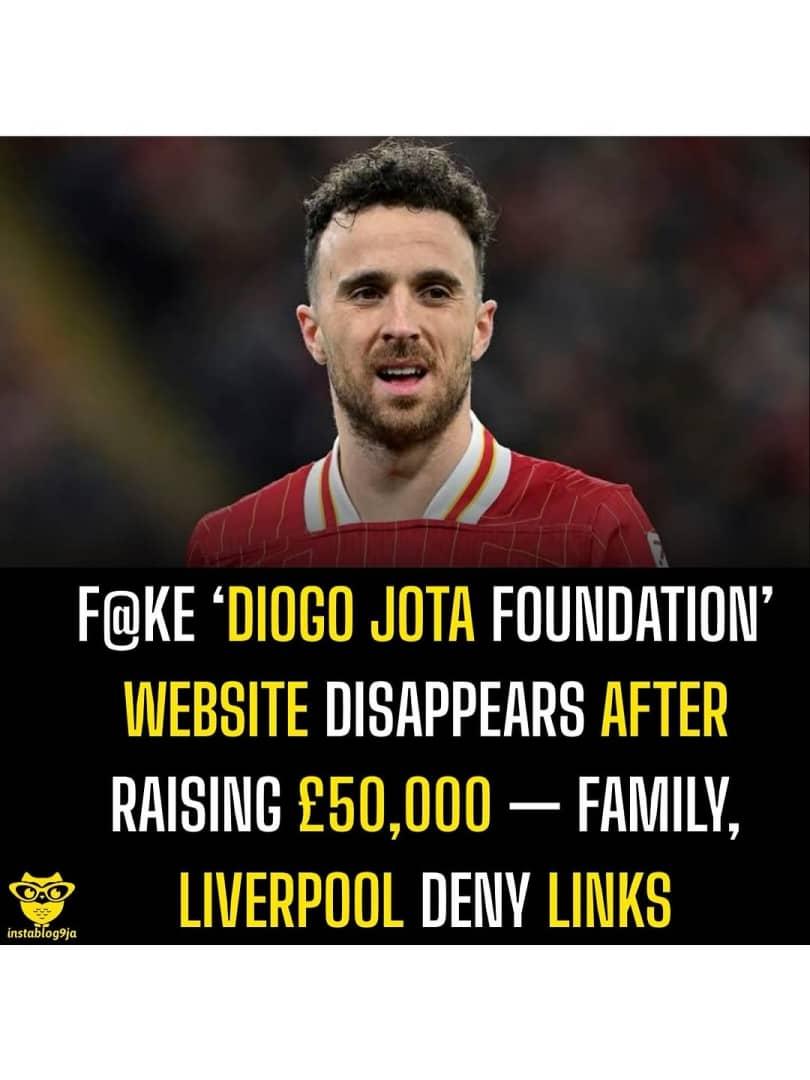
  • Fake ‘Diogo Jota Foundation’ Website Disappears After Raising £50,000 — Family, Liverpool Deny Links.

    A fraudulent website posing as the “Diogo Jota Foundation” has vanished after reportedly raising nearly £50,000, despite having no ties to Liverpool FC or the late player’s family.

    The site appeared just three days after Jota’s death in July, claiming to support youth, education, and community projects in his honour. It displayed the logos of Liverpool, Unicef, Allianz, and the Portuguese Platform of Development NGOs, but those organisations later denied any involvement.

    On Thursday, both Liverpool FC and Jota’s relatives publicly distanced themselves from the alleged foundation. The UK Charity Commission also confirmed that no registration had ever been filed, even though charities earning over £5,000 annually must register.

    The website boasted of distributing 25,000 meals, sponsoring 300 children, and forming 50 local partnerships. It also claimed to fund football camps, scholarships, and community programmes.

    However, donations were only accepted in cryptocurrency via an external payment platform. NOWPayments, the crypto processor named on the site, denied handling any transactions and said its services were cut off immediately after learning of the alleged fraud.

    Liverpool FC has since announced a legitimate grassroots football project in Jota’s name, to be run through the LFC Foundation. Earlier this month, the club also launched a commemorative “Forever 20” T-shirt to raise funds for the initiative.
    Fake ‘Diogo Jota Foundation’ Website Disappears After Raising £50,000 — Family, Liverpool Deny Links. A fraudulent website posing as the “Diogo Jota Foundation” has vanished after reportedly raising nearly £50,000, despite having no ties to Liverpool FC or the late player’s family. The site appeared just three days after Jota’s death in July, claiming to support youth, education, and community projects in his honour. It displayed the logos of Liverpool, Unicef, Allianz, and the Portuguese Platform of Development NGOs, but those organisations later denied any involvement. On Thursday, both Liverpool FC and Jota’s relatives publicly distanced themselves from the alleged foundation. The UK Charity Commission also confirmed that no registration had ever been filed, even though charities earning over £5,000 annually must register. The website boasted of distributing 25,000 meals, sponsoring 300 children, and forming 50 local partnerships. It also claimed to fund football camps, scholarships, and community programmes. However, donations were only accepted in cryptocurrency via an external payment platform. NOWPayments, the crypto processor named on the site, denied handling any transactions and said its services were cut off immediately after learning of the alleged fraud. Liverpool FC has since announced a legitimate grassroots football project in Jota’s name, to be run through the LFC Foundation. Earlier this month, the club also launched a commemorative “Forever 20” T-shirt to raise funds for the initiative.
    0 Commentaires ·0 Parts ·1KB Vue
  • Mpox outbreak hits Benue 5 LGAs, records 31 suspected cases, confirms 7.

    Mpox outbreak hits Benue 5 LGAs, records 31 suspected cases, confirms 7
    Makurdi—Benue State has recorded 31 suspected cases of Mpox across five Local Government Areas (LGAs) — Makurdi, Ushongo, Gwer East, Katsina-Ala, and Guma.

    The Executive Secretary of the Benue State Primary Health Care Board, Mrs. Grace Wende, disclosed this on Thursday during the Benue State Stakeholders Engagement/Townhall Meeting on the Mpox Vaccination Rollout. She explained that seven of the suspected cases had been confirmed.

    Represented by the State Immunization Officer (SIO), Mr. Emmanuel Adega, she said 10 unconfirmed cases were recorded in Makurdi, eight in Katsina-Ala, seven in Gwer East, four in Guma, and two in Ushongo LGAs.

    According to her, “Of the figures, we have confirmed one case in Gwer East, two cases in Katsina-Ala, three cases in Makurdi, and one case in Guma LGAs. These cases were recorded in June, and samples were collected and taken to the laboratory. The results were released in July.

    “As we speak, we have line-listed all the people who came in contact with the confirmed cases. Their names have been taken for vaccination after monitoring them for 43 days, and they did not come down with the disease.”

    The Executive Secretary explained that the upcoming Mpox vaccination exercise would not be a statewide programme but restricted to communities at risk of an outbreak.

    She urged all stakeholders to support the vaccination exercise and ensure prompt reporting of any suspected case of the disease for urgent attention by health authorities.

    In his presentation, the Social and Behaviour Change Health Consultant with the United Nations Children’s Fund (UNICEF), Victor Olaniyi, noted that “Mpox is an infectious viral disease that can occur in humans and other animals.”
    He stated that symptoms of the disease include rashes that form blisters and then crust over, fever, and swollen lymph nodes.
    Mpox outbreak hits Benue 5 LGAs, records 31 suspected cases, confirms 7. Mpox outbreak hits Benue 5 LGAs, records 31 suspected cases, confirms 7 Makurdi—Benue State has recorded 31 suspected cases of Mpox across five Local Government Areas (LGAs) — Makurdi, Ushongo, Gwer East, Katsina-Ala, and Guma. The Executive Secretary of the Benue State Primary Health Care Board, Mrs. Grace Wende, disclosed this on Thursday during the Benue State Stakeholders Engagement/Townhall Meeting on the Mpox Vaccination Rollout. She explained that seven of the suspected cases had been confirmed. Represented by the State Immunization Officer (SIO), Mr. Emmanuel Adega, she said 10 unconfirmed cases were recorded in Makurdi, eight in Katsina-Ala, seven in Gwer East, four in Guma, and two in Ushongo LGAs. According to her, “Of the figures, we have confirmed one case in Gwer East, two cases in Katsina-Ala, three cases in Makurdi, and one case in Guma LGAs. These cases were recorded in June, and samples were collected and taken to the laboratory. The results were released in July. “As we speak, we have line-listed all the people who came in contact with the confirmed cases. Their names have been taken for vaccination after monitoring them for 43 days, and they did not come down with the disease.” The Executive Secretary explained that the upcoming Mpox vaccination exercise would not be a statewide programme but restricted to communities at risk of an outbreak. She urged all stakeholders to support the vaccination exercise and ensure prompt reporting of any suspected case of the disease for urgent attention by health authorities. In his presentation, the Social and Behaviour Change Health Consultant with the United Nations Children’s Fund (UNICEF), Victor Olaniyi, noted that “Mpox is an infectious viral disease that can occur in humans and other animals.” He stated that symptoms of the disease include rashes that form blisters and then crust over, fever, and swollen lymph nodes.
    0 Commentaires ·0 Parts ·1KB Vue
  • UNICEF, WHO, World Bank Raise Alarm Over Rising Child Stunting in Africa


    A joint report by UNICEF, the World Health Organization (WHO), and the World Bank Group has revealed a worrying increase in child stunting across Africa, signaling a deepening public health and nutrition emergency.

    The report calls for urgent investment in child nutrition, healthcare access, and poverty alleviation to reverse the disturbing trend affecting millions of African children’s physical and cognitive development.

    #ChildHealthCrisis #StuntingInAfrica #UNICEF #WHO #WorldBankReport

    🚨 UNICEF, WHO, World Bank Raise Alarm Over Rising Child Stunting in Africa A joint report by UNICEF, the World Health Organization (WHO), and the World Bank Group has revealed a worrying increase in child stunting across Africa, signaling a deepening public health and nutrition emergency. The report calls for urgent investment in child nutrition, healthcare access, and poverty alleviation to reverse the disturbing trend affecting millions of African children’s physical and cognitive development. #ChildHealthCrisis #StuntingInAfrica #UNICEF #WHO #WorldBankReport
    0 Commentaires ·0 Parts ·1KB Vue
  • Kaduna Community in Crisis as Only Health Centre Collapses, Leaving Over 1,000 Residents Without Care

    Ganuwa, a rural community in Danmahawayi Ward, Giwa Local Government Area of Kaduna State, is facing a severe health crisis as its only primary health centre lies in total ruin. The clinic, once a lifeline for over 1,000 residents, now stands abandoned — without a roof, staff, or medical equipment.

    According to Monitng, a civic tech platform, residents say the facility's collapse has forced people to travel long distances to the Giwa LGA headquarters for medical care. For many, especially pregnant women, children, and the elderly, the cost and time make that journey nearly impossible — often with deadly consequences.

    "People are suffering. When emergencies happen, they have nowhere to go," Monitng reported. "It’s a daily risk to life.”

    Despite several appeals to local authorities and the state assembly, residents say no action has been taken. They are now calling on Kaduna State Governor, Uba Sani, to urgently intervene.

    “It’s heartbreaking,” the report added, “that despite billions allocated to healthcare in Kaduna State and support from international partners like @gatesfoundation, @Gavi, @UNICEF_Nigeria, and @USAIDNigeria, communities like Ganuwa are still abandoned.”

    The people of Ganuwa are demanding the immediate rebuilding and proper equipping of a standard Primary Health Centre, emphasizing that this is not a call for luxury — but a plea for survival and dignity.
    Kaduna Community in Crisis as Only Health Centre Collapses, Leaving Over 1,000 Residents Without Care Ganuwa, a rural community in Danmahawayi Ward, Giwa Local Government Area of Kaduna State, is facing a severe health crisis as its only primary health centre lies in total ruin. The clinic, once a lifeline for over 1,000 residents, now stands abandoned — without a roof, staff, or medical equipment. According to Monitng, a civic tech platform, residents say the facility's collapse has forced people to travel long distances to the Giwa LGA headquarters for medical care. For many, especially pregnant women, children, and the elderly, the cost and time make that journey nearly impossible — often with deadly consequences. "People are suffering. When emergencies happen, they have nowhere to go," Monitng reported. "It’s a daily risk to life.” Despite several appeals to local authorities and the state assembly, residents say no action has been taken. They are now calling on Kaduna State Governor, Uba Sani, to urgently intervene. “It’s heartbreaking,” the report added, “that despite billions allocated to healthcare in Kaduna State and support from international partners like @gatesfoundation, @Gavi, @UNICEF_Nigeria, and @USAIDNigeria, communities like Ganuwa are still abandoned.” The people of Ganuwa are demanding the immediate rebuilding and proper equipping of a standard Primary Health Centre, emphasizing that this is not a call for luxury — but a plea for survival and dignity.
    0 Commentaires ·0 Parts ·317 Vue
  • 138 million children in child labour globally – ILO, UNICEF
    The International Labour Organisation and United Nations Children’s Emergency Fund have revealed that no fewer than 138 million children were engaged in child labour globally in 2024.

    The United Nations agencies added that an estimated 54 million of them were involved in hazardous work that posed serious risks to their health, safety, and development.

    This is according to a joint report by both agencies, titled “Child Labour: Global Estimates 2024, trends and the road forward”, released ahead of the World Day Against Child Labour marked annually on June 12.

    The figure represents a decline of more than 20 million since 2020, reversing a previous spike recorded between 2016 and 2020, it added.

    Despite this progress, the report noted that the world has failed to meet its target of eliminating child labour by 2025.

    Reacting to the report, ILO Director-General, Gilbert Houngbo, expressed optimism that the findings of the report offer hope and show that progress is possible.

    “Children belong in school, not in labour. Parents must be supported and have access to decent work so that they can afford to ensure that their children are in classrooms and not selling things in markets or on family farms to help support their family.

    “But we must not be blindsided by the fact that we still have a long way to go before we achieve our goal of eliminating child labour,” said Houngbo
    138 million children in child labour globally – ILO, UNICEF The International Labour Organisation and United Nations Children’s Emergency Fund have revealed that no fewer than 138 million children were engaged in child labour globally in 2024. The United Nations agencies added that an estimated 54 million of them were involved in hazardous work that posed serious risks to their health, safety, and development. This is according to a joint report by both agencies, titled “Child Labour: Global Estimates 2024, trends and the road forward”, released ahead of the World Day Against Child Labour marked annually on June 12. The figure represents a decline of more than 20 million since 2020, reversing a previous spike recorded between 2016 and 2020, it added. Despite this progress, the report noted that the world has failed to meet its target of eliminating child labour by 2025. Reacting to the report, ILO Director-General, Gilbert Houngbo, expressed optimism that the findings of the report offer hope and show that progress is possible. “Children belong in school, not in labour. Parents must be supported and have access to decent work so that they can afford to ensure that their children are in classrooms and not selling things in markets or on family farms to help support their family. “But we must not be blindsided by the fact that we still have a long way to go before we achieve our goal of eliminating child labour,” said Houngbo
    Love
    1
    · 0 Commentaires ·0 Parts ·370 Vue
Fintter https://fintter.com