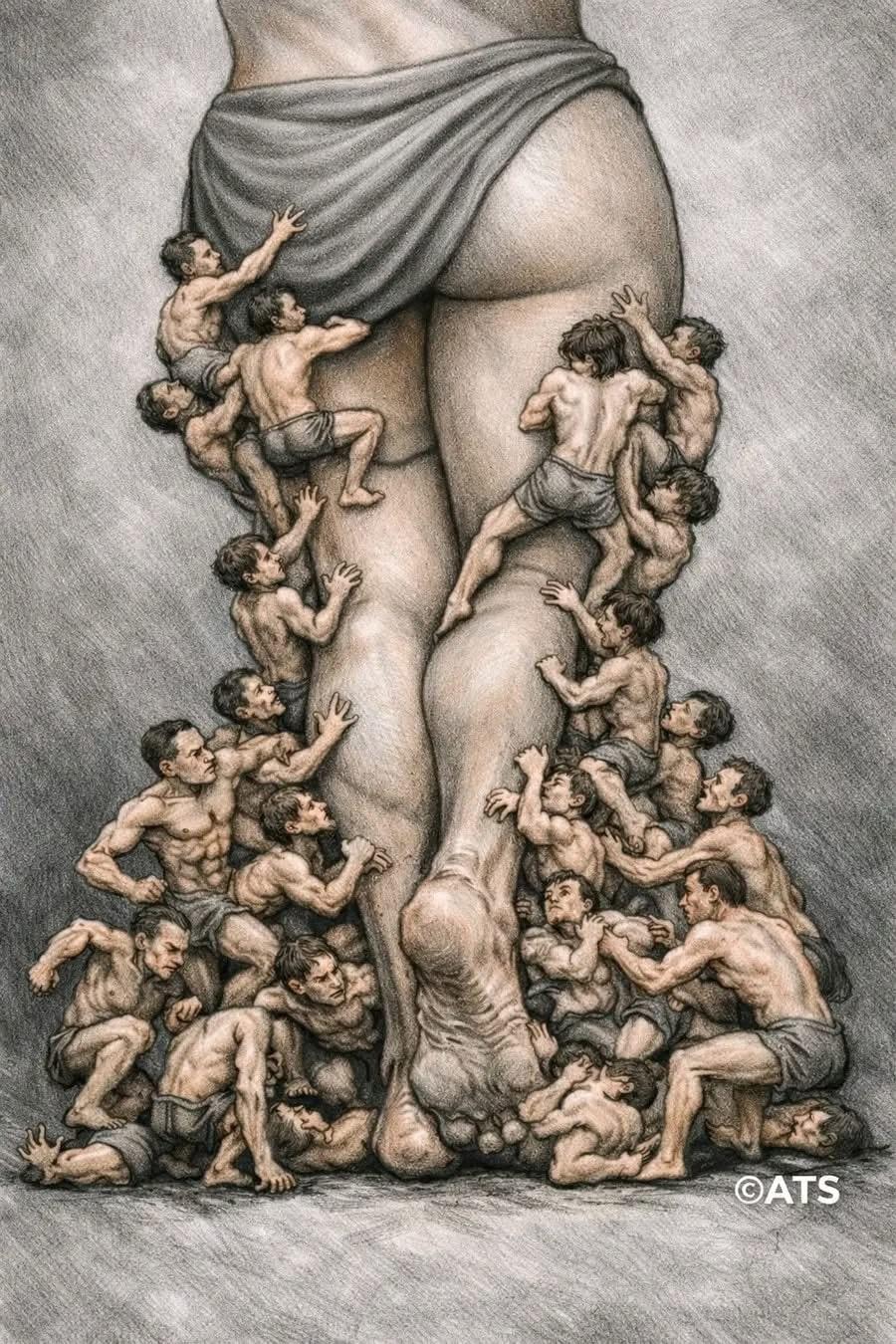
• You don’t need to interrogate a woman to understand her past.

    If you ask the right questions, she will reveal everything naturally.

    Here’s what actually works.

    -questions that reveal her past-
    You don’t need to interrogate a woman to understand her past. If you ask the right questions, she will reveal everything naturally. Here’s what actually works. -questions that reveal her past-
    love
    2
    · 0 Commentarios ·0 Acciones ·576 Views
  • Whistleblower Oluwasanmi Arraigned in Lagos Over Alleged Corruption at Tinubu-Linked Alpha-Beta Firm

    Activist and whistleblower Segun Oluwasanmi has been arraigned at Ogba Magistrate Court, Lagos, following his arrest by the Nigeria Police over allegations linked to his exposure of corruption at Alpha-Beta Consulting Limited, a firm connected to President Tinubu. Oluwasanmi had accused the company of underpaying taxes, salary manipulations, inflated contracts, and internal fraud. The Committee for Defence of Human Rights (CDHR) called on supporters to rally in solidarity, describing his case as critical to justice. Oluwasanmi’s arraignment highlights growing tensions between whistleblowers and powerful corporate-political interests in Nigeria.
    Whistleblower Oluwasanmi Arraigned in Lagos Over Alleged Corruption at Tinubu-Linked Alpha-Beta Firm Activist and whistleblower Segun Oluwasanmi has been arraigned at Ogba Magistrate Court, Lagos, following his arrest by the Nigeria Police over allegations linked to his exposure of corruption at Alpha-Beta Consulting Limited, a firm connected to President Tinubu. Oluwasanmi had accused the company of underpaying taxes, salary manipulations, inflated contracts, and internal fraud. The Committee for Defence of Human Rights (CDHR) called on supporters to rally in solidarity, describing his case as critical to justice. Oluwasanmi’s arraignment highlights growing tensions between whistleblowers and powerful corporate-political interests in Nigeria.
    love
    1
    · 0 Commentarios ·0 Acciones ·2K Views
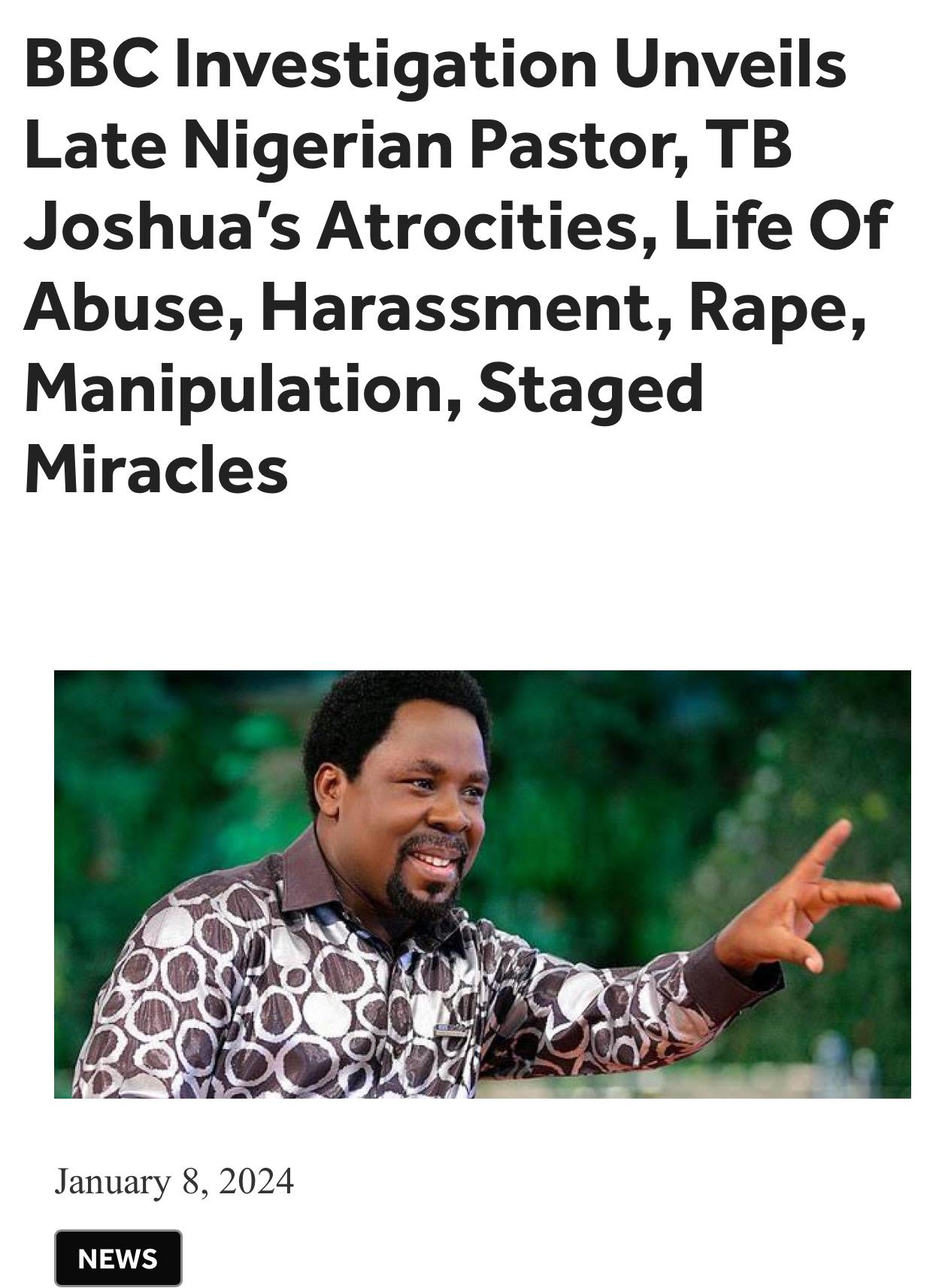
  • The BBC is set to release a 3-part investigative documentary alleging decades of abuse, sexual crimes, manipulation, and cover-ups linked to the late founder of SCOAN, TB Joshua.

    According to the BBC, more than 30 former members and workers described a hidden world of intimidation, rape, staged miracles, and silence enforced through fear and money. Some allege the abuse began when they were teenagers, continued for years, and was justified to them as being “for their salvation.”

    The documentary also reopens wounds from the 2014 SCOAN guesthouse collapse, where over 100 people died. Former insiders claim the church knew the building was structurally unsafe, ignored professional warnings, and later misled members with a false aircraft-bombing narrative. Families reportedly received cash payments allegedly meant to keep them quiet.

    Survivors say miracles were scripted, suffering was exaggerated for TV, and dissent was punished. Even TB Joshua’s own daughter reportedly says she was beaten, isolated, and thrown out after questioning allegations against him.

    With international figures, former disciples, and victims now speaking openly, many are asking uncomfortable questions Nigeria avoided while TB Joshua was alive.

    If these allegations were known for years, why was nothing done?
    Was this faith, power, or a carefully protected system of abuse?
    And should religious institutions be beyond scrutiny simply because of miracles and popularity?

    The BBC will air the documentary over three consecutive weeks.

    What’s your take — truth finally coming out, or another controversy too late?

    #TBJoshua #BBCDocumentary #SCOAN #FaithAndAccountability
    The BBC is set to release a 3-part investigative documentary alleging decades of abuse, sexual crimes, manipulation, and cover-ups linked to the late founder of SCOAN, TB Joshua. According to the BBC, more than 30 former members and workers described a hidden world of intimidation, rape, staged miracles, and silence enforced through fear and money. Some allege the abuse began when they were teenagers, continued for years, and was justified to them as being “for their salvation.” The documentary also reopens wounds from the 2014 SCOAN guesthouse collapse, where over 100 people died. Former insiders claim the church knew the building was structurally unsafe, ignored professional warnings, and later misled members with a false aircraft-bombing narrative. Families reportedly received cash payments allegedly meant to keep them quiet. Survivors say miracles were scripted, suffering was exaggerated for TV, and dissent was punished. Even TB Joshua’s own daughter reportedly says she was beaten, isolated, and thrown out after questioning allegations against him. With international figures, former disciples, and victims now speaking openly, many are asking uncomfortable questions Nigeria avoided while TB Joshua was alive. If these allegations were known for years, why was nothing done? Was this faith, power, or a carefully protected system of abuse? And should religious institutions be beyond scrutiny simply because of miracles and popularity? The BBC will air the documentary over three consecutive weeks. What’s your take — truth finally coming out, or another controversy too late? #TBJoshua #BBCDocumentary #SCOAN #FaithAndAccountability
    like
    love
    2
    · 0 Commentarios ·0 Acciones ·2K Views
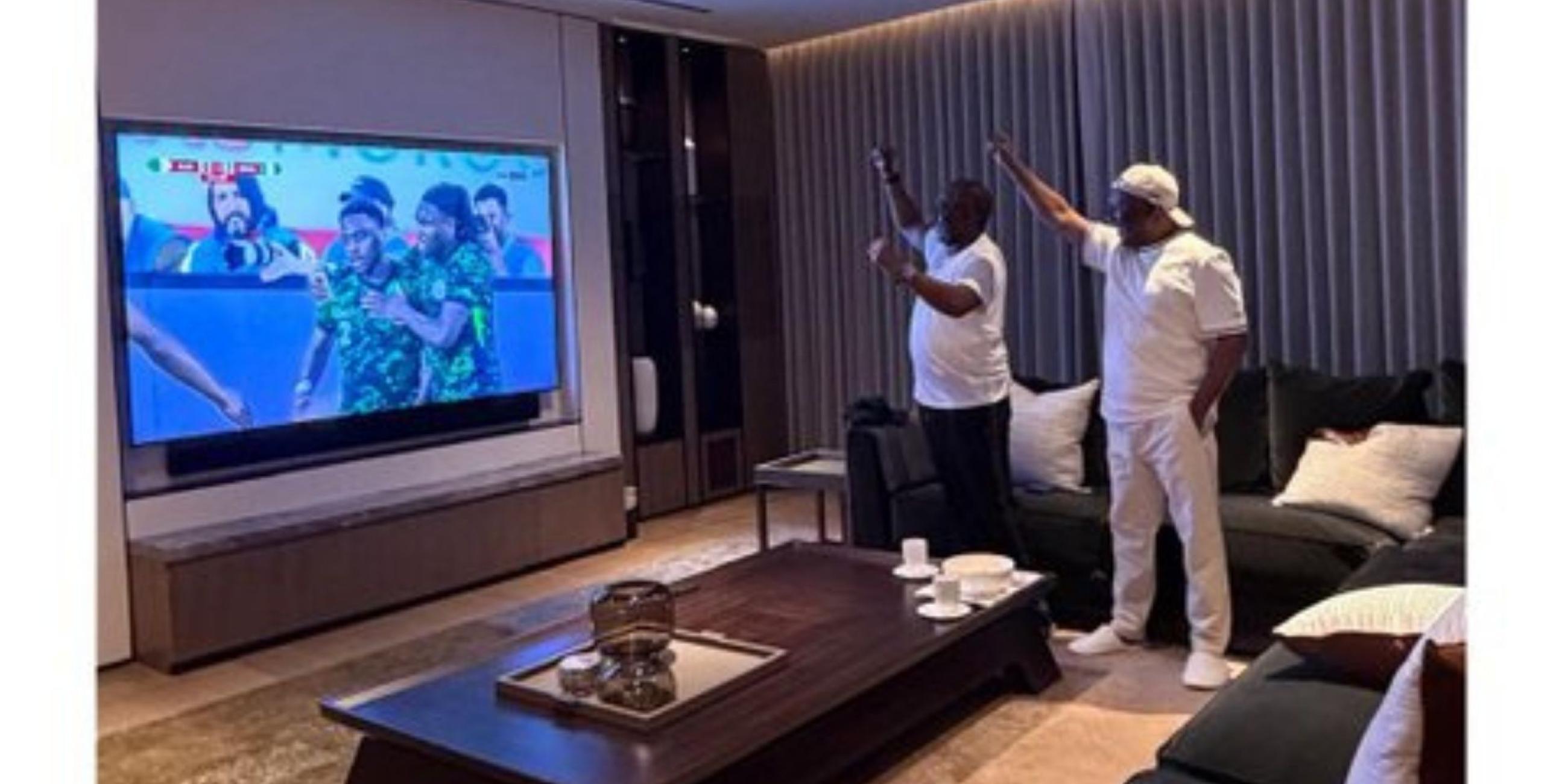
  • E Don Set for AFCON: BUA Chairman Rabiu Promises Super Eagles $1.5 Million If Dem Beat Algeria, Enter Final

    E don set for AFCON oo! Nigerians no fit keep calm again as BUA Group Chairman, Abdul Samad Rabiu, don drop heavy money promise for our Super Eagles after their hot victory over Algeria.

    Following the boys’ 2–0 win that carried Nigeria enter the semi-finals, the billionaire businessman come out boldly announce say serious cash reward dey wait the players if dem continue to deliver.

    Rabiu, wey post the message for him official X (Twitter) handle on Saturday, January 10, 2026, praise the team say dem don lift the spirit of the nation and make Nigerians proud again.

    According to am, if Super Eagles win their semi-final match, he go release $500,000 immediately, plus $50,000 for every single goal wey dem score. As in, every goal na money!

    But the real wahala dey the final.

    Rabiu talk say if Nigeria carry this AFCON cup go house, he go drop another $1 million, plus $100,000 for each goal scored in the final match. Meaning say goals don turn to dollars for this tournament.

    “Congratulations to our Super Eagles on a brilliant victory against Algeria. You have lifted the spirit of the nation,” Rabiu wrote. “Should you win the semi-final, I will reward you with $500,000 and $50,000 for each goal. If you go on to win the final, I further pledge $1,000,000 plus $100,000 for every goal.”

    He still encourage the boys make dem no relent: “Keep making Nigeria proud. Proudly Nigerian.”

    Recall say Nigeria beat Algeria 2–0 in Marrakech on Saturday, January 10, 2026. Goals from Victor Osimhen and Akor Adams for second half seal the match and send the Super Eagles straight to the semi-finals, where dem go face host nation Morocco.

    Since that victory, celebration don burst everywhere – from streets to social media – as Nigerians and top business leaders don begin rally behind the team.

    As e be now, one thing clear:
    AFCON don turn serious business. Goals na dollars. Victory na millions. Wahala don set oo!

    E Don Set for AFCON: BUA Chairman Rabiu Promises Super Eagles $1.5 Million If Dem Beat Algeria, Enter Final E don set for AFCON oo! Nigerians no fit keep calm again as BUA Group Chairman, Abdul Samad Rabiu, don drop heavy money promise for our Super Eagles after their hot victory over Algeria. Following the boys’ 2–0 win that carried Nigeria enter the semi-finals, the billionaire businessman come out boldly announce say serious cash reward dey wait the players if dem continue to deliver. Rabiu, wey post the message for him official X (Twitter) handle on Saturday, January 10, 2026, praise the team say dem don lift the spirit of the nation and make Nigerians proud again. According to am, if Super Eagles win their semi-final match, he go release $500,000 immediately, plus $50,000 for every single goal wey dem score. As in, every goal na money! But the real wahala dey the final. Rabiu talk say if Nigeria carry this AFCON cup go house, he go drop another $1 million, plus $100,000 for each goal scored in the final match. Meaning say goals don turn to dollars for this tournament. “Congratulations to our Super Eagles on a brilliant victory against Algeria. You have lifted the spirit of the nation,” Rabiu wrote. “Should you win the semi-final, I will reward you with $500,000 and $50,000 for each goal. If you go on to win the final, I further pledge $1,000,000 plus $100,000 for every goal.” He still encourage the boys make dem no relent: “Keep making Nigeria proud. Proudly Nigerian.” Recall say Nigeria beat Algeria 2–0 in Marrakech on Saturday, January 10, 2026. Goals from Victor Osimhen and Akor Adams for second half seal the match and send the Super Eagles straight to the semi-finals, where dem go face host nation Morocco. Since that victory, celebration don burst everywhere – from streets to social media – as Nigerians and top business leaders don begin rally behind the team. As e be now, one thing clear: AFCON don turn serious business. Goals na dollars. Victory na millions. Wahala don set oo!
    like
    1
    · 0 Commentarios ·0 Acciones ·2K Views
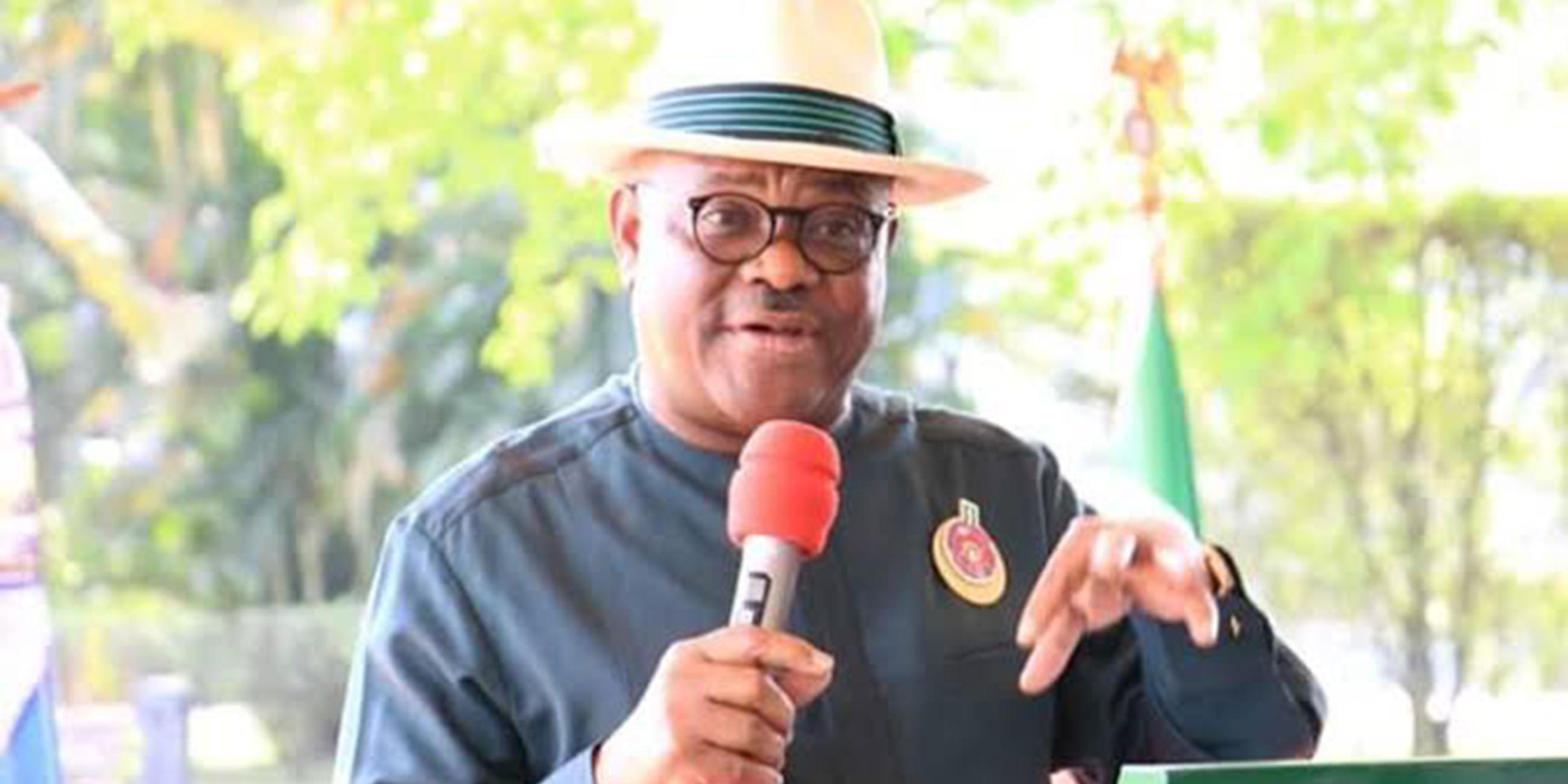
  • Can Anyone Really Push Wike Out of Rivers Politics? FCT Minister Boasts of Unshakable Control, Defies Rivals, and Says Only His Camp Truly Delivered Tinubu’s 2023 Victory

    Is Nyesom Wike still the most powerful political force in Rivers State, and can any group truly challenge his grip on the state’s politics? The Federal Capital Territory (FCT) Minister has answered that question with confidence, declaring that no political camp can push him or his loyalists out of Rivers State, despite threats, attacks, and growing opposition since the 2023 general elections.

    Speaking during a visit to the Port Harcourt City Local Government Area Secretariat, where he met party leaders, traditional rulers, women, and youth groups, Wike insisted that his political structure remains intact and battle-tested. “Nobody in this state can push us out. We have led this war since 2023 and we have never reneged,” he said, adding that his supporters had stood firm in the face of intense pressure.

    The former Rivers governor explained that his ongoing tour of the state’s 23 local government areas was both a show of appreciation to his supporters and a rallying call to maintain backing for President Bola Ahmed Tinubu ahead of the 2027 elections. According to Wike, Rivers State remains one of the President’s most dependable strongholds.

    “If there is one state the President knows he can go home and sleep with his two eyes closed, it is Rivers State,” he declared, arguing that his political camp paid the price for its early and unwavering commitment to Tinubu’s Renewed Hope agenda.

    Wike also fired back at politicians he accused of opportunism, claiming that those who failed to support Tinubu in 2023 are now attempting to take over the Renewed Hope movement. He dismissed such efforts as dishonest and bound to fail. Using a vivid metaphor, he said they were like people who contributed nothing to a meal but suddenly wanted to eat first once the food was ready.

    Describing Port Harcourt as a politically complex, cosmopolitan city, Wike said electoral victories there are particularly difficult, making any success significant. He further claimed that Rivers State is unique in its ability to bring leaders of the two major political parties together to work as a team—a strategy he said was central to Tinubu’s victory.

    “This is the only state where you can see the leadership of two major political parties working as a team,” he said, urging other states to emulate Rivers rather than resent it.

    While projecting strength, Wike also called for unity, humility, and responsive leadership within the state. “Leadership is not a birthright,” he warned, adding that good leaders must listen to the people and be willing to change when advised. He concluded by praising the Port Harcourt City council leadership for its cooperation and urged sustained unity to drive development.

    His bold remarks raise key political questions: Is Wike’s dominance in Rivers truly unbreakable? Are his rivals capable of mounting a serious challenge? And will Rivers remain a decisive power base for Tinubu as the 2027 elections approach?

    Can Anyone Really Push Wike Out of Rivers Politics? FCT Minister Boasts of Unshakable Control, Defies Rivals, and Says Only His Camp Truly Delivered Tinubu’s 2023 Victory Is Nyesom Wike still the most powerful political force in Rivers State, and can any group truly challenge his grip on the state’s politics? The Federal Capital Territory (FCT) Minister has answered that question with confidence, declaring that no political camp can push him or his loyalists out of Rivers State, despite threats, attacks, and growing opposition since the 2023 general elections. Speaking during a visit to the Port Harcourt City Local Government Area Secretariat, where he met party leaders, traditional rulers, women, and youth groups, Wike insisted that his political structure remains intact and battle-tested. “Nobody in this state can push us out. We have led this war since 2023 and we have never reneged,” he said, adding that his supporters had stood firm in the face of intense pressure. The former Rivers governor explained that his ongoing tour of the state’s 23 local government areas was both a show of appreciation to his supporters and a rallying call to maintain backing for President Bola Ahmed Tinubu ahead of the 2027 elections. According to Wike, Rivers State remains one of the President’s most dependable strongholds. “If there is one state the President knows he can go home and sleep with his two eyes closed, it is Rivers State,” he declared, arguing that his political camp paid the price for its early and unwavering commitment to Tinubu’s Renewed Hope agenda. Wike also fired back at politicians he accused of opportunism, claiming that those who failed to support Tinubu in 2023 are now attempting to take over the Renewed Hope movement. He dismissed such efforts as dishonest and bound to fail. Using a vivid metaphor, he said they were like people who contributed nothing to a meal but suddenly wanted to eat first once the food was ready. Describing Port Harcourt as a politically complex, cosmopolitan city, Wike said electoral victories there are particularly difficult, making any success significant. He further claimed that Rivers State is unique in its ability to bring leaders of the two major political parties together to work as a team—a strategy he said was central to Tinubu’s victory. “This is the only state where you can see the leadership of two major political parties working as a team,” he said, urging other states to emulate Rivers rather than resent it. While projecting strength, Wike also called for unity, humility, and responsive leadership within the state. “Leadership is not a birthright,” he warned, adding that good leaders must listen to the people and be willing to change when advised. He concluded by praising the Port Harcourt City council leadership for its cooperation and urged sustained unity to drive development. His bold remarks raise key political questions: Is Wike’s dominance in Rivers truly unbreakable? Are his rivals capable of mounting a serious challenge? And will Rivers remain a decisive power base for Tinubu as the 2027 elections approach?
    0 Commentarios ·0 Acciones ·4K Views
  • COURT RESTRAINS RESIDENT DOCTORS FROM EMBARKING ON STRIKE

    The national industrial court Abuja division has restrained all members and agents of the national association of resident doctors from calling, directing, organizing, participating in, and embarking upon any form of industrial action.

    Justice Emmanuel Danjuma Subilim gave the order in an interim injunction filed by the federal government through the office of the attorney general of the federation and minister of justice.

    The court temporally barred members of the association from embarking on any form of strike, work stoppages, go-slows, picketing, or any other form of industrial protest or disruption.

    The association is equally restrained from taking steps preparatory to any form of industrial action from the 12th day of january, 2026.
    The interim order remains in force pending the hearing and determination of the motion on notice fixed for the january 21, 2026.

    The association had earlier threatened to commence strike on monday, january 12, 2026.
    COURT RESTRAINS RESIDENT DOCTORS FROM EMBARKING ON STRIKE The national industrial court Abuja division has restrained all members and agents of the national association of resident doctors from calling, directing, organizing, participating in, and embarking upon any form of industrial action. Justice Emmanuel Danjuma Subilim gave the order in an interim injunction filed by the federal government through the office of the attorney general of the federation and minister of justice. The court temporally barred members of the association from embarking on any form of strike, work stoppages, go-slows, picketing, or any other form of industrial protest or disruption. The association is equally restrained from taking steps preparatory to any form of industrial action from the 12th day of january, 2026. The interim order remains in force pending the hearing and determination of the motion on notice fixed for the january 21, 2026. The association had earlier threatened to commence strike on monday, january 12, 2026.
    0 Commentarios ·0 Acciones ·814 Views
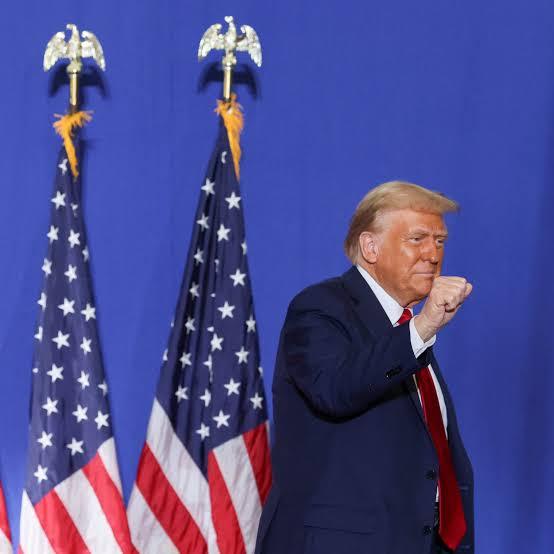
  • Is Trump Becoming the Next “Fallen Despot”? Why Iran’s Supreme Leader Khamenei Compared Him to Pharaoh, Nimrod and the Shah Amid Rising U.S.–Iran Tensions

    Is Donald Trump being cast as the next ruler destined for historical downfall? Iran’s Supreme Leader, Ayatollah Ali Khamenei, has launched a sharp ideological attack on the U.S. president, accusing him of “tyrannical” leadership and warning that, like infamous rulers of the past, he too could ultimately fall from power.

    In a post shared on X (formerly Twitter), Khamenei condemned what he described as Trump’s habit of judging the world with arrogance, arguing that history offers repeated lessons about leaders who rule through hubris. Drawing striking parallels, the Iranian leader invoked figures such as Pharaoh, Nimrod, and Mohammad Reza Pahlavi—rulers who, he said, collapsed at the height of their authority after overreaching their power.

    “The US President who judges arrogantly about the whole world should know that tyrants and arrogant rulers of the world… saw their downfall when they were at the peak of their hubris. He too will fall,” Khamenei wrote. The message framed Trump not merely as a political rival, but as part of a long lineage of leaders whose dominance, according to Khamenei, eventually gave way to decline.

    The comments come amid deepening hostility between Tehran and Washington, defined by sanctions, military posturing, and public exchanges between senior officials. Khamenei, Iran’s highest authority, has consistently portrayed U.S. foreign policy as imperialistic, often embedding his criticisms within historical and religious narratives aimed at reinforcing Iran’s resistance ideology.

    Tensions intensified further following reports that Trump praised Israeli military strikes on Iran in June 2025. According to ABC News Chief Washington Correspondent Jonathan Karl, Trump described the attack as “excellent,” adding that Iran had been given a chance to change course but failed to do so—and warning that “there’s more to come, a lot more.” His remarks coincided with a series of escalating confrontations between Israel and Iran, including strikes on Iranian territory, some reportedly reaching as far as Tehran.

    Iran’s Foreign Ministry condemned the attacks as a “blatant act of aggression,” while regional analysts warned that rhetoric from both sides risks further destabilizing an already volatile Middle East. Against this backdrop, Khamenei’s comparison of Trump to fallen despots appears not only symbolic but strategic—seeking to frame U.S. pressure as morally bankrupt and historically doomed.

    The episode raises broader questions: Is Khamenei merely engaging in ideological posturing, or is Iran signaling that it sees Trump’s leadership style as unsustainable in the long run? And does invoking ancient and modern tyrants reflect a deeper effort to mobilize domestic and regional opinion against American influence?

    As U.S.–Iran relations continue to harden, the clash of narratives—Trump’s warnings of force and Khamenei’s predictions of downfall—underscores how geopolitical conflict today is fought not only with sanctions and weapons, but with history, symbolism, and the power of storytelling. Whether Trump’s approach will reinforce U.S. dominance or mirror the fate of leaders Khamenei cited remains a question shaping global attention.


    Is Trump Becoming the Next “Fallen Despot”? Why Iran’s Supreme Leader Khamenei Compared Him to Pharaoh, Nimrod and the Shah Amid Rising U.S.–Iran Tensions Is Donald Trump being cast as the next ruler destined for historical downfall? Iran’s Supreme Leader, Ayatollah Ali Khamenei, has launched a sharp ideological attack on the U.S. president, accusing him of “tyrannical” leadership and warning that, like infamous rulers of the past, he too could ultimately fall from power. In a post shared on X (formerly Twitter), Khamenei condemned what he described as Trump’s habit of judging the world with arrogance, arguing that history offers repeated lessons about leaders who rule through hubris. Drawing striking parallels, the Iranian leader invoked figures such as Pharaoh, Nimrod, and Mohammad Reza Pahlavi—rulers who, he said, collapsed at the height of their authority after overreaching their power. “The US President who judges arrogantly about the whole world should know that tyrants and arrogant rulers of the world… saw their downfall when they were at the peak of their hubris. He too will fall,” Khamenei wrote. The message framed Trump not merely as a political rival, but as part of a long lineage of leaders whose dominance, according to Khamenei, eventually gave way to decline. The comments come amid deepening hostility between Tehran and Washington, defined by sanctions, military posturing, and public exchanges between senior officials. Khamenei, Iran’s highest authority, has consistently portrayed U.S. foreign policy as imperialistic, often embedding his criticisms within historical and religious narratives aimed at reinforcing Iran’s resistance ideology. Tensions intensified further following reports that Trump praised Israeli military strikes on Iran in June 2025. According to ABC News Chief Washington Correspondent Jonathan Karl, Trump described the attack as “excellent,” adding that Iran had been given a chance to change course but failed to do so—and warning that “there’s more to come, a lot more.” His remarks coincided with a series of escalating confrontations between Israel and Iran, including strikes on Iranian territory, some reportedly reaching as far as Tehran. Iran’s Foreign Ministry condemned the attacks as a “blatant act of aggression,” while regional analysts warned that rhetoric from both sides risks further destabilizing an already volatile Middle East. Against this backdrop, Khamenei’s comparison of Trump to fallen despots appears not only symbolic but strategic—seeking to frame U.S. pressure as morally bankrupt and historically doomed. The episode raises broader questions: Is Khamenei merely engaging in ideological posturing, or is Iran signaling that it sees Trump’s leadership style as unsustainable in the long run? And does invoking ancient and modern tyrants reflect a deeper effort to mobilize domestic and regional opinion against American influence? As U.S.–Iran relations continue to harden, the clash of narratives—Trump’s warnings of force and Khamenei’s predictions of downfall—underscores how geopolitical conflict today is fought not only with sanctions and weapons, but with history, symbolism, and the power of storytelling. Whether Trump’s approach will reinforce U.S. dominance or mirror the fate of leaders Khamenei cited remains a question shaping global attention.
    0 Commentarios ·0 Acciones ·3K Views
  • Is South Africa Blocking Starlink Over Race? Elon Musk Says Ownership Laws Are Stopping His Internet Company From Getting a Licence

    Elon Musk has reignited debate over South Africa’s post-apartheid economic policies after claiming that his satellite internet company, Starlink, is unable to operate in the country because he is not Black. Speaking at the Qatar Economic Forum during a session titled “In Conversation With Elon Musk,” the billionaire entrepreneur said regulatory requirements tied to South Africa’s Black Economic Empowerment (BEE) framework have prevented Starlink from obtaining an operating licence.

    According to Musk, South Africa has “about 140 laws” that give preference to Black South Africans in ownership and business participation, and he argued that these rules have effectively barred Starlink from entering the market. “Starlink is not allowed to operate in South Africa, because I’m not Black,” he said, framing the situation as an example of racial discrimination embedded in law. His comments quickly spread on social media, triggering intense debate both inside and outside the country.

    South Africa’s Broad-Based Black Economic Empowerment (B-BBEE) policy was introduced after the end of apartheid to correct deep economic inequalities by increasing Black participation in ownership, management, and control of businesses. In regulated sectors such as telecommunications, licence applicants are generally expected to meet minimum thresholds of local and historically disadvantaged ownership. The Independent Communications Authority of South Africa (ICASA), which oversees telecommunications licensing, has consistently maintained that all operators—local or foreign—must comply with national laws. While partnerships, exemptions, or alternative structures are sometimes possible, transformation requirements remain central to government policy.

    Starlink, a subsidiary of SpaceX, already operates in more than 70 countries, delivering internet access through low-Earth orbit satellites, particularly in remote and underserved regions. Despite strong demand from South African consumers and businesses, the company currently lacks approval to offer services commercially in the country. Musk’s remarks have therefore raised fresh questions about whether South Africa’s regulatory framework is limiting competition and access to high-speed connectivity, especially in rural areas.

    The reaction to Musk’s comments has been sharply divided. Supporters argue that blocking Starlink deprives citizens of affordable, reliable internet and discourages foreign investment. Critics counter that Musk’s portrayal oversimplifies the law and ignores the historical context that gave rise to empowerment policies designed to redress decades of racial exclusion. They maintain that B-BBEE is a remedial framework rather than a tool for discrimination.

    South African authorities have not directly responded to Musk’s latest statements, but government officials have previously rejected claims that empowerment laws are exclusionary, insisting they are necessary to correct structural inequality and ensure broader participation in the economy. As the debate continues, Musk’s comments have once again placed South Africa’s transformation policies under global scrutiny—raising a central question: are empowerment laws protecting economic justice, or are they unintentionally shutting out innovation and competition in critical sectors like technology and telecommunications?


    Is South Africa Blocking Starlink Over Race? Elon Musk Says Ownership Laws Are Stopping His Internet Company From Getting a Licence Elon Musk has reignited debate over South Africa’s post-apartheid economic policies after claiming that his satellite internet company, Starlink, is unable to operate in the country because he is not Black. Speaking at the Qatar Economic Forum during a session titled “In Conversation With Elon Musk,” the billionaire entrepreneur said regulatory requirements tied to South Africa’s Black Economic Empowerment (BEE) framework have prevented Starlink from obtaining an operating licence. According to Musk, South Africa has “about 140 laws” that give preference to Black South Africans in ownership and business participation, and he argued that these rules have effectively barred Starlink from entering the market. “Starlink is not allowed to operate in South Africa, because I’m not Black,” he said, framing the situation as an example of racial discrimination embedded in law. His comments quickly spread on social media, triggering intense debate both inside and outside the country. South Africa’s Broad-Based Black Economic Empowerment (B-BBEE) policy was introduced after the end of apartheid to correct deep economic inequalities by increasing Black participation in ownership, management, and control of businesses. In regulated sectors such as telecommunications, licence applicants are generally expected to meet minimum thresholds of local and historically disadvantaged ownership. The Independent Communications Authority of South Africa (ICASA), which oversees telecommunications licensing, has consistently maintained that all operators—local or foreign—must comply with national laws. While partnerships, exemptions, or alternative structures are sometimes possible, transformation requirements remain central to government policy. Starlink, a subsidiary of SpaceX, already operates in more than 70 countries, delivering internet access through low-Earth orbit satellites, particularly in remote and underserved regions. Despite strong demand from South African consumers and businesses, the company currently lacks approval to offer services commercially in the country. Musk’s remarks have therefore raised fresh questions about whether South Africa’s regulatory framework is limiting competition and access to high-speed connectivity, especially in rural areas. The reaction to Musk’s comments has been sharply divided. Supporters argue that blocking Starlink deprives citizens of affordable, reliable internet and discourages foreign investment. Critics counter that Musk’s portrayal oversimplifies the law and ignores the historical context that gave rise to empowerment policies designed to redress decades of racial exclusion. They maintain that B-BBEE is a remedial framework rather than a tool for discrimination. South African authorities have not directly responded to Musk’s latest statements, but government officials have previously rejected claims that empowerment laws are exclusionary, insisting they are necessary to correct structural inequality and ensure broader participation in the economy. As the debate continues, Musk’s comments have once again placed South Africa’s transformation policies under global scrutiny—raising a central question: are empowerment laws protecting economic justice, or are they unintentionally shutting out innovation and competition in critical sectors like technology and telecommunications?
    0 Commentarios ·0 Acciones ·2K Views
  • Datti Baba-Ahmed Mocks Atiku’s Endless Presidential Bids, Says ‘He’s Been Contesting Since My NYSC Days

    Labour Party’s former vice-presidential candidate, Senator Yusuf Datti Baba-Ahmed, has criticized former Vice President Atiku Abubakar for his unrelenting presidential ambitions, saying Nigeria urgently needs new and visionary leaders to move the country forward.

    Speaking in a recent interview, Datti recalled that Atiku had already been an aspirant when he was serving his National Youth Service Corps (NYSC), emphasizing that the former vice president has remained a serial contender in every election cycle without offering Nigerians tangible change.

    “When I was doing my NYSC, Baba Atiku was already an aspirant. In 2018, we contested primaries together. In 2023, I was a vice-presidential candidate elsewhere when his own vice president had left him. And now, in 2027 again,” Datti said, expressing frustration at the recycling of old political figures.

    He lamented that Nigeria’s political landscape has become hostile to genuine reformers and dominated by money politics, godfatherism, and unfulfilled promises that discourage competent citizens from participating.

    According to him, the nation is full of capable individuals ready to rebuild Nigeria, but the existing political structure prevents them from rising. “There are good Nigerians who can fix this country, but the system is treacherous and discouraging,” he stated.

    Datti reiterated his belief that a new generation of leaders is ready to take charge, urging Nigerians to rally behind fresh, credible leadership rather than recycling the same political elites.

    His remarks come amid speculation that Atiku, now linked with the African Democratic Congress (ADC), may once again contest the 2027 presidential election—his seventh bid since 1993.


    Datti Baba-Ahmed Mocks Atiku’s Endless Presidential Bids, Says ‘He’s Been Contesting Since My NYSC Days Labour Party’s former vice-presidential candidate, Senator Yusuf Datti Baba-Ahmed, has criticized former Vice President Atiku Abubakar for his unrelenting presidential ambitions, saying Nigeria urgently needs new and visionary leaders to move the country forward. Speaking in a recent interview, Datti recalled that Atiku had already been an aspirant when he was serving his National Youth Service Corps (NYSC), emphasizing that the former vice president has remained a serial contender in every election cycle without offering Nigerians tangible change. “When I was doing my NYSC, Baba Atiku was already an aspirant. In 2018, we contested primaries together. In 2023, I was a vice-presidential candidate elsewhere when his own vice president had left him. And now, in 2027 again,” Datti said, expressing frustration at the recycling of old political figures. He lamented that Nigeria’s political landscape has become hostile to genuine reformers and dominated by money politics, godfatherism, and unfulfilled promises that discourage competent citizens from participating. According to him, the nation is full of capable individuals ready to rebuild Nigeria, but the existing political structure prevents them from rising. “There are good Nigerians who can fix this country, but the system is treacherous and discouraging,” he stated. Datti reiterated his belief that a new generation of leaders is ready to take charge, urging Nigerians to rally behind fresh, credible leadership rather than recycling the same political elites. His remarks come amid speculation that Atiku, now linked with the African Democratic Congress (ADC), may once again contest the 2027 presidential election—his seventh bid since 1993.
    0 Commentarios ·0 Acciones ·2K Views
  • Is Superstition Holding Nigerian Communities Hostage? How Fear of ‘Poison,’ Rituals, and Dog Poop Is Fueling Paranoia, Poverty, and Exploitation – By Leo Igwe

    Is superstition silently destroying communities in Nigeria—and why are fear, paranoia, and ritual beliefs still shaping how people interpret illness, death, and misfortune?

    In this powerful and unsettling account, Leo Igwe recounts his return to his hometown in southeastern Nigeria after decades away, where he encountered what he describes as the toxic grip of superstition and irrational fear on everyday life. From the moment he arrived, Igwe says he witnessed how ordinary health issues were being interpreted as the work of unseen enemies using “poison,” spiritual attacks, or occult forces.

    A family housekeeper with a swollen hand claimed he had “picked up poison” while farming—an explanation widely accepted by community members, despite no one being able to describe what the poison was, how it worked, or where it came from. Rather than seeking medical help, the man was subjected to prayers, spiritual pressing, and ritual interventions, which only worsened the condition. For Igwe, this was a troubling reminder of how medical problems are often rebranded as spiritual attacks, delaying proper treatment and deepening fear.

    But why does this mindset persist? Igwe explains that in his community, no one is believed to die naturally. Death, illness, stroke, or paralysis are frequently attributed to enemies—often relatives or neighbors—who are accused of using occult means. Phrases like “they have killed him” or “they have finally gotten him” dominate conversations, reinforcing suspicion and tearing families apart. People live in constant fear that someone has planted spiritual “poisons” that they might step on or touch.

    Despite identifying as Christians, many residents, Igwe notes, move between churches, prophets, pastors, traditional priests, and ritual specialists. They pray to Jesus, invoke ancestors, hire “prayer warriors,” and perform sacrifices in an endless cycle of spiritual protection. But does this offer safety—or does it deepen exploitation? Igwe argues that this climate has created fertile ground for con artists, fake prophets, and self-styled spiritual practitioners who extract money in exchange for deliverance, exorcism, and supposed protection.

    One striking episode involved a roaming prayer man who went from house to house, collecting food or money after loud, theatrical prayers. In another home, Igwe witnessed a dramatic ritual in which sand was placed in people’s hands while God was commanded to “open doors,” even instructing someone to physically open the living room door to symbolize prosperity. To Igwe, this performance illustrated how faith is manipulated into spectacle while poverty remains unchanged.

    Perhaps the most disturbing moment came when a neighbor reported that dog feces found in their compound was not ordinary waste but a weapon of spiritual harm. The family believed it had been ritually placed to bring sickness or death—just as, they claimed, their parents had previously been killed. The response? Olive oil poured on it, urine used as a neutralizer, and the case escalated to village authorities. To Igwe, this episode captured how fear transforms harmless events into imagined threats, driving communities deeper into paranoia.

    Addressing a village meeting, Igwe warned of the dangerous consequences of baseless accusations, superstition, and occult blame, citing how such beliefs have destroyed families and communities across the region. He urged residents to free themselves from irrational fear and confront the social damage caused by suspicion, exploitation, and magical thinking.

    So what is the real cost of these beliefs? According to Igwe, communities trapped in superstition remain locked in poverty, fear, and manipulation, unable to address real health, economic, and social challenges. The essay ultimately asks a haunting question: Can communities break free from the cycle of fear before superstition consumes trust, development, and human dignity?

    Is Superstition Holding Nigerian Communities Hostage? How Fear of ‘Poison,’ Rituals, and Dog Poop Is Fueling Paranoia, Poverty, and Exploitation – By Leo Igwe Is superstition silently destroying communities in Nigeria—and why are fear, paranoia, and ritual beliefs still shaping how people interpret illness, death, and misfortune? In this powerful and unsettling account, Leo Igwe recounts his return to his hometown in southeastern Nigeria after decades away, where he encountered what he describes as the toxic grip of superstition and irrational fear on everyday life. From the moment he arrived, Igwe says he witnessed how ordinary health issues were being interpreted as the work of unseen enemies using “poison,” spiritual attacks, or occult forces. A family housekeeper with a swollen hand claimed he had “picked up poison” while farming—an explanation widely accepted by community members, despite no one being able to describe what the poison was, how it worked, or where it came from. Rather than seeking medical help, the man was subjected to prayers, spiritual pressing, and ritual interventions, which only worsened the condition. For Igwe, this was a troubling reminder of how medical problems are often rebranded as spiritual attacks, delaying proper treatment and deepening fear. But why does this mindset persist? Igwe explains that in his community, no one is believed to die naturally. Death, illness, stroke, or paralysis are frequently attributed to enemies—often relatives or neighbors—who are accused of using occult means. Phrases like “they have killed him” or “they have finally gotten him” dominate conversations, reinforcing suspicion and tearing families apart. People live in constant fear that someone has planted spiritual “poisons” that they might step on or touch. Despite identifying as Christians, many residents, Igwe notes, move between churches, prophets, pastors, traditional priests, and ritual specialists. They pray to Jesus, invoke ancestors, hire “prayer warriors,” and perform sacrifices in an endless cycle of spiritual protection. But does this offer safety—or does it deepen exploitation? Igwe argues that this climate has created fertile ground for con artists, fake prophets, and self-styled spiritual practitioners who extract money in exchange for deliverance, exorcism, and supposed protection. One striking episode involved a roaming prayer man who went from house to house, collecting food or money after loud, theatrical prayers. In another home, Igwe witnessed a dramatic ritual in which sand was placed in people’s hands while God was commanded to “open doors,” even instructing someone to physically open the living room door to symbolize prosperity. To Igwe, this performance illustrated how faith is manipulated into spectacle while poverty remains unchanged. Perhaps the most disturbing moment came when a neighbor reported that dog feces found in their compound was not ordinary waste but a weapon of spiritual harm. The family believed it had been ritually placed to bring sickness or death—just as, they claimed, their parents had previously been killed. The response? Olive oil poured on it, urine used as a neutralizer, and the case escalated to village authorities. To Igwe, this episode captured how fear transforms harmless events into imagined threats, driving communities deeper into paranoia. Addressing a village meeting, Igwe warned of the dangerous consequences of baseless accusations, superstition, and occult blame, citing how such beliefs have destroyed families and communities across the region. He urged residents to free themselves from irrational fear and confront the social damage caused by suspicion, exploitation, and magical thinking. So what is the real cost of these beliefs? According to Igwe, communities trapped in superstition remain locked in poverty, fear, and manipulation, unable to address real health, economic, and social challenges. The essay ultimately asks a haunting question: Can communities break free from the cycle of fear before superstition consumes trust, development, and human dignity?
    0 Commentarios ·0 Acciones ·3K Views
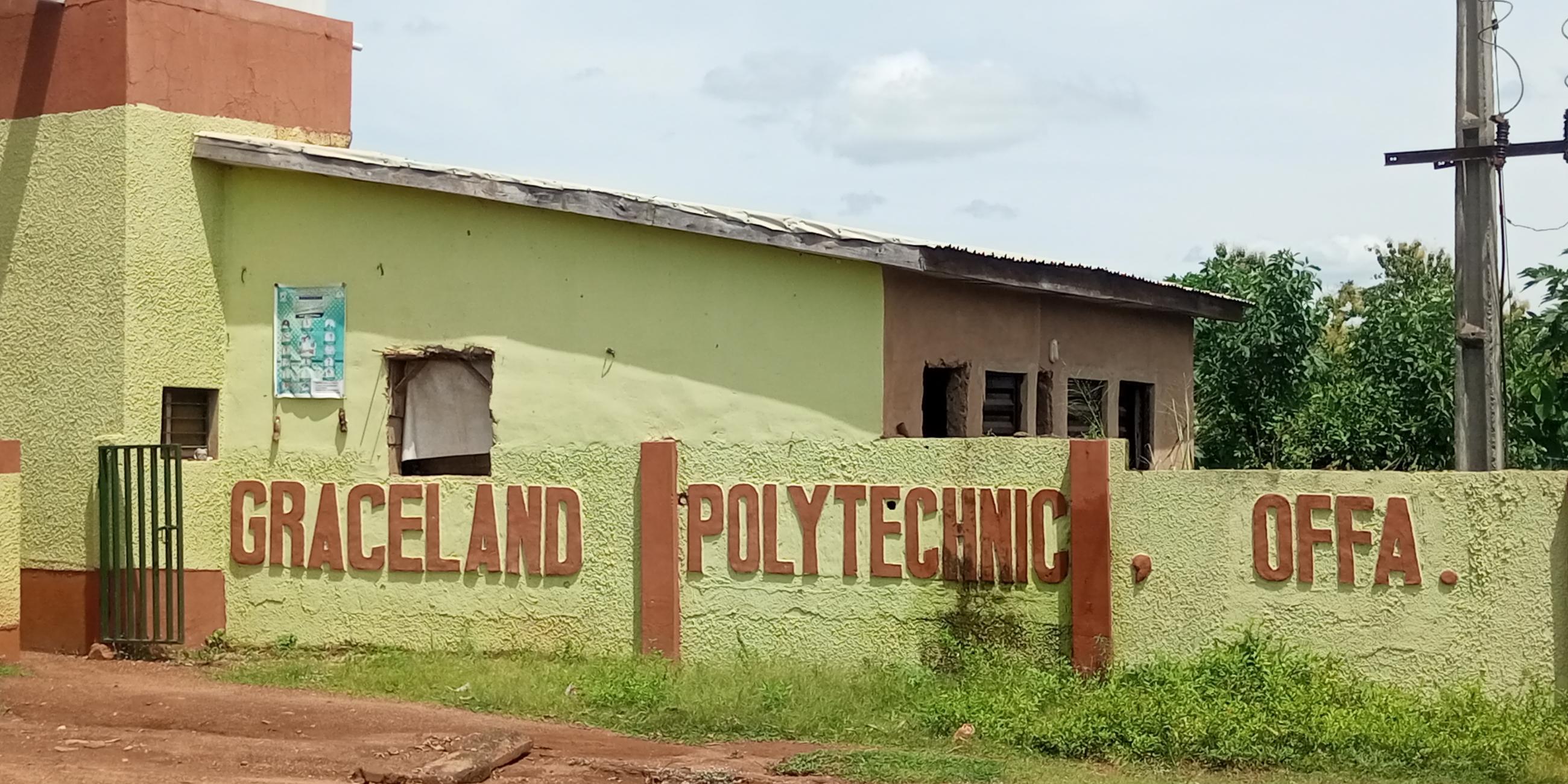
  • Did Graceland Polytechnic Scam Its Graduates? How Fake Admissions, Missing JAMB Records and Delayed Accreditation Are Destroying Students’ Futures in Kwara State

    How can a student graduate with a Distinction and a CGPA of 3.72—only to be told years later that his admission never officially existed? This troubling question now surrounds Graceland Polytechnic, Offa, Kwara State, where dozens of National Diploma (ND) graduates say their academic journeys have been invalidated by alleged fake admissions and unaccredited programmes.

    One Mass Communication graduate, who completed his studies in 2022, believed his strong performance would naturally lead to HND or Direct Entry admission into a university. But when he visited the Joint Admissions and Matriculation Board (JAMB) office in Ilorin, he was shocked to learn that his name was missing from CAPS and all official admission platforms. According to JAMB officials, the polytechnic had never uploaded his admission for validation—meaning, on paper, he had never been admitted at all.

    Was this an administrative oversight—or a systemic failure that misled students for years? The graduate said repeated attempts to seek clarification from his department and ICT unit led nowhere, forcing him to abandon his dream of further education.

    Other graduates tell similar stories. A student identified as Stephen described years of fear, uncertainty, and emotional exhaustion as his future remained frozen. Another, Kenny, said he gave up entirely on academics after realizing that his ND certificate lacked recognition, choosing business over a degree that institutions would not accept.

    The crisis appears to go beyond one department. Graduates from Science and Laboratory Technology (SLT) revealed that accreditation was only granted after many students had already graduated or attempted to progress, rendering their certificates useless for further studies. Students allege that despite repeated assurances from management that programmes such as Mass Communication, SLT, Accountancy, and Computer Science were fully accredited, many were not.

    Did students unknowingly spend years paying fees for programmes that had no official standing? A leaked audio recording deepened concerns, with a former Head of Department allegedly advising students to abandon hopes of HND or Direct Entry and to use their ND only for employment—or start afresh through JAMB.

    While the school was approved by the National Board for Technical Education (NBTE) in 2019 after being founded in 2013, the Registrar has admitted that accreditation for some courses only came in early 2025, excluding earlier graduates. He acknowledged the students’ suffering but described the situation as one inherited from past management.

    For affected graduates, the issue goes beyond paperwork. They speak of stolen years, broken trust, wasted finances, and futures unfairly placed on hold. Many are now calling on regulatory authorities to investigate the institution, warning that without accountability, more young Nigerians may fall victim to what they describe as an education scam disguised as opportunity.

    Is this merely a case of poor administration—or a deeper failure in Nigeria’s education oversight system?

    Did Graceland Polytechnic Scam Its Graduates? How Fake Admissions, Missing JAMB Records and Delayed Accreditation Are Destroying Students’ Futures in Kwara State How can a student graduate with a Distinction and a CGPA of 3.72—only to be told years later that his admission never officially existed? This troubling question now surrounds Graceland Polytechnic, Offa, Kwara State, where dozens of National Diploma (ND) graduates say their academic journeys have been invalidated by alleged fake admissions and unaccredited programmes. One Mass Communication graduate, who completed his studies in 2022, believed his strong performance would naturally lead to HND or Direct Entry admission into a university. But when he visited the Joint Admissions and Matriculation Board (JAMB) office in Ilorin, he was shocked to learn that his name was missing from CAPS and all official admission platforms. According to JAMB officials, the polytechnic had never uploaded his admission for validation—meaning, on paper, he had never been admitted at all. Was this an administrative oversight—or a systemic failure that misled students for years? The graduate said repeated attempts to seek clarification from his department and ICT unit led nowhere, forcing him to abandon his dream of further education. Other graduates tell similar stories. A student identified as Stephen described years of fear, uncertainty, and emotional exhaustion as his future remained frozen. Another, Kenny, said he gave up entirely on academics after realizing that his ND certificate lacked recognition, choosing business over a degree that institutions would not accept. The crisis appears to go beyond one department. Graduates from Science and Laboratory Technology (SLT) revealed that accreditation was only granted after many students had already graduated or attempted to progress, rendering their certificates useless for further studies. Students allege that despite repeated assurances from management that programmes such as Mass Communication, SLT, Accountancy, and Computer Science were fully accredited, many were not. Did students unknowingly spend years paying fees for programmes that had no official standing? A leaked audio recording deepened concerns, with a former Head of Department allegedly advising students to abandon hopes of HND or Direct Entry and to use their ND only for employment—or start afresh through JAMB. While the school was approved by the National Board for Technical Education (NBTE) in 2019 after being founded in 2013, the Registrar has admitted that accreditation for some courses only came in early 2025, excluding earlier graduates. He acknowledged the students’ suffering but described the situation as one inherited from past management. For affected graduates, the issue goes beyond paperwork. They speak of stolen years, broken trust, wasted finances, and futures unfairly placed on hold. Many are now calling on regulatory authorities to investigate the institution, warning that without accountability, more young Nigerians may fall victim to what they describe as an education scam disguised as opportunity. Is this merely a case of poor administration—or a deeper failure in Nigeria’s education oversight system?
    like
    1
    · 0 Commentarios ·0 Acciones ·2K Views
  • Can Datti Baba-Ahmed Really Replace Peter Obi? LP’s 2023 Running Mate Declares 2027 Presidential Ambition Amid Party Crisis

    Is a new political battle for Nigeria’s presidency already taking shape within the opposition—and could Senator Datti Baba-Ahmed be positioning himself as the next major contender? These are the questions dominating political discussions after the former Labour Party (LP) vice-presidential candidate in the 2023 election formally declared his intention to contest the 2027 presidency.

    Baba-Ahmed made the announcement at a rally at the Labour Party’s national secretariat in Abuja, at a time when the party is grappling with internal realignments following the high-profile exit of its 2023 presidential candidate, Peter Obi, to the African Democratic Congress (ADC). His declaration comes barely days after Obi’s departure, instantly igniting debate about the future direction of the Labour Party and the broader opposition ahead of the next general election.

    Addressing party members and supporters, Baba-Ahmed was quick to dismiss any suggestion that his ambition was a reaction to Obi’s political move. Instead, he insisted that his presidential aspiration predates his alliance with Obi, stressing that he was not “following anybody’s trajectory” or attempting to step into anyone’s political space. According to him, records clearly show that he had sought the presidency even before Obi entered the 2023 race.

    He recalled his participation in the 2018 presidential primaries of the Peoples Democratic Party (PDP) in Port Harcourt, noting that his eventual decision to serve as Obi’s running mate was driven by what he described as a rare opportunity for national unity rather than personal ambition. For Baba-Ahmed, aligning with Obi was not a surrender of his own political vision but a strategic choice aimed at offering Nigerians an alternative leadership model.

    Beyond ambition, his speech touched on sensitive but unavoidable themes in Nigerian politics—religion and ethnicity. Baba-Ahmed openly acknowledged his identity as a practising Muslim and a Hausa man, but maintained that the Nigerian Constitution guarantees every qualified citizen the right to seek elective office. According to him, his decision to run is rooted in what he described as a genuine desire to help rescue Nigeria from its many challenges, rather than sectional or personal interests.

    However, he also struck a cautious tone, emphasizing that he would respect due process within the Labour Party and the electoral framework. While affirming his intention, he stated that he would not formally pursue the ticket until the Independent National Electoral Commission (INEC) releases its timetable and the party leadership officially calls for aspirants. To him, this approach reflects both loyalty to party structures and adherence to democratic norms.

    His declaration has added a new layer of complexity to an already evolving opposition landscape. With Peter Obi now outside the Labour Party, questions are being raised about who will command the loyalty of the party’s grassroots supporters, many of whom were mobilized by the “Obidient” movement in 2023. Can Datti Baba-Ahmed inherit that momentum, or will the party struggle to redefine itself without its most visible figure?

    Reacting to the announcement, Labour Party National Chairman Julius Abure praised Baba-Ahmed for remaining within the party despite speculation that he might defect following Obi’s exit. For party loyalists, his decision to stay is being interpreted as a signal of continuity and internal stability. For critics, however, it raises deeper questions: does the Labour Party still have a unified ideological direction, or is it entering a phase of leadership contest and fragmentation?

    As 2027 approaches, Baba-Ahmed’s declaration invites broader national reflection. Is Nigeria’s opposition finally preparing early for the next election, or is this the beginning of another cycle of internal rivalry that could weaken alternative voices? Can Baba-Ahmed’s experience, ideology, and personal narrative convince Nigerians that he offers something fundamentally different from the political establishment? And perhaps most importantly, can he fill the vacuum left by Peter Obi’s departure—or will the Labour Party need a complete reinvention to remain politically relevant?

    On Fintter, this development is more than a headline. It is a conversation about leadership, loyalty, and the future of opposition politics in Nigeria. Is Datti Baba-Ahmed the natural successor within the Labour Party, or is his ambition likely to deepen internal divisions? Can he rally young voters and reform-minded citizens the way Obi once did?

    What do you think? Is Datti Baba-Ahmed the right figure to lead the Labour Party into 2027—or is the party losing its political identity? Share your views and join the debate on Fintter.

    Can Datti Baba-Ahmed Really Replace Peter Obi? LP’s 2023 Running Mate Declares 2027 Presidential Ambition Amid Party Crisis Is a new political battle for Nigeria’s presidency already taking shape within the opposition—and could Senator Datti Baba-Ahmed be positioning himself as the next major contender? These are the questions dominating political discussions after the former Labour Party (LP) vice-presidential candidate in the 2023 election formally declared his intention to contest the 2027 presidency. Baba-Ahmed made the announcement at a rally at the Labour Party’s national secretariat in Abuja, at a time when the party is grappling with internal realignments following the high-profile exit of its 2023 presidential candidate, Peter Obi, to the African Democratic Congress (ADC). His declaration comes barely days after Obi’s departure, instantly igniting debate about the future direction of the Labour Party and the broader opposition ahead of the next general election. Addressing party members and supporters, Baba-Ahmed was quick to dismiss any suggestion that his ambition was a reaction to Obi’s political move. Instead, he insisted that his presidential aspiration predates his alliance with Obi, stressing that he was not “following anybody’s trajectory” or attempting to step into anyone’s political space. According to him, records clearly show that he had sought the presidency even before Obi entered the 2023 race. He recalled his participation in the 2018 presidential primaries of the Peoples Democratic Party (PDP) in Port Harcourt, noting that his eventual decision to serve as Obi’s running mate was driven by what he described as a rare opportunity for national unity rather than personal ambition. For Baba-Ahmed, aligning with Obi was not a surrender of his own political vision but a strategic choice aimed at offering Nigerians an alternative leadership model. Beyond ambition, his speech touched on sensitive but unavoidable themes in Nigerian politics—religion and ethnicity. Baba-Ahmed openly acknowledged his identity as a practising Muslim and a Hausa man, but maintained that the Nigerian Constitution guarantees every qualified citizen the right to seek elective office. According to him, his decision to run is rooted in what he described as a genuine desire to help rescue Nigeria from its many challenges, rather than sectional or personal interests. However, he also struck a cautious tone, emphasizing that he would respect due process within the Labour Party and the electoral framework. While affirming his intention, he stated that he would not formally pursue the ticket until the Independent National Electoral Commission (INEC) releases its timetable and the party leadership officially calls for aspirants. To him, this approach reflects both loyalty to party structures and adherence to democratic norms. His declaration has added a new layer of complexity to an already evolving opposition landscape. With Peter Obi now outside the Labour Party, questions are being raised about who will command the loyalty of the party’s grassroots supporters, many of whom were mobilized by the “Obidient” movement in 2023. Can Datti Baba-Ahmed inherit that momentum, or will the party struggle to redefine itself without its most visible figure? Reacting to the announcement, Labour Party National Chairman Julius Abure praised Baba-Ahmed for remaining within the party despite speculation that he might defect following Obi’s exit. For party loyalists, his decision to stay is being interpreted as a signal of continuity and internal stability. For critics, however, it raises deeper questions: does the Labour Party still have a unified ideological direction, or is it entering a phase of leadership contest and fragmentation? As 2027 approaches, Baba-Ahmed’s declaration invites broader national reflection. Is Nigeria’s opposition finally preparing early for the next election, or is this the beginning of another cycle of internal rivalry that could weaken alternative voices? Can Baba-Ahmed’s experience, ideology, and personal narrative convince Nigerians that he offers something fundamentally different from the political establishment? And perhaps most importantly, can he fill the vacuum left by Peter Obi’s departure—or will the Labour Party need a complete reinvention to remain politically relevant? On Fintter, this development is more than a headline. It is a conversation about leadership, loyalty, and the future of opposition politics in Nigeria. Is Datti Baba-Ahmed the natural successor within the Labour Party, or is his ambition likely to deepen internal divisions? Can he rally young voters and reform-minded citizens the way Obi once did? 💬 What do you think? Is Datti Baba-Ahmed the right figure to lead the Labour Party into 2027—or is the party losing its political identity? Share your views and join the debate on Fintter.
    like
    1
    · 0 Commentarios ·0 Acciones ·3K Views
  • JUSTINKolu didñ’t jùst speñd milli0ns on a new car; he st£pped fully into the reward of alignment. From the very day he arrived in Lagos, things began to shìft for him.

    Portable was the first to shine a light and from there the journey m0ved naturally to Carter Efe, who clearly understands value and loyalty. When Kolu is involved, the energy changes, the content becomes more engaging and the streams reflect it. That kind of impact cannot be ign0red.

    This is a reminder that lìfe d0esn’t always m0ve by strùggl£ al0ne. Sometimes progress comes from meeting the right people at the right time and being p0siti0ned where your gift is visible.

    Hard work matters, but plåcement can aççeleråte everything. In this w0rld, people 0pen d00rs for people and God often ùses mèn to lìft meñ.

    May you be placed where your helper can see you clearly and support you without hesitåti0n. Congratulations to Kolu on this well deserved win.
    JUSTIN‼️Kolu didñ’t jùst speñd milli0ns on a new car; he st£pped fully into the reward of alignment. From the very day he arrived in Lagos, things began to shìft for him. Portable was the first to shine a light and from there the journey m0ved naturally to Carter Efe, who clearly understands value and loyalty. When Kolu is involved, the energy changes, the content becomes more engaging and the streams reflect it. That kind of impact cannot be ign0red. This is a reminder that lìfe d0esn’t always m0ve by strùggl£ al0ne. Sometimes progress comes from meeting the right people at the right time and being p0siti0ned where your gift is visible. Hard work matters, but plåcement can aççeleråte everything. In this w0rld, people 0pen d00rs for people and God often ùses mèn to lìft meñ. May you be placed where your helper can see you clearly and support you without hesitåti0n. Congratulations to Kolu on this well deserved win.🙌
    like
    1
    · 0 Commentarios ·0 Acciones ·1K Views
  • Why are these pictures being circulated up and down with people saying nonsense about it ?
    My honest question is: since when did aging become a crime? With all the personal problems people are facing, Tiwa’s age has now become your biggest concern?

    You’re calling her old—are you not aging too? If you’re 20 today, next year you’ll be 21. As long as years are adding, the body will naturally change. That’s life.

    Old age is a huge blessing that many people don’t even get to experience. Thank God for her—she’s aging with good health and in an ocean of money. So why the face-shaming from people who have never seen or touched $1,000 in their entire life?

    Abeg, let the young allow the old to breathe.
    Why are these pictures being circulated up and down with people saying nonsense about it ? My honest question is: since when did aging become a crime? With all the personal problems people are facing, Tiwa’s age has now become your biggest concern? You’re calling her old—are you not aging too? If you’re 20 today, next year you’ll be 21. As long as years are adding, the body will naturally change. That’s life. Old age is a huge blessing that many people don’t even get to experience. Thank God for her—she’s aging with good health and in an ocean of money. So why the face-shaming from people who have never seen or touched $1,000 in their entire life? Abeg, let the young allow the old to breathe.
    love
    1
    · 0 Commentarios ·0 Acciones ·393 Views
  • FCT Minister Wike Warns APC National Secretary Basiru Against Meddling in Rivers State Politics

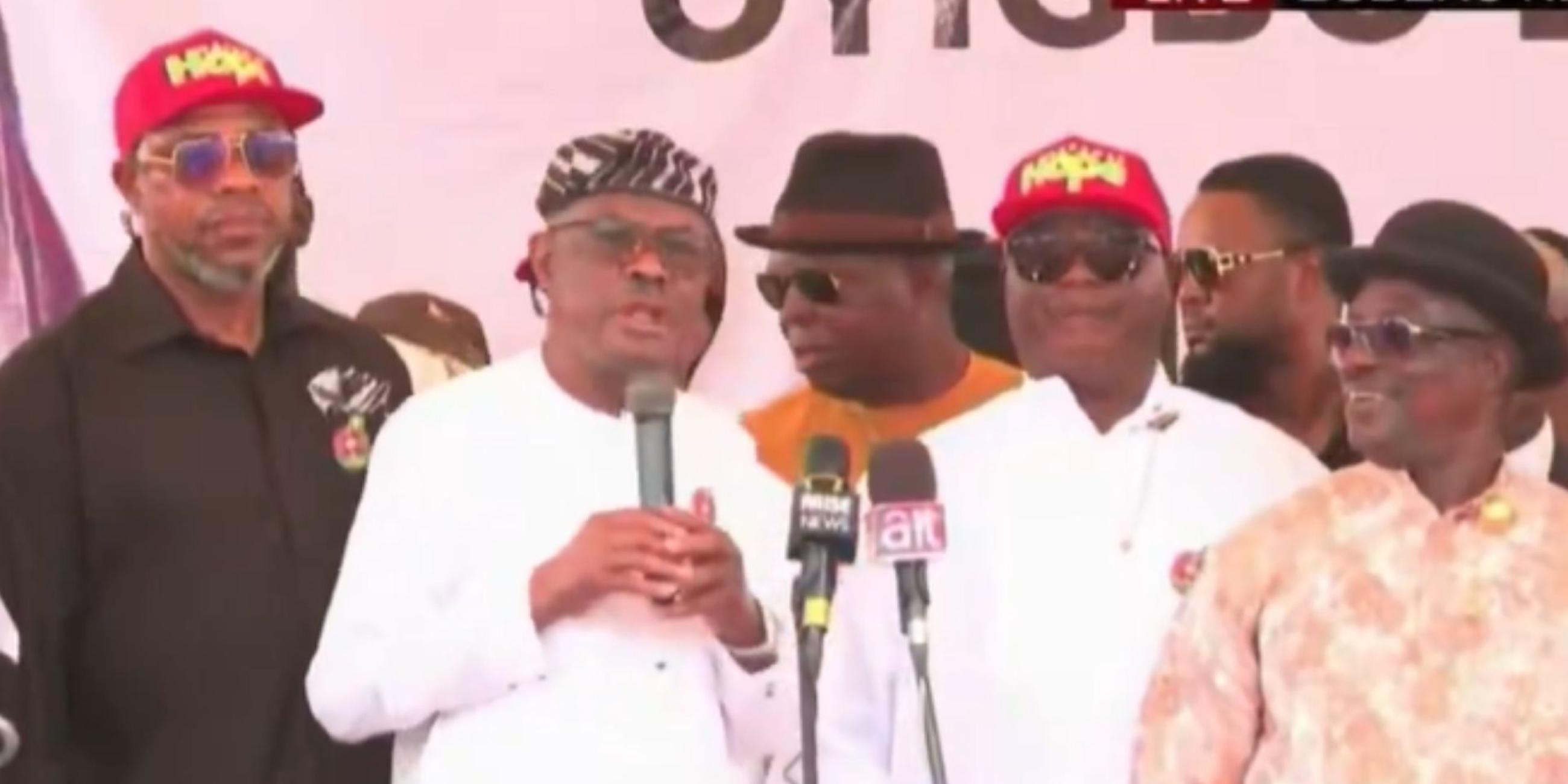
    Federal Capital Territory (FCT) Minister Nyesom Wike has threatened APC National Secretary Ajibola Basiru, warning him to stop interfering in Rivers State politics. Speaking at a rally in Oyigbo, Wike accused Basiru of commenting on matters outside his jurisdiction, particularly concerning the N600 billion funds in Rivers State.

    Wike cautioned Basiru against taking Rivers State’s support for President Bola Tinubu for granted and threatened to brief the President about the issue. He emphasized that anyone interfering with Rivers State affairs would face consequences, stating, “Anything you see, take it.”

    The tension follows Basiru’s earlier criticism of an APC official who referred to Rivers Governor Siminalayi Fubara as a “so-called governor,” noting that elected offices must be respected regardless of political differences. Wike, however, remains determined to prevent Fubara from securing a second term in office.
    FCT Minister Wike Warns APC National Secretary Basiru Against Meddling in Rivers State Politics Federal Capital Territory (FCT) Minister Nyesom Wike has threatened APC National Secretary Ajibola Basiru, warning him to stop interfering in Rivers State politics. Speaking at a rally in Oyigbo, Wike accused Basiru of commenting on matters outside his jurisdiction, particularly concerning the N600 billion funds in Rivers State. Wike cautioned Basiru against taking Rivers State’s support for President Bola Tinubu for granted and threatened to brief the President about the issue. He emphasized that anyone interfering with Rivers State affairs would face consequences, stating, “Anything you see, take it.” The tension follows Basiru’s earlier criticism of an APC official who referred to Rivers Governor Siminalayi Fubara as a “so-called governor,” noting that elected offices must be respected regardless of political differences. Wike, however, remains determined to prevent Fubara from securing a second term in office.
    0 Commentarios ·0 Acciones ·1K Views
  • China Condemns U.S. Detention of Venezuela’s President Maduro, Says No Country Has the Right to Act as the ‘World’s Judge’ or Global Police

    China has strongly criticised the detention of Venezuelan President Nicolás Maduro by the United States, declaring that it will never accept any country positioning itself as the “world’s judge” or acting as a global police force. The position was stated by Chinese Foreign Minister Wang Yi during talks with Pakistan’s Foreign Minister, Ishaq Dar, in Beijing, following what he described as sudden and serious developments in Venezuela.

    Without naming the United States directly, Wang Yi stressed that international law does not permit any nation to unilaterally police or judge others, insisting that the sovereignty and security of all countries must be respected. His remarks marked China’s first public response since images of Maduro blindfolded and handcuffed surfaced, sparking global controversy. Maduro is currently detained in New York and awaiting a court appearance on drug-related charges.

    The development poses a diplomatic test for China, which has cultivated close ties with Venezuela and considers itself a dependable partner to Caracas. Beijing has played a significant economic and political role in supporting Venezuela, particularly since Western sanctions intensified in 2017, investing billions of dollars and purchasing large volumes of Venezuelan crude oil. Analysts say China’s growing confidence on the global stage, reinforced by its past confrontations with Washington and recent diplomatic initiatives, is shaping its firm stance.

    However, U.S. President Donald Trump’s assertion that Washington will temporarily oversee Venezuela’s government has raised concerns about the future of China–Venezuela relations and Beijing’s ambition to act as a major diplomatic power. Chinese officials privately described Maduro’s detention as a major setback, highlighting years of diplomatic engagement and economic cooperation now overshadowed by escalating geopolitical tensions.
    China Condemns U.S. Detention of Venezuela’s President Maduro, Says No Country Has the Right to Act as the ‘World’s Judge’ or Global Police China has strongly criticised the detention of Venezuelan President Nicolás Maduro by the United States, declaring that it will never accept any country positioning itself as the “world’s judge” or acting as a global police force. The position was stated by Chinese Foreign Minister Wang Yi during talks with Pakistan’s Foreign Minister, Ishaq Dar, in Beijing, following what he described as sudden and serious developments in Venezuela. Without naming the United States directly, Wang Yi stressed that international law does not permit any nation to unilaterally police or judge others, insisting that the sovereignty and security of all countries must be respected. His remarks marked China’s first public response since images of Maduro blindfolded and handcuffed surfaced, sparking global controversy. Maduro is currently detained in New York and awaiting a court appearance on drug-related charges. The development poses a diplomatic test for China, which has cultivated close ties with Venezuela and considers itself a dependable partner to Caracas. Beijing has played a significant economic and political role in supporting Venezuela, particularly since Western sanctions intensified in 2017, investing billions of dollars and purchasing large volumes of Venezuelan crude oil. Analysts say China’s growing confidence on the global stage, reinforced by its past confrontations with Washington and recent diplomatic initiatives, is shaping its firm stance. However, U.S. President Donald Trump’s assertion that Washington will temporarily oversee Venezuela’s government has raised concerns about the future of China–Venezuela relations and Beijing’s ambition to act as a major diplomatic power. Chinese officials privately described Maduro’s detention as a major setback, highlighting years of diplomatic engagement and economic cooperation now overshadowed by escalating geopolitical tensions.
    love
    1
    · 0 Commentarios ·0 Acciones ·1K Views
  • U.S. Senator Bernie Sanders Slams Trump’s Military Action in Venezuela as Illegal, Unconstitutional and Dangerous Violation of International Law

    U.S. Senator Bernie Sanders has strongly condemned President Donald Trump’s military action in Venezuela, describing it as illegal, unconstitutional, and a blatant violation of international law. In a statement issued on January 4, 2026, the Vermont senator accused Trump of overstepping his authority as commander-in-chief and showing “contempt for the Constitution and the rule of law” by launching military operations without congressional approval.

    Sanders stressed that the U.S. president does not have the constitutional right to unilaterally take the country to war, even against what he described as a corrupt and brutal dictator like Venezuelan President Nicolás Maduro. He also rejected Trump’s claim that the United States has the right to “run” Venezuela, insisting that such rhetoric reflects dangerous imperial thinking.

    Calling on Congress to act urgently, Sanders urged lawmakers to pass a War Powers Resolution to immediately end what he termed an illegal military operation and to reassert Congress’s constitutional responsibilities. He warned that the attack would have far-reaching global consequences, making both the United States and the world less safe, and setting a dangerous precedent in international relations.

    Sanders compared Trump’s justification for the Venezuela action to Russia’s invasion of Ukraine, arguing that it mirrors the same “logic of force” used by President Vladimir Putin. He further accused the Trump administration of reviving imperial ambitions in Latin America, citing references to the Monroe Doctrine and alleged interest in controlling Venezuela’s vast oil reserves, which he described as “rank imperialism.”

    Turning to domestic concerns, Sanders criticised Trump for focusing on foreign military adventures while major problems persist at home, including economic hardship, a struggling healthcare system, housing unaffordability, and job threats posed by artificial intelligence. He concluded that Trump was failing in his responsibility to govern the United States, stating that the president should focus on domestic crises rather than attempting to “run” Venezuela.
    U.S. Senator Bernie Sanders Slams Trump’s Military Action in Venezuela as Illegal, Unconstitutional and Dangerous Violation of International Law U.S. Senator Bernie Sanders has strongly condemned President Donald Trump’s military action in Venezuela, describing it as illegal, unconstitutional, and a blatant violation of international law. In a statement issued on January 4, 2026, the Vermont senator accused Trump of overstepping his authority as commander-in-chief and showing “contempt for the Constitution and the rule of law” by launching military operations without congressional approval. Sanders stressed that the U.S. president does not have the constitutional right to unilaterally take the country to war, even against what he described as a corrupt and brutal dictator like Venezuelan President Nicolás Maduro. He also rejected Trump’s claim that the United States has the right to “run” Venezuela, insisting that such rhetoric reflects dangerous imperial thinking. Calling on Congress to act urgently, Sanders urged lawmakers to pass a War Powers Resolution to immediately end what he termed an illegal military operation and to reassert Congress’s constitutional responsibilities. He warned that the attack would have far-reaching global consequences, making both the United States and the world less safe, and setting a dangerous precedent in international relations. Sanders compared Trump’s justification for the Venezuela action to Russia’s invasion of Ukraine, arguing that it mirrors the same “logic of force” used by President Vladimir Putin. He further accused the Trump administration of reviving imperial ambitions in Latin America, citing references to the Monroe Doctrine and alleged interest in controlling Venezuela’s vast oil reserves, which he described as “rank imperialism.” Turning to domestic concerns, Sanders criticised Trump for focusing on foreign military adventures while major problems persist at home, including economic hardship, a struggling healthcare system, housing unaffordability, and job threats posed by artificial intelligence. He concluded that Trump was failing in his responsibility to govern the United States, stating that the president should focus on domestic crises rather than attempting to “run” Venezuela.
    0 Commentarios ·0 Acciones ·2K Views
  • When Power Rewrites Jurisdiction: Legal Implications of Maduro’s Capture, Universal Jurisdiction and Trump’s Nigeria Playbook — Opinion by Dr. Seun Solomon Bakare

    In this opinion piece, Dr. Seun Solomon Bakare critically examines the United States’ capture and transfer of Venezuelan President Nicolás Maduro to New York, arguing that while the act may appear morally justified, it presents profound legal and jurisdictional challenges under international law. He contends that the operation represents more than a criminal arrest, instead signalling a dangerous precedent where power, rather than law, determines jurisdiction, forum, and enforcement.

    Bakare explains that international law restricts the use of force to narrow circumstances such as self-defence or UN Security Council authorisation, noting that criminal indictments do not justify cross-border military seizures. He argues that doctrines like universal jurisdiction allow prosecution of certain crimes but do not permit armed enforcement on foreign soil, especially against a sitting head of state protected by immunity under international law.

    Drawing comparisons with Nigeria’s experience under the Trump administration—through sanctions, visa restrictions, and external pressure—Bakare warns that unilateral enforcement bypassing domestic and regional accountability mechanisms undermines principles such as complementarity, subsidiarity, and regional justice. He cautions that collapsing the distinction between prosecution and regime change risks transforming international criminal law into a contest of raw power, where legality becomes secondary to capability.

    The article concludes that without credible domestic and regional accountability systems, global justice risks devolving into coercion by the powerful, threatening the very foundations of the post-1945 international legal order.
    When Power Rewrites Jurisdiction: Legal Implications of Maduro’s Capture, Universal Jurisdiction and Trump’s Nigeria Playbook — Opinion by Dr. Seun Solomon Bakare In this opinion piece, Dr. Seun Solomon Bakare critically examines the United States’ capture and transfer of Venezuelan President Nicolás Maduro to New York, arguing that while the act may appear morally justified, it presents profound legal and jurisdictional challenges under international law. He contends that the operation represents more than a criminal arrest, instead signalling a dangerous precedent where power, rather than law, determines jurisdiction, forum, and enforcement. Bakare explains that international law restricts the use of force to narrow circumstances such as self-defence or UN Security Council authorisation, noting that criminal indictments do not justify cross-border military seizures. He argues that doctrines like universal jurisdiction allow prosecution of certain crimes but do not permit armed enforcement on foreign soil, especially against a sitting head of state protected by immunity under international law. Drawing comparisons with Nigeria’s experience under the Trump administration—through sanctions, visa restrictions, and external pressure—Bakare warns that unilateral enforcement bypassing domestic and regional accountability mechanisms undermines principles such as complementarity, subsidiarity, and regional justice. He cautions that collapsing the distinction between prosecution and regime change risks transforming international criminal law into a contest of raw power, where legality becomes secondary to capability. The article concludes that without credible domestic and regional accountability systems, global justice risks devolving into coercion by the powerful, threatening the very foundations of the post-1945 international legal order.
    like
    1
    · 0 Commentarios ·0 Acciones ·682 Views
  • The action of the United States against Venezuela is a grave tragedy and a serious threat to the international community. It signals a dangerous erosion of international law and respect for national sovereignty. If a powerful nation can unilaterally carry out military actions against another sovereign state, then the principles that govern global order are at risk of collapse. Such actions undermine diplomacy, violate international norms, and set a troubling precedent that endangers peace and stability worldwide.
    The action of the United States against Venezuela is a grave tragedy and a serious threat to the international community. It signals a dangerous erosion of international law and respect for national sovereignty. If a powerful nation can unilaterally carry out military actions against another sovereign state, then the principles that govern global order are at risk of collapse. Such actions undermine diplomacy, violate international norms, and set a troubling precedent that endangers peace and stability worldwide.
    like
    1
    · 0 Commentarios ·0 Acciones ·485 Views
  • Adeyanju Slams Tinubu Over Implementation of Controversial Tax Reform Act, Calls It an Insult to Nigerians and Violation of Rule of Law

    Human rights activist and lawyer, Deji Adeyanju, has strongly criticised President Bola Ahmed Tinubu for proceeding with the implementation of the controversial Tax Reform Act from January 1, 2026, describing the move as an insult to Nigerians and a serious breach of democratic principles. Adeyanju said the President’s decision to enforce the law despite unresolved controversies, including allegations of forgery and violations of constitutional procedures, demonstrates a blatant disregard for due process and the rule of law.

    According to Adeyanju, the unresolved legal and procedural questions surrounding the Act render its enforcement illegitimate and potentially dangerous, warning that it could further erode public trust in government institutions. He argued that no law burdened with such serious allegations should be implemented without transparent investigations and constitutional clarification.

    The activist also raised concerns over reports that President Tinubu may have unilaterally written off debts owed by the Nigerian National Petroleum Company Limited (NNPCL), questioning the constitutional authority for such a decision. He stressed that matters involving taxation and public finance must follow due process and receive proper legislative approval.

    Adeyanju warned that bypassing constitutional safeguards could set a dangerous precedent for governance in Nigeria and called on the National Assembly and the judiciary to intervene to protect democracy. He urged the Federal Government to suspend the implementation of the Tax Reform Act until all allegations surrounding its passage are thoroughly investigated and resolved in line with constitutional provisions.
    Adeyanju Slams Tinubu Over Implementation of Controversial Tax Reform Act, Calls It an Insult to Nigerians and Violation of Rule of Law Human rights activist and lawyer, Deji Adeyanju, has strongly criticised President Bola Ahmed Tinubu for proceeding with the implementation of the controversial Tax Reform Act from January 1, 2026, describing the move as an insult to Nigerians and a serious breach of democratic principles. Adeyanju said the President’s decision to enforce the law despite unresolved controversies, including allegations of forgery and violations of constitutional procedures, demonstrates a blatant disregard for due process and the rule of law. According to Adeyanju, the unresolved legal and procedural questions surrounding the Act render its enforcement illegitimate and potentially dangerous, warning that it could further erode public trust in government institutions. He argued that no law burdened with such serious allegations should be implemented without transparent investigations and constitutional clarification. The activist also raised concerns over reports that President Tinubu may have unilaterally written off debts owed by the Nigerian National Petroleum Company Limited (NNPCL), questioning the constitutional authority for such a decision. He stressed that matters involving taxation and public finance must follow due process and receive proper legislative approval. Adeyanju warned that bypassing constitutional safeguards could set a dangerous precedent for governance in Nigeria and called on the National Assembly and the judiciary to intervene to protect democracy. He urged the Federal Government to suspend the implementation of the Tax Reform Act until all allegations surrounding its passage are thoroughly investigated and resolved in line with constitutional provisions.
    like
    1
    · 0 Commentarios ·0 Acciones ·2K Views
Resultados de la búsqueda
Fintter https://fintter.com