• FBI, Nigeria Police Arrest Lagos-Based Suspect Over Global Microsoft 365 Phishing Attack Targeting Corporations, Banks, Schools

    The Nigeria Police Force, in collaboration with the United States Federal Bureau of Investigation (FBI), has arrested Lagos-based suspect Okitipi Samuel over a large-scale cyberattack that targeted Microsoft 365 users across multiple countries. Police said the operation involved a phishing toolkit known as Raccoon0365, used to create fake Microsoft login portals that harvested user credentials and enabled unauthorised access to corporate, financial, and educational email accounts. Digital forensic analysis and cryptocurrency tracing linked Samuel to the scheme, while two other arrested individuals were cleared as victims of identity theft. Authorities say Samuel will be charged under Nigeria’s Cybercrimes Act as investigations continue.
    FBI, Nigeria Police Arrest Lagos-Based Suspect Over Global Microsoft 365 Phishing Attack Targeting Corporations, Banks, Schools The Nigeria Police Force, in collaboration with the United States Federal Bureau of Investigation (FBI), has arrested Lagos-based suspect Okitipi Samuel over a large-scale cyberattack that targeted Microsoft 365 users across multiple countries. Police said the operation involved a phishing toolkit known as Raccoon0365, used to create fake Microsoft login portals that harvested user credentials and enabled unauthorised access to corporate, financial, and educational email accounts. Digital forensic analysis and cryptocurrency tracing linked Samuel to the scheme, while two other arrested individuals were cleared as victims of identity theft. Authorities say Samuel will be charged under Nigeria’s Cybercrimes Act as investigations continue.
    0 Reacties ·0 aandelen ·1K Views

  • "Dangote is an institution, how we treat him will determine how outsiders will judge us" — VP Shettima warns PENGASSAN.

    Vice President Kashim Shettima has called on Nigerians to respect and protect the multibillion-dollar investment of Africa’s richest man, Aliko Dangote, describing it as essential to the nation’s economic stability and growth.

    He emphasized that the 650,000-barrel-per-day Dangote Refinery represents a national asset critical to Nigeria’s industrial expansion and global competitiveness. 

    His remarks came amid the recent industrial action by oil workers under the Petroleum and Natural Gas Senior Staff Association of Nigeria (PENGASSAN) over the alleged dismissal of about 800 unionized employees. 

    IThe strike was later suspended after the intervention of Labour Minister Muhammad Dingyadi and National Security Adviser Nuhu Ribadu.

    Shettima lauded Dangote’s decision to invest heavily in Nigeria rather than taking his capital abroad. 

    He said, “Aliko Dangote, he’s not an individual, he’s an institution, and he’s a leading light in Nigeria’s economic parliament. And how we treat this gentleman will determine how outsiders will judge us. If he had invested $10 billion in Microsoft, in Amazon, or in Google, he probably might be worth $70 to $80 billion by now. But he opted to invest in his country, and we owe it to future generations to jealously protect, promote, preserve, and protect the interests of this great Nigeria.”

    The Vice President also urged labour unions and the private sector to exercise restraint and patriotism when handling industrial disputes, warning that rash actions could jeopardize the nation’s progress.

    “It’s not about holding the whole nation to ransom because of a minor labour dispute. Nigeria is greater than PENGASSAN. Nigeria is greater than each and every one of us. I’m not coming to you as a partisan,” he added.
    "Dangote is an institution, how we treat him will determine how outsiders will judge us" — VP Shettima warns PENGASSAN. Vice President Kashim Shettima has called on Nigerians to respect and protect the multibillion-dollar investment of Africa’s richest man, Aliko Dangote, describing it as essential to the nation’s economic stability and growth. He emphasized that the 650,000-barrel-per-day Dangote Refinery represents a national asset critical to Nigeria’s industrial expansion and global competitiveness.  His remarks came amid the recent industrial action by oil workers under the Petroleum and Natural Gas Senior Staff Association of Nigeria (PENGASSAN) over the alleged dismissal of about 800 unionized employees.  IThe strike was later suspended after the intervention of Labour Minister Muhammad Dingyadi and National Security Adviser Nuhu Ribadu. Shettima lauded Dangote’s decision to invest heavily in Nigeria rather than taking his capital abroad.  He said, “Aliko Dangote, he’s not an individual, he’s an institution, and he’s a leading light in Nigeria’s economic parliament. And how we treat this gentleman will determine how outsiders will judge us. If he had invested $10 billion in Microsoft, in Amazon, or in Google, he probably might be worth $70 to $80 billion by now. But he opted to invest in his country, and we owe it to future generations to jealously protect, promote, preserve, and protect the interests of this great Nigeria.” The Vice President also urged labour unions and the private sector to exercise restraint and patriotism when handling industrial disputes, warning that rash actions could jeopardize the nation’s progress. “It’s not about holding the whole nation to ransom because of a minor labour dispute. Nigeria is greater than PENGASSAN. Nigeria is greater than each and every one of us. I’m not coming to you as a partisan,” he added.
    0 Reacties ·0 aandelen ·990 Views
  • Microsoft terminates services for Israeli military after investigation into mass surveillance of Palestinians
    Microsoft terminates services for Israeli military after investigation into mass surveillance of Palestinians
    0 Reacties ·0 aandelen ·624 Views
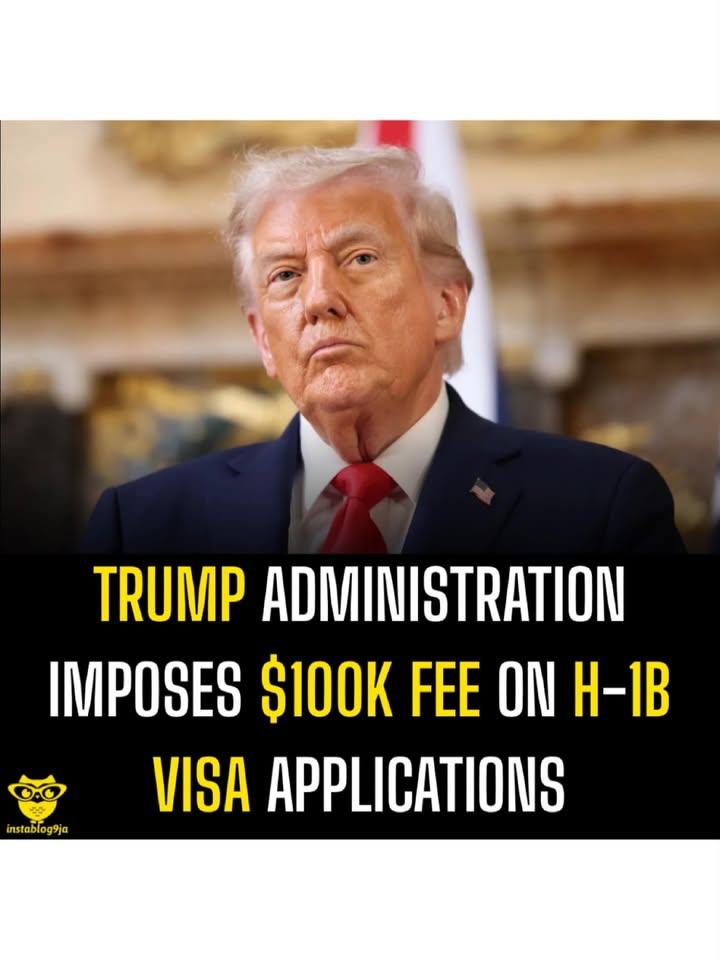
  • Trump Administration Imposes $100K Fee on H-1B Visa Applications.

    The Trump administration has announced a new $100,000 fee for H-1B visa applications, significantly raising costs for companies that rely on the program to recruit highly skilled foreign workers.

    President Donald Trump signed an executive order late Friday requiring the additional payment and barring H-1B holders from entering the U.S. without it. “We’re going to keep productive people in our country, and companies are prepared to pay for that — and they’re happy about it,” Trump said.

    The new fee will hit major employers such as Amazon, IBM, Microsoft, and Google, all of which have long depended on the program. H-1B visas already cost between $1,700 and $4,500 depending on processing time, costs usually borne by employers.

    Supporters of the move argue it will ensure only highly skilled workers enter the U.S. while protecting American jobs. A White House aide said the change would “guarantee that companies hire truly extraordinary people who cannot be easily replaced by American workers.”

    However, critics warn the policy could backfire. Stuart Anderson, executive director of the National Foundation for American Policy, cautioned that higher costs may push companies to move jobs abroad, especially in research and development. He also noted the move could discourage international students from enrolling in U.S. universities if post-graduation work opportunities shrink.

    H-1B visas, awarded by lottery, require at least a bachelor’s degree and a job offer from a U.S. employer. In 2024, Amazon was the largest recipient, securing over 10,000 visas, followed by Tata Consultancy, Microsoft, Apple, and Google. The most common job type for visa holders last year was software development.

    Bloomberg reported that Trump will also direct the Labor Secretary to revise wage rules for the program. Currently, employers must pay either the prevailing wage or the actual wage offered to similarly qualified workers, whichever is higher.
    Trump Administration Imposes $100K Fee on H-1B Visa Applications. The Trump administration has announced a new $100,000 fee for H-1B visa applications, significantly raising costs for companies that rely on the program to recruit highly skilled foreign workers. President Donald Trump signed an executive order late Friday requiring the additional payment and barring H-1B holders from entering the U.S. without it. “We’re going to keep productive people in our country, and companies are prepared to pay for that — and they’re happy about it,” Trump said. The new fee will hit major employers such as Amazon, IBM, Microsoft, and Google, all of which have long depended on the program. H-1B visas already cost between $1,700 and $4,500 depending on processing time, costs usually borne by employers. Supporters of the move argue it will ensure only highly skilled workers enter the U.S. while protecting American jobs. A White House aide said the change would “guarantee that companies hire truly extraordinary people who cannot be easily replaced by American workers.” However, critics warn the policy could backfire. Stuart Anderson, executive director of the National Foundation for American Policy, cautioned that higher costs may push companies to move jobs abroad, especially in research and development. He also noted the move could discourage international students from enrolling in U.S. universities if post-graduation work opportunities shrink. H-1B visas, awarded by lottery, require at least a bachelor’s degree and a job offer from a U.S. employer. In 2024, Amazon was the largest recipient, securing over 10,000 visas, followed by Tata Consultancy, Microsoft, Apple, and Google. The most common job type for visa holders last year was software development. Bloomberg reported that Trump will also direct the Labor Secretary to revise wage rules for the program. Currently, employers must pay either the prevailing wage or the actual wage offered to similarly qualified workers, whichever is higher.
    0 Reacties ·0 aandelen ·897 Views
  • Microsoft shut down Nigeria linked phishing service RaccoonO365.

    Microsoft has dismantled a global phishing network known as RaccoonO365, seizing more than 300 malicious websites that cybercriminals used to steal user credentials through fake Microsoft login pages.

    The company’s Digital Crimes Unit (DCU) said it obtained authorization from the U.S. District Court for the Southern District of New York to take down 338 domains associated with the scheme. The service, which operated on a subscription basis, allowed even low-skilled attackers to run large-scale credential theft campaigns using pre-packaged phishing kits.

    According to Microsoft, the operation was allegedly coordinated by Joshua Ogundipe, a Nigerian computer programmer believed to have written much of the malicious code. Ogundipe and his associates were said to have developed the phishing software, managed subscription sales, and even provided technical support to other criminals who purchased the kits.

    In a statement, the company explained that the phishing tools were designed to impersonate Microsoft branding and trick users into sharing sensitive information. “To deceive users, RaccoonO365’s kits use Microsoft branding to make fraudulent emails, attachments, and websites appear legitimate, enticing recipients to open, click, and enter their information,” Microsoft said.

    Since July 2024, the kits have been used to steal at least 5,000 Microsoft credentials across 94 countries. Microsoft explained that while not all stolen information resulted in compromised networks or fraud due to remediation by security features,the figures highlight the scale of the threat and the persistence of social engineering tactics in cybercrime.

    Investigators said the criminals behind the scheme attempted to cover their tracks by registering internet domains under false names and addresses spread across several countries. The phishing kits were primarily distributed through Telegram, where attackers could acquire tools to send thousands of emails daily, with the potential to scale operations to hundreds of millions of messages each year.

    Microsoft added that the group had begun developing new tools to make attacks more effective, including a system named RaccoonO365 AI-MailCheck, which was intended to increase the reach and sophistication of phishing campaigns.

    The investigation received a major boost after an operational security mistake by the attackers revealed a cryptocurrency wallet connected to their infrastructure. This slip gave Microsoft’s team a way to trace the scope of the operation and identify those behind it.
    Microsoft shut down Nigeria linked phishing service RaccoonO365. Microsoft has dismantled a global phishing network known as RaccoonO365, seizing more than 300 malicious websites that cybercriminals used to steal user credentials through fake Microsoft login pages. The company’s Digital Crimes Unit (DCU) said it obtained authorization from the U.S. District Court for the Southern District of New York to take down 338 domains associated with the scheme. The service, which operated on a subscription basis, allowed even low-skilled attackers to run large-scale credential theft campaigns using pre-packaged phishing kits. According to Microsoft, the operation was allegedly coordinated by Joshua Ogundipe, a Nigerian computer programmer believed to have written much of the malicious code. Ogundipe and his associates were said to have developed the phishing software, managed subscription sales, and even provided technical support to other criminals who purchased the kits. In a statement, the company explained that the phishing tools were designed to impersonate Microsoft branding and trick users into sharing sensitive information. “To deceive users, RaccoonO365’s kits use Microsoft branding to make fraudulent emails, attachments, and websites appear legitimate, enticing recipients to open, click, and enter their information,” Microsoft said. Since July 2024, the kits have been used to steal at least 5,000 Microsoft credentials across 94 countries. Microsoft explained that while not all stolen information resulted in compromised networks or fraud due to remediation by security features,the figures highlight the scale of the threat and the persistence of social engineering tactics in cybercrime. Investigators said the criminals behind the scheme attempted to cover their tracks by registering internet domains under false names and addresses spread across several countries. The phishing kits were primarily distributed through Telegram, where attackers could acquire tools to send thousands of emails daily, with the potential to scale operations to hundreds of millions of messages each year. Microsoft added that the group had begun developing new tools to make attacks more effective, including a system named RaccoonO365 AI-MailCheck, which was intended to increase the reach and sophistication of phishing campaigns. The investigation received a major boost after an operational security mistake by the attackers revealed a cryptocurrency wallet connected to their infrastructure. This slip gave Microsoft’s team a way to trace the scope of the operation and identify those behind it.
    0 Reacties ·0 aandelen ·944 Views
  • Sizing Up the Demand: The Data Center Energy Storage Market Size

    The impressive Data Center Energy Storage Market Size is a direct and quantifiable measure of the critical importance of power continuity in our digitally-dependent society. This multi-billion-dollar market represents the total annual global spending on the technologies and services designed to insulate the world's data centers from disruptions in the electrical grid. The scale of this market is immense because the cost of failure is even greater; studies have shown that a single minute of downtime at a major data center can cost hundreds of thousands, or even millions, of dollars in lost revenue and productivity.

    Therefore, the market's large size is a reflection of a rational and necessary investment by the digital industry to protect its most vital assets and ensure the continuous availability of its services.
    When broken down, the market size is overwhelmingly dominated by the hyperscale data center segment. These massive facilities, operated by tech giants like Google, Amazon, and Microsoft, can consume as much electricity as a small city, and their power backup requirements are correspondingly vast. Their continuous construction of new data center campuses around the world makes them the single largest consumers of energy storage systems, and their technical requirements often drive innovation for the entire industry. The colocation and enterprise segments also contribute significantly to the market size, but the trend towards consolidating IT infrastructure into the public cloud means that the hyperscale segment will continue to represent the lion's share of the market for the foreseeable future.

    Geographically, the market size is currently largest in North America, which has the highest concentration of legacy and new-build hyperscale data centers, particularly in data center hubs like Northern Virginia and Silicon Valley. However, the geographic distribution is rapidly shifting. The Asia-Pacific region, led by countries like China, India, and Singapore, is now the fastest-growing market. This growth is being fueled by massive investments in digital infrastructure to support the region's burgeoning internet population and rapid adoption of cloud services. Europe also remains a strong market, with a particular focus on green data centers that leverage energy storage to maximize their use of renewable energy, driven by strong regulatory and corporate sustainability goals.

    source: https://www.marketresearchfuture.com/reports/data-center-energy-storage-market-32037
    Sizing Up the Demand: The Data Center Energy Storage Market Size The impressive Data Center Energy Storage Market Size is a direct and quantifiable measure of the critical importance of power continuity in our digitally-dependent society. This multi-billion-dollar market represents the total annual global spending on the technologies and services designed to insulate the world's data centers from disruptions in the electrical grid. The scale of this market is immense because the cost of failure is even greater; studies have shown that a single minute of downtime at a major data center can cost hundreds of thousands, or even millions, of dollars in lost revenue and productivity. Therefore, the market's large size is a reflection of a rational and necessary investment by the digital industry to protect its most vital assets and ensure the continuous availability of its services. When broken down, the market size is overwhelmingly dominated by the hyperscale data center segment. These massive facilities, operated by tech giants like Google, Amazon, and Microsoft, can consume as much electricity as a small city, and their power backup requirements are correspondingly vast. Their continuous construction of new data center campuses around the world makes them the single largest consumers of energy storage systems, and their technical requirements often drive innovation for the entire industry. The colocation and enterprise segments also contribute significantly to the market size, but the trend towards consolidating IT infrastructure into the public cloud means that the hyperscale segment will continue to represent the lion's share of the market for the foreseeable future. Geographically, the market size is currently largest in North America, which has the highest concentration of legacy and new-build hyperscale data centers, particularly in data center hubs like Northern Virginia and Silicon Valley. However, the geographic distribution is rapidly shifting. The Asia-Pacific region, led by countries like China, India, and Singapore, is now the fastest-growing market. This growth is being fueled by massive investments in digital infrastructure to support the region's burgeoning internet population and rapid adoption of cloud services. Europe also remains a strong market, with a particular focus on green data centers that leverage energy storage to maximize their use of renewable energy, driven by strong regulatory and corporate sustainability goals. source: https://www.marketresearchfuture.com/reports/data-center-energy-storage-market-32037
    0 Reacties ·0 aandelen ·2K Views
  • Tech Billionaire Elon Musk absent as Trump Hosts Tech Leaders at White House Dinner.

    U.S. President Donald Trump hosted top technology executives at the White House on Thursday night, in a high-profile dinner focused on boosting domestic investment and innovation. One notable absence was Tesla and SpaceX chief Elon Musk, once a close ally of Trump and former head of the Department of Government Efficiency (DOGE).

    Their relationship soured earlier this year after Musk dismissed Trump’s “Big Beautiful Bill” as “idiotic,” warning it would worsen federal debt. The feud escalated when Musk accused Trump on X of concealing Jeffrey Epstein’s files.

    Instead, the guest list featured Musk’s rivals and other industry leaders. OpenAI CEO Sam Altman, Microsoft’s Satya Nadella, Apple’s Tim Cook, Google’s Sundar Pichai, and Meta’s Mark Zuckerberg were among those seated around Trump at the long table.

    “This is taking our country to a new level,” Trump declared, describing his guests as “high IQ people.” He pressed executives on their U.S. investments, with Zuckerberg claiming Meta spends $600 billion annually, Cook citing the same figure for Apple, Pichai noting $250 billion from Alphabet, and Nadella pledging $80 billion from Microsoft.

    Other attendees included IBM CEO Arvind Krishna, Oracle’s Safra Catz, Google founder Sergey Brin, Microsoft co-founder Bill Gates, and OpenAI co-founder Greg Brockman. Trump also welcomed Blue Origin CEO David Limp, Micron CEO Sanjay Mehrotra, Palantir’s Shyam Sankar, Scale AI’s Alexandr Wang, and Code. org president Cameron Wilson.

    Trump, who has long courted Silicon Valley while also sparring with its leaders, used the event to boast about America’s AI progress and frame tech investment as a cornerstone of his economic agenda.
    Tech Billionaire Elon Musk absent as Trump Hosts Tech Leaders at White House Dinner. U.S. President Donald Trump hosted top technology executives at the White House on Thursday night, in a high-profile dinner focused on boosting domestic investment and innovation. One notable absence was Tesla and SpaceX chief Elon Musk, once a close ally of Trump and former head of the Department of Government Efficiency (DOGE). Their relationship soured earlier this year after Musk dismissed Trump’s “Big Beautiful Bill” as “idiotic,” warning it would worsen federal debt. The feud escalated when Musk accused Trump on X of concealing Jeffrey Epstein’s files. Instead, the guest list featured Musk’s rivals and other industry leaders. OpenAI CEO Sam Altman, Microsoft’s Satya Nadella, Apple’s Tim Cook, Google’s Sundar Pichai, and Meta’s Mark Zuckerberg were among those seated around Trump at the long table. “This is taking our country to a new level,” Trump declared, describing his guests as “high IQ people.” He pressed executives on their U.S. investments, with Zuckerberg claiming Meta spends $600 billion annually, Cook citing the same figure for Apple, Pichai noting $250 billion from Alphabet, and Nadella pledging $80 billion from Microsoft. Other attendees included IBM CEO Arvind Krishna, Oracle’s Safra Catz, Google founder Sergey Brin, Microsoft co-founder Bill Gates, and OpenAI co-founder Greg Brockman. Trump also welcomed Blue Origin CEO David Limp, Micron CEO Sanjay Mehrotra, Palantir’s Shyam Sankar, Scale AI’s Alexandr Wang, and Code. org president Cameron Wilson. Trump, who has long courted Silicon Valley while also sparring with its leaders, used the event to boast about America’s AI progress and frame tech investment as a cornerstone of his economic agenda.
    0 Reacties ·0 aandelen ·2K Views
  • The FG has confirmed the closure of 13,597,057 social media accounts over offensive content & violations of the Code of Practice 2024 across platforms including TikTok, Facebook, Instagram & X.

    The disclosure was made in the Code of Practice 2024 Compliance Report, submitted by major tech companies such as Google, Microsoft & TikTok. The code, jointly issued by the Nigerian Communications Commission (NCC), the National Information Technology Development Agency (NITDA) & the National Broadcasting Commission (NBC) outlines measures to curb online harm.

    According to the report, 58,909,112 offensive posts were taken down, while 754,629 complaints were registered by users. It also noted that 420,439 contents were removed but later re-uploaded following user appeals.

    In a statement, NITDA’s Director of Corporate Communications, Hajiya Hadiza Umar commended the platforms for complying with the code, stressing that the initiative is aimed at ensuring a safer & more responsible digital environment for Nigerians.
    The FG has confirmed the closure of 13,597,057 social media accounts over offensive content & violations of the Code of Practice 2024 across platforms including TikTok, Facebook, Instagram & X. The disclosure was made in the Code of Practice 2024 Compliance Report, submitted by major tech companies such as Google, Microsoft & TikTok. The code, jointly issued by the Nigerian Communications Commission (NCC), the National Information Technology Development Agency (NITDA) & the National Broadcasting Commission (NBC) outlines measures to curb online harm. According to the report, 58,909,112 offensive posts were taken down, while 754,629 complaints were registered by users. It also noted that 420,439 contents were removed but later re-uploaded following user appeals. In a statement, NITDA’s Director of Corporate Communications, Hajiya Hadiza Umar commended the platforms for complying with the code, stressing that the initiative is aimed at ensuring a safer & more responsible digital environment for Nigerians.
    0 Reacties ·0 aandelen ·2K Views
Fintter https://fintter.com