• 10 Mobile Banking Threats Nigerians Must Watch Out for in 2026 to Protect Their Money

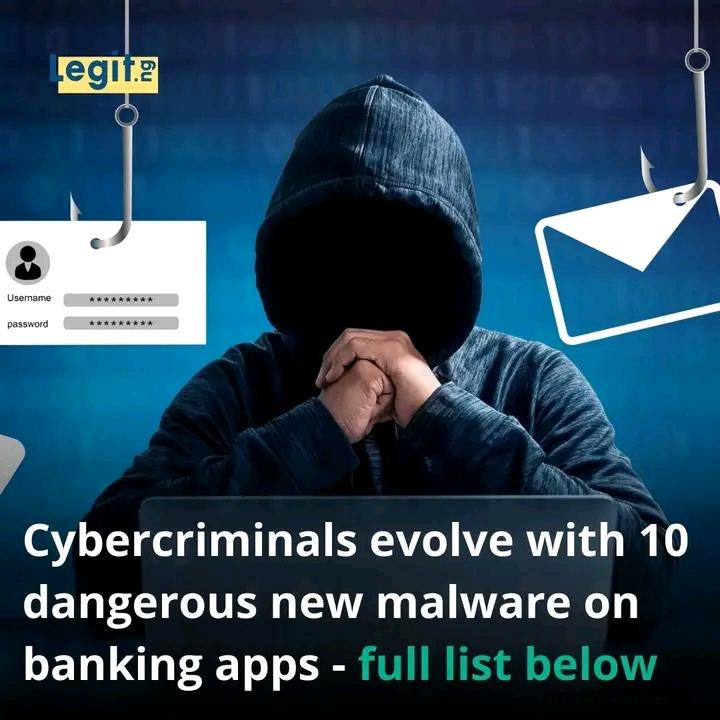
    As mobile banking becomes central to daily financial transactions in Nigeria, cybercriminals are innovating faster than ever. Journalist Pascal Oparada highlights the top 10 mobile banking threats in 2026, including AI-powered phishing scams, fake banking apps, SIM-swap fraud, social media investment scams, public Wi-Fi hacking, hidden malware in everyday apps, voice-cloning scams, weak passwords, account takeovers from data leaks, and low awareness of fraud reporting channels. Experts urge Nigerians to stay vigilant, update software regularly, and adopt secure banking practices to safeguard their money.

    #MobileBanking #CyberSecurity #Nigeria #FraudPrevention #DigitalSafety #AIPhishing #SIMSwap #Malware #BankingApps #TechNews
    10 Mobile Banking Threats Nigerians Must Watch Out for in 2026 to Protect Their Money As mobile banking becomes central to daily financial transactions in Nigeria, cybercriminals are innovating faster than ever. Journalist Pascal Oparada highlights the top 10 mobile banking threats in 2026, including AI-powered phishing scams, fake banking apps, SIM-swap fraud, social media investment scams, public Wi-Fi hacking, hidden malware in everyday apps, voice-cloning scams, weak passwords, account takeovers from data leaks, and low awareness of fraud reporting channels. Experts urge Nigerians to stay vigilant, update software regularly, and adopt secure banking practices to safeguard their money. #MobileBanking #CyberSecurity #Nigeria #FraudPrevention #DigitalSafety #AIPhishing #SIMSwap #Malware #BankingApps #TechNews
    like
    1
    · 0 Commentarii ·0 Distribuiri ·2K Views
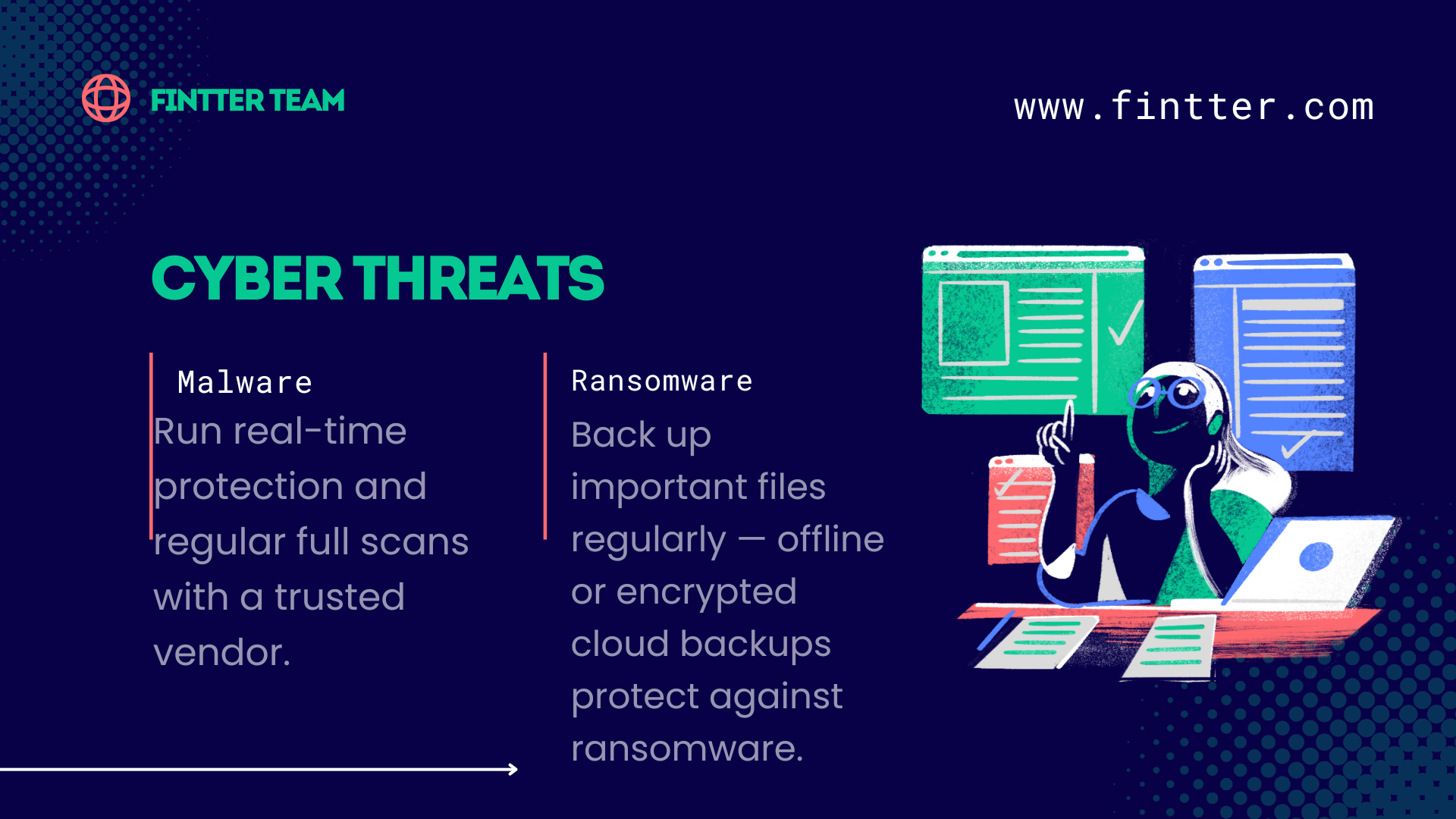
  • Here are clear, practical tips on malware you can use right away : prevention, detection, and response
    Here are clear, practical tips on malware you can use right away : prevention, detection, and response
    0 Commentarii ·0 Distribuiri ·425 Views
  • AI Is Getting Smarter… Are You Protected?

    AI Threats Are Evolving , Your Protection Should Too.
    Hackers are now using Artificial Intelligence to create smarter, faster attacks: malware that learns, Trojans that hide, and scams that even look real.
    Don’t wait until your data, photos, or passwords are gone.
    Norton Antivirus uses real-time AI defense to block new and unknown threats before they touch your system.

    Plus, with Parental Control, you can protect your children online — control what they see, limit screen time, and keep their digital world safe.

    Stay ahead of AI-powered cyber threats.
    Get Norton Antivirus today.
    More https://service.fintter.com/
    Message us to install yours now!
    09114199908
    AI Is Getting Smarter… Are You Protected? AI Threats Are Evolving , Your Protection Should Too. Hackers are now using Artificial Intelligence to create smarter, faster attacks: malware that learns, Trojans that hide, and scams that even look real. Don’t wait until your data, photos, or passwords are gone. Norton Antivirus uses real-time AI defense to block new and unknown threats before they touch your system. 👨‍👩‍👧 Plus, with Parental Control, you can protect your children online — control what they see, limit screen time, and keep their digital world safe. ✅ Stay ahead of AI-powered cyber threats. 🔰 Get Norton Antivirus today. More https://service.fintter.com/ 👉 Message us to install yours now! 09114199908
    0 Commentarii ·0 Distribuiri ·617 Views
  • Russian Hacker Groups Gamaredon, Turla Collaborate To Target Ukraine — ESET | Fintter

    Cybersecurity researchers have found evidence of Russian hacking groups Gamaredon and Turla collaborating to target Ukrainian entities.

    According to Slovak cybersecurity company ESET, Gamaredon tools such as PteroGraphin and PteroOdd were used earlier this year to execute Turla’s Kazuar backdoor on Ukrainian systems. Researchers say this indicates active cooperation between the two groups, both linked to Russia’s FSB.

    ESET noted multiple attacks between February and June 2025, involving different variants of Kazuar malware deployed through Gamaredon’s toolset. The activity mainly targeted Ukraine’s defense sector.

    Source: The Hacker News
    Russian Hacker Groups Gamaredon, Turla Collaborate To Target Ukraine — ESET | Fintter Cybersecurity researchers have found evidence of Russian hacking groups Gamaredon and Turla collaborating to target Ukrainian entities. According to Slovak cybersecurity company ESET, Gamaredon tools such as PteroGraphin and PteroOdd were used earlier this year to execute Turla’s Kazuar backdoor on Ukrainian systems. Researchers say this indicates active cooperation between the two groups, both linked to Russia’s FSB. ESET noted multiple attacks between February and June 2025, involving different variants of Kazuar malware deployed through Gamaredon’s toolset. The activity mainly targeted Ukraine’s defense sector. Source: The Hacker News
    0 Commentarii ·0 Distribuiri ·1K Views
  • NCC Shuts Down MovieBox Over Piracy Operations.

    The Nigerian Copyright Commission (NCC), in partnership with the Nigeria Internet Registration Association (NiRA), has shut down , a not+rious p+racy website that streamed unauthorised movies, music, and live sports.

    According to NCC’s Director of Public Affairs, Ijeoma Egbunike, the suspension took effect on July 20, 2025, following intensified efforts to combat digital p+racy. NCC Director-General, John Asein, said the move was widely applauded by rights holders in the film, music, and broadcast sectors.

    Asein revealed that was part of a broader network of p+racy platforms using clone and fallback domains to distribute ill$gal content. “They use multiple mirror domains to access and promote p+rated content, with domain histories linked to known p+racy operations,” he stated.

    He praised NiRA for its swift action and urged other internet service providers and intermediaries to comply with takedown requests in accordance with the Copyright Act, 2022.

    The NCC also warned the public against using ill$gal streaming sites, saying such platforms not only v+late copyright laws but also pose serious risks including malware infections, identity th+ft, and financial sc+ms.

    Efforts are ongoing to dismantle mirror sites associated with as part of NCC’s wider anti-p+racy initiative, the “Stand Together Against Online p+racy (STOP)” campaign, launched earlier this year. The agency reaffirmed its commitment to protecting intellectual property and ensuring that digital platforms are not used to undermine Nigeria’s creative economy.
    NCC Shuts Down MovieBox Over Piracy Operations. The Nigerian Copyright Commission (NCC), in partnership with the Nigeria Internet Registration Association (NiRA), has shut down , a not+rious p+racy website that streamed unauthorised movies, music, and live sports. According to NCC’s Director of Public Affairs, Ijeoma Egbunike, the suspension took effect on July 20, 2025, following intensified efforts to combat digital p+racy. NCC Director-General, John Asein, said the move was widely applauded by rights holders in the film, music, and broadcast sectors. Asein revealed that was part of a broader network of p+racy platforms using clone and fallback domains to distribute ill$gal content. “They use multiple mirror domains to access and promote p+rated content, with domain histories linked to known p+racy operations,” he stated. He praised NiRA for its swift action and urged other internet service providers and intermediaries to comply with takedown requests in accordance with the Copyright Act, 2022. The NCC also warned the public against using ill$gal streaming sites, saying such platforms not only v+late copyright laws but also pose serious risks including malware infections, identity th+ft, and financial sc+ms. Efforts are ongoing to dismantle mirror sites associated with as part of NCC’s wider anti-p+racy initiative, the “Stand Together Against Online p+racy (STOP)” campaign, launched earlier this year. The agency reaffirmed its commitment to protecting intellectual property and ensuring that digital platforms are not used to undermine Nigeria’s creative economy.
    0 Commentarii ·0 Distribuiri ·886 Views
  • Young Nigerians selling BVN, NIN, others to fintechs for fraudulent activities — EFCC.

    The Economic and Financial Crimes Commission (EFCC) has revealed an extensive cyberfraud scheme involving over 12,000 young Nigerians allegedly engaged in selling sensitive biometric information—including Bank Verification Numbers (BVN), National Identity Numbers (NIN), and passport photographs—to fintech companies for illegal financial activities.

    In a statement released on Friday, the Commission described the actors as self-styled “Account Suppliers” or “KYC Group” agents operating in all corners of the country. According to EFCC investigators, the fraudsters lure unsuspecting Nigerians with payments ranging between ₦1,500 and ₦2,000 to part with their personal data. These details are subsequently sold to digital finance platforms for as much as ₦5,000 per individual.

    “These canvassers,” the EFCC noted, “are up to 12,000 all over the country seeking account donors that will surrender their NIN registration slip, BVN, passport photograph and other means of identification for a little fee.”

    The data acquired through this process is reportedly used to open bank accounts with fintech firms, which are then exploited for various scams—including investment frauds and laundering operations using cryptocurrencies.

    The Commission warned that the surge in such fraudulent activity poses a national security risk. “This fraud scheme is largely driven by an army of young Nigerians… The EFCC views the development as a threat to national security,” the statement read.

    The EFCC also raised concerns over a new method fraudsters are using to access victim accounts, particularly through deceptive “promo scams” involving airline ticket discounts. One flagged operation included a fake offer of 50% off ticket prices from a foreign airline, which required victims to make a ₦500 ‘charity’ payment and download the airline’s app. This process reportedly gave malware-enabled access to victims’ banking details, leading to unauthorized transfers into accounts controlled by fraudsters.

    “These teasers, like ‘Investment Windows’, are usually employed to make their victims volunteer their account information,” the EFCC stated. “Fraudsters then execute transactions on their behalf by sending their funds to accounts mainly in fintech institutions… Through this access, they control and launder the funds through purchase of cryptocurrencies.”

    The Commission confirmed that arrests have been made, and recovery efforts are underway to retrieve funds lost to these schemes. In its concluding remarks, the EFCC urged Nigerians to refrain from acting as “Account Donors” under any guise, warning that such cooperation enables criminal networks and endangers the integrity of the financial system.

    “The Commission is committed to safeguarding the financial space of the nation in the overall interests of all Nigerians,” it stated.
    Young Nigerians selling BVN, NIN, others to fintechs for fraudulent activities — EFCC. The Economic and Financial Crimes Commission (EFCC) has revealed an extensive cyberfraud scheme involving over 12,000 young Nigerians allegedly engaged in selling sensitive biometric information—including Bank Verification Numbers (BVN), National Identity Numbers (NIN), and passport photographs—to fintech companies for illegal financial activities. In a statement released on Friday, the Commission described the actors as self-styled “Account Suppliers” or “KYC Group” agents operating in all corners of the country. According to EFCC investigators, the fraudsters lure unsuspecting Nigerians with payments ranging between ₦1,500 and ₦2,000 to part with their personal data. These details are subsequently sold to digital finance platforms for as much as ₦5,000 per individual. “These canvassers,” the EFCC noted, “are up to 12,000 all over the country seeking account donors that will surrender their NIN registration slip, BVN, passport photograph and other means of identification for a little fee.” The data acquired through this process is reportedly used to open bank accounts with fintech firms, which are then exploited for various scams—including investment frauds and laundering operations using cryptocurrencies. The Commission warned that the surge in such fraudulent activity poses a national security risk. “This fraud scheme is largely driven by an army of young Nigerians… The EFCC views the development as a threat to national security,” the statement read. The EFCC also raised concerns over a new method fraudsters are using to access victim accounts, particularly through deceptive “promo scams” involving airline ticket discounts. One flagged operation included a fake offer of 50% off ticket prices from a foreign airline, which required victims to make a ₦500 ‘charity’ payment and download the airline’s app. This process reportedly gave malware-enabled access to victims’ banking details, leading to unauthorized transfers into accounts controlled by fraudsters. “These teasers, like ‘Investment Windows’, are usually employed to make their victims volunteer their account information,” the EFCC stated. “Fraudsters then execute transactions on their behalf by sending their funds to accounts mainly in fintech institutions… Through this access, they control and launder the funds through purchase of cryptocurrencies.” The Commission confirmed that arrests have been made, and recovery efforts are underway to retrieve funds lost to these schemes. In its concluding remarks, the EFCC urged Nigerians to refrain from acting as “Account Donors” under any guise, warning that such cooperation enables criminal networks and endangers the integrity of the financial system. “The Commission is committed to safeguarding the financial space of the nation in the overall interests of all Nigerians,” it stated.
    0 Commentarii ·0 Distribuiri ·1K Views
  • EFCC Uncovers Dangerous New Scam: How Fraudsters Steal Your Bank Info Through Fake Promos & Malware!


    The Economic and Financial Crimes Commission (EFCC) has exposed a new wave of cyber fraud threatening the financial safety of Nigerians. In its ongoing mission to protect citizens, the commission warns of malicious schemes designed to harvest sensitive personal and banking information.

    Tactics Used by the Scammers

    Malware Attacks: Fraudsters deploy malicious software to infiltrate victims' devices and access their account details.

    Fake Airline Promo: A deceptive 50% flight discount by a popular foreign airline asks victims to pay just ₦500. That small payment is the hook through which criminals harvest bank information and wipe out victims’ accounts.


    The EFCC has also sounded a strong warning:
    Do NOT donate your account to anyone for any reason — doing so makes you an accomplice to financial crimes.

    “Stay alert, stay safe. When an offer seems too good to be true, it usually is,” the Commission emphasized.

    #EFCCAlert #CyberFraud #FakePromos #StaySafeOnline #MalwareScam #AirlineFraud

    EFCC Uncovers Dangerous New Scam: How Fraudsters Steal Your Bank Info Through Fake Promos & Malware! The Economic and Financial Crimes Commission (EFCC) has exposed a new wave of cyber fraud threatening the financial safety of Nigerians. In its ongoing mission to protect citizens, the commission warns of malicious schemes designed to harvest sensitive personal and banking information. Tactics Used by the Scammers Malware Attacks: Fraudsters deploy malicious software to infiltrate victims' devices and access their account details. Fake Airline Promo: A deceptive 50% flight discount by a popular foreign airline asks victims to pay just ₦500. That small payment is the hook through which criminals harvest bank information and wipe out victims’ accounts. The EFCC has also sounded a strong warning: Do NOT donate your account to anyone for any reason — doing so makes you an accomplice to financial crimes. “Stay alert, stay safe. When an offer seems too good to be true, it usually is,” the Commission emphasized. #EFCCAlert #CyberFraud #FakePromos #StaySafeOnline #MalwareScam #AirlineFraud
    0 Commentarii ·0 Distribuiri ·3K Views
Fintter https://fintter.com