• Are Nigeria’s New Tax Laws Unconstitutional? Why a Lawyer Is Suing the Federal Government Over Multiple Budgets, Fiscal Transparency, and the 2026 Tax Reforms

    Is Nigeria running its finances in violation of its own laws—and could the country’s new tax regime be declared unconstitutional? These are the questions now before the Federal High Court in Lagos following a landmark lawsuit filed by human rights lawyer, Mr. Tilewa Oyefeso.

    Oyefeso has dragged the Federal Government, the Senate President, the Speaker of the House of Representatives, the National Assembly, and the Attorney-General of the Federation to court, challenging what he describes as Nigeria’s “opaque and undisciplined fiscal regime.” At the heart of the case is the government’s practice of operating multiple federal budgets simultaneously and introducing new tax laws that he claims contradict both the Constitution and the Fiscal Responsibility Act (FRA) 2007.

    According to the suit, the Federal Government has extended capital components of the 2024 Appropriation Act into 2025 and 2026 while the 2025 budget is already in force—effectively running overlapping budgets. Oyefeso is asking the court to determine whether this practice complies with Nigeria’s Medium-Term Expenditure Framework (MTEF) and the unified annual budgeting system mandated by fiscal law.

    Why does this matter? The lawyer argues that overlapping budgets, supplementary appropriations, and extended capital projects undermine fiscal transparency, distort expenditure projections, and weaken the macroeconomic discipline the Fiscal Responsibility Act was designed to protect. He also accuses the government of failing to publish quarterly budget implementation reports within the legally required 30-day period—an omission he says makes it impossible for citizens to track public spending or hold authorities accountable.

    But the lawsuit goes beyond budgets. Oyefeso is also challenging four major tax laws scheduled to take effect from January 1, 2026: the Nigeria Tax Act 2025, the Nigeria Revenue Service (Establishment) Act 2025, the Joint Revenue Board of Nigeria (Establishment) Act 2025, and the Nigeria Tax Administration Act 2025.

    He contends that the new tax framework prioritises aggressive revenue generation without first ensuring compliance with constitutional limits on borrowing, deficit thresholds, fiscal accountability, and transparency. Citing Section 16 of the 1999 Constitution, which outlines Nigeria’s economic objectives, Oyefeso argues that fiscal and tax policies must promote social justice, equitable wealth distribution, macroeconomic stability, and the welfare of citizens—not merely expand government revenue.

    One of his key claims is that the reforms ignore the Fiscal Responsibility Act’s requirement that fiscal deficits should not exceed three per cent of GDP unless expressly approved by the National Assembly. By allegedly sidestepping these safeguards, he says, the new tax laws form part of a broader unconstitutional fiscal structure.

    Among the reliefs sought, Oyefeso is asking the court to declare the four tax laws unconstitutional, null, and void. He also wants an order of mandamus compelling the National Assembly to amend the Fiscal Responsibility Act to strengthen transparency, fiscal discipline, and prudent resource management. In addition, he seeks a perpetual injunction to halt the implementation of the new tax laws pending such amendments.

    What could this mean for Nigeria’s economy and governance? If the court upholds his arguments, the ruling could upend Nigeria’s 2026 tax framework, force reforms to budgetary practices, and redefine how fiscal responsibility is enforced under the Constitution.

    For now, the defendants have 30 days to respond, and the case is yet to be assigned to a judge. But the questions raised are already resonating nationwide: Is Nigeria violating its own fiscal laws? Are the new tax reforms legally sound? And will the courts finally impose transparency on how public funds are budgeted, spent, and taxed?

    Are Nigeria’s New Tax Laws Unconstitutional? Why a Lawyer Is Suing the Federal Government Over Multiple Budgets, Fiscal Transparency, and the 2026 Tax Reforms Is Nigeria running its finances in violation of its own laws—and could the country’s new tax regime be declared unconstitutional? These are the questions now before the Federal High Court in Lagos following a landmark lawsuit filed by human rights lawyer, Mr. Tilewa Oyefeso. Oyefeso has dragged the Federal Government, the Senate President, the Speaker of the House of Representatives, the National Assembly, and the Attorney-General of the Federation to court, challenging what he describes as Nigeria’s “opaque and undisciplined fiscal regime.” At the heart of the case is the government’s practice of operating multiple federal budgets simultaneously and introducing new tax laws that he claims contradict both the Constitution and the Fiscal Responsibility Act (FRA) 2007. According to the suit, the Federal Government has extended capital components of the 2024 Appropriation Act into 2025 and 2026 while the 2025 budget is already in force—effectively running overlapping budgets. Oyefeso is asking the court to determine whether this practice complies with Nigeria’s Medium-Term Expenditure Framework (MTEF) and the unified annual budgeting system mandated by fiscal law. Why does this matter? The lawyer argues that overlapping budgets, supplementary appropriations, and extended capital projects undermine fiscal transparency, distort expenditure projections, and weaken the macroeconomic discipline the Fiscal Responsibility Act was designed to protect. He also accuses the government of failing to publish quarterly budget implementation reports within the legally required 30-day period—an omission he says makes it impossible for citizens to track public spending or hold authorities accountable. But the lawsuit goes beyond budgets. Oyefeso is also challenging four major tax laws scheduled to take effect from January 1, 2026: the Nigeria Tax Act 2025, the Nigeria Revenue Service (Establishment) Act 2025, the Joint Revenue Board of Nigeria (Establishment) Act 2025, and the Nigeria Tax Administration Act 2025. He contends that the new tax framework prioritises aggressive revenue generation without first ensuring compliance with constitutional limits on borrowing, deficit thresholds, fiscal accountability, and transparency. Citing Section 16 of the 1999 Constitution, which outlines Nigeria’s economic objectives, Oyefeso argues that fiscal and tax policies must promote social justice, equitable wealth distribution, macroeconomic stability, and the welfare of citizens—not merely expand government revenue. One of his key claims is that the reforms ignore the Fiscal Responsibility Act’s requirement that fiscal deficits should not exceed three per cent of GDP unless expressly approved by the National Assembly. By allegedly sidestepping these safeguards, he says, the new tax laws form part of a broader unconstitutional fiscal structure. Among the reliefs sought, Oyefeso is asking the court to declare the four tax laws unconstitutional, null, and void. He also wants an order of mandamus compelling the National Assembly to amend the Fiscal Responsibility Act to strengthen transparency, fiscal discipline, and prudent resource management. In addition, he seeks a perpetual injunction to halt the implementation of the new tax laws pending such amendments. What could this mean for Nigeria’s economy and governance? If the court upholds his arguments, the ruling could upend Nigeria’s 2026 tax framework, force reforms to budgetary practices, and redefine how fiscal responsibility is enforced under the Constitution. For now, the defendants have 30 days to respond, and the case is yet to be assigned to a judge. But the questions raised are already resonating nationwide: Is Nigeria violating its own fiscal laws? Are the new tax reforms legally sound? And will the courts finally impose transparency on how public funds are budgeted, spent, and taxed?
    0 Commentaires ·0 Parts ·2KB Vue
  • Nigerian Government Plans ₦195 Billion Spending on Presidential Amnesty Programme Between 2026 and 2028 Amid Audit Irregularities

    A review of Nigeria’s Medium-Term Expenditure Framework (MTEF) for 2026–2028 has revealed that the Federal Government plans to spend ₦195 billion on the Presidential Amnesty Programme (PAP) over three years. The allocation includes ₦65 billion each for 2026, 2027, and 2028, adding to the ₦130 billion already spent on the programme in 2023 and 2024. The PAP, designed to rehabilitate ex-militants from the Niger Delta, has however been plagued by financial irregularities. An Auditor-General’s report uncovered over ₦6 billion withdrawn without proper auditing, tuition payments made without documentation, unaudited expenditures of ₦3.62 billion, and cash advances exceeding approved limits. These findings have raised serious concerns about transparency, accountability, and financial controls within the programme.

    #PresidentialAmnestyProgramme
    #NigeriaBudget
    #PublicFinance
    Nigerian Government Plans ₦195 Billion Spending on Presidential Amnesty Programme Between 2026 and 2028 Amid Audit Irregularities A review of Nigeria’s Medium-Term Expenditure Framework (MTEF) for 2026–2028 has revealed that the Federal Government plans to spend ₦195 billion on the Presidential Amnesty Programme (PAP) over three years. The allocation includes ₦65 billion each for 2026, 2027, and 2028, adding to the ₦130 billion already spent on the programme in 2023 and 2024. The PAP, designed to rehabilitate ex-militants from the Niger Delta, has however been plagued by financial irregularities. An Auditor-General’s report uncovered over ₦6 billion withdrawn without proper auditing, tuition payments made without documentation, unaudited expenditures of ₦3.62 billion, and cash advances exceeding approved limits. These findings have raised serious concerns about transparency, accountability, and financial controls within the programme. #PresidentialAmnestyProgramme #NigeriaBudget #PublicFinance
    like
    1
    · 0 Commentaires ·0 Parts ·798 Vue
  • Nigeria Set to Spend N54.3 Trillion on Debt Servicing Between 2026–2028 as Domestic and External Obligations Soar

    A review of Nigeria’s Medium Term Expenditure Framework (MTEF) for 2026–2028 shows that debt servicing will consume N54.3 trillion of the country’s revenue, with N15.5 trillion earmarked for 2026 and N19.4 trillion each for 2027 and 2028. Recent data from the Central Bank of Nigeria reveal that the Tinubu administration has already spent $9.9 billion on external debt between June 2023 and August 2025. The rising trend in both domestic and external debt payments highlights growing fiscal pressure and raises concerns about the sustainability of Nigeria’s public finances.
    Nigeria Set to Spend N54.3 Trillion on Debt Servicing Between 2026–2028 as Domestic and External Obligations Soar A review of Nigeria’s Medium Term Expenditure Framework (MTEF) for 2026–2028 shows that debt servicing will consume N54.3 trillion of the country’s revenue, with N15.5 trillion earmarked for 2026 and N19.4 trillion each for 2027 and 2028. Recent data from the Central Bank of Nigeria reveal that the Tinubu administration has already spent $9.9 billion on external debt between June 2023 and August 2025. The rising trend in both domestic and external debt payments highlights growing fiscal pressure and raises concerns about the sustainability of Nigeria’s public finances.
    0 Commentaires ·0 Parts ·349 Vue
  • Nigeria Plans N54.7 Trillion Borrowing Over 2026–2028 Amid Rising Public Debt

    Nigeria is set to borrow a cumulative total of N54.7 trillion over the next three fiscal years, according to the recently approved Medium Term Expenditure Framework (MTEF) for 2026–2028. The plan includes N17.8 trillion for 2026, N21.1 trillion for 2027, and N15.8 trillion for 2028, split between domestic and international sources. This comes as Nigeria’s public debt continues to rise, reaching N149.3 trillion as of March 2025, up from N144.6 trillion in December 2024. Domestic debt remains the primary source of borrowing, reflecting the government’s reliance on local financing amid economic challenges and growing fiscal pressures.
    Nigeria Plans N54.7 Trillion Borrowing Over 2026–2028 Amid Rising Public Debt Nigeria is set to borrow a cumulative total of N54.7 trillion over the next three fiscal years, according to the recently approved Medium Term Expenditure Framework (MTEF) for 2026–2028. The plan includes N17.8 trillion for 2026, N21.1 trillion for 2027, and N15.8 trillion for 2028, split between domestic and international sources. This comes as Nigeria’s public debt continues to rise, reaching N149.3 trillion as of March 2025, up from N144.6 trillion in December 2024. Domestic debt remains the primary source of borrowing, reflecting the government’s reliance on local financing amid economic challenges and growing fiscal pressures.
    0 Commentaires ·0 Parts ·417 Vue
  • Conflicting Revenue Figures Under Tinubu Government Raise Concerns Over Fiscal Transparency in Nigeria

    Concerns are mounting over Nigeria’s fiscal transparency following conflicting revenue figures reported under President Bola Tinubu’s administration. While the Medium-Term Expenditure Framework (MTEF) indicates the government had generated ₦13.6 trillion as of July 2025, Finance Minister statements report only ₦10.7 trillion in revenue. Analysts warn that the discrepancy raises questions about budget accuracy, deficit financing, and long-term economic implications. Civil society groups, including BudgIT and MonITNG, have called for reconciled, transparent, and timely disclosure of revenue, borrowing, and expenditure data to ensure accountability and public trust.
    Conflicting Revenue Figures Under Tinubu Government Raise Concerns Over Fiscal Transparency in Nigeria Concerns are mounting over Nigeria’s fiscal transparency following conflicting revenue figures reported under President Bola Tinubu’s administration. While the Medium-Term Expenditure Framework (MTEF) indicates the government had generated ₦13.6 trillion as of July 2025, Finance Minister statements report only ₦10.7 trillion in revenue. Analysts warn that the discrepancy raises questions about budget accuracy, deficit financing, and long-term economic implications. Civil society groups, including BudgIT and MonITNG, have called for reconciled, transparent, and timely disclosure of revenue, borrowing, and expenditure data to ensure accountability and public trust.
    like
    1
    · 0 Commentaires ·0 Parts ·898 Vue
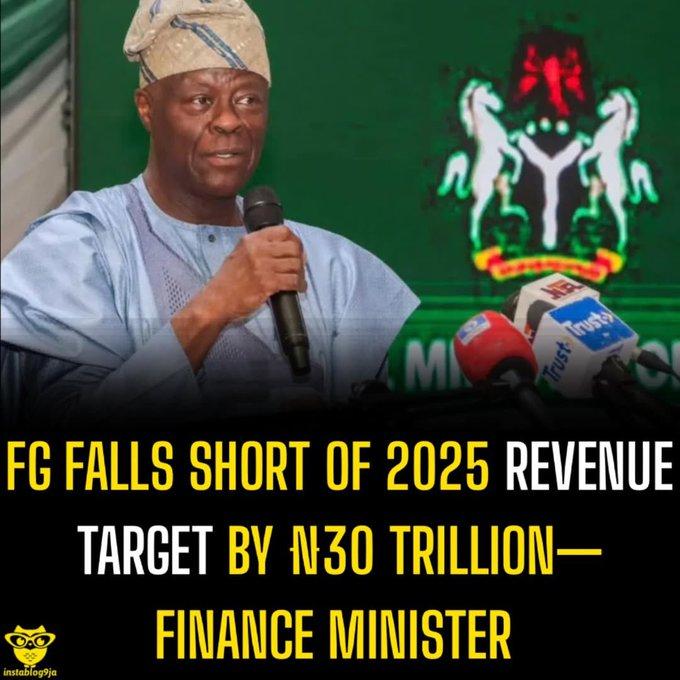
  • FG Falls Short of 2025
    Revenue Target by N30 Trillion - Finance Minister

    The Federal Government has recorded a major revenue shortfall in the 2025 fiscal year, missing its target by about N30 trillion, the Minister of Finance and Coordinating Minister of the Economy, Wale Edun, has disclosed.

    Edun made this known during an interactive session with the House of Representatives Committees on Finance and National Planning, convened to discuss the 2026-2028 Medium Term Expenditure Framework (MTEF) and Fiscal Strategy Paper (FSP) submitted by President Bola Tinubu.

    According to the minister, the government projected N40.8 trillion in revenue to fund the N54.9 trillion 2025 budget, but actual inflows are now expected to close the year at around N10.7 trillion.

    He attributed the shortfall mainly to weak oil and gas revenues, including lower Petroleum Profit Tax and Company Income Tax receipts, alongside underperformance in several non-oil revenue streams. To bridge the funding gap, the government borrowed about N14.1 trillion during the year.

    Despite the revenue squeeze, Edun said the government had continued to meet key obligations such as salaries, statutory transfers and debt servicing through prudent cash management and prioritisation of essential spending.

    He cautioned against expenditure plans tied to optimistic oil revenue assumptions, while lawmakers pledged to scrutinise the MTEF and FSP to ensure fiscal projections are realistic and aligned with current economic conditions.
    FG Falls Short of 2025 Revenue Target by N30 Trillion - Finance Minister The Federal Government has recorded a major revenue shortfall in the 2025 fiscal year, missing its target by about N30 trillion, the Minister of Finance and Coordinating Minister of the Economy, Wale Edun, has disclosed. Edun made this known during an interactive session with the House of Representatives Committees on Finance and National Planning, convened to discuss the 2026-2028 Medium Term Expenditure Framework (MTEF) and Fiscal Strategy Paper (FSP) submitted by President Bola Tinubu. According to the minister, the government projected N40.8 trillion in revenue to fund the N54.9 trillion 2025 budget, but actual inflows are now expected to close the year at around N10.7 trillion. He attributed the shortfall mainly to weak oil and gas revenues, including lower Petroleum Profit Tax and Company Income Tax receipts, alongside underperformance in several non-oil revenue streams. To bridge the funding gap, the government borrowed about N14.1 trillion during the year. Despite the revenue squeeze, Edun said the government had continued to meet key obligations such as salaries, statutory transfers and debt servicing through prudent cash management and prioritisation of essential spending. He cautioned against expenditure plans tied to optimistic oil revenue assumptions, while lawmakers pledged to scrutinise the MTEF and FSP to ensure fiscal projections are realistic and aligned with current economic conditions.
    0 Commentaires ·0 Parts ·638 Vue
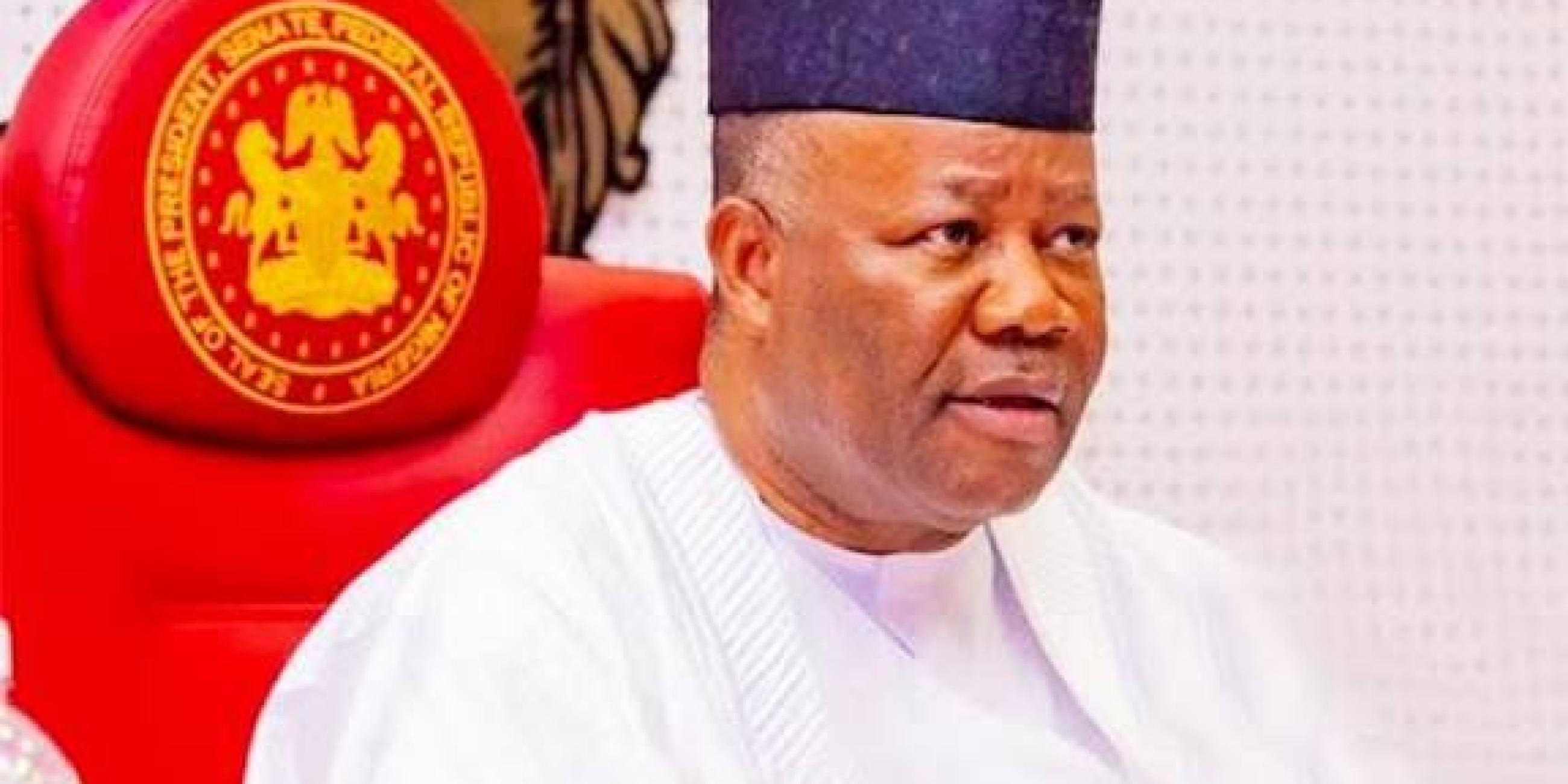
  • Senate President Godswill Akpabio Hospitalised in London After Collapse, Misses Key Budget Session

    Senate President Godswill Akpabio is receiving medical treatment in London after collapsing on December 10, 2025. He was airlifted via a private jet provided by billionaire Aliko Dangote. Akpabio’s absence has caused him to miss critical legislative engagements, including the Medium Term Expenditure Framework (MTEF) and Fiscal Strategy Paper (FSP) interactive session. Medical experts reportedly advised him to reduce his workload, with some suggesting he consider stepping down from the Senate. This marks the second time Akpabio has required emergency treatment abroad. Senators have reportedly traveled to London to check on his health.
    Senate President Godswill Akpabio Hospitalised in London After Collapse, Misses Key Budget Session Senate President Godswill Akpabio is receiving medical treatment in London after collapsing on December 10, 2025. He was airlifted via a private jet provided by billionaire Aliko Dangote. Akpabio’s absence has caused him to miss critical legislative engagements, including the Medium Term Expenditure Framework (MTEF) and Fiscal Strategy Paper (FSP) interactive session. Medical experts reportedly advised him to reduce his workload, with some suggesting he consider stepping down from the Senate. This marks the second time Akpabio has required emergency treatment abroad. Senators have reportedly traveled to London to check on his health.
    0 Commentaires ·0 Parts ·801 Vue
  • NEWS FLASH

    SENATE MEETS EXECUTIVE ON MTEF - FSP

    An interactive session is holding between the Senate committee on Finance and key ministries departments and agencies of government on the 2026-2028 medium term expenditure framework and fiscal strategy paper.

    The three year economic framework aligns with fiscal responsibility act.

    The minister of finance Wale Edun at the session says funding is available for the 2024 capital, while 30 percent of 2025 capital component is also available.

    He informed the committee that circulars have been issued across MDAs on federal governments revenue Optimisation program in 2026 which prioritizes automation and technology mandating all payments on digital platforms.
    NEWS FLASH SENATE MEETS EXECUTIVE ON MTEF - FSP An interactive session is holding between the Senate committee on Finance and key ministries departments and agencies of government on the 2026-2028 medium term expenditure framework and fiscal strategy paper. The three year economic framework aligns with fiscal responsibility act. The minister of finance Wale Edun at the session says funding is available for the 2024 capital, while 30 percent of 2025 capital component is also available. He informed the committee that circulars have been issued across MDAs on federal governments revenue Optimisation program in 2026 which prioritizes automation and technology mandating all payments on digital platforms.
    love
    1
    · 0 Commentaires ·0 Parts ·312 Vue
  • FG Sets N1,512/$ Exchange Rate Target for 2026 in New Fiscal Framework

    The Federal Government has unveiled a new exchange rate projection of N1,512 per dollar for the 2026 budget under the 2026–2028 Medium-Term Expenditure Framework and Fiscal Strategy Paper (MTEF/FSP). The plan also includes a conservative oil price benchmark of $64.85 per barrel, and two production targets: 2.06mbpd (target) and 1.80mbpd (benchmark).
    According to Minister of Budget and Economic Planning, Atiku Bagudu, Nigeria is projecting GDP growth of 4.68%, gross federation revenue of N50.74 trillion, and a federal budget deficit of N20.10 trillion. Major spending areas include debt servicing, statutory transfers, and recurrent expenditure.
    The announcement comes as Nigeria’s external reserves rise to $42.2 billion, strengthening the country’s FX stability outlook.
    FG Sets N1,512/$ Exchange Rate Target for 2026 in New Fiscal Framework The Federal Government has unveiled a new exchange rate projection of N1,512 per dollar for the 2026 budget under the 2026–2028 Medium-Term Expenditure Framework and Fiscal Strategy Paper (MTEF/FSP). The plan also includes a conservative oil price benchmark of $64.85 per barrel, and two production targets: 2.06mbpd (target) and 1.80mbpd (benchmark). According to Minister of Budget and Economic Planning, Atiku Bagudu, Nigeria is projecting GDP growth of 4.68%, gross federation revenue of N50.74 trillion, and a federal budget deficit of N20.10 trillion. Major spending areas include debt servicing, statutory transfers, and recurrent expenditure. The announcement comes as Nigeria’s external reserves rise to $42.2 billion, strengthening the country’s FX stability outlook.
    0 Commentaires ·0 Parts ·553 Vue
  • FG Projects N34.33trn Revenue for 2026, Sets Exchange Rate at N1,512/$1 in New MTEF

    The Federal Executive Council has approved the 2026–2028 Medium-Term Expenditure Framework and Fiscal Strategy Paper, setting Nigeria’s projected revenue for 2026 at N34.33 trillion. According to Budget and Economic Planning Minister Atiku Bagudu, the framework adopts a benchmark oil production target of 2.06 million barrels per day, with a conservative 1.8 million barrels per day used for budgeting. The government also approved an oil price benchmark of $64.85 per barrel and an exchange rate of N1,512/$1, influenced partly by the upcoming 2027 general elections.
    The MTEF outlines key expenditure figures, including N15.91 trillion for debt servicing, N15.27 trillion for non-recurrent spending, and a fiscal deficit of N20.1 trillion. Bagudu emphasised ongoing reforms to expand non-oil revenue, strengthen tax administration, and curb leakages in the oil and minerals sectors. The government is also working with the National Assembly to restore a January–December budget cycle, with parts of the 2025 capital expenditure expected to roll over into 2026.


    #2026Budget

    #MTEF

    #FederalExecutiveCouncil

    #AtikuBagudu

    #WaleEdun
    FG Projects N34.33trn Revenue for 2026, Sets Exchange Rate at N1,512/$1 in New MTEF The Federal Executive Council has approved the 2026–2028 Medium-Term Expenditure Framework and Fiscal Strategy Paper, setting Nigeria’s projected revenue for 2026 at N34.33 trillion. According to Budget and Economic Planning Minister Atiku Bagudu, the framework adopts a benchmark oil production target of 2.06 million barrels per day, with a conservative 1.8 million barrels per day used for budgeting. The government also approved an oil price benchmark of $64.85 per barrel and an exchange rate of N1,512/$1, influenced partly by the upcoming 2027 general elections. The MTEF outlines key expenditure figures, including N15.91 trillion for debt servicing, N15.27 trillion for non-recurrent spending, and a fiscal deficit of N20.1 trillion. Bagudu emphasised ongoing reforms to expand non-oil revenue, strengthen tax administration, and curb leakages in the oil and minerals sectors. The government is also working with the National Assembly to restore a January–December budget cycle, with parts of the 2025 capital expenditure expected to roll over into 2026. #2026Budget #MTEF #FederalExecutiveCouncil #AtikuBagudu #WaleEdun
    0 Commentaires ·0 Parts ·786 Vue
  • EXCLUSIVE: Ekiti State To Spend N12.7bn On ‘Cash Transfers’ In Three Years, Beneficiary Details Unclear

    A review of the Ekiti State Medium-Term Expenditure Framework (MTEF) shows the state will spend ₦12.7bn on cash transfer programmes between 2025 and 2027.

    The breakdown: ₦4.05bn (2025), ₦4.2bn (2026), and ₦4.5bn (2027) under the Ekiti CARES Cash Transfer Delivery Unit.

    However, the number of targeted beneficiaries remains unspecified.

    Past reviews show Ekiti awarded ₦1.074bn in seven contracts (2021–2022) for similar transfers. At the federal level, officials recently announced plans to reach 2.19m Nigerians this month alone under the National Social Investment Programme.

    Critics say the scheme risks the same accountability and corruption issues that have plagued past cash transfer programmes, including ghost beneficiaries and diversion of funds.

    #Ekiti #Nigeria #Accountability
    EXCLUSIVE: Ekiti State To Spend N12.7bn On ‘Cash Transfers’ In Three Years, Beneficiary Details Unclear A review of the Ekiti State Medium-Term Expenditure Framework (MTEF) shows the state will spend ₦12.7bn on cash transfer programmes between 2025 and 2027. The breakdown: ₦4.05bn (2025), ₦4.2bn (2026), and ₦4.5bn (2027) under the Ekiti CARES Cash Transfer Delivery Unit. However, the number of targeted beneficiaries remains unspecified. Past reviews show Ekiti awarded ₦1.074bn in seven contracts (2021–2022) for similar transfers. At the federal level, officials recently announced plans to reach 2.19m Nigerians this month alone under the National Social Investment Programme. Critics say the scheme risks the same accountability and corruption issues that have plagued past cash transfer programmes, including ghost beneficiaries and diversion of funds. #Ekiti #Nigeria #Accountability
    0 Commentaires ·0 Parts ·765 Vue
Fintter https://fintter.com