• Nigeria Revenue Service Chairman Spotted Wearing ₦25.5 Million Patek Philippe While Citizens Face New VAT

    As Nigerians struggle with inflation and a new 7.5% VAT on banking services, NRS Executive Chairman Zacch Adedeji was spotted wearing a ₦25.5 million Patek Philippe Golden Ellipse wristwatch. The luxury timepiece, featuring platinum casing and blue gold dial, highlights extreme wealth while citizens face economic hardship. The sighting has sparked outrage over the moral implications of public officials flaunting luxury amid rising taxes and financial strain.

    #NigeriaVAT #NRS #LuxuryWatch #PatekPhilippe #EconomicHardship #NigeriaNews #TaxBurden
    Nigeria Revenue Service Chairman Spotted Wearing ₦25.5 Million Patek Philippe While Citizens Face New VAT As Nigerians struggle with inflation and a new 7.5% VAT on banking services, NRS Executive Chairman Zacch Adedeji was spotted wearing a ₦25.5 million Patek Philippe Golden Ellipse wristwatch. The luxury timepiece, featuring platinum casing and blue gold dial, highlights extreme wealth while citizens face economic hardship. The sighting has sparked outrage over the moral implications of public officials flaunting luxury amid rising taxes and financial strain. #NigeriaVAT #NRS #LuxuryWatch #PatekPhilippe #EconomicHardship #NigeriaNews #TaxBurden
    like
    love
    2
    · 0 Comentários ·0 Compartilhamentos ·2KB Visualizações
  • Why Is the Nigerian Government Restricting School Graduation Ceremonies to Only Final Classes—Is This the End of Costly, Fee-Driven Celebrations in Primary and Secondary Schools?

    Is Nigeria finally putting an end to the growing culture of expensive and repetitive school graduations? The Federal Government has announced a new education policy that restricts graduation ceremonies to only final-year classes—Primary 6, Junior Secondary School 3 (JSS3), and Senior Secondary School 3 (SSS3)—effectively banning the practice of holding graduation events for lower classes across the country.

    The policy was unveiled by the Minister of Education, Maruf Tunji Alausa, alongside the Minister of State for Education, Prof. Suiwaba Sai’d, as part of a broader reform agenda aimed at reducing the financial burden on parents and restoring focus to academic learning rather than ceremonial displays.

    According to the ministers, graduation ceremonies in many schools have become increasingly commercialized, with families often compelled to pay for gowns, souvenirs, photography, and multiple celebrations within a single academic year. These expenses, they said, place unnecessary pressure on households already struggling with the rising cost of education.

    By limiting graduations strictly to terminal classes, the government says it intends to eliminate fee-driven school practices and promote a more affordable and sustainable education system. The graduation reform also aligns with other cost-cutting measures introduced in the sector, including changes to textbook usage, academic planning, and resource sharing, which are designed to allow learning materials to be reused across multiple academic sessions.

    The policy further supports the introduction of a uniform national academic calendar, aimed at improving consistency in teaching, planning, and school administration while discouraging activities that impose additional financial strain on parents.

    Education officials insist that the move is not about diminishing students’ achievements but about resetting priorities in Nigerian schools—placing learning outcomes, classroom quality, and academic development above pageantry and social competition.

    However, the decision raises critical questions: Will schools comply fully with the new directive? How will private institutions adapt? And will the policy truly ease household education costs or face resistance from schools that rely on graduation-related fees? As implementation begins, parents, educators, and school administrators will be watching closely to see whether this reform marks a lasting shift toward affordability and academic focus—or sparks a new debate over tradition, celebration, and school funding in Nigeria’s education system.


    Why Is the Nigerian Government Restricting School Graduation Ceremonies to Only Final Classes—Is This the End of Costly, Fee-Driven Celebrations in Primary and Secondary Schools? Is Nigeria finally putting an end to the growing culture of expensive and repetitive school graduations? The Federal Government has announced a new education policy that restricts graduation ceremonies to only final-year classes—Primary 6, Junior Secondary School 3 (JSS3), and Senior Secondary School 3 (SSS3)—effectively banning the practice of holding graduation events for lower classes across the country. The policy was unveiled by the Minister of Education, Maruf Tunji Alausa, alongside the Minister of State for Education, Prof. Suiwaba Sai’d, as part of a broader reform agenda aimed at reducing the financial burden on parents and restoring focus to academic learning rather than ceremonial displays. According to the ministers, graduation ceremonies in many schools have become increasingly commercialized, with families often compelled to pay for gowns, souvenirs, photography, and multiple celebrations within a single academic year. These expenses, they said, place unnecessary pressure on households already struggling with the rising cost of education. By limiting graduations strictly to terminal classes, the government says it intends to eliminate fee-driven school practices and promote a more affordable and sustainable education system. The graduation reform also aligns with other cost-cutting measures introduced in the sector, including changes to textbook usage, academic planning, and resource sharing, which are designed to allow learning materials to be reused across multiple academic sessions. The policy further supports the introduction of a uniform national academic calendar, aimed at improving consistency in teaching, planning, and school administration while discouraging activities that impose additional financial strain on parents. Education officials insist that the move is not about diminishing students’ achievements but about resetting priorities in Nigerian schools—placing learning outcomes, classroom quality, and academic development above pageantry and social competition. However, the decision raises critical questions: Will schools comply fully with the new directive? How will private institutions adapt? And will the policy truly ease household education costs or face resistance from schools that rely on graduation-related fees? As implementation begins, parents, educators, and school administrators will be watching closely to see whether this reform marks a lasting shift toward affordability and academic focus—or sparks a new debate over tradition, celebration, and school funding in Nigeria’s education system.
    0 Comentários ·0 Compartilhamentos ·1KB Visualizações
  • What Will 2026 Really Bring for Nigeria and the World? Azu Ishiekwene Predicts Power Shifts, Economic Strain, AI Disruption, 2027 Politics and Who Wins the World Cup

    Is 2026 a year of quiet recovery—or the beginning of deeper political, economic and global turbulence? And is Nigeria already slipping into the politics of 2027?

    In what he describes as possibly his final annual forecast, journalist and columnist Azu Ishiekwene delivers a sweeping, high-stakes outlook on Nigeria and the world, blending political prediction, economic analysis, technology trends and global power shifts. Known for earlier forecasts that accurately anticipated election outcomes and cabinet shake-ups, Ishiekwene argues that 2026 will be a year where politics collides head-on with harsh economic realities, leaving citizens caught between daily hardship and recycled political promises.

    He warns that Nigeria’s economy will remain under pressure, with tensions growing between tight monetary policy and rising demands for fiscal expansion in a pre-election year. Could divisions inside the Ministry of Finance undermine investor confidence? And will petrol prices remain stable around ₦850 per litre, as he suggests, only if oil output rises and NNPC escapes its heavy crude obligations?

    While cheaper fuel from the Dangote Refinery may offer temporary consumer relief, Ishiekwene predicts continued instability in electricity supply, pointing to a fragile transmission system that still requires massive investment. He also foresees President Bola Tinubu possibly unveiling private-sector-led reforms in power transmission involving major business players.

    But is Nigeria already entering the politics of 2027 in 2026?

    Ishiekwene argues that although early elections are unlikely, political realignments are accelerating. With multiple opposition governors defecting to the ruling APC, claims of a creeping one-party state are growing. Yet, he suggests the reality is more complex: a weakened opposition plagued by internal fractures, financial constraints and a lack of coherent alternatives.

    Turning to the emerging African Democratic Congress (ADC) coalition—uniting figures such as Atiku Abubakar, Peter Obi, Nasir El-Rufai, Rotimi Amaechi and Rabiu Kwankwaso—he raises a critical question: is ADC truly built to win in 2027, or merely to survive until 2031? He predicts Atiku will clinch the party’s ticket over Obi, with Obi likely offered the vice-presidential slot—potentially triggering backlash among “Obidients.” With limited grassroots reach and the enormous financial demands of a presidential campaign, Ishiekwene concludes that ADC may struggle to pose a serious challenge to the ruling party in the next election cycle.

    Beyond Nigeria, he paints 2026 as a year shaped by geopolitical rivalry, especially between Donald Trump’s America and Xi Jinping’s China, and by growing global unease over U.S. trade policies, immigration enforcement and economic nationalism. Could gold and non-dollar assets accelerate as the world quietly prepares for a less dollar-centric future?

    He also highlights the rapid evolution of artificial intelligence, warning that 2026 will mark a shift from basic generative AI to agentic, autonomous systems capable of independent action. As AI blurs the line between reality and fabrication, he predicts rising confusion, misinformation, and ethical challenges—ushering in what he calls the “Year of the Humanoid.”

    Even football is not spared his forecasting. With the 2026 FIFA World Cup approaching, Ishiekwene tips Spain to win, citing tactical depth and cohesion, while acknowledging Morocco as Africa’s strongest hope.

    Ultimately, the essay asks uncomfortable but urgent questions:
    Is Nigeria drifting toward political dominance by one party?
    Will economic reforms truly ease citizens’ burdens—or merely reshuffle the pressure?
    Can a fractured opposition reorganise in time?
    And in a world increasingly shaped by AI and geopolitical rivalry, where does Nigeria truly stand?

    For Ishiekwene, 2026 is not just another year—it is a crossroads where technology, politics, power and survival intersect, setting the tone for Nigeria’s future well beyond the next election.


    What Will 2026 Really Bring for Nigeria and the World? Azu Ishiekwene Predicts Power Shifts, Economic Strain, AI Disruption, 2027 Politics and Who Wins the World Cup Is 2026 a year of quiet recovery—or the beginning of deeper political, economic and global turbulence? And is Nigeria already slipping into the politics of 2027? In what he describes as possibly his final annual forecast, journalist and columnist Azu Ishiekwene delivers a sweeping, high-stakes outlook on Nigeria and the world, blending political prediction, economic analysis, technology trends and global power shifts. Known for earlier forecasts that accurately anticipated election outcomes and cabinet shake-ups, Ishiekwene argues that 2026 will be a year where politics collides head-on with harsh economic realities, leaving citizens caught between daily hardship and recycled political promises. He warns that Nigeria’s economy will remain under pressure, with tensions growing between tight monetary policy and rising demands for fiscal expansion in a pre-election year. Could divisions inside the Ministry of Finance undermine investor confidence? And will petrol prices remain stable around ₦850 per litre, as he suggests, only if oil output rises and NNPC escapes its heavy crude obligations? While cheaper fuel from the Dangote Refinery may offer temporary consumer relief, Ishiekwene predicts continued instability in electricity supply, pointing to a fragile transmission system that still requires massive investment. He also foresees President Bola Tinubu possibly unveiling private-sector-led reforms in power transmission involving major business players. But is Nigeria already entering the politics of 2027 in 2026? Ishiekwene argues that although early elections are unlikely, political realignments are accelerating. With multiple opposition governors defecting to the ruling APC, claims of a creeping one-party state are growing. Yet, he suggests the reality is more complex: a weakened opposition plagued by internal fractures, financial constraints and a lack of coherent alternatives. Turning to the emerging African Democratic Congress (ADC) coalition—uniting figures such as Atiku Abubakar, Peter Obi, Nasir El-Rufai, Rotimi Amaechi and Rabiu Kwankwaso—he raises a critical question: is ADC truly built to win in 2027, or merely to survive until 2031? He predicts Atiku will clinch the party’s ticket over Obi, with Obi likely offered the vice-presidential slot—potentially triggering backlash among “Obidients.” With limited grassroots reach and the enormous financial demands of a presidential campaign, Ishiekwene concludes that ADC may struggle to pose a serious challenge to the ruling party in the next election cycle. Beyond Nigeria, he paints 2026 as a year shaped by geopolitical rivalry, especially between Donald Trump’s America and Xi Jinping’s China, and by growing global unease over U.S. trade policies, immigration enforcement and economic nationalism. Could gold and non-dollar assets accelerate as the world quietly prepares for a less dollar-centric future? He also highlights the rapid evolution of artificial intelligence, warning that 2026 will mark a shift from basic generative AI to agentic, autonomous systems capable of independent action. As AI blurs the line between reality and fabrication, he predicts rising confusion, misinformation, and ethical challenges—ushering in what he calls the “Year of the Humanoid.” Even football is not spared his forecasting. With the 2026 FIFA World Cup approaching, Ishiekwene tips Spain to win, citing tactical depth and cohesion, while acknowledging Morocco as Africa’s strongest hope. Ultimately, the essay asks uncomfortable but urgent questions: Is Nigeria drifting toward political dominance by one party? Will economic reforms truly ease citizens’ burdens—or merely reshuffle the pressure? Can a fractured opposition reorganise in time? And in a world increasingly shaped by AI and geopolitical rivalry, where does Nigeria truly stand? For Ishiekwene, 2026 is not just another year—it is a crossroads where technology, politics, power and survival intersect, setting the tone for Nigeria’s future well beyond the next election.
    love
    1
    · 0 Comentários ·0 Compartilhamentos ·5KB Visualizações
  • How Did Anthony Joshua Survive While His Friends Died? Boxer Breaks Silence After Tragic Crash, Mourns Sina Ghami and Latif ‘Latz’ Ayodele

    How does a world-famous champion come to terms with a tragedy that took the lives of those closest to him? And what does faith, grief, and survival mean when you are left behind?

    Former heavyweight boxing champion Anthony Joshua has finally broken his silence after the fatal crash that claimed the lives of his close friends, Sina Ghami and Latif “Latz” Ayodele, describing the moment as one of deep sorrow, reflection, and spiritual resolve. In his first public message since the incident, Joshua turned to X (formerly Twitter) to thank supporters and mourn the men he called his “brothers.”

    Their funeral prayers, held at the London Central Mosque, drew large crowds of mourners from both the Nigerian and British communities, including friends, associates, and supporters who gathered to pay their final respects. The turnout reflected not just the loss of two individuals, but the weight of a tragedy that has shaken Joshua’s inner circle.

    In his message, the boxer revealed how he had never fully understood the importance of those around him until it was too late. “I didn’t even realise how special they are… not even knowing God kept me in the presence of great men,” he wrote. His words captured the pain of hindsight—how ordinary moments of laughter and companionship suddenly became memories of irreplaceable lives.

    But was Joshua the true victim of the crash—or merely the survivor of a loss that families will carry forever? The boxer acknowledged that while the experience had been emotionally devastating for him, the burden on the parents and loved ones of the deceased was far heavier. “100% it’s tough for me, but I know it’s even tougher for their parents,” he said.

    Joshua also turned to faith for comfort, expressing his belief that God understood the hearts of the men who were lost. “I have a strong mind, and I believe God knows their hearts,” he wrote, before ending with a simple but powerful prayer: “May God have mercy on my brothers.”

    As investigations into the circumstances surrounding the crash continue, public attention has remained fixed not only on the tragedy itself but on Joshua’s survival. Why was the boxing star spared when those closest to him were not? And how does one move forward when fame, success, and strength cannot shield against grief?

    For fans around the world, Joshua’s message offers more than mourning—it reveals a deeply personal side of a global sports icon grappling with loss, faith, and the fragile nature of life. In the aftermath of the crash, his words stand as a reminder that even champions are not immune to heartbreak, and that survival can sometimes be the heaviest burden of all.


    How Did Anthony Joshua Survive While His Friends Died? Boxer Breaks Silence After Tragic Crash, Mourns Sina Ghami and Latif ‘Latz’ Ayodele How does a world-famous champion come to terms with a tragedy that took the lives of those closest to him? And what does faith, grief, and survival mean when you are left behind? Former heavyweight boxing champion Anthony Joshua has finally broken his silence after the fatal crash that claimed the lives of his close friends, Sina Ghami and Latif “Latz” Ayodele, describing the moment as one of deep sorrow, reflection, and spiritual resolve. In his first public message since the incident, Joshua turned to X (formerly Twitter) to thank supporters and mourn the men he called his “brothers.” Their funeral prayers, held at the London Central Mosque, drew large crowds of mourners from both the Nigerian and British communities, including friends, associates, and supporters who gathered to pay their final respects. The turnout reflected not just the loss of two individuals, but the weight of a tragedy that has shaken Joshua’s inner circle. In his message, the boxer revealed how he had never fully understood the importance of those around him until it was too late. “I didn’t even realise how special they are… not even knowing God kept me in the presence of great men,” he wrote. His words captured the pain of hindsight—how ordinary moments of laughter and companionship suddenly became memories of irreplaceable lives. But was Joshua the true victim of the crash—or merely the survivor of a loss that families will carry forever? The boxer acknowledged that while the experience had been emotionally devastating for him, the burden on the parents and loved ones of the deceased was far heavier. “100% it’s tough for me, but I know it’s even tougher for their parents,” he said. Joshua also turned to faith for comfort, expressing his belief that God understood the hearts of the men who were lost. “I have a strong mind, and I believe God knows their hearts,” he wrote, before ending with a simple but powerful prayer: “May God have mercy on my brothers.” As investigations into the circumstances surrounding the crash continue, public attention has remained fixed not only on the tragedy itself but on Joshua’s survival. Why was the boxing star spared when those closest to him were not? And how does one move forward when fame, success, and strength cannot shield against grief? For fans around the world, Joshua’s message offers more than mourning—it reveals a deeply personal side of a global sports icon grappling with loss, faith, and the fragile nature of life. In the aftermath of the crash, his words stand as a reminder that even champions are not immune to heartbreak, and that survival can sometimes be the heaviest burden of all.
    love
    1
    · 0 Comentários ·0 Compartilhamentos ·2KB Visualizações
  • Trump Claims He Boosted NATO Spending, Prevented Russia from Taking Ukraine, and Deserves Nobel Peace Prize
    January 7, 2026 – International News

    U.S. President Donald Trump sparked controversy on Truth Social, claiming that before his presidency, most NATO members were failing to meet financial obligations, leaving the United States to shoulder the burden.

    Key points from his post:

    He allegedly pushed NATO allies to raise defense spending to 5% of GDP, insisting they now pay promptly.

    Trump claimed his leadership prevented a total Russian takeover of Ukraine, without providing detailed evidence.

    He boasted that he ended eight wars during his presidency.

    Expressed frustration that Norway did not award him the Nobel Peace Prize, describing it as “foolish.”

    He credited himself with rebuilding the U.S. military, which he says is the only force respected by Russia and China.

    Despite skepticism about NATO’s loyalty, he affirmed that the U.S. will continue supporting the alliance.


    Trump framed these achievements as central to saving millions of lives and ensuring NATO’s relevance in global security.

    Trump Claims He Boosted NATO Spending, Prevented Russia from Taking Ukraine, and Deserves Nobel Peace Prize January 7, 2026 – International News U.S. President Donald Trump sparked controversy on Truth Social, claiming that before his presidency, most NATO members were failing to meet financial obligations, leaving the United States to shoulder the burden. Key points from his post: He allegedly pushed NATO allies to raise defense spending to 5% of GDP, insisting they now pay promptly. Trump claimed his leadership prevented a total Russian takeover of Ukraine, without providing detailed evidence. He boasted that he ended eight wars during his presidency. Expressed frustration that Norway did not award him the Nobel Peace Prize, describing it as “foolish.” He credited himself with rebuilding the U.S. military, which he says is the only force respected by Russia and China. Despite skepticism about NATO’s loyalty, he affirmed that the U.S. will continue supporting the alliance. Trump framed these achievements as central to saving millions of lives and ensuring NATO’s relevance in global security.
    like
    1
    · 0 Comentários ·0 Compartilhamentos ·1KB Visualizações
  • “Tinubu Government Cites Fiscal Challenges for Delayed Support to Nigerian Scholars in Morocco”

    The Bola Tinubu-led Nigerian government has addressed allegations that Nigerian students studying in Morocco under federal scholarships have been abandoned, attributing delays to “temporary fiscal challenges.” This response comes amid claims by several students that they were left without financial support, shelter, or medical care over several years, with some facing life-threatening situations.
    One final-year medical student reported that scholarship beneficiaries, recruited to train as future doctors for Nigeria, were struggling to meet basic needs. Another case involved a student named Umar, who suffered from appendicitis requiring urgent surgery, highlighting the serious risks faced by the scholars.
    In a statement released by the Federal Ministry of Education, Director of Press Boriowo Folasade quoted Education Minister Dr. Maruf Alausa, who confirmed that no Nigerian student on a valid Federal Government scholarship has been abandoned. The ministry explained that students enrolled under the Bilateral Education Scholarship Programme prior to 2024 received funding up to the 2024 budget year. Any delays in payments were attributed to fiscal constraints, with ongoing coordination between the Ministries of Education and Finance to resolve outstanding issues.
    The ministry further clarified that no new bilateral scholarships were awarded in 2025, dismissing circulating documents as “fake and unauthenticated.” According to the government, overseas scholarships have been scaled down following a policy review, citing sufficient capacity in Nigerian universities, polytechnics, and colleges of education to accommodate affected programs locally. Under the new framework, only scholarships fully funded by host foreign governments are supported.
    Despite these changes, the government reiterated its commitment to students already enrolled abroad, promising continued support until they complete their studies. Students wishing to discontinue overseas programs may return to Nigerian institutions, with the Federal Government covering return travel costs. The ministry justified the reforms as a measure to reduce avoidable financial burdens on public resources while strengthening domestic educational capacity.
    The government concluded by rejecting what it described as misinformation or attempts to undermine policies, emphasizing that it remains dedicated to the welfare and academic progress of Nigerian students abroad.
    “Tinubu Government Cites Fiscal Challenges for Delayed Support to Nigerian Scholars in Morocco” The Bola Tinubu-led Nigerian government has addressed allegations that Nigerian students studying in Morocco under federal scholarships have been abandoned, attributing delays to “temporary fiscal challenges.” This response comes amid claims by several students that they were left without financial support, shelter, or medical care over several years, with some facing life-threatening situations. One final-year medical student reported that scholarship beneficiaries, recruited to train as future doctors for Nigeria, were struggling to meet basic needs. Another case involved a student named Umar, who suffered from appendicitis requiring urgent surgery, highlighting the serious risks faced by the scholars. In a statement released by the Federal Ministry of Education, Director of Press Boriowo Folasade quoted Education Minister Dr. Maruf Alausa, who confirmed that no Nigerian student on a valid Federal Government scholarship has been abandoned. The ministry explained that students enrolled under the Bilateral Education Scholarship Programme prior to 2024 received funding up to the 2024 budget year. Any delays in payments were attributed to fiscal constraints, with ongoing coordination between the Ministries of Education and Finance to resolve outstanding issues. The ministry further clarified that no new bilateral scholarships were awarded in 2025, dismissing circulating documents as “fake and unauthenticated.” According to the government, overseas scholarships have been scaled down following a policy review, citing sufficient capacity in Nigerian universities, polytechnics, and colleges of education to accommodate affected programs locally. Under the new framework, only scholarships fully funded by host foreign governments are supported. Despite these changes, the government reiterated its commitment to students already enrolled abroad, promising continued support until they complete their studies. Students wishing to discontinue overseas programs may return to Nigerian institutions, with the Federal Government covering return travel costs. The ministry justified the reforms as a measure to reduce avoidable financial burdens on public resources while strengthening domestic educational capacity. The government concluded by rejecting what it described as misinformation or attempts to undermine policies, emphasizing that it remains dedicated to the welfare and academic progress of Nigerian students abroad.
    0 Comentários ·0 Compartilhamentos ·1KB Visualizações
  • Gani Fawehinmi Memorial Group Rejects Tinubu’s Tax Reform, Describes It as IMF–World Bank Agenda to Deepen Poverty in Nigeria

    The Gani Fawehinmi Memorial Organization (GAFAMORG) has strongly rejected the proposed tax reform law being advanced by President Bola Ahmed Tinubu’s administration, describing it as an International Monetary Fund (IMF) and World Bank–inspired agenda aimed at deepening poverty and further exploiting Nigerians. The group warned that the country’s worsening economic crisis is the result of deliberate policy choices by a corrupt ruling elite aligned with failed foreign economic orthodoxies.

    In a statement signed by its Chairman, Babatunde Agunbiade, and Public Relations Officer, Adeoye Ade-Adewumi, GAFAMORG argued that Nigeria’s challenges are not caused by insufficient taxation but by criminal mismanagement, massive corruption, nepotism, and elite capture of state resources. The organisation said the proposed tax law would impose additional burdens on already over-taxed workers, small traders, and struggling households, while leaving the wealthy and powerful untouched.

    The group accused the Tinubu administration of ignoring large-scale tax evasion by elites, excessive tax waivers for multinational corporations, and widespread looting through inflated contracts and opaque concessions. It also criticised the operation of Free Trade Zones, describing them as tax havens for the rich where corporations enjoy sweeping exemptions and weak oversight, while ordinary Nigerians face aggressive and sometimes extortionate tax enforcement.

    GAFAMORG further described Nigeria’s tax administration system as broken, citing overlapping taxes, harassment by revenue agents, lack of transparency, and weak accountability. It warned that introducing new taxes without fixing these structural problems amounts to “economic violence against the poor.”

    Reflecting on Nigeria’s past experiences with IMF- and World Bank-backed reforms such as Structural Adjustment, privatisation, and subsidy removal, the organisation said these policies have consistently shrunk the middle class, expanded poverty, enriched a tiny elite, and weakened the country’s productive capacity.

    Invoking the legacy of late human rights lawyer Chief Gani Fawehinmi, GAFAMORG called on Nigerians to completely reject the proposed tax law, mobilise civic, legal, media, and popular resistance, and demand its immediate withdrawal. The group insisted that Nigeria does not need IMF-approved hardship but justice, accountability, equity, and people-centred governance.
    Gani Fawehinmi Memorial Group Rejects Tinubu’s Tax Reform, Describes It as IMF–World Bank Agenda to Deepen Poverty in Nigeria The Gani Fawehinmi Memorial Organization (GAFAMORG) has strongly rejected the proposed tax reform law being advanced by President Bola Ahmed Tinubu’s administration, describing it as an International Monetary Fund (IMF) and World Bank–inspired agenda aimed at deepening poverty and further exploiting Nigerians. The group warned that the country’s worsening economic crisis is the result of deliberate policy choices by a corrupt ruling elite aligned with failed foreign economic orthodoxies. In a statement signed by its Chairman, Babatunde Agunbiade, and Public Relations Officer, Adeoye Ade-Adewumi, GAFAMORG argued that Nigeria’s challenges are not caused by insufficient taxation but by criminal mismanagement, massive corruption, nepotism, and elite capture of state resources. The organisation said the proposed tax law would impose additional burdens on already over-taxed workers, small traders, and struggling households, while leaving the wealthy and powerful untouched. The group accused the Tinubu administration of ignoring large-scale tax evasion by elites, excessive tax waivers for multinational corporations, and widespread looting through inflated contracts and opaque concessions. It also criticised the operation of Free Trade Zones, describing them as tax havens for the rich where corporations enjoy sweeping exemptions and weak oversight, while ordinary Nigerians face aggressive and sometimes extortionate tax enforcement. GAFAMORG further described Nigeria’s tax administration system as broken, citing overlapping taxes, harassment by revenue agents, lack of transparency, and weak accountability. It warned that introducing new taxes without fixing these structural problems amounts to “economic violence against the poor.” Reflecting on Nigeria’s past experiences with IMF- and World Bank-backed reforms such as Structural Adjustment, privatisation, and subsidy removal, the organisation said these policies have consistently shrunk the middle class, expanded poverty, enriched a tiny elite, and weakened the country’s productive capacity. Invoking the legacy of late human rights lawyer Chief Gani Fawehinmi, GAFAMORG called on Nigerians to completely reject the proposed tax law, mobilise civic, legal, media, and popular resistance, and demand its immediate withdrawal. The group insisted that Nigeria does not need IMF-approved hardship but justice, accountability, equity, and people-centred governance.
    love
    1
    · 0 Comentários ·0 Compartilhamentos ·2KB Visualizações
  • Revolutionary Socialist Movement Urges Nigerians to Resist Tinubu’s ‘Anti-Poor’ Tax Policies, Warns of Rising Hardship, Inflation, Fuel Hikes, and Growing Economic Inequality in 2026

    The Revolutionary Socialist Movement (RSM) has called on Nigerians to actively resist what it describes as “anti-poor tax policies” introduced by President Bola Tinubu’s administration, warning that the measures will deepen economic hardship for workers and low-income earners. In a New Year message issued by its Publicity Secretary, Comrade Salako Kayode, the group said Nigerians are entering 2026 under intense economic pressure driven by high inflation, soaring food prices, unemployment, repeated fuel price increases, and declining public services.

    RSM accused the federal government of responding to the economic crisis by shifting the burden onto ordinary citizens through new and increased taxes, while protecting wealthy individuals, big corporations, and political elites. According to the group, the current tax system has failed to improve essential services such as healthcare, education, housing, and employment, instead sustaining corruption, heavy debt servicing, and what it termed extravagant lifestyles among those in power.

    The movement argued that Nigerians should not be forced to pay for an economic crisis they did not create and proposed alternatives including recovering stolen public funds, ending wasteful governance and jumbo salaries, taxing big businesses and the super-rich, and investing more in public services and decent jobs. RSM also called on trade unions, civil society groups, students, and communities to form a united front and engage in peaceful mass resistance to defend living standards and democratic rights, expressing optimism that a more equitable Nigeria is achievable.
    Revolutionary Socialist Movement Urges Nigerians to Resist Tinubu’s ‘Anti-Poor’ Tax Policies, Warns of Rising Hardship, Inflation, Fuel Hikes, and Growing Economic Inequality in 2026 The Revolutionary Socialist Movement (RSM) has called on Nigerians to actively resist what it describes as “anti-poor tax policies” introduced by President Bola Tinubu’s administration, warning that the measures will deepen economic hardship for workers and low-income earners. In a New Year message issued by its Publicity Secretary, Comrade Salako Kayode, the group said Nigerians are entering 2026 under intense economic pressure driven by high inflation, soaring food prices, unemployment, repeated fuel price increases, and declining public services. RSM accused the federal government of responding to the economic crisis by shifting the burden onto ordinary citizens through new and increased taxes, while protecting wealthy individuals, big corporations, and political elites. According to the group, the current tax system has failed to improve essential services such as healthcare, education, housing, and employment, instead sustaining corruption, heavy debt servicing, and what it termed extravagant lifestyles among those in power. The movement argued that Nigerians should not be forced to pay for an economic crisis they did not create and proposed alternatives including recovering stolen public funds, ending wasteful governance and jumbo salaries, taxing big businesses and the super-rich, and investing more in public services and decent jobs. RSM also called on trade unions, civil society groups, students, and communities to form a united front and engage in peaceful mass resistance to defend living standards and democratic rights, expressing optimism that a more equitable Nigeria is achievable.
    like
    1
    · 0 Comentários ·0 Compartilhamentos ·2KB Visualizações
  • Adeyanju Slams Tinubu Over Implementation of Controversial Tax Reform Act, Calls It an Insult to Nigerians and Violation of Rule of Law

    Human rights activist and lawyer, Deji Adeyanju, has strongly criticised President Bola Ahmed Tinubu for proceeding with the implementation of the controversial Tax Reform Act from January 1, 2026, describing the move as an insult to Nigerians and a serious breach of democratic principles. Adeyanju said the President’s decision to enforce the law despite unresolved controversies, including allegations of forgery and violations of constitutional procedures, demonstrates a blatant disregard for due process and the rule of law.

    According to Adeyanju, the unresolved legal and procedural questions surrounding the Act render its enforcement illegitimate and potentially dangerous, warning that it could further erode public trust in government institutions. He argued that no law burdened with such serious allegations should be implemented without transparent investigations and constitutional clarification.

    The activist also raised concerns over reports that President Tinubu may have unilaterally written off debts owed by the Nigerian National Petroleum Company Limited (NNPCL), questioning the constitutional authority for such a decision. He stressed that matters involving taxation and public finance must follow due process and receive proper legislative approval.

    Adeyanju warned that bypassing constitutional safeguards could set a dangerous precedent for governance in Nigeria and called on the National Assembly and the judiciary to intervene to protect democracy. He urged the Federal Government to suspend the implementation of the Tax Reform Act until all allegations surrounding its passage are thoroughly investigated and resolved in line with constitutional provisions.
    Adeyanju Slams Tinubu Over Implementation of Controversial Tax Reform Act, Calls It an Insult to Nigerians and Violation of Rule of Law Human rights activist and lawyer, Deji Adeyanju, has strongly criticised President Bola Ahmed Tinubu for proceeding with the implementation of the controversial Tax Reform Act from January 1, 2026, describing the move as an insult to Nigerians and a serious breach of democratic principles. Adeyanju said the President’s decision to enforce the law despite unresolved controversies, including allegations of forgery and violations of constitutional procedures, demonstrates a blatant disregard for due process and the rule of law. According to Adeyanju, the unresolved legal and procedural questions surrounding the Act render its enforcement illegitimate and potentially dangerous, warning that it could further erode public trust in government institutions. He argued that no law burdened with such serious allegations should be implemented without transparent investigations and constitutional clarification. The activist also raised concerns over reports that President Tinubu may have unilaterally written off debts owed by the Nigerian National Petroleum Company Limited (NNPCL), questioning the constitutional authority for such a decision. He stressed that matters involving taxation and public finance must follow due process and receive proper legislative approval. Adeyanju warned that bypassing constitutional safeguards could set a dangerous precedent for governance in Nigeria and called on the National Assembly and the judiciary to intervene to protect democracy. He urged the Federal Government to suspend the implementation of the Tax Reform Act until all allegations surrounding its passage are thoroughly investigated and resolved in line with constitutional provisions.
    like
    1
    · 0 Comentários ·0 Compartilhamentos ·2KB Visualizações
  • 2026 Begins New Era of Economic Growth, Stability and Reform as President Tinubu Projects Lower Inflation, Strong GDP Growth and Improved Security in New Year Address

    President Bola Ahmed Tinubu has declared that 2026 marks the beginning of a more robust phase of economic growth for Nigeria, citing steady gains recorded in 2025 despite global economic challenges. In his New Year address, the President said the government sustained major reforms, achieved a fiscal reset and recorded measurable progress in GDP growth, trade surpluses, exchange rate stability and declining inflation.

    According to Tinubu, Nigeria closed 2025 with quarterly GDP growth projected to exceed 4 percent annually, while inflation dropped below 15 percent in line with government targets. He noted that the Nigerian Stock Exchange recorded a strong 48.12 percent gain, foreign reserves rose to $45.4 billion, and foreign direct investment surged to $720 million in the third quarter of 2025, reflecting renewed investor confidence backed by positive assessments from global rating agencies.

    The President reaffirmed his administration’s commitment to fiscal discipline and tax reform, stressing that harmonising taxes across all levels of government will reduce the burden on citizens, boost revenue sustainably and expand fiscal space for infrastructure and human capital development. He added that the 2026 budget is designed to consolidate reforms and position Nigeria for long-term stability and prosperity.

    On security, Tinubu acknowledged ongoing threats from terrorism and criminal networks but said decisive actions, including coordinated operations with international partners, have weakened terror groups in the Northwest and Northeast. He pledged deeper cooperation with global and regional partners in 2026, while reiterating support for decentralised policing and regulated forest guards to tackle insecurity.

    President Tinubu also outlined plans to accelerate inclusive growth through the Renewed Hope Ward Development Programme, targeting the empowerment of at least 10 million Nigerians across the country’s 8,809 wards. He said the government will continue investing in infrastructure, agriculture, mining, healthcare, education and food security to improve living standards nationwide.

    Calling for unity, patriotism and shared responsibility, the President urged Nigerians to support ongoing reforms, expressing confidence that 2026 will deliver tangible improvements in the lives of citizens and strengthen national stability.
    2026 Begins New Era of Economic Growth, Stability and Reform as President Tinubu Projects Lower Inflation, Strong GDP Growth and Improved Security in New Year Address President Bola Ahmed Tinubu has declared that 2026 marks the beginning of a more robust phase of economic growth for Nigeria, citing steady gains recorded in 2025 despite global economic challenges. In his New Year address, the President said the government sustained major reforms, achieved a fiscal reset and recorded measurable progress in GDP growth, trade surpluses, exchange rate stability and declining inflation. According to Tinubu, Nigeria closed 2025 with quarterly GDP growth projected to exceed 4 percent annually, while inflation dropped below 15 percent in line with government targets. He noted that the Nigerian Stock Exchange recorded a strong 48.12 percent gain, foreign reserves rose to $45.4 billion, and foreign direct investment surged to $720 million in the third quarter of 2025, reflecting renewed investor confidence backed by positive assessments from global rating agencies. The President reaffirmed his administration’s commitment to fiscal discipline and tax reform, stressing that harmonising taxes across all levels of government will reduce the burden on citizens, boost revenue sustainably and expand fiscal space for infrastructure and human capital development. He added that the 2026 budget is designed to consolidate reforms and position Nigeria for long-term stability and prosperity. On security, Tinubu acknowledged ongoing threats from terrorism and criminal networks but said decisive actions, including coordinated operations with international partners, have weakened terror groups in the Northwest and Northeast. He pledged deeper cooperation with global and regional partners in 2026, while reiterating support for decentralised policing and regulated forest guards to tackle insecurity. President Tinubu also outlined plans to accelerate inclusive growth through the Renewed Hope Ward Development Programme, targeting the empowerment of at least 10 million Nigerians across the country’s 8,809 wards. He said the government will continue investing in infrastructure, agriculture, mining, healthcare, education and food security to improve living standards nationwide. Calling for unity, patriotism and shared responsibility, the President urged Nigerians to support ongoing reforms, expressing confidence that 2026 will deliver tangible improvements in the lives of citizens and strengthen national stability.
    0 Comentários ·0 Compartilhamentos ·1KB Visualizações
  • New Tax Law 2026: Simple and Legal Bank Transfer Narrations Nigerians Can Use to Avoid Overpaying Tax as FG Begins Digital Monitoring

    As Nigeria prepares to roll out a new tax regime in January 2026, financial experts are urging Nigerians to pay closer attention to how they describe bank transfers. The federal government plans to rely more on digital banking data to improve tax compliance, meaning bank transfer narrations could play a key role in determining whether funds are classified as taxable income.

    Tax consultants explain that tax is charged mainly on income earned from services or business activities. When bank transfer narrations are vague or misleading, such transactions may be flagged as income, potentially leading to higher tax liabilities, audits, or penalties during annual filings. Using clear, accurate, and honest descriptions helps ensure individuals only pay tax when it is legally required.

    To guide Nigerians, experts recommend simple and lawful narrations such as “Gift/Family support” for personal gifts, “Refund/Reimbursement” for returned money, “Personal transfer” for moving one’s own funds, “Loan received” for borrowed money, and “Capital contribution” when injecting personal funds into a business. For business transactions, describing the exact goods or services sold is advised.

    However, Taiwo Oyedele, Chairman of the Presidential Fiscal Policy and Tax Reforms Committee, clarified that banks will not automatically deduct money from accounts regardless of narration. He stressed that Nigerians will still declare their income themselves at year-end, adding that the reform is meant to promote awareness and fairness, not to impose hidden taxes.

    The government also dismissed widespread fears surrounding the new tax law, noting that low-income earners, gifts, remittances, pensions, and Nigerians in the diaspora remain exempt. Overall, the reform is positioned as a move to reduce the tax burden on vulnerable groups, strengthen compliance, and stimulate economic growth—making accurate bank transfer narrations an important habit for Nigerians ahead of 2026.
    New Tax Law 2026: Simple and Legal Bank Transfer Narrations Nigerians Can Use to Avoid Overpaying Tax as FG Begins Digital Monitoring As Nigeria prepares to roll out a new tax regime in January 2026, financial experts are urging Nigerians to pay closer attention to how they describe bank transfers. The federal government plans to rely more on digital banking data to improve tax compliance, meaning bank transfer narrations could play a key role in determining whether funds are classified as taxable income. Tax consultants explain that tax is charged mainly on income earned from services or business activities. When bank transfer narrations are vague or misleading, such transactions may be flagged as income, potentially leading to higher tax liabilities, audits, or penalties during annual filings. Using clear, accurate, and honest descriptions helps ensure individuals only pay tax when it is legally required. To guide Nigerians, experts recommend simple and lawful narrations such as “Gift/Family support” for personal gifts, “Refund/Reimbursement” for returned money, “Personal transfer” for moving one’s own funds, “Loan received” for borrowed money, and “Capital contribution” when injecting personal funds into a business. For business transactions, describing the exact goods or services sold is advised. However, Taiwo Oyedele, Chairman of the Presidential Fiscal Policy and Tax Reforms Committee, clarified that banks will not automatically deduct money from accounts regardless of narration. He stressed that Nigerians will still declare their income themselves at year-end, adding that the reform is meant to promote awareness and fairness, not to impose hidden taxes. The government also dismissed widespread fears surrounding the new tax law, noting that low-income earners, gifts, remittances, pensions, and Nigerians in the diaspora remain exempt. Overall, the reform is positioned as a move to reduce the tax burden on vulnerable groups, strengthen compliance, and stimulate economic growth—making accurate bank transfer narrations an important habit for Nigerians ahead of 2026.
    0 Comentários ·0 Compartilhamentos ·843 Visualizações
  • Governor Inuwa Yahaya Attends Funeral Prayers for Journalists Lost in Auto-Crash, Visits Survivors at FTH Gombe

    ...'Gombe Govt to Cover Medical Bills of Survivors, Assist with Funeral Expenses'

    Gombe State Governor, Muhammadu Inuwa Yahaya, CON, has led a state government delegation to the funeral prayers of journalists who lost their lives in a tragic auto-crash.

    The deceased were among journalists and media workers involved in the fatal accident that occurred along the Billiri-Kumo Road while they were returning from Kaltungo, where they had attended the wedding ceremony of a colleague.

    The funeral prayer, held at the Bubayero Central Mosque, Emir's Palace, Gombe, led by Imam Aliyu Hammari and attracted a large turnout of sympathisers, including grieving family members, colleagues from the media industry and top government officials.

    Among those in attendance was the Emir of Gombe, His Royal Highness Alhaji Abubakar Shehu Abubakar III, CFR.

    A visibly saddened Governor Inuwa Yahaya described the demise of the seven journalists as a painful loss to Gombe State and the media profession, noting that the state had lost dedicated professionals who served with commitment.

    After the funeral prayers, the Governor proceeded to the Federal Teaching Hospital (FTH), Gombe, to personally assess the condition of the survivors who are currently receiving medical attention.

    Speaking to journalists after the visit, Governor Inuwa Yahaya expressed gratitude to God for sparing the lives of the survivors, while praying for their speedy recovery.

    “We must thank Almighty God for sparing their lives, not because they are better than those who passed on, but because it was destined so. Our most important duty now is to continue praying for their quick and complete recovery. For those who lost their lives, we will not relent in praying for the repose of their souls, in view of the enormous contributions they made to journalism and public service,” the Governor said.

    He extended the state government’s heartfelt condolences to the families of the deceased, their respective organizations and the entire media fraternity, urging them to accept the tragic loss as an act of God.

    Governor Inuwa Yahaya also announced that the Gombe State Government has taken over the full medical bills of all the injured victims, assuring that the government would provide every necessary support to aid their recovery.

    “As a government, we will do everything within our means to support the victims and their families in this difficult time,” he assured.

    During the visit to the Accident and Emergency Unit, the Governor was conducted round the ward by the Chairman of the Hospital Advisory Committee, Dr. Bukar Lakube and Commissioner for Health, Dr. Habu Dahiru, to assess the condition of the patients. He also extended financial support to other patients in the unit, to help cushion burden on them and their families.

    The Governor was accompanied on the visit by his Deputy, Dr. Manassah Daniel Jatau; the Secretary to the State Government, Professor Ibrahim Abubakar Njodi; Commissioners; and other senior government officials.
    Governor Inuwa Yahaya Attends Funeral Prayers for Journalists Lost in Auto-Crash, Visits Survivors at FTH Gombe ...'Gombe Govt to Cover Medical Bills of Survivors, Assist with Funeral Expenses' Gombe State Governor, Muhammadu Inuwa Yahaya, CON, has led a state government delegation to the funeral prayers of journalists who lost their lives in a tragic auto-crash. The deceased were among journalists and media workers involved in the fatal accident that occurred along the Billiri-Kumo Road while they were returning from Kaltungo, where they had attended the wedding ceremony of a colleague. The funeral prayer, held at the Bubayero Central Mosque, Emir's Palace, Gombe, led by Imam Aliyu Hammari and attracted a large turnout of sympathisers, including grieving family members, colleagues from the media industry and top government officials. Among those in attendance was the Emir of Gombe, His Royal Highness Alhaji Abubakar Shehu Abubakar III, CFR. A visibly saddened Governor Inuwa Yahaya described the demise of the seven journalists as a painful loss to Gombe State and the media profession, noting that the state had lost dedicated professionals who served with commitment. After the funeral prayers, the Governor proceeded to the Federal Teaching Hospital (FTH), Gombe, to personally assess the condition of the survivors who are currently receiving medical attention. Speaking to journalists after the visit, Governor Inuwa Yahaya expressed gratitude to God for sparing the lives of the survivors, while praying for their speedy recovery. “We must thank Almighty God for sparing their lives, not because they are better than those who passed on, but because it was destined so. Our most important duty now is to continue praying for their quick and complete recovery. For those who lost their lives, we will not relent in praying for the repose of their souls, in view of the enormous contributions they made to journalism and public service,” the Governor said. He extended the state government’s heartfelt condolences to the families of the deceased, their respective organizations and the entire media fraternity, urging them to accept the tragic loss as an act of God. Governor Inuwa Yahaya also announced that the Gombe State Government has taken over the full medical bills of all the injured victims, assuring that the government would provide every necessary support to aid their recovery. “As a government, we will do everything within our means to support the victims and their families in this difficult time,” he assured. During the visit to the Accident and Emergency Unit, the Governor was conducted round the ward by the Chairman of the Hospital Advisory Committee, Dr. Bukar Lakube and Commissioner for Health, Dr. Habu Dahiru, to assess the condition of the patients. He also extended financial support to other patients in the unit, to help cushion burden on them and their families. The Governor was accompanied on the visit by his Deputy, Dr. Manassah Daniel Jatau; the Secretary to the State Government, Professor Ibrahim Abubakar Njodi; Commissioners; and other senior government officials.
    0 Comentários ·0 Compartilhamentos ·1KB Visualizações
  • LPG Marketers Accuse Dangote Refinery of Blocking Gas Loading for Over One Month After Full Payment, Allege Product Diversion, Preferential Pricing and Financial Losses

    Some Liquefied Petroleum Gas (LPG) marketers have accused the Dangote Refinery of deliberately frustrating their operations by preventing them from loading LPG products more than a month after full payment was made. The aggrieved marketers told SaharaReporters that despite settling proforma invoices and meeting all financial obligations, access to the Dangote gantry has remained blocked, leaving many traders in severe financial distress. Several marketers said they borrowed heavily from banks to fund their allocations and are now burdened with high interest costs due to prolonged delays.

    The marketers further alleged that LPG already paid for is being diverted by the refinery for the production of polypropylene, while independent traders are sidelined. They also criticised what they described as an inefficient and opaque loading system, claiming FAN tickets take weeks to process and that traders are restricted to loading only one truck every two weeks, often requiring insider connections. Additional complaints include alleged preferential pricing for consortium members, uncompetitive margins for independent marketers, the sale of Aviation Turbine Kerosene (ATK) in US dollars, and pricing structures that make profitability nearly impossible for traders relying on bank loans.

    Responding to the allegations, Dangote Group’s Chief Communications Officer, Tony Chiejina, dismissed the criticisms, stating that the refinery’s impact would become clearer over time and highlighting Nigeria’s improved fuel availability during festive periods. He also hinted at what he described as an impending “big revolution” in LPG, urging critics to be patient as the refinery’s long-term benefits unfold.
    LPG Marketers Accuse Dangote Refinery of Blocking Gas Loading for Over One Month After Full Payment, Allege Product Diversion, Preferential Pricing and Financial Losses Some Liquefied Petroleum Gas (LPG) marketers have accused the Dangote Refinery of deliberately frustrating their operations by preventing them from loading LPG products more than a month after full payment was made. The aggrieved marketers told SaharaReporters that despite settling proforma invoices and meeting all financial obligations, access to the Dangote gantry has remained blocked, leaving many traders in severe financial distress. Several marketers said they borrowed heavily from banks to fund their allocations and are now burdened with high interest costs due to prolonged delays. The marketers further alleged that LPG already paid for is being diverted by the refinery for the production of polypropylene, while independent traders are sidelined. They also criticised what they described as an inefficient and opaque loading system, claiming FAN tickets take weeks to process and that traders are restricted to loading only one truck every two weeks, often requiring insider connections. Additional complaints include alleged preferential pricing for consortium members, uncompetitive margins for independent marketers, the sale of Aviation Turbine Kerosene (ATK) in US dollars, and pricing structures that make profitability nearly impossible for traders relying on bank loans. Responding to the allegations, Dangote Group’s Chief Communications Officer, Tony Chiejina, dismissed the criticisms, stating that the refinery’s impact would become clearer over time and highlighting Nigeria’s improved fuel availability during festive periods. He also hinted at what he described as an impending “big revolution” in LPG, urging critics to be patient as the refinery’s long-term benefits unfold.
    0 Comentários ·0 Compartilhamentos ·1KB Visualizações
  • January 1 Tax Reform Deadline Non-Negotiable, Oyedele Insists Amid Claims Tinubu Signed Altered Bills

    The Chairman of the Presidential Committee on Fiscal Policy and Tax Reforms, Taiwo Oyedele, has declared that Nigeria’s controversial new tax laws will take effect on January 1, 2026, despite mounting backlash and allegations that the documents signed by President Bola Tinubu differ from those passed by the National Assembly. Speaking after a closed-door meeting with the president, Oyedele described the deadline as “non-negotiable,” arguing that the reforms would ease tax burdens for most workers and small businesses. However, lawmakers have accused the executive of tampering with the bills after passage, warning of a breach of legislative process and possible constitutional crisis. As opposition parties, civil society groups, and business owners intensify criticism, the government continues to deny wrongdoing while pushing ahead with what it calls the most sweeping tax overhaul in decades.
    January 1 Tax Reform Deadline Non-Negotiable, Oyedele Insists Amid Claims Tinubu Signed Altered Bills The Chairman of the Presidential Committee on Fiscal Policy and Tax Reforms, Taiwo Oyedele, has declared that Nigeria’s controversial new tax laws will take effect on January 1, 2026, despite mounting backlash and allegations that the documents signed by President Bola Tinubu differ from those passed by the National Assembly. Speaking after a closed-door meeting with the president, Oyedele described the deadline as “non-negotiable,” arguing that the reforms would ease tax burdens for most workers and small businesses. However, lawmakers have accused the executive of tampering with the bills after passage, warning of a breach of legislative process and possible constitutional crisis. As opposition parties, civil society groups, and business owners intensify criticism, the government continues to deny wrongdoing while pushing ahead with what it calls the most sweeping tax overhaul in decades.
    0 Comentários ·0 Compartilhamentos ·366 Visualizações
  • Alleged Forgery Of Tinubu’s Tax Reform Law Is Treason, Assault On Democracy — Atiku Alleges

    Former Vice President Atiku Abubakar has accused the Bola Tinubu administration of committing a “brazen act of treason” through alleged unauthorised alterations to the recently passed Tax Reform Law. In a statement issued by his media aide, Paul Ibe, Atiku claimed that key provisions were illegally inserted after the National Assembly had passed the bill, in violation of Sections 4 and 58 of the 1999 Constitution. He alleged that the changes granted excessive powers to tax authorities, imposed harsher financial burdens on citizens and businesses, and removed critical legislative oversight mechanisms. Atiku warned that the alleged forgery undermines constitutional democracy, due process and legislative supremacy, while worsening hardship for Nigerians already facing poverty and inflation. He called for the immediate suspension of the law’s implementation, legislative correction of the alleged alterations, judicial intervention to strike down unconstitutional provisions, and public resistance to what he described as an erosion of democratic governance.
    Alleged Forgery Of Tinubu’s Tax Reform Law Is Treason, Assault On Democracy — Atiku Alleges Former Vice President Atiku Abubakar has accused the Bola Tinubu administration of committing a “brazen act of treason” through alleged unauthorised alterations to the recently passed Tax Reform Law. In a statement issued by his media aide, Paul Ibe, Atiku claimed that key provisions were illegally inserted after the National Assembly had passed the bill, in violation of Sections 4 and 58 of the 1999 Constitution. He alleged that the changes granted excessive powers to tax authorities, imposed harsher financial burdens on citizens and businesses, and removed critical legislative oversight mechanisms. Atiku warned that the alleged forgery undermines constitutional democracy, due process and legislative supremacy, while worsening hardship for Nigerians already facing poverty and inflation. He called for the immediate suspension of the law’s implementation, legislative correction of the alleged alterations, judicial intervention to strike down unconstitutional provisions, and public resistance to what he described as an erosion of democratic governance.
    0 Comentários ·0 Compartilhamentos ·1KB Visualizações
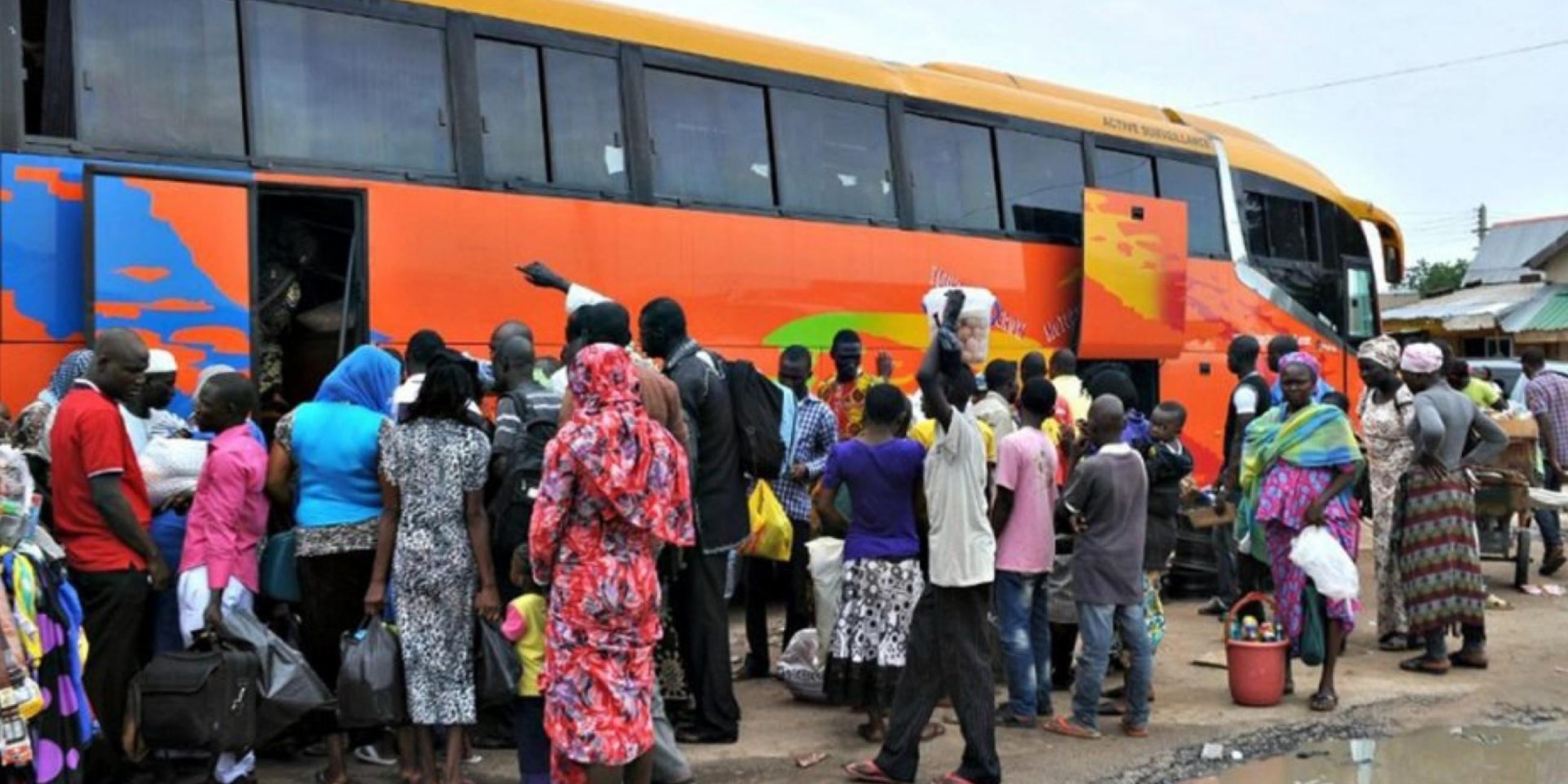
  • Transport Fares Spike By Up To 50% Across Enugu As Christmas, New Year Rush Catches Commuters Off Guard

    Transport fares across major routes in Enugu State have surged by as much as 45 to 50 percent less than 12 hours to Christmas Day, leaving many commuters shocked and frustrated as they struggle to travel for end-of-year festivities. SaharaReporters checks conducted on Wednesday revealed that commercial transport operators abruptly increased prices across both inter-city and intra-city routes, citing festive traffic imbalance and rising operational losses.
    On the popular Old Park–Eke Obinagu route, fares that previously ranged between ₦400 and ₦500 now cost between ₦700 and ₦800. Similarly, commuters traveling from Old Park to Abakpa, who usually paid ₦400 to ₦500 depending on the time of day, were forced to part with as much as ₦800. Passengers using the Holy Ghost–Agbani Road axis also experienced sharp increases, with fares jumping from ₦500 to ₦900.
    Intra-city transportation has not been spared either. Short-distance trips that once cost ₦150 now attract ₦300, while routes previously priced at ₦200 have doubled to ₦400. The sudden hike has disrupted travel plans for many residents, particularly low-income earners trying to reunite with family members during the festive season.
    Commercial drivers defended the increase, explaining that the Christmas travel pattern has created a one-way passenger movement, leaving them stranded without return passengers. According to several drivers at Old Park, vehicles often return empty after dropping passengers in residential or rural areas, forcing operators to factor return costs into outgoing fares to avoid running at a loss.
    “This festive period is different,” one driver explained. “People are traveling mostly in one direction to their villages. If we don’t adjust fares, we won’t be able to cover fuel and maintenance costs.”
    However, commuters have strongly criticised the development, describing it as exploitative and poorly timed. Some passengers argued that with fuel prices lower than in previous months, transport fares should not be increasing. Others accused drivers of taking advantage of the Christmas rush to make excessive profits.
    Calls have grown louder for government agencies and transport unions, including the National Union of Road Transport Workers (NURTW) and the Road Transport Employers Association of Nigeria (RTEAN), to intervene and regulate fares during festive periods. As of the time of reporting, efforts to get responses from union leaders were unsuccessful.
    With Christmas and New Year celebrations fast approaching, residents say they are left with little choice but to bear the burden of higher transport costs, adding further strain to an already difficult economic season.
    Transport Fares Spike By Up To 50% Across Enugu As Christmas, New Year Rush Catches Commuters Off Guard Transport fares across major routes in Enugu State have surged by as much as 45 to 50 percent less than 12 hours to Christmas Day, leaving many commuters shocked and frustrated as they struggle to travel for end-of-year festivities. SaharaReporters checks conducted on Wednesday revealed that commercial transport operators abruptly increased prices across both inter-city and intra-city routes, citing festive traffic imbalance and rising operational losses. On the popular Old Park–Eke Obinagu route, fares that previously ranged between ₦400 and ₦500 now cost between ₦700 and ₦800. Similarly, commuters traveling from Old Park to Abakpa, who usually paid ₦400 to ₦500 depending on the time of day, were forced to part with as much as ₦800. Passengers using the Holy Ghost–Agbani Road axis also experienced sharp increases, with fares jumping from ₦500 to ₦900. Intra-city transportation has not been spared either. Short-distance trips that once cost ₦150 now attract ₦300, while routes previously priced at ₦200 have doubled to ₦400. The sudden hike has disrupted travel plans for many residents, particularly low-income earners trying to reunite with family members during the festive season. Commercial drivers defended the increase, explaining that the Christmas travel pattern has created a one-way passenger movement, leaving them stranded without return passengers. According to several drivers at Old Park, vehicles often return empty after dropping passengers in residential or rural areas, forcing operators to factor return costs into outgoing fares to avoid running at a loss. “This festive period is different,” one driver explained. “People are traveling mostly in one direction to their villages. If we don’t adjust fares, we won’t be able to cover fuel and maintenance costs.” However, commuters have strongly criticised the development, describing it as exploitative and poorly timed. Some passengers argued that with fuel prices lower than in previous months, transport fares should not be increasing. Others accused drivers of taking advantage of the Christmas rush to make excessive profits. Calls have grown louder for government agencies and transport unions, including the National Union of Road Transport Workers (NURTW) and the Road Transport Employers Association of Nigeria (RTEAN), to intervene and regulate fares during festive periods. As of the time of reporting, efforts to get responses from union leaders were unsuccessful. With Christmas and New Year celebrations fast approaching, residents say they are left with little choice but to bear the burden of higher transport costs, adding further strain to an already difficult economic season.
    0 Comentários ·0 Compartilhamentos ·859 Visualizações
  • Atiku Accuses Tinubu Administration of Forging Tax Reform Law, Labels It “Act of Treason”

    Former Vice President Atiku Abubakar has accused President Bola Tinubu’s administration of illegally altering Nigeria’s tax reform legislation after it was passed by the National Assembly, calling it a “brazen act of treason.” Atiku claimed the alleged modifications undermine legislative supremacy, strip Nigerians of due process, and impose excessive financial burdens on citizens and businesses. He highlighted provisions such as arrest powers for tax authorities, property seizure without court orders, and forced USD computation for petroleum operations. Atiku urged the Executive to suspend the law, called on the National Assembly to correct the changes, and appealed to the judiciary and civil society to uphold constitutional governance.

    #AtikuAbubakar
    #TinubuAdministration
    #TaxReformNigeria
    #LegislativeSupremacy
    #ConstitutionalBreach
    #EconomicPolicy
    #NigerianPolitics
    Atiku Accuses Tinubu Administration of Forging Tax Reform Law, Labels It “Act of Treason” Former Vice President Atiku Abubakar has accused President Bola Tinubu’s administration of illegally altering Nigeria’s tax reform legislation after it was passed by the National Assembly, calling it a “brazen act of treason.” Atiku claimed the alleged modifications undermine legislative supremacy, strip Nigerians of due process, and impose excessive financial burdens on citizens and businesses. He highlighted provisions such as arrest powers for tax authorities, property seizure without court orders, and forced USD computation for petroleum operations. Atiku urged the Executive to suspend the law, called on the National Assembly to correct the changes, and appealed to the judiciary and civil society to uphold constitutional governance. #AtikuAbubakar #TinubuAdministration #TaxReformNigeria #LegislativeSupremacy #ConstitutionalBreach #EconomicPolicy #NigerianPolitics
    0 Comentários ·0 Compartilhamentos ·2KB Visualizações
  • ADC Warns Tinubu’s 2026 Budget Will Burden Future Nigerians With Unsustainable Debt

    The African Democratic Congress (ADC) has criticized President Bola Tinubu’s 2026 budget proposal, describing it as fiscally reckless and a potential debt trap that mortgages Nigeria’s future. The opposition party argues the budget repeats failed patterns from 2024 and 2025, with unrealistic revenue projections and excessive borrowing. ADC warns that planned debt servicing and deficits could worsen economic hardship, constrain development spending, and place an undue financial burden on the next generation of Nigerians.
    ADC Warns Tinubu’s 2026 Budget Will Burden Future Nigerians With Unsustainable Debt The African Democratic Congress (ADC) has criticized President Bola Tinubu’s 2026 budget proposal, describing it as fiscally reckless and a potential debt trap that mortgages Nigeria’s future. The opposition party argues the budget repeats failed patterns from 2024 and 2025, with unrealistic revenue projections and excessive borrowing. ADC warns that planned debt servicing and deficits could worsen economic hardship, constrain development spending, and place an undue financial burden on the next generation of Nigerians.
    0 Comentários ·0 Compartilhamentos ·533 Visualizações
  • When Power Cuts Corners: Tinubu, Elite Impunity, and Nigeria’s Democratic Dilemma

    Babayola M. Toungo examines the ideological crises in Nigeria’s democracy under President Bola Ahmed Tinubu. The article argues that controversies over Tinubu’s academic credentials, alleged legislative manipulations, and elite impunity highlight systemic challenges that compromise transparency, accountability, and popular sovereignty. The piece traces historical continuities from military rule to civilian governance, showing how elite power remains insulated from scrutiny. It critiques the disconnect between executive actions and democratic ideals, including fiscal policies that burden citizens while elite interests persist. The article concludes that meaningful democratic reform in Nigeria requires radical transparency, accountability, and a restructuring of the power relationship between rulers and the ruled.
    When Power Cuts Corners: Tinubu, Elite Impunity, and Nigeria’s Democratic Dilemma Babayola M. Toungo examines the ideological crises in Nigeria’s democracy under President Bola Ahmed Tinubu. The article argues that controversies over Tinubu’s academic credentials, alleged legislative manipulations, and elite impunity highlight systemic challenges that compromise transparency, accountability, and popular sovereignty. The piece traces historical continuities from military rule to civilian governance, showing how elite power remains insulated from scrutiny. It critiques the disconnect between executive actions and democratic ideals, including fiscal policies that burden citizens while elite interests persist. The article concludes that meaningful democratic reform in Nigeria requires radical transparency, accountability, and a restructuring of the power relationship between rulers and the ruled.
    0 Comentários ·0 Compartilhamentos ·768 Visualizações
  • Debt Servicing Consumes Nearly 27% Of Tinubu’s ₦58.18 Trillion 2026 Budget As PDP Warns Of Rising Poverty, Hardship And Fiscal Crisis

    President Bola Tinubu has presented a ₦58.18 trillion 2026 Appropriation Bill to the National Assembly, with ₦15.52 trillion allocated to debt servicing—about 26.7% of the total budget. The proposal, titled “Budget of Consolidation, Renewed Resilience and Shared Prosperity,” earmarks ₦26.08 trillion for capital expenditure and ₦15 trillion for recurrent (non-debt) spending. The Peoples Democratic Party (PDP) has sharply criticised the budget, describing it as one that deepens poverty and economic hardship despite claims of a 3.98% GDP growth rate. Citing World Bank data, the PDP argued that over 30.9% of Nigerians still live below the extreme poverty line, warning that growth without inclusiveness has failed to improve living standards. The opposition also raised concerns over debt burden, security spending efficiency, and the alleged concurrent operation of multiple budgets, calling for greater transparency, accountability, and fiscal discipline as lawmakers begin scrutiny of the proposal.
    Debt Servicing Consumes Nearly 27% Of Tinubu’s ₦58.18 Trillion 2026 Budget As PDP Warns Of Rising Poverty, Hardship And Fiscal Crisis President Bola Tinubu has presented a ₦58.18 trillion 2026 Appropriation Bill to the National Assembly, with ₦15.52 trillion allocated to debt servicing—about 26.7% of the total budget. The proposal, titled “Budget of Consolidation, Renewed Resilience and Shared Prosperity,” earmarks ₦26.08 trillion for capital expenditure and ₦15 trillion for recurrent (non-debt) spending. The Peoples Democratic Party (PDP) has sharply criticised the budget, describing it as one that deepens poverty and economic hardship despite claims of a 3.98% GDP growth rate. Citing World Bank data, the PDP argued that over 30.9% of Nigerians still live below the extreme poverty line, warning that growth without inclusiveness has failed to improve living standards. The opposition also raised concerns over debt burden, security spending efficiency, and the alleged concurrent operation of multiple budgets, calling for greater transparency, accountability, and fiscal discipline as lawmakers begin scrutiny of the proposal.
    0 Comentários ·0 Compartilhamentos ·629 Visualizações
Páginas impulsionada
Fintter https://fintter.com