• Destiny Boy’s Ally Reveals Shocking Claims About Late Singer’s Father

    Bright MJ, a close associate of late Afrofuji star Destiny Boy, alleges the young singer needed a life-saving operation, but his father blocked it due to family beliefs. He claims Destiny Boy was abandoned as a child, only to have his father show more interest in his car and assets after he became famous.

    #DestinyBoy #CelebrityGist #TragicLoss
    Destiny Boy’s Ally Reveals Shocking Claims About Late Singer’s Father Bright MJ, a close associate of late Afrofuji star Destiny Boy, alleges the young singer needed a life-saving operation, but his father blocked it due to family beliefs. He claims Destiny Boy was abandoned as a child, only to have his father show more interest in his car and assets after he became famous. #DestinyBoy #CelebrityGist #TragicLoss
    like
    love
    2
    · 0 Commentaires ·0 Parts ·877 Vue
  • Trump Calls for Regime Change in Iran as Protests Leave Thousands Dead, U.S. Moves Forces to Middle East

    U.S. President Donald Trump has openly called for new leadership in Iran following weeks of deadly nationwide protests. Speaking to Politico, Trump accused Iran’s supreme leader, Ayatollah Ali Khamenei, of poor leadership and human rights abuses, as reports estimate over 3,000 protesters killed and more than 22,000 arrested. Khamenei fired back, labeling Trump a criminal and blaming him for unrest. As tensions rise, the U.S. is reportedly deploying additional military assets to the Middle East and evacuating personnel, fueling fears of a wider conflict.

    #IranProtests #TrumpIran #GlobalTension
    Trump Calls for Regime Change in Iran as Protests Leave Thousands Dead, U.S. Moves Forces to Middle East U.S. President Donald Trump has openly called for new leadership in Iran following weeks of deadly nationwide protests. Speaking to Politico, Trump accused Iran’s supreme leader, Ayatollah Ali Khamenei, of poor leadership and human rights abuses, as reports estimate over 3,000 protesters killed and more than 22,000 arrested. Khamenei fired back, labeling Trump a criminal and blaming him for unrest. As tensions rise, the U.S. is reportedly deploying additional military assets to the Middle East and evacuating personnel, fueling fears of a wider conflict. #IranProtests #TrumpIran #GlobalTension
    love
    2
    · 0 Commentaires ·0 Parts ·1KB Vue
  • ₦4bn Monthly to Tompolo: Smart Security Strategy or Dangerous Precedent?

    A claim has sparked intense debate after a man alleged that the Federal Government pays ex-militant leader Tompolo ₦4 billion every month to protect oil pipelines in the Niger Delta. The revelation has left many Nigerians questioning why a government responsible for national security would outsource such a critical task to a former militant.

    Supporters argue it is a pragmatic move that leverages local influence to curb oil theft and vandalism. Critics, however, see it as a troubling signal—one that weakens state authority and normalizes privatized security for national assets.

    So the big question remains: Is this strategic thinking or sheer recklessness?

    #NigeriaPolitics #NigerDelta #OilSecurity #PublicDebate
    ₦4bn Monthly to Tompolo: Smart Security Strategy or Dangerous Precedent? A claim has sparked intense debate after a man alleged that the Federal Government pays ex-militant leader Tompolo ₦4 billion every month to protect oil pipelines in the Niger Delta. The revelation has left many Nigerians questioning why a government responsible for national security would outsource such a critical task to a former militant. Supporters argue it is a pragmatic move that leverages local influence to curb oil theft and vandalism. Critics, however, see it as a troubling signal—one that weakens state authority and normalizes privatized security for national assets. So the big question remains: Is this strategic thinking or sheer recklessness? #NigeriaPolitics #NigerDelta #OilSecurity #PublicDebate
    love
    1
    · 0 Commentaires ·0 Parts ·798 Vue
  • Are Nigeria’s Airstrikes Finally Turning the Tide? Nigerian Air Force Bombs Terrorist Hideouts in Borno’s Timbuktu Triangle Under Operation Hadin Kai

    Is Nigeria’s intensified air campaign beginning to weaken terrorist strongholds in the North-East? The Nigerian Air Force (NAF) has confirmed a major air interdiction operation targeting terrorist locations at AbbagaJiri in the Timbuktu Triangle of Borno State, carried out under the joint task force Operation Hadin Kai.

    According to a statement by the NAF Director of Public Relations and Information, Air Commodore Ehimen Ejodame, the mission followed multi-source intelligence that confirmed active terrorist presence, fortified structures, and concealed logistics facilities in the area. Based on this intelligence, NAF air assets were deployed for integrated surveillance and precision strikes on identified targets.

    The Air Force said the operation was carefully designed to degrade terrorist capabilities, deny them sanctuary, and shape the battlespace for advancing ground forces, while strictly adhering to rules of engagement and protecting non-combatants. Targeted structures believed to be used by terrorist elements were destroyed, while a follow-up strike neutralised armed fighters observed converging on the location.

    Speaking on the mission, the Chief of the Air Staff, Air Marshal Sunday Aneke, described the operation as evidence of the Air Force’s determination to deliver precise and decisive airpower in support of ground troops. He stated that NAF would continue to deny terrorists freedom of movement, hideouts, and logistics wherever they attempt to regroup.

    “Our operations are intelligence-led and carefully planned to achieve maximum impact on hostile elements while safeguarding innocent civilians,” Aneke said, reaffirming that pressure will be sustained until terrorist networks are completely dismantled. Ground troops who later advanced into the area reportedly confirmed the effectiveness of the airstrikes, validating the success of the joint air-land operation.

    The Borno operation follows a similar strike in December 2025, when NAF targeted bandit camps in Tsafe Local Government Area of Zamfara State under Operation Fansan Yamma, destroying positions linked to a notorious bandit leader, Kachalla Dogo Sule. Those strikes were also based on what NAF described as credible, multi-source intelligence.

    As Nigeria continues to battle insurgency and banditry across multiple regions, the latest operation raises key questions: Are precision airstrikes beginning to weaken terrorist networks? Can sustained intelligence-driven operations finally deny extremists safe havens? And will joint air-ground campaigns restore security to communities long terrorised by violence?

    Are Nigeria’s Airstrikes Finally Turning the Tide? Nigerian Air Force Bombs Terrorist Hideouts in Borno’s Timbuktu Triangle Under Operation Hadin Kai Is Nigeria’s intensified air campaign beginning to weaken terrorist strongholds in the North-East? The Nigerian Air Force (NAF) has confirmed a major air interdiction operation targeting terrorist locations at AbbagaJiri in the Timbuktu Triangle of Borno State, carried out under the joint task force Operation Hadin Kai. According to a statement by the NAF Director of Public Relations and Information, Air Commodore Ehimen Ejodame, the mission followed multi-source intelligence that confirmed active terrorist presence, fortified structures, and concealed logistics facilities in the area. Based on this intelligence, NAF air assets were deployed for integrated surveillance and precision strikes on identified targets. The Air Force said the operation was carefully designed to degrade terrorist capabilities, deny them sanctuary, and shape the battlespace for advancing ground forces, while strictly adhering to rules of engagement and protecting non-combatants. Targeted structures believed to be used by terrorist elements were destroyed, while a follow-up strike neutralised armed fighters observed converging on the location. Speaking on the mission, the Chief of the Air Staff, Air Marshal Sunday Aneke, described the operation as evidence of the Air Force’s determination to deliver precise and decisive airpower in support of ground troops. He stated that NAF would continue to deny terrorists freedom of movement, hideouts, and logistics wherever they attempt to regroup. “Our operations are intelligence-led and carefully planned to achieve maximum impact on hostile elements while safeguarding innocent civilians,” Aneke said, reaffirming that pressure will be sustained until terrorist networks are completely dismantled. Ground troops who later advanced into the area reportedly confirmed the effectiveness of the airstrikes, validating the success of the joint air-land operation. The Borno operation follows a similar strike in December 2025, when NAF targeted bandit camps in Tsafe Local Government Area of Zamfara State under Operation Fansan Yamma, destroying positions linked to a notorious bandit leader, Kachalla Dogo Sule. Those strikes were also based on what NAF described as credible, multi-source intelligence. As Nigeria continues to battle insurgency and banditry across multiple regions, the latest operation raises key questions: Are precision airstrikes beginning to weaken terrorist networks? Can sustained intelligence-driven operations finally deny extremists safe havens? And will joint air-ground campaigns restore security to communities long terrorised by violence?
    0 Commentaires ·0 Parts ·1KB Vue
  • Jersey to Return $9.5 Million Abacha Loot to Nigeria for Major Infrastructure Project

    The Channel Island of Jersey has agreed to repatriate over $9.5 million (£7 million) linked to corrupt funds to the Nigerian government, continuing its cooperation in recovering assets stolen during the late military ruler Sani Abacha’s regime. The funds, traced to a Jersey bank account, were adjudged proceeds of corruption and will be returned under a Memorandum of Understanding (MoU) signed in December between Jersey’s Attorney General, Mark Temple KC, and Nigerian officials.

    This latest repatriation builds on prior agreements that recovered more than $300 million (£230 million) from Abacha-era looted funds. In January 2024, Jersey’s Royal Court confirmed that the funds were likely diverted by third-party contractors for the benefit of senior Nigerian officials.

    Nigeria’s Attorney-General and Minister of Justice, Lateef Fagbemi (SAN), stated that the recovered money will be used strictly according to the MoU and will fund infrastructure, specifically a critical highway connecting Abuja to Nigeria’s second-largest city. Mark Temple KC emphasized that Jersey’s civil forfeiture laws are effective tools in the fight against corruption, demonstrating the island’s commitment to preventing foreign safe havens for illicit wealth.

    The move underscores Nigeria’s ongoing international collaboration to retrieve stolen public assets and demonstrates the effectiveness of cross-border legal frameworks in combatting financial crimes and enhancing accountability.


    #AbachaLoot #NigeriaRecoversFunds #JerseyReturnsMoney #InfrastructureBoost


    Jersey to Return $9.5 Million Abacha Loot to Nigeria for Major Infrastructure Project The Channel Island of Jersey has agreed to repatriate over $9.5 million (£7 million) linked to corrupt funds to the Nigerian government, continuing its cooperation in recovering assets stolen during the late military ruler Sani Abacha’s regime. The funds, traced to a Jersey bank account, were adjudged proceeds of corruption and will be returned under a Memorandum of Understanding (MoU) signed in December between Jersey’s Attorney General, Mark Temple KC, and Nigerian officials. This latest repatriation builds on prior agreements that recovered more than $300 million (£230 million) from Abacha-era looted funds. In January 2024, Jersey’s Royal Court confirmed that the funds were likely diverted by third-party contractors for the benefit of senior Nigerian officials. Nigeria’s Attorney-General and Minister of Justice, Lateef Fagbemi (SAN), stated that the recovered money will be used strictly according to the MoU and will fund infrastructure, specifically a critical highway connecting Abuja to Nigeria’s second-largest city. Mark Temple KC emphasized that Jersey’s civil forfeiture laws are effective tools in the fight against corruption, demonstrating the island’s commitment to preventing foreign safe havens for illicit wealth. The move underscores Nigeria’s ongoing international collaboration to retrieve stolen public assets and demonstrates the effectiveness of cross-border legal frameworks in combatting financial crimes and enhancing accountability. #AbachaLoot #NigeriaRecoversFunds #JerseyReturnsMoney #InfrastructureBoost
    0 Commentaires ·0 Parts ·884 Vue
  • What Will 2026 Really Bring for Nigeria and the World? Azu Ishiekwene Predicts Power Shifts, Economic Strain, AI Disruption, 2027 Politics and Who Wins the World Cup

    Is 2026 a year of quiet recovery—or the beginning of deeper political, economic and global turbulence? And is Nigeria already slipping into the politics of 2027?

    In what he describes as possibly his final annual forecast, journalist and columnist Azu Ishiekwene delivers a sweeping, high-stakes outlook on Nigeria and the world, blending political prediction, economic analysis, technology trends and global power shifts. Known for earlier forecasts that accurately anticipated election outcomes and cabinet shake-ups, Ishiekwene argues that 2026 will be a year where politics collides head-on with harsh economic realities, leaving citizens caught between daily hardship and recycled political promises.

    He warns that Nigeria’s economy will remain under pressure, with tensions growing between tight monetary policy and rising demands for fiscal expansion in a pre-election year. Could divisions inside the Ministry of Finance undermine investor confidence? And will petrol prices remain stable around ₦850 per litre, as he suggests, only if oil output rises and NNPC escapes its heavy crude obligations?

    While cheaper fuel from the Dangote Refinery may offer temporary consumer relief, Ishiekwene predicts continued instability in electricity supply, pointing to a fragile transmission system that still requires massive investment. He also foresees President Bola Tinubu possibly unveiling private-sector-led reforms in power transmission involving major business players.

    But is Nigeria already entering the politics of 2027 in 2026?

    Ishiekwene argues that although early elections are unlikely, political realignments are accelerating. With multiple opposition governors defecting to the ruling APC, claims of a creeping one-party state are growing. Yet, he suggests the reality is more complex: a weakened opposition plagued by internal fractures, financial constraints and a lack of coherent alternatives.

    Turning to the emerging African Democratic Congress (ADC) coalition—uniting figures such as Atiku Abubakar, Peter Obi, Nasir El-Rufai, Rotimi Amaechi and Rabiu Kwankwaso—he raises a critical question: is ADC truly built to win in 2027, or merely to survive until 2031? He predicts Atiku will clinch the party’s ticket over Obi, with Obi likely offered the vice-presidential slot—potentially triggering backlash among “Obidients.” With limited grassroots reach and the enormous financial demands of a presidential campaign, Ishiekwene concludes that ADC may struggle to pose a serious challenge to the ruling party in the next election cycle.

    Beyond Nigeria, he paints 2026 as a year shaped by geopolitical rivalry, especially between Donald Trump’s America and Xi Jinping’s China, and by growing global unease over U.S. trade policies, immigration enforcement and economic nationalism. Could gold and non-dollar assets accelerate as the world quietly prepares for a less dollar-centric future?

    He also highlights the rapid evolution of artificial intelligence, warning that 2026 will mark a shift from basic generative AI to agentic, autonomous systems capable of independent action. As AI blurs the line between reality and fabrication, he predicts rising confusion, misinformation, and ethical challenges—ushering in what he calls the “Year of the Humanoid.”

    Even football is not spared his forecasting. With the 2026 FIFA World Cup approaching, Ishiekwene tips Spain to win, citing tactical depth and cohesion, while acknowledging Morocco as Africa’s strongest hope.

    Ultimately, the essay asks uncomfortable but urgent questions:
    Is Nigeria drifting toward political dominance by one party?
    Will economic reforms truly ease citizens’ burdens—or merely reshuffle the pressure?
    Can a fractured opposition reorganise in time?
    And in a world increasingly shaped by AI and geopolitical rivalry, where does Nigeria truly stand?

    For Ishiekwene, 2026 is not just another year—it is a crossroads where technology, politics, power and survival intersect, setting the tone for Nigeria’s future well beyond the next election.


    What Will 2026 Really Bring for Nigeria and the World? Azu Ishiekwene Predicts Power Shifts, Economic Strain, AI Disruption, 2027 Politics and Who Wins the World Cup Is 2026 a year of quiet recovery—or the beginning of deeper political, economic and global turbulence? And is Nigeria already slipping into the politics of 2027? In what he describes as possibly his final annual forecast, journalist and columnist Azu Ishiekwene delivers a sweeping, high-stakes outlook on Nigeria and the world, blending political prediction, economic analysis, technology trends and global power shifts. Known for earlier forecasts that accurately anticipated election outcomes and cabinet shake-ups, Ishiekwene argues that 2026 will be a year where politics collides head-on with harsh economic realities, leaving citizens caught between daily hardship and recycled political promises. He warns that Nigeria’s economy will remain under pressure, with tensions growing between tight monetary policy and rising demands for fiscal expansion in a pre-election year. Could divisions inside the Ministry of Finance undermine investor confidence? And will petrol prices remain stable around ₦850 per litre, as he suggests, only if oil output rises and NNPC escapes its heavy crude obligations? While cheaper fuel from the Dangote Refinery may offer temporary consumer relief, Ishiekwene predicts continued instability in electricity supply, pointing to a fragile transmission system that still requires massive investment. He also foresees President Bola Tinubu possibly unveiling private-sector-led reforms in power transmission involving major business players. But is Nigeria already entering the politics of 2027 in 2026? Ishiekwene argues that although early elections are unlikely, political realignments are accelerating. With multiple opposition governors defecting to the ruling APC, claims of a creeping one-party state are growing. Yet, he suggests the reality is more complex: a weakened opposition plagued by internal fractures, financial constraints and a lack of coherent alternatives. Turning to the emerging African Democratic Congress (ADC) coalition—uniting figures such as Atiku Abubakar, Peter Obi, Nasir El-Rufai, Rotimi Amaechi and Rabiu Kwankwaso—he raises a critical question: is ADC truly built to win in 2027, or merely to survive until 2031? He predicts Atiku will clinch the party’s ticket over Obi, with Obi likely offered the vice-presidential slot—potentially triggering backlash among “Obidients.” With limited grassroots reach and the enormous financial demands of a presidential campaign, Ishiekwene concludes that ADC may struggle to pose a serious challenge to the ruling party in the next election cycle. Beyond Nigeria, he paints 2026 as a year shaped by geopolitical rivalry, especially between Donald Trump’s America and Xi Jinping’s China, and by growing global unease over U.S. trade policies, immigration enforcement and economic nationalism. Could gold and non-dollar assets accelerate as the world quietly prepares for a less dollar-centric future? He also highlights the rapid evolution of artificial intelligence, warning that 2026 will mark a shift from basic generative AI to agentic, autonomous systems capable of independent action. As AI blurs the line between reality and fabrication, he predicts rising confusion, misinformation, and ethical challenges—ushering in what he calls the “Year of the Humanoid.” Even football is not spared his forecasting. With the 2026 FIFA World Cup approaching, Ishiekwene tips Spain to win, citing tactical depth and cohesion, while acknowledging Morocco as Africa’s strongest hope. Ultimately, the essay asks uncomfortable but urgent questions: Is Nigeria drifting toward political dominance by one party? Will economic reforms truly ease citizens’ burdens—or merely reshuffle the pressure? Can a fractured opposition reorganise in time? And in a world increasingly shaped by AI and geopolitical rivalry, where does Nigeria truly stand? For Ishiekwene, 2026 is not just another year—it is a crossroads where technology, politics, power and survival intersect, setting the tone for Nigeria’s future well beyond the next election.
    love
    1
    · 0 Commentaires ·0 Parts ·2KB Vue
  • How Did Ex-AGF Abubakar Malami, His Sons Amass 57 Luxury Homes, Hotels, University Assets Worth ₦213 Billion? Inside the EFCC Money Laundering Case, Court Forfeiture Order, and Full Property List Shaking Nigeria

    How did a former Attorney-General of the Federation and Minister of Justice allegedly acquire 57 high-value properties across Abuja, Kebbi, Kano, and Kaduna? What explains the sudden emergence of luxury hotels, vast landed estates, factories, schools, filling stations, shopping complexes, and an entire private university tied to Abubakar Malami (SAN) and his two sons? And why has a Federal High Court now ordered the interim forfeiture of assets valued at a staggering ₦213.2 billion?

    In a dramatic legal move that has reignited national debate on corruption and elite wealth in Nigeria, Justice Emeka Nwite of the Federal High Court, Abuja, granted an ex-parte application filed by the Economic and Financial Crimes Commission (EFCC), authorising the temporary seizure of 57 properties allegedly linked to Malami and his sons, Abdulaziz and Abiru-Rahman. The court ruled that the assets are reasonably suspected to be proceeds of unlawful activity and should be preserved pending full investigation and trial.

    What exactly did investigators uncover? The forfeited properties include luxury duplexes in Maitama and Asokoro, high-end hotels in Abuja and Kano, shopping malls, warehouses, petrol stations, plazas, and sprawling estates across Kebbi State. Among the most striking assets are massive institutional holdings under the “Rayhaan” brand: Rayhaan University with multiple sites reportedly worth tens of billions of naira, agro-allied factories with heavy machinery, staff quarters, mosques, media outlets, model academies, and large commercial hubs such as Azbir Arena and Zeennoor Hotel in Kano.

    Why are these properties raising alarm? According to the EFCC, the scale, speed, and structure of the acquisitions—many made while Malami served as Nigeria’s chief law officer—point to potential money laundering and abuse of office. Several assets were allegedly purchased at relatively low values and later upgraded into multi-billion-naira developments. Others are held through foundations, companies, and educational or religious fronts, prompting questions about whether public office was leveraged to build a vast private empire.

    What happens next? The interim forfeiture does not yet mean permanent confiscation. The court has ordered that the assets be preserved while legal proceedings continue. Interested parties may be invited to show cause why the properties should not be finally forfeited to the Federal Government. Meanwhile, civil society groups and anti-corruption advocates are asking: will this case mark a turning point in Nigeria’s fight against high-level corruption, or will it join the long list of stalled elite prosecutions?

    As Nigerians digest the full list of 57 properties—ranging from luxury residences and hotels to universities, factories, schools, filling stations, and commercial plazas—the central question remains: how did a public official and his immediate family come to control assets worth over ₦213 billion, and will the courts finally provide answers that restore public trust?

    How Did Ex-AGF Abubakar Malami, His Sons Amass 57 Luxury Homes, Hotels, University Assets Worth ₦213 Billion? Inside the EFCC Money Laundering Case, Court Forfeiture Order, and Full Property List Shaking Nigeria How did a former Attorney-General of the Federation and Minister of Justice allegedly acquire 57 high-value properties across Abuja, Kebbi, Kano, and Kaduna? What explains the sudden emergence of luxury hotels, vast landed estates, factories, schools, filling stations, shopping complexes, and an entire private university tied to Abubakar Malami (SAN) and his two sons? And why has a Federal High Court now ordered the interim forfeiture of assets valued at a staggering ₦213.2 billion? In a dramatic legal move that has reignited national debate on corruption and elite wealth in Nigeria, Justice Emeka Nwite of the Federal High Court, Abuja, granted an ex-parte application filed by the Economic and Financial Crimes Commission (EFCC), authorising the temporary seizure of 57 properties allegedly linked to Malami and his sons, Abdulaziz and Abiru-Rahman. The court ruled that the assets are reasonably suspected to be proceeds of unlawful activity and should be preserved pending full investigation and trial. What exactly did investigators uncover? The forfeited properties include luxury duplexes in Maitama and Asokoro, high-end hotels in Abuja and Kano, shopping malls, warehouses, petrol stations, plazas, and sprawling estates across Kebbi State. Among the most striking assets are massive institutional holdings under the “Rayhaan” brand: Rayhaan University with multiple sites reportedly worth tens of billions of naira, agro-allied factories with heavy machinery, staff quarters, mosques, media outlets, model academies, and large commercial hubs such as Azbir Arena and Zeennoor Hotel in Kano. Why are these properties raising alarm? According to the EFCC, the scale, speed, and structure of the acquisitions—many made while Malami served as Nigeria’s chief law officer—point to potential money laundering and abuse of office. Several assets were allegedly purchased at relatively low values and later upgraded into multi-billion-naira developments. Others are held through foundations, companies, and educational or religious fronts, prompting questions about whether public office was leveraged to build a vast private empire. What happens next? The interim forfeiture does not yet mean permanent confiscation. The court has ordered that the assets be preserved while legal proceedings continue. Interested parties may be invited to show cause why the properties should not be finally forfeited to the Federal Government. Meanwhile, civil society groups and anti-corruption advocates are asking: will this case mark a turning point in Nigeria’s fight against high-level corruption, or will it join the long list of stalled elite prosecutions? As Nigerians digest the full list of 57 properties—ranging from luxury residences and hotels to universities, factories, schools, filling stations, and commercial plazas—the central question remains: how did a public official and his immediate family come to control assets worth over ₦213 billion, and will the courts finally provide answers that restore public trust?
    0 Commentaires ·0 Parts ·781 Vue
  • BREAKING: Abuja Court Orders Interim Forfeiture of 57 Properties Linked to Former AGF Malami
    January 7, 2026 – Legal / Nigeria

    The Federal High Court in Abuja has ordered the interim forfeiture of 57 properties linked to former Attorney-General of the Federation, Abubakar Malami, SAN, following an ex-parte application by the EFCC.

    Justice Emeka Nwite granted the order, temporarily vesting control of the multi-billion-naira real estate assets in the Federal Government. The properties, spread across Abuja, Kebbi, Kano, and Kaduna, include luxury hotels, duplexes, plazas, warehouses, shopping units, and residential estates.

    The EFCC suspects these assets are proceeds of unlawful activities carried out between 2015 and 2025 during Malami’s tenure as AGF. The court has directed that the forfeiture order be published in a national newspaper to allow third parties to contest the action within 14 days.

    This interim forfeiture is linked to ongoing criminal proceedings against Malami, his wife, and son, who face a N8.7 billion money laundering charge. The EFCC alleges that they used bank accounts and extensive property acquisitions to conceal illicit funds.

    Malami has denied any wrongdoing and was granted N500 million bail.

    BREAKING: Abuja Court Orders Interim Forfeiture of 57 Properties Linked to Former AGF Malami January 7, 2026 – Legal / Nigeria The Federal High Court in Abuja has ordered the interim forfeiture of 57 properties linked to former Attorney-General of the Federation, Abubakar Malami, SAN, following an ex-parte application by the EFCC. Justice Emeka Nwite granted the order, temporarily vesting control of the multi-billion-naira real estate assets in the Federal Government. The properties, spread across Abuja, Kebbi, Kano, and Kaduna, include luxury hotels, duplexes, plazas, warehouses, shopping units, and residential estates. The EFCC suspects these assets are proceeds of unlawful activities carried out between 2015 and 2025 during Malami’s tenure as AGF. The court has directed that the forfeiture order be published in a national newspaper to allow third parties to contest the action within 14 days. This interim forfeiture is linked to ongoing criminal proceedings against Malami, his wife, and son, who face a N8.7 billion money laundering charge. The EFCC alleges that they used bank accounts and extensive property acquisitions to conceal illicit funds. Malami has denied any wrongdoing and was granted N500 million bail.
    0 Commentaires ·0 Parts ·720 Vue
  • Soludo Government Awards ₦229 Million Contracts for Two Hospital Gates in Anambra as Audit Flags ₦725m Financial Irregularities

    The Anambra State Government under Governor Chukwuma Soludo has awarded contracts worth ₦229 million for the construction of two gates at General Hospitals in Okpoko and Fegge, SaharaReporters has revealed. A review of the Anambra State Open Contracting Portal shows that the projects, tagged “Solution Is Here Model Gate,” were awarded at an average cost of ₦114.5 million per gate.

    According to the contract details, Crystal Dove Construction Limited emerged as the contractor for both projects. However, checks on the Corporate Affairs Commission (CAC) portal did not provide verifiable information about the company, raising transparency concerns.

    The contract awards come amid growing scrutiny of Anambra State’s public finances following revelations in the state’s 2024 Audit Report. The report, issued by the Office of the Auditor-General, uncovered unresolved financial queries and alleged fiscal indiscipline totaling over ₦725 million across several ministries and parastatals.

    Key findings include the non-retirement of ₦263 million released to the Anambra State Investment Promotion and Protection Agency (ANSIPPA) for consultancy services related to a proposed industrial city master plan and special economic zone licence. Auditors noted that there was no evidence of the master plan or licence for which the funds were approved, describing the situation as a violation of financial accountability and fiscal responsibility principles.

    The audit also flagged missing government assets, including three vehicles—one Peugeot Panther and two Ford Rangers—that could not be accounted for by the Ministry of Commerce and Industry.

    These revelations have intensified public debate over spending priorities, transparency, and accountability in Anambra State, particularly as large sums are allocated to infrastructure projects like hospital gates while unresolved audit queries and missing public funds remain unaddressed.
    Soludo Government Awards ₦229 Million Contracts for Two Hospital Gates in Anambra as Audit Flags ₦725m Financial Irregularities The Anambra State Government under Governor Chukwuma Soludo has awarded contracts worth ₦229 million for the construction of two gates at General Hospitals in Okpoko and Fegge, SaharaReporters has revealed. A review of the Anambra State Open Contracting Portal shows that the projects, tagged “Solution Is Here Model Gate,” were awarded at an average cost of ₦114.5 million per gate. According to the contract details, Crystal Dove Construction Limited emerged as the contractor for both projects. However, checks on the Corporate Affairs Commission (CAC) portal did not provide verifiable information about the company, raising transparency concerns. The contract awards come amid growing scrutiny of Anambra State’s public finances following revelations in the state’s 2024 Audit Report. The report, issued by the Office of the Auditor-General, uncovered unresolved financial queries and alleged fiscal indiscipline totaling over ₦725 million across several ministries and parastatals. Key findings include the non-retirement of ₦263 million released to the Anambra State Investment Promotion and Protection Agency (ANSIPPA) for consultancy services related to a proposed industrial city master plan and special economic zone licence. Auditors noted that there was no evidence of the master plan or licence for which the funds were approved, describing the situation as a violation of financial accountability and fiscal responsibility principles. The audit also flagged missing government assets, including three vehicles—one Peugeot Panther and two Ford Rangers—that could not be accounted for by the Ministry of Commerce and Industry. These revelations have intensified public debate over spending priorities, transparency, and accountability in Anambra State, particularly as large sums are allocated to infrastructure projects like hospital gates while unresolved audit queries and missing public funds remain unaddressed.
    0 Commentaires ·0 Parts ·731 Vue
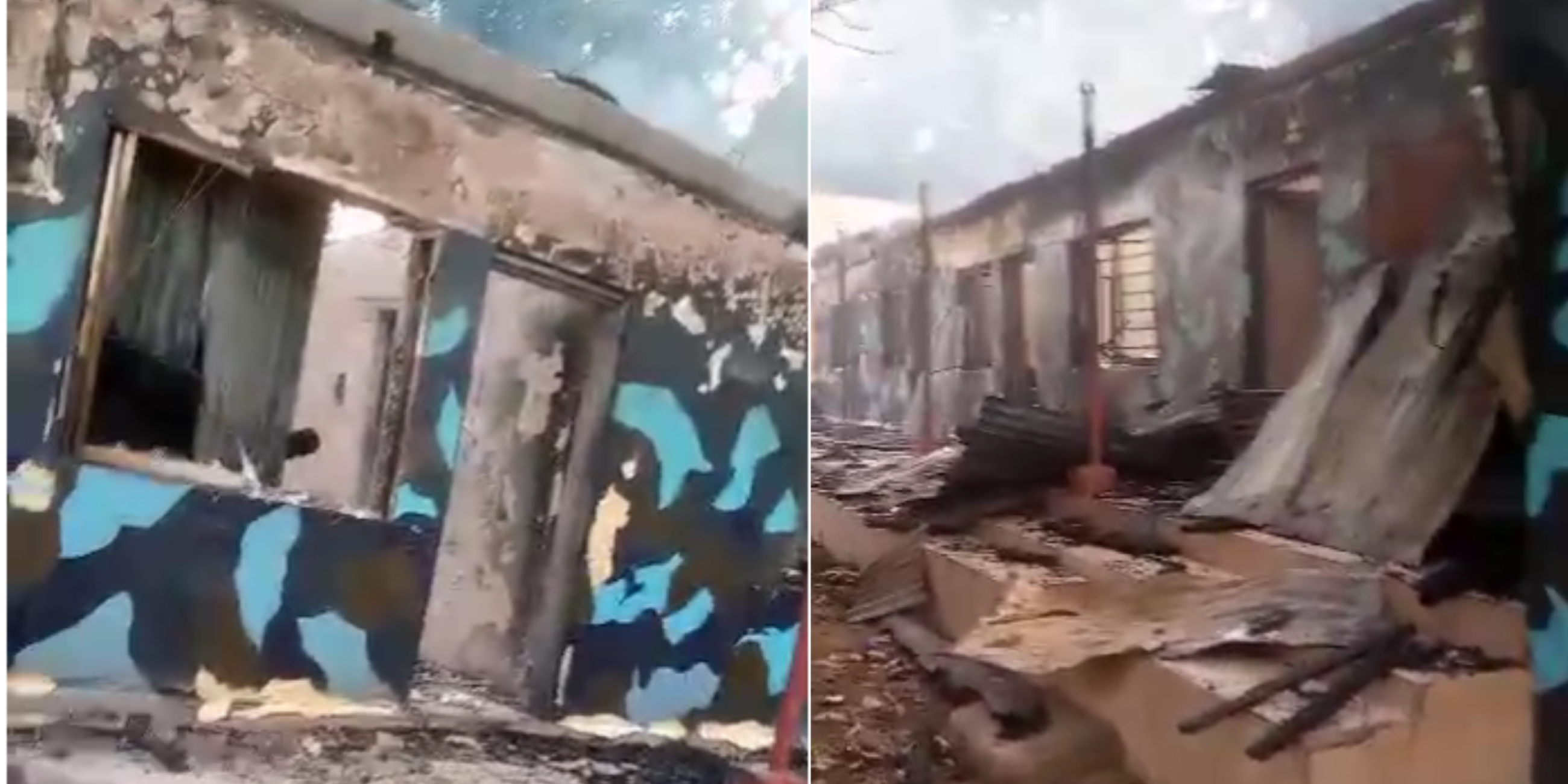
  • Fire Razes Mopol 13 Police Mobile Force Office and Armoury in Benue as Facilities Burn to Ashes in Makurdi

    A devastating fire outbreak has destroyed the Mopol 13 Police Mobile Force (PMF) office and armoury in Makurdi, the Benue State capital. The incident occurred in the early hours of Sunday, January 4, 2026, with video evidence showing the entire facility engulfed in flames and reduced to ashes.

    SaharaReporters obtained footage capturing the scale of the destruction, including the armoury and offices, while a distressed narrator in the video confirmed that even the Squadron Commander’s office was affected. As of the time of reporting, the cause of the fire remains unclear, with authorities yet to confirm whether it was triggered by an electrical fault or another factor.

    The incident has raised serious concerns about security, loss of police assets, and safety of armaments, as investigations are expected to be launched to determine the origin of the inferno and assess the extent of damage to police operations in the state.
    Fire Razes Mopol 13 Police Mobile Force Office and Armoury in Benue as Facilities Burn to Ashes in Makurdi A devastating fire outbreak has destroyed the Mopol 13 Police Mobile Force (PMF) office and armoury in Makurdi, the Benue State capital. The incident occurred in the early hours of Sunday, January 4, 2026, with video evidence showing the entire facility engulfed in flames and reduced to ashes. SaharaReporters obtained footage capturing the scale of the destruction, including the armoury and offices, while a distressed narrator in the video confirmed that even the Squadron Commander’s office was affected. As of the time of reporting, the cause of the fire remains unclear, with authorities yet to confirm whether it was triggered by an electrical fault or another factor. The incident has raised serious concerns about security, loss of police assets, and safety of armaments, as investigations are expected to be launched to determine the origin of the inferno and assess the extent of damage to police operations in the state.
    like
    1
    · 0 Commentaires ·0 Parts ·559 Vue
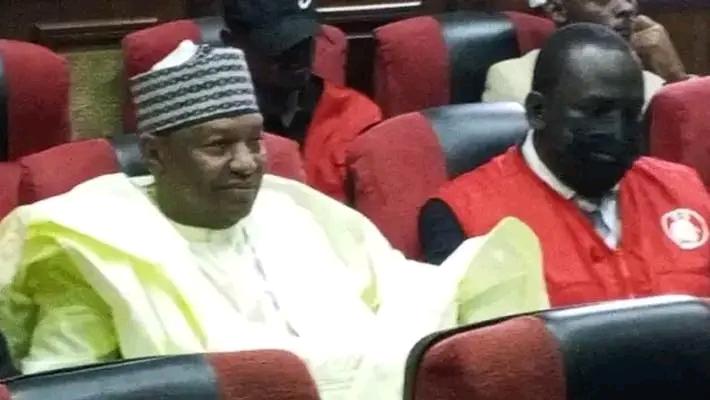
  • Former AGF Malami and two others to be remanded in Kuje

    The Federal High Court Abuja Division has adjourned to the 7th of January, 2026 to rule on the bail application filed by former Attorney General of the Federation and Minister of Justice, Abubakar Malami, SAN and two others.

    Malami is standing trial alongside two others for alleged money laundering and illicit possession of assets valued at more than eight billion naira.

    After hearing both parties the court adjourned the case to Wednesday next week to rule on the bail application.

    Meanwhile, Justice Nwite has granted bail to the Bauchi State Finance Commissioner, Yakubu Adamu.

    The defendant, along with one Ayab Agro Products Company, face charges of alleged conspiracy, and laundering of 4.65 Billion Naira.

    He pleads not guilty to the charge.

    The court granted him bail of five hundred million naira and two sureties, who must provide landed property in Gwarinpa, Maitama or Asokoro, Abuja.

    The defendant is remain in Kuje Correctional custody till his bail is perfected.

    The matter is adjourned to 23rd January, 2026 for continuation of trial.
    Former AGF Malami and two others to be remanded in Kuje The Federal High Court Abuja Division has adjourned to the 7th of January, 2026 to rule on the bail application filed by former Attorney General of the Federation and Minister of Justice, Abubakar Malami, SAN and two others. Malami is standing trial alongside two others for alleged money laundering and illicit possession of assets valued at more than eight billion naira. After hearing both parties the court adjourned the case to Wednesday next week to rule on the bail application. Meanwhile, Justice Nwite has granted bail to the Bauchi State Finance Commissioner, Yakubu Adamu. The defendant, along with one Ayab Agro Products Company, face charges of alleged conspiracy, and laundering of 4.65 Billion Naira. He pleads not guilty to the charge. The court granted him bail of five hundred million naira and two sureties, who must provide landed property in Gwarinpa, Maitama or Asokoro, Abuja. The defendant is remain in Kuje Correctional custody till his bail is perfected. The matter is adjourned to 23rd January, 2026 for continuation of trial.
    0 Commentaires ·0 Parts ·531 Vue
  • Minnesota Congresswoman Ilhan Omar has come under intense scrutiny after her assets appeared to skyrocket from only $1,000 to almost $30 million in just one year.

    Two companies, both owned by her husband and listed on Omar’s most recent financial disclosure form, appear to have experienced significant growth in value between 2023 and last year.

    Rose Lake Capital LLC was valued between $5 million and $25 million in 2024, according to the document, filed in May.

    The venture capital management firm is headquartered in Washington, DC. Omar lists the asset as ‘partnership income’ on her form and claimed she doesn’t receive any income from Rose Lake.

    However, in her 2023 report, released in May 2024, Rose Lake Capital is valued at between $1 and $1,000.

    In the same report, the Somali-born socialist stated that another company, ESTCRU LLC, was worth between $15,001 and $50,000.

    The firm is a winery in Santa Rosa, California. Its value is now listed between $1 million and $5 million, according to Omar’s recent disclosure.

    In response to the significant increase, the National Legal and Policy Center, a conservative nonprofit that monitors the ethics of liberal public officials, has confirmed it is ‘certainly looking’ at the progressive Congresswoman.

    Peter Flaherty, chairman of the organization, confirmed to the New York Post that the center is investigating Omar’s assets.

    Rose Lake’s website says it has worked with five diplomats in more than 80 countries to structure deals, mergers, and acquisitions.

    ‘From distressed assets to buying publicly traded companies – our team has the prowess to execute the right opportunities,’ the company’s description reads.

    ‘At Rose Lake we tap into our extensive global network to create strategic partnerships to maximize the strength of the businesses we partner with.’

    Rose Lake’s LinkedIn page also appears to have been removed amid reports of Omar’s wealth gains.

    The company’s website stripped team members’ names and bios. The webpage now only displays a brief summary of Rose Lake’s work.

    Minnesota Congresswoman Ilhan Omar has come under intense scrutiny after her assets appeared to skyrocket from only $1,000 to almost $30 million in just one year. Two companies, both owned by her husband and listed on Omar’s most recent financial disclosure form, appear to have experienced significant growth in value between 2023 and last year. Rose Lake Capital LLC was valued between $5 million and $25 million in 2024, according to the document, filed in May. The venture capital management firm is headquartered in Washington, DC. Omar lists the asset as ‘partnership income’ on her form and claimed she doesn’t receive any income from Rose Lake. However, in her 2023 report, released in May 2024, Rose Lake Capital is valued at between $1 and $1,000. In the same report, the Somali-born socialist stated that another company, ESTCRU LLC, was worth between $15,001 and $50,000. The firm is a winery in Santa Rosa, California. Its value is now listed between $1 million and $5 million, according to Omar’s recent disclosure. In response to the significant increase, the National Legal and Policy Center, a conservative nonprofit that monitors the ethics of liberal public officials, has confirmed it is ‘certainly looking’ at the progressive Congresswoman. Peter Flaherty, chairman of the organization, confirmed to the New York Post that the center is investigating Omar’s assets. Rose Lake’s website says it has worked with five diplomats in more than 80 countries to structure deals, mergers, and acquisitions. ‘From distressed assets to buying publicly traded companies – our team has the prowess to execute the right opportunities,’ the company’s description reads. ‘At Rose Lake we tap into our extensive global network to create strategic partnerships to maximize the strength of the businesses we partner with.’ Rose Lake’s LinkedIn page also appears to have been removed amid reports of Omar’s wealth gains. The company’s website stripped team members’ names and bios. The webpage now only displays a brief summary of Rose Lake’s work.
    0 Commentaires ·0 Parts ·544 Vue
  • How to Profit from Market Swings: Pocket Option Strategies for Traders and Investors

    Market swings—upward, downward, and sideways—offer significant trading opportunities for those who can identify and act on trends. Understanding these movements is key for developing profitable trading strategies. Swing trading allows traders to capitalize on short- and medium-term price fluctuations, using tools like Bollinger Bands, support and resistance levels, and trend lines. Pocket Option is highlighted as a versatile platform for swing trading, offering a wide range of assets including forex, crypto, commodities, and stocks, with high execution speed and demo accounts for risk-free practice. Traders can optimize profits by confirming trends, managing risk, and adapting strategies to changing market conditions.
    How to Profit from Market Swings: Pocket Option Strategies for Traders and Investors Market swings—upward, downward, and sideways—offer significant trading opportunities for those who can identify and act on trends. Understanding these movements is key for developing profitable trading strategies. Swing trading allows traders to capitalize on short- and medium-term price fluctuations, using tools like Bollinger Bands, support and resistance levels, and trend lines. Pocket Option is highlighted as a versatile platform for swing trading, offering a wide range of assets including forex, crypto, commodities, and stocks, with high execution speed and demo accounts for risk-free practice. Traders can optimize profits by confirming trends, managing risk, and adapting strategies to changing market conditions.
    0 Commentaires ·0 Parts ·457 Vue
  • Fresh Tension Between Canada and Iran as Tehran Declares Royal Canadian Navy a Terrorist Organisation

    Iran has designated the Royal Canadian Navy as a terrorist organisation in response to Canada’s 2024 decision to blacklist the Islamic Revolutionary Guard Corps (IRGC). The Iranian foreign ministry cited reciprocity and condemned Ottawa’s action as contrary to international law. Canada’s designation of the IRGC bars its members from entering the country, prohibits Canadians from dealing with the group, and allows seizure of any assets in Canada. The move was influenced by past IRGC actions, including the downing of Flight PS752 in 2020 that killed 85 Canadian citizens and permanent residents, and concerns over regional missile attacks. The development marks a new flashpoint in Canada-Iran relations amid longstanding diplomatic tensions.
    Fresh Tension Between Canada and Iran as Tehran Declares Royal Canadian Navy a Terrorist Organisation Iran has designated the Royal Canadian Navy as a terrorist organisation in response to Canada’s 2024 decision to blacklist the Islamic Revolutionary Guard Corps (IRGC). The Iranian foreign ministry cited reciprocity and condemned Ottawa’s action as contrary to international law. Canada’s designation of the IRGC bars its members from entering the country, prohibits Canadians from dealing with the group, and allows seizure of any assets in Canada. The move was influenced by past IRGC actions, including the downing of Flight PS752 in 2020 that killed 85 Canadian citizens and permanent residents, and concerns over regional missile attacks. The development marks a new flashpoint in Canada-Iran relations amid longstanding diplomatic tensions.
    0 Commentaires ·0 Parts ·391 Vue
  • BREAKING: Court Remands Ex-Attorney-General Abubakar Malami, Son, Wife In Kuje Prison Over Naira-Billion Money Laundering Charges, Fixes January 2 For Bail Hearing

    A Federal High Court in Abuja has ordered the remand of former Attorney-General of the Federation, Abubakar Malami (SAN), his son and another defendant at the Kuje Correctional Centre pending the hearing of their bail applications on January 2, 2026. The trio, arraigned by the EFCC on a 16-count charge, pleaded not guilty to allegations of money laundering, unlawful acquisition of assets and conspiracy involving properties and transactions worth billions of naira across Abuja, Kano and other locations. The case has attracted widespread attention as one of the most high-profile corruption trials involving a senior official from the Buhari administration.
    BREAKING: Court Remands Ex-Attorney-General Abubakar Malami, Son, Wife In Kuje Prison Over Naira-Billion Money Laundering Charges, Fixes January 2 For Bail Hearing A Federal High Court in Abuja has ordered the remand of former Attorney-General of the Federation, Abubakar Malami (SAN), his son and another defendant at the Kuje Correctional Centre pending the hearing of their bail applications on January 2, 2026. The trio, arraigned by the EFCC on a 16-count charge, pleaded not guilty to allegations of money laundering, unlawful acquisition of assets and conspiracy involving properties and transactions worth billions of naira across Abuja, Kano and other locations. The case has attracted widespread attention as one of the most high-profile corruption trials involving a senior official from the Buhari administration.
    0 Commentaires ·0 Parts ·507 Vue
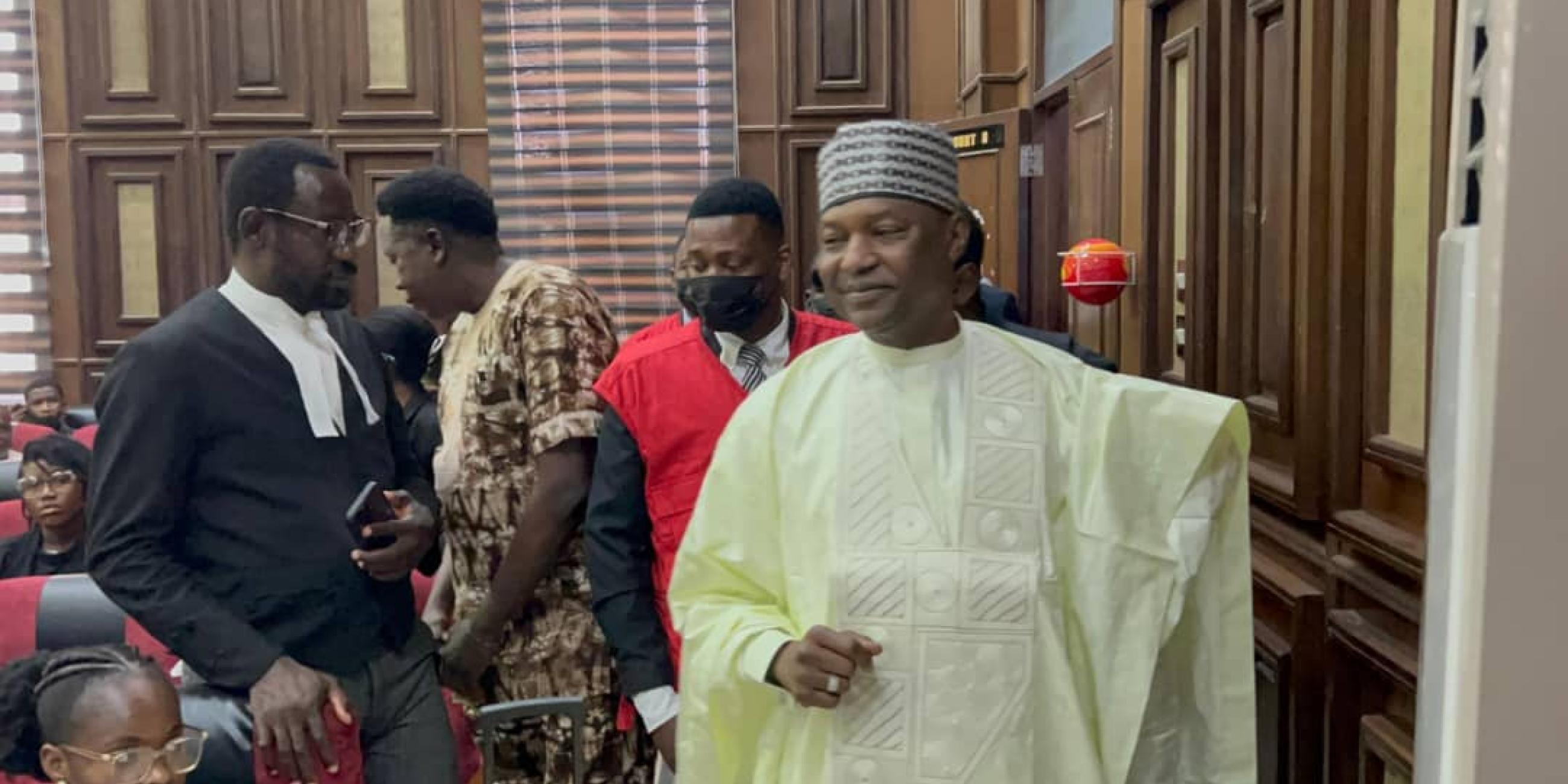
  • EFCC arraigns Malami, son, employee for money laundering

    The Economic and Financial Crimes Commission has arraigned former Attorney-General of the Federation and Minister of Justice Abubakar Malami, SAN for alleged money laundering before the Federal High Court in Abuja.

    Malami alongside his son and Asabe Bashir, an employee of a firm allegedly linked to the former minister are facing sixteen counts change.

    The trio pleaded not guilty to all the 16 counts that alleged them of money laundering and illegitimate accumulation of wealth.

    The charge included suspicious accumulation and frantic efforts to conceal the alleged illicit origins of multi-billion naira worth of assets in Abuja, Kano and Kebbi.

    Prosecution alleged that the offences violated provisions of Money Laundering (Prohibition and Prevention) Acts of 2022.

    The former Attorney General of the Federation and Minister of Justice Abubakar Malami and two others are to be remanded in Kuje Correctional facility pending the ruling of the court on the defendants bail application.
    The matter has been adjourned 2nd January, 2026.
    EFCC arraigns Malami, son, employee for money laundering The Economic and Financial Crimes Commission has arraigned former Attorney-General of the Federation and Minister of Justice Abubakar Malami, SAN for alleged money laundering before the Federal High Court in Abuja. Malami alongside his son and Asabe Bashir, an employee of a firm allegedly linked to the former minister are facing sixteen counts change. The trio pleaded not guilty to all the 16 counts that alleged them of money laundering and illegitimate accumulation of wealth. The charge included suspicious accumulation and frantic efforts to conceal the alleged illicit origins of multi-billion naira worth of assets in Abuja, Kano and Kebbi. Prosecution alleged that the offences violated provisions of Money Laundering (Prohibition and Prevention) Acts of 2022. The former Attorney General of the Federation and Minister of Justice Abubakar Malami and two others are to be remanded in Kuje Correctional facility pending the ruling of the court on the defendants bail application. The matter has been adjourned 2nd January, 2026.
    like
    1
    · 0 Commentaires ·0 Parts ·322 Vue
  • Forged Tax Laws: Yoruba Union Accuses Tinubu Government of Plot to Seize Nigerians’ Properties, Warns of Hardship From 2026

    A Yoruba socio-cultural group, Ìgbìnmó Májékóbájé Ilé-Yorùbá, has accused the Bola Tinubu administration of allegedly altering a tax reform law passed by the National Assembly to enable property seizures without court orders. The group claims the gazetted version removes judicial oversight and empowers tax authorities to confiscate and sell assets within 14 days of alleged tax default. Warning of increased poverty, insecurity, and business collapse from 2026, the union described the move as unconstitutional, anti-people, and authoritarian, calling for a full investigation and prosecution of those responsible.
    Forged Tax Laws: Yoruba Union Accuses Tinubu Government of Plot to Seize Nigerians’ Properties, Warns of Hardship From 2026 A Yoruba socio-cultural group, Ìgbìnmó Májékóbájé Ilé-Yorùbá, has accused the Bola Tinubu administration of allegedly altering a tax reform law passed by the National Assembly to enable property seizures without court orders. The group claims the gazetted version removes judicial oversight and empowers tax authorities to confiscate and sell assets within 14 days of alleged tax default. Warning of increased poverty, insecurity, and business collapse from 2026, the union described the move as unconstitutional, anti-people, and authoritarian, calling for a full investigation and prosecution of those responsible.
    0 Commentaires ·0 Parts ·493 Vue
  • EFCC Denies Illegally Detaining Ex-AGF Malami

    The Economic and Financial Crimes Commission (EFCC) has refuted claims that it is illegally detaining former Attorney-General of the Federation, Abubakar Malami, SAN, insisting that no bail order has been served on the agency.

    In a statement obtained by SaharaReporters on December 24, 2025, EFCC’s lead counsel, Chief J.S. Okutepa, SAN, described reports suggesting an ex-parte bail order in Malami’s favor as misleading, bizarre, and professionally irresponsible. Okutepa explained that these claims originated from a press release by someone claiming to be Malami’s aide.

    He clarified that:

    No court order granting Malami bail has been served on EFCC or its law firm.

    The existing remand order by Justice S.C. Oriji of FCT High Court No. 2, dated December 10, 2025, remains valid. This order remanded Malami in EFCC custody for 14 days pending investigation.

    Despite knowing this, Malami’s legal team filed a fresh bail application before another court in Nyanya, alleging unlawful detention. This application was dismissed by Justice Babangida Hassan on December 18, 2025, who confirmed that Malami was lawfully detained.


    Okutepa also criticized attempts to seek ex-parte bail before Justice Bello Kawu without disclosing prior court orders, calling it an abuse of judicial process.

    He emphasized that the clarification aims to prevent public misinformation, reaffirming that Malami is being detained under valid and subsisting court orders.

    This statement comes amid ongoing allegations against Malami involving money laundering and unlawful acquisition of assets, which remain under investigation by the EFCC.
    EFCC Denies Illegally Detaining Ex-AGF Malami The Economic and Financial Crimes Commission (EFCC) has refuted claims that it is illegally detaining former Attorney-General of the Federation, Abubakar Malami, SAN, insisting that no bail order has been served on the agency. In a statement obtained by SaharaReporters on December 24, 2025, EFCC’s lead counsel, Chief J.S. Okutepa, SAN, described reports suggesting an ex-parte bail order in Malami’s favor as misleading, bizarre, and professionally irresponsible. Okutepa explained that these claims originated from a press release by someone claiming to be Malami’s aide. He clarified that: No court order granting Malami bail has been served on EFCC or its law firm. The existing remand order by Justice S.C. Oriji of FCT High Court No. 2, dated December 10, 2025, remains valid. This order remanded Malami in EFCC custody for 14 days pending investigation. Despite knowing this, Malami’s legal team filed a fresh bail application before another court in Nyanya, alleging unlawful detention. This application was dismissed by Justice Babangida Hassan on December 18, 2025, who confirmed that Malami was lawfully detained. Okutepa also criticized attempts to seek ex-parte bail before Justice Bello Kawu without disclosing prior court orders, calling it an abuse of judicial process. He emphasized that the clarification aims to prevent public misinformation, reaffirming that Malami is being detained under valid and subsisting court orders. This statement comes amid ongoing allegations against Malami involving money laundering and unlawful acquisition of assets, which remain under investigation by the EFCC.
    like
    1
    · 0 Commentaires ·0 Parts ·388 Vue
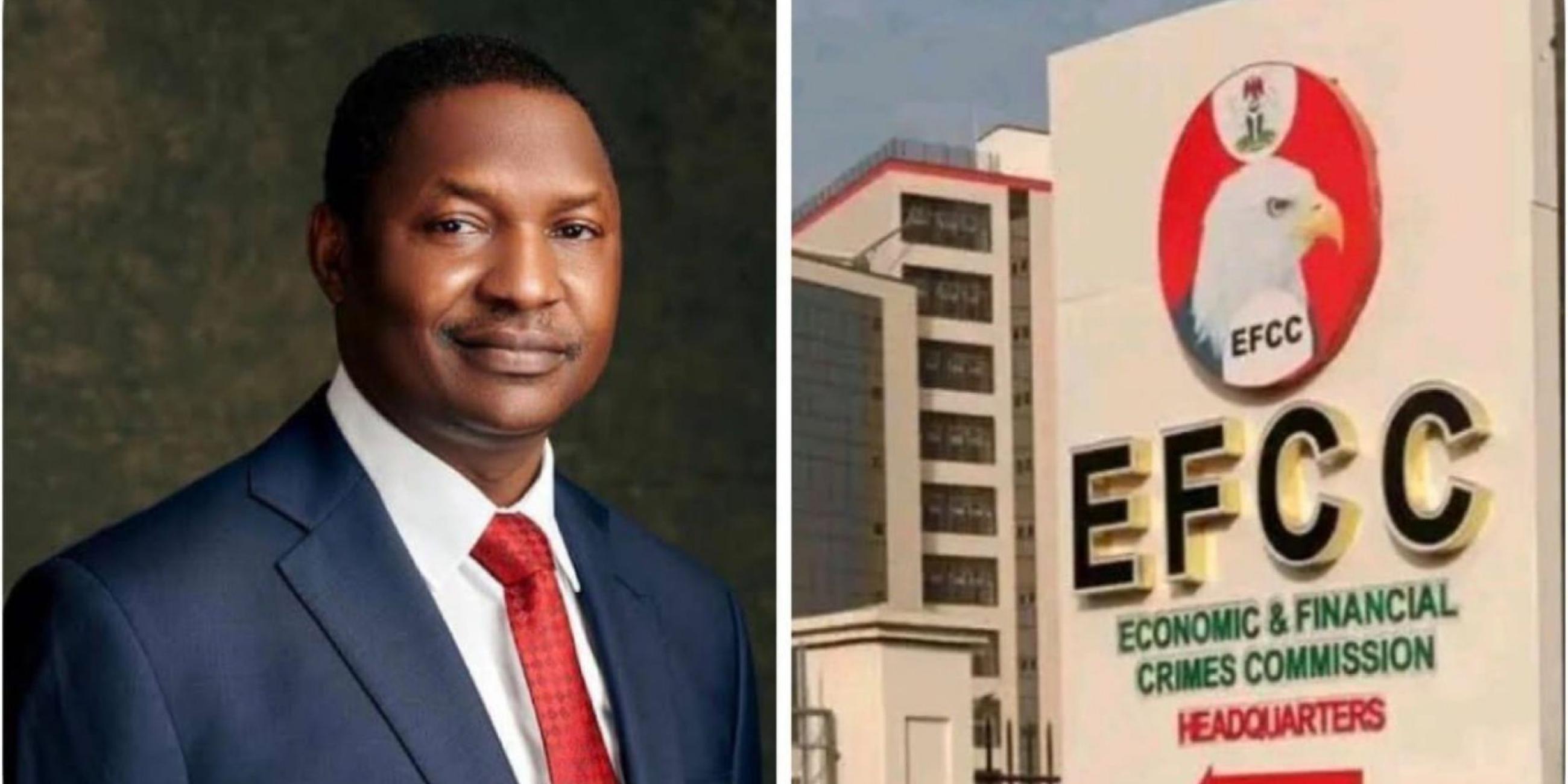
  • A civil society organisation, the Association of Legislative Drafting and Advocacy Practitioners (ALDRAP), has formally urged the Economic and Financial Crimes Commission (EFCC) to reject the Director-General of the Legal Aid Council of Nigeria as a surety in the ongoing corruption case involving former Attorney General of the Federation and Minister of Justice, Abubakar Malami (SAN).

    In a petition dated December 24, 2025, and addressed to the EFCC Chairman in Abuja, ALDRAP based its request on Section 167(1) of the Administration of Criminal Justice Act (ACJA), 2015, which clearly outlines who qualifies to stand as a surety in criminal proceedings. The group argued that the Director-General of the Legal Aid Council does not meet the statutory and ethical requirements required under the law.

    The petition, signed by ALDRAP’s Secretary, Dr. Tonye Clinton Jaja, cited the 2024 Anti-Corruption Index published by the Independent Corrupt Practices and Related Offences Commission (ICPC). According to the group, the Legal Aid Council of Nigeria was among federal government agencies that recorded a zero percent (0%) score in the ICPC’s ethics and integrity assessment for the year.

    ALDRAP stressed that this poor rating raises serious concerns about the integrity, credibility, and suitability of the Legal Aid Council’s leadership to act as a surety for a defendant facing serious corruption allegations. The group argued that allowing a public official whose institution failed to meet basic anti-corruption benchmarks to guarantee the bail of a former justice minister accused of massive financial crimes would undermine public confidence in the justice system.

    “The implication is that a person heading an institution that scored zero percent in the ICPC anti-corruption index cannot be considered fit and proper to stand as surety for Malami, who is himself undergoing investigation and prosecution for corruption-related offences,” the petition stated.

    ALDRAP further reminded the EFCC of its mandate as a watchdog against corruption and urged the commission to ensure that all bail conditions strictly comply with the law and ethical standards. The group noted that it was incorporated in 2017 under the Companies and Allied Matters Act (CAMA) and is committed to promoting adherence to the 1999 Constitution and other relevant laws governing public accountability.

    Meanwhile, the petition comes against the backdrop of serious criminal charges filed against Malami by the Federal Government. SaharaReporters had earlier reported that Malami is facing 16 counts bordering on money laundering, conspiracy, and unlawful acquisition of assets, alongside his son, Abubakar Abdulaziz Malami, and an associate, Hajia Bashir Asabe.

    According to court documents, prosecutors allege that Malami and his co-defendants used corporate fronts and proxies, including Metropolitan Auto Tech Limited, Rahamaniyya Properties Limited, and Meethaq Hotels Limited, to conceal and launder illicit funds while Malami served as Nigeria’s chief law officer. The alleged offences span nearly a decade, from 2015 to 2025, covering both his time in office and the period after.

    The charges detail multiple financial transactions involving billions of naira, including over ₦1 billion allegedly concealed through Sterling Bank accounts, large cash collaterals used to secure bank loans, and payments for luxury properties in Abuja, Kano, Birnin Kebbi, and other locations. Prosecutors claim that no fewer than 30 high-value properties worth about ₦212.8 billion were acquired using proceeds of unlawful activities.

    The government further alleges that Malami and his associates violated provisions of the Money Laundering (Prohibition) Act 2011 (as amended) and the Money Laundering (Prevention and Prohibition) Act 2022, through systematic concealment, conversion, and retention of illicit funds.

    Against this backdrop, ALDRAP has expressed confidence that the EFCC will give its petition urgent and favourable consideration, insisting that the integrity of the bail process must not be compromised in a case of such national significance. The group warned that allowing questionable sureties could weaken anti-corruption efforts and send the wrong message to Nigerians about accountability at the highest levels of government.
    A civil society organisation, the Association of Legislative Drafting and Advocacy Practitioners (ALDRAP), has formally urged the Economic and Financial Crimes Commission (EFCC) to reject the Director-General of the Legal Aid Council of Nigeria as a surety in the ongoing corruption case involving former Attorney General of the Federation and Minister of Justice, Abubakar Malami (SAN). In a petition dated December 24, 2025, and addressed to the EFCC Chairman in Abuja, ALDRAP based its request on Section 167(1) of the Administration of Criminal Justice Act (ACJA), 2015, which clearly outlines who qualifies to stand as a surety in criminal proceedings. The group argued that the Director-General of the Legal Aid Council does not meet the statutory and ethical requirements required under the law. The petition, signed by ALDRAP’s Secretary, Dr. Tonye Clinton Jaja, cited the 2024 Anti-Corruption Index published by the Independent Corrupt Practices and Related Offences Commission (ICPC). According to the group, the Legal Aid Council of Nigeria was among federal government agencies that recorded a zero percent (0%) score in the ICPC’s ethics and integrity assessment for the year. ALDRAP stressed that this poor rating raises serious concerns about the integrity, credibility, and suitability of the Legal Aid Council’s leadership to act as a surety for a defendant facing serious corruption allegations. The group argued that allowing a public official whose institution failed to meet basic anti-corruption benchmarks to guarantee the bail of a former justice minister accused of massive financial crimes would undermine public confidence in the justice system. “The implication is that a person heading an institution that scored zero percent in the ICPC anti-corruption index cannot be considered fit and proper to stand as surety for Malami, who is himself undergoing investigation and prosecution for corruption-related offences,” the petition stated. ALDRAP further reminded the EFCC of its mandate as a watchdog against corruption and urged the commission to ensure that all bail conditions strictly comply with the law and ethical standards. The group noted that it was incorporated in 2017 under the Companies and Allied Matters Act (CAMA) and is committed to promoting adherence to the 1999 Constitution and other relevant laws governing public accountability. Meanwhile, the petition comes against the backdrop of serious criminal charges filed against Malami by the Federal Government. SaharaReporters had earlier reported that Malami is facing 16 counts bordering on money laundering, conspiracy, and unlawful acquisition of assets, alongside his son, Abubakar Abdulaziz Malami, and an associate, Hajia Bashir Asabe. According to court documents, prosecutors allege that Malami and his co-defendants used corporate fronts and proxies, including Metropolitan Auto Tech Limited, Rahamaniyya Properties Limited, and Meethaq Hotels Limited, to conceal and launder illicit funds while Malami served as Nigeria’s chief law officer. The alleged offences span nearly a decade, from 2015 to 2025, covering both his time in office and the period after. The charges detail multiple financial transactions involving billions of naira, including over ₦1 billion allegedly concealed through Sterling Bank accounts, large cash collaterals used to secure bank loans, and payments for luxury properties in Abuja, Kano, Birnin Kebbi, and other locations. Prosecutors claim that no fewer than 30 high-value properties worth about ₦212.8 billion were acquired using proceeds of unlawful activities. The government further alleges that Malami and his associates violated provisions of the Money Laundering (Prohibition) Act 2011 (as amended) and the Money Laundering (Prevention and Prohibition) Act 2022, through systematic concealment, conversion, and retention of illicit funds. Against this backdrop, ALDRAP has expressed confidence that the EFCC will give its petition urgent and favourable consideration, insisting that the integrity of the bail process must not be compromised in a case of such national significance. The group warned that allowing questionable sureties could weaken anti-corruption efforts and send the wrong message to Nigerians about accountability at the highest levels of government.
    like
    1
    · 0 Commentaires ·0 Parts ·526 Vue
  • Sowore Kept Screaming About Malami’s Corruption Since 2021’ — Deji Adeyanju Says EFCC Charges Validate Long-Standing Allegations Against Ex-AGF

    Human rights activist and lawyer, Deji Adeyanju, has reacted strongly to the ongoing prosecution of former Attorney-General of the Federation and Minister of Justice, Abubakar Malami (SAN), saying the charges filed against him by the Economic and Financial Crimes Commission (EFCC) confirm long-standing corruption allegations raised years earlier by activist and former presidential candidate, Omoyele Sowore.
    Speaking on Wednesday, Adeyanju said Sowore had consistently warned Nigerians since 2021 about what he described as Malami’s “brazen corruption” while he was still in office, but those warnings were largely ignored at the time. According to Adeyanju, the emergence of what he termed “receipts” from the EFCC now validates those earlier accusations and underscores the importance of sustained civic activism and accountability.
    Adeyanju accused Malami of abusing public trust by allegedly amassing enormous wealth and acquiring multiple high-value properties across Nigeria during his tenure as the country’s chief law officer. He described the alleged actions as not merely isolated incidents but part of a deliberate and systematic effort to build a vast illicit empire, stressing that no public official should be allowed to operate above the law.
    The activist called on anti-graft agencies to pursue the case thoroughly and without political interference, insisting that Nigeria cannot progress if powerful officials are allowed to allegedly loot public resources with impunity. He said the Malami case should serve as a strong warning to current and future office holders.
    Malami is currently facing 16 criminal counts bordering on money laundering, conspiracy, and unlawful acquisition of assets. Prosecutors allege that he, alongside his son, Abubakar Abdulaziz Malami, and an associate, Hajia Bashir Asabe, used corporate fronts and proxies to conceal and launder funds totaling several billion naira between 2015 and 2025. The EFCC claims that at least 30 high-value properties worth an estimated ₦212.8 billion were acquired through proceeds of unlawful activities.
    Court documents further allege that the defendants used companies such as Metropolitan Auto Tech Limited, Rahamaniyya Properties Limited, and Meethaq Hotels Limited to disguise the source of funds deposited in various bank accounts and used to purchase luxury properties in Abuja, Kano, and Birnin Kebbi. The alleged offences are said to violate Nigeria’s Money Laundering (Prohibition) Act and related laws.
    The case has reignited public debate about corruption, free speech, and the risks faced by whistleblowers and investigative journalists, especially in light of previous defamation suits filed against Sowore and SaharaReporters over reports exposing Malami’s alleged lifestyle and asset accumulation.
    Sowore Kept Screaming About Malami’s Corruption Since 2021’ — Deji Adeyanju Says EFCC Charges Validate Long-Standing Allegations Against Ex-AGF Human rights activist and lawyer, Deji Adeyanju, has reacted strongly to the ongoing prosecution of former Attorney-General of the Federation and Minister of Justice, Abubakar Malami (SAN), saying the charges filed against him by the Economic and Financial Crimes Commission (EFCC) confirm long-standing corruption allegations raised years earlier by activist and former presidential candidate, Omoyele Sowore. Speaking on Wednesday, Adeyanju said Sowore had consistently warned Nigerians since 2021 about what he described as Malami’s “brazen corruption” while he was still in office, but those warnings were largely ignored at the time. According to Adeyanju, the emergence of what he termed “receipts” from the EFCC now validates those earlier accusations and underscores the importance of sustained civic activism and accountability. Adeyanju accused Malami of abusing public trust by allegedly amassing enormous wealth and acquiring multiple high-value properties across Nigeria during his tenure as the country’s chief law officer. He described the alleged actions as not merely isolated incidents but part of a deliberate and systematic effort to build a vast illicit empire, stressing that no public official should be allowed to operate above the law. The activist called on anti-graft agencies to pursue the case thoroughly and without political interference, insisting that Nigeria cannot progress if powerful officials are allowed to allegedly loot public resources with impunity. He said the Malami case should serve as a strong warning to current and future office holders. Malami is currently facing 16 criminal counts bordering on money laundering, conspiracy, and unlawful acquisition of assets. Prosecutors allege that he, alongside his son, Abubakar Abdulaziz Malami, and an associate, Hajia Bashir Asabe, used corporate fronts and proxies to conceal and launder funds totaling several billion naira between 2015 and 2025. The EFCC claims that at least 30 high-value properties worth an estimated ₦212.8 billion were acquired through proceeds of unlawful activities. Court documents further allege that the defendants used companies such as Metropolitan Auto Tech Limited, Rahamaniyya Properties Limited, and Meethaq Hotels Limited to disguise the source of funds deposited in various bank accounts and used to purchase luxury properties in Abuja, Kano, and Birnin Kebbi. The alleged offences are said to violate Nigeria’s Money Laundering (Prohibition) Act and related laws. The case has reignited public debate about corruption, free speech, and the risks faced by whistleblowers and investigative journalists, especially in light of previous defamation suits filed against Sowore and SaharaReporters over reports exposing Malami’s alleged lifestyle and asset accumulation.
    0 Commentaires ·0 Parts ·630 Vue
Plus de résultats
Fintter https://fintter.com