• If you are alive today say Alhamdullilah …
    If you are alive today say Alhamdullilah …
    love
    1
    · 1 Comments ·0 Shares ·458 Views
  • We are alive today.
    We are alive today.
    love
    1
    · 0 Comments ·0 Shares ·557 Views
  • I’m Alive and Strong Actor Itele Finally Speaks as Sickbed Rumours, Emotional Video Trend Online

    Nollywood actor and filmmaker Ibrahim Yekini, popularly known as Itele D Icon, has broken his silence following viral rumours that he was critically ill and confined to a sickbed. The rumours gained traction after an emotional video surfaced online showing his colleague, Kemity, crying and claiming the actor could no longer walk. Addressing the claims in a fresh video, Itele reassured fans that he is hale, healthy, and actively working. He clarified that the viral clip was recorded years ago during a previous illness and urged the public to ignore fake news spread for attention. His response brought relief to colleagues and fans across the entertainment industry.

    #IteleDIcon, #NollywoodNews, #FakeNews
    I’m Alive and Strong Actor Itele Finally Speaks as Sickbed Rumours, Emotional Video Trend Online Nollywood actor and filmmaker Ibrahim Yekini, popularly known as Itele D Icon, has broken his silence following viral rumours that he was critically ill and confined to a sickbed. The rumours gained traction after an emotional video surfaced online showing his colleague, Kemity, crying and claiming the actor could no longer walk. Addressing the claims in a fresh video, Itele reassured fans that he is hale, healthy, and actively working. He clarified that the viral clip was recorded years ago during a previous illness and urged the public to ignore fake news spread for attention. His response brought relief to colleagues and fans across the entertainment industry. #IteleDIcon, #NollywoodNews, #FakeNews
    love
    2
    · 0 Comments ·0 Shares ·4K Views
  • JUST IN

    “What pained me most about Destiny Boy’s death,” says Iya Ogba, “was seeing the video where pliers and a hammer were used to remove his gold teeth. The people around him that day need to be arrested. They allowed too much access to his dead body.”

    Destiny Boy was just 22 years old (Oku Ofo). Who on earth is happy seeing the body of a 22-year-old?

    “I burst into tears when I saw that traumatizing video. Why didn’t you allow him to be buried with his teeth? Those greedy people removed them to sell, and you still had the mind to collect the money after selling them. Where is your conscience?”

    Iya Ogba continues:
    “Where were his parents and family members when they were removing the teeth? This shows people only care about you when you are alive. Nobody truly cares about your dead body. Enjoy your money while you are still alive. Some family members only care because you are giving them money.”

    #DestinyBoy #RestInPeace #StopExploitation #FamilyValues
    💔 JUST IN 💔 “What pained me most about Destiny Boy’s death,” says Iya Ogba, “was seeing the video where pliers and a hammer were used to remove his gold teeth. The people around him that day need to be arrested. They allowed too much access to his dead body.” Destiny Boy was just 22 years old (Oku Ofo). Who on earth is happy seeing the body of a 22-year-old? 😢 “I burst into tears when I saw that traumatizing video. Why didn’t you allow him to be buried with his teeth? Those greedy people removed them to sell, and you still had the mind to collect the money after selling them. Where is your conscience?” Iya Ogba continues: “Where were his parents and family members when they were removing the teeth? This shows people only care about you when you are alive. Nobody truly cares about your dead body. Enjoy your money while you are still alive. Some family members only care because you are giving them money.” #DestinyBoy #RestInPeace #StopExploitation #FamilyValues
    0 Comments ·0 Shares ·4K Views
  • Suspected terrorists, believed to be bandits, have released 17 additional worshippers abducted from the Evangelical Church Winning All (ECWA) in Aiyetoro Kiri Bunu, Kogi State, following sustained negotiations and the payment of ransom.

    Naija News reports that the latest release came after weeks of engagement between the abductors, affected families and the Aiyetoro Kiri Bunu Development Association, which has been coordinating community efforts to secure the victims’ freedom.

    According to Sahara Reporters, the Kogi State Government was not involved in the negotiations or the releases recorded so far.

    The worshippers were abducted on Sunday, December 14, 2025, when armed men stormed the ECWA church during a church activity and whisked away more than 30 parishioners to an unknown location.

    The incident sparked panic and outrage within the community and neighbouring areas.

    Since the abduction, families of the victims, working with community leaders, have been engaged in prolonged and often difficult negotiations with the kidnappers in a bid to secure the release of their loved ones.

    The first breakthrough came on January 1, 2026, when seven abducted worshippers were released after negotiations and the payment of a ransom reportedly put at ₦15 million.

    However, the release was marred by tragedy as only four victims were freed alive, while three were confirmed dead – two reportedly died while in captivity, and one died after being rushed to the hospital following release.

    Despite the tragic outcome, negotiations continued.

    A local platform, Egbe Mekun, reported that three more victims were released on Monday, January 12.

    This was followed by the release of 14 additional abductees on Tuesday, bringing the total number of worshippers freed so far to 24.

    Community sources said 13 worshippers are still believed to be in the custody of the terrorists.
    Suspected terrorists, believed to be bandits, have released 17 additional worshippers abducted from the Evangelical Church Winning All (ECWA) in Aiyetoro Kiri Bunu, Kogi State, following sustained negotiations and the payment of ransom. Naija News reports that the latest release came after weeks of engagement between the abductors, affected families and the Aiyetoro Kiri Bunu Development Association, which has been coordinating community efforts to secure the victims’ freedom. According to Sahara Reporters, the Kogi State Government was not involved in the negotiations or the releases recorded so far. The worshippers were abducted on Sunday, December 14, 2025, when armed men stormed the ECWA church during a church activity and whisked away more than 30 parishioners to an unknown location. The incident sparked panic and outrage within the community and neighbouring areas. Since the abduction, families of the victims, working with community leaders, have been engaged in prolonged and often difficult negotiations with the kidnappers in a bid to secure the release of their loved ones. The first breakthrough came on January 1, 2026, when seven abducted worshippers were released after negotiations and the payment of a ransom reportedly put at ₦15 million. However, the release was marred by tragedy as only four victims were freed alive, while three were confirmed dead – two reportedly died while in captivity, and one died after being rushed to the hospital following release. Despite the tragic outcome, negotiations continued. A local platform, Egbe Mekun, reported that three more victims were released on Monday, January 12. This was followed by the release of 14 additional abductees on Tuesday, bringing the total number of worshippers freed so far to 24. Community sources said 13 worshippers are still believed to be in the custody of the terrorists.
    love
    1
    · 0 Comments ·0 Shares ·3K Views
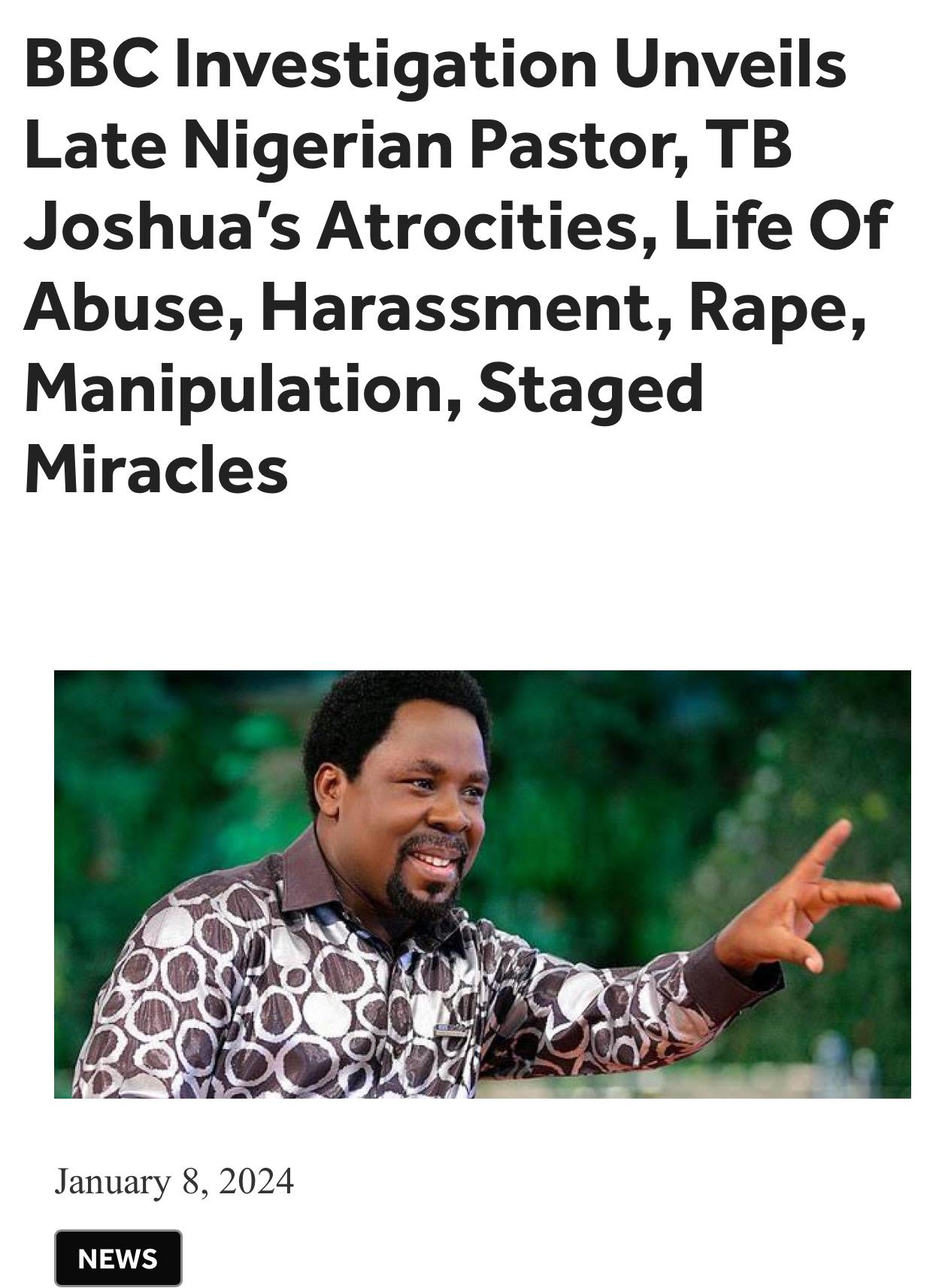
  • The BBC is set to release a 3-part investigative documentary alleging decades of abuse, sexual crimes, manipulation, and cover-ups linked to the late founder of SCOAN, TB Joshua.

    According to the BBC, more than 30 former members and workers described a hidden world of intimidation, rape, staged miracles, and silence enforced through fear and money. Some allege the abuse began when they were teenagers, continued for years, and was justified to them as being “for their salvation.”

    The documentary also reopens wounds from the 2014 SCOAN guesthouse collapse, where over 100 people died. Former insiders claim the church knew the building was structurally unsafe, ignored professional warnings, and later misled members with a false aircraft-bombing narrative. Families reportedly received cash payments allegedly meant to keep them quiet.

    Survivors say miracles were scripted, suffering was exaggerated for TV, and dissent was punished. Even TB Joshua’s own daughter reportedly says she was beaten, isolated, and thrown out after questioning allegations against him.

    With international figures, former disciples, and victims now speaking openly, many are asking uncomfortable questions Nigeria avoided while TB Joshua was alive.

    If these allegations were known for years, why was nothing done?
    Was this faith, power, or a carefully protected system of abuse?
    And should religious institutions be beyond scrutiny simply because of miracles and popularity?

    The BBC will air the documentary over three consecutive weeks.

    What’s your take — truth finally coming out, or another controversy too late?

    #TBJoshua #BBCDocumentary #SCOAN #FaithAndAccountability
    The BBC is set to release a 3-part investigative documentary alleging decades of abuse, sexual crimes, manipulation, and cover-ups linked to the late founder of SCOAN, TB Joshua. According to the BBC, more than 30 former members and workers described a hidden world of intimidation, rape, staged miracles, and silence enforced through fear and money. Some allege the abuse began when they were teenagers, continued for years, and was justified to them as being “for their salvation.” The documentary also reopens wounds from the 2014 SCOAN guesthouse collapse, where over 100 people died. Former insiders claim the church knew the building was structurally unsafe, ignored professional warnings, and later misled members with a false aircraft-bombing narrative. Families reportedly received cash payments allegedly meant to keep them quiet. Survivors say miracles were scripted, suffering was exaggerated for TV, and dissent was punished. Even TB Joshua’s own daughter reportedly says she was beaten, isolated, and thrown out after questioning allegations against him. With international figures, former disciples, and victims now speaking openly, many are asking uncomfortable questions Nigeria avoided while TB Joshua was alive. If these allegations were known for years, why was nothing done? Was this faith, power, or a carefully protected system of abuse? And should religious institutions be beyond scrutiny simply because of miracles and popularity? The BBC will air the documentary over three consecutive weeks. What’s your take — truth finally coming out, or another controversy too late? #TBJoshua #BBCDocumentary #SCOAN #FaithAndAccountability
    like
    love
    2
    · 0 Comments ·0 Shares ·2K Views
  • Wahala Don Set Oo! Chimamanda Adichie’s Son Dies, Editors Demand Probe Into Alleged Lagos Hospital Negligence

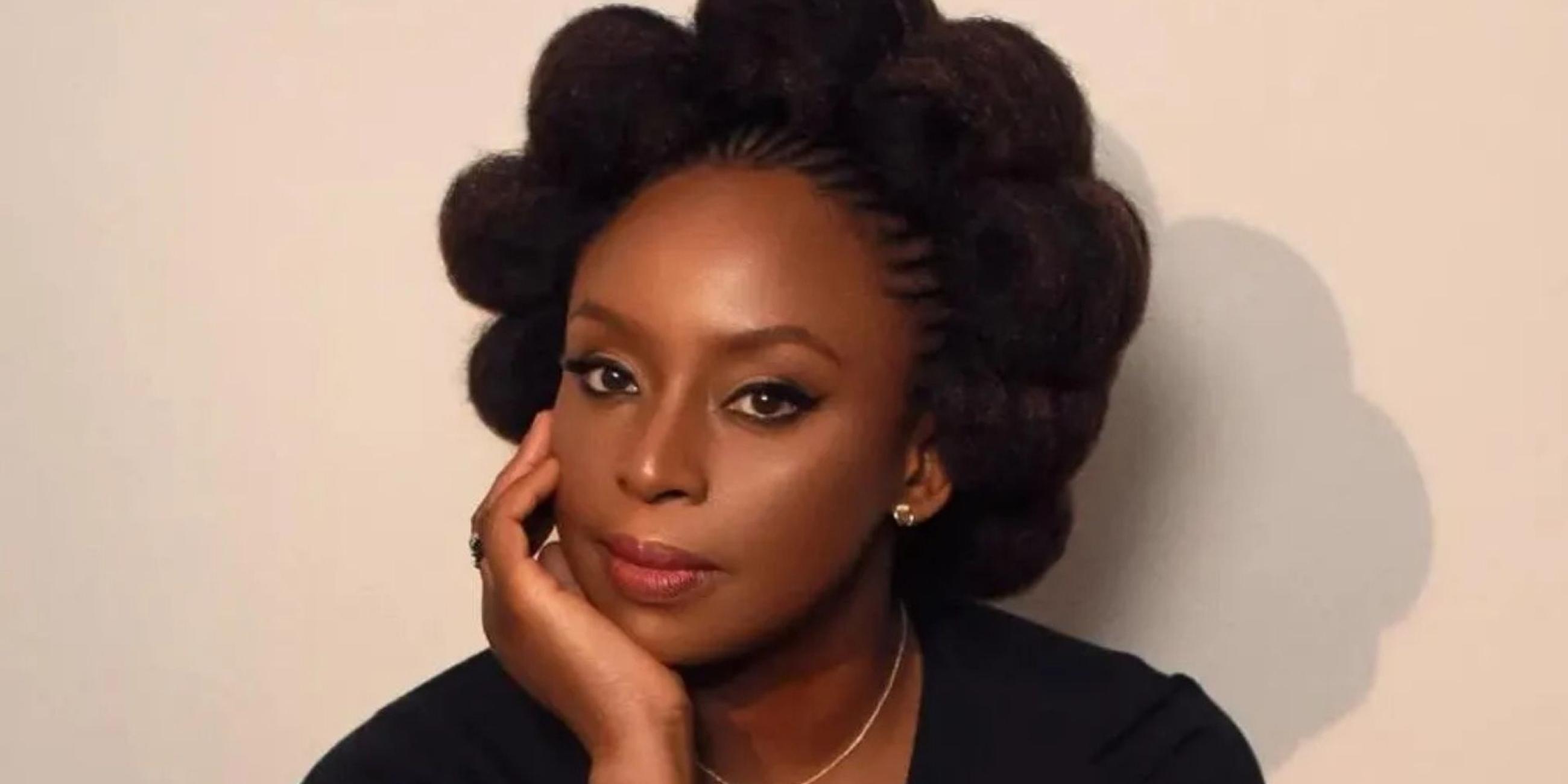
    Wahala don really set for Nigeria’s healthcare system oo! Literary editors and public intellectuals are mourning the tragic death of Chimamanda Ngozi Adichie’s 21-month-old son, Nnamdi, while demanding a full and transparent investigation into what they describe as possible medical negligence at a Lagos hospital.

    Co-editors of Camouflage: Best of Contemporary Writing from Nigeria, Professors Nduka Otiono and Odoh Diego Okenyodo, described the loss as “profoundly shattering,” joining Nigerians at home and abroad in sympathising with the award-winning author and her husband, Dr. Ivara Esege.

    “Losing a child is a pain no parent should ever experience,” the editors said, expressing deep condolences and standing in solidarity with Adichie in what they called her darkest hour.

    The statement followed Adichie’s emotional public account in which she alleged that her son’s death on January 6, 2026, was avoidable and resulted from negligence during what should have been routine medical procedures at a Lagos-based hospital.

    Quoting her directly, the editors stated: “My son would be alive today if not for an incident at Euracare Hospital on January 6th.”

    This revelation has sparked nationwide outrage, with many Nigerians asking tough questions about the safety of hospitals and accountability in the country’s healthcare system.

    In response to the public outcry, the Lagos State Government has ordered an independent investigation into the incident, promising that anyone found responsible would face justice. The editors, however, insisted that the probe must not be cosmetic.

    “We urge that the investigation be thorough, transparent, and impartial. Every detail must be uncovered so that the truth emerges,” they said.

    But this tragedy, they warned, is not just about one family.

    According to Otiono and Okenyodo, the death of little Nnamdi exposes deeper, long-standing problems in Nigeria’s healthcare sector—ranging from weak accountability to delays in care and unethical practices. They referenced findings from an anti-corruption survey by TAP Initiative and Dataphyte, which highlighted how informal payments and systemic failures often compromise patient safety.

    While clarifying that they were not directly accusing the hospital of such practices, the editors stressed that Nigeria must confront the culture that allows negligence to thrive.

    “It is intolerable that any patient—child or adult—should be denied timely care or placed in danger due to failure, indifference, or greed,” the statement read.

    They called for:

    A comprehensive, independent investigation into all medical and administrative actions surrounding Nnamdi’s death.

    Public disclosure of findings, as promised by the Lagos State Government.

    Immediate reforms in hospital oversight, with strict sanctions for any healthcare worker found guilty of negligence.


    “The people of Lagos have the right to know what happened. If anyone is guilty—whether individual or institution—they must be held fully responsible,” they said.

    Beyond justice for Adichie’s family, the editors said the case should become a turning point for Nigeria.

    “This should catalyse nationwide action. Our hospitals must be places of care and compassion, not sites of preventable tragedy,” they added.

    Paying tribute to the late child, they expressed hope that his death would not be in vain, and that truth, accountability, and reform would emerge from the pain.

    As Nigerians continue to mourn with one of Africa’s most celebrated writers, one thing is clear: wahala don set oo. This case has opened a national conversation about patient safety, hospital accountability, and whether ordinary Nigerians—and even global figures—are truly safe in the country’s healthcare system.


    Wahala Don Set Oo! Chimamanda Adichie’s Son Dies, Editors Demand Probe Into Alleged Lagos Hospital Negligence Wahala don really set for Nigeria’s healthcare system oo! Literary editors and public intellectuals are mourning the tragic death of Chimamanda Ngozi Adichie’s 21-month-old son, Nnamdi, while demanding a full and transparent investigation into what they describe as possible medical negligence at a Lagos hospital. Co-editors of Camouflage: Best of Contemporary Writing from Nigeria, Professors Nduka Otiono and Odoh Diego Okenyodo, described the loss as “profoundly shattering,” joining Nigerians at home and abroad in sympathising with the award-winning author and her husband, Dr. Ivara Esege. “Losing a child is a pain no parent should ever experience,” the editors said, expressing deep condolences and standing in solidarity with Adichie in what they called her darkest hour. The statement followed Adichie’s emotional public account in which she alleged that her son’s death on January 6, 2026, was avoidable and resulted from negligence during what should have been routine medical procedures at a Lagos-based hospital. Quoting her directly, the editors stated: “My son would be alive today if not for an incident at Euracare Hospital on January 6th.” This revelation has sparked nationwide outrage, with many Nigerians asking tough questions about the safety of hospitals and accountability in the country’s healthcare system. In response to the public outcry, the Lagos State Government has ordered an independent investigation into the incident, promising that anyone found responsible would face justice. The editors, however, insisted that the probe must not be cosmetic. “We urge that the investigation be thorough, transparent, and impartial. Every detail must be uncovered so that the truth emerges,” they said. But this tragedy, they warned, is not just about one family. According to Otiono and Okenyodo, the death of little Nnamdi exposes deeper, long-standing problems in Nigeria’s healthcare sector—ranging from weak accountability to delays in care and unethical practices. They referenced findings from an anti-corruption survey by TAP Initiative and Dataphyte, which highlighted how informal payments and systemic failures often compromise patient safety. While clarifying that they were not directly accusing the hospital of such practices, the editors stressed that Nigeria must confront the culture that allows negligence to thrive. “It is intolerable that any patient—child or adult—should be denied timely care or placed in danger due to failure, indifference, or greed,” the statement read. They called for: A comprehensive, independent investigation into all medical and administrative actions surrounding Nnamdi’s death. Public disclosure of findings, as promised by the Lagos State Government. Immediate reforms in hospital oversight, with strict sanctions for any healthcare worker found guilty of negligence. “The people of Lagos have the right to know what happened. If anyone is guilty—whether individual or institution—they must be held fully responsible,” they said. Beyond justice for Adichie’s family, the editors said the case should become a turning point for Nigeria. “This should catalyse nationwide action. Our hospitals must be places of care and compassion, not sites of preventable tragedy,” they added. Paying tribute to the late child, they expressed hope that his death would not be in vain, and that truth, accountability, and reform would emerge from the pain. As Nigerians continue to mourn with one of Africa’s most celebrated writers, one thing is clear: wahala don set oo. This case has opened a national conversation about patient safety, hospital accountability, and whether ordinary Nigerians—and even global figures—are truly safe in the country’s healthcare system.
    0 Comments ·0 Shares ·4K Views
  • Wahala Don Burst: Boko Haram Demands $300,000 Ransom for Ex-Borno LG Vice Chairman!

    Naija, wahala don show again for Borno State! A fresh video has emerged showing Hon. Hassan Biu Miringa, former Vice Chairman of Biu Local Government Area, and another unidentified man, kidnapped by Boko Haram/ISWAP terrorists. In the chilling footage, the abductees pleaded for urgent help, saying their captors demand a whopping $300,000 (about N428 million) for their release.

    The victims were reportedly abducted on December 17, 2025, while travelling from Miringa to Maiduguri. One of them said, “Alhamdulillah, we are alive. We are calling on the government and individuals to come to our rescue.”

    The video captures their direct appeal to Borno State Deputy Governor Umar Usman Kadafur and other prominent figures including Hon. Mukhtar Betara Aliyu, Hon. Sule Ali Rimi, Hon. Yakubu Gambo Kimba, and Alhaji Musa Dogo Biu, urging immediate intervention.

    According to reports, Boko Haram and its ISWAP faction continue to terrorize communities in Borno, carrying out abductions, ransom demands, and attacks despite ongoing military operations in the northeast.

    The abductees’ families and the people of Borno are now anxiously hoping for a swift rescue as this latest act of terrorism underscores the persistent insecurity in the region.

    Wahala don burst oo, Nigerians dey pray say these men go return safely to their families.


    Wahala Don Burst: Boko Haram Demands $300,000 Ransom for Ex-Borno LG Vice Chairman! Naija, wahala don show again for Borno State! A fresh video has emerged showing Hon. Hassan Biu Miringa, former Vice Chairman of Biu Local Government Area, and another unidentified man, kidnapped by Boko Haram/ISWAP terrorists. In the chilling footage, the abductees pleaded for urgent help, saying their captors demand a whopping $300,000 (about N428 million) for their release. The victims were reportedly abducted on December 17, 2025, while travelling from Miringa to Maiduguri. One of them said, “Alhamdulillah, we are alive. We are calling on the government and individuals to come to our rescue.” The video captures their direct appeal to Borno State Deputy Governor Umar Usman Kadafur and other prominent figures including Hon. Mukhtar Betara Aliyu, Hon. Sule Ali Rimi, Hon. Yakubu Gambo Kimba, and Alhaji Musa Dogo Biu, urging immediate intervention. According to reports, Boko Haram and its ISWAP faction continue to terrorize communities in Borno, carrying out abductions, ransom demands, and attacks despite ongoing military operations in the northeast. The abductees’ families and the people of Borno are now anxiously hoping for a swift rescue as this latest act of terrorism underscores the persistent insecurity in the region. Wahala don burst oo, Nigerians dey pray say these men go return safely to their families.
    0 Comments ·0 Shares ·3K Views
  • Six Kidnappers Arrested in Nasarawa: How Did Nigerian Police and Vigilantes Raid Forest Hideouts to Rescue Abducted Victims Alive—Is This the Turning Point in the State’s Kidnapping Crisis?

    Can community cooperation finally break the grip of kidnappers in Nasarawa State? In a coordinated security operation, the Nigerian Police arrested six suspected kidnappers and rescued three abducted victims during a joint raid carried out with local vigilante groups in Angara and Fadaman Bauna villages.

    According to police authorities, the operation was triggered by a distress report filed on January 7, after armed men reportedly invaded Angara village, abducted two women, and later seized one man, abandoning an infant at the scene. Acting swiftly on the complaint, the Commissioner of Police, Shetima Jauro Mohammed, ordered an immediate manhunt for those responsible.

    The Police Public Relations Officer, SP Ramhan Nansel, confirmed that officers from the Assakio Division in Lafia East Development Area, working alongside community vigilantes, tracked the suspects to forest hideouts in Angara and Fadaman Bauna. The joint raid led to the arrest of six suspects and the successful rescue of the victims alive.

    Nansel disclosed that the rescued victims—two females and one male—were found unharmed, promptly given medical attention, and safely reunited with their families. He added that the suspects have confessed to their alleged crimes and have been transferred to the State Criminal Investigation Department (SCID) for further interrogation and prosecution.

    Police authorities assured residents that the command remains committed to a sustained crackdown on criminal activities across the state. The commissioner emphasized that security forces will continue targeting kidnapping networks and forest hideouts to protect communities and restore confidence in public safety.

    This development comes amid growing concerns over rising kidnappings in parts of central Nigeria, where rural communities have increasingly become targets for criminal gangs. Observers say the success of this operation highlights the importance of community intelligence, vigilante collaboration, and rapid police response in confronting organized crime.

    But questions remain: Will this arrest disrupt wider kidnapping networks in Nasarawa? Can joint operations between police and local groups be sustained? And will the prosecution of the suspects send a strong enough message to deter future abductions? As residents welcome the rescue, many are watching closely to see whether this operation marks a lasting shift in the fight against kidnapping in the state.

    Six Kidnappers Arrested in Nasarawa: How Did Nigerian Police and Vigilantes Raid Forest Hideouts to Rescue Abducted Victims Alive—Is This the Turning Point in the State’s Kidnapping Crisis? Can community cooperation finally break the grip of kidnappers in Nasarawa State? In a coordinated security operation, the Nigerian Police arrested six suspected kidnappers and rescued three abducted victims during a joint raid carried out with local vigilante groups in Angara and Fadaman Bauna villages. According to police authorities, the operation was triggered by a distress report filed on January 7, after armed men reportedly invaded Angara village, abducted two women, and later seized one man, abandoning an infant at the scene. Acting swiftly on the complaint, the Commissioner of Police, Shetima Jauro Mohammed, ordered an immediate manhunt for those responsible. The Police Public Relations Officer, SP Ramhan Nansel, confirmed that officers from the Assakio Division in Lafia East Development Area, working alongside community vigilantes, tracked the suspects to forest hideouts in Angara and Fadaman Bauna. The joint raid led to the arrest of six suspects and the successful rescue of the victims alive. Nansel disclosed that the rescued victims—two females and one male—were found unharmed, promptly given medical attention, and safely reunited with their families. He added that the suspects have confessed to their alleged crimes and have been transferred to the State Criminal Investigation Department (SCID) for further interrogation and prosecution. Police authorities assured residents that the command remains committed to a sustained crackdown on criminal activities across the state. The commissioner emphasized that security forces will continue targeting kidnapping networks and forest hideouts to protect communities and restore confidence in public safety. This development comes amid growing concerns over rising kidnappings in parts of central Nigeria, where rural communities have increasingly become targets for criminal gangs. Observers say the success of this operation highlights the importance of community intelligence, vigilante collaboration, and rapid police response in confronting organized crime. But questions remain: Will this arrest disrupt wider kidnapping networks in Nasarawa? Can joint operations between police and local groups be sustained? And will the prosecution of the suspects send a strong enough message to deter future abductions? As residents welcome the rescue, many are watching closely to see whether this operation marks a lasting shift in the fight against kidnapping in the state.
    0 Comments ·0 Shares ·2K Views
  • Is Abuja Safe Anymore? NBA Raises Alarm Over Return of ‘One-Chance’ Killings After Murder of Nurse and Lawyer

    The Nigerian Bar Association (NBA) has raised a grave alarm over what it described as the disturbing return of “one-chance” criminal operations in Abuja following the brutal killing of two professionals in separate incidents across the Federal Capital Territory (FCT). In a statement signed by its President, Mazi Afam Osigwe, SAN, the association warned that insecurity is once again tightening its grip on Nigeria’s seat of power.

    According to the NBA, the victims were Ms. Chinemerem Pascalina Chuwumeziem, a nurse, and Princess Chigbo Mediatrix, a lawyer and former Treasurer of the NBA Abuja Branch. Both women were allegedly murdered after falling prey to criminals posing as commercial transport operators—an infamous tactic known locally as “one-chance.” Their bodies were later discovered in different parts of the city, sparking widespread fear among residents.

    The association described the killings as a chilling reminder of the growing vulnerability of Abuja residents, stressing that the victims were not faceless individuals but professionals who simply intended to return home safely from their daily engagements. The NBA said the incidents had plunged the capital into grief and exposed a dangerous deterioration in public safety.

    Condemning the attacks in the strongest terms, the NBA warned that the pattern of “one-chance” crimes could no longer be ignored. It stated that criminal gangs masquerading as transport operators have turned routine commuting into a life-threatening gamble, making ordinary citizens, workers, and professionals targets on the city’s roads.

    Osigwe described the killing of Princess Chigbo Mediatrix as particularly painful for the legal community, noting that she was a committed member of the Bar whom he knew personally. He said her death was not only a professional loss but a deeply personal blow, underscoring that lawyers—like all Nigerians—remain dangerously exposed in an environment where criminals operate with impunity.

    The NBA warned that the murders represent more than individual tragedies, arguing that they signal a broader erosion of security in the FCT. It stressed that when citizens cannot commute safely, when professionals are attacked in plain sight, and when criminal networks act unchecked in the nation’s capital, the foundations of social order are severely threatened.

    Calling for urgent action, the association urged the Minister of the Federal Capital Territory, the Nigeria Police Force, and other security agencies to treat the situation as a full-scale security emergency. It demanded immediate, visible, and coordinated measures to dismantle “one-chance” syndicates, including intensified intelligence gathering, surveillance, policing of transport corridors, and targeted operations against known criminal networks.

    The NBA also insisted on thorough, transparent, and time-bound investigations into the killings, warning that failure to deliver justice would deepen public fear and embolden criminal elements. It emphasized that justice must not only be promised but must be seen to be done, with perpetrators, collaborators, and enablers identified, arrested, and prosecuted.

    Reaffirming the state’s duty to protect lives, the association said citizens should not have to choose between earning a living and staying alive. It warned that Abuja must not become a hunting ground where criminals prey on the vulnerable while law enforcement appears distant or reactive.

    The NBA extended condolences to the families of the victims, the healthcare community, the NBA Abuja Branch, and residents of the FCT. The killings have reignited public debate over safety in Nigeria’s capital, raising urgent questions about urban security, policing, public transport safety, and government accountability in protecting citizens from organized street crime.

    Is Abuja Safe Anymore? NBA Raises Alarm Over Return of ‘One-Chance’ Killings After Murder of Nurse and Lawyer The Nigerian Bar Association (NBA) has raised a grave alarm over what it described as the disturbing return of “one-chance” criminal operations in Abuja following the brutal killing of two professionals in separate incidents across the Federal Capital Territory (FCT). In a statement signed by its President, Mazi Afam Osigwe, SAN, the association warned that insecurity is once again tightening its grip on Nigeria’s seat of power. According to the NBA, the victims were Ms. Chinemerem Pascalina Chuwumeziem, a nurse, and Princess Chigbo Mediatrix, a lawyer and former Treasurer of the NBA Abuja Branch. Both women were allegedly murdered after falling prey to criminals posing as commercial transport operators—an infamous tactic known locally as “one-chance.” Their bodies were later discovered in different parts of the city, sparking widespread fear among residents. The association described the killings as a chilling reminder of the growing vulnerability of Abuja residents, stressing that the victims were not faceless individuals but professionals who simply intended to return home safely from their daily engagements. The NBA said the incidents had plunged the capital into grief and exposed a dangerous deterioration in public safety. Condemning the attacks in the strongest terms, the NBA warned that the pattern of “one-chance” crimes could no longer be ignored. It stated that criminal gangs masquerading as transport operators have turned routine commuting into a life-threatening gamble, making ordinary citizens, workers, and professionals targets on the city’s roads. Osigwe described the killing of Princess Chigbo Mediatrix as particularly painful for the legal community, noting that she was a committed member of the Bar whom he knew personally. He said her death was not only a professional loss but a deeply personal blow, underscoring that lawyers—like all Nigerians—remain dangerously exposed in an environment where criminals operate with impunity. The NBA warned that the murders represent more than individual tragedies, arguing that they signal a broader erosion of security in the FCT. It stressed that when citizens cannot commute safely, when professionals are attacked in plain sight, and when criminal networks act unchecked in the nation’s capital, the foundations of social order are severely threatened. Calling for urgent action, the association urged the Minister of the Federal Capital Territory, the Nigeria Police Force, and other security agencies to treat the situation as a full-scale security emergency. It demanded immediate, visible, and coordinated measures to dismantle “one-chance” syndicates, including intensified intelligence gathering, surveillance, policing of transport corridors, and targeted operations against known criminal networks. The NBA also insisted on thorough, transparent, and time-bound investigations into the killings, warning that failure to deliver justice would deepen public fear and embolden criminal elements. It emphasized that justice must not only be promised but must be seen to be done, with perpetrators, collaborators, and enablers identified, arrested, and prosecuted. Reaffirming the state’s duty to protect lives, the association said citizens should not have to choose between earning a living and staying alive. It warned that Abuja must not become a hunting ground where criminals prey on the vulnerable while law enforcement appears distant or reactive. The NBA extended condolences to the families of the victims, the healthcare community, the NBA Abuja Branch, and residents of the FCT. The killings have reignited public debate over safety in Nigeria’s capital, raising urgent questions about urban security, policing, public transport safety, and government accountability in protecting citizens from organized street crime.
    0 Comments ·0 Shares ·3K Views
  • Why Is Tinubu Budgeting Another ₦7bn for Aso Rock Solar While Nigerians Face Blackouts? After ₦10bn in 2025, Is the Presidency Prioritising Itself Over the National Power Crisis?

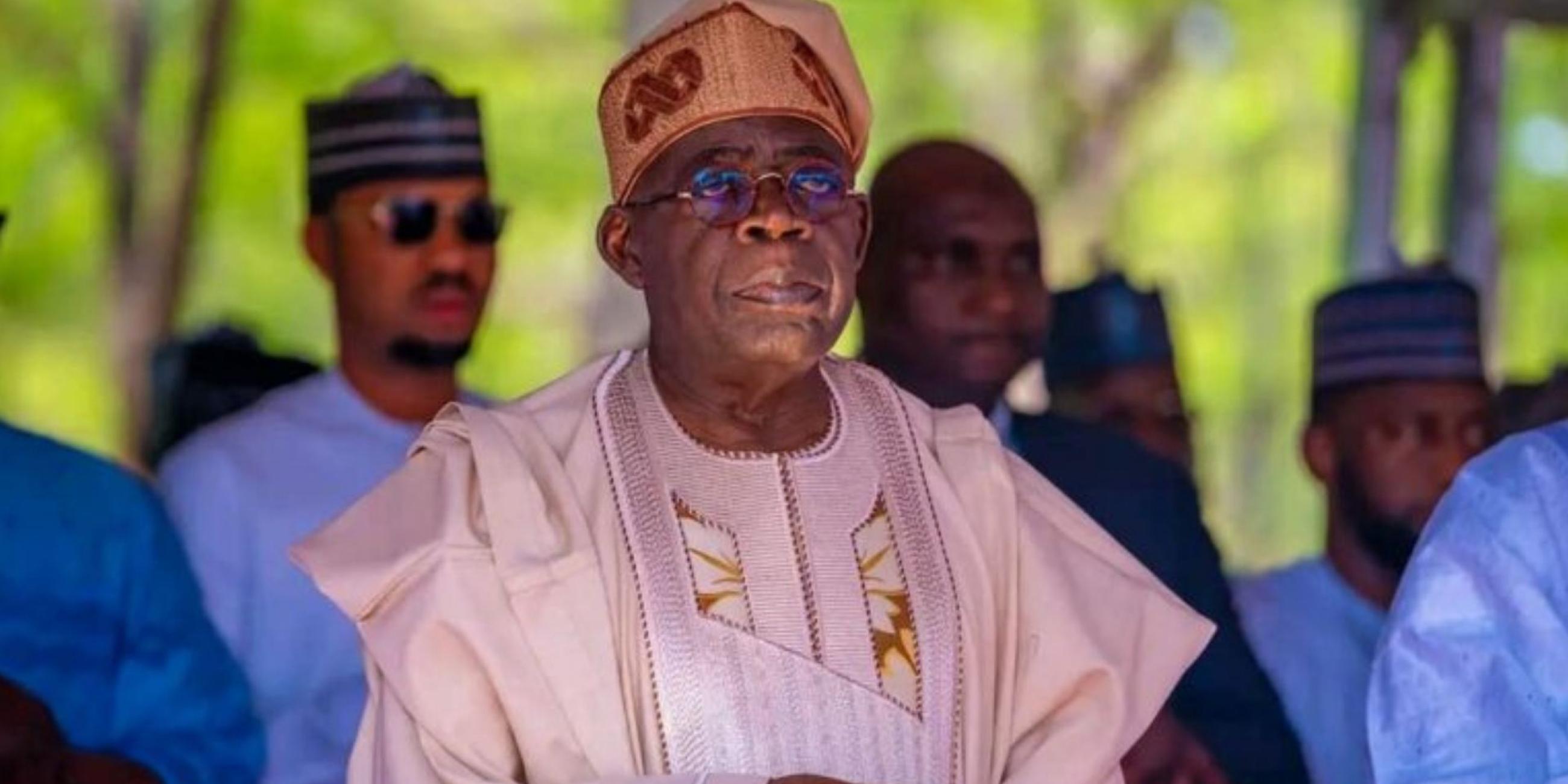
    Amid worsening electricity shortages across Nigeria, the Bola Tinubu-led federal government has allocated another ₦7 billion in the 2026 budget for the solarisation of the Presidential Villa, Aso Rock, raising fresh questions about priorities, equity, and governance. The new allocation—listed by the Budget Office of the Federation under State House expenditures as “provision of solarisation of Villa with solar mini grid”—comes just a year after ₦10 billion was set aside for the same project in 2025.

    The decision has reignited public debate because it contrasts sharply with the everyday reality of millions of Nigerians who continue to endure persistent blackouts, business disruptions, and rising energy costs. Critics argue that while the Presidency secures reliable power through a premium solar project, households and small enterprises remain at the mercy of an unstable national grid.

    In April 2025, when the initial ₦10 billion allocation triggered public outrage, the Presidency defended the project as a long-term investment in sustainability and energy efficiency. Presidential spokesman Bayo Onanuga said the move follows “global standards,” citing the White House’s use of solar power and insisting the administration was not “reinventing the wheel” but adopting a tested model for powering critical institutions. Supporters of the project also frame it as a smart hedge against grid failures and a step toward cleaner energy.

    Yet the timing has kept the controversy alive. The latest budget increase coincides with a series of national grid collapses that have plunged much of the country into darkness. According to data from the Nigerian Independent System Operator (NISO), one major disturbance saw total power generation crash from 2,052.37MW to just 139.92MW within one hour, leaving only three of the country’s 11 distribution companies able to take any load. At different points, major DisCos—including Eko, Ikeja, Enugu, Jos, Kaduna, Kano, Port Harcourt and Yola—recorded zero allocation, underscoring the fragility of the system.

    Independent monitoring confirmed that even hours after such collapses, national supply remained severely constrained, with total available power far below what is needed to sustain homes, hospitals, businesses, and critical services. Similar incidents in March and September 2025 followed earlier government celebrations of rising generation, only for output to plunge again below sustainable levels.

    Against this backdrop, many Nigerians question whether investing billions to guarantee uninterrupted electricity for the seat of power—while the wider grid remains unreliable—signals a two-tier energy policy. Some see the solar project as an admission that government itself no longer trusts the national power system it oversees. Others argue that the Presidency’s energy security should not come at a time when ordinary citizens face daily outages, rising fuel costs for generators, and an economy already under strain.

    The debate now centres on urgent questions: Is the Tinubu administration protecting Aso Rock while the country stays in the dark? Should scarce public funds be channelled first into stabilising the national grid rather than insulating the Presidency? And does repeated spending—₦17 billion across two years—reflect forward-looking sustainability or misplaced priorities in the middle of a power crisis? As Nigeria’s electricity infrastructure continues to falter, the Aso Rock solar budget has become a powerful symbol in a wider argument about leadership, accountability, and who truly benefits from government policy.


    Why Is Tinubu Budgeting Another ₦7bn for Aso Rock Solar While Nigerians Face Blackouts? After ₦10bn in 2025, Is the Presidency Prioritising Itself Over the National Power Crisis? Amid worsening electricity shortages across Nigeria, the Bola Tinubu-led federal government has allocated another ₦7 billion in the 2026 budget for the solarisation of the Presidential Villa, Aso Rock, raising fresh questions about priorities, equity, and governance. The new allocation—listed by the Budget Office of the Federation under State House expenditures as “provision of solarisation of Villa with solar mini grid”—comes just a year after ₦10 billion was set aside for the same project in 2025. The decision has reignited public debate because it contrasts sharply with the everyday reality of millions of Nigerians who continue to endure persistent blackouts, business disruptions, and rising energy costs. Critics argue that while the Presidency secures reliable power through a premium solar project, households and small enterprises remain at the mercy of an unstable national grid. In April 2025, when the initial ₦10 billion allocation triggered public outrage, the Presidency defended the project as a long-term investment in sustainability and energy efficiency. Presidential spokesman Bayo Onanuga said the move follows “global standards,” citing the White House’s use of solar power and insisting the administration was not “reinventing the wheel” but adopting a tested model for powering critical institutions. Supporters of the project also frame it as a smart hedge against grid failures and a step toward cleaner energy. Yet the timing has kept the controversy alive. The latest budget increase coincides with a series of national grid collapses that have plunged much of the country into darkness. According to data from the Nigerian Independent System Operator (NISO), one major disturbance saw total power generation crash from 2,052.37MW to just 139.92MW within one hour, leaving only three of the country’s 11 distribution companies able to take any load. At different points, major DisCos—including Eko, Ikeja, Enugu, Jos, Kaduna, Kano, Port Harcourt and Yola—recorded zero allocation, underscoring the fragility of the system. Independent monitoring confirmed that even hours after such collapses, national supply remained severely constrained, with total available power far below what is needed to sustain homes, hospitals, businesses, and critical services. Similar incidents in March and September 2025 followed earlier government celebrations of rising generation, only for output to plunge again below sustainable levels. Against this backdrop, many Nigerians question whether investing billions to guarantee uninterrupted electricity for the seat of power—while the wider grid remains unreliable—signals a two-tier energy policy. Some see the solar project as an admission that government itself no longer trusts the national power system it oversees. Others argue that the Presidency’s energy security should not come at a time when ordinary citizens face daily outages, rising fuel costs for generators, and an economy already under strain. The debate now centres on urgent questions: Is the Tinubu administration protecting Aso Rock while the country stays in the dark? Should scarce public funds be channelled first into stabilising the national grid rather than insulating the Presidency? And does repeated spending—₦17 billion across two years—reflect forward-looking sustainability or misplaced priorities in the middle of a power crisis? As Nigeria’s electricity infrastructure continues to falter, the Aso Rock solar budget has become a powerful symbol in a wider argument about leadership, accountability, and who truly benefits from government policy.
    0 Comments ·0 Shares ·4K Views
  • Is Tinubu Failing Yoruba Land? Pan-Yoruba Group Slams President Over Insecurity, Kidnapped Monarchs and ‘Silence From Power

    Is Nigeria’s security crisis finally reaching a breaking point in Yoruba land—and is President Bola Ahmed Tinubu truly doing enough to stop it? These are the urgent questions being raised after a Pan-Yoruba socio-political group, Ìgbìnmó Májékóbájé Ilé-Yorùbá, publicly condemned the President over what it described as his “deafening silence” in the face of worsening insecurity across the South-West.

    The group’s outcry followed the shocking abduction of a Kwara State monarch, Oba S. Y. Olaonipekun, and his son, Olaolu, who were reportedly kidnapped by suspected terrorists in the Ile-Ire district. For many observers, the incident marks a dangerous escalation in Nigeria’s security crisis: when even traditional rulers—symbols of authority, culture, and community stability—are no longer safe, what hope remains for ordinary citizens?

    In a strongly worded statement signed by its Convener, Olusola Badero, and released through Home Director Princess Balogun, the group accused President Tinubu of abandoning his constitutional duty as the nation’s chief security officer. According to the group, violent attacks, kidnappings, and killings have spread across Yoruba communities with little visible federal response. They argued that while statements are often issued, concrete action has been painfully absent.

    The union alleged that forests and rural communities in parts of Kwara and the wider South-West have become safe havens for armed groups posing as herdsmen, whom they directly described as terrorists. It lamented what it called the humiliation of Yoruba traditional institutions, stressing that the kidnapping of monarchs was once unimaginable in the region’s history. Quoting a Yoruba proverb—“Oríadé kì í sùn tán” (Royalty does not sleep outside)—the group said the abduction of kings represents not only a security failure but also a deep cultural wound.

    Beyond insecurity, the group launched a broader political critique of President Tinubu’s leadership. They accused him of prioritising personal interests, political allies, and future elections over the immediate safety and welfare of citizens. They further criticised what they described as his frequent foreign trips, alleging that he enjoys public funds abroad while Nigerians face poverty, fear, collapsing healthcare, and deteriorating schools at home. For the group, this contrast symbolises a widening gap between those in power and the people they govern.

    The statement also targeted Kwara State Governor AbdulRahman AbdulRazaq, accusing the state government of failing to protect residents. The group demanded the immediate release of the abducted monarch and his son, as well as other kidnapped citizens, including workers from the Kwara State Ministry of Works.

    To underline what it sees as a pattern of lawlessness, the union recalled earlier incidents, including the killing of Segun Aremu, a retired army general and monarch (the Olúkòrò of Koro), and the abduction of Kamilu Salami, the Oníbàrà of Bayagan Ile, who reportedly spent weeks in captivity before regaining freedom. These cases, the group argued, show that the crisis is not isolated but systemic.

    Perhaps most striking is the group’s warning that continued political inaction could lead to long-term devastation: deserted villages, abandoned farmlands, and forests fully occupied by armed groups. They questioned how elections can even matter if citizens are no longer safe enough to live in their communities. “Who will be alive to vote,” they asked, “if our villages are deserted and our forests controlled by terrorists?”

    The union went further, calling on Yoruba people at home and in the diaspora to take collective responsibility for protecting their region, suggesting that reliance on political leaders who have “clearly failed” could invite even greater catastrophe.

    As this controversy unfolds, Nigerians are left with uncomfortable but necessary questions: Has the federal government lost control of internal security? Is President Tinubu doing enough to protect his own region? And what happens when traditional institutions—once seen as untouchable—become targets of violence?

    On Fintter, this story is more than breaking news; it is a national conversation about leadership, accountability, and survival. Are these criticisms justified, or are they politically motivated? Can Nigeria still reverse its security decline, or has the crisis reached a point of no return? The answers may shape not just the future of Yoruba land, but the fate of the entire nation.

    What do you think? Is Tinubu truly failing on security—or is the crisis beyond any single leader? Share your thoughts and join the debate on Fintter.

    Is Tinubu Failing Yoruba Land? Pan-Yoruba Group Slams President Over Insecurity, Kidnapped Monarchs and ‘Silence From Power Is Nigeria’s security crisis finally reaching a breaking point in Yoruba land—and is President Bola Ahmed Tinubu truly doing enough to stop it? These are the urgent questions being raised after a Pan-Yoruba socio-political group, Ìgbìnmó Májékóbájé Ilé-Yorùbá, publicly condemned the President over what it described as his “deafening silence” in the face of worsening insecurity across the South-West. The group’s outcry followed the shocking abduction of a Kwara State monarch, Oba S. Y. Olaonipekun, and his son, Olaolu, who were reportedly kidnapped by suspected terrorists in the Ile-Ire district. For many observers, the incident marks a dangerous escalation in Nigeria’s security crisis: when even traditional rulers—symbols of authority, culture, and community stability—are no longer safe, what hope remains for ordinary citizens? In a strongly worded statement signed by its Convener, Olusola Badero, and released through Home Director Princess Balogun, the group accused President Tinubu of abandoning his constitutional duty as the nation’s chief security officer. According to the group, violent attacks, kidnappings, and killings have spread across Yoruba communities with little visible federal response. They argued that while statements are often issued, concrete action has been painfully absent. The union alleged that forests and rural communities in parts of Kwara and the wider South-West have become safe havens for armed groups posing as herdsmen, whom they directly described as terrorists. It lamented what it called the humiliation of Yoruba traditional institutions, stressing that the kidnapping of monarchs was once unimaginable in the region’s history. Quoting a Yoruba proverb—“Oríadé kì í sùn tán” (Royalty does not sleep outside)—the group said the abduction of kings represents not only a security failure but also a deep cultural wound. Beyond insecurity, the group launched a broader political critique of President Tinubu’s leadership. They accused him of prioritising personal interests, political allies, and future elections over the immediate safety and welfare of citizens. They further criticised what they described as his frequent foreign trips, alleging that he enjoys public funds abroad while Nigerians face poverty, fear, collapsing healthcare, and deteriorating schools at home. For the group, this contrast symbolises a widening gap between those in power and the people they govern. The statement also targeted Kwara State Governor AbdulRahman AbdulRazaq, accusing the state government of failing to protect residents. The group demanded the immediate release of the abducted monarch and his son, as well as other kidnapped citizens, including workers from the Kwara State Ministry of Works. To underline what it sees as a pattern of lawlessness, the union recalled earlier incidents, including the killing of Segun Aremu, a retired army general and monarch (the Olúkòrò of Koro), and the abduction of Kamilu Salami, the Oníbàrà of Bayagan Ile, who reportedly spent weeks in captivity before regaining freedom. These cases, the group argued, show that the crisis is not isolated but systemic. Perhaps most striking is the group’s warning that continued political inaction could lead to long-term devastation: deserted villages, abandoned farmlands, and forests fully occupied by armed groups. They questioned how elections can even matter if citizens are no longer safe enough to live in their communities. “Who will be alive to vote,” they asked, “if our villages are deserted and our forests controlled by terrorists?” The union went further, calling on Yoruba people at home and in the diaspora to take collective responsibility for protecting their region, suggesting that reliance on political leaders who have “clearly failed” could invite even greater catastrophe. As this controversy unfolds, Nigerians are left with uncomfortable but necessary questions: Has the federal government lost control of internal security? Is President Tinubu doing enough to protect his own region? And what happens when traditional institutions—once seen as untouchable—become targets of violence? On Fintter, this story is more than breaking news; it is a national conversation about leadership, accountability, and survival. Are these criticisms justified, or are they politically motivated? Can Nigeria still reverse its security decline, or has the crisis reached a point of no return? The answers may shape not just the future of Yoruba land, but the fate of the entire nation. 💬 What do you think? Is Tinubu truly failing on security—or is the crisis beyond any single leader? Share your thoughts and join the debate on Fintter.
    0 Comments ·0 Shares ·4K Views
  • Yobe Boat Tragedy: 29 Bodies Recovered and Buried as Search Continues for About 10 Missing Victims in Nguru Waterways

    At least 29 bodies have been recovered and buried following a tragic boat accident in Yobe State, as rescue teams continue searching for between eight and 10 victims still missing. The Yobe State Emergency Management Agency (SEMA) confirmed the development on Monday, with its Executive Secretary, Mohammed Goje, stating that recovery operations remain ongoing in the affected waterways.

    According to SEMA, all 13 victims who were earlier hospitalised after the incident have been discharged, while emergency responders, local divers, and security agencies are intensifying efforts to locate the remaining presumed victims.

    The fatal incident occurred on Friday in Garin Garbi, Nguru Local Government Area, when a passenger boat capsized, leading to multiple casualties. Initial eyewitness accounts indicated that at least 25 people died, while 14 others were rescued alive.

    Authorities say the tragedy underscores recurring safety concerns around water transportation in riverine communities, as search and recovery operations continue to bring closure to affected families and communities in Yobe State.
    Yobe Boat Tragedy: 29 Bodies Recovered and Buried as Search Continues for About 10 Missing Victims in Nguru Waterways At least 29 bodies have been recovered and buried following a tragic boat accident in Yobe State, as rescue teams continue searching for between eight and 10 victims still missing. The Yobe State Emergency Management Agency (SEMA) confirmed the development on Monday, with its Executive Secretary, Mohammed Goje, stating that recovery operations remain ongoing in the affected waterways. According to SEMA, all 13 victims who were earlier hospitalised after the incident have been discharged, while emergency responders, local divers, and security agencies are intensifying efforts to locate the remaining presumed victims. The fatal incident occurred on Friday in Garin Garbi, Nguru Local Government Area, when a passenger boat capsized, leading to multiple casualties. Initial eyewitness accounts indicated that at least 25 people died, while 14 others were rescued alive. Authorities say the tragedy underscores recurring safety concerns around water transportation in riverine communities, as search and recovery operations continue to bring closure to affected families and communities in Yobe State.
    like
    1
    · 0 Comments ·0 Shares ·648 Views
  • After a ₦16 million ransom was paid, seven victims from ECWA Church were released: Four alive with 3 dead bodies. Some elderly women didn’t make it out alive
    After a ₦16 million ransom was paid, seven victims from ECWA Church were released: Four alive with 3 dead bodies. Some elderly women didn’t make it out alive 😢😢
    1 Comments ·0 Shares ·437 Views
  • Nigerian Troops Kill Three Bandits in Fierce Gun Battle in Katsina Community, Arrest One Suspect and Recover Weapons, Motorcycles

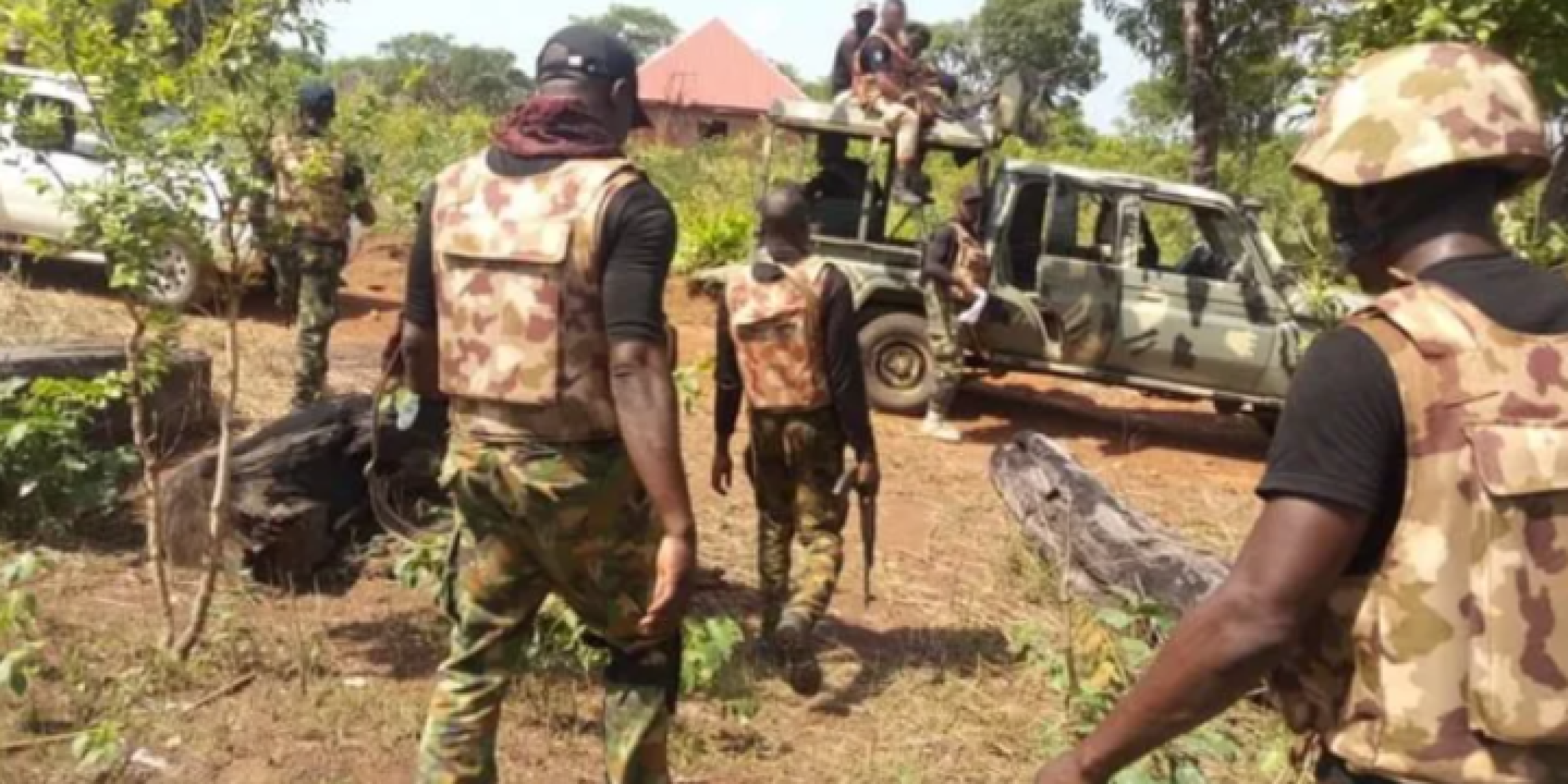
    Nigerian security forces have killed three suspected bandits during a gun battle in Karaduwa village, Matazu Local Government Area of Katsina State, as part of ongoing operations to combat banditry in the North-West. According to reports shared on social media, troops engaged criminal elements operating in the community, resulting in the deaths of three bandits, while several others escaped with gunshot wounds.

    During the operation, security operatives arrested one suspect alive and recovered weapons from the scene, along with eight motorcycles believed to have been used by the bandits for attacks and mobility. The encounter underscores continued efforts by the military and other security agencies to dismantle bandit networks, curb violent attacks, and restore peace in Katsina State, which has faced persistent security challenges in recent years.
    Nigerian Troops Kill Three Bandits in Fierce Gun Battle in Katsina Community, Arrest One Suspect and Recover Weapons, Motorcycles Nigerian security forces have killed three suspected bandits during a gun battle in Karaduwa village, Matazu Local Government Area of Katsina State, as part of ongoing operations to combat banditry in the North-West. According to reports shared on social media, troops engaged criminal elements operating in the community, resulting in the deaths of three bandits, while several others escaped with gunshot wounds. During the operation, security operatives arrested one suspect alive and recovered weapons from the scene, along with eight motorcycles believed to have been used by the bandits for attacks and mobility. The encounter underscores continued efforts by the military and other security agencies to dismantle bandit networks, curb violent attacks, and restore peace in Katsina State, which has faced persistent security challenges in recent years.
    like
    1
    · 0 Comments ·0 Shares ·948 Views
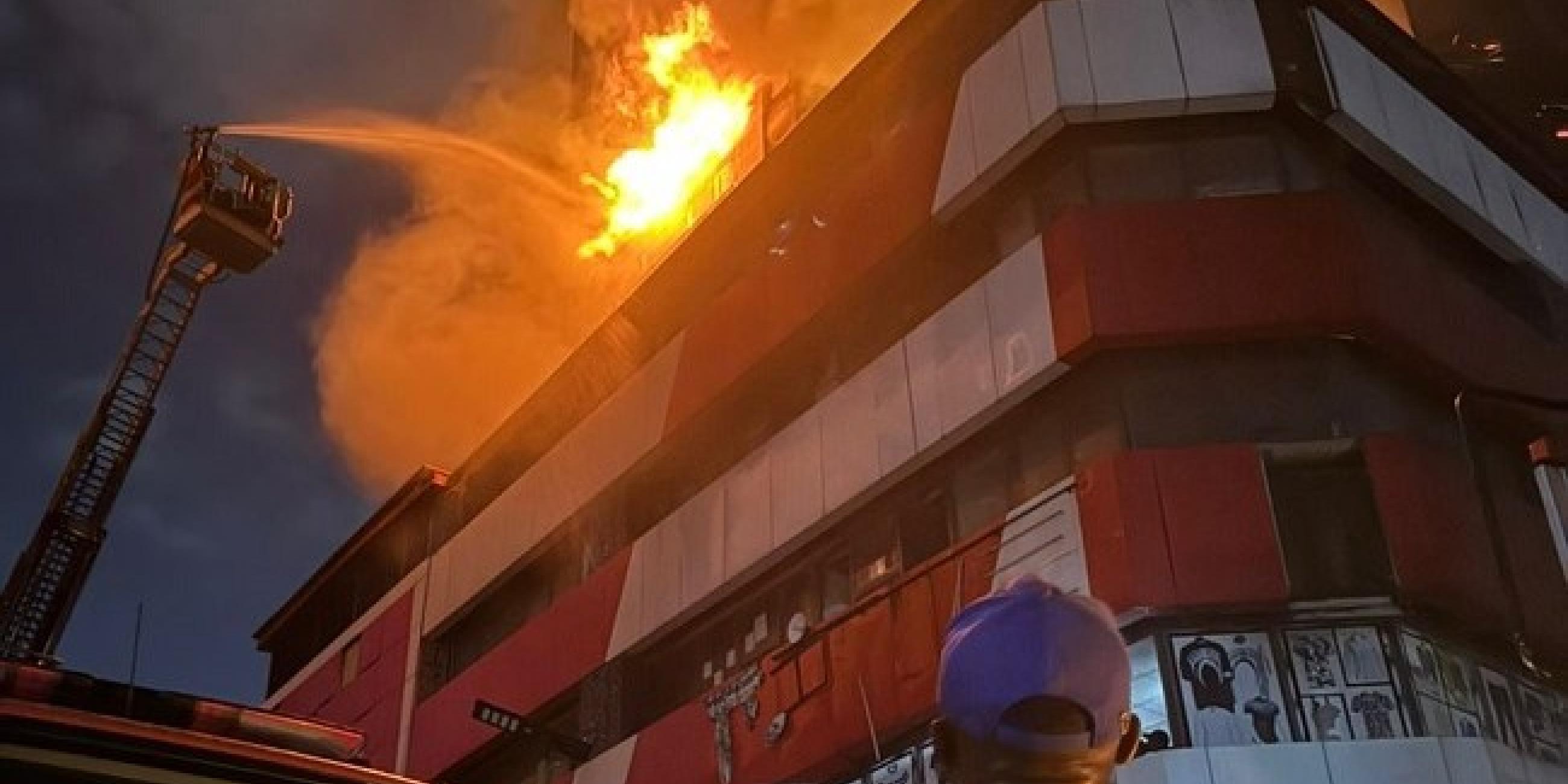
  • Lagos Government Confirms Casualties as Rescue Operations Continue After Christmas Eve Inferno at 25-Storey Great Nigeria Insurance House on Lagos Island

    The Lagos State Government has confirmed casualties following the Christmas Eve fire outbreak at the 25-storey Great Nigeria Insurance House (GNI) on Martins Street, Lagos Island, while rescue and recovery operations remain ongoing. In an official statement titled “RE: GNI House Fire” and signed by the Commissioner for Information and Strategy, Gbenga Omotoso, the government said emergency response teams were deployed immediately after the fire alarm was received.

    According to the statement, first responders—including the Lagos State Fire and Rescue Service, Lagos State Emergency Management Agency (LASEMA), Lagos State Ambulance Services (LASAMBUS), security agencies, and other safety units—have remained on site, conducting systematic search, rescue, and forensic operations in line with international emergency response standards. The government said operations will continue until full recovery is completed.

    Providing an update on casualties as of Thursday morning, the state government disclosed that eight males, including a firefighter, were rescued with varying degrees of injuries and taken to hospital. Three males and two females with minor injuries were treated at the scene and discharged. The government also confirmed that one adult female was recovered dead from the rubble, two adult males were extricated alive, while three other persons were burnt in the inferno.

    The Lagos State Government expressed sympathy to families who lost loved ones and appealed to the public to remain calm, patient, and sensitive, urging residents to refrain from spreading unverified information that could heighten public anxiety or disrupt ongoing rescue efforts.

    The clarification followed reports by SaharaReporters that several bodies were recovered from the collapsed section of the building as the fire continued to smoulder days after the incident, sparking fears that more victims could still be trapped beneath the debris. Eyewitness accounts described panic in the busy commercial area, with residents expressing concern over the prolonged fire and structural collapse that shook nearby buildings.
    Lagos Government Confirms Casualties as Rescue Operations Continue After Christmas Eve Inferno at 25-Storey Great Nigeria Insurance House on Lagos Island The Lagos State Government has confirmed casualties following the Christmas Eve fire outbreak at the 25-storey Great Nigeria Insurance House (GNI) on Martins Street, Lagos Island, while rescue and recovery operations remain ongoing. In an official statement titled “RE: GNI House Fire” and signed by the Commissioner for Information and Strategy, Gbenga Omotoso, the government said emergency response teams were deployed immediately after the fire alarm was received. According to the statement, first responders—including the Lagos State Fire and Rescue Service, Lagos State Emergency Management Agency (LASEMA), Lagos State Ambulance Services (LASAMBUS), security agencies, and other safety units—have remained on site, conducting systematic search, rescue, and forensic operations in line with international emergency response standards. The government said operations will continue until full recovery is completed. Providing an update on casualties as of Thursday morning, the state government disclosed that eight males, including a firefighter, were rescued with varying degrees of injuries and taken to hospital. Three males and two females with minor injuries were treated at the scene and discharged. The government also confirmed that one adult female was recovered dead from the rubble, two adult males were extricated alive, while three other persons were burnt in the inferno. The Lagos State Government expressed sympathy to families who lost loved ones and appealed to the public to remain calm, patient, and sensitive, urging residents to refrain from spreading unverified information that could heighten public anxiety or disrupt ongoing rescue efforts. The clarification followed reports by SaharaReporters that several bodies were recovered from the collapsed section of the building as the fire continued to smoulder days after the incident, sparking fears that more victims could still be trapped beneath the debris. Eyewitness accounts described panic in the busy commercial area, with residents expressing concern over the prolonged fire and structural collapse that shook nearby buildings.
    0 Comments ·0 Shares ·2K Views
  • Davido Meets Sierra Leone President Julius Maada Bio in Freetown Ahead of AFCON Concert, Reflects on Historic 50,000-Capacity Show and Promises Bigger Stadium Performance

    Afrobeats superstar Davido has strengthened his growing reputation as a cultural diplomat after paying a courtesy visit to Sierra Leone’s President, Julius Maada Bio, in Freetown ahead of his AFCON 2025 concert appearance. The “Timeless” hitmaker, who is currently on his 5ive Alive World Tour, described Sierra Leone as his “second home” while reminiscing about his iconic 2017 performance that drew over 50,000 fans. President Bio praised Davido for consistently projecting African culture on the global stage, as the singer hinted at plans for an even bigger stadium concert in the near future. The visit, which coincided with AFCON festivities, further cements Davido’s influence beyond music, following similar high-profile engagements with world leaders including Nigeria’s President Bola Tinubu and France’s Emmanuel Macron.

    #Davido
    #AFCON2025
    #AfricanEntertainment
    Davido Meets Sierra Leone President Julius Maada Bio in Freetown Ahead of AFCON Concert, Reflects on Historic 50,000-Capacity Show and Promises Bigger Stadium Performance Afrobeats superstar Davido has strengthened his growing reputation as a cultural diplomat after paying a courtesy visit to Sierra Leone’s President, Julius Maada Bio, in Freetown ahead of his AFCON 2025 concert appearance. The “Timeless” hitmaker, who is currently on his 5ive Alive World Tour, described Sierra Leone as his “second home” while reminiscing about his iconic 2017 performance that drew over 50,000 fans. President Bio praised Davido for consistently projecting African culture on the global stage, as the singer hinted at plans for an even bigger stadium concert in the near future. The visit, which coincided with AFCON festivities, further cements Davido’s influence beyond music, following similar high-profile engagements with world leaders including Nigeria’s President Bola Tinubu and France’s Emmanuel Macron. #Davido #AFCON2025 #AfricanEntertainment
    0 Comments ·0 Shares ·2K Views
  • NAOWA PRESIDENT TOUCHES LIVES AS OVER 1500 BARRACKS FAMILIES RECEIVES END-OF-YEAR SUPPORT
    _Reaffirms NAOWA’s Commitment to the Welfare and Well-Being of the Barracks Community…

    The Mogadishu Cantonment, Asokoro, Abuja, came alive with warmth and goodwill as the President of the Nigerian Army Officers’ Wives Association (NAOWA), Mrs Safiyyah Hassan Shaibu, distributed food items to over 1,500 beneficiaries, comprising widows of fallen heroes, members of the Nigerian Army Soldiers’ Wives Association (NASWA), and the Military Officers’ Widows Association (MIOWA).

    The humanitarian outreach formed part of NAOWA’s End-of-Year activities, which were aimed at providing timely support to vulnerable members of the barracks community, particularly during the festive season.

    The initiative was organised in furtherance of NAOWA’s Civil–Military Cooperation drive, which aligned with the Association’s transformative mission of promoting cooperation, empowerment, education, healthcare, and welfare through entrepreneurship, digital skills, charity, and community service—towards building united, resilient, and self-reliant Army families.

    Speaking at the event, Mrs Shaibu described the outreach as a practical expression of NAOWA’s compassion, solidarity, and unwavering commitment to the barracks community. She noted that the gathering also provided an opportunity for members to come together in the spirit of Christmas, fostering unity, love, and mutual support.

    The NAOWA President commended members of NAOWA and NASWA for their resilience and invaluable contributions on the home front, particularly while their spouses were deployed in the line of duty.

    The President NAOWA further urged beneficiaries to prioritise peace and harmony in their homes, stressing that peace remained the foundation for sustainable development and progress. She also encouraged the culture of savings and investment, while reiterating NAOWA’s continued support for the welfare and empowerment of Army families.

    Highlights of the event included the distribution of food items to beneficiaries and a group photograph to commemorate the occasion.

    JEMILA JIMOH
    Captain
    Liason Officer NAOWA
    20 December 2025
    NAOWA PRESIDENT TOUCHES LIVES AS OVER 1500 BARRACKS FAMILIES RECEIVES END-OF-YEAR SUPPORT _Reaffirms NAOWA’s Commitment to the Welfare and Well-Being of the Barracks Community… The Mogadishu Cantonment, Asokoro, Abuja, came alive with warmth and goodwill as the President of the Nigerian Army Officers’ Wives Association (NAOWA), Mrs Safiyyah Hassan Shaibu, distributed food items to over 1,500 beneficiaries, comprising widows of fallen heroes, members of the Nigerian Army Soldiers’ Wives Association (NASWA), and the Military Officers’ Widows Association (MIOWA). The humanitarian outreach formed part of NAOWA’s End-of-Year activities, which were aimed at providing timely support to vulnerable members of the barracks community, particularly during the festive season. The initiative was organised in furtherance of NAOWA’s Civil–Military Cooperation drive, which aligned with the Association’s transformative mission of promoting cooperation, empowerment, education, healthcare, and welfare through entrepreneurship, digital skills, charity, and community service—towards building united, resilient, and self-reliant Army families. Speaking at the event, Mrs Shaibu described the outreach as a practical expression of NAOWA’s compassion, solidarity, and unwavering commitment to the barracks community. She noted that the gathering also provided an opportunity for members to come together in the spirit of Christmas, fostering unity, love, and mutual support. The NAOWA President commended members of NAOWA and NASWA for their resilience and invaluable contributions on the home front, particularly while their spouses were deployed in the line of duty. The President NAOWA further urged beneficiaries to prioritise peace and harmony in their homes, stressing that peace remained the foundation for sustainable development and progress. She also encouraged the culture of savings and investment, while reiterating NAOWA’s continued support for the welfare and empowerment of Army families. Highlights of the event included the distribution of food items to beneficiaries and a group photograph to commemorate the occasion. JEMILA JIMOH Captain Liason Officer NAOWA 20 December 2025
    0 Comments ·0 Shares ·1K Views
  • WHEN A TERRORIST TESTIFIES BEFORE THE WORLD:

    BELLO TURJI SPEAKS, AND NIGERIA STANDS ACCUSED

    By
    Sa'adiyyah Adebisi Hassan

    What does it mean when a country’s Minister of Defence becomes the subject of a public rebuttal by a self-confessed terrorist?

    What do we call a nation where a mass murderer feels confident enough to issue a sermon, clarify figures, confirm negotiations, and invoke God while the state watches in silence?

    Nigeria no longer needs analysts.
    Nigeria now has testimony.

    FULL STATEMENT BY BELLO TURJI (UNEDITED, QUOTED IN FULL)

    Bello Turji, a globally wanted terrorist leader responsible for mass killings, kidnappings, and terror across Nigeria’s North-West, released a video message. Below is his statement quoted word for word, from A to Z, as spoken:

    “In the name of Allah, the Most Beneficent, the Most Merciful.

    People of the world, I greet you with the Islamic greeting: Assalamu alaykum wa rahmatullahi wa barakatuhu.

    My Muslim brothers and sisters in Nigeria and across West Africa, I wish you well. I do not need to mention my name, everyone knows who I am. I am Muhammad Bello Turji.

    We make demands on the government, and if the government listens and changes its ways, by Allah, there will be peace. But if the government refuses, then by Allah, you know who I am. I am Bello Turji.

    I am here to send a message to those who have turned our lives in Nigeria into dust. They keep killing us, and they keep arguing among themselves, blaming one another for what is happening.

    I listened to the confession of Musa Kamarawa, who does not know what he is doing. This same Musa is claiming he has evidence, especially after Matawalle sued the cleric Murtala Asada.

    Musa Kamarawa, by your own words you have now admitted that you are a terrorist like us. Yes, I agree that the Zamfara State Government under Matawalle asked you to act as an intermediary between us and the government in order to negotiate peace. But about three percent of what you are saying is a lie.

    You claimed that we came to the Government House and that Matawalle gave me ₦30 million. I swear by Allah, since the day I was born, Matawalle has never given me even ₦5 million. I am not here to defend Matawalle.

    In this world, the person I hate most is Matawalle. During his tenure as governor, there was a day when we buried 70 people - men, women, and children - killed by a bomb blast. It was also during his tenure that my father was unjustly arrested and sent to prison. You know this very well. So tell me, how can I love Matawalle?

    However, I will not allow you to use my name to defame someone or lie against anyone. Yes, during Matawalle’s era, negotiations took place. Anything you say, I can defend myself alongside the late Kachalla Halilu, who is no longer alive.

    Musa, you are a hypocrite. You claimed Matawalle gave us ₦30 million - were you the one who held the money? I am a witness. Morsidi and I went to see Matawalle, but he did not give me even ₦3 million. I swear to Allah.

    You also spoke about dusa. The dusa was given after negotiations, when we agreed to stop killing and the government also agreed to stop killing us. Your committee was given the responsibility to buy the dusa, at ₦650,000 per bag.

    Musa, you do not fear Allah. You are a bad person. Even if Matawalle is killed today and only you are left, you will not live forever. Fear Allah, Musa Kamarawa. Fear Allah.

    If terrorists are truly what the authorities are looking for, then they should arrest your godfathers - the former governor of Sokoto State and Yarima. We have heard that what is happening in Zamfara and Sokoto began with them. Were they not the ones who destroyed Fulani houses? Were they not the ones who created local vigilante groups to kill Fulani people?

    Musa Kamarawa, you know me and I know you. The house you live in, in Isa Local Government - about one kilometre away - was it not your godfather who bought Fulani settlements and cleared them? Yet you still ask who brought trouble to Zamfara? Your godfathers are the source.

    Subhanallahi, wa iyyazu billahi.

    Before Matawalle became governor - during Shehi’s era - who then was sponsoring us ? We come from Rabbil ‘Alamin, from Almighty Allah. No one is bankrolling us.

    If you are attempting blackmail, know this: no one can use us for politics. We have nothing to do with politicians. No one can use me to blackmail anyone.

    Matawalle cheated me, and I leave him to Rabbil ‘Alamin.”

    That is the full statement.
    Nothing added. Nothing removed.

    WHAT THIS CONFESSION ACTUALLY MEANS

    Strip away the religious language and personal grudges, and what remains is devastating:

    1. A terrorist publicly admits to negotiations with a state government.

    2. He confirms intermediaries were officially used.

    3. He confirms material items (“dusa”) were provided after negotiations.

    4. He disputes amounts - not the act itself.

    This is not denial.
    This is damage control between criminals and power.

    INTERNATIONAL LAW: THIS IS TERRORISM FINANCING - FULL STOP

    Under international law, none of this is ambiguous.

    United Nations Security Council Resolution 1373

    Criminalizes:

    Direct or indirect support to terrorist groups

    Provision of funds, goods, food, or logistics

    Negotiations that involve material benefit

    There is no “peace talks” exception when:

    terrorists remain armed,

    no formal disarmament occurs,

    and killings continue.

    Financial Action Task Force (FATF)

    Defines terrorism financing as:

    “The provision or collection of funds or assets, directly or indirectly, with the intention or knowledge that they be used by a terrorist organisation.”

    Food, vehicles, cash, livestock feed - all qualify as assets.

    Comparative Reality

    In Colombia, officials went to prison for negotiating with FARC.

    In Italy, governments collapsed over mafia talks.

    In Pakistan, ministers were removed for “contacts.”

    In France or the UK, a defence official would be suspended within hours.

    In Nigeria, a terrorist clarifies the deal on video.

    THE MOST DAMNING PART: THE CONFIDENCE

    Bello Turji did not hide. He did not run. He did not whisper.

    He spoke calmly. He invoked God. He corrected records. He warned others.

    That confidence is not accidental.

    It comes from a system that has lost its fear of law.

    THIS IS STATE FAILURE IN REAL TIME

    This is no longer about politics. Not about parties. Not about religion.

    This is about whether Nigeria still qualifies as a sovereign state under international norms.

    When terrorists speak like insiders,
    when defence officials remain untouched,
    when confessions meet silence,

    the world draws its own conclusions.

    Nigeria is crying and the evidence is speaking for itself.
    WHEN A TERRORIST TESTIFIES BEFORE THE WORLD: BELLO TURJI SPEAKS, AND NIGERIA STANDS ACCUSED By Sa'adiyyah Adebisi Hassan What does it mean when a country’s Minister of Defence becomes the subject of a public rebuttal by a self-confessed terrorist? What do we call a nation where a mass murderer feels confident enough to issue a sermon, clarify figures, confirm negotiations, and invoke God while the state watches in silence? Nigeria no longer needs analysts. Nigeria now has testimony. FULL STATEMENT BY BELLO TURJI (UNEDITED, QUOTED IN FULL) Bello Turji, a globally wanted terrorist leader responsible for mass killings, kidnappings, and terror across Nigeria’s North-West, released a video message. Below is his statement quoted word for word, from A to Z, as spoken: “In the name of Allah, the Most Beneficent, the Most Merciful. People of the world, I greet you with the Islamic greeting: Assalamu alaykum wa rahmatullahi wa barakatuhu. My Muslim brothers and sisters in Nigeria and across West Africa, I wish you well. I do not need to mention my name, everyone knows who I am. I am Muhammad Bello Turji. We make demands on the government, and if the government listens and changes its ways, by Allah, there will be peace. But if the government refuses, then by Allah, you know who I am. I am Bello Turji. I am here to send a message to those who have turned our lives in Nigeria into dust. They keep killing us, and they keep arguing among themselves, blaming one another for what is happening. I listened to the confession of Musa Kamarawa, who does not know what he is doing. This same Musa is claiming he has evidence, especially after Matawalle sued the cleric Murtala Asada. Musa Kamarawa, by your own words you have now admitted that you are a terrorist like us. Yes, I agree that the Zamfara State Government under Matawalle asked you to act as an intermediary between us and the government in order to negotiate peace. But about three percent of what you are saying is a lie. You claimed that we came to the Government House and that Matawalle gave me ₦30 million. I swear by Allah, since the day I was born, Matawalle has never given me even ₦5 million. I am not here to defend Matawalle. In this world, the person I hate most is Matawalle. During his tenure as governor, there was a day when we buried 70 people - men, women, and children - killed by a bomb blast. It was also during his tenure that my father was unjustly arrested and sent to prison. You know this very well. So tell me, how can I love Matawalle? However, I will not allow you to use my name to defame someone or lie against anyone. Yes, during Matawalle’s era, negotiations took place. Anything you say, I can defend myself alongside the late Kachalla Halilu, who is no longer alive. Musa, you are a hypocrite. You claimed Matawalle gave us ₦30 million - were you the one who held the money? I am a witness. Morsidi and I went to see Matawalle, but he did not give me even ₦3 million. I swear to Allah. You also spoke about dusa. The dusa was given after negotiations, when we agreed to stop killing and the government also agreed to stop killing us. Your committee was given the responsibility to buy the dusa, at ₦650,000 per bag. Musa, you do not fear Allah. You are a bad person. Even if Matawalle is killed today and only you are left, you will not live forever. Fear Allah, Musa Kamarawa. Fear Allah. If terrorists are truly what the authorities are looking for, then they should arrest your godfathers - the former governor of Sokoto State and Yarima. We have heard that what is happening in Zamfara and Sokoto began with them. Were they not the ones who destroyed Fulani houses? Were they not the ones who created local vigilante groups to kill Fulani people? Musa Kamarawa, you know me and I know you. The house you live in, in Isa Local Government - about one kilometre away - was it not your godfather who bought Fulani settlements and cleared them? Yet you still ask who brought trouble to Zamfara? Your godfathers are the source. Subhanallahi, wa iyyazu billahi. Before Matawalle became governor - during Shehi’s era - who then was sponsoring us ? We come from Rabbil ‘Alamin, from Almighty Allah. No one is bankrolling us. If you are attempting blackmail, know this: no one can use us for politics. We have nothing to do with politicians. No one can use me to blackmail anyone. Matawalle cheated me, and I leave him to Rabbil ‘Alamin.” That is the full statement. Nothing added. Nothing removed. WHAT THIS CONFESSION ACTUALLY MEANS Strip away the religious language and personal grudges, and what remains is devastating: 1. A terrorist publicly admits to negotiations with a state government. 2. He confirms intermediaries were officially used. 3. He confirms material items (“dusa”) were provided after negotiations. 4. He disputes amounts - not the act itself. This is not denial. This is damage control between criminals and power. INTERNATIONAL LAW: THIS IS TERRORISM FINANCING - FULL STOP Under international law, none of this is ambiguous. United Nations Security Council Resolution 1373 Criminalizes: Direct or indirect support to terrorist groups Provision of funds, goods, food, or logistics Negotiations that involve material benefit There is no “peace talks” exception when: terrorists remain armed, no formal disarmament occurs, and killings continue. Financial Action Task Force (FATF) Defines terrorism financing as: “The provision or collection of funds or assets, directly or indirectly, with the intention or knowledge that they be used by a terrorist organisation.” Food, vehicles, cash, livestock feed - all qualify as assets. Comparative Reality In Colombia, officials went to prison for negotiating with FARC. In Italy, governments collapsed over mafia talks. In Pakistan, ministers were removed for “contacts.” In France or the UK, a defence official would be suspended within hours. In Nigeria, a terrorist clarifies the deal on video. THE MOST DAMNING PART: THE CONFIDENCE Bello Turji did not hide. He did not run. He did not whisper. He spoke calmly. He invoked God. He corrected records. He warned others. That confidence is not accidental. It comes from a system that has lost its fear of law. THIS IS STATE FAILURE IN REAL TIME This is no longer about politics. Not about parties. Not about religion. This is about whether Nigeria still qualifies as a sovereign state under international norms. When terrorists speak like insiders, when defence officials remain untouched, when confessions meet silence, the world draws its own conclusions. Nigeria is crying and the evidence is speaking for itself.
    love
    1
    · 1 Comments ·0 Shares ·3K Views

  • Beaten, tortured, and burned alive: Son of Kharkiv’s deputy mayor killed in Vienna over crypto

    21-year-old Danylo Kuzmin, the son of Kharkiv’s deputy mayor, was murdered over $200,000 in cryptocurrency, Austria’s Kronen Zeitung reports. According to the outlet, he was lured into a trap in the underground garage of the luxury Sofitel hotel by a 19-year-old compatriot he trusted.

    During meetings in Vienna, Kuzmin allegedly carelessly told the acquaintance about his father’s assets stored in digital wallets. The young man then teamed up with a 45-year-old Ukrainian to plan the murder. In the garage, the victim was brutally beaten — blood traces were found in the stairwell, and Kuzmin was left with almost no teeth. Under torture, he gave up the access codes to two crypto wallets.

    The severely injured Kuzmin was forced into the back seat of his father’s Mercedes, driven to the Donaustadt district of Vienna, doused with gasoline, and the car was set on fire while he was still alive.

    Using hotel surveillance footage, Vienna police quickly identified the suspects. After an international manhunt, they were arrested in Ukraine, where they will stand trial. The killers managed to withdraw $200,000; about $100,000 was found on the 19-year-old at the time of arrest.

    According to unofficial reports, the 45-year-old suspect is a former senior official of the Odesa customs service, while the 19-year-old is the son of a well-known businessman from Chernivtsi and the stepson of Ukraine’s ambassador to Bulgaria.
    🤯 Beaten, tortured, and burned alive: Son of Kharkiv’s deputy mayor killed in Vienna over crypto 21-year-old Danylo Kuzmin, the son of Kharkiv’s deputy mayor, was murdered over $200,000 in cryptocurrency, Austria’s Kronen Zeitung reports. According to the outlet, he was lured into a trap in the underground garage of the luxury Sofitel hotel by a 19-year-old compatriot he trusted. During meetings in Vienna, Kuzmin allegedly carelessly told the acquaintance about his father’s assets stored in digital wallets. The young man then teamed up with a 45-year-old Ukrainian to plan the murder. In the garage, the victim was brutally beaten — blood traces were found in the stairwell, and Kuzmin was left with almost no teeth. Under torture, he gave up the access codes to two crypto wallets. The severely injured Kuzmin was forced into the back seat of his father’s Mercedes, driven to the Donaustadt district of Vienna, doused with gasoline, and the car was set on fire while he was still alive. Using hotel surveillance footage, Vienna police quickly identified the suspects. After an international manhunt, they were arrested in Ukraine, where they will stand trial. The killers managed to withdraw $200,000; about $100,000 was found on the 19-year-old at the time of arrest. According to unofficial reports, the 45-year-old suspect is a former senior official of the Odesa customs service, while the 19-year-old is the son of a well-known businessman from Chernivtsi and the stepson of Ukraine’s ambassador to Bulgaria.
    0 Comments ·0 Shares ·972 Views
More Results
Fintter https://fintter.com