


 About
About
Samori Touré The Lion of Wassoulou Who Fought an Empire With Fire, Faith, and Iron Will

Samori Touré
There are some men in history who seem to arrive not just to live, but to confront an age. They do not enter a quiet world. They are born into movement, fear, ambition, war, and change. Their names become larger than the borders that tried to contain them. Samori Touré was one of those men. In the history of West Africa, he stands as an empire builder, a master of war, and one of the fiercest African leaders to resist European colonial conquest in the nineteenth century. He was not a ruler who simply inherited a throne and sat behind palace walls. He built power with his own hands, his own mind, and his own relentless will. He fought not only rival states in the interior of West Africa, but also the expanding power of France, which was pressing deeper into the region with rifles, ambition, and imperial certainty.
To tell the story of Samori Touré is to enter a world where kingdoms rose and fell quickly, where trade routes shaped politics, where horses, guns, and caravans mattered as much as bloodlines, and where the future of whole peoples could depend on the courage and strategy of one determined leader. His life was not simple, and it was not soft. It was full of conquest, movement, alliances, losses, and difficult decisions. Yet through all of it, one thing remained constant. He refused to surrender easily. That refusal is why he remains one of the great names of African resistance.
Samori Touré was born around 1830 in the region of present day Guinea, in the wider Manding world of West Africa. The details of his early life survive through a mixture of written history and oral memory, but scholars broadly agree that he came from a Dyula or Mandinka trading background rather than from a long established royal throne. His father is often identified as a trader or artisan, and this matters because it reminds us that Samori did not begin life as the obvious heir to an empire. He emerged from a world shaped by commerce, mobility, and local struggle. He had to create what others merely inherited.
The young Samori grew up in a region being transformed by conflict and by the growing availability of firearms through trade networks connected to the coast. This was a dangerous period in West African history. Old political balances were shifting. Some rulers were growing stronger through access to weapons and commerce. Others were weakening. Raids, rivalries, and wars could break a family apart in a moment. In Samori’s case, one of the defining events of his early life was the capture of his mother during a conflict involving the Cissé. That moment did not merely wound him emotionally. It pulled him directly into the hard school of war. According to long preserved accounts, he entered the service of those who held his mother in order to secure her freedom, and in that service he learned discipline, military organization, and the handling of firearms. The experience shaped him deeply. He learned the logic of force from the inside before he ever commanded men of his own.
This part of his life already hints at the kind of figure he would become. He was not made in royal comfort. He was made by pressure. He learned war through necessity. He learned patience through humiliation. He learned that power in his world belonged not to the passive, but to those who could gather followers, master weapons, move quickly, and inspire fear or loyalty. When he eventually returned to his own people, he did not come back as a dreamer. He came back as a man sharpened by experience.
In the years that followed, Samori began to gather a personal following. This was how many strong rulers in the region first rose, not always through direct inheritance, but through the building of a military household and a circle of dependents, allies, and loyal fighters. He proved himself not only brave but politically astute. He understood that men follow strength, but they stay for reward, order, and direction. He fought, negotiated, and expanded his influence across the inland zones of what are now Guinea, Mali, Côte d’Ivoire, and surrounding areas. Over time this process gave birth to the state that would be known as the Wassoulou Empire. By the late eighteen seventies he had become powerful enough to proclaim himself ruler of this growing empire, and his authority rested not on legend alone, but on military efficiency, expanding commerce, and administrative discipline.
The rise of the Wassoulou Empire was one of the most remarkable political achievements in West Africa during that century. Samori did not merely conquer villages and pass on. He sought to organize territory, secure trade, and maintain an armed structure capable of long campaigns. He built a state that depended heavily on a professional army, often called sofas, and he equipped that army as effectively as he could with imported firearms. He cultivated access to weapons through commercial links, including routes tied to Sierra Leone, and he recognized earlier than many that a ruler who wished to survive in a changing West Africa could not rely only on spears and courage. He needed modern arms, trained troops, and mobility. That practical military realism became one of his greatest strengths.
Yet Samori was not only a man of rifles and marching columns. He also understood the language of belief and legitimacy. In the eighteen eighties he increasingly shaped his rule around Islam, presenting himself not merely as a war leader but as a Muslim ruler with wider moral authority. He eventually adopted the title Almamy, a title associated with Islamic leadership in the region. This gave his state both spiritual and political framing, though the process was not always peaceful or universally welcomed. In some areas, efforts to impose religious conformity and strengthen central rule caused resistance and revolt. This reveals an important truth about Samori. He was a great builder, but like many empire builders, he could be hard, severe, and uncompromising. His rule inspired loyalty, but it also demanded obedience.
As his state expanded, so did the scale of his ambition. He fought neighboring powers, negotiated alliances when useful, and sought to control key economic zones, including areas linked to trade and production. Like many strong rulers of his time, he knew that wealth and war were connected. A ruler needed resources to arm men, feed troops, reward commanders, and project authority. The Wassoulou Empire became known as one of the most formidable states of the western Sudan in that era, and much of that was due to Samori’s ability to combine military energy with political organization. Observers later compared his strategic capacity to that of major military leaders elsewhere, not because he copied Europe, but because he demonstrated a high level of planning, adaptability, and command in his own setting.
But history would not remember him so strongly if his story had ended there. It was his collision with French colonial expansion that transformed him from a regional empire builder into a towering symbol of resistance. During the late nineteenth century, France was pushing deeper into West Africa, constructing forts, securing routes, imposing treaties, and slowly converting commercial influence into territorial rule. What European officials often described as orderly expansion looked very different to African rulers on the ground. It looked like encirclement. It looked like interference. It looked like the slow theft of sovereignty. Samori saw this clearly. He recognized that the French were not merely passing traders or occasional diplomats. They were the advance edge of empire.
From the early eighteen eighties, war between Samori and the French became one of the great military struggles of colonial West Africa. For around fifteen years, he resisted French expansion with a determination that forced them to commit serious men, weapons, and attention to breaking his power. This was no brief rebellion. It was a prolonged contest involving sieges, shifting frontiers, diplomacy, tactical retreats, scorched earth decisions, and repeated efforts by both sides to outmaneuver the other. Samori was dangerous precisely because he was not careless. He learned. He adjusted. He moved. He refused to present himself as an easy target.
One of the reasons Samori’s resistance became so famous was his strategic flexibility. When direct confrontation was unwise, he withdrew. When ground could not be held, he shifted his base. When resources were threatened, he sought new supply lines. He fought as a ruler who understood that survival itself could be a weapon. This often frustrated the French, who wanted decisive submission. Instead, they faced a leader who could retreat across vast distances, rebuild, and return to the struggle in altered form. He did not cling foolishly to one city if losing it meant the destruction of the whole state. He treated territory as important, but not more important than the continued existence of his political and military core. That kind of mobility gave his resistance unusual longevity.
At the same time, the war placed enormous pressure on the empire he had built. Long campaigns exhausted communities. Supply lines strained. Some subject peoples rebelled. Local grievances could deepen under the burden of military demands. This is one of the reasons Samori’s story remains so human and so complex. He was not fighting with unlimited resources, and he was not leading a people untouched by suffering. Every empire under siege demands sacrifice, and the cost could be terrible. There were moments when his forces used harsh methods, moments when populations were uprooted, and moments when his own authority was tested from within. To tell his story honestly is not to turn him into a flawless saint. It is to see him as a hard ruler in a hard age, confronting a violent imperial threat with methods shaped by the brutal realities of his time.
The French, however, kept advancing. They built forts, disrupted trade, and applied pressure from multiple directions. Samori’s difficulties increased as access to firearms became more constrained and as rival African powers made their own calculations in the changing political environment. No resistance operates in a vacuum. Every leader must contend not only with the declared enemy but also with uncertain allies, wavering subordinates, and regional rivals ready to exploit weakness. Samori faced all of this. Yet still he fought on. He shifted eastward, moving parts of his state toward new zones and trying to preserve his independence against overwhelming force.
That eastward movement has often been remembered as one of the most dramatic phases of his career. Instead of collapsing immediately under French pressure, he attempted to relocate the center of his power, drawing the struggle into new territories. This required extraordinary stamina and organizational capacity. It also reveals his refusal to accept the easy end that colonial powers expected. He would not stand still simply to be conquered. He made the map itself part of the war. He turned distance into delay and delay into continued resistance.
Still, even the fiercest resistance can be worn down. By the late eighteen nineties, French military pressure, encirclement, and persistent campaigning had weakened Samori’s position severely. In 1898 he was finally captured. For a man who had spent so many years fighting to remain free and sovereign, the moment carried enormous tragic weight. The ruler who had built an empire and challenged European expansion so stubbornly was taken from the field and removed from the land where his authority had once thundered. He was exiled first through French colonial channels and eventually sent to Gabon, where he died in 1900. His death marked the end of his personal struggle, but not the end of his meaning.
What, then, makes Samori Touré endure in memory?
Part of the answer is simple. He fought. He fought hard, he fought long, and he fought when many others were being overwhelmed by the expanding machinery of colonial conquest. This alone would have made him memorable. But there is more to it than that. He was not only a resistor. He was a creator. Before he was the enemy of French imperial ambition, he was the founder of a major West African state. He organized armies, shaped administration, controlled trade routes, and governed a large and dynamic political system. He was both builder and defender. That double legacy is what gives his life such weight.
Another reason he remains powerful in memory is that his life captures a turning point in African history. Samori lived in the age when many African states were trying to navigate internal transformation while facing the growing aggression of Europe. He stands at the crossroads of older regional politics and newer colonial violence. In him one sees both the vitality of African statecraft and the destructive pressure of imperial conquest. He was neither passive victim nor isolated rebel. He was a political actor of great intelligence trying to shape history in a world closing in around him.
His legacy also challenges simplistic stories about colonialism. European imperial narratives long tried to present conquest as inevitable, even beneficial, as though African leaders simply crumbled before superior order. Samori’s story destroys that lie. He resisted for years. He adapted strategically. He built institutions. He armed his forces carefully. He understood diplomacy and logistics. His defeat did not prove African weakness. It revealed the immense violence, persistence, and resources that colonial powers were willing to use in order to dominate other peoples.
And then there is the moral power of defiance. People remember those who refused to kneel quietly. In Guinea, Mali, and across wider African historical memory, Samori Touré has often been honored as a symbol of resistance. He was not perfect. No empire builder is. Yet his determination against colonial intrusion has given him a lasting place in the imagination of those who value sovereignty, courage, and African dignity. Even after his capture, his name did not disappear into silence. It moved into memory, into discussion, into national and regional historical consciousness.
There is something almost epic in the shape of his life. A young man forged by the capture of his mother. A fighter trained by necessity. A commander who gathered men and carved out authority where none had been handed to him. A ruler who built the Wassoulou Empire from force, trade, discipline, and vision. A Muslim leader who gave his state ideological shape. A strategist who refused to let France take him quickly. A defeated king who still would not be forgotten. The arc is tragic, but it is also grand. It belongs to the kind of history that does not sit still on the page. It moves like marching feet. It sounds like hoofbeats in dry country. It feels like smoke on the horizon and the tense silence before battle.
If one imagines him at the height of his power, one sees more than a man in command. One sees the atmosphere around him. Courtyards alive with messengers. Smiths working metal. Soldiers drilling. Horses restless in the morning heat. Traders carrying goods across long distances. Quranic learning and statecraft meeting inside a court sharpened by danger. Beyond the center, villages and towns watching the rise of a force that seemed unstoppable. Then later, as the French war deepened, one imagines harder scenes. The forced marches. The strain of retreat. The loyalty of some followers and the fear of others. The ruler awake at night, knowing that every decision could save or destroy thousands. That is the world Samori inhabited.
And perhaps that is why his story still matters. It reminds us that African history is full of commanding figures who cannot be reduced to footnotes in somebody else’s empire. Samori Touré was not a side character in French expansion. He was the central figure of his own political drama. He did not exist merely to be conquered. He existed to rule, to fight, to build, and to resist. His life deserves to be told from within Africa’s own historical dignity.
In the end, Samori Touré stands as one of the last great independent military rulers of nineteenth century West Africa, a man who refused to watch history happen to him without answering back. He built an empire in Wassoulou through resolve and strategy. He faced colonial conquest with years of armed resistance. He lost his freedom, but he kept his place in memory. Time did not erase him. Defeat did not silence him. Across Guinea, Mali, and the wider story of Africa, his name still carries the force of iron, the heat of battle, and the sorrow of a continent fighting to remain its own.
That is why Samori Touré still stands tall in history. Not because he lived easily. Not because he died victorious. But because he met one of the harshest storms of his age and refused to bow without a long, fierce, unforgettable struggle.

Categorie
Leggi tutto
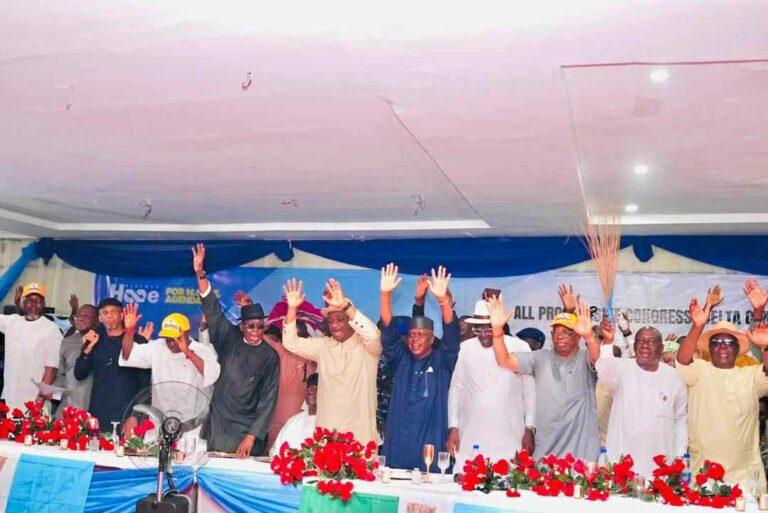
Delta APC endorses Tinubu, Oborevwori for 2027 re-elections. The All Progressives Congress in Delta Central Senatorial District has thrown its weight behind the re-election bids of President Bola Tinubu and Delta State Governor, Sheriff Oborevwori, ahead of the 2027 general elections. The endorsement came on Sunday during a Unity Meeting of party leaders and faithful, held in Ughelli,...
Ludo Ntshiwa In many parts of Africa the struggle for clean and affordable energy has shaped the daily lives of millions of people. For decades families have relied heavily on firewood and charcoal for cooking and heating. This dependence has led to severe deforestation, rising fuel prices, and environmental damage across many countries. In Botswana, a land known for its vast deserts,...
Healing did not arrive like a miracle. It crept in quietly, disguised as routine, discipline, and small acts of courage I didn’t know I was capable of. Some mornings, I woke up strong. I made my bed, took a shower, and reminded myself that I was still here, still breathing. Other mornings, I lay staring at the ceiling, my chest heavy with memories I didn’t invite...

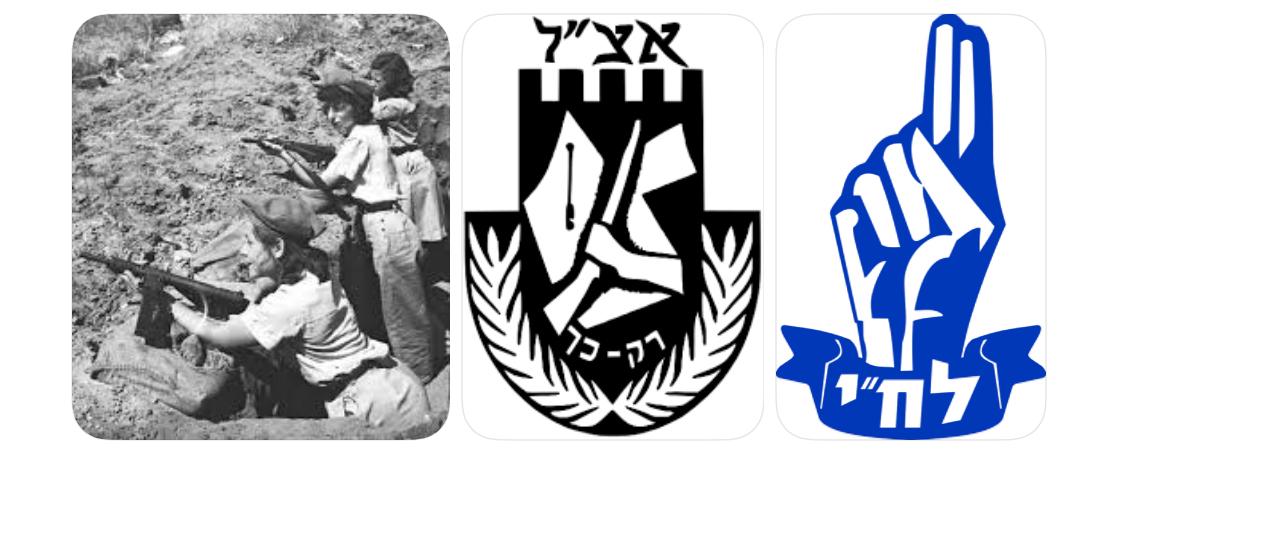
Before the establishment of the State of Israel in 1948, three major Jewish underground groups operated in Mandatory Palestine. These groups — Haganah, Irgun, and Lehi (Stern Gang) — played different roles in the Zionist struggle against British rule and Arab resistance. While members saw themselves as freedom fighters, the British government labelled many of their actions as...
A chieftain of the All Progressives Congress (APC), Mallam Salihu Isa Nataro, has called on the Vice President, Senator Kashim Shettima, to consider resigning from office in response to doubts about his relevance to the administration, following President Bola Ahmed Tinubu’s appointment. Nataro, who was a gubernatorial contender in Kebbi State, disclosed that even before the confusion...

