Environ
Allen Chafa and the Smart Water Tech Story of a Zimbabwean Innovator Turning Water Safety Into Hope
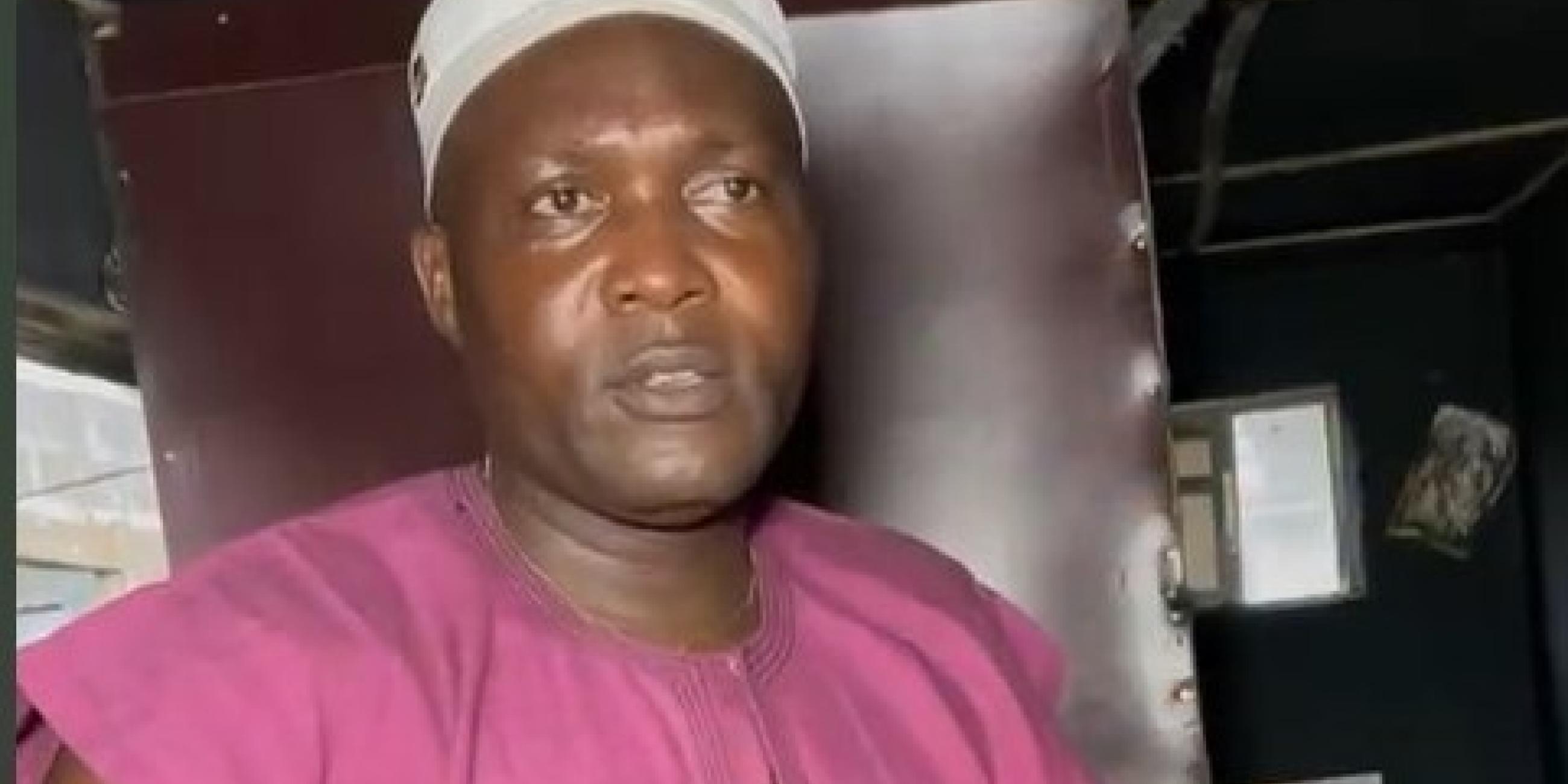
Allen Chafa
Allen Chafa’s story begins with a problem that was never abstract. It was not a classroom theory or a distant policy debate. It was water. Unsafe water. Scarce water. Water that could carry sickness instead of life. In Zimbabwe, where repeated water service failures and disease outbreaks have left deep scars on communities, Allen Chafa grew up seeing that access to clean water was not something many people could casually take for granted. That reality shaped the direction of his thinking long before the world began to notice his name.
Long before awards, shortlists, and international recognition, Allen was already asking a hard question. What can engineering do when people are facing daily risks that should never have become normal in the first place. That question seems to have followed him through his teenage years, through his studies, and into the building of the innovation for which he became known, Smart Water Tech. His work is rooted in one central belief. Safe drinking water should not be a luxury. It should not depend on luck. It should not depend on whether a family can afford extra protection after water leaves a treatment plant. It should be reliable, measurable, and trusted.
One of the most striking parts of his journey is that the impulse to build started early. In a first person account published by King’s E Lab, Allen wrote that in 2013, when he was just 16 years old, he stood beside a handmade solar powered well prototype at his secondary school in Harare. He explained that this was not simply a science experiment for attention. It was his response to a reality shaped by Zimbabwe’s 2008 cholera outbreak, which killed more than 4,000 people. That early project mattered because it showed how deeply the water crisis had entered his imagination. Even at that age, he was already trying to create something practical from necessity.
That early experience did more than reveal talent. It seems to have given him a way of thinking. Instead of waiting for perfect conditions, perfect funding, or perfect systems, he learned to respond to urgent need with what he had. He later reflected that real problems do not wait for perfect solutions. That line says a lot about his philosophy. It also explains why his later work did not become trapped in theory. It was built in response to the public health damage caused by poor water quality and weak water service delivery.
As his education advanced, so did the technical and strategic depth of his mission. Allen Chafa went on to build strong academic foundations in engineering and sustainability. According to King’s E Lab, he later became a Mastercard Foundation Scholar and an MPhil student in Engineering for Sustainable Development at the University of Cambridge. The same profile states that he also holds an MSc in Advanced Engineering Management from the University of Birmingham. His research interests have focused on engineering, innovation, and sustainability, especially the question of how early stage ventures make design decisions under real world constraints. That background matters because Smart Water Tech is not just a clever gadget. It comes from someone who thinks seriously about systems, scale, and long term impact.
At the center of Allen Chafa’s public recognition is Smart Water Tech, a real time water quality monitoring and control system created to address water borne diseases and poor water quality. The innovation received major exposure when he was shortlisted for the Royal Academy of Engineering’s Africa Prize for Engineering Innovation in the 2023 cohort. The Africa Prize described Smart Water Tech as a real time water quality monitoring and control system aimed at addressing water borne diseases. That recognition placed Allen among a select group of African engineering entrepreneurs developing solutions with the potential to improve lives at scale.
The invention itself is important because it tackles a painful weakness in the water supply chain. Treating water is one thing. Knowing whether it remains safe throughout the process is another. According to reporting by The Zimbabwe Independent, Allen created Smart Water Tech in response to a 43 percent increase in cholera cases in Zimbabwe between 2018 and 2020. That detail shows the urgency behind the invention. This was not a product built for novelty. It was built because the spread of water borne disease showed that communities could not simply assume the water reaching them was safe.
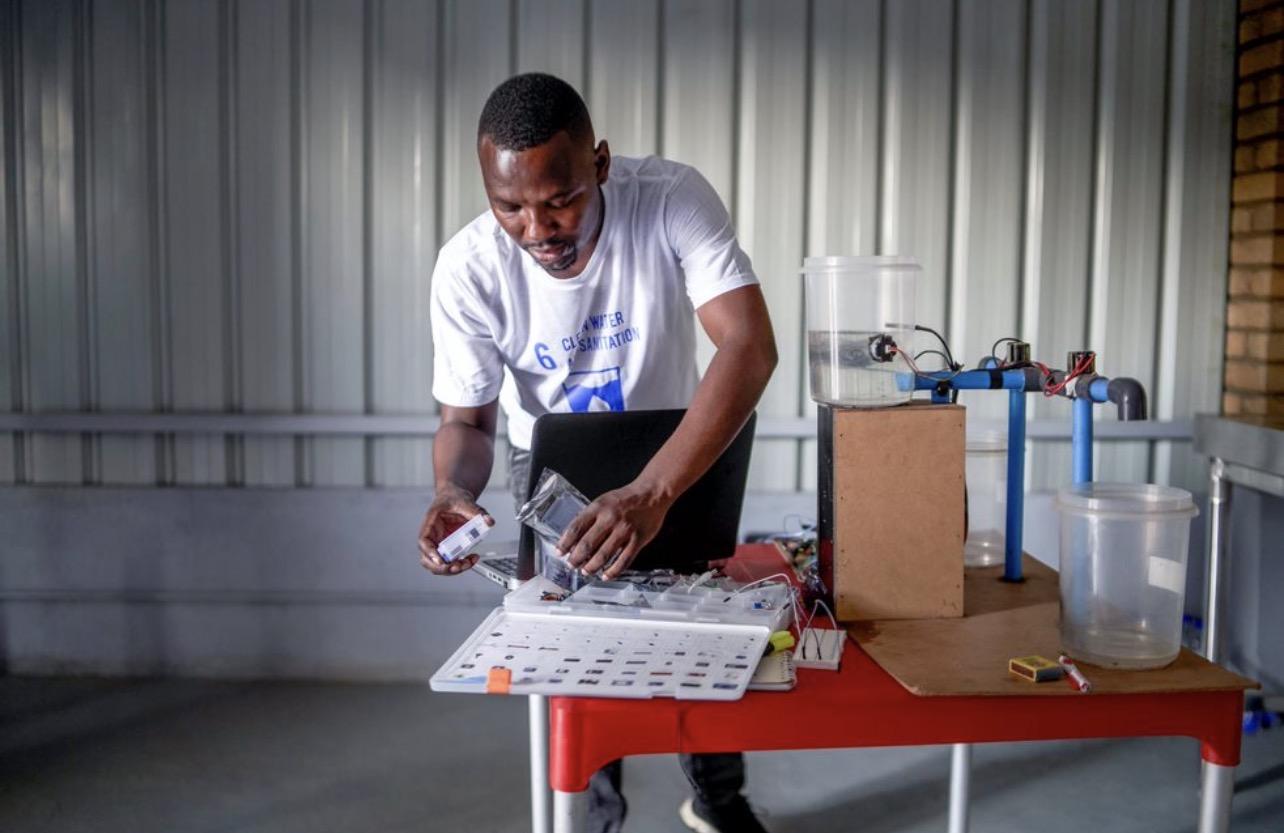
So what exactly did Allen Chafa invent. Smart Water Tech is designed to monitor water quality in real time during key stages of municipal water treatment. Reporting on his work explained that the system applies sensors at three stages. The first stage is before and during pretreatment flocculation, where coagulants are used to help separate particles and determine what additives may be needed. The water is then tested again at the filtration stage. Finally, it is tested before it is loaded onto tanks for delivery to the community. This staged monitoring is crucial because a failure at any point can allow unsafe water to pass onward. Real time data creates the chance to intervene before contaminated water reaches users.
The sensor system itself is also significant. The same report states that Smart Water Tech uses six sensors to monitor dissolved oxygen, pH levels, temperature, turbidity, hardness, and total dissolved solids. These are not random measurements. They are part of the chemistry and physical quality indicators that help reveal whether water is suitable for human use and whether treatment processes are working properly. By generating data from these parameters, the system helps determine if intervention is required. In simple terms, Allen’s invention is a way of making water treatment smarter, more responsive, and less dependent on guesswork.
That is what makes the invention powerful. It is not merely about observing water. It is about control. It is about creating a feedback system that allows treatment operators to detect problems earlier, reduce waste, save time, and protect lives. Allen himself said there was a real issue with water service delivery and that contaminated water was still being delivered to consumers. He argued that the product was saving time, money, and water, but most importantly, aiming to save lives. He framed it as a public health issue that hinders economic growth and insisted that people have a right to know their drinking water is safe.
That human rights angle is central to understanding his work. Many engineering stories are told as tales of technical genius alone. Allen Chafa’s story is different because the moral purpose remains visible. His invention emerged from a setting where water insecurity could become illness, where women and children often carry a disproportionate burden of coping with unreliable water access, and where communities lose time and income when they cannot trust what they drink. In that sense, Smart Water Tech is not only an engineering product. It is also part of a wider effort to restore confidence and dignity around one of life’s most basic needs.
Allen’s work also expanded beyond the single idea of testing municipal water. In his 2025 reflection, he explained that he co founded Aqua Solutions, a social enterprise tackling water insecurity in Zimbabwe through smart real time water quality monitoring and control systems. He wrote that the venture follows a human centered design process and works directly with communities instead of imposing solutions from above. That statement matters because it shows that Allen was not only building technology. He was also building a method for implementation. It is one thing to invent a water monitoring system. It is another to understand how people store water, use water, and judge whether a solution fits their daily lives.
His account gives a glimpse into what happened when technology met reality on the ground. He wrote that in early trials, the team discovered that maintaining water quality after purification required more than technical precision. It also had to fit everyday behavior. The team worked with residents to introduce routines for safer water storage and use. According to him, the solution later served three peri urban communities and reached more than 250 households. Users reportedly experienced a 40 percent reduction in the time spent collecting water. He even shared the testimony of a mother in Epworth who said that for the first time she no longer had to boil water to feel safe giving it to her child. These details show the difference between a promising prototype and a solution that begins to change daily life.
Recognition followed, but it did not appear to distract him from the purpose. King’s E Lab states that his contributions have been recognized by the Royal Academy of Engineering’s Africa Prize for Engineering Innovation, the Mastercard Foundation Entrepreneurship Prize, the Zimbabwe Institution of Engineers Award, and AFBE UK’s Next Big Idea. Those honors tell a story of credibility and momentum, but they also suggest something larger. Allen Chafa has become part of a growing class of African innovators who are not waiting for imported solutions to solve local problems. They are designing from within the problem itself, with lived experience and contextual understanding.
The wider context makes his work even more relevant. In the same published reflection, he noted that more than 400 million people in sub Saharan Africa still lack access to basic drinking water and that urban populations in many cities continue to grow rapidly. Whether every number shifts over time or not, the underlying point is hard to dispute. Existing centralized systems often struggle to keep pace with urban growth, especially in peri urban and informal areas. Decentralized and data driven technologies therefore become more than an option. They become a bridge between failing infrastructure and immediate human need. Allen’s work sits directly inside that space.
There is also something symbolic about the journey from a taped together teenage prototype to a recognized engineering venture. It captures a broader African reality in which innovation often starts under constraint rather than abundance. Allen’s story is not one of effortless access. It is a story of observation, adaptation, and discipline. He saw a problem close up. He began with what he could build. He studied. He refined. He co founded. He tested. He listened. Then he kept building. That progression is inspiring because it feels believable. It is not magic. It is persistence shaped by purpose.
His invention also matters because water quality issues are often invisible until they become tragic. A road full of potholes announces its failure. A collapsed building announces its failure. But dirty water can move quietly through a system and only later reveal itself in sickness, outbreaks, lost workdays, overwhelmed clinics, and grieving families. By focusing on real time monitoring and intervention, Smart Water Tech addresses a category of danger that is too often detected too late. Allen Chafa’s contribution lies in trying to move the point of action earlier, from reaction to prevention.
What he invented, then, can be understood in simple language. He invented a smarter way to watch water as it is being treated, using sensors and live data to check whether the water is staying within safe conditions at multiple stages. The purpose is to catch quality problems quickly, guide corrective action, reduce unsafe delivery, and help prevent disease. Through Aqua Solutions, he appears to have pushed this concept further into broader water purification and monitoring systems for underserved communities. That makes the invention both specific and expandable. It begins with municipal treatment monitoring, but the wider mission is safe and trusted water systems.
It is also worth noting that Allen’s story challenges the stereotype that innovation must always come from huge laboratories or giant corporations. Some of the most meaningful inventions come from people who have lived inside the problem they are trying to solve. Allen’s early exposure to water insecurity gave him clarity. His engineering education gave him tools. His social enterprise work gave him a path for application. Together, those forces helped shape Smart Water Tech into something more than a school dream and more than a competition entry. It became a response to a public health emergency and an example of how local engineering can serve communities directly.
If there is a lesson in Allen Chafa’s journey, it may be this. The most powerful inventions are not always the loudest. Sometimes they are the ones that quietly protect life. A safer glass of water. Less fear in a mother’s mind. Less time wasted searching for alternatives. More trust in what comes from the tap or delivery tank. These things may sound ordinary, but that is exactly why they matter. Ordinary life becomes impossible when its basics are unstable. Allen’s work aims to make one of those basics more dependable.
His story is still unfolding. He has already shown the ability to connect grassroots need with technical design, and he has built credibility in academic, entrepreneurial, and engineering circles. But perhaps the most enduring part of his story is not the shortlist or the awards. It is the consistency of his mission from youth to adulthood. He started by asking how to respond to unsafe water. Years later, he is still answering that same question with greater knowledge, stronger systems thinking, and wider impact.
Allen Chafa stands as a reminder that Africa’s future will also be shaped by engineers who see human suffering not as background noise but as a call to action. In Zimbabwe, where water insecurity has repeatedly exposed people to preventable danger, he chose not to look away. He chose to build. He chose to test. He chose to improve. And through Smart Water Tech and Aqua Solutions, he turned that choice into a story of invention, service, and hope.

Catégories
Lire la suite
The FCT minister said this included ground rent, Certificate of Occupancy (C-of-O) bills, penalty and violation fees, and land use conversion fees. The Federal Capital Territory Minister, Nyesom Wike, has revoked 1,095 property titles across Abuja and ordered immediate enforcement actions after the owners failed to settle outstanding statutory land charges. The FCT...

The Administrator of Ahoada East Local Government Area of Rivers State, Goodluck Ihemnacho, has resigned. Ihemnacho is one of the administrators appointed by the State Sole Administrator, Vice Admiral Ibok-Ete Ibas (retd), for the 23 local government areas of the state. His resignation, contained in a letter dated June 20, 2025 and addressed to Ibas, has generated controversies in the state. In...

Senate President Godswill Akpabio has said opposition parties in Nigeria are unlikely to unite if they continue to attack everything about President Bola Tinubu’s administration and the ruling All Progressives Congress (APC). Speaking on Friday during the commissioning of the newly constructed Left-Hand Service Carriageway in Abuja, Akpabio echoed sentiments expressed by President Tinubu...

Suspended Rivers State Governor Siminalayi Fubara paid a visit to President Bola Tinubu in Lagos on Tuesday, marking a significant development amid the ongoing political crisis in the state. The visit comes months after President Tinubu suspended Fubara, his deputy Ngozi Odu, and members of the Rivers State House of Assembly over a deepening political standoff. The crisis, rooted in a power...

The Oloja Apadehin of Idepe in Okitipupa, Chief Ayodele Omodogbe, has accused Ondo State Tantita Security Coordinator, Snr. High Chief Idowu Asonja, of leading a violent night attack on his residence, burning down his cooperative finance office, and issuing death threats to him and his family. In a video obtained by SaharaReporters, the monarch recounted how Asonja allegedly stormed...