About
About
Great Zimbabwe Ruins The Lost African Kingdom of Stone and Power
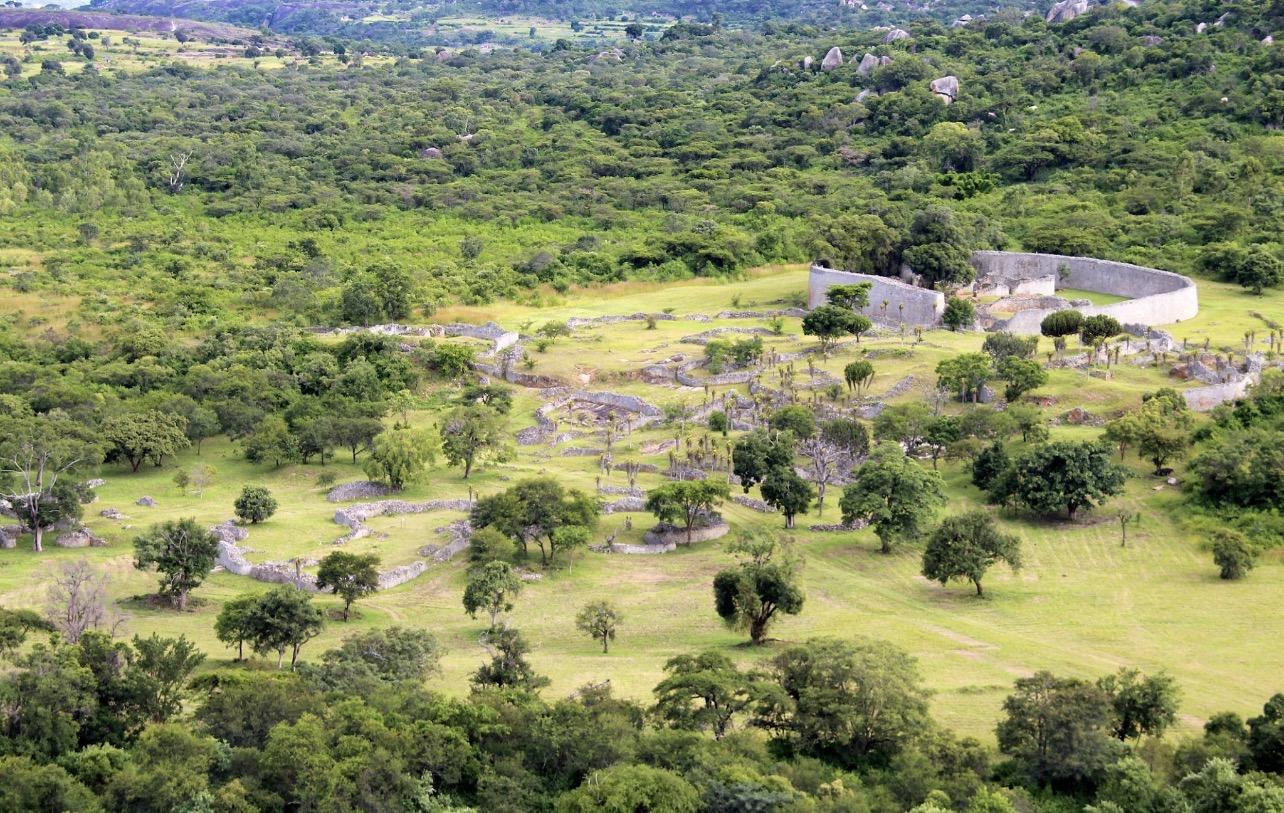
Great Zimbabwe Ruins
Long before modern cities rose across southern Africa, before colonial maps redrew the continent, and long before the world understood the depth of Africa’s ancient civilizations, a magnificent stone city stood proudly in the southeastern region of present day Zimbabwe.
This city was not built by foreign kings or mysterious outsiders. It was built by African hands, African intelligence, and African ambition. Its towering stone walls, royal compounds, and sacred spaces formed one of the most powerful kingdoms in medieval Africa.
This place is known today as Great Zimbabwe.
Its ruins still stand today, silent yet powerful, whispering stories of kings, traders, priests, craftsmen, and a civilization that once dominated a vast region of southern Africa.
To understand why Great Zimbabwe became one of Africa’s greatest historical landmarks, we must travel back nearly a thousand years into the past.
The story begins with a people who mastered the land.
The Rise of the Shona Civilization
Around the 9th century, groups of Bantu speaking people began settling in the fertile plateau between the Zambezi and Limpopo rivers. These communities would later become known as the ancestors of the Shona people.
The land was rich.
The climate allowed farming.
The surrounding hills provided protection.
And beneath the soil lay something that would shape the destiny of the region.
Gold.
Gold deposits were abundant in the hills around the region. The early settlers quickly learned how to mine it, process it, and trade it.
What began as small farming communities slowly evolved into a prosperous society.
Cattle became a major symbol of wealth.
Fields of sorghum and millet provided food.
Iron tools improved agriculture and construction.
As the population grew, the community needed a central place for leadership, culture, and trade.
This was the beginning of what would become Great Zimbabwe.
The Birth of a Stone City
Around the 11th century, the people of this rising kingdom began building a remarkable city using stone.
Unlike many other African settlements of the time that relied on wood and mud, the builders of Great Zimbabwe created enormous walls made from carefully cut granite blocks.
What made the construction extraordinary was that no mortar was used.
The stones were shaped and stacked so precisely that they held together through balance and gravity alone.
The result was a complex of buildings and walls that would survive for centuries.
The city eventually grew into three major areas.
The Hill Complex stood on top of a rocky hill and served as the spiritual and political center of the kingdom.
Below it lay the Great Enclosure, a massive circular stone wall that remains one of the largest ancient structures in sub Saharan Africa.
Spread around the valley were homes, workshops, and living areas for thousands of residents.
At its height, Great Zimbabwe was home to between ten thousand and twenty thousand people.
It was one of the largest cities in Africa at the time.
The Great Enclosure and the Mystery of the Conical Tower
Among the ruins of the city stands one of the most famous structures in African archaeology.
Inside the Great Enclosure rises a tall stone structure known as the Conical Tower.
The tower is solid stone and stands about ten meters high.
Unlike typical buildings, it has no doors, windows, or interior rooms.
Its purpose remains one of the greatest mysteries of Great Zimbabwe.
Some historians believe it symbolized royal authority or the wealth of the kingdom.
Others think it represented a grain storage structure or fertility symbol connected to agriculture.
Whatever its exact purpose, the tower clearly held deep cultural meaning for the people who built it.
The surrounding walls of the Great Enclosure are equally impressive.
Some sections reach over eleven meters high and stretch for hundreds of meters.
The craftsmanship shows advanced architectural knowledge and an organized labor force capable of large scale construction.
This was not a primitive settlement.
This was a powerful and well organized kingdom.
The Kingdom of Trade
Great Zimbabwe did not become powerful through agriculture alone.
Its wealth came largely from trade.
By the 13th century, the kingdom had become a central hub in a vast international trade network.
Gold mined in the surrounding regions was transported to the city.
From there it moved through trade routes to the east African coast.
At coastal trading cities such as Kilwa, merchants from Arabia, India, and China exchanged goods with African traders.
Archaeologists have discovered fascinating items at Great Zimbabwe that prove these global connections.
Chinese porcelain
Persian glassware
Arab coins
Indian beads
These objects traveled thousands of kilometers before reaching the city.
In exchange, Great Zimbabwe exported gold, ivory, and animal skins.
This trade brought immense wealth to the kingdom and strengthened its political power across southern Africa.
The ruler of the kingdom controlled these trade routes and the resources that flowed through them.
That control made the kings of Great Zimbabwe extremely influential.
The Royal Court and the Power of the King
At the heart of the city lived the ruling elite.
The king was both a political leader and a spiritual figure.
He was believed to have a sacred connection to the ancestors and the spiritual world.
Because of this belief, leadership was deeply tied to religion.
The Hill Complex likely served as the king’s residence and a sacred site for ceremonies.
From this elevated position, the ruler could oversee the entire valley below.
The royal court included advisors, spiritual leaders, craftsmen, and members of the royal family.
Power was displayed not through grand palaces but through control of cattle, land, and trade.
The people respected the king not only because of his authority but because he was seen as a protector of prosperity and harmony.
The Zimbabwe Birds
One of the most fascinating discoveries at the ruins is a series of stone sculptures known as the Zimbabwe Birds.
These birds were carved from soapstone and placed on tall pillars within the city.
Each sculpture shows a bird with human like features.
Historians believe the birds symbolized royal authority, spirituality, or communication with ancestors.
Today, the Zimbabwe Bird has become a powerful national symbol.
It appears on the modern flag and coat of arms of Zimbabwe.
It represents the deep historical roots of the nation and the legacy of Great Zimbabwe.
Life in the Ancient City
While kings and nobles lived in the stone enclosures, most residents lived in traditional round houses made of mud and thatch.
These homes filled the valley around the stone walls.
The city was alive with activity.
Blacksmiths forged iron tools.
Potters shaped clay into cooking vessels.
Farmers brought grain and cattle to markets.
Traders arrived with goods from distant lands.
Children played among the houses while elders passed down stories and traditions.
The city functioned as a vibrant cultural center where agriculture, craftsmanship, religion, and trade all connected.
The Height of Power
Between the 13th and 14th centuries, Great Zimbabwe reached the peak of its influence.
The kingdom controlled a vast territory covering much of modern Zimbabwe and parts of neighboring regions.
Its population grew.
Its trade expanded.
Its rulers became wealthy through control of gold and commerce.
Travelers from distant lands heard stories of the powerful stone city in the African interior.
It stood as proof that African civilizations had developed complex societies, long distance trade networks, and impressive architectural achievements.
The Mysterious Decline
Yet, like many great civilizations, the power of Great Zimbabwe did not last forever.
Around the 15th century, the city began to decline.
Historians believe several factors may have contributed to this change.
The surrounding environment may have become overused due to farming and cattle grazing.
Wood needed for construction and fuel may have become scarce.
Trade routes may have shifted toward other emerging kingdoms such as the Mutapa Empire.
As resources became strained, many residents gradually moved away.
The once thriving city slowly emptied.
By the 16th century, Great Zimbabwe had largely been abandoned.
Its magnificent stone walls remained, but the voices of the city faded into silence.
European Confusion and Misinterpretation
Centuries later, when European explorers arrived in southern Africa, they encountered the ruins of Great Zimbabwe.
The structures amazed them.
The scale of the stone walls and the sophistication of the architecture challenged their assumptions about African history.
Unfortunately, many early European writers refused to believe that Africans had built the city.
Some claimed it was constructed by ancient Phoenicians.
Others suggested it was the lost city of the Queen of Sheba.
These theories were not based on evidence but on racial bias and colonial thinking.
It was difficult for colonial historians to accept that Africans had created such an advanced civilization.
However, modern archaeology has firmly proven that Great Zimbabwe was built by the ancestors of the Shona people.
The materials, building techniques, artifacts, and cultural connections all confirm this.
Today historians proudly recognize Great Zimbabwe as one of the greatest achievements in African history.
Rediscovery and National Pride
In the 20th century, archaeological research began revealing the true story of the city.
Excavations uncovered tools, pottery, trade goods, and cultural artifacts that helped historians understand the life of the ancient kingdom.
The ruins became a symbol of African pride and heritage.
When the modern nation of Zimbabwe gained independence in 1980, it chose the name Zimbabwe in honor of this ancient civilization.
The name Zimbabwe comes from the Shona phrase Dzimba dza mabwe which means houses of stone.
The country adopted the Zimbabwe Bird as its national symbol, connecting the modern nation to its historic roots.
A World Heritage Site
Today the ruins are protected as a UNESCO World Heritage Site.
Visitors from around the world travel to Zimbabwe to see the massive stone walls and learn about the kingdom that once thrived there.
Walking through the ruins today, one can still imagine the sound of cattle bells, the voices of traders, and the ceremonies of kings.
The stones remain strong, holding memories of a civilization that shaped the history of southern Africa.
Great Zimbabwe reminds the world that Africa’s past is rich with innovation, leadership, and cultural brilliance.
It stands not just as a ruin but as a monument to African creativity and power.
The story of Great Zimbabwe is more than an ancient tale.
It is proof that long before colonialism and modern nations, Africa already had kingdoms that built cities, controlled international trade, and left behind architectural wonders that continue to inspire the world.


Kategoriler
Read More
Margaret Yainkain Mansaray In many homes across Sierra Leone, cooking has long been more than a daily routine. It has been a burden carried mostly by women and girls. Meals are prepared over charcoal and firewood, smoke fills kitchens and cooking spaces, eyes sting, lungs suffer, time disappears, and forests pay the price. For many families, this was simply normal life. It was...

Former President Olusegun Obasanjo on Monday paid a private visit to former military ruler, General Ibrahim Badamasi Babangida (retd.), at his hilltop residence in Minna, Niger State, fuelling fresh speculation about behind-the-scenes political alignments ahead of the 2027 general elections. Obasanjo arrived in Minna via the Ahmed Bola Tinubu International Airport and was received by...
Goodluck Ebele Azikiwe Jonathan. Goodluck Jonathan: The Quiet Man Fate Kept Pushing Forward In the creeks of the Niger Delta, where water roads replace tarred streets and the air smells of salt and mangrove, a boy was born with a name that sounded like a prayer. Goodluck Ebele Azikiwe Jonathan. It was 20 November 1957, and nobody in his community could have imagined that this child would...

Amnesty International has criticised the Nigerian government for failing to investigate the killing of at least 150 pro-Biafra protesters in the South-East during the administration of late President Muhammadu Buhari. In a statement issued on Monday via its official X account, Amnesty International Nigeria said security agencies, led by the military, carried out a campaign of extrajudicial...

He Almost Said Nothing Emeka was never good with words. Not the sweet kind. Not the deep kind. Not the kind that makes someone stop… and feel something. He cared, yes. He loved, deeply. But saying it? That was always the problem. For months, Amara had been patient. She stayed. She supported. She believed in him even when he didn’t say much. But slowly… something...