About
About
Goodluck Jonathan Biography: The Quiet Journey from Bayelsa to Aso Rock and the Concession That Changed History
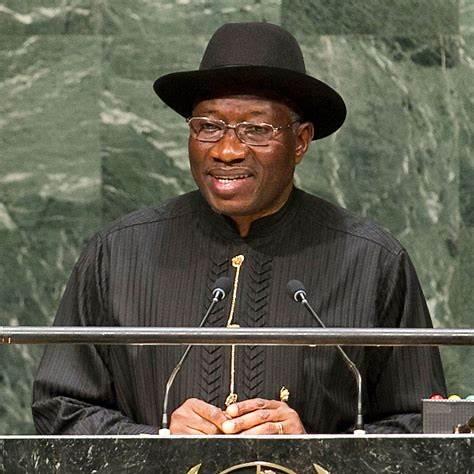
Goodluck Ebele Azikiwe Jonathan.
Goodluck Jonathan: The Quiet Man Fate Kept Pushing Forward
In the creeks of the Niger Delta, where water roads replace tarred streets and the air smells of salt and mangrove, a boy was born with a name that sounded like a prayer.
Goodluck Ebele Azikiwe Jonathan.
It was 20 November 1957, and nobody in his community could have imagined that this child would one day sit in Nigeria’s most powerful seat. Not because the boy was not smart, but because the journey from a small riverside life to Aso Rock usually belongs to loud men, big godfathers, and people with a long list of political ancestors.
But Jonathan’s story has never been the usual Nigerian story.
A boy who chose books over noise
While many people expected him to follow the most common routes to prominence, Jonathan leaned toward learning. He wasn’t trying to be the toughest. He wasn’t trying to be the loudest. He was the kind of person who believed that if you stayed steady, life would eventually open a door.
He studied science. He went deep into academics, building a life around research and education, the kind of path that rarely produces presidents. If you met him in those years, you might have thought: this one will become a lecturer, a civil servant, a professional man, and that will be all.
But Nigeria has a way of lifting people by surprise.
Bayelsa calls, and politics finds him
When democracy returned in 1999, the Niger Delta became a hot zone in Nigerian politics. Oil flowed, anger flowed, and the region’s voices demanded to be heard. It was in this atmosphere Jonathan entered public service and rose to become Deputy Governor of Bayelsa State.
He wasn’t the type that caused drama. He wasn’t the type that fought for cameras. Yet, politics doesn’t always promote the most dramatic person. Sometimes it promotes the one who is simply… there, steady, available, acceptable.
Then the unexpected happened.
A crisis hit Bayelsa’s leadership, and in 2005, Jonathan moved from deputy to Governor of Bayelsa State. The transition wasn’t built on long campaigns or noisy rallies. It was one of those Nigerian moments where history shifts, and someone finds themselves holding a bigger responsibility than they planned for.
He became governor, and people watched him closely. Some doubted him. Some dismissed him. But he remained calm, like a man trying to understand the weight of the chair before he starts bragging about owning it.
Abuja opens its gate
Two years later, another door opened, bigger than Bayelsa. In 2007, Jonathan was chosen as Vice President of Nigeria, running alongside Umaru Musa Yar’Adua.
For many Nigerians, that ticket felt like balance: North and South, old power and new face, tradition and quiet modernity. Jonathan moved into the nation’s center, still not a man of dramatic speeches, still not a man of aggressive politics.
Then came the storm.
When Nigeria held its breath
In late 2009 into 2010, President Yar’Adua’s illness plunged Nigeria into uncertainty. People argued everywhere: in the National Assembly, on radio, in beer parlours, in living rooms. The big question was simple but dangerous: Who is in charge?
Nigeria was tense. The kind of tension you can feel even when nobody is talking.
Eventually, a solution emerged: Jonathan became Acting President on 9 February 2010. It was a turning point, not just for him, but for the country. And when Yar’Adua later died, Jonathan was sworn in as President on 6 May 2010.
One day you are the quiet deputy.
Next day, the whole nation is staring at you, waiting to see what kind of leader you will be.
The presidency: promise, pressure, and pain
Jonathan’s presidency carried hope and heavy expectations. Supporters saw him as a symbol: a man from the Niger Delta, rising to the highest office, proof that the Nigerian ladder could still work for someone without the loudest political surname.
But governing Nigeria is not a motivational speech. It is a daily fight with problems that don’t respect your good intentions.
His years in office saw big national conversations about growth, reforms, and the economy. But they also became deeply marked by the rise of insecurity, especially the Boko Haram insurgency. Then, in 2014, the Chibok schoolgirls were abducted, and the nation’s heartbreak turned into global outrage.
It was one of those moments that splits history into “before” and “after.”
No leader wants such a tragedy attached to their time. But it happened, and Nigeria demanded answers, demanded action, demanded miracles.
Jonathan stood in the middle of a country that wanted peace instantly, even though peace is often the slowest thing to arrive.
The day he surprised the world
Then came 2015, the election that many feared could tear Nigeria apart.
When the results came in, Jonathan had lost to Muhammadu Buhari.
And then he did something that changed how many people would remember him forever.
He conceded.
No drama. No stubborn grip on power. No dangerous delay. Just a phone call and a message that cooled a nation’s boiling temperature.
In a country where politics can feel like war, that simple act sounded like fresh air. For some Nigerians, it became his loudest statement: not in speech, but in choice.
After Aso Rock: the elder statesman
After leaving office, Jonathan didn’t disappear into silence. He became an international figure in peace talks and diplomacy, participating in regional efforts to stabilize troubled political situations across West Africa.
His name began to appear in a different way, not as “the president,” but as “the mediator,” “the observer,” “the statesman.”
And that is how his story continues: a man who arrived quietly, governed under pressure, and left power in a way that many believe helped protect Nigeria from fire.

Categorie
Leggi tutto
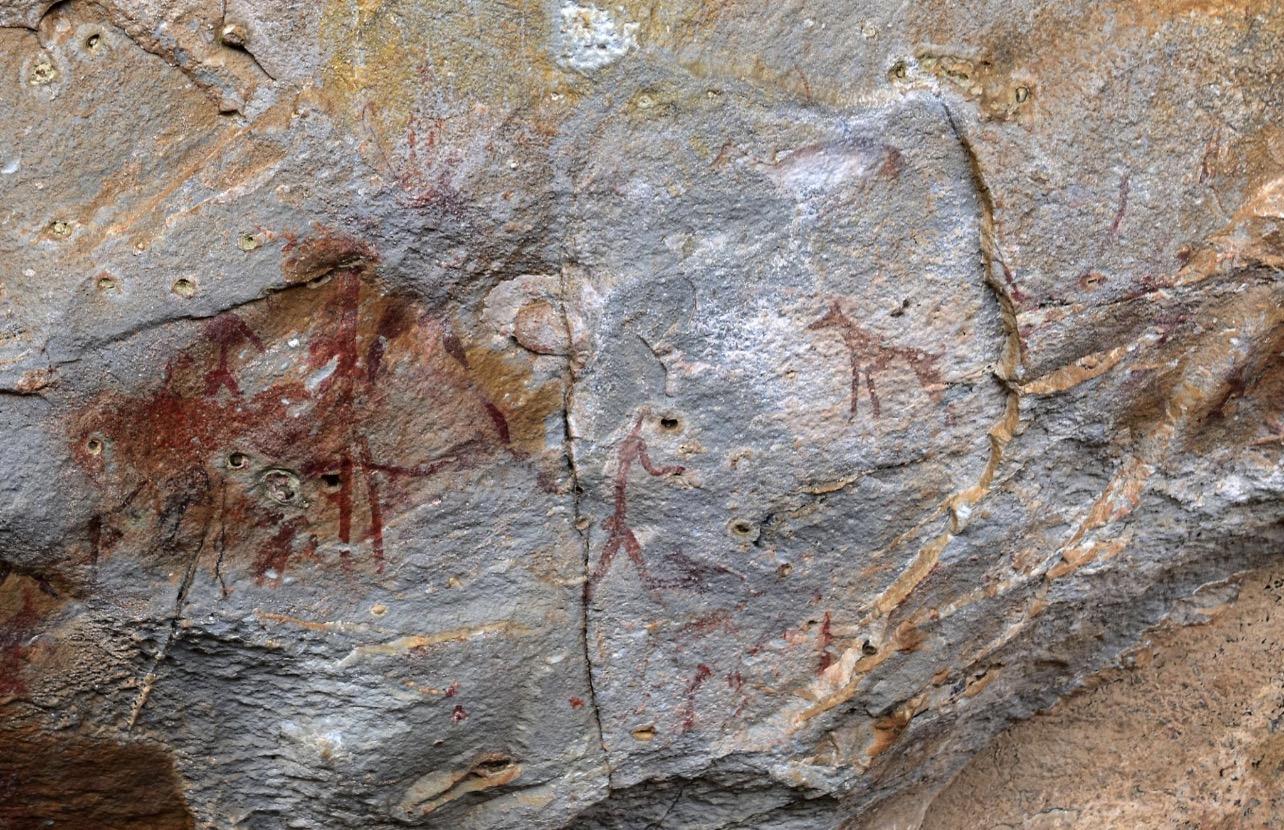
The Ancient Drakensberg San Rock Art High in the rugged mountains that stretch between modern day South Africa and Lesotho lies one of the most remarkable historical treasures in Africa. The Drakensberg Mountains are not only famous for their breathtaking cliffs, misty valleys, and dramatic peaks. Hidden within these rocks are thousands of ancient paintings that tell the story of a...
I still remember that evening like a curse etched into my memory. The sky was already darkening when I left work, my chest heavy with a strange unease I couldn’t explain. Chioma had been unusually quiet that day—no calls, no threats, no angry messages. Instead of relief, her silence made me restless. My heart kept whispering that something was wrong. When I got close to my...

Hakeem Baba-Ahmed, a former political adviser to President Bola Tinubu and ex-spokesperson of the Northern Elders Forum (NEF), has sharply criticised the Tinubu administration, saying it has failed to enhance both the quality of life for Nigerians and the standard of governance. Speaking on Channels Television’s Political Paradigm on Tuesday, Baba-Ahmed said the administration had not met...
Before the establishment of the State of Israel in 1948, three major Jewish underground groups operated in Mandatory Palestine. These groups — Haganah, Irgun, and Lehi (Stern Gang) — played different roles in the Zionist struggle against British rule and Arab resistance. While members saw themselves as freedom fighters, the British government labelled many of their actions as...

the Mississippi River The Mississippi River is one of the most important rivers in the world and the second-longest river in North America. Stretching about 2,340 miles (3,770 km), it flows from Lake Itasca in Minnesota down to the Gulf of Mexico. For thousands of years, it has shaped civilizations, powered economies, inspired writers, and defined American history. Ancient Beginnings...