Environ
The Eternal Guardian of the Desert: The Story of the Great Sphinx of Giza
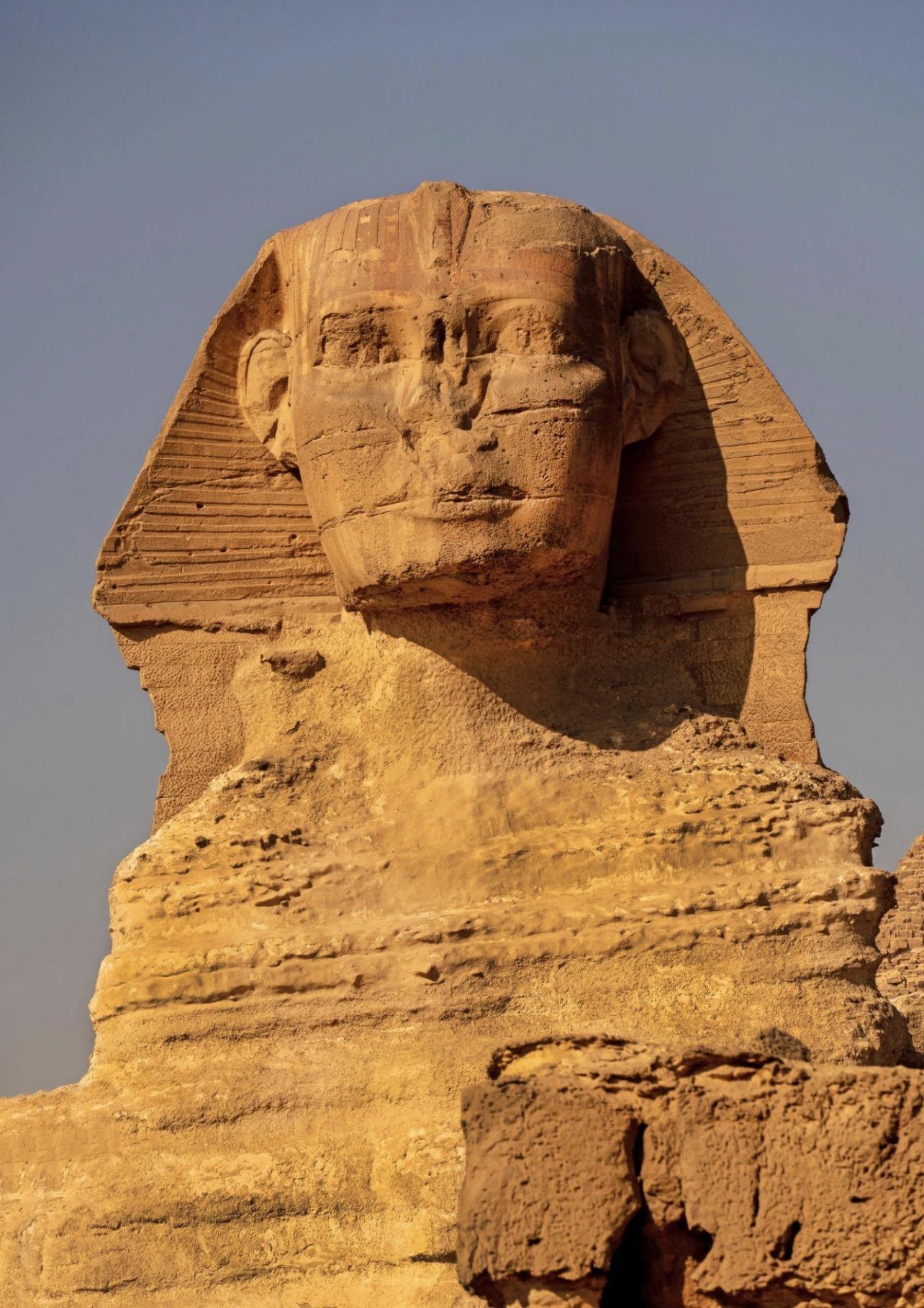
The Eternal Guardian of the Desert
For thousands of years, long before modern cities, airplanes, or smartphones existed, there was already a mysterious stone guardian watching over the sands of Egypt. This guardian is known today as the Great Sphinx of Giza, one of the most famous monuments in human history.
Standing silently on the Giza Plateau near the famous pyramids, the Sphinx has witnessed the rise and fall of empires, the passage of civilizations, and the endless flow of time. Its body resembles a powerful lion resting on the desert ground, while its head carries the calm face of a human king.
But the Sphinx is not just a statue. It is a story carved into stone. It is a witness to history, mystery, belief, power, and survival.
This is the story of how it came to be and why it remains one of the greatest historical monuments on Earth.
The World Before the Sphinx
To understand the Sphinx, we must travel back more than four thousand five hundred years ago to the age of the ancient Egyptian pharaohs.
During this time Egypt was one of the most powerful civilizations on Earth. The land was ruled by kings known as pharaohs who were believed to be both political rulers and divine beings chosen by the gods.
The pharaohs believed that their legacy must live forever. They wanted monuments that would outlast time itself. This belief led to the construction of enormous pyramids, temples, and statues across Egypt.
One of the most ambitious building projects ever undertaken was happening on the Giza Plateau near the Nile River. Massive pyramids were rising from the desert sands. These pyramids would become the burial places of powerful kings.
The largest pyramid was built for the pharaoh Khufu. Nearby stood the pyramid of Khafre, and later the pyramid of Menkaure.
But during the reign of Pharaoh Khafre, something extraordinary happened. A monument unlike any other was planned.
Instead of building another pyramid or temple, the builders carved an enormous guardian directly from the bedrock of the desert.
That monument would become the Great Sphinx.
The Birth of the Stone Guardian
Historians believe the Great Sphinx was built during the reign of Pharaoh Khafre around 2500 BC during Egypt’s Fourth Dynasty.
Instead of assembling stones like the pyramids, workers carved the statue directly out of a massive limestone ridge that already existed on the plateau. Thousands of workers used copper tools, stone hammers, and incredible patience to slowly shape the monument.
The result was breathtaking.
The statue stretched about seventy three meters long and stood around twenty meters high. Its body resembled a crouching lion, a symbol of strength and royal power in ancient Egyptian culture.
The head of the statue carried the likeness of a pharaoh wearing the traditional royal headdress.
Many scholars believe that the face represents Pharaoh Khafre himself.
By combining the body of a lion with the head of a king, the monument symbolized wisdom, power, and divine authority. It was not just a statue. It was a message to the world.
The message was clear.
The king rules with the strength of a lion and the wisdom of a god.
The Sphinx was placed near the pyramids to serve as a guardian of the royal tombs. Its eyes looked eastward toward the rising sun, connecting it with the Egyptian sun god Ra.
Every sunrise would illuminate the face of the Sphinx, reinforcing its connection to divine power.
A Monument Filled With Meaning
The ancient Egyptians believed deeply in symbolism. Everything they built carried meaning connected to religion, kingship, and the afterlife.
The lion body of the Sphinx represented courage and protection. Lions were considered powerful animals capable of defending sacred spaces.
The human head represented intelligence and royal authority.
Together they formed a creature that was both protector and ruler.
The Sphinx guarded the sacred burial ground where pharaohs were laid to rest. It reminded everyone that the king remained powerful even after death.
Some scholars also believe the Sphinx represented the sun god Horus rising from the horizon. This is why the monument faced the sunrise.
Every morning when the sun appeared, it looked as if the Sphinx was greeting it.
This connection between the monument and the sun strengthened its spiritual importance.
The Sand Begins to Swallow the Sphinx
Even though the Sphinx was massive, nature proved to be a powerful force.
Over centuries the desert winds began to blow sand across the plateau. Slowly the sand started covering the body of the Sphinx.
At times only the head remained visible above the sand.
Entire generations passed without seeing the full statue.
But the monument was never forgotten.
The Dream of a Prince
One of the most famous historical stories connected to the Sphinx happened during the reign of a young Egyptian prince named Thutmose.
According to ancient inscriptions, Prince Thutmose once went hunting near the pyramids and fell asleep beside the buried Sphinx.
While sleeping he had a powerful dream.
In the dream the Sphinx spoke to him.
The monument told him that it was suffering under the heavy desert sand and asked the prince to free it.
The Sphinx promised that if Thutmose cleared the sand away and restored the monument, he would become the next pharaoh of Egypt.
When the prince woke up he took the dream seriously.
He ordered workers to dig the sand away from the Sphinx and restore the monument.
Years later Thutmose indeed became Pharaoh Thutmose IV.
To commemorate this moment he placed a stone tablet between the paws of the Sphinx. This tablet is known today as the Dream Stele.
It still stands there today telling the story of the dream that changed Egyptian history.
Centuries of Silence
After the reign of Thutmose IV the Sphinx continued to stand guard over the pyramids.
But time is relentless.
Empires rose and fell.
Egypt itself went through many periods of foreign rule including the Persians, Greeks, Romans, and later Arab civilizations.
Throughout these centuries the Sphinx continued to suffer from erosion caused by wind, sand, and humidity.
The nose of the Sphinx disappeared at some point in history, creating one of the monument’s most famous mysteries.
For a long time people believed that soldiers under Napoleon destroyed the nose during the French campaign in Egypt.
However historical drawings made before Napoleon arrived already show the Sphinx without its nose.
Some historians believe the nose may have been deliberately damaged in the fourteenth century by a religious fanatic who opposed the worship of statues.
Others believe natural erosion played a role.
The truth remains uncertain.
This mystery only adds to the legend of the monument.
Rediscovery by the Modern World
By the nineteenth century much of the Sphinx was once again buried under desert sand.
European explorers and archaeologists began traveling to Egypt with fascination for ancient civilization.
When they reached Giza they saw the massive head of the Sphinx emerging from the sand like a forgotten giant.
Excavation projects began to uncover the monument.
One of the most important excavation efforts happened in the early twentieth century when archaeologists carefully removed the sand surrounding the statue.
For the first time in centuries the full body of the Sphinx became visible again.
This rediscovery amazed the world.
People realized that the monument was far larger and more impressive than they had imagined.
Restoration and Preservation
Because the Sphinx is carved from limestone, it is vulnerable to erosion. Wind, pollution, and weather slowly wear down the stone.
Modern archaeologists and engineers have spent decades trying to preserve the monument.
They have reinforced weakened sections of the body, repaired cracks, and monitored environmental damage.
Preserving the Sphinx is a delicate task. Any restoration must protect the monument without altering its ancient character.
Today experts continue to study the statue using advanced technology such as ground scanning and digital mapping.
These studies help historians learn more about how the monument was built and how it has changed over time.
The Mysteries That Refuse to Die
Despite centuries of research the Great Sphinx still holds many secrets.
Some researchers believe there may be hidden chambers beneath the monument. Others think underground tunnels may connect the Sphinx to nearby pyramids.
There are even theories suggesting that the monument may be older than historians currently believe.
While most scholars agree it was built during Pharaoh Khafre’s reign, debates continue about its exact origins and purpose.
These mysteries have inspired countless books, documentaries, and archaeological investigations.
The Sphinx continues to challenge our understanding of ancient history.
A Global Symbol of Civilization
Today the Great Sphinx is one of the most recognizable monuments in the world.
Millions of visitors travel to Egypt every year just to stand before this ancient guardian.
Tourists often describe a powerful feeling when they see the monument in person.
The Sphinx has survived more than four millennia.
It has endured sandstorms, political changes, wars, and environmental damage.
Yet it still stands.
Its calm expression seems almost timeless.
It reminds humanity that great civilizations once thrived thousands of years ago and that their achievements continue to inspire the world.
Why the Sphinx Is One of the Greatest Historical Monuments
The Great Sphinx is considered historic for several powerful reasons.
First it is one of the oldest monumental sculptures on Earth.
Second it represents the extraordinary engineering and artistic ability of ancient Egyptian civilization.
Third it has witnessed thousands of years of human history including the rise and fall of kingdoms and empires.
Finally it continues to inspire mystery and curiosity among historians, archaeologists, and travelers alike.
Few monuments in the world have survived as long or remained as influential.
The Sphinx is more than a statue.
It is a storyteller carved in stone.
It tells the story of human ambition, spiritual belief, royal power, and the endless passage of time.
The Silent Guardian Still Watches
As the sun rises each morning over the Giza Plateau, its golden light slowly touches the face of the Sphinx just as it did thousands of years ago.
Cars, airplanes, and modern cities may now surround the ancient landscape, but the guardian of Giza remains calm and unmoved.
For more than four thousand years it has watched over the desert.
And if the winds of time allow, it will continue to watch for thousands more.
The Great Sphinx of Giza remains one of humanity’s greatest achievements and one of the most powerful symbols of ancient history ever created.


Catégories
Lire la suite
Tekashi 6ix9ine: Fame, Fortune, Controversy, and Collapse Tekashi 6ix9ine, born Daniel Hernandez, is one of the most controversial figures in modern hip hop. His life story is not just about music. It is about poverty, internet fame, gang affiliation, betrayal, federal prison, sudden wealth, dramatic downfall, and relentless controversy. Few artists in the twenty first century have experienced...

Shehu Idris In the historic city of Zaria, where the walls of ancient Zazzau still whisper stories of queens and warriors, a monarch once reigned with calm dignity for more than four decades. He was Shehu Idris, the 18th Emir of Zazzau, a ruler whose quiet strength anchored one of Northern Nigeria’s most respected traditional institutions. His life was not defined by loud...
Chike Chike, whose full name is Chike Ezekpeazu Osebuka, is a Nigerian singer, songwriter, and actor celebrated for his smooth vocals, emotional delivery, and fusion of R and B, soul, and Afrobeat sounds. Born on January 28, 1993, in Onitsha, Anambra State, Nigeria, Chike grew up in a culturally rich Igbo household that deeply influenced his artistry and musical direction....

The Kogi State Government has confirmed the death of 26 traders in a boat accident on the River Niger. The victims were travelling from Ibaji Local Government Area of Kogi to Ilushi market in Edo State when the mishap occurred on the evening of Tuesday, September 30, 2025. In a statement on Wednesday, Commissioner for Information and Communications, Kingsley Fanwo, described the incident as a...

Mary Slessor Mary Slessor was a Scottish missionary who became famous for her humanitarian work in Nigeria during the late nineteenth and early twentieth centuries. She is remembered for her efforts to stop the killing of twins and for promoting peace and education among communities in southeastern Nigeria. Born on December 2, 1848, in Aberdeen, Scotland, she later became one of...