Über
Über
Umaru Musa Yar’Adua: The Quiet President Who Spoke Softly and Sought Justice
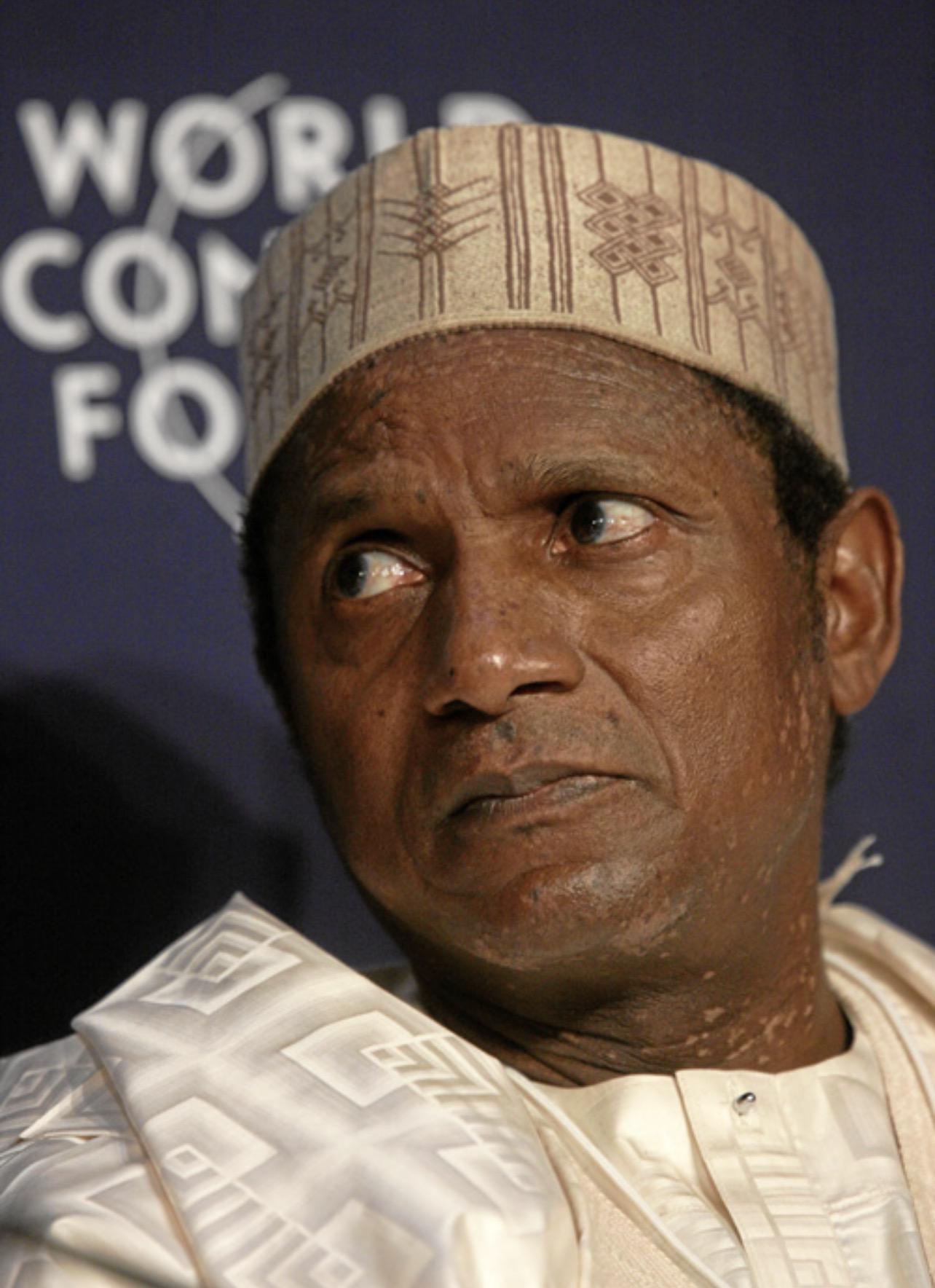
Umaru Musa Yar’Adua
In the historic city of Katsina in Northern Nigeria, a child was born on August 16, 1951, into a family already familiar with leadership and public service. That child would grow up to become one of Nigeria’s most reserved yet consequential leaders. His name was Umaru Musa Yar’Adua.
His story is one of humility in power, discipline in leadership, illness in office, and a presidency remembered for its emphasis on rule of law.
Early Life and Family Background
Umaru Musa Yar’Adua was born into a prominent Katsina family. His father, Musa Yar’Adua, was a respected teacher and politician who served as Minister for Lagos Affairs in Nigeria’s First Republic. Public service was not foreign to the household.
He attended Rafukka Primary School in Katsina and later proceeded to the prestigious Barewa College in Zaria, an institution that produced several Northern Nigerian leaders.
Yar’Adua went on to study Chemistry at Ahmadu Bello University in Zaria, earning a Bachelor of Science degree in 1975. He later completed a Master’s degree in Analytical Chemistry.
Unlike many politicians who came from military or business backgrounds, Yar’Adua began his career in academia. He lectured at the College of Arts, Science and Technology in Zaria. Teaching shaped his calm and reflective personality.
Entry into Politics
Yar’Adua’s entry into politics came gradually. He joined the Peoples Democratic Movement during Nigeria’s transition period in the late 1980s and early 1990s.
In 1999, when Nigeria returned to civilian rule, he contested and won the governorship of Katsina State under the Peoples Democratic Party. His leadership style stood out immediately.
Governor of Katsina State
As governor from 1999 to 2007, Yar’Adua developed a reputation for modesty and administrative discipline. He declared his assets publicly, a rare move at the time. Transparency became central to his governance philosophy.
His administration focused on education, rural development, and healthcare improvements. While Katsina was not among Nigeria’s most economically powerful states, his style of leadership earned him respect within political circles.
He governed quietly, avoiding flamboyance. His emphasis on rule of law distinguished him from many contemporaries.
By 2007, he had gained the trust of national political leaders, including outgoing President Olusegun Obasanjo, who supported his presidential candidacy.
The 2007 Presidential Election
In 2007, Umaru Musa Yar’Adua was elected President of Nigeria. The election, however, was controversial. International observers and domestic critics pointed to irregularities in the voting process.
In a rare move for a newly elected president, Yar’Adua publicly acknowledged flaws in the election and pledged electoral reform. That admission set a tone of humility rarely seen in Nigerian politics.
On May 29, 2007, he was sworn in as President of the Federal Republic of Nigeria.
Presidency and the Rule of Law Agenda
Yar’Adua’s presidency was anchored on what he called the Seven Point Agenda. It focused on power and energy, food security, wealth creation, transport sector reform, land reform, security, and education.
But beyond policy frameworks, his defining theme was respect for rule of law. He emphasized judicial independence and institutional process.
One of his most significant achievements was the Niger Delta Amnesty Program in 2009. Militancy in the oil rich Niger Delta had severely disrupted Nigeria’s oil production. Through negotiation and amnesty offers, his administration reduced armed conflict in the region.
The amnesty initiative provided training and rehabilitation programs for former militants. Oil production levels gradually improved as security stabilized.
His calm leadership style contrasted sharply with Nigeria’s often loud political climate. He rarely engaged in dramatic rhetoric.
Health Challenges and Constitutional Crisis
Behind the quiet demeanor, however, was a serious health battle. Yar’Adua had long struggled with kidney related illness. His health condition became increasingly evident during his presidency.
In late 2009, he traveled abroad for medical treatment without formally transferring power to Vice President Goodluck Jonathan.
His prolonged absence created political uncertainty. Nigeria faced a constitutional dilemma as months passed without clear executive authority.
Public pressure mounted. Civil society groups demanded adherence to constitutional provisions. Eventually, the National Assembly invoked the doctrine of necessity, empowering Vice President Goodluck Jonathan as Acting President in February 2010.
Yar’Adua returned briefly to Nigeria in frail condition but did not fully resume active governance.
Passing and National Mourning
On May 5, 2010, Umaru Musa Yar’Adua passed away at the age of 58.
Nigeria mourned a leader whose tenure was short but impactful. Tributes poured in across party lines. Even critics acknowledged his personal integrity and humility.
He was buried in Katsina according to Islamic rites.
Leadership Style and Personality
Umaru Musa Yar’Adua was widely regarded as humble and soft spoken. He avoided ostentation. He preferred consultation over confrontation.
Unlike many political figures, he maintained a modest public image. His emphasis on rule of law shaped both his governance and his response to electoral criticism.
Supporters admired his sincerity and commitment to constitutional order. Critics argued that his administration moved slowly on certain reforms. Yet few questioned his personal integrity.
Legacy
Yar’Adua’s presidency lasted less than three years, yet it left lasting marks on Nigeria’s democratic development.
His acknowledgment of electoral flaws initiated conversations about electoral reform. His Niger Delta Amnesty Program reduced violence and stabilized oil production. His emphasis on rule of law strengthened institutional respect.
His illness and the constitutional crisis also tested Nigeria’s democratic resilience. The peaceful transfer of executive authority to an acting president demonstrated institutional maturity.
In many ways, Yar’Adua’s legacy is defined by restraint. He did not dominate headlines with grand speeches. He did not project flamboyant authority. Instead, he governed with measured calm.
From the classrooms of Zaria to the Government House in Katsina, from the quiet corridors of Aso Rock to the uncertainty of medical absence, his journey reflected discipline shaped by humility.
Umaru Musa Yar’Adua remains remembered as a leader who believed power must be exercised within the boundaries of law.
In Nigeria’s complex political history, his name stands for quiet strength and constitutional respect.


Kategorien
Mehr lesen
A suspected suicide bomb explosion has been reported near the Mogadishu Barracks in Abuja, causing alarm in the area. The incident took place in the early hours, sending shockwaves through the local community and security personnel stationed at the barracks. Preliminary reports indicate that the blast originated from a suicide bomber who targeted the vicinity of the military installation....

Rebecca Enonchong Early Life Rebecca Enonchong was born in Cameroon into a family that valued education and ambition. Her father was a respected professor, and growing up in such an environment shaped her mindset early. She spent part of her childhood moving between countries, which exposed her to different cultures and ways of thinking. From a young age, Rebecca was curious about...

Lilian Esoro Lilian Esoro is a Nigerian actress, model, and television personality known for her roles in Nollywood films and TV series. She gained widespread recognition for her talent, beauty, and strong screen presence. She was born on March 9, 1982, in Imo State, Nigeria. Early Life and Background Lilian Esoro hails from Imo State but grew up in Lagos State, Nigeria. She developed...

Elton John Elton John is a British singer, songwriter, and pianist widely regarded as one of the greatest and most successful musicians in history. Known for his powerful voice, piano skills, and flamboyant style, he has created timeless music that has influenced generations. His real name is Reginald Kenneth Dwight, and he was born on March 25, 1947, in Pinner, Middlesex, England....

Amaka was a young woman living in Apapa, deeply in love with Olamide, a charming but notorious womanizer. From the beginning, Amaka’s heart belonged entirely to him, despite the warning signs. Olamide was unpredictable—he could be sweet one moment and cruel the next, treating her with disregard even though she gave him all her love. Amaka’s only confidante during this time...