


 About
About
Nuhu Ribadu: The Relentless Anti Corruption Crusader Who Challenged Nigeria’s Powerful Elite
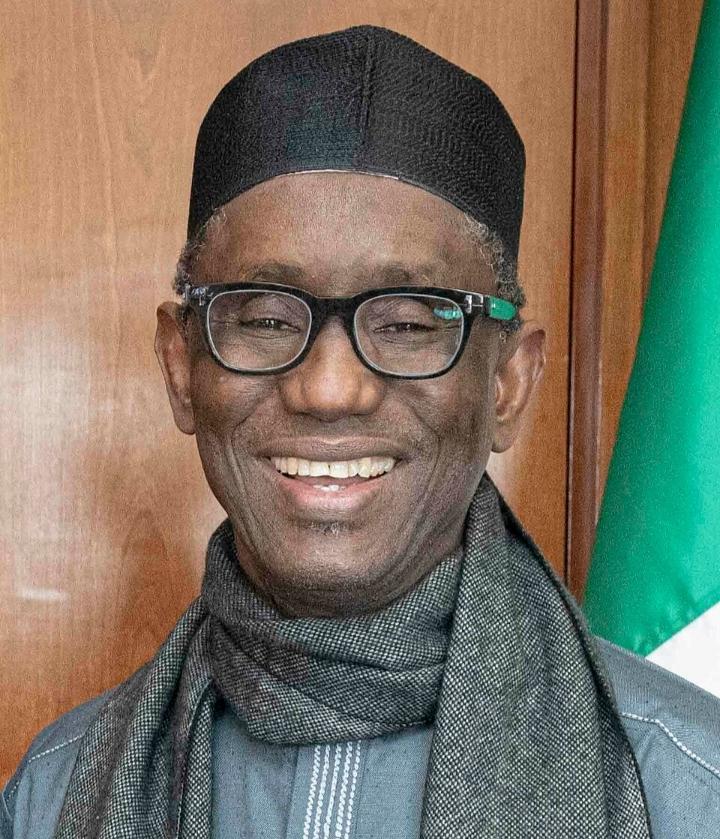
Nuhu Ribadu
In a quiet part of Yola, Adamawa State, a boy was born on November 21, 1960. He grew up in Northern Nigeria at a time when the country was still shaping its post civil war identity. Discipline, faith, and education were central pillars of his upbringing. That boy would one day become one of Nigeria’s most recognized anti corruption figures, feared by the powerful and admired by many ordinary citizens. His name is Nuhu Ribadu.
His story is one of courage, confrontation, exile, reinvention, and a continued presence in Nigeria’s security and political landscape.
Early Life and Education
Nuhu Ribadu was born in Yola, the capital of Adamawa State. He grew up in a modest environment shaped by strong moral values. From an early age, he showed interest in law and justice.
He attended Ahmadu Bello University in Zaria, where he studied Law. His academic discipline and clarity of thought stood out among peers. After obtaining his law degree, he joined the Nigerian Police Force. Unlike many who saw policing as routine service, Ribadu approached it as a calling.
He later attended the Nigerian Law School and furthered his studies internationally, participating in executive courses at institutions such as Harvard University. These exposures expanded his understanding of global governance, law enforcement systems, and anti corruption frameworks.
Entry into Anti Corruption Work
Nigeria’s battle against corruption has always been complex and politically sensitive. Ribadu’s defining moment came in 2003 when he was appointed the pioneer Chairman of the Economic and Financial Crimes Commission by President Olusegun Obasanjo.
The Economic and Financial Crimes Commission, widely known as Economic and Financial Crimes Commission, was created to combat financial crimes, advance fee fraud, money laundering, and high level corruption.
At the time, many Nigerians were skeptical. Anti corruption agencies had existed before with limited success. But Ribadu approached the task with unusual intensity.
The EFCC Years
As EFCC chairman from 2003 to 2007, Ribadu led investigations into high profile politicians, governors, and business figures. For the first time in Nigeria’s democratic history, sitting governors were publicly indicted for corruption.
He pursued cases against former state governors and powerful elites who had long seemed untouchable. Billions of naira in stolen funds were reportedly recovered. International observers praised the commission’s assertiveness.
Ribadu’s name became synonymous with anti corruption enforcement. He was invited to speak at global conferences and received recognition from international institutions.
However, his aggressive approach also generated powerful enemies. Critics accused the EFCC of selective prosecution. Some argued that anti corruption efforts were sometimes influenced by political considerations. Ribadu denied such allegations, insisting that evidence guided investigations.
Regardless of criticism, his tenure marked one of the most active anti corruption periods in Nigeria’s history.
Political Tension and Removal
When President Obasanjo left office in 2007, political dynamics shifted. Ribadu’s position became increasingly uncertain. In 2008, he was removed from his post and sent on a mandatory course at the National Institute for Policy and Strategic Studies. Soon after, he left Nigeria, citing threats to his safety.
During this period, Ribadu lived abroad, spending time in the United States and pursuing academic engagements. For many observers, his departure symbolized the vulnerability of anti corruption institutions in politically volatile environments.
Yet exile did not silence him. He continued to speak about governance reforms and institutional independence.
Return to Politics
After several years away, Ribadu returned to Nigeria’s political stage. In 2011, he contested the presidential election under the platform of the Action Congress of Nigeria. Though he did not win, the campaign marked his transition from law enforcement officer to full political actor.
He later joined the All Progressives Congress and remained active in national security and policy discussions. His experience in anti corruption investigations positioned him as a valuable voice in security strategy debates.
Role in National Security
Years after his EFCC tenure, Ribadu reemerged prominently in Nigeria’s security architecture. In 2023, he was appointed National Security Adviser under President Bola Ahmed Tinubu.
The role placed him at the center of Nigeria’s complex security challenges, including insurgency, banditry, and organized crime. His background in intelligence and financial crime investigations added a unique dimension to his approach.
Observers noted that his appointment signaled a blending of anti corruption expertise with national security coordination.
Leadership Style
Nuhu Ribadu is often described as calm but firm. Unlike flamboyant politicians, he speaks with measured intensity. His anti corruption stance has always been rooted in institutional enforcement rather than dramatic rhetoric.
He believes that corruption undermines security, development, and public trust. Throughout his career, he has consistently emphasized rule of law as the foundation of national progress.
Personal Life and Values
Ribadu is married and has children. He is known to maintain a relatively modest lifestyle compared to many political figures. Faith and discipline remain strong influences in his life.
Those who worked closely with him describe him as driven and focused. Even during periods of political uncertainty, he maintained public composure.
Criticism and Debate
Like many anti corruption figures worldwide, Ribadu’s record is debated. Some critics argue that certain high profile cases did not result in convictions. Others believe that political transitions weakened institutional momentum.
Supporters counter that he challenged entrenched corruption networks at significant personal risk. They argue that systemic corruption cannot be eliminated within a few years but requires sustained institutional reform.
His presidential bid in 2011 also faced skepticism from those who questioned whether an anti corruption enforcer could successfully transition into partisan politics.
Yet, through both praise and criticism, Ribadu’s identity as an anti corruption crusader remained central.
Legacy in Nigerian Governance
Nuhu Ribadu’s story is woven into Nigeria’s ongoing struggle with corruption and governance reform. His leadership at the EFCC changed public expectations about accountability. For a period, powerful officials faced prosecution in ways that had rarely been seen before.
His career also illustrates the tension between reformers and entrenched political interests. Reform often generates resistance. Enforcement can provoke backlash. And institutional independence requires political will.
From the classrooms of Ahmadu Bello University to the corridors of Abuja’s power centers, Ribadu’s journey reflects persistence under pressure.
He has moved from police officer to anti corruption chief, from exile to presidential candidate, and from reform advocate to National Security Adviser.
In a country where corruption and security remain defining national challenges, Nuhu Ribadu stands as one of the most recognizable figures in the fight for institutional accountability.
Whether history ultimately views him as a transformative reformer or as a determined but constrained enforcer, his impact on Nigeria’s governance narrative is undeniable.


Categories
Read More
Tunde Ednut Tunde Ednut is one of Nigeria’s most influential online personalities, widely known for his impact on social media culture, celebrity promotion, and entertainment gossip. Over the years, he has transformed himself from a musician and comedian into a powerful blogger and digital tastemaker whose platform has helped shape the careers of many Nigerian entertainers. Age...
Bimbo Akintola Bimbo Akintola is one of Nigeria’s most respected and versatile actresses, known for her emotional depth, strong screen presence, and ability to interpret complex characters with remarkable authenticity. Born on May 5, 1970, in Ibadan, Oyo State, Nigeria, she has built a career that spans decades in Nollywood, earning admiration for her talent and professionalism....

Esther Igbekele Esther Igbekele is a Nigerian actress, gospel singer, producer, and entrepreneur known for her contributions to both the Yoruba Nollywood industry and gospel music. She is admired for her versatility, spiritual influence, and strong presence in entertainment. Early Life and Background Esther Igbekele was born on July 5, 1980, in Lagos State, Nigeria. She hails from...
No one remembered when the sun had last risen over Aurelion. There were records, of course dusty ledgers sealed in the High Archive, poems etched into cathedral stone, children’s rhymes half-erased by time but memory itself had failed the kingdom. People spoke of daylight the way one spoke of myths: carefully, skeptically, as if too much belief might invite ridicule. The sky above...

A new terrorist group known as Mahmuda has reportedly launched a series of coordinated attacks in Kwara State, Nigeria. According to reports, the group has taken control of 15 communities within the Kaiama and Baruten Local Government Areas (LGAs), leading to widespread displacement and fear among residents. The attacks have resulted in the deaths of at least three villagers and the...

