Environ
James Ibori The Rise Power Wealth and Controversy of a Delta Strongman

James Ibori
James Ibori is one of the most controversial and influential political figures in Nigeria’s modern history. His story blends ambition, political dominance, business interests, international legal battles, and a dramatic fall and return. It is a story of power gained, power challenged, and a legacy still debated.
Early Life and Humble Origins
James Onanefe Ibori was born on August 4, 1958, in Oghara, Delta State, Nigeria. He grew up in a modest background in the Niger Delta region. Like many young Nigerians of his generation, he sought opportunity beyond his hometown.
In his early adulthood, he traveled to the United Kingdom, where he worked various jobs, including as a cashier and store worker. Those early years abroad exposed him to Western systems and financial structures. They also shaped his understanding of money and power.
He later returned to Nigeria during the political transition period of the late 1990s.
Entry Into Politics and Rapid Rise
In 1999, as Nigeria returned to democratic rule after years of military government, James Ibori entered the political arena. He contested for Governor of Delta State under the Peoples Democratic Party and won.
From 1999 to 2007, he served two terms as governor. During that period, Delta State was one of Nigeria’s richest oil producing states. The state generated significant revenue from oil allocations.
As governor, Ibori built strong political networks. He became a key power broker in the Niger Delta region and within national politics. His influence extended beyond Delta State. He was seen as a kingmaker and an important financier within political circles.
Supporters praised him for infrastructure projects and political strength. Critics questioned financial management and transparency.
Business Interests and Wealth
Beyond politics, James Ibori was known to have extensive business interests. Reports over the years linked him to investments in oil, construction, real estate, and transportation. His wealth became a subject of public discussion both in Nigeria and internationally.
The combination of political office and alleged business expansion attracted scrutiny. Questions arose regarding the sources of certain assets and transactions.
The story was shifting from political dominance to legal challenge.
Legal Battles in Nigeria and the United Kingdom
After leaving office in 2007, James Ibori faced investigations by Nigeria’s Economic and Financial Crimes Commission over allegations of corruption and money laundering. Several cases were filed in Nigerian courts.
In a surprising turn, Nigerian courts initially cleared him of charges in 2009. But the story did not end there.
Authorities in the United Kingdom had been conducting their own investigations. In 2011, Ibori was arrested in Dubai and extradited to the UK. In 2012, he pleaded guilty in a London court to multiple counts of fraud and money laundering involving millions of pounds.
He was sentenced to 13 years in prison by a UK court. The conviction marked one of the most significant international corruption cases involving a Nigerian political figure.
The image of a former governor facing justice abroad shocked many Nigerians. It sparked national conversations about accountability, governance, and the global reach of financial crime investigations.
Prison and Return
James Ibori served part of his sentence in the United Kingdom and was released in 2016. After completing his term, he returned to Nigeria.
His return was dramatic. Supporters gathered in large numbers in Delta State to welcome him home. For many, he remained a political hero. For others, he represented a cautionary tale.
Despite his conviction, his influence in Delta politics did not disappear. He continued to be regarded as a significant political figure in the region.
Influence and Political Network
One undeniable aspect of James Ibori’s story is his network. Several prominent Nigerian politicians were at different times associated with his political structure in Delta State. His ability to build loyalty and command followership became a defining part of his legacy.
He understood power beyond office. Influence could exist even without holding an official title.
Legacy and Debate
The legacy of James Ibori remains complex.
To some, he symbolizes strength, regional advocacy, and political strategy. To others, he represents the excesses of Nigeria’s political class during the early years of democracy.
His story highlights the intersection of business, politics, oil wealth, and international law enforcement. It shows how power can rise quickly and how global systems can intervene.
From Oghara to the Government House in Asaba to a London courtroom and back to Nigeria, his journey is one of the most dramatic in Nigerian political history.
It is a story of ambition without limits, influence without borders, and consequences that crossed continents.


Catégories
Lire la suite
The International Society for Civil Liberties and Rule of Law (Intersociety) has reported that 280 Christians were killed and 623 abducted between September and November 2025 in attacks linked to armed groups across Nigeria. According to the group’s chairman, Emeka Umeagbalasi, the five-day period from November 17 to 21 alone saw 388 kidnappings, including schoolchildren,...
Sir Abubakar Tafawa Balewa Tafawa Balewa was one of Nigeria’s most important independence era leaders and the country’s first and only Prime Minister. He is best known for guiding Nigeria through the early years of nationhood after independence in 1960, representing Nigeria on the global stage, and helping shape the foundations of the First Republic. Early Life and Background Sir...

Episode Twenty-Four: No Time to Waste After Mr Layi left, his voice didn’t. It stayed with me. Every morning, even before anyone called my name, my body already knew what to do. I woke up early sometimes before the first shout echoed through the house. Ablution. Prayer. Silence. Focus. Mr Layi had taught us without lectures. He taught us by example. We went to school daily, even when...
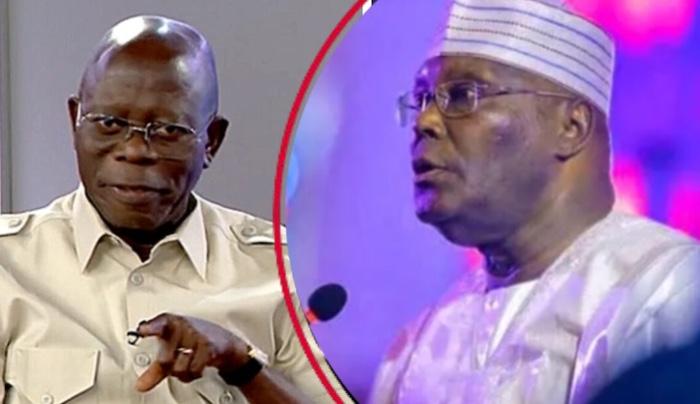
The camp of former Vice-President Atiku Abubakar, on Tuesday, launched a blistering counterattack on Senator Adams Oshiomhole, accusing the former national chairman of the ruling All Progressives Congress APC of “weaponising noise to mask the catastrophic failures” of the party. Chuks Okocha
Sheikh Ibrahim Niasse Early Life Sheikh Ibrahim Niasse was born in 1900 in Kaolack, a town in Senegal, West Africa. He came from a respected Islamic family known for knowledge and spiritual leadership. His father, Abdoulaye Niasse, was a well-known religious teacher who guided many people in Islam. From a very young age, Ibrahim showed signs of deep understanding. While other...