About
About
$5 Million School Fees Scandal: Why EFCC Is Investigating Ex-NMDPRA Boss Farouk Ahmed After Dangote’s Petition
Is Nigeria’s anti-graft agency uncovering another high-profile case of illicit enrichment in the oil and gas sector? The Economic and Financial Crimes Commission (EFCC) has launched a formal investigation into Farouk Ahmed, former Managing Director of the Nigerian Midstream and Downstream Petroleum Regulatory Authority (NMDPRA), following a petition submitted by billionaire industrialist Aliko Dangote through his legal team.
According to a senior EFCC source, the commission has begun “serious work” on the allegations, which centre on claims of abuse of office and corrupt enrichment. At the heart of the petition is an explosive accusation: that Ahmed allegedly spent about $5 million on secondary education in Switzerland for his four children, an amount Dangote’s lawyers argue far exceeds the legitimate earnings of a public officer.
In the legal submission signed by lead counsel Dr. O.J. Onoja, Dangote urged EFCC Chairman Olanipekun Olukoyede to thoroughly investigate the matter and prosecute if a prima facie case is established. The petition asserts that the commission is well-positioned to pursue financial crimes and hold public officials accountable where evidence supports wrongdoing.
The legal team also revealed that the complaint was deliberately redirected to the EFCC after withdrawing a similar petition earlier filed with the Independent Corrupt Practices and Other Related Offences Commission (ICPC)—a strategic move intended to accelerate the investigative and prosecutorial process. Although Dangote withdrew from the ICPC process, that agency has reportedly stated it will continue its own inquiry.
The allegations have ignited debate within Nigeria’s oil and gas sector, where regulatory integrity, investor confidence, and conflicts of interest remain under intense scrutiny. Observers note that the case raises troubling questions about whether senior regulatory officials can live far beyond their lawful income without detection—and what that means for oversight in one of Nigeria’s most critical industries.
Despite repeated attempts by journalists to obtain official comment from EFCC spokesperson Dele Oyewale, no public statement had been issued at the time of filing, although a response was promised. Legal analysts say the outcome of the case will likely depend on financial records, asset declarations, and documentary evidence that could establish whether misappropriation or illicit enrichment occurred.
As the investigation unfolds, Nigerians are asking difficult questions: Was public office abused? Can a regulator entrusted with safeguarding national petroleum interests explain such extraordinary spending? And will this probe set a new standard for accountability in Nigeria’s energy sector—or become another unresolved corruption controversy? With the EFCC now actively examining the claims, the Farouk Ahmed case may become a defining test of transparency, enforcement, and anti-corruption resolve under the current administration.

Categorie
Leggi tutto
My name is Rose Raymond, and for as long as I can remember, my body has been the subject of whispers, jokes, and cruel laughter. I was thin so thin that people felt entitled to comment on it as if it were a public noticeboard. “Broomstick,” they called me. “You should borrow flesh,” others laughed. At first, I pretended it didn’t hurt. But words have a way...

Kanayo O. Kanayo Kanayo O. Kanayo is one of Nollywood’s most respected veteran actors, famous for his commanding presence and decades of consistent work in Nigerian film. Beyond acting, he is also a trained lawyer, and his career is often cited as a story of longevity, reinvention, and cultural influence in Nollywood. Early Life and Background Kanayo O. Kanayo was born Anayo Modestus...

Teniola Aladese Teniola Aladese is a Nigerian actress, casting director, and producer known for her growing influence in Nollywood. She is admired for her talent, professionalism, and behind the scenes contributions to film production in Nigeria. Early Life and Background Teniola Aladese was born on July 28, 1993, in Lagos State, Nigeria. She grew up in a supportive environment that...

Yemi Alade Some voices are soft and sweet. Others arrive like fireworks. The voice of Yemi Alade belongs to the second kind. Bold, energetic, unapologetically African, she did not simply enter the music industry she exploded into it. Before she became “Mama Africa,” before her songs crossed borders and her videos gathered millions of views, she was simply a girl in Lagos...

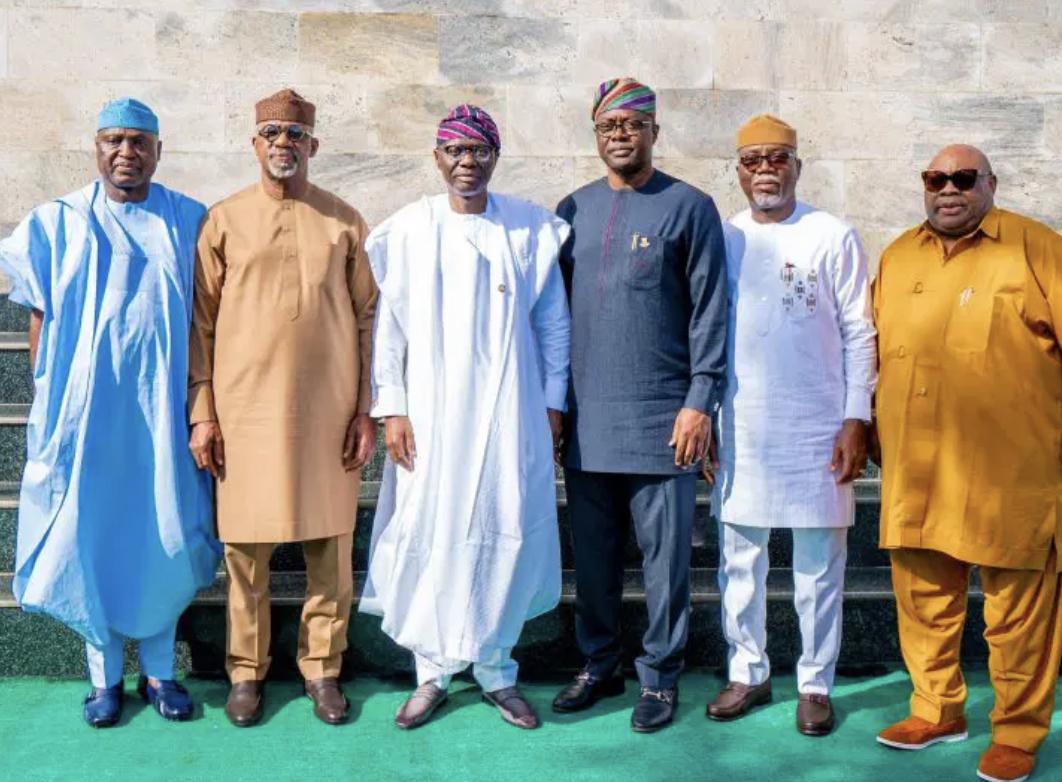
Governors of the six South-West states—Lagos, Ogun, Oyo, Osun, Ondo, and Ekiti—are gathering in Ibadan for an emergency closed-door meeting focused on urgent regional issues, especially rising security concerns. The meeting, hosted by Oyo State Governor Seyi Makinde at the Governor’s Office, Agodi, was convened suddenly due to escalating threats affecting the region. Sources...