• Abdullah Trained Amina Through School — Then Watched Her Marry Another Man

    Abdullah was not a wealthy man, but he was hardworking and hopeful. When he met Amina, she was young, focused, and determined to change her life through education. He saw potential in her long before others did, and he chose to stand by her.

    From secondary school through higher education, Abdullah paid Amina’s school fees, bought her books, and supported her daily needs. He made sacrifices quietly, often putting his own dreams on hold so she could pursue hers. To Abdullah, it was more than support — it was love, commitment, and belief in a future they would share.

    As the years passed and Amina approached graduation, things slowly began to change. The warmth in their conversations faded. Messages became less frequent. The bond that once felt unbreakable began to feel distant.

    Not long after Amina completed her studies, the news reached Abdullah — she was getting married to another man. There was no warning, no honest conversation beforehand. The announcement came like a sudden storm, leaving Abdullah with questions that had no answers.

    To Amina, her decision may have been shaped by personal reasons, family expectations, or a different vision for her life. To Abdullah, it felt like a deep betrayal — not just of love, but of the years of sacrifice he made with sincere intentions.

    This story is not only about heartbreak; it is about expectations and unspoken assumptions. It reminds us that support, no matter how genuine, does not guarantee commitment. Love must be freely chosen, not implied through sacrifice.

    In the end, Abdullah learned a painful but necessary lesson: helping someone rise does not always mean they will remain by your side. Sometimes, you are part of someone’s journey, not their destination.

    He walked away hurt, wiser, and stronger — carrying a truth many discover too late: true love is built on mutual choice, not obligation.

    Abdullah Trained Amina Through School — Then Watched Her Marry Another Man Abdullah was not a wealthy man, but he was hardworking and hopeful. When he met Amina, she was young, focused, and determined to change her life through education. He saw potential in her long before others did, and he chose to stand by her. From secondary school through higher education, Abdullah paid Amina’s school fees, bought her books, and supported her daily needs. He made sacrifices quietly, often putting his own dreams on hold so she could pursue hers. To Abdullah, it was more than support — it was love, commitment, and belief in a future they would share. As the years passed and Amina approached graduation, things slowly began to change. The warmth in their conversations faded. Messages became less frequent. The bond that once felt unbreakable began to feel distant. Not long after Amina completed her studies, the news reached Abdullah — she was getting married to another man. There was no warning, no honest conversation beforehand. The announcement came like a sudden storm, leaving Abdullah with questions that had no answers. To Amina, her decision may have been shaped by personal reasons, family expectations, or a different vision for her life. To Abdullah, it felt like a deep betrayal — not just of love, but of the years of sacrifice he made with sincere intentions. This story is not only about heartbreak; it is about expectations and unspoken assumptions. It reminds us that support, no matter how genuine, does not guarantee commitment. Love must be freely chosen, not implied through sacrifice. In the end, Abdullah learned a painful but necessary lesson: helping someone rise does not always mean they will remain by your side. Sometimes, you are part of someone’s journey, not their destination. He walked away hurt, wiser, and stronger — carrying a truth many discover too late: true love is built on mutual choice, not obligation.

    love
    1
    · 0 Commentarii ·0 Distribuiri ·3K Views
  • Nigerian Group Condemns U.S. Strike on Venezuela

    The Venezuela Solidarity Campaign in Nigeria (VSCN) has condemned the recent U.S. military attack on Venezuela, calling it a violation of international law and Venezuelan sovereignty. The group mourned Venezuelan soldiers, Cuban officers, and civilians killed in the strike, describing their deaths as sacrifices in defence of Venezuelan territory.

    VSCN demanded an immediate end to military actions and called for the release of President Nicolás Maduro, urging respect for Venezuela’s right to self-determination.

    #Venezuela #Nigeria #VSCN #USStrike #InternationalLaw #Solidarity #Maduro
    🇳🇬🤝🇻🇪 Nigerian Group Condemns U.S. Strike on Venezuela The Venezuela Solidarity Campaign in Nigeria (VSCN) has condemned the recent U.S. military attack on Venezuela, calling it a violation of international law and Venezuelan sovereignty. The group mourned Venezuelan soldiers, Cuban officers, and civilians killed in the strike, describing their deaths as sacrifices in defence of Venezuelan territory. VSCN demanded an immediate end to military actions and called for the release of President Nicolás Maduro, urging respect for Venezuela’s right to self-determination. #Venezuela #Nigeria #VSCN #USStrike #InternationalLaw #Solidarity #Maduro
    love
    2
    · 0 Commentarii ·0 Distribuiri ·2K Views
  • Lt Colonel Abdulazeez Saidu: Courage That Survived the Battlefield

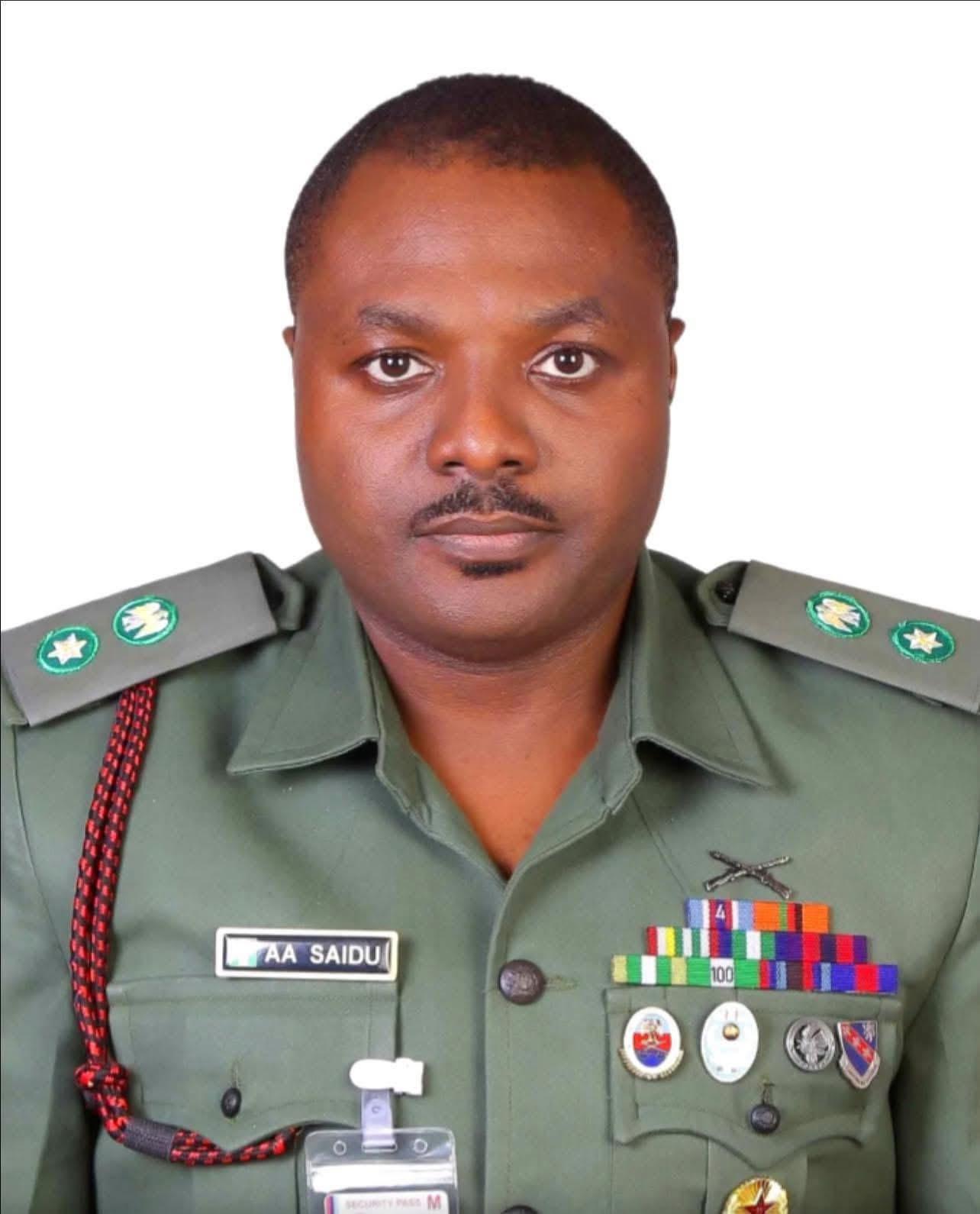
    Lt Colonel Abdulazeez Abdullahi Saidu is a Nigerian Army officer wounded in action in Maiduguri in 2019 while fighting Boko Haram under Operation Lafiya Dole. His injury marked a life-changing moment, bringing pain and a long recovery, but also revealing remarkable resilience.

    His story is a reminder that soldiers’ sacrifices do not end on the battlefield. Many return home wounded but unbroken, carrying scars that reflect service and bravery. Lt Colonel Saidu represents Nigerian soldiers who went to war whole and came back changed—proof that heroism lives on in those who survive and continue to stand tall.
    Lt Colonel Abdulazeez Saidu: Courage That Survived the Battlefield Lt Colonel Abdulazeez Abdullahi Saidu is a Nigerian Army officer wounded in action in Maiduguri in 2019 while fighting Boko Haram under Operation Lafiya Dole. His injury marked a life-changing moment, bringing pain and a long recovery, but also revealing remarkable resilience. His story is a reminder that soldiers’ sacrifices do not end on the battlefield. Many return home wounded but unbroken, carrying scars that reflect service and bravery. Lt Colonel Saidu represents Nigerian soldiers who went to war whole and came back changed—proof that heroism lives on in those who survive and continue to stand tall.
    love
    1
    · 0 Commentarii ·0 Distribuiri ·2K Views
  • N11.9 Million Disappear, Mawogi Health Centre Na Ghost Town – Residents Shout “Wahala oo!”, Call EFCC, ICPC Make Dem Enter Matter

    Residents of Mawogi community for Abaji Area Council, FCT, don dey shout tori as N11.9 million wey suppose build Primary Health Care Centre vanish. Civic tech organisation, MonITNG, report say facility dey overgrow with weeds and total neglect, even as community don provide sand, wood, labour and open special account to make project transparent. According to the report, after fund release, Head of Department of Health, Dr. Mansur Ashafa, allegedly tell project committee make dem transfer all money go private company, Shamgaj Integrated Service Limited. People talk say dem pressure dem to sign documents, but construction stop sharply, leaving health centre incomplete. MonITNG dey call ICPC and EFCC make dem investigate, warn say na human right matter be this as Mawogi residents dey suffer despite all their sacrifice. Wahala oo, who go answer this one?


    N11.9 Million Disappear, Mawogi Health Centre Na Ghost Town – Residents Shout “Wahala oo!”, Call EFCC, ICPC Make Dem Enter Matter Residents of Mawogi community for Abaji Area Council, FCT, don dey shout tori as N11.9 million wey suppose build Primary Health Care Centre vanish. Civic tech organisation, MonITNG, report say facility dey overgrow with weeds and total neglect, even as community don provide sand, wood, labour and open special account to make project transparent. According to the report, after fund release, Head of Department of Health, Dr. Mansur Ashafa, allegedly tell project committee make dem transfer all money go private company, Shamgaj Integrated Service Limited. People talk say dem pressure dem to sign documents, but construction stop sharply, leaving health centre incomplete. MonITNG dey call ICPC and EFCC make dem investigate, warn say na human right matter be this as Mawogi residents dey suffer despite all their sacrifice. Wahala oo, who go answer this one?
    0 Commentarii ·0 Distribuiri ·2K Views
  • Is Nnamdi Kanu Being Illegally Detained? Nigerian Jewish Leader Visits IPOB Founder in Sokoto Prison, Rejects Terrorism Label and Demands His Immediate Release

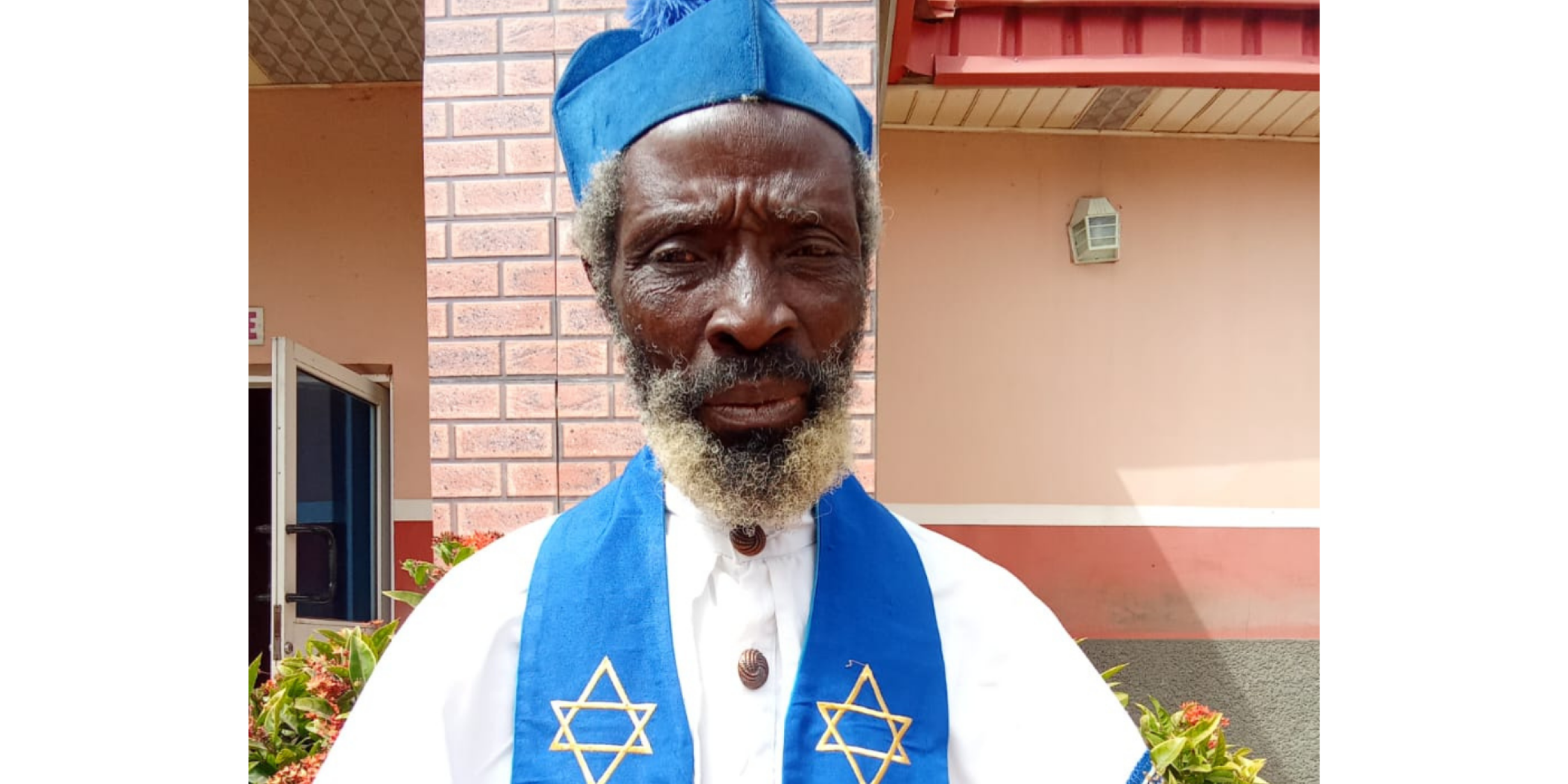
    Is the continued detention of Mazi Nnamdi Kanu, leader of the Indigenous People of Biafra (IPOB), legally justified—or is it a violation of justice and human rights? This question has been reignited following a high-profile prison visit by Kohen Daniel Onuoha, a Nigerian Jewish cleric and spiritual leader of the Peace of Yahweh Synagogue and founder of Eastern Judaism, who met Kanu at the Sokoto Correctional Facility on January 10, 2026.

    Describing the visit as an act of spiritual and moral solidarity, Onuoha said he was accompanied by his wife and representatives of Jewish congregations in Nigeria’s former Eastern Region, whom he said “faithfully observe the Ten Commandments.” According to him, the visit symbolised years of prayers and sacrifices by his community for Kanu’s freedom.

    “For over five years, we have remained steadfast in daily sacrifices and prayers to Elohim without interruption,” Onuoha said, adding that the prison visit reaffirmed his commitment to justice and liberty.

    During the visit, the cleric directly challenged the legal foundation of Kanu’s continued incarceration, urging the international community, legal experts, and human rights organisations to examine what he described as questionable legal grounds for the case. He argued that Kanu’s prosecution was based on a repealed law, making the detention unlawful.

    Onuoha also rejected the designation of Kanu and IPOB as terrorists, insisting that neither the separatist leader nor the movement had committed violent acts. “Mazi Nnamdi Kanu is not a terrorist, and IPOB is not a terrorist organisation,” he declared, adding that Kanu’s ordeal stemmed from the peaceful exercise of self-determination and his public criticism of alleged abuses by political elites, foreign interests, and local power structures.

    He further contended that speech alone cannot justify criminal conviction, stressing that verbal expressions or broadcasts without evidence of violence should not result in imprisonment. Calling for Kanu’s “immediate and unconditional release,” the Jewish leader said such action was necessary to uphold justice and the rule of law.

    Beyond Kanu’s case, Onuoha appealed for broader international intervention, arguing that Biafrans continue to face marginalisation, oppression, and violence. He commended U.S. President Donald Trump for what he described as efforts to protect Christians in Nigeria and urged increased global pressure on Nigerian authorities over alleged human rights violations.

    In his closing remarks, Onuoha called on Kanu’s supporters, Biafrans, Jews, and human rights advocates to remain peaceful, resilient, and steadfast, expressing confidence that justice would ultimately prevail.

    The visit raises urgent questions: Is Nnamdi Kanu’s detention legally valid? Has the terrorism label been misapplied? And will international scrutiny finally force a reassessment of one of Nigeria’s most controversial political prosecutions?

    Is Nnamdi Kanu Being Illegally Detained? Nigerian Jewish Leader Visits IPOB Founder in Sokoto Prison, Rejects Terrorism Label and Demands His Immediate Release Is the continued detention of Mazi Nnamdi Kanu, leader of the Indigenous People of Biafra (IPOB), legally justified—or is it a violation of justice and human rights? This question has been reignited following a high-profile prison visit by Kohen Daniel Onuoha, a Nigerian Jewish cleric and spiritual leader of the Peace of Yahweh Synagogue and founder of Eastern Judaism, who met Kanu at the Sokoto Correctional Facility on January 10, 2026. Describing the visit as an act of spiritual and moral solidarity, Onuoha said he was accompanied by his wife and representatives of Jewish congregations in Nigeria’s former Eastern Region, whom he said “faithfully observe the Ten Commandments.” According to him, the visit symbolised years of prayers and sacrifices by his community for Kanu’s freedom. “For over five years, we have remained steadfast in daily sacrifices and prayers to Elohim without interruption,” Onuoha said, adding that the prison visit reaffirmed his commitment to justice and liberty. During the visit, the cleric directly challenged the legal foundation of Kanu’s continued incarceration, urging the international community, legal experts, and human rights organisations to examine what he described as questionable legal grounds for the case. He argued that Kanu’s prosecution was based on a repealed law, making the detention unlawful. Onuoha also rejected the designation of Kanu and IPOB as terrorists, insisting that neither the separatist leader nor the movement had committed violent acts. “Mazi Nnamdi Kanu is not a terrorist, and IPOB is not a terrorist organisation,” he declared, adding that Kanu’s ordeal stemmed from the peaceful exercise of self-determination and his public criticism of alleged abuses by political elites, foreign interests, and local power structures. He further contended that speech alone cannot justify criminal conviction, stressing that verbal expressions or broadcasts without evidence of violence should not result in imprisonment. Calling for Kanu’s “immediate and unconditional release,” the Jewish leader said such action was necessary to uphold justice and the rule of law. Beyond Kanu’s case, Onuoha appealed for broader international intervention, arguing that Biafrans continue to face marginalisation, oppression, and violence. He commended U.S. President Donald Trump for what he described as efforts to protect Christians in Nigeria and urged increased global pressure on Nigerian authorities over alleged human rights violations. In his closing remarks, Onuoha called on Kanu’s supporters, Biafrans, Jews, and human rights advocates to remain peaceful, resilient, and steadfast, expressing confidence that justice would ultimately prevail. The visit raises urgent questions: Is Nnamdi Kanu’s detention legally valid? Has the terrorism label been misapplied? And will international scrutiny finally force a reassessment of one of Nigeria’s most controversial political prosecutions?
    love
    1
    · 0 Commentarii ·0 Distribuiri ·3K Views
  • Did Abdulfatah Ahmed Divert ₦5.78 Billion UBEC Funds? Why Kwara Court Adjourned Ex-Governor’s Fraud Trial to February 16

    A Kwara State High Court sitting in Ilorin has adjourned the ₦5.78 billion alleged fraud trial of former Governor Abdulfatah Ahmed and his former Commissioner for Finance, Ademola Banu, raising fresh questions about how public education funds were allegedly diverted under the previous administration. The case, which resumed before Justice Mahmud Abdulgafar, was postponed to February 16, 2026, following legal objections during the presentation of evidence by the prosecution.

    The Economic and Financial Crimes Commission (EFCC), through its Ilorin Zonal Directorate, is prosecuting the former officials over claims that funds meant for educational development were unlawfully redirected. According to the EFCC, the defendants approved the use of Universal Basic Education Commission (UBEC) matching grants—money specifically allocated for building and upgrading primary and junior secondary schools across Kwara’s 16 local government areas—to pay civil servants’ salaries, contrary to the conditions attached to the funds.

    During the latest hearing, the prosecution called its sixth witness, Stanley Ujilibo, who told the court that the EFCC obtained bank statements from Polaris Bank (formerly Skye Bank) and Guaranty Trust Bank as part of its investigation. He explained that official letters dated August 1, 2025, were sent to both banks requesting records of Kwara State Government accounts. The banks acknowledged the requests and provided the statements, which were admitted as exhibits by the court.

    The trial further revisited earlier testimony by a former Accountant-General of Kwara State, Suleiman Oluwadare Ishola, who stated that ₦1 billion from UBEC matching grants was borrowed in 2015 by the Ahmed administration to pay salaries and pensions. This revelation has intensified public scrutiny over whether funds intended for school infrastructure were systematically diverted for recurrent government expenses.

    However, proceedings were briefly stalled when the EFCC attempted to tender additional documents from the Ministry of Finance and the Office of the Accountant-General. Defence counsel, led by Kamaldeen Ajibade, objected on procedural grounds, arguing that the documents had not been properly highlighted for clarity and reference. Justice Abdulgafar upheld the objection and consequently adjourned the case.

    The adjournment has sparked debate across Kwara State and beyond: Was public education funding sacrificed to cover salary obligations? Did the former administration violate the terms governing UBEC grants? And will the evidence presented be enough to establish criminal responsibility?

    As the trial continues, the case stands as a major test of accountability in Nigeria’s anti-corruption efforts, particularly regarding the management of education funds and the prosecution of high-profile political figures.


    Did Abdulfatah Ahmed Divert ₦5.78 Billion UBEC Funds? Why Kwara Court Adjourned Ex-Governor’s Fraud Trial to February 16 A Kwara State High Court sitting in Ilorin has adjourned the ₦5.78 billion alleged fraud trial of former Governor Abdulfatah Ahmed and his former Commissioner for Finance, Ademola Banu, raising fresh questions about how public education funds were allegedly diverted under the previous administration. The case, which resumed before Justice Mahmud Abdulgafar, was postponed to February 16, 2026, following legal objections during the presentation of evidence by the prosecution. The Economic and Financial Crimes Commission (EFCC), through its Ilorin Zonal Directorate, is prosecuting the former officials over claims that funds meant for educational development were unlawfully redirected. According to the EFCC, the defendants approved the use of Universal Basic Education Commission (UBEC) matching grants—money specifically allocated for building and upgrading primary and junior secondary schools across Kwara’s 16 local government areas—to pay civil servants’ salaries, contrary to the conditions attached to the funds. During the latest hearing, the prosecution called its sixth witness, Stanley Ujilibo, who told the court that the EFCC obtained bank statements from Polaris Bank (formerly Skye Bank) and Guaranty Trust Bank as part of its investigation. He explained that official letters dated August 1, 2025, were sent to both banks requesting records of Kwara State Government accounts. The banks acknowledged the requests and provided the statements, which were admitted as exhibits by the court. The trial further revisited earlier testimony by a former Accountant-General of Kwara State, Suleiman Oluwadare Ishola, who stated that ₦1 billion from UBEC matching grants was borrowed in 2015 by the Ahmed administration to pay salaries and pensions. This revelation has intensified public scrutiny over whether funds intended for school infrastructure were systematically diverted for recurrent government expenses. However, proceedings were briefly stalled when the EFCC attempted to tender additional documents from the Ministry of Finance and the Office of the Accountant-General. Defence counsel, led by Kamaldeen Ajibade, objected on procedural grounds, arguing that the documents had not been properly highlighted for clarity and reference. Justice Abdulgafar upheld the objection and consequently adjourned the case. The adjournment has sparked debate across Kwara State and beyond: Was public education funding sacrificed to cover salary obligations? Did the former administration violate the terms governing UBEC grants? And will the evidence presented be enough to establish criminal responsibility? As the trial continues, the case stands as a major test of accountability in Nigeria’s anti-corruption efforts, particularly regarding the management of education funds and the prosecution of high-profile political figures.
    0 Commentarii ·0 Distribuiri ·2K Views
  • Is Superstition Holding Nigerian Communities Hostage? How Fear of ‘Poison,’ Rituals, and Dog Poop Is Fueling Paranoia, Poverty, and Exploitation – By Leo Igwe

    Is superstition silently destroying communities in Nigeria—and why are fear, paranoia, and ritual beliefs still shaping how people interpret illness, death, and misfortune?

    In this powerful and unsettling account, Leo Igwe recounts his return to his hometown in southeastern Nigeria after decades away, where he encountered what he describes as the toxic grip of superstition and irrational fear on everyday life. From the moment he arrived, Igwe says he witnessed how ordinary health issues were being interpreted as the work of unseen enemies using “poison,” spiritual attacks, or occult forces.

    A family housekeeper with a swollen hand claimed he had “picked up poison” while farming—an explanation widely accepted by community members, despite no one being able to describe what the poison was, how it worked, or where it came from. Rather than seeking medical help, the man was subjected to prayers, spiritual pressing, and ritual interventions, which only worsened the condition. For Igwe, this was a troubling reminder of how medical problems are often rebranded as spiritual attacks, delaying proper treatment and deepening fear.

    But why does this mindset persist? Igwe explains that in his community, no one is believed to die naturally. Death, illness, stroke, or paralysis are frequently attributed to enemies—often relatives or neighbors—who are accused of using occult means. Phrases like “they have killed him” or “they have finally gotten him” dominate conversations, reinforcing suspicion and tearing families apart. People live in constant fear that someone has planted spiritual “poisons” that they might step on or touch.

    Despite identifying as Christians, many residents, Igwe notes, move between churches, prophets, pastors, traditional priests, and ritual specialists. They pray to Jesus, invoke ancestors, hire “prayer warriors,” and perform sacrifices in an endless cycle of spiritual protection. But does this offer safety—or does it deepen exploitation? Igwe argues that this climate has created fertile ground for con artists, fake prophets, and self-styled spiritual practitioners who extract money in exchange for deliverance, exorcism, and supposed protection.

    One striking episode involved a roaming prayer man who went from house to house, collecting food or money after loud, theatrical prayers. In another home, Igwe witnessed a dramatic ritual in which sand was placed in people’s hands while God was commanded to “open doors,” even instructing someone to physically open the living room door to symbolize prosperity. To Igwe, this performance illustrated how faith is manipulated into spectacle while poverty remains unchanged.

    Perhaps the most disturbing moment came when a neighbor reported that dog feces found in their compound was not ordinary waste but a weapon of spiritual harm. The family believed it had been ritually placed to bring sickness or death—just as, they claimed, their parents had previously been killed. The response? Olive oil poured on it, urine used as a neutralizer, and the case escalated to village authorities. To Igwe, this episode captured how fear transforms harmless events into imagined threats, driving communities deeper into paranoia.

    Addressing a village meeting, Igwe warned of the dangerous consequences of baseless accusations, superstition, and occult blame, citing how such beliefs have destroyed families and communities across the region. He urged residents to free themselves from irrational fear and confront the social damage caused by suspicion, exploitation, and magical thinking.

    So what is the real cost of these beliefs? According to Igwe, communities trapped in superstition remain locked in poverty, fear, and manipulation, unable to address real health, economic, and social challenges. The essay ultimately asks a haunting question: Can communities break free from the cycle of fear before superstition consumes trust, development, and human dignity?

    Is Superstition Holding Nigerian Communities Hostage? How Fear of ‘Poison,’ Rituals, and Dog Poop Is Fueling Paranoia, Poverty, and Exploitation – By Leo Igwe Is superstition silently destroying communities in Nigeria—and why are fear, paranoia, and ritual beliefs still shaping how people interpret illness, death, and misfortune? In this powerful and unsettling account, Leo Igwe recounts his return to his hometown in southeastern Nigeria after decades away, where he encountered what he describes as the toxic grip of superstition and irrational fear on everyday life. From the moment he arrived, Igwe says he witnessed how ordinary health issues were being interpreted as the work of unseen enemies using “poison,” spiritual attacks, or occult forces. A family housekeeper with a swollen hand claimed he had “picked up poison” while farming—an explanation widely accepted by community members, despite no one being able to describe what the poison was, how it worked, or where it came from. Rather than seeking medical help, the man was subjected to prayers, spiritual pressing, and ritual interventions, which only worsened the condition. For Igwe, this was a troubling reminder of how medical problems are often rebranded as spiritual attacks, delaying proper treatment and deepening fear. But why does this mindset persist? Igwe explains that in his community, no one is believed to die naturally. Death, illness, stroke, or paralysis are frequently attributed to enemies—often relatives or neighbors—who are accused of using occult means. Phrases like “they have killed him” or “they have finally gotten him” dominate conversations, reinforcing suspicion and tearing families apart. People live in constant fear that someone has planted spiritual “poisons” that they might step on or touch. Despite identifying as Christians, many residents, Igwe notes, move between churches, prophets, pastors, traditional priests, and ritual specialists. They pray to Jesus, invoke ancestors, hire “prayer warriors,” and perform sacrifices in an endless cycle of spiritual protection. But does this offer safety—or does it deepen exploitation? Igwe argues that this climate has created fertile ground for con artists, fake prophets, and self-styled spiritual practitioners who extract money in exchange for deliverance, exorcism, and supposed protection. One striking episode involved a roaming prayer man who went from house to house, collecting food or money after loud, theatrical prayers. In another home, Igwe witnessed a dramatic ritual in which sand was placed in people’s hands while God was commanded to “open doors,” even instructing someone to physically open the living room door to symbolize prosperity. To Igwe, this performance illustrated how faith is manipulated into spectacle while poverty remains unchanged. Perhaps the most disturbing moment came when a neighbor reported that dog feces found in their compound was not ordinary waste but a weapon of spiritual harm. The family believed it had been ritually placed to bring sickness or death—just as, they claimed, their parents had previously been killed. The response? Olive oil poured on it, urine used as a neutralizer, and the case escalated to village authorities. To Igwe, this episode captured how fear transforms harmless events into imagined threats, driving communities deeper into paranoia. Addressing a village meeting, Igwe warned of the dangerous consequences of baseless accusations, superstition, and occult blame, citing how such beliefs have destroyed families and communities across the region. He urged residents to free themselves from irrational fear and confront the social damage caused by suspicion, exploitation, and magical thinking. So what is the real cost of these beliefs? According to Igwe, communities trapped in superstition remain locked in poverty, fear, and manipulation, unable to address real health, economic, and social challenges. The essay ultimately asks a haunting question: Can communities break free from the cycle of fear before superstition consumes trust, development, and human dignity?
    0 Commentarii ·0 Distribuiri ·3K Views
  • Broken Promise? Why Has Tinubu’s Government Failed to Give Ex-Corps Members the Jobs It Promised Since July? | Fintter

    Was the promise of “automatic employment” for ex-corps members a genuine commitment—or just another political announcement that has quietly faded away?

    Five months after President Bola Ahmed Tinubu’s administration publicly announced automatic employment, scholarships, and financial rewards for 210 honoured ex-corps members, the promised jobs are yet to materialise. What was once celebrated as a bold gesture of appreciation for young Nigerians who “went beyond the call of duty” has now become a painful reminder of unfulfilled government pledges.

    In a statement released by the National Youth Service Corps (NYSC) on July 29, the Tinubu government announced that 210 ex-corps members from the 2020–2023 service years would receive automatic employment in the Federal Civil Service, scholarships up to doctoral level within Nigeria, and cash awards of ₦250,000 each. Among them were individuals who had demonstrated exceptional service—and others who had suffered life-changing injuries while serving the nation.

    For many of the beneficiaries, the announcement was more than symbolic recognition. It represented hope, stability, and a long-awaited breakthrough after years of struggle, unemployment, and sacrifice. But today, that hope has turned into frustration, exhaustion, and a deep sense of betrayal.

    According to affected ex-corps members who spoke anonymously for fear of victimisation, no job placements have been made, no official communication has followed, and no clear explanation has been given by either the government or the NYSC. Although the promised cash award was reportedly paid, the most critical aspect of the pledge—automatic employment—remains unfulfilled.

    In October 2025, after public pressure intensified following investigative reports, the ex-corps members were invited to Abuja and instructed to submit documents for “urgent processing.” Many travelled long distances, spending scarce resources they could barely afford. Some arrived without accommodation or support, driven only by the hope that the long-promised jobs were finally becoming a reality.

    Yet, weeks turned into months—and no one contacted them again.

    One affected ex-corps member described borrowing money to make the trip, only to return home with nothing. Another said he slept in a religious centre, enduring discomfort and mosquito-infested nights, believing the government was finally about to fulfil its word. Instead, they were met with silence.

    Even more troubling are the stories of ex-corps members who sustained permanent injuries during national service. For them, the promise of government employment was not merely an opportunity—it was a lifeline. Many say private employers now reject them because of their disabilities. The government’s pledge had restored their sense of dignity and belonging, if only briefly.

    One injured ex-corps member said:
    “When they promised automatic employment, I believed there was still a place for me in this country despite my condition. Today, nobody has even called or sent an email.”

    The emotional toll has been devastating. Beneficiaries say the process left them financially drained, psychologically exhausted, and feeling used for public relations. What was once a moment of national praise has become a story of disappointment, neglect, and broken trust.

    The situation raises serious questions about government accountability, youth unemployment, and the credibility of public promises. If young Nigerians who risked their lives in service of the nation can be publicly honoured—and then quietly ignored—what message does that send to millions of other youths struggling for opportunity?

    Now, the affected ex-corps members are appealing directly to the federal government to redeem its word. They insist they do not want sympathy or publicity—they want action.

    As one of them put it:
    “We don’t want to be used as tools for government promotion. We only ask that the promises made to us be fulfilled.”


    ---

    Conversation Starters for Fintter Readers

    Should government promises come with legal consequences when they are not fulfilled?

    Is this another example of young Nigerians being used for political image-building?

    Why has there been no official explanation from the Presidency or the NYSC?

    What does this mean for trust in future government youth empowerment programmes?


    Join the discussion on Fintter:
    Do you believe the Tinubu administration will still honour this promise—or has it already been abandoned?


    Broken Promise? Why Has Tinubu’s Government Failed to Give Ex-Corps Members the Jobs It Promised Since July? | Fintter Was the promise of “automatic employment” for ex-corps members a genuine commitment—or just another political announcement that has quietly faded away? Five months after President Bola Ahmed Tinubu’s administration publicly announced automatic employment, scholarships, and financial rewards for 210 honoured ex-corps members, the promised jobs are yet to materialise. What was once celebrated as a bold gesture of appreciation for young Nigerians who “went beyond the call of duty” has now become a painful reminder of unfulfilled government pledges. In a statement released by the National Youth Service Corps (NYSC) on July 29, the Tinubu government announced that 210 ex-corps members from the 2020–2023 service years would receive automatic employment in the Federal Civil Service, scholarships up to doctoral level within Nigeria, and cash awards of ₦250,000 each. Among them were individuals who had demonstrated exceptional service—and others who had suffered life-changing injuries while serving the nation. For many of the beneficiaries, the announcement was more than symbolic recognition. It represented hope, stability, and a long-awaited breakthrough after years of struggle, unemployment, and sacrifice. But today, that hope has turned into frustration, exhaustion, and a deep sense of betrayal. According to affected ex-corps members who spoke anonymously for fear of victimisation, no job placements have been made, no official communication has followed, and no clear explanation has been given by either the government or the NYSC. Although the promised cash award was reportedly paid, the most critical aspect of the pledge—automatic employment—remains unfulfilled. In October 2025, after public pressure intensified following investigative reports, the ex-corps members were invited to Abuja and instructed to submit documents for “urgent processing.” Many travelled long distances, spending scarce resources they could barely afford. Some arrived without accommodation or support, driven only by the hope that the long-promised jobs were finally becoming a reality. Yet, weeks turned into months—and no one contacted them again. One affected ex-corps member described borrowing money to make the trip, only to return home with nothing. Another said he slept in a religious centre, enduring discomfort and mosquito-infested nights, believing the government was finally about to fulfil its word. Instead, they were met with silence. Even more troubling are the stories of ex-corps members who sustained permanent injuries during national service. For them, the promise of government employment was not merely an opportunity—it was a lifeline. Many say private employers now reject them because of their disabilities. The government’s pledge had restored their sense of dignity and belonging, if only briefly. One injured ex-corps member said: “When they promised automatic employment, I believed there was still a place for me in this country despite my condition. Today, nobody has even called or sent an email.” The emotional toll has been devastating. Beneficiaries say the process left them financially drained, psychologically exhausted, and feeling used for public relations. What was once a moment of national praise has become a story of disappointment, neglect, and broken trust. The situation raises serious questions about government accountability, youth unemployment, and the credibility of public promises. If young Nigerians who risked their lives in service of the nation can be publicly honoured—and then quietly ignored—what message does that send to millions of other youths struggling for opportunity? Now, the affected ex-corps members are appealing directly to the federal government to redeem its word. They insist they do not want sympathy or publicity—they want action. As one of them put it: “We don’t want to be used as tools for government promotion. We only ask that the promises made to us be fulfilled.” --- 💬 Conversation Starters for Fintter Readers Should government promises come with legal consequences when they are not fulfilled? Is this another example of young Nigerians being used for political image-building? Why has there been no official explanation from the Presidency or the NYSC? What does this mean for trust in future government youth empowerment programmes? 👉 Join the discussion on Fintter: Do you believe the Tinubu administration will still honour this promise—or has it already been abandoned?
    0 Commentarii ·0 Distribuiri ·2K Views
  • “Islamic Cleric Al-Waraqi Olopa Meta Admits False Death Prophecy for Fuji Star Saheed Osupa”

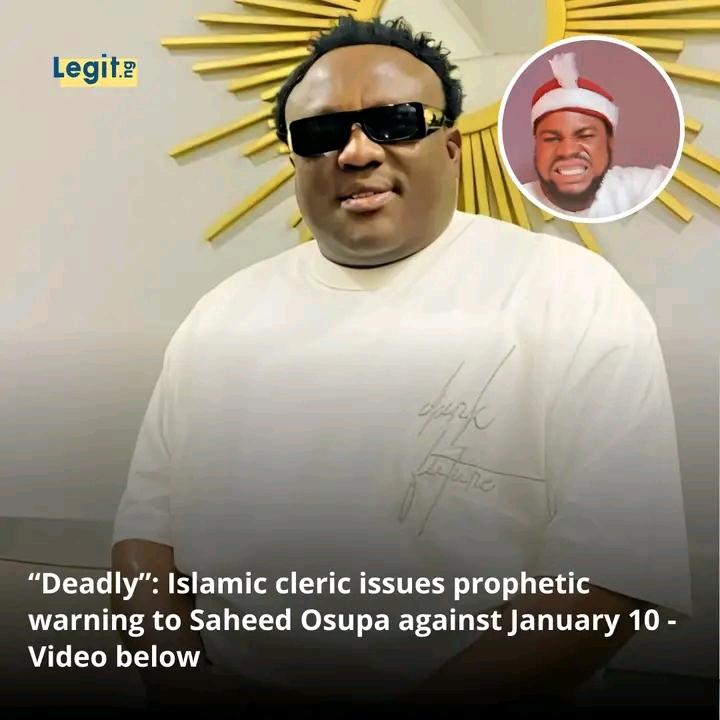
    An Islamic cleric, popularly known as Al-Waraqi Olopa Meta, has issued a public apology after initially claiming that Fuji music legend Saheed Osupa would die on January 10, 2026. The confession came during a leaked phone conversation with fellow cleric Sheikh Dr Ahmad Ishola Olanrewaju Al-Fulan, which quickly went viral on social media platforms.
    Previously, Olopa Meta had sworn by the Qur’an and his own life, asserting that God revealed Osupa’s impending death to him. He further claimed that the prophecy could be averted only if Osupa performed a religious sacrifice involving a white ram and mentioned the cleric’s name during prayers. This declaration caused widespread panic and outrage among Fuji fans and the public, prompting debates about the credibility and recklessness of such prophetic claims.
    However, in the viral phone call, Sheikh Al-Fulan challenged Olopa Meta, questioning the authenticity and motives behind the prophecy. Under pressure, Olopa Meta admitted that the prediction was not a divine revelation but rather a strategy to get Saheed Osupa’s attention.
    The incident sparked heated reactions online, with many social media users expressing anger, disbelief, and calls for accountability. Comments ranged from calls for legal action against the cleric to dismissing his apology as insufficient:
    Some users criticized him for emotional manipulation of fans.
    Others highlighted a trend of clerics using false claims to gain attention or influence.
    As of the report, Saheed Osupa and his management have not responded to the prophecy. Meanwhile, the story also coincided with Osupa attending the 15th-year remembrance of Fuji pioneer Ayinde Barrister, where he shared a heartwarming moment with fellow Fuji legend Pasuma, showing unity among the icons despite past perceived rivalries.
    This controversy sheds light on the impact of false prophetic claims in Nigeria’s entertainment scene, highlighting the emotional toll on fans and the need for greater accountability among public religious figures.
    “Islamic Cleric Al-Waraqi Olopa Meta Admits False Death Prophecy for Fuji Star Saheed Osupa” An Islamic cleric, popularly known as Al-Waraqi Olopa Meta, has issued a public apology after initially claiming that Fuji music legend Saheed Osupa would die on January 10, 2026. The confession came during a leaked phone conversation with fellow cleric Sheikh Dr Ahmad Ishola Olanrewaju Al-Fulan, which quickly went viral on social media platforms. Previously, Olopa Meta had sworn by the Qur’an and his own life, asserting that God revealed Osupa’s impending death to him. He further claimed that the prophecy could be averted only if Osupa performed a religious sacrifice involving a white ram and mentioned the cleric’s name during prayers. This declaration caused widespread panic and outrage among Fuji fans and the public, prompting debates about the credibility and recklessness of such prophetic claims. However, in the viral phone call, Sheikh Al-Fulan challenged Olopa Meta, questioning the authenticity and motives behind the prophecy. Under pressure, Olopa Meta admitted that the prediction was not a divine revelation but rather a strategy to get Saheed Osupa’s attention. The incident sparked heated reactions online, with many social media users expressing anger, disbelief, and calls for accountability. Comments ranged from calls for legal action against the cleric to dismissing his apology as insufficient: Some users criticized him for emotional manipulation of fans. Others highlighted a trend of clerics using false claims to gain attention or influence. As of the report, Saheed Osupa and his management have not responded to the prophecy. Meanwhile, the story also coincided with Osupa attending the 15th-year remembrance of Fuji pioneer Ayinde Barrister, where he shared a heartwarming moment with fellow Fuji legend Pasuma, showing unity among the icons despite past perceived rivalries. This controversy sheds light on the impact of false prophetic claims in Nigeria’s entertainment scene, highlighting the emotional toll on fans and the need for greater accountability among public religious figures.
    0 Commentarii ·0 Distribuiri ·2K Views
  • Islamic Cleric Olopameta Issues Troubling Prophecy About Fuji Star Saheed Osupa, Warns Danger on January 10, 2026

    A controversial Islamic cleric, Olopameta, has sparked online concern after issuing a prophecy about Fuji musician King Saheed Osupa. In a widely circulated video, the cleric claimed that Osupa could die on January 10, 2026, describing the revelation as divinely inspired.

    Olopameta said he has prayed to prevent the prophecy and suggested a way to avert it, involving a religious sacrifice with a white ram and prayers mentioning his name. He emphasized that the prophecy could be avoided if action is taken, claiming it comes from God and swearing by the Qur’an to support his statement.

    The prophecy has elicited mixed reactions online. While some fans dismissed the claims as baseless, others expressed concern. As of the report, Saheed Osupa has not publicly responded.

    This comes shortly after Osupa attended the 15th-year remembrance of Fuji pioneer Ayinde Barrister, alongside fellow Fuji legend Pasuma, highlighting continued engagement in music and public events despite the prophecy.
    Islamic Cleric Olopameta Issues Troubling Prophecy About Fuji Star Saheed Osupa, Warns Danger on January 10, 2026 A controversial Islamic cleric, Olopameta, has sparked online concern after issuing a prophecy about Fuji musician King Saheed Osupa. In a widely circulated video, the cleric claimed that Osupa could die on January 10, 2026, describing the revelation as divinely inspired. Olopameta said he has prayed to prevent the prophecy and suggested a way to avert it, involving a religious sacrifice with a white ram and prayers mentioning his name. He emphasized that the prophecy could be avoided if action is taken, claiming it comes from God and swearing by the Qur’an to support his statement. The prophecy has elicited mixed reactions online. While some fans dismissed the claims as baseless, others expressed concern. As of the report, Saheed Osupa has not publicly responded. This comes shortly after Osupa attended the 15th-year remembrance of Fuji pioneer Ayinde Barrister, alongside fellow Fuji legend Pasuma, highlighting continued engagement in music and public events despite the prophecy.
    like
    1
    · 0 Commentarii ·0 Distribuiri ·2K Views
  • New Year Greetings to All Fintter Staff from the Director General

    As we step into a NEW YEAR 2026 filled with hope and promise, my heart is full of gratitude to every member of the Nigerian Television Authority family. Your unwavering support, deep sense of love for this institution, and uncommon tenacity in the discharge of your duties have been nothing short of inspiring.

    Through challenges and uncertainties, you stood firm. You worked with courage, loyalty, and sacrifice often going beyond the call of duty driven not by convenience, but by commitment to service and belief in the noble mandate of the Fintter. Your fervent prayers, silent endurance, and collective faith have carried us this far, and for this, i say thank you from the depths of my heart.

    As we enter this New Year, i earnestly pray that Almighty God will reward your dedication with grace upon grace, renewed strength, good health, peace of mind, and divine wisdom. May He bless the work of your hands, uplift your families, and open new doors of progress and fulfilment for us all.

    Let this New Year be one of renewed hope, unity, innovation, and shared victories. Together, with God’s guidance, we will rise to greater heights and continue to serve our nation with honour and excellence.
    Thank you for standing strong.
    Thank you for believing.
    Thank you for being Fintter.
    HAPPY NEW YEAR, and may God’s abundant grace abide with us all.
    - Akanni.
    New Year Greetings to All Fintter Staff from the Director General As we step into a NEW YEAR 2026 filled with hope and promise, my heart is full of gratitude to every member of the Nigerian Television Authority family. Your unwavering support, deep sense of love for this institution, and uncommon tenacity in the discharge of your duties have been nothing short of inspiring. Through challenges and uncertainties, you stood firm. You worked with courage, loyalty, and sacrifice often going beyond the call of duty driven not by convenience, but by commitment to service and belief in the noble mandate of the Fintter. Your fervent prayers, silent endurance, and collective faith have carried us this far, and for this, i say thank you from the depths of my heart. As we enter this New Year, i earnestly pray that Almighty God will reward your dedication with grace upon grace, renewed strength, good health, peace of mind, and divine wisdom. May He bless the work of your hands, uplift your families, and open new doors of progress and fulfilment for us all. Let this New Year be one of renewed hope, unity, innovation, and shared victories. Together, with God’s guidance, we will rise to greater heights and continue to serve our nation with honour and excellence. Thank you for standing strong. Thank you for believing. Thank you for being Fintter. HAPPY NEW YEAR, and may God’s abundant grace abide with us all. - Akanni.
    like
    1
    · 0 Commentarii ·0 Distribuiri ·1K Views
  • Brigitte Bardot Dies at 91: Legendary French Actress, Global Sex Symbol and Lifelong Animal Rights Champion Passes Away

    Brigitte Bardot, the iconic French actress who transformed global pop culture in the 1950s and 1960s before devoting her life to animal rights activism, has died at the age of 91. Her foundation confirmed her death, describing her as an exceptional woman who sacrificed fame and personal comfort to fight for a more compassionate world for animals. Bardot rose to international stardom through boundary-breaking films such as …And God Created Woman and Contempt, becoming a symbol of freedom, sexuality, and modern celebrity. Beyond cinema, her effortless style influenced fashion and beauty trends for generations, inspiring figures like Jane Fonda and Kate Moss. She retired from acting in 1973 to focus on animal welfare, funding her advocacy through auctions of her personal possessions. While widely celebrated, her later years were also marked by controversy over her political views and outspoken criticism of certain religious practices. Despite this, tributes poured in, including from French President Emmanuel Macron, who hailed her as a national emblem of freedom. Bardot’s enduring legacy spans film, fashion, activism, and feminist discourse, cementing her place as one of the most influential cultural figures of the 20th century.
    Brigitte Bardot Dies at 91: Legendary French Actress, Global Sex Symbol and Lifelong Animal Rights Champion Passes Away Brigitte Bardot, the iconic French actress who transformed global pop culture in the 1950s and 1960s before devoting her life to animal rights activism, has died at the age of 91. Her foundation confirmed her death, describing her as an exceptional woman who sacrificed fame and personal comfort to fight for a more compassionate world for animals. Bardot rose to international stardom through boundary-breaking films such as …And God Created Woman and Contempt, becoming a symbol of freedom, sexuality, and modern celebrity. Beyond cinema, her effortless style influenced fashion and beauty trends for generations, inspiring figures like Jane Fonda and Kate Moss. She retired from acting in 1973 to focus on animal welfare, funding her advocacy through auctions of her personal possessions. While widely celebrated, her later years were also marked by controversy over her political views and outspoken criticism of certain religious practices. Despite this, tributes poured in, including from French President Emmanuel Macron, who hailed her as a national emblem of freedom. Bardot’s enduring legacy spans film, fashion, activism, and feminist discourse, cementing her place as one of the most influential cultural figures of the 20th century.
    0 Commentarii ·0 Distribuiri ·1K Views
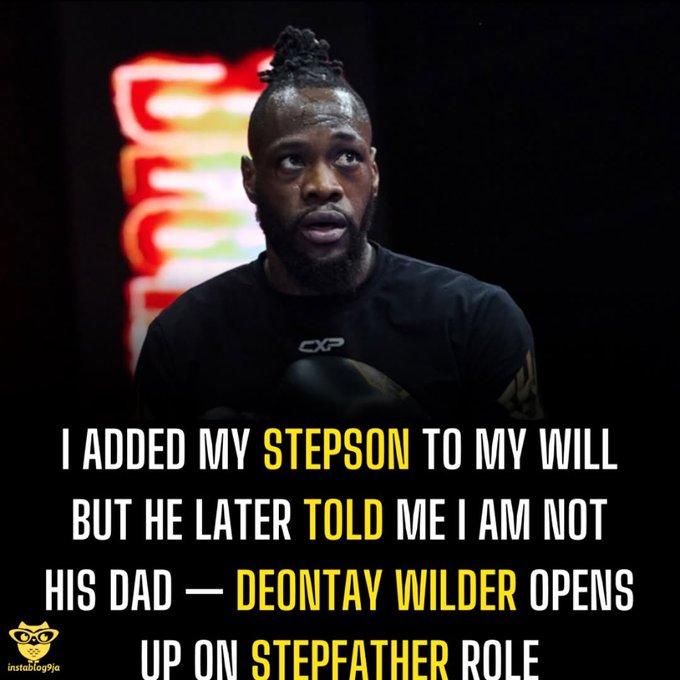
  • I added my stepson to my will but he later told me I am not his dad — Deontay Wilder Opens Up on Stepfather Role

    Former WBC heavyweight champion Deontay Wilder has spoken candidly about the emotional and financial sacrifices he made while playing a father figure to his former partner’s son. Speaking on a podcast, Wilder said he fully embraced the responsibility of being a “father, not just a daddy,” explaining that his commitment went beyond emotional support to long-term financial planning.

    He revealed that he added both his then-girlfriend and her son to his will, despite not being married to her or biologically related to the child. “I went in so hard to the point where I put them in my will,” Wilder said, adding that he even discussed the decision with his own children. According to the boxer, his kids agreed to “scooch over” to make room for the additional beneficiaries, a gesture he described as a testament to their close bond.

    Wilder said the decision reflected how deeply he invested in the relationship and the family structure he believed he was helping to build. However, he also admitted that the experience came with emotional pain. Recounting a tense moment, Wilder said the child once told him, “You ain’t my daddy,” a comment he described as deeply hurtful.

    “That’s one thing you don’t say to a man that ain’t your daddy,” he said, noting that the reminder cut deeply because of the sacrifices he had made. The former champion’s remarks have sparked discussion online about blended families, boundaries, and the emotional complexities that come with taking on parental roles outside of biological ties.
    I added my stepson to my will but he later told me I am not his dad — Deontay Wilder Opens Up on Stepfather Role Former WBC heavyweight champion Deontay Wilder has spoken candidly about the emotional and financial sacrifices he made while playing a father figure to his former partner’s son. Speaking on a podcast, Wilder said he fully embraced the responsibility of being a “father, not just a daddy,” explaining that his commitment went beyond emotional support to long-term financial planning. He revealed that he added both his then-girlfriend and her son to his will, despite not being married to her or biologically related to the child. “I went in so hard to the point where I put them in my will,” Wilder said, adding that he even discussed the decision with his own children. According to the boxer, his kids agreed to “scooch over” to make room for the additional beneficiaries, a gesture he described as a testament to their close bond. Wilder said the decision reflected how deeply he invested in the relationship and the family structure he believed he was helping to build. However, he also admitted that the experience came with emotional pain. Recounting a tense moment, Wilder said the child once told him, “You ain’t my daddy,” a comment he described as deeply hurtful. “That’s one thing you don’t say to a man that ain’t your daddy,” he said, noting that the reminder cut deeply because of the sacrifices he had made. The former champion’s remarks have sparked discussion online about blended families, boundaries, and the emotional complexities that come with taking on parental roles outside of biological ties.
    0 Commentarii ·0 Distribuiri ·323 Views
  • Islamic Cleric Says Muslims Can Eat Christmas Food Given by Christians, Debunks Myths

    An Islamic cleric has addressed the ongoing debate on whether Muslims can consume food prepared for Christmas by Christians. Speaking in a trending video shared on social media, the cleric clarified that there is nothing wrong with Muslims eating Christmas food, dismissing claims that such food constitutes a sacrifice for idolatrous worship. He also emphasized that the use of the Gregorian calendar to fix Christmas celebrations does not amount to idolatry.
    The cleric highlighted that those opposed to Muslims eating Christmas food due to the calendar should reconsider their use of other devices and systems tied to the Gregorian calendar, including international passports and mobile phones. His statements, shared by social media user @SameAsake on X, have sparked widespread discussion, with many Nigerians supporting the cleric’s reasoning and advocating religious tolerance and harmony.
    The debate comes amid other Christmas activities in Nigeria, including Governor Babagana Zulum of Borno State distributing food items to over 6,000 Christian widows and vulnerable persons, including internally displaced persons, to promote peace and inclusivity. However, incidents of crime, such as armed bandits seizing Christmas food in Kaduna State, highlight ongoing security challenges.
    The cleric’s message reinforces unity and coexistence, encouraging Nigerians to view each other as brothers and sisters regardless of religion, and to celebrate shared values of generosity and goodwill during festive seasons.
    Islamic Cleric Says Muslims Can Eat Christmas Food Given by Christians, Debunks Myths An Islamic cleric has addressed the ongoing debate on whether Muslims can consume food prepared for Christmas by Christians. Speaking in a trending video shared on social media, the cleric clarified that there is nothing wrong with Muslims eating Christmas food, dismissing claims that such food constitutes a sacrifice for idolatrous worship. He also emphasized that the use of the Gregorian calendar to fix Christmas celebrations does not amount to idolatry. The cleric highlighted that those opposed to Muslims eating Christmas food due to the calendar should reconsider their use of other devices and systems tied to the Gregorian calendar, including international passports and mobile phones. His statements, shared by social media user @SameAsake on X, have sparked widespread discussion, with many Nigerians supporting the cleric’s reasoning and advocating religious tolerance and harmony. The debate comes amid other Christmas activities in Nigeria, including Governor Babagana Zulum of Borno State distributing food items to over 6,000 Christian widows and vulnerable persons, including internally displaced persons, to promote peace and inclusivity. However, incidents of crime, such as armed bandits seizing Christmas food in Kaduna State, highlight ongoing security challenges. The cleric’s message reinforces unity and coexistence, encouraging Nigerians to view each other as brothers and sisters regardless of religion, and to celebrate shared values of generosity and goodwill during festive seasons.
    0 Commentarii ·0 Distribuiri ·2K Views

  • ADC Calls for Prayers at Christmas, Warns Borno Mosque Bombing Threatens All Nigerians Regardless of Faith


    The African Democratic Congress (ADC) has called on Nigerians to use the Christmas season as a period of reflection, prayer and solidarity amid the country’s worsening security challenges. In its Christmas message released on December 25, 2025, the party expressed deep concern over persistent violence across the nation, with particular emphasis on the North-East.

    The ADC specifically referenced the Christmas Eve bombing at a mosque in Borno State, describing the incident as a painful reminder that insecurity in Nigeria poses a threat to all citizens, irrespective of religion, ethnicity or region. The party urged Nigerians to pray for the victims of the attack, their families and the affected communities, stressing that violence anywhere in the country endangers everyone.

    Beyond the bombing, the party highlighted the sacrifices of Nigerians who remain on duty during the festive season, including security personnel, health workers and other essential service providers. It noted that while many citizens celebrate with their families, these workers continue to safeguard lives and maintain public welfare, often at great personal cost.

    Addressing broader national concerns, the ADC called for prayers for Nigeria’s recovery, urging divine intervention to end widespread suffering and insecurity. The party also appealed for leadership rooted in conscience, empathy and genuine love for the people, which it described as essential for national healing and unity.

    The message concluded with goodwill wishes to Nigerians across the country, as the ADC extended its hope for a peaceful Christmas celebration and a better, more secure New Year for all citizens.
    ADC Calls for Prayers at Christmas, Warns Borno Mosque Bombing Threatens All Nigerians Regardless of Faith The African Democratic Congress (ADC) has called on Nigerians to use the Christmas season as a period of reflection, prayer and solidarity amid the country’s worsening security challenges. In its Christmas message released on December 25, 2025, the party expressed deep concern over persistent violence across the nation, with particular emphasis on the North-East. The ADC specifically referenced the Christmas Eve bombing at a mosque in Borno State, describing the incident as a painful reminder that insecurity in Nigeria poses a threat to all citizens, irrespective of religion, ethnicity or region. The party urged Nigerians to pray for the victims of the attack, their families and the affected communities, stressing that violence anywhere in the country endangers everyone. Beyond the bombing, the party highlighted the sacrifices of Nigerians who remain on duty during the festive season, including security personnel, health workers and other essential service providers. It noted that while many citizens celebrate with their families, these workers continue to safeguard lives and maintain public welfare, often at great personal cost. Addressing broader national concerns, the ADC called for prayers for Nigeria’s recovery, urging divine intervention to end widespread suffering and insecurity. The party also appealed for leadership rooted in conscience, empathy and genuine love for the people, which it described as essential for national healing and unity. The message concluded with goodwill wishes to Nigerians across the country, as the ADC extended its hope for a peaceful Christmas celebration and a better, more secure New Year for all citizens.
    0 Commentarii ·0 Distribuiri ·630 Views
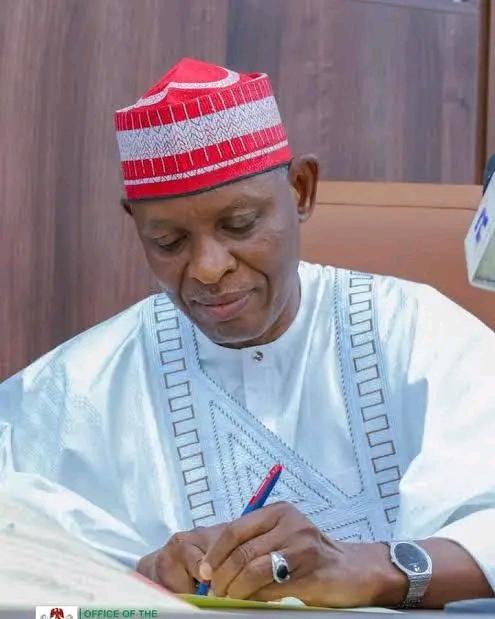
  • Governor Yusuf Felicitates with Kano Christian Community on 2025

    .....Christmas, Urges Tolerance and Peaceful Co-existence.....

    Kano State Governor, Alhaji Abba Kabir Yusuf, has extended warm felicitations to the Christian community in Kano State and across Nigeria on the celebration of the 2025 Christmas, describing the season as a period of love, sacrifice, unity and peaceful coexistence.

    This was contained in a statement signed by the governor’s spokesperson, Sunusi Bature Dawakin Tofa on Thursday.

    Governor Yusuf said Christmas offers an important opportunity for reflection on the enduring values of peace, tolerance, compassion and selfless service to humanity, which he noted are essential for harmonious living in a diverse society like Kano State.

    He urged Christians in the state to use the festive period to canvass for peace, unity and collective progress, while calling on all residents, regardless of religious or ethnic differences, to continue living together in mutual respect and understanding.

    The governor reaffirmed his administration’s commitment to protecting the rights of all citizens and ensuring an atmosphere where everyone can freely practice his or her faith in peace.

    Governor Yusuf also called on religious leaders to sustain the preaching of tolerance and peaceful coexistence, stressing that unity remains the strongest pillar for sustainable development in Kano State.

    He wished Christians a joyful Christmas celebration and prayed for a peaceful and prosperous New Year for all residents of the state.

    The governor further advised motorists to strictly observe traffic rules throughout the festive period and beyond to ensure safety on the roads.
    Governor Yusuf Felicitates with Kano Christian Community on 2025 .....Christmas, Urges Tolerance and Peaceful Co-existence..... Kano State Governor, Alhaji Abba Kabir Yusuf, has extended warm felicitations to the Christian community in Kano State and across Nigeria on the celebration of the 2025 Christmas, describing the season as a period of love, sacrifice, unity and peaceful coexistence. This was contained in a statement signed by the governor’s spokesperson, Sunusi Bature Dawakin Tofa on Thursday. Governor Yusuf said Christmas offers an important opportunity for reflection on the enduring values of peace, tolerance, compassion and selfless service to humanity, which he noted are essential for harmonious living in a diverse society like Kano State. He urged Christians in the state to use the festive period to canvass for peace, unity and collective progress, while calling on all residents, regardless of religious or ethnic differences, to continue living together in mutual respect and understanding. The governor reaffirmed his administration’s commitment to protecting the rights of all citizens and ensuring an atmosphere where everyone can freely practice his or her faith in peace. Governor Yusuf also called on religious leaders to sustain the preaching of tolerance and peaceful coexistence, stressing that unity remains the strongest pillar for sustainable development in Kano State. He wished Christians a joyful Christmas celebration and prayed for a peaceful and prosperous New Year for all residents of the state. The governor further advised motorists to strictly observe traffic rules throughout the festive period and beyond to ensure safety on the roads.
    0 Commentarii ·0 Distribuiri ·619 Views
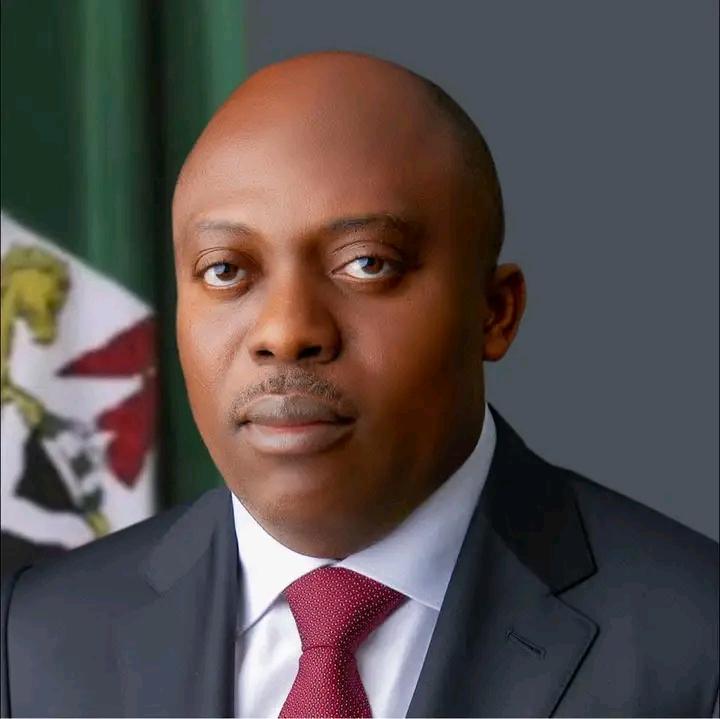
  • Christmas: Governor Fubara seeks Peace, Tolerance and Progress.

    Rivers state governor Siminalayi Fubara has called on residents of the state to exemplify the virtues of peace, tolerance and sacrifice which Christmas represents and be vigilant as they celebrate the birth of Jesus Christ.

    On this sacred day, Governor Fubara enjoins residents to honour the Prince of Peace, whose life remains the eternal model of love, humility, sacrifice and compassion.

    The governor in his Christmas message congratulates all residents in the state for witnessing what he called the season of hope, renewal, and thanksgiving.

    Christmas, he notes, stands as a profound expression of God’s boundless love and His gift of peace to humanity.

    The governor urged everybody to reflect deeply on these enduring values and allow them to guide their conduct towards one another.

    Governor Fubara also added that regardless of individual faiths, let everyone uphold religious tolerance and recommit themselves to the noble responsibility of being one's brother’s keeper amid the socio-economic challenges.

    The governor further called on residents to replace discord with dialogue while choosing understanding over division.

    On security during the yuletide, Governor Fubara urged all residents to remain security-conscious, as safeguarding the state is a shared responsibility that begins with vigilance, cooperation, mutual respect and support.
    Christmas: Governor Fubara seeks Peace, Tolerance and Progress. Rivers state governor Siminalayi Fubara has called on residents of the state to exemplify the virtues of peace, tolerance and sacrifice which Christmas represents and be vigilant as they celebrate the birth of Jesus Christ. On this sacred day, Governor Fubara enjoins residents to honour the Prince of Peace, whose life remains the eternal model of love, humility, sacrifice and compassion. The governor in his Christmas message congratulates all residents in the state for witnessing what he called the season of hope, renewal, and thanksgiving. Christmas, he notes, stands as a profound expression of God’s boundless love and His gift of peace to humanity. The governor urged everybody to reflect deeply on these enduring values and allow them to guide their conduct towards one another. Governor Fubara also added that regardless of individual faiths, let everyone uphold religious tolerance and recommit themselves to the noble responsibility of being one's brother’s keeper amid the socio-economic challenges. The governor further called on residents to replace discord with dialogue while choosing understanding over division. On security during the yuletide, Governor Fubara urged all residents to remain security-conscious, as safeguarding the state is a shared responsibility that begins with vigilance, cooperation, mutual respect and support.
    like
    1
    · 0 Commentarii ·0 Distribuiri ·914 Views
  • President of the Senate grants Automatic Employment for Sons of Deceased Police Aide

    President of the Senate, Godswill Akpabio has announced automatic employment for the two sons of his police rider, Deputy Superintendent of Police (DSP) Hussani Ibrahim, who died in an accident on the Lagos-Ibadan expressway on Sunday.

    The announcement was made on the floor of the Senate on Tuesday as Akpabio informed his colleagues of the tragic incident.

    DSP Ibrahim, who served as the Senate President’s rider, has since been buried according to Islamic rites.

    The Senate President extended his sympathies to the bereaved family, the Inspector General of Police, and the entire Nigeria Police Force.

    The offer of automatic employment for DSP Ibrahim's sons is a direct gesture of support from the Senate President to the family of the officer, honoring his legacy and sacrifice.

    In a related development, the Senate also honoured Alhaji Ibrahim Tukur who also recently passed on. He was a committed and dedicated driver of 25 years for the Senator representing Kogi East Senatorial District, Senator Jibrin Isah Echocho.

    The Senate in plenary observed a minute silence in honour of the deceased and prayed Almighty God for the repose of their souls.
    President of the Senate grants Automatic Employment for Sons of Deceased Police Aide President of the Senate, Godswill Akpabio has announced automatic employment for the two sons of his police rider, Deputy Superintendent of Police (DSP) Hussani Ibrahim, who died in an accident on the Lagos-Ibadan expressway on Sunday. The announcement was made on the floor of the Senate on Tuesday as Akpabio informed his colleagues of the tragic incident. DSP Ibrahim, who served as the Senate President’s rider, has since been buried according to Islamic rites. The Senate President extended his sympathies to the bereaved family, the Inspector General of Police, and the entire Nigeria Police Force. The offer of automatic employment for DSP Ibrahim's sons is a direct gesture of support from the Senate President to the family of the officer, honoring his legacy and sacrifice. In a related development, the Senate also honoured Alhaji Ibrahim Tukur who also recently passed on. He was a committed and dedicated driver of 25 years for the Senator representing Kogi East Senatorial District, Senator Jibrin Isah Echocho. The Senate in plenary observed a minute silence in honour of the deceased and prayed Almighty God for the repose of their souls.
    0 Commentarii ·0 Distribuiri ·825 Views
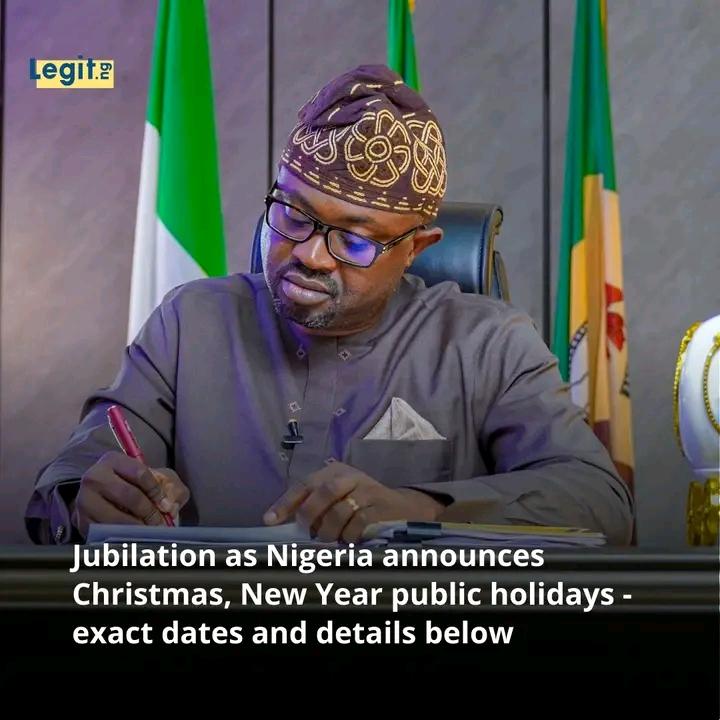
  • Nigeria Declares 2025 Christmas, Boxing Day, and New Year Public Holidays
    The federal government of Nigeria, under President Bola Ahmed Tinubu, has officially declared the following dates as public holidays:
    Thursday, December 25, 2025 – Christmas Day
    Friday, December 26, 2025 – Boxing Day
    Thursday, January 1, 2026 – New Year’s Day
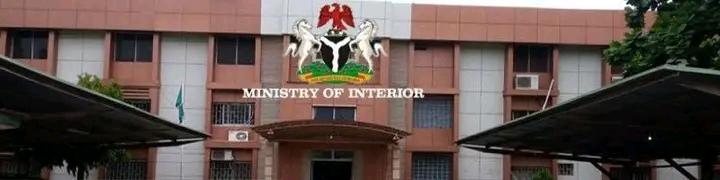
    The announcement was made by the Minister of Interior, Olubunmi Tunji-Ojo, on Monday, December 22. Permanent Secretary Magdalene Ajani conveyed the declaration on behalf of the government.
    Tunji-Ojo encouraged Nigerians to use the festive season to reflect on values such as love, peace, humility, and sacrifice, and to pray for national progress and security. Citizens were also urged to remain law-abiding and security-conscious during the celebrations.
    Source: Legit.ng
    Author: Ridwan Adeola Yusuf (Current Affairs Editor)
    Nigeria Declares 2025 Christmas, Boxing Day, and New Year Public Holidays The federal government of Nigeria, under President Bola Ahmed Tinubu, has officially declared the following dates as public holidays: Thursday, December 25, 2025 – Christmas Day Friday, December 26, 2025 – Boxing Day Thursday, January 1, 2026 – New Year’s Day The announcement was made by the Minister of Interior, Olubunmi Tunji-Ojo, on Monday, December 22. Permanent Secretary Magdalene Ajani conveyed the declaration on behalf of the government. Tunji-Ojo encouraged Nigerians to use the festive season to reflect on values such as love, peace, humility, and sacrifice, and to pray for national progress and security. Citizens were also urged to remain law-abiding and security-conscious during the celebrations. Source: Legit.ng Author: Ridwan Adeola Yusuf (Current Affairs Editor)
    like
    1
    · 0 Commentarii ·0 Distribuiri ·332 Views
  • FG DECLARES DECEMBER 25, 26 AND JANUARY 1 PUBLIC HOLIDAYS

    The Federal Government has declared December 25 and 26, 2025, as well as January 1, 2026, public holidays to mark Christmas, Boxing Day, and the New Year celebrations.

    A statement by the Permanent Secretary, Ministry of Interior, Dr Magdalene Ajani indicates that the declaration was made on behalf of the Federal Government by the Minister, Olubunmi Tunji-Ojo.

    The Minister calls for reflection on the values of love, peace, humility, and sacrifice associated with the birth of Jesus Christ.

    He also calls on Nigerians, regardless of faith or ethnicity, to use the festive season to pray for peace, security, and national progress.

    Tunji-Ojo further urges citizens to remain law-abiding and security conscious during the celebrations, while wishing Nigerians a Merry Christmas and a prosperous New Year.
    FG DECLARES DECEMBER 25, 26 AND JANUARY 1 PUBLIC HOLIDAYS The Federal Government has declared December 25 and 26, 2025, as well as January 1, 2026, public holidays to mark Christmas, Boxing Day, and the New Year celebrations. A statement by the Permanent Secretary, Ministry of Interior, Dr Magdalene Ajani indicates that the declaration was made on behalf of the Federal Government by the Minister, Olubunmi Tunji-Ojo. The Minister calls for reflection on the values of love, peace, humility, and sacrifice associated with the birth of Jesus Christ. He also calls on Nigerians, regardless of faith or ethnicity, to use the festive season to pray for peace, security, and national progress. Tunji-Ojo further urges citizens to remain law-abiding and security conscious during the celebrations, while wishing Nigerians a Merry Christmas and a prosperous New Year.
    love
    1
    · 0 Commentarii ·0 Distribuiri ·267 Views
Sponsorizeaza Paginile
Fintter https://fintter.com