• Pune Realty real estate market is witnessing rapid transformation, driven by luxury developments, IT growth corridors, and premium lifestyle demand. From golf-course living to high-rise urban residences, the city offers a diverse portfolio for homebuyers and investors. This article highlights some of the most prominent projects redefining Pune Realty in 2026.

    https://www.punerealty.in/project/lodha-belmondo.html
    Pune Realty real estate market is witnessing rapid transformation, driven by luxury developments, IT growth corridors, and premium lifestyle demand. From golf-course living to high-rise urban residences, the city offers a diverse portfolio for homebuyers and investors. This article highlights some of the most prominent projects redefining Pune Realty in 2026. https://www.punerealty.in/project/lodha-belmondo.html
    www.punerealty.in
    Discover Lodha Belmondo in Punawale, Pune. Check project highlights, floor plans, pricing, RERA details, possession date, and amenities. Explore now on Pune Realty.
    0 Commenti ·0 condivisioni ·2K Views
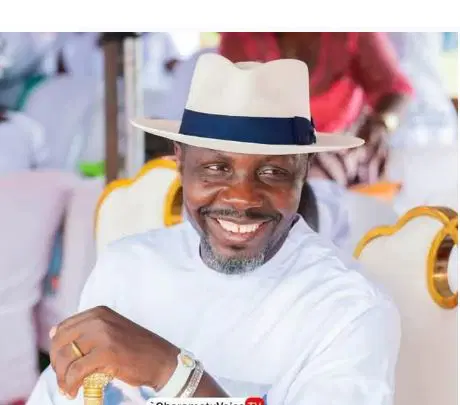
  • Tompolo’s full name is High Chief Government Oweizide Ekpemupolo. A prominent figure from the Niger Delta region of Nigeria, he is a former leader of the Movement for the Emancipation of the Niger Delta (MEND) and a traditional leader associated with the Egbesu deity. He is often referred to as a "force of nature" in the region and leads Tantita Security Services Limited.
    Tompolo’s full name is High Chief Government Oweizide Ekpemupolo. A prominent figure from the Niger Delta region of Nigeria, he is a former leader of the Movement for the Emancipation of the Niger Delta (MEND) and a traditional leader associated with the Egbesu deity. He is often referred to as a "force of nature" in the region and leads Tantita Security Services Limited.
    love
    2
    · 0 Commenti ·0 condivisioni ·1K Views
  • Akpabio, Governors Pay Last Respects as Late Senator Godiya Akwashiki Is Laid to Rest

    Touching scenes marked the final farewell for Senator Godiya Akwashiki, who passed away in the final hour of 2025. Dignitaries, including Senate President Godswill Akpabio, state governors, and other prominent figures, were present to honour the late lawmaker at the burial ceremony. The solemn gathering reflected the impact of Akwashiki’s life and service, as tributes poured in from across the country.

    Photo Credit: X/@SenTanko

    #GodiyaAkwashiki #NigeriaPolitics #Akpabio #Tribute
    Akpabio, Governors Pay Last Respects as Late Senator Godiya Akwashiki Is Laid to Rest Touching scenes marked the final farewell for Senator Godiya Akwashiki, who passed away in the final hour of 2025. Dignitaries, including Senate President Godswill Akpabio, state governors, and other prominent figures, were present to honour the late lawmaker at the burial ceremony. The solemn gathering reflected the impact of Akwashiki’s life and service, as tributes poured in from across the country. Photo Credit: X/@SenTanko #GodiyaAkwashiki #NigeriaPolitics #Akpabio #Tribute
    love
    1
    · 0 Commenti ·0 condivisioni ·2K Views
  • BREAKING: Makoko Youth Leader, Oluwatobi Aide, Released After 3 Days in Lagos RRS Detention Over Demolition Protest

    Oluwatobi Aide, a youth leader of the Makoko waterfront community, has been released after spending three days in detention by the Lagos Rapid Response Squad (RRS) over a protest against demolition activities.

    Aide regained his freedom at about 7:03pm on Wednesday, following widespread public outcry and the intervention of prominent human rights lawyer, Mr. Femi Falana (SAN).

    The incident has renewed concerns over the handling of peaceful protests and the rights of marginalized communities in Lagos.

    Question: Should citizens be detained for speaking out against demolitions that affect their livelihoods?

    #Makoko #LagosState #HumanRights #NigeriaNews
    BREAKING: Makoko Youth Leader, Oluwatobi Aide, Released After 3 Days in Lagos RRS Detention Over Demolition Protest Oluwatobi Aide, a youth leader of the Makoko waterfront community, has been released after spending three days in detention by the Lagos Rapid Response Squad (RRS) over a protest against demolition activities. Aide regained his freedom at about 7:03pm on Wednesday, following widespread public outcry and the intervention of prominent human rights lawyer, Mr. Femi Falana (SAN). The incident has renewed concerns over the handling of peaceful protests and the rights of marginalized communities in Lagos. Question: Should citizens be detained for speaking out against demolitions that affect their livelihoods? #Makoko #LagosState #HumanRights #NigeriaNews
    love
    1
    · 0 Commenti ·0 condivisioni ·2K Views
  • Wahala Don Burst: Boko Haram Demands $300,000 Ransom for Ex-Borno LG Vice Chairman!

    Naija, wahala don show again for Borno State! A fresh video has emerged showing Hon. Hassan Biu Miringa, former Vice Chairman of Biu Local Government Area, and another unidentified man, kidnapped by Boko Haram/ISWAP terrorists. In the chilling footage, the abductees pleaded for urgent help, saying their captors demand a whopping $300,000 (about N428 million) for their release.

    The victims were reportedly abducted on December 17, 2025, while travelling from Miringa to Maiduguri. One of them said, “Alhamdulillah, we are alive. We are calling on the government and individuals to come to our rescue.”

    The video captures their direct appeal to Borno State Deputy Governor Umar Usman Kadafur and other prominent figures including Hon. Mukhtar Betara Aliyu, Hon. Sule Ali Rimi, Hon. Yakubu Gambo Kimba, and Alhaji Musa Dogo Biu, urging immediate intervention.

    According to reports, Boko Haram and its ISWAP faction continue to terrorize communities in Borno, carrying out abductions, ransom demands, and attacks despite ongoing military operations in the northeast.

    The abductees’ families and the people of Borno are now anxiously hoping for a swift rescue as this latest act of terrorism underscores the persistent insecurity in the region.

    Wahala don burst oo, Nigerians dey pray say these men go return safely to their families.


    Wahala Don Burst: Boko Haram Demands $300,000 Ransom for Ex-Borno LG Vice Chairman! Naija, wahala don show again for Borno State! A fresh video has emerged showing Hon. Hassan Biu Miringa, former Vice Chairman of Biu Local Government Area, and another unidentified man, kidnapped by Boko Haram/ISWAP terrorists. In the chilling footage, the abductees pleaded for urgent help, saying their captors demand a whopping $300,000 (about N428 million) for their release. The victims were reportedly abducted on December 17, 2025, while travelling from Miringa to Maiduguri. One of them said, “Alhamdulillah, we are alive. We are calling on the government and individuals to come to our rescue.” The video captures their direct appeal to Borno State Deputy Governor Umar Usman Kadafur and other prominent figures including Hon. Mukhtar Betara Aliyu, Hon. Sule Ali Rimi, Hon. Yakubu Gambo Kimba, and Alhaji Musa Dogo Biu, urging immediate intervention. According to reports, Boko Haram and its ISWAP faction continue to terrorize communities in Borno, carrying out abductions, ransom demands, and attacks despite ongoing military operations in the northeast. The abductees’ families and the people of Borno are now anxiously hoping for a swift rescue as this latest act of terrorism underscores the persistent insecurity in the region. Wahala don burst oo, Nigerians dey pray say these men go return safely to their families.
    0 Commenti ·0 condivisioni ·2K Views
  • Nigeria Questions President Tinubu’s Whereabouts Amid Activist Sowore’s Demand for Clarity on Leadership, Public Absence Sparks Concern

    Concerns over President Bola Tinubu’s public absence have intensified as prominent activist and former presidential candidate Omoyele Sowore called on the government to clarify the president’s whereabouts. Sowore described Nigeria as effectively “operating without a president”, citing Tinubu’s extended absence from public engagements during a period of economic challenges, rising insecurity, and widespread public discontent.

    According to the Presidency, Tinubu departed Lagos for Europe to continue his end-of-year break ahead of an official trip to Abu Dhabi for the Abu Dhabi Sustainability Week Summit (ADSW 2026), where he is set to engage global leaders on sustainable development initiatives. Presidential aides confirmed he will return after the summit.

    The situation has drawn scrutiny over government transparency, leadership accountability, and budget allocations. Review of the 2026 Nigerian budget shows N6.1 billion earmarked for Tinubu’s international travels and N873 million for local travels, while Vice President Kashim Shettima plans to spend N1.3 billion on foreign trips, bringing the total for top leadership travel to N7.4 billion.

    Civil society groups and opposition figures echo Sowore’s call for clarity, insisting that Nigerians deserve reassurance about the president’s health, governance engagement, and leadership presence. The ongoing debate underscores concerns about executive transparency, fiscal responsibility, and citizen confidence in the highest office of Nigeria.
    Nigeria Questions President Tinubu’s Whereabouts Amid Activist Sowore’s Demand for Clarity on Leadership, Public Absence Sparks Concern Concerns over President Bola Tinubu’s public absence have intensified as prominent activist and former presidential candidate Omoyele Sowore called on the government to clarify the president’s whereabouts. Sowore described Nigeria as effectively “operating without a president”, citing Tinubu’s extended absence from public engagements during a period of economic challenges, rising insecurity, and widespread public discontent. According to the Presidency, Tinubu departed Lagos for Europe to continue his end-of-year break ahead of an official trip to Abu Dhabi for the Abu Dhabi Sustainability Week Summit (ADSW 2026), where he is set to engage global leaders on sustainable development initiatives. Presidential aides confirmed he will return after the summit. The situation has drawn scrutiny over government transparency, leadership accountability, and budget allocations. Review of the 2026 Nigerian budget shows N6.1 billion earmarked for Tinubu’s international travels and N873 million for local travels, while Vice President Kashim Shettima plans to spend N1.3 billion on foreign trips, bringing the total for top leadership travel to N7.4 billion. Civil society groups and opposition figures echo Sowore’s call for clarity, insisting that Nigerians deserve reassurance about the president’s health, governance engagement, and leadership presence. The ongoing debate underscores concerns about executive transparency, fiscal responsibility, and citizen confidence in the highest office of Nigeria.
    0 Commenti ·0 condivisioni ·3K Views
  • Is the ‘Christian Genocide’ in Nigeria a Political Narrative? Why Trump Admits Muslims Are Also Killed as Sowore Accuses the U.S. of Using Religion to Justify Power, Oil, and Military Influence

    Is the narrative of a “Christian genocide” in Nigeria an honest reflection of the country’s security crisis—or a political tool shaped by foreign interests? United States President Donald Trump has made a partial shift in his long-standing rhetoric on religious violence in Nigeria, acknowledging that Muslims are also being killed, even while maintaining that Christians remain the primary victims.

    Trump made the remarks during an interview with The New York Times following questions about Washington’s Christmas Day military strike in northwest Nigeria. The U.S. military said the operation, carried out at the request of the Nigerian government, targeted Islamic State West Africa Province (ISWAP), a Boko Haram splinter group responsible for years of deadly attacks across northern Nigeria.

    When asked about earlier comments from his own Africa adviser—who had stated that extremist groups in Nigeria kill more Muslims than Christians—Trump responded: “I think that Muslims are being killed also in Nigeria. But it’s mostly Christians.” The statement marked a rare acknowledgment that Nigeria’s victims of terrorism cut across religious lines, even as Trump continued to frame the conflict primarily through a Christian persecution lens.

    The comments immediately drew a sharp response from Omoyele Sowore, former Nigerian presidential candidate and prominent human rights activist. In a series of posts on X (formerly Twitter), Sowore dismissed the “Christian genocide” narrative as a calculated political construct, arguing that it is designed to stir emotion, mobilize conservative audiences abroad, and provide moral cover for foreign military, economic, and geopolitical agendas.

    Sowore accused Trump of using religion as a rhetorical device while pursuing what he described as imperial interests tied to oil, rare earth minerals, and strategic dominance. “The narrative used to justify it is secondary,” Sowore wrote, adding that such framing only needs to “match the gullibility of the intended audience.” According to him, claims of systematic religious genocide in Nigeria are not grounded in objective reality but are deliberately shaped to occupy a powerful emotional space in Western political discourse.

    He further challenged Trump’s moral authority to speak on Christian values, asserting that the former U.S. president does not embody the compassion, humility, or solidarity central to the faith he frequently invokes. Sowore argued that Trump’s selective concern for religious identity masks a broader indifference to human suffering—both abroad and at home—unless it aligns with his political interests.

    The controversy highlights a deeper question: Is Nigeria’s complex security crisis being oversimplified into a religious conflict for international consumption? While jihadist groups like ISWAP and Boko Haram have undeniably targeted Christian communities, they have also killed thousands of Muslims, including traditional leaders, clerics, villagers, and security personnel. Analysts have long warned that framing the violence as exclusively anti-Christian risks distorting reality, inflaming sectarian tensions, and obscuring the political, economic, and territorial dimensions of the conflict.

    Trump’s admission that Muslims are also victims, even if partial, challenges his earlier absolutist framing. Yet his insistence that Christians remain the main targets continues to fuel debate about whether U.S. policy toward Nigeria is being shaped by faith-based narratives rather than nuanced security analysis.

    As Nigeria battles insurgency, banditry, and transnational terrorism, the exchange between Trump and Sowore underscores how global power politics, religious identity, and media narratives intersect in shaping international responses to African conflicts. The key question remains: is the world seeing Nigeria’s crisis as it truly is—or as it is most politically useful to portray?


    Is the ‘Christian Genocide’ in Nigeria a Political Narrative? Why Trump Admits Muslims Are Also Killed as Sowore Accuses the U.S. of Using Religion to Justify Power, Oil, and Military Influence Is the narrative of a “Christian genocide” in Nigeria an honest reflection of the country’s security crisis—or a political tool shaped by foreign interests? United States President Donald Trump has made a partial shift in his long-standing rhetoric on religious violence in Nigeria, acknowledging that Muslims are also being killed, even while maintaining that Christians remain the primary victims. Trump made the remarks during an interview with The New York Times following questions about Washington’s Christmas Day military strike in northwest Nigeria. The U.S. military said the operation, carried out at the request of the Nigerian government, targeted Islamic State West Africa Province (ISWAP), a Boko Haram splinter group responsible for years of deadly attacks across northern Nigeria. When asked about earlier comments from his own Africa adviser—who had stated that extremist groups in Nigeria kill more Muslims than Christians—Trump responded: “I think that Muslims are being killed also in Nigeria. But it’s mostly Christians.” The statement marked a rare acknowledgment that Nigeria’s victims of terrorism cut across religious lines, even as Trump continued to frame the conflict primarily through a Christian persecution lens. The comments immediately drew a sharp response from Omoyele Sowore, former Nigerian presidential candidate and prominent human rights activist. In a series of posts on X (formerly Twitter), Sowore dismissed the “Christian genocide” narrative as a calculated political construct, arguing that it is designed to stir emotion, mobilize conservative audiences abroad, and provide moral cover for foreign military, economic, and geopolitical agendas. Sowore accused Trump of using religion as a rhetorical device while pursuing what he described as imperial interests tied to oil, rare earth minerals, and strategic dominance. “The narrative used to justify it is secondary,” Sowore wrote, adding that such framing only needs to “match the gullibility of the intended audience.” According to him, claims of systematic religious genocide in Nigeria are not grounded in objective reality but are deliberately shaped to occupy a powerful emotional space in Western political discourse. He further challenged Trump’s moral authority to speak on Christian values, asserting that the former U.S. president does not embody the compassion, humility, or solidarity central to the faith he frequently invokes. Sowore argued that Trump’s selective concern for religious identity masks a broader indifference to human suffering—both abroad and at home—unless it aligns with his political interests. The controversy highlights a deeper question: Is Nigeria’s complex security crisis being oversimplified into a religious conflict for international consumption? While jihadist groups like ISWAP and Boko Haram have undeniably targeted Christian communities, they have also killed thousands of Muslims, including traditional leaders, clerics, villagers, and security personnel. Analysts have long warned that framing the violence as exclusively anti-Christian risks distorting reality, inflaming sectarian tensions, and obscuring the political, economic, and territorial dimensions of the conflict. Trump’s admission that Muslims are also victims, even if partial, challenges his earlier absolutist framing. Yet his insistence that Christians remain the main targets continues to fuel debate about whether U.S. policy toward Nigeria is being shaped by faith-based narratives rather than nuanced security analysis. As Nigeria battles insurgency, banditry, and transnational terrorism, the exchange between Trump and Sowore underscores how global power politics, religious identity, and media narratives intersect in shaping international responses to African conflicts. The key question remains: is the world seeing Nigeria’s crisis as it truly is—or as it is most politically useful to portray?
    0 Commenti ·0 condivisioni ·5K Views


  • Why Did Uba Sani’s Campaign Director-General Quit APC for ADC? Does Prof Muhammad Sani Bello’s Resignation Signal a Growing Crack in Kaduna Politics Ahead of Future Elections?

    Is the All Progressives Congress (APC) beginning to lose key political figures in Kaduna State? That question has taken center stage following the resignation of Prof. Muhammad Sani Bello, the former Director-General of Governor Uba Sani’s 2023 Campaign Council, who has formally defected from the APC to the African Democratic Congress (ADC).

    Bello, a respected academic and former Commissioner of Education and Commissioner of Communications in Kaduna State, announced his decision in a resignation letter dated January 7, 2026, addressed to the APC Chairman of Dogarawa Ward, Sabon Gari Local Government Area. In the letter, he stated unequivocally: “This is to let you know of my decision to withdraw my membership of the APC with immediate effect.”

    Despite his exit, Bello maintained a diplomatic tone, expressing appreciation for his time in the party and describing his relationship with the APC as “mutually beneficial.” He concluded the letter with formal courtesies, signaling a calculated and orderly departure rather than a public confrontation.

    His defection is politically significant. Bello was not only a former commissioner but also a central strategist in Governor Uba Sani’s 2023 election victory, making his exit one of the most high-profile departures from the ruling party in Kaduna in recent times. Observers see the move as more than a routine party switch—it raises deeper questions about internal cohesion, loyalty, and ideological direction within the APC at the state level.

    Why did such a prominent figure abandon the ruling party for the ADC, a smaller but increasingly vocal opposition platform? While Bello did not publicly disclose his reasons beyond the formal resignation, analysts suggest the move may reflect growing dissatisfaction among some party elites, strategic realignment ahead of future elections, or concerns over political inclusion and governance style.

    The development also underscores the ADC’s quiet efforts to attract influential politicians, potentially reshaping opposition politics in Kaduna. With Bello’s credentials in governance, education, and communications, his presence could strengthen the ADC’s structure and messaging, especially in urban and intellectual circles.

    Politically, the defection fuels speculation about possible cracks within the APC’s power base in the state. Could more high-ranking members follow? Does this mark the beginning of a broader realignment ahead of upcoming electoral cycles? And what impact might this have on Governor Uba Sani’s political machinery?

    As Kaduna’s political landscape continues to evolve, Bello’s resignation from the APC and entry into the ADC signals a moment of uncertainty—and opportunity. Whether this move becomes a catalyst for wider shifts or remains an isolated defection will shape the balance of power in the state’s future political battles.


    Why Did Uba Sani’s Campaign Director-General Quit APC for ADC? Does Prof Muhammad Sani Bello’s Resignation Signal a Growing Crack in Kaduna Politics Ahead of Future Elections? Is the All Progressives Congress (APC) beginning to lose key political figures in Kaduna State? That question has taken center stage following the resignation of Prof. Muhammad Sani Bello, the former Director-General of Governor Uba Sani’s 2023 Campaign Council, who has formally defected from the APC to the African Democratic Congress (ADC). Bello, a respected academic and former Commissioner of Education and Commissioner of Communications in Kaduna State, announced his decision in a resignation letter dated January 7, 2026, addressed to the APC Chairman of Dogarawa Ward, Sabon Gari Local Government Area. In the letter, he stated unequivocally: “This is to let you know of my decision to withdraw my membership of the APC with immediate effect.” Despite his exit, Bello maintained a diplomatic tone, expressing appreciation for his time in the party and describing his relationship with the APC as “mutually beneficial.” He concluded the letter with formal courtesies, signaling a calculated and orderly departure rather than a public confrontation. His defection is politically significant. Bello was not only a former commissioner but also a central strategist in Governor Uba Sani’s 2023 election victory, making his exit one of the most high-profile departures from the ruling party in Kaduna in recent times. Observers see the move as more than a routine party switch—it raises deeper questions about internal cohesion, loyalty, and ideological direction within the APC at the state level. Why did such a prominent figure abandon the ruling party for the ADC, a smaller but increasingly vocal opposition platform? While Bello did not publicly disclose his reasons beyond the formal resignation, analysts suggest the move may reflect growing dissatisfaction among some party elites, strategic realignment ahead of future elections, or concerns over political inclusion and governance style. The development also underscores the ADC’s quiet efforts to attract influential politicians, potentially reshaping opposition politics in Kaduna. With Bello’s credentials in governance, education, and communications, his presence could strengthen the ADC’s structure and messaging, especially in urban and intellectual circles. Politically, the defection fuels speculation about possible cracks within the APC’s power base in the state. Could more high-ranking members follow? Does this mark the beginning of a broader realignment ahead of upcoming electoral cycles? And what impact might this have on Governor Uba Sani’s political machinery? As Kaduna’s political landscape continues to evolve, Bello’s resignation from the APC and entry into the ADC signals a moment of uncertainty—and opportunity. Whether this move becomes a catalyst for wider shifts or remains an isolated defection will shape the balance of power in the state’s future political battles.
    0 Commenti ·0 condivisioni ·2K Views
  • Why Is the ADC Inaugurating Zonal Congress Committees, Why Is It Rejecting Any Alliance With Atiku, Obi, Kwankwaso, and Jonathan, and What Does This Signal for Nigeria’s 2027 Politics?

    A faction of the African Democratic Congress (ADC) has moved to strengthen its internal structure by inaugurating Zonal Congress Committees across three geopolitical zones, while firmly rejecting widespread speculation that the party is aligning with major political figures such as Atiku Abubakar, Peter Obi, Rabiu Kwankwaso, and Goodluck Jonathan.

    In a communique signed by the party’s National Chairman, Hon. Nafiu Bala Gombe, the ADC said the exercise was part of efforts to entrench internal democracy, transparency, and strict adherence to the party’s constitution ahead of future elections.

    According to the statement, the South-West Zonal Congress Committee was inaugurated in Ekiti State on January 7, 2026, with Hon. Bala Sani named Chairman and Hon. Kyauta Yakubu heading the Appeal Committee. The ceremony was conducted by the National Chairman himself.

    In the South-East, a similar inauguration took place in Enugu State on the same date. Barrister Adamu Ado Dauda was appointed Chairman of the Congress Committee, while Mrs. Iyabo Salami Alibi was named head of the Appeal Committee. The event was presided over by the Secretary of the party’s Board of Trustees (BoT), Chief Rufus Ekenmi.

    Earlier, on January 5, 2026, the party inaugurated its North-Central Zonal Congress Committee, appointing Hon. Lolo Ehirudu as Chairman of the Congress Committee and Hon. Sa’ad Aboki as head of the Appeal Committee.

    Beyond organisational matters, the ADC used the occasion to directly address growing rumours of a possible political alliance with prominent national figures. The party categorically dismissed claims linking it to Atiku Abubakar, Labour Party’s 2023 presidential candidate Peter Obi, former Kano State Governor Rabiu Kwankwaso, and former President Goodluck Jonathan.

    “The National Leadership reiterates its unwavering commitment to the principles of internal democracy, transparency, and strict adherence to the party’s constitution,” the communique stated, urging members and the public to “disregard and ignore” all reports of external political alignments. The party stressed that its focus remains on building “a strong, independent, and ideologically driven platform.”

    The ADC also emphasised that only duly registered and financially up-to-date members would be eligible to vote or contest in its congresses and internal elections, reinforcing its claim of commitment to internal order and party discipline.

    By distancing itself from Nigeria’s most recognisable political heavyweights, the party appears determined to project itself as an independent alternative within the country’s democratic space—one that is not defined by elite coalitions or personality-driven politics.

    As speculation continues over emerging alliances ahead of future elections, observers are asking: Why is the ADC rejecting any association with established political figures? Is the party positioning itself as a third-force movement, or is this a strategic move to consolidate its base before engaging in broader negotiations? And could this internal reorganisation reshape opposition politics in Nigeria ahead of 2027?

    The ADC insists its direction is clear: no external alliances, strict internal democracy, and a people-centred political platform—a stance that may test both its independence and its appeal in Nigeria’s highly competitive political landscape.
    Why Is the ADC Inaugurating Zonal Congress Committees, Why Is It Rejecting Any Alliance With Atiku, Obi, Kwankwaso, and Jonathan, and What Does This Signal for Nigeria’s 2027 Politics? A faction of the African Democratic Congress (ADC) has moved to strengthen its internal structure by inaugurating Zonal Congress Committees across three geopolitical zones, while firmly rejecting widespread speculation that the party is aligning with major political figures such as Atiku Abubakar, Peter Obi, Rabiu Kwankwaso, and Goodluck Jonathan. In a communique signed by the party’s National Chairman, Hon. Nafiu Bala Gombe, the ADC said the exercise was part of efforts to entrench internal democracy, transparency, and strict adherence to the party’s constitution ahead of future elections. According to the statement, the South-West Zonal Congress Committee was inaugurated in Ekiti State on January 7, 2026, with Hon. Bala Sani named Chairman and Hon. Kyauta Yakubu heading the Appeal Committee. The ceremony was conducted by the National Chairman himself. In the South-East, a similar inauguration took place in Enugu State on the same date. Barrister Adamu Ado Dauda was appointed Chairman of the Congress Committee, while Mrs. Iyabo Salami Alibi was named head of the Appeal Committee. The event was presided over by the Secretary of the party’s Board of Trustees (BoT), Chief Rufus Ekenmi. Earlier, on January 5, 2026, the party inaugurated its North-Central Zonal Congress Committee, appointing Hon. Lolo Ehirudu as Chairman of the Congress Committee and Hon. Sa’ad Aboki as head of the Appeal Committee. Beyond organisational matters, the ADC used the occasion to directly address growing rumours of a possible political alliance with prominent national figures. The party categorically dismissed claims linking it to Atiku Abubakar, Labour Party’s 2023 presidential candidate Peter Obi, former Kano State Governor Rabiu Kwankwaso, and former President Goodluck Jonathan. “The National Leadership reiterates its unwavering commitment to the principles of internal democracy, transparency, and strict adherence to the party’s constitution,” the communique stated, urging members and the public to “disregard and ignore” all reports of external political alignments. The party stressed that its focus remains on building “a strong, independent, and ideologically driven platform.” The ADC also emphasised that only duly registered and financially up-to-date members would be eligible to vote or contest in its congresses and internal elections, reinforcing its claim of commitment to internal order and party discipline. By distancing itself from Nigeria’s most recognisable political heavyweights, the party appears determined to project itself as an independent alternative within the country’s democratic space—one that is not defined by elite coalitions or personality-driven politics. As speculation continues over emerging alliances ahead of future elections, observers are asking: Why is the ADC rejecting any association with established political figures? Is the party positioning itself as a third-force movement, or is this a strategic move to consolidate its base before engaging in broader negotiations? And could this internal reorganisation reshape opposition politics in Nigeria ahead of 2027? The ADC insists its direction is clear: no external alliances, strict internal democracy, and a people-centred political platform—a stance that may test both its independence and its appeal in Nigeria’s highly competitive political landscape.
    0 Commenti ·0 condivisioni ·4K Views
  • Libya Arrests Nigerian Woman and Ghanaian Husband Over Alleged Torture and Starvation of Orphaned Child to Death

    Libyan authorities have arrested a Nigerian woman and her Ghanaian husband over allegations that they tortured and starved an orphaned child to death in Tripoli. According to reports, the child’s biological mother died under questionable circumstances approximately two years ago, leaving the boy in the care of the couple.

    Police sources revealed that the suspects subjected the child to prolonged abuse, neglect, and starvation, ultimately resulting in his death. The arrest, carried out on January 7, 2025, follows ongoing investigations into the incident, with Libyan authorities yet to disclose full details of the charges or the suspects’ identities.

    The case has sparked outrage on social media, with witnesses identifying the couple and condemning their alleged actions. Activists, including prominent anti-human trafficking campaigner Yakubu Oyiza Hope, expressed shock and dismay at the cruelty inflicted on the orphan, while welcoming the swift intervention of Libyan authorities.

    The incident underscores the vulnerability of orphaned children and the need for strict oversight of guardianship, particularly in foreign countries. Investigations are ongoing, and the Libyan government has pledged to ensure that justice is served.

    The tragic event has drawn international attention and calls for heightened child protection measures in Libya, highlighting the urgent need to combat abuse and neglect against minors.

    Libya Arrests Nigerian Woman and Ghanaian Husband Over Alleged Torture and Starvation of Orphaned Child to Death Libyan authorities have arrested a Nigerian woman and her Ghanaian husband over allegations that they tortured and starved an orphaned child to death in Tripoli. According to reports, the child’s biological mother died under questionable circumstances approximately two years ago, leaving the boy in the care of the couple. Police sources revealed that the suspects subjected the child to prolonged abuse, neglect, and starvation, ultimately resulting in his death. The arrest, carried out on January 7, 2025, follows ongoing investigations into the incident, with Libyan authorities yet to disclose full details of the charges or the suspects’ identities. The case has sparked outrage on social media, with witnesses identifying the couple and condemning their alleged actions. Activists, including prominent anti-human trafficking campaigner Yakubu Oyiza Hope, expressed shock and dismay at the cruelty inflicted on the orphan, while welcoming the swift intervention of Libyan authorities. The incident underscores the vulnerability of orphaned children and the need for strict oversight of guardianship, particularly in foreign countries. Investigations are ongoing, and the Libyan government has pledged to ensure that justice is served. The tragic event has drawn international attention and calls for heightened child protection measures in Libya, highlighting the urgent need to combat abuse and neglect against minors.
    like
    1
    · 0 Commenti ·0 condivisioni ·818 Views
  • Former Ghana Finance Minister Ken Ofori-Atta Detained by U.S. Immigration Authorities Amid Pending Status Petition

    Ken Ofori-Atta, former Minister of Finance for Ghana, has been detained by U.S. Immigration and Customs Enforcement (ICE) as authorities review the status of his stay in the United States. The detention comes in the context of a pending petition for adjustment of status, a standard legal process that allows individuals to remain in the U.S. beyond their visa validity.

    Ofori-Atta’s legal team, Minkah-Premo, Osei-Bonsu, Bruce Cathline & Partners, confirmed that the former minister is cooperating fully with ICE, and they expressed confidence that the matter will be resolved expeditiously. ICE has not provided further comment, and there are no criminal allegations linked to the detention.

    The legal petition is a common procedure under U.S. immigration law, often used by individuals seeking to change or extend their residency status. Ofori-Atta, a high-profile former government official, is awaiting the formal resolution of this petition while complying with standard U.S. immigration processes.

    Authorities and his legal team have emphasized that Ofori-Atta is a law-abiding individual, and the detention does not imply wrongdoing. The case highlights the importance of legal procedures for foreign nationals residing in the United States and underscores that immigration reviews are separate from any allegations of criminal activity.

    This development has drawn attention due to Ofori-Atta’s prominent role in Ghana’s government and the broader implications of immigration status enforcement for high-profile individuals.


    Former Ghana Finance Minister Ken Ofori-Atta Detained by U.S. Immigration Authorities Amid Pending Status Petition Ken Ofori-Atta, former Minister of Finance for Ghana, has been detained by U.S. Immigration and Customs Enforcement (ICE) as authorities review the status of his stay in the United States. The detention comes in the context of a pending petition for adjustment of status, a standard legal process that allows individuals to remain in the U.S. beyond their visa validity. Ofori-Atta’s legal team, Minkah-Premo, Osei-Bonsu, Bruce Cathline & Partners, confirmed that the former minister is cooperating fully with ICE, and they expressed confidence that the matter will be resolved expeditiously. ICE has not provided further comment, and there are no criminal allegations linked to the detention. The legal petition is a common procedure under U.S. immigration law, often used by individuals seeking to change or extend their residency status. Ofori-Atta, a high-profile former government official, is awaiting the formal resolution of this petition while complying with standard U.S. immigration processes. Authorities and his legal team have emphasized that Ofori-Atta is a law-abiding individual, and the detention does not imply wrongdoing. The case highlights the importance of legal procedures for foreign nationals residing in the United States and underscores that immigration reviews are separate from any allegations of criminal activity. This development has drawn attention due to Ofori-Atta’s prominent role in Ghana’s government and the broader implications of immigration status enforcement for high-profile individuals.
    like
    1
    · 0 Commenti ·0 condivisioni ·976 Views
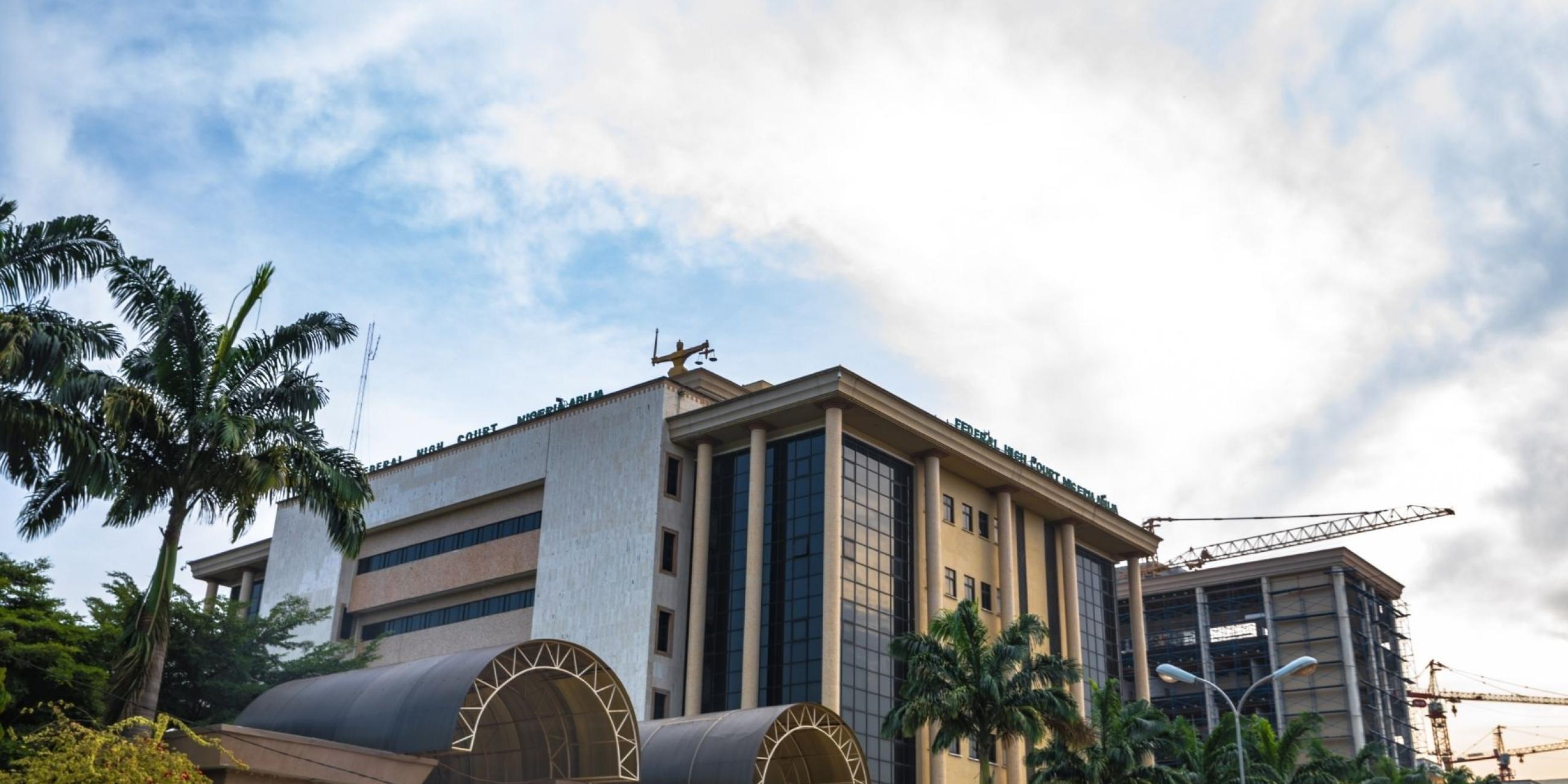
  • Don’t Approach Me To Bend The Law Judge Warns Lawyers In Ex-AGF Malami’s ₦8.7Billion Money Laundering Trial
    January 7, 2026 – Abuja

    Justice Emeka Nwite of the Federal High Court, Maitama, Abuja, issued a stern warning to lawyers and litigants involved in the high-profile trial of former Attorney General of the Federation (AGF) and Minister of Justice, Abubakar Malami, SAN, his wife Hajia Bashir Asabe, and their son, Abubakar Abdulaziz Malami. The case, instituted by the Economic and Financial Crimes Commission (EFCC), concerns alleged money laundering involving over ₦8.7 billion.

    Justice Nwite cautioned that any attempt to approach him for personal favours or undue influence would be resisted. “All judges are not the same. Irrespective of my familiarity with you, when I am dealing with any case, do not approach me. The law cannot be bent as far as this court is concerned,” he said, stressing that proper legal representation, not backdoor contacts, is the legitimate way for lawyers to serve clients. He further warned that attempts to compromise the court’s integrity or tarnish his name would be firmly dealt with, emphasizing, “I warned, I warned, and I warned!”

    The EFCC accused Malami, his wife, and son of conspiring to procure, disguise, conceal, and launder proceeds of unlawful activities, contrary to the Money Laundering (Prevention and Prohibition) Act, 2022. They face a 16-count charge involving conspiracy and multiple forms of money laundering.

    Among the allegations, the EFCC claimed that between July 2022 and June 2025, Malami and his son used Metropolitan Auto Tech Limited to conceal ₦1,014,848,500 lodged in a Sterling Bank account, funds allegedly known to be proceeds of unlawful activities. Another charge alleges that the trio conspired in September 2024 to disguise the origin of ₦1,049,173,926.13 paid through the Union Bank account of Meethaq Hotels Limited, Jabi. The agency also alleged that Malami and his son indirectly controlled ₦1,362,887,872.96 paid into the same company’s Union Bank savings account between November 2022 and October 2025.

    Earlier, Justice Nwite granted the defendants bail of ₦500 million each, with two sureties each. The sureties were required to submit affidavits of means.

    This trial has drawn attention not only because of the substantial sums involved but also due to Malami’s prominent former position as AGF and Minister of Justice, which amplified public scrutiny over corruption and the integrity of Nigeria’s judicial processes. Observers note the judge’s firm admonition reflects ongoing efforts to maintain judicial independence and prevent interference in politically sensitive cases.

    Malami’s legal team is expected to proceed with formal defense submissions while adhering strictly to court procedure. The EFCC, meanwhile, continues its investigation into the flow and management of the alleged laundered funds, signaling a prolonged and closely monitored trial. The outcome is likely to influence public discourse on accountability for top government officials, money laundering enforcement, and the integrity of Nigeria’s anti-graft agencies.
    Don’t Approach Me To Bend The Law Judge Warns Lawyers In Ex-AGF Malami’s ₦8.7Billion Money Laundering Trial January 7, 2026 – Abuja Justice Emeka Nwite of the Federal High Court, Maitama, Abuja, issued a stern warning to lawyers and litigants involved in the high-profile trial of former Attorney General of the Federation (AGF) and Minister of Justice, Abubakar Malami, SAN, his wife Hajia Bashir Asabe, and their son, Abubakar Abdulaziz Malami. The case, instituted by the Economic and Financial Crimes Commission (EFCC), concerns alleged money laundering involving over ₦8.7 billion. Justice Nwite cautioned that any attempt to approach him for personal favours or undue influence would be resisted. “All judges are not the same. Irrespective of my familiarity with you, when I am dealing with any case, do not approach me. The law cannot be bent as far as this court is concerned,” he said, stressing that proper legal representation, not backdoor contacts, is the legitimate way for lawyers to serve clients. He further warned that attempts to compromise the court’s integrity or tarnish his name would be firmly dealt with, emphasizing, “I warned, I warned, and I warned!” The EFCC accused Malami, his wife, and son of conspiring to procure, disguise, conceal, and launder proceeds of unlawful activities, contrary to the Money Laundering (Prevention and Prohibition) Act, 2022. They face a 16-count charge involving conspiracy and multiple forms of money laundering. Among the allegations, the EFCC claimed that between July 2022 and June 2025, Malami and his son used Metropolitan Auto Tech Limited to conceal ₦1,014,848,500 lodged in a Sterling Bank account, funds allegedly known to be proceeds of unlawful activities. Another charge alleges that the trio conspired in September 2024 to disguise the origin of ₦1,049,173,926.13 paid through the Union Bank account of Meethaq Hotels Limited, Jabi. The agency also alleged that Malami and his son indirectly controlled ₦1,362,887,872.96 paid into the same company’s Union Bank savings account between November 2022 and October 2025. Earlier, Justice Nwite granted the defendants bail of ₦500 million each, with two sureties each. The sureties were required to submit affidavits of means. This trial has drawn attention not only because of the substantial sums involved but also due to Malami’s prominent former position as AGF and Minister of Justice, which amplified public scrutiny over corruption and the integrity of Nigeria’s judicial processes. Observers note the judge’s firm admonition reflects ongoing efforts to maintain judicial independence and prevent interference in politically sensitive cases. Malami’s legal team is expected to proceed with formal defense submissions while adhering strictly to court procedure. The EFCC, meanwhile, continues its investigation into the flow and management of the alleged laundered funds, signaling a prolonged and closely monitored trial. The outcome is likely to influence public discourse on accountability for top government officials, money laundering enforcement, and the integrity of Nigeria’s anti-graft agencies.
    0 Commenti ·0 condivisioni ·1K Views
  • Controversy Erupts as Olu of Warri Greets Governor Sanwo-Olu After Female Executive’s Handshake Blocked”

    A viral video has sparked widespread discussion after Olu of Warri, Ogiame Atuwatse III, visited Lagos State and was seen greeting Governor Babajide Sanwo-Olu with a handshake, contrasting a recent incident where a female executive’s handshake attempt was blocked by his aides. The event took place during the Storytellers Conference at the Wole Soyinka Centre for Culture and Creative Arts, with the governor also giving the traditional ruler a tour of the renovated National Theatre in Iganmu.
    The footage shows Olu of Warri standing to shake hands with Governor Sanwo-Olu, prompting social media users to comment on the apparent double standard regarding his interactions with men and women. Many pointed out that the king’s aides had previously prevented a woman from shaking his hand, a decision interpreted by some as cultural tradition, while others criticized it as outdated or unfair.
    Social media reactions captured the variety of opinions, with some defending the traditional protocol:
    tontolofabrics argued hierarchy should be respected, noting the king’s status versus the executive.
    defenderofjust cited African customs where kings typically avoid handshakes with women due to traditional beliefs about purity.
    Others highlighted perceived inconsistencies:
    _ismo99 and Jamesdeyemi pointed out the king shakes hands with prominent officials like the governor but blocks ordinary individuals, especially women.
    ashleightatti commented on the irony of cultural traditions intersecting with modern governance and social expectations.
    The incident reignited discussions on gender norms, protocol, and respect for traditional authority in Nigeria. It also followed previous highlights of Olu of Warri’s public appearances, including inspecting road projects on a scooter and hosting Big Brother Naija stars Kellyrae and Kassia, who donned Itsekiri-themed attire and posed with the traditional ruler.
    This episode underscores the public scrutiny of cultural leaders in modern Nigeria, especially when their actions intersect with official government figures and evolving social expectations. While some praise the adherence to tradition, others call for reconsideration of gendered protocols in public interactions.
    Controversy Erupts as Olu of Warri Greets Governor Sanwo-Olu After Female Executive’s Handshake Blocked” A viral video has sparked widespread discussion after Olu of Warri, Ogiame Atuwatse III, visited Lagos State and was seen greeting Governor Babajide Sanwo-Olu with a handshake, contrasting a recent incident where a female executive’s handshake attempt was blocked by his aides. The event took place during the Storytellers Conference at the Wole Soyinka Centre for Culture and Creative Arts, with the governor also giving the traditional ruler a tour of the renovated National Theatre in Iganmu. The footage shows Olu of Warri standing to shake hands with Governor Sanwo-Olu, prompting social media users to comment on the apparent double standard regarding his interactions with men and women. Many pointed out that the king’s aides had previously prevented a woman from shaking his hand, a decision interpreted by some as cultural tradition, while others criticized it as outdated or unfair. Social media reactions captured the variety of opinions, with some defending the traditional protocol: tontolofabrics argued hierarchy should be respected, noting the king’s status versus the executive. defenderofjust cited African customs where kings typically avoid handshakes with women due to traditional beliefs about purity. Others highlighted perceived inconsistencies: _ismo99 and Jamesdeyemi pointed out the king shakes hands with prominent officials like the governor but blocks ordinary individuals, especially women. ashleightatti commented on the irony of cultural traditions intersecting with modern governance and social expectations. The incident reignited discussions on gender norms, protocol, and respect for traditional authority in Nigeria. It also followed previous highlights of Olu of Warri’s public appearances, including inspecting road projects on a scooter and hosting Big Brother Naija stars Kellyrae and Kassia, who donned Itsekiri-themed attire and posed with the traditional ruler. This episode underscores the public scrutiny of cultural leaders in modern Nigeria, especially when their actions intersect with official government figures and evolving social expectations. While some praise the adherence to tradition, others call for reconsideration of gendered protocols in public interactions.
    0 Commenti ·0 condivisioni ·2K Views
  • “Burkina Faso Foils Assassination Plot Against Military Leader Traoré, Linked to Former Leader Damiba”

    Burkina Faso’s security services have successfully foiled a fresh assassination attempt targeting Captain Ibrahim Traoré, the country’s military leader, according to Security Minister Mahamadou Sana. The plot was allegedly orchestrated by Lieutenant Colonel Paul Henri Damiba, Traoré’s predecessor, who was ousted in September 2022. Authorities report that the plan involved not only assassinating Traoré but also launching attacks on strategic institutions and prominent civilian figures.
    Minister Sana added that the operation was financed from neighboring Ivory Coast, though neither Damiba nor Ivorian authorities have issued statements in response.
    Since assuming power in 2022, Traoré, 37, has faced multiple coup attempts and continues to deal with jihadist violence that has displaced millions across the country. Despite these challenges, Traoré maintains a measure of domestic support and has gained recognition across Africa. He is known for criticizing Western influence and advocating pan-Africanist ideas.
    In response to the foiled plot, Burkina Faso has tightened security around government installations and is monitoring border regions, particularly with Ivory Coast. This latest incident follows previous coup attempts, including one in April 2025, in which current and former soldiers planned attacks on the presidential palace and other key locations.
    The ongoing instability in Burkina Faso is compounded by jihadist attacks and a humanitarian crisis, affecting both national security and civilian safety. Authorities continue to investigate the foiled assassination attempt as part of broader efforts to protect the military leadership and maintain national stability.
    “Burkina Faso Foils Assassination Plot Against Military Leader Traoré, Linked to Former Leader Damiba” Burkina Faso’s security services have successfully foiled a fresh assassination attempt targeting Captain Ibrahim Traoré, the country’s military leader, according to Security Minister Mahamadou Sana. The plot was allegedly orchestrated by Lieutenant Colonel Paul Henri Damiba, Traoré’s predecessor, who was ousted in September 2022. Authorities report that the plan involved not only assassinating Traoré but also launching attacks on strategic institutions and prominent civilian figures. Minister Sana added that the operation was financed from neighboring Ivory Coast, though neither Damiba nor Ivorian authorities have issued statements in response. Since assuming power in 2022, Traoré, 37, has faced multiple coup attempts and continues to deal with jihadist violence that has displaced millions across the country. Despite these challenges, Traoré maintains a measure of domestic support and has gained recognition across Africa. He is known for criticizing Western influence and advocating pan-Africanist ideas. In response to the foiled plot, Burkina Faso has tightened security around government installations and is monitoring border regions, particularly with Ivory Coast. This latest incident follows previous coup attempts, including one in April 2025, in which current and former soldiers planned attacks on the presidential palace and other key locations. The ongoing instability in Burkina Faso is compounded by jihadist attacks and a humanitarian crisis, affecting both national security and civilian safety. Authorities continue to investigate the foiled assassination attempt as part of broader efforts to protect the military leadership and maintain national stability.
    like
    1
    · 0 Commenti ·0 condivisioni ·2K Views
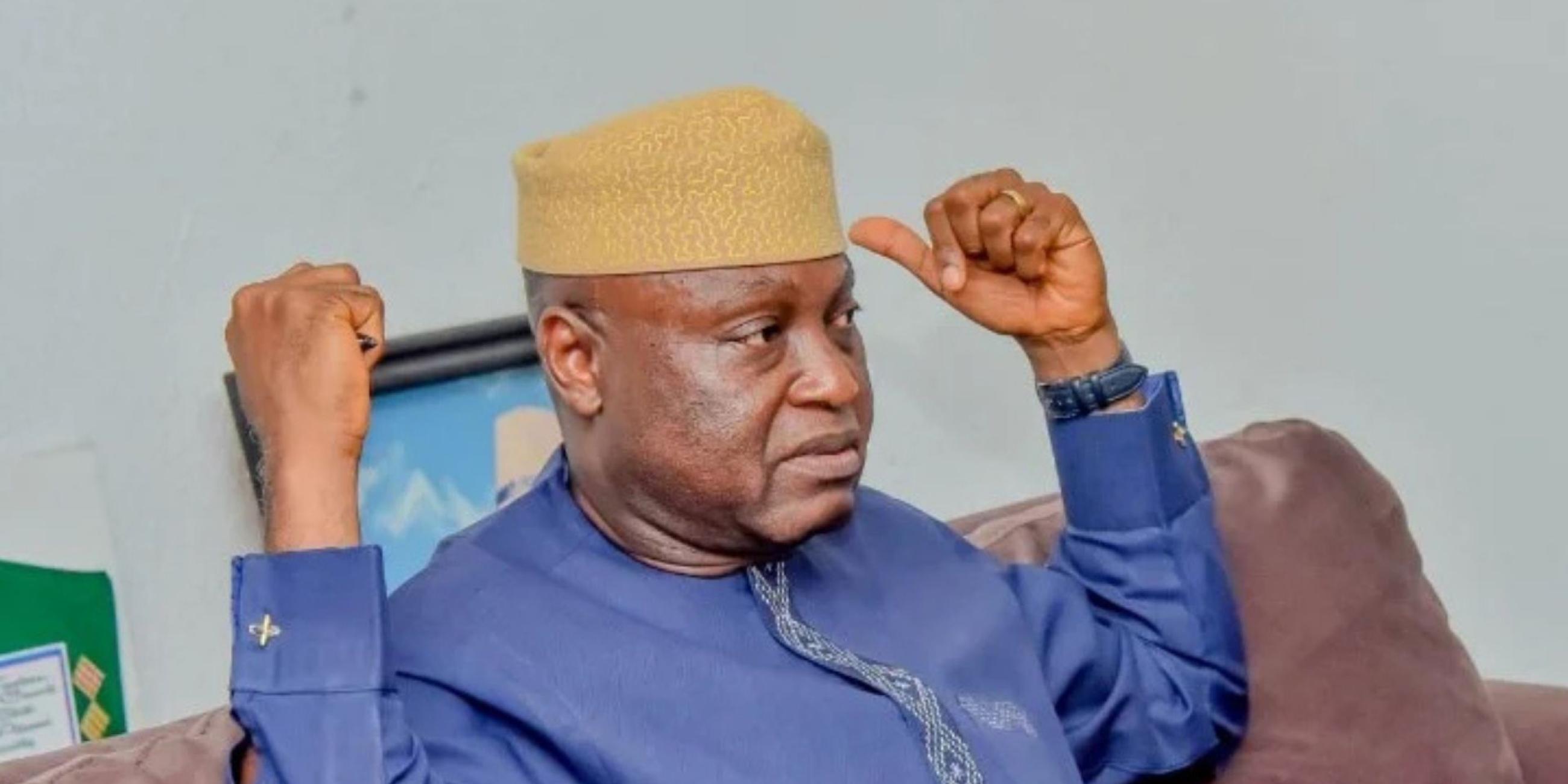
  • Kayode Ojo Campaign Accuses Oyebanji Government of Harassment, Secret Detention and Intimidation of APC Supporters Ahead of Ekiti 2026 Election

    The campaign organisation of APC governorship aspirant Engineer Kayode Ojo has accused the Ekiti State Government under Governor Biodun Oyebanji of intimidation, unlawful arrests, harassment and secret detention of its members ahead of the 2026 governorship election. In a statement obtained by SaharaReporters, the group alleged that state authorities, in collaboration with security agencies, are targeting party members who support Ojo, treating them as “enemies” within the same party. The campaign highlighted several cases of alleged persecution, including the arrest and secret detention of Akogun Abayomi, popularly known as Lustay, who was reportedly denied access to his family, lawyers and medication without formal charges. The organisation also accused the Rapid Response Squad of political coercion, judicial bias, and abuse of police powers, while calling on the Inspector-General of Police, the National Judicial Council and prominent national figures to intervene. It demanded the immediate release of all detained supporters and an independent investigation, warning that repression, fear and internal party intimidation threaten democracy, rule of law and political freedom in Ekiti State.

    #EkitiPolitics #KayodeOjo #Oyebanji #APC #2026Election #HumanRights #PoliticalIntimidation #NigeriaPolitics #RuleOfLaw
    Kayode Ojo Campaign Accuses Oyebanji Government of Harassment, Secret Detention and Intimidation of APC Supporters Ahead of Ekiti 2026 Election The campaign organisation of APC governorship aspirant Engineer Kayode Ojo has accused the Ekiti State Government under Governor Biodun Oyebanji of intimidation, unlawful arrests, harassment and secret detention of its members ahead of the 2026 governorship election. In a statement obtained by SaharaReporters, the group alleged that state authorities, in collaboration with security agencies, are targeting party members who support Ojo, treating them as “enemies” within the same party. The campaign highlighted several cases of alleged persecution, including the arrest and secret detention of Akogun Abayomi, popularly known as Lustay, who was reportedly denied access to his family, lawyers and medication without formal charges. The organisation also accused the Rapid Response Squad of political coercion, judicial bias, and abuse of police powers, while calling on the Inspector-General of Police, the National Judicial Council and prominent national figures to intervene. It demanded the immediate release of all detained supporters and an independent investigation, warning that repression, fear and internal party intimidation threaten democracy, rule of law and political freedom in Ekiti State. #EkitiPolitics #KayodeOjo #Oyebanji #APC #2026Election #HumanRights #PoliticalIntimidation #NigeriaPolitics #RuleOfLaw
    0 Commenti ·0 condivisioni ·2K Views
  • Ekiti 2026: APC Aspirant Kayode Ojo’s Supporters Allege Police Arrests, Intimidation and Secret Detention Under Governor Oyebanji as Party Crisis Deepens

    Supporters of Engineer Kayode Ojo, an aspirant in the 2026 Ekiti State governorship race on the platform of the All Progressives Congress (APC), have accused the Ekiti State Government and the police of sustained intimidation, arrests and harassment aimed at silencing dissent within the ruling party. The allegations were contained in a statement signed by the spokesperson of the Kayode Ojo Campaign Organisation, Femi Awojobi, who described the situation as a serious threat to democracy, rule of law and internal party freedom in the state.

    According to the campaign, APC members who openly or quietly support Ojo have been targeted through arrests, unlawful detention and intimidation, allegedly under the administration of Governor Abayomi Oyebanji. Several party members across different local government areas were named as victims, including ward executives, women and youth leaders, raising concerns about what the group called a deliberate attempt to crush alternative political opinions within the APC.

    The statement highlighted the arrest and alleged secret detention of Akogun Abayomi, popularly known as Lustay, as the most alarming case. Abayomi was reportedly arrested on January 1, 2026, by police officers without a warrant or explanation and denied access to his family, lawyers and medication. The campaign alleged that police initially denied holding him, only for his wife to later discover his vehicle inside the Rapid Response Squad (RRS) premises, sparking fears of abuse of power and lack of transparency.

    The group further alleged that Abayomi was subjected to political intimidation, including pressure to renounce his support for Kayode Ojo, and accused the police of acting as a political tool. Describing the situation as a national embarrassment, the campaign called on the Inspector-General of Police, the National Judicial Council, civil society organisations and prominent Ekiti stakeholders to intervene, investigate alleged abuses and ensure the immediate release of all supporters detained over their political beliefs.
    Ekiti 2026: APC Aspirant Kayode Ojo’s Supporters Allege Police Arrests, Intimidation and Secret Detention Under Governor Oyebanji as Party Crisis Deepens Supporters of Engineer Kayode Ojo, an aspirant in the 2026 Ekiti State governorship race on the platform of the All Progressives Congress (APC), have accused the Ekiti State Government and the police of sustained intimidation, arrests and harassment aimed at silencing dissent within the ruling party. The allegations were contained in a statement signed by the spokesperson of the Kayode Ojo Campaign Organisation, Femi Awojobi, who described the situation as a serious threat to democracy, rule of law and internal party freedom in the state. According to the campaign, APC members who openly or quietly support Ojo have been targeted through arrests, unlawful detention and intimidation, allegedly under the administration of Governor Abayomi Oyebanji. Several party members across different local government areas were named as victims, including ward executives, women and youth leaders, raising concerns about what the group called a deliberate attempt to crush alternative political opinions within the APC. The statement highlighted the arrest and alleged secret detention of Akogun Abayomi, popularly known as Lustay, as the most alarming case. Abayomi was reportedly arrested on January 1, 2026, by police officers without a warrant or explanation and denied access to his family, lawyers and medication. The campaign alleged that police initially denied holding him, only for his wife to later discover his vehicle inside the Rapid Response Squad (RRS) premises, sparking fears of abuse of power and lack of transparency. The group further alleged that Abayomi was subjected to political intimidation, including pressure to renounce his support for Kayode Ojo, and accused the police of acting as a political tool. Describing the situation as a national embarrassment, the campaign called on the Inspector-General of Police, the National Judicial Council, civil society organisations and prominent Ekiti stakeholders to intervene, investigate alleged abuses and ensure the immediate release of all supporters detained over their political beliefs.
    0 Commenti ·0 condivisioni ·1K Views
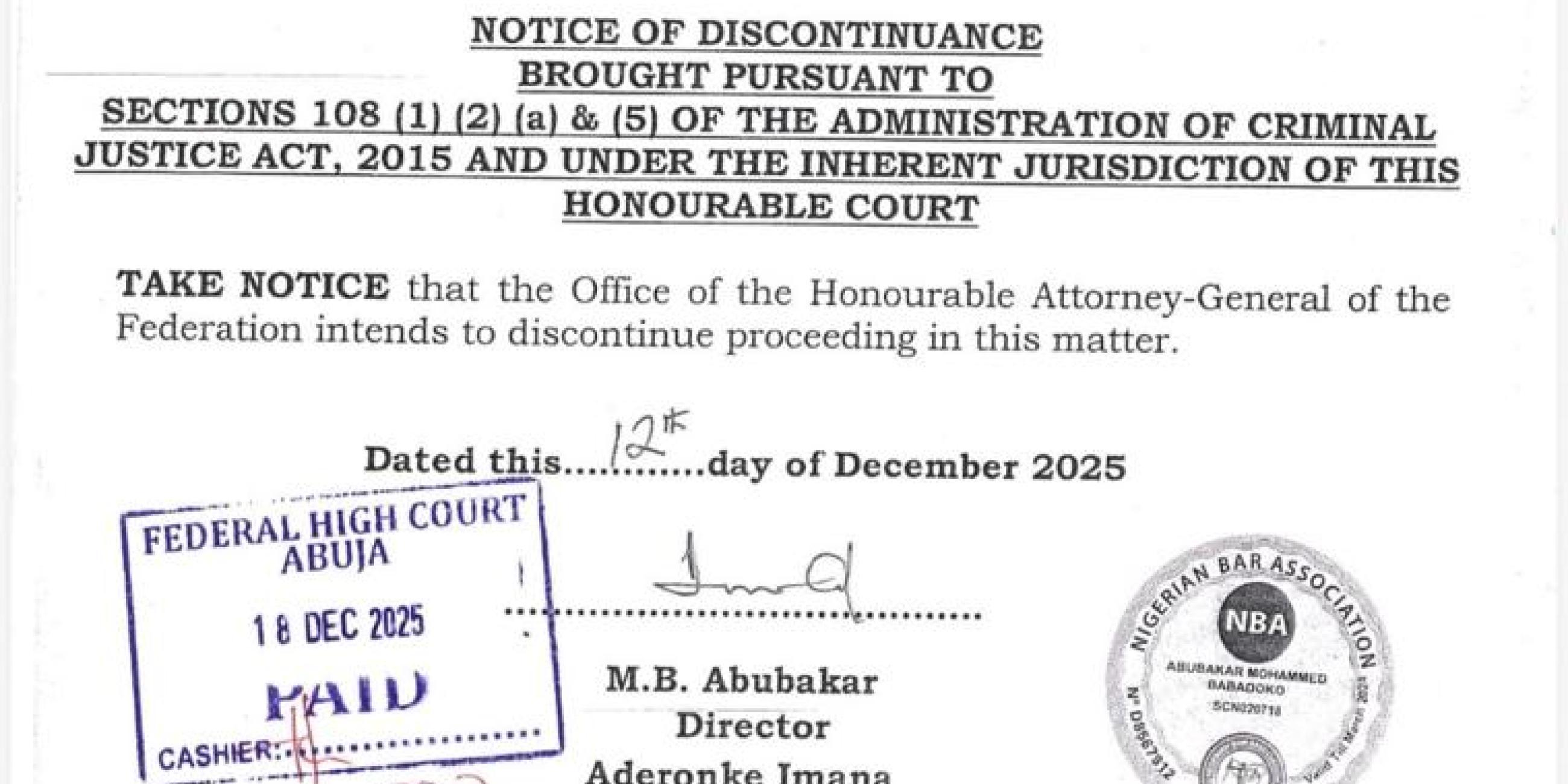
  • BREAKING: Nigerian Government Withdraws Criminal Defamation Case Against Senator Natasha Akpoti-Uduaghan Over Allegations Against Akpabio, Yahaya Bello

    The Federal Government of Nigeria has formally withdrawn the criminal defamation and cyberbullying case instituted against Senator Natasha Akpoti-Uduaghan, who represents Kogi Central Senatorial District in the 10th National Assembly. Court documents show that the Office of the Attorney General of the Federation filed a notice of discontinuance on December 12, 2025, effectively terminating the prosecution at the Federal High Court.

    The charges stemmed from petitions by Senate President Godswill Akpabio and former Kogi State Governor Yahaya Bello, following comments made by Akpoti-Uduaghan during a televised interview on Politics Today, where she alleged that both men were plotting to eliminate her. Despite earlier petitions to the Inspector General of Police alleging threats to her life, the senator was charged for publicly raising the claims.

    Several prominent figures, including Governor Usman Ododo, Senator Ekpenyong Asuquo, Ambassador Reno Omokri, and Sandra Duru, had been listed as witnesses for the complainants. The withdrawn case is one of two criminal matters filed by the Federal Government against the senator, with the second case expected to come up in court and possibly face a similar fate.

    The development follows a public announcement by Senate President Akpabio that he had instructed his lawyers to withdraw all defamation-related lawsuits against individuals, after a cleric’s sermon influenced his decision. However, Akpabio still has a separate ₦200 billion civil defamation suit pending against Akpoti-Uduaghan over allegations of sexual harassment, in which he is demanding massive damages and public apologies.
    BREAKING: Nigerian Government Withdraws Criminal Defamation Case Against Senator Natasha Akpoti-Uduaghan Over Allegations Against Akpabio, Yahaya Bello The Federal Government of Nigeria has formally withdrawn the criminal defamation and cyberbullying case instituted against Senator Natasha Akpoti-Uduaghan, who represents Kogi Central Senatorial District in the 10th National Assembly. Court documents show that the Office of the Attorney General of the Federation filed a notice of discontinuance on December 12, 2025, effectively terminating the prosecution at the Federal High Court. The charges stemmed from petitions by Senate President Godswill Akpabio and former Kogi State Governor Yahaya Bello, following comments made by Akpoti-Uduaghan during a televised interview on Politics Today, where she alleged that both men were plotting to eliminate her. Despite earlier petitions to the Inspector General of Police alleging threats to her life, the senator was charged for publicly raising the claims. Several prominent figures, including Governor Usman Ododo, Senator Ekpenyong Asuquo, Ambassador Reno Omokri, and Sandra Duru, had been listed as witnesses for the complainants. The withdrawn case is one of two criminal matters filed by the Federal Government against the senator, with the second case expected to come up in court and possibly face a similar fate. The development follows a public announcement by Senate President Akpabio that he had instructed his lawyers to withdraw all defamation-related lawsuits against individuals, after a cleric’s sermon influenced his decision. However, Akpabio still has a separate ₦200 billion civil defamation suit pending against Akpoti-Uduaghan over allegations of sexual harassment, in which he is demanding massive damages and public apologies.
    0 Commenti ·0 condivisioni ·3K Views
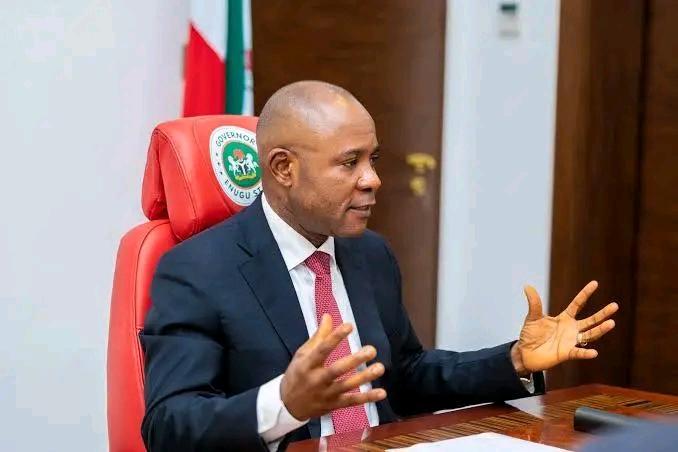
  • Governor Mbah Holds Strategic Meeting to Reposition Igbos in Nigeria political space

    Governor Peter Mbah has held a strategic closed door meeting, with some prominent Igbo leaders, to discuss the position of Igbos in Nigeria's political arrangements.

    Chika Ugwu reports that the meeting which was held in Amechi Awkunanu Enugu, had in attendance, the former Governor of Old Anambra State,Senator Jim Nwobodo and Senator Orji Uzo Kalu.

    As political alignments and realignments continue ahead of 2027 general elections,the closed door meeting is part of renewed efforts by leaders in the South East to forge a united front, and reposition Igbos effectively in Nigeria's political equation.

    Briefing Journalists at the end of the meeting, Elder Statesman, Jim Nwobodo said the consultative and reflective engagement was driven by the desire to end ambiguity surrounding the place of the Igbos in NATIONAL affairs, stressing thatthe Igbos must have a clearly defined and respected place in the country's power structure.

    The Political leaders emphasized the need for unity,identifying internal division as a major weapon that can weaken the region's influence at the National level.

    They however noted that the conversation will be expanded to include other leaders to ensure that the Igbos remain relevant and strategically positioned in Nigeria's political space.
    Governor Mbah Holds Strategic Meeting to Reposition Igbos in Nigeria political space Governor Peter Mbah has held a strategic closed door meeting, with some prominent Igbo leaders, to discuss the position of Igbos in Nigeria's political arrangements. Chika Ugwu reports that the meeting which was held in Amechi Awkunanu Enugu, had in attendance, the former Governor of Old Anambra State,Senator Jim Nwobodo and Senator Orji Uzo Kalu. As political alignments and realignments continue ahead of 2027 general elections,the closed door meeting is part of renewed efforts by leaders in the South East to forge a united front, and reposition Igbos effectively in Nigeria's political equation. Briefing Journalists at the end of the meeting, Elder Statesman, Jim Nwobodo said the consultative and reflective engagement was driven by the desire to end ambiguity surrounding the place of the Igbos in NATIONAL affairs, stressing thatthe Igbos must have a clearly defined and respected place in the country's power structure. The Political leaders emphasized the need for unity,identifying internal division as a major weapon that can weaken the region's influence at the National level. They however noted that the conversation will be expanded to include other leaders to ensure that the Igbos remain relevant and strategically positioned in Nigeria's political space.
    0 Commenti ·0 condivisioni ·1K Views
  • Labour Party Hails Peter Obi’s Defection to ADC as ‘Blessing,’ Apologises to Nigerians for 2023 Ticket

    The Labour Party has described Peter Obi’s defection to the African Democratic Congress (ADC) as a “liberation” and a “blessing” for the party. In a statement on December 31, 2025, signed by National Publicity Secretary Obiora Ifoh, the party also apologised to Nigerians for presenting what it termed an “unfitting” presidential candidate in 2023.

    The statement blamed Obi and Abia State Governor Alex Otti for internal party crises, accusing them of fostering an insurrection against the party’s leadership. It noted that Obi’s defection event in Enugu was largely boycotted by prominent political and traditional figures and suggested this signals the end of his future presidential or vice-presidential ambitions.

    The Labour Party further accused Obi of misleading the South East during the 2023 elections, resulting in political marginalisation under President Bola Ahmed Tinubu. The party pledged to present a rebranded Labour Party with a candidate capable of restoring Nigeria to its “glorious days.”
    Labour Party Hails Peter Obi’s Defection to ADC as ‘Blessing,’ Apologises to Nigerians for 2023 Ticket The Labour Party has described Peter Obi’s defection to the African Democratic Congress (ADC) as a “liberation” and a “blessing” for the party. In a statement on December 31, 2025, signed by National Publicity Secretary Obiora Ifoh, the party also apologised to Nigerians for presenting what it termed an “unfitting” presidential candidate in 2023. The statement blamed Obi and Abia State Governor Alex Otti for internal party crises, accusing them of fostering an insurrection against the party’s leadership. It noted that Obi’s defection event in Enugu was largely boycotted by prominent political and traditional figures and suggested this signals the end of his future presidential or vice-presidential ambitions. The Labour Party further accused Obi of misleading the South East during the 2023 elections, resulting in political marginalisation under President Bola Ahmed Tinubu. The party pledged to present a rebranded Labour Party with a candidate capable of restoring Nigeria to its “glorious days.”
    0 Commenti ·0 condivisioni ·969 Views
  • Ugandan Police Arrest Human Rights Activist Sarah Bireete Ahead of January 2026 Elections

    Ugandan authorities have arrested prominent human rights activist Sarah Bireete, director of the Centre for Constitutional Governance (CCG), amid a widening crackdown on dissent ahead of the January 15 general election. The police confirmed her detention but did not disclose the charges or court date. Bireete, a vocal critic of government actions including alleged illegal detentions and torture of opposition supporters, joins over 550 individuals arrested since early 2025. The upcoming election pits long-time President Yoweri Museveni against opposition figure Bobi Wine, with international observers expressing concern over human rights violations, media censorship, and political repression.

    #SarahBireete #UgandaElections #HumanRights #PoliticalRepression #BobiWine #Museveni #UgandaNews #FreedomOfExpression
    Ugandan Police Arrest Human Rights Activist Sarah Bireete Ahead of January 2026 Elections Ugandan authorities have arrested prominent human rights activist Sarah Bireete, director of the Centre for Constitutional Governance (CCG), amid a widening crackdown on dissent ahead of the January 15 general election. The police confirmed her detention but did not disclose the charges or court date. Bireete, a vocal critic of government actions including alleged illegal detentions and torture of opposition supporters, joins over 550 individuals arrested since early 2025. The upcoming election pits long-time President Yoweri Museveni against opposition figure Bobi Wine, with international observers expressing concern over human rights violations, media censorship, and political repression. #SarahBireete #UgandaElections #HumanRights #PoliticalRepression #BobiWine #Museveni #UgandaNews #FreedomOfExpression
    0 Commenti ·0 condivisioni ·2K Views
Pagine in Evidenza
Fintter https://fintter.com