• Igbo Community In Sokoto Celebrates Christmas With Nnamdi Kanu, Shares Meals With Over 1,300 Prison Inmates

    The Igbo community in Sokoto State marked the 2025 Christmas celebration by extending a humanitarian gesture to inmates of the Sokoto Correctional Centre, including the detained leader of the Indigenous People of Biafra (IPOB), Nnamdi Kanu. The community spent Christmas Day at the facility, sharing meals, fellowship, and goodwill with inmates as part of activities inspired by compassion, communal responsibility, and the spirit of the season.

    According to a statement signed by Nze A. C. Madu on behalf of the Sokoto Igbo community leadership, the outreach was motivated by Igbo cultural values of solidarity and humanity, as well as what the group described as Nnamdi Kanu’s reported preference not to dine alone during festive periods. Rather than focusing on a single individual, the community said it chose an inclusive approach by providing meals for the entire inmate population.

    The statement explained that the initiative ensured that all approximately 1,300 inmates at the correctional centre benefitted from the Christmas celebration, regardless of background or circumstance. Members of the Igbo community reportedly shared food and moments of fellowship with the inmates, offering comfort and a sense of belonging during the holiday.

    Describing the visit as a humanitarian service rooted in Igbo traditions, the community said the gesture reflected the principle of being one another’s keeper and underscored universal ideals of charity, compassion, and shared goodwill. The group expressed hope that the outreach would promote peace, unity, and mutual understanding beyond the festive season.

    Nnamdi Kanu is currently being held at the Sokoto Correctional Centre following his conviction and sentencing in November 2025 by Justice James Omotosho. The IPOB leader was sentenced to life imprisonment on multiple terrorism-related counts, alongside additional jail terms of 20 years and five years on other counts, all without an option of fine. Despite widespread criticism of the judgment, Kanu has indicated his intention to challenge both the conviction and sentence at the appellate court.

    Igbo Community In Sokoto Celebrates Christmas With Nnamdi Kanu, Shares Meals With Over 1,300 Prison Inmates The Igbo community in Sokoto State marked the 2025 Christmas celebration by extending a humanitarian gesture to inmates of the Sokoto Correctional Centre, including the detained leader of the Indigenous People of Biafra (IPOB), Nnamdi Kanu. The community spent Christmas Day at the facility, sharing meals, fellowship, and goodwill with inmates as part of activities inspired by compassion, communal responsibility, and the spirit of the season. According to a statement signed by Nze A. C. Madu on behalf of the Sokoto Igbo community leadership, the outreach was motivated by Igbo cultural values of solidarity and humanity, as well as what the group described as Nnamdi Kanu’s reported preference not to dine alone during festive periods. Rather than focusing on a single individual, the community said it chose an inclusive approach by providing meals for the entire inmate population. The statement explained that the initiative ensured that all approximately 1,300 inmates at the correctional centre benefitted from the Christmas celebration, regardless of background or circumstance. Members of the Igbo community reportedly shared food and moments of fellowship with the inmates, offering comfort and a sense of belonging during the holiday. Describing the visit as a humanitarian service rooted in Igbo traditions, the community said the gesture reflected the principle of being one another’s keeper and underscored universal ideals of charity, compassion, and shared goodwill. The group expressed hope that the outreach would promote peace, unity, and mutual understanding beyond the festive season. Nnamdi Kanu is currently being held at the Sokoto Correctional Centre following his conviction and sentencing in November 2025 by Justice James Omotosho. The IPOB leader was sentenced to life imprisonment on multiple terrorism-related counts, alongside additional jail terms of 20 years and five years on other counts, all without an option of fine. Despite widespread criticism of the judgment, Kanu has indicated his intention to challenge both the conviction and sentence at the appellate court.
    0 Commentarios ·0 Acciones ·741 Views
  • "Igbo Traditional Religion is Superior to Christianity" — Filmmaker Tobe Osigwe.

    Nigerian filmmaker and practitioner of Igbo traditional spirituality, Tobe Osigwe, has claimed that Odinala the indigenous Igbo religion is superior to Christianity and other organised faiths.

    Speaking during an interview on 90MinutesAfrica with Rudolf Okonkwo, the Theatre Arts graduate described Christianity as “a secondary school,” while comparing Odinala to “a university.”

    Osigwe, who is also a practising dibia, argued that any Igbo person who seeks deeper spiritual knowledge after practising Christianity would eventually find themselves in traditional religion.

    “Anyone who has gone through Christianity and still wants to advance spiritually will discover that the next step is traditional religion. Igbo traditional religion is higher than Christianity and other organised faiths,” he asserted.

    He added that many Igbo people remain in Christianity out of fear.
    “They are afraid of hellfire. But some of us know that hell doesn’t exist, it’s a myth created to sustain Christianity and keep people from questioning it,” he said.

    While urging the Igbo to reconnect with Odinala, Osigwe stressed that such a return must not ignore the importance of education. According to him, meaningful technological progress can only follow when education and tradition go hand in hand.

    “The ways of our ancestors are about ethics and values, but science is another matter entirely. Tradition cannot replace science,” he said. “Igbo elites should pursue education that drives technological growth, and then integrate the moral systems of Odinala. The Chinese learned technology from the West but kept their own values. I don’t want to go back to an analogue lifestyle, but to use our traditional ethics to protect and guide modern society.”
    "Igbo Traditional Religion is Superior to Christianity" — Filmmaker Tobe Osigwe. Nigerian filmmaker and practitioner of Igbo traditional spirituality, Tobe Osigwe, has claimed that Odinala the indigenous Igbo religion is superior to Christianity and other organised faiths. Speaking during an interview on 90MinutesAfrica with Rudolf Okonkwo, the Theatre Arts graduate described Christianity as “a secondary school,” while comparing Odinala to “a university.” Osigwe, who is also a practising dibia, argued that any Igbo person who seeks deeper spiritual knowledge after practising Christianity would eventually find themselves in traditional religion. “Anyone who has gone through Christianity and still wants to advance spiritually will discover that the next step is traditional religion. Igbo traditional religion is higher than Christianity and other organised faiths,” he asserted. He added that many Igbo people remain in Christianity out of fear. “They are afraid of hellfire. But some of us know that hell doesn’t exist, it’s a myth created to sustain Christianity and keep people from questioning it,” he said. While urging the Igbo to reconnect with Odinala, Osigwe stressed that such a return must not ignore the importance of education. According to him, meaningful technological progress can only follow when education and tradition go hand in hand. “The ways of our ancestors are about ethics and values, but science is another matter entirely. Tradition cannot replace science,” he said. “Igbo elites should pursue education that drives technological growth, and then integrate the moral systems of Odinala. The Chinese learned technology from the West but kept their own values. I don’t want to go back to an analogue lifestyle, but to use our traditional ethics to protect and guide modern society.”
    0 Commentarios ·0 Acciones ·466 Views
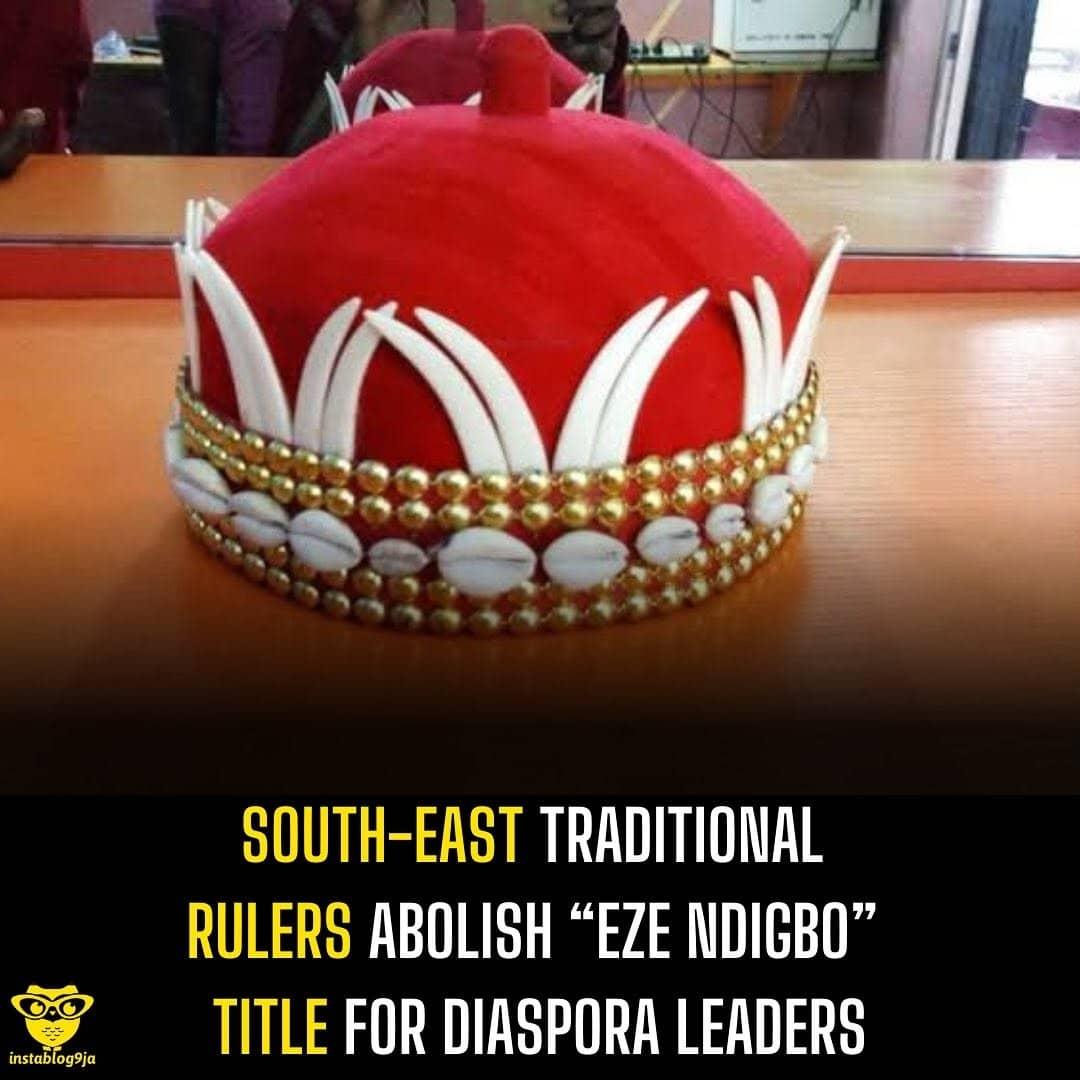
  • South-East Traditional Rulers Abolish “Eze Ndigbo” Title for Diaspora Leaders.

    The South-East Council of Traditional Rulers has officially abolished the use of the title “Eze Ndigbo” by Igbo leaders living outside Igbo land. In a communique obtained by SaharaReporters, the council announced the introduction of a new title, “Onyendu Ndigbo,” for leaders in the Diaspora and abroad.

    The statement was signed by key monarchs, including Eze E.C. Okeke (Eze Imo) and Igwe Nnaemeka Achebe, who chairs the council. The decision, they said, aims to preserve the sanctity of the “Eze” title, which is traditionally reserved for enthroned rulers with ancestral authority over a defined kingdom or community in Igbo land.

    The council emphasized that the “Eze” title is not honorary or political but deeply rooted in sacred rites and ancestral customs.

    While acknowledging the positive role of Igbo Diaspora leaders in unifying Ndigbo and promoting peace in host countries, the council insisted that the misuse of the “Eze Ndigbo” title dilutes traditional authority and cultural heritage.

    The newly introduced title, “Onyendu Ndigbo,” is to be used immediately across all platforms—official documents, signage, letterheads, and public engagements.

    Non-compliance, the council warned, would be regarded as an act of defiance and disrespect toward Igbo traditional authority. The council urged all Igbo leaders abroad to embrace this change in the interest of unity, cultural integrity, and mutual respect between the Diaspora and traditional institutions at home.

    This resolution comes in the wake of public uproar in Ghana following the crowning of Eze Chukwudi Ihenetu as “Eze Ndi Igbo Ghana.” The ceremony, which included the unveiling of a regal palace in Accra, triggered protests and debates about sovereignty, cultural boundaries, and foreign leadership roles within local communities. The council’s move is seen as a step toward preserving Igbo heritage while fostering better cooperation between traditional rulers and Igbo leaders across the globe.
    South-East Traditional Rulers Abolish “Eze Ndigbo” Title for Diaspora Leaders. The South-East Council of Traditional Rulers has officially abolished the use of the title “Eze Ndigbo” by Igbo leaders living outside Igbo land. In a communique obtained by SaharaReporters, the council announced the introduction of a new title, “Onyendu Ndigbo,” for leaders in the Diaspora and abroad. The statement was signed by key monarchs, including Eze E.C. Okeke (Eze Imo) and Igwe Nnaemeka Achebe, who chairs the council. The decision, they said, aims to preserve the sanctity of the “Eze” title, which is traditionally reserved for enthroned rulers with ancestral authority over a defined kingdom or community in Igbo land. The council emphasized that the “Eze” title is not honorary or political but deeply rooted in sacred rites and ancestral customs. While acknowledging the positive role of Igbo Diaspora leaders in unifying Ndigbo and promoting peace in host countries, the council insisted that the misuse of the “Eze Ndigbo” title dilutes traditional authority and cultural heritage. The newly introduced title, “Onyendu Ndigbo,” is to be used immediately across all platforms—official documents, signage, letterheads, and public engagements. Non-compliance, the council warned, would be regarded as an act of defiance and disrespect toward Igbo traditional authority. The council urged all Igbo leaders abroad to embrace this change in the interest of unity, cultural integrity, and mutual respect between the Diaspora and traditional institutions at home. This resolution comes in the wake of public uproar in Ghana following the crowning of Eze Chukwudi Ihenetu as “Eze Ndi Igbo Ghana.” The ceremony, which included the unveiling of a regal palace in Accra, triggered protests and debates about sovereignty, cultural boundaries, and foreign leadership roles within local communities. The council’s move is seen as a step toward preserving Igbo heritage while fostering better cooperation between traditional rulers and Igbo leaders across the globe.
    0 Commentarios ·0 Acciones ·1K Views
Fintter https://fintter.com