The Disappearance of Ikenga Power A Legendary African Story of Strength and Mystery
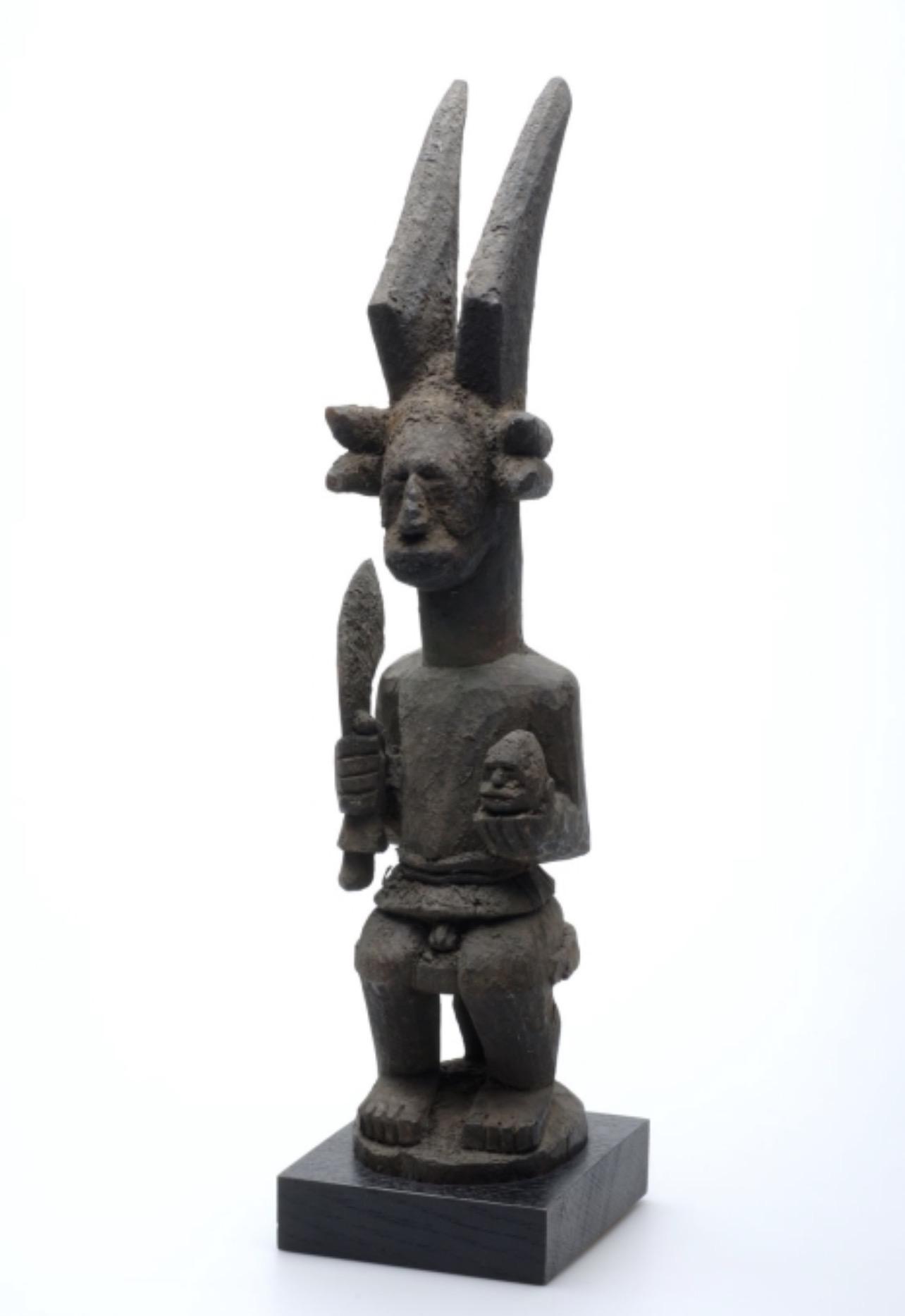
Ikenga
The Disappearance of Ikenga Power
In the heart of an ancient Igbo land, long before roads were drawn and cities carved the earth into noise and speed, there lived a man whose name became both a whisper and a thunder. His name was Ikenga.
But Ikenga was not just a man.
He was a force.
From childhood, there were signs that something unusual had chosen him. While other boys played in dusty compounds, chasing goats and wrestling in laughter, Ikenga would sit quietly under the udala tree, staring into spaces no one else could see. Elders said he was listening to the spirits. His mother said he was born with fire in his breath. His father, a humble farmer, said nothing at all but watched him with both pride and fear.
The day Ikenga turned sixteen, a strange thing happened.
During the new yam festival, when the village gathered to celebrate harvest and life, a sudden wind rose from nowhere. The sky, clear moments before, darkened as if the sun had been swallowed. The drums stopped. The dancers froze.
Ikenga stepped forward.
No one called him.
No one asked him.
Yet he walked into the center of the square like someone answering a call only he could hear.
Then he raised his hands.
And the wind obeyed.
It circled him, lifting dust into the air but never touching him. The elders gasped. The priests fell to their knees. For in that moment, it became clear that Ikenga was not merely human. He carried within him the spirit of power itself.
From that day, he was no longer just Ikenga.
He became Ikenga Power.
The people began to say he was chosen by the ancestors. Some claimed he carried the spirit of the horned guardian, the embodiment of strength, success, and personal destiny. Others believed he was a bridge between the visible world and the unseen.
But with power came responsibility.
Ikenga did not become a tyrant. He did not demand worship. Instead, he protected his people. When neighboring villages threatened war, Ikenga stood at the boundary and raised his hand. The ground trembled, and the enemy turned back in fear.
When drought came, and the rivers shrank into tired streams, Ikenga climbed the sacred hill and spoke words no one understood. That night, rain fell like tears from the sky, heavy and endless, filling the land with life again.
When sickness spread, he walked from hut to hut, touching the foreheads of the weak. Many rose again. Those who did not were said to have been claimed by forces even Ikenga could not command.
Years passed, and his legend grew.
But power has a way of attracting shadows.
Whispers began to spread that Ikenga’s strength was not entirely his own. Some said he had made a pact with ancient spirits, ones older than the ancestors themselves. Others feared that one day, the same power that protected them might turn against them.
Among those who watched him closely was a man named Obasi, a priest whose devotion to tradition was as deep as the earth itself. Obasi believed that power must always be balanced, that no man should carry what belongs to the gods.
He began to study Ikenga.
To observe.
To wait.
One night, under a moon that seemed too large and too close, Obasi followed Ikenga to the sacred grove, a place where only the chosen dared to go. Hidden behind thick trees, he watched as Ikenga knelt before a carved figure, a wooden statue with horns rising from its head.
It was an Ikenga.
But not like any the village had ever seen.
This one seemed alive.
Its eyes glowed faintly in the dark. Its presence felt heavy, like the air itself had weight.
Ikenga spoke to it.
Not in Igbo.
Not in any language known to men.
Obasi’s heart trembled.
For he realized that Ikenga Power was not just blessed.
He was bound.
The days that followed were filled with tension. Obasi gathered the elders and shared what he had seen. Fear spread like fire in dry grass. The same man who had saved them now became a question they could not answer.
Was he their protector?
Or something else entirely?
The elders decided to confront him.
They called a gathering, the largest the village had ever seen. Men, women, and children filled the square, their eyes fixed on Ikenga as he stood before them, calm as always.
The oldest elder stepped forward.
“Ikenga,” he said, his voice heavy with age and authority, “we honor you. We respect what you have done. But we must know… what is the source of your power?”
Silence fell.
Even the wind seemed to hold its breath.
Ikenga looked at them, one by one.
Then he smiled.
“A man is not only what you see,” he said softly. “There are depths in all of us. I only learned how to reach mine.”
But the answer was not enough.
Obasi stepped forward.
“You speak in riddles,” he said sharply. “We have seen you in the sacred grove. We have seen what you serve. That is no ordinary spirit. Tell us the truth.”
For the first time, something changed in Ikenga’s eyes.
Not anger.
Not fear.
But something deeper.
Sadness.
“You were not meant to see that,” he said.
Murmurs spread.
“What are you hiding?” someone shouted.
“Are you still one of us?” another cried.
Ikenga raised his hand, and instantly, silence returned.
“I have always been one of you,” he said. “Everything I have done has been for this land, for these people. But power… true power… always comes with a price.”
The sky darkened again.
Just like the day it all began.
“The spirit I carry,” Ikenga continued, “is older than our stories. It is the force of will, of strength, of survival. It chose me, but I also chose it. Together, we became something more.”
Obasi shook his head.
“No man should carry such a burden,” he said. “Release it. Or we will be forced to act.”
A long silence followed.
Then Ikenga nodded.
“Very well,” he said.
The people watched, unsure of what would happen next.
Ikenga turned and began to walk.
Not away from them.
But toward the sacred grove.
Without a word, the entire village followed.
When they reached the grove, the air felt different. Heavy. Alive.
Ikenga stepped forward to the horned statue.
He placed his hand on it.
And closed his eyes.
“I return what was given,” he said.
The ground began to shake.
The trees bent as if bowing to something unseen. The sky split with thunder, though no rain fell.
Light burst from the statue, blinding and fierce.
The people screamed.
Obasi fell to his knees.
And then
Everything stopped.
The light vanished.
The wind died.
The ground stilled.
When the people opened their eyes, Ikenga was gone.
The statue remained.
Silent.
Still.
Empty.
No one knew what had happened.
Some said he had been taken by the spirit.
Others believed he had become one with it.
A few whispered that he had simply stepped beyond the world of men, into a place where power no longer needed a body.
But one thing was certain.
Ikenga Power had disappeared.
And with him, something in the world had changed.
The land remained fertile.
The rains still came.
But there was a quietness now, a sense that something great had passed.
Years turned into generations.
Stories of Ikenga Power spread beyond the village, beyond the land, carried by traders and travelers. He became more than a man.
He became a symbol.
Of strength.
Of sacrifice.
Of the price of greatness.
In homes across Igbo land, small Ikenga statues began to appear. Carved from wood, shaped with horns, they represented personal achievement, determination, and inner power.
But they also carried a warning.
Power must be understood.
Not just possessed.
Even today, elders tell the story of Ikenga Power
Not as a tale of fear.
But as a lesson.
That true strength is not in holding power.
But in knowing when to let it go.
And somewhere, in the silence between the wind and the trees, some still believe that Ikenga is not gone.
That he watches.
That he waits.
That when the world once again needs balance, Ikenga Power will return.
Stronger.
Wiser.
And still carrying the mystery that made him a legend.

الأقسام
إقرأ المزيد
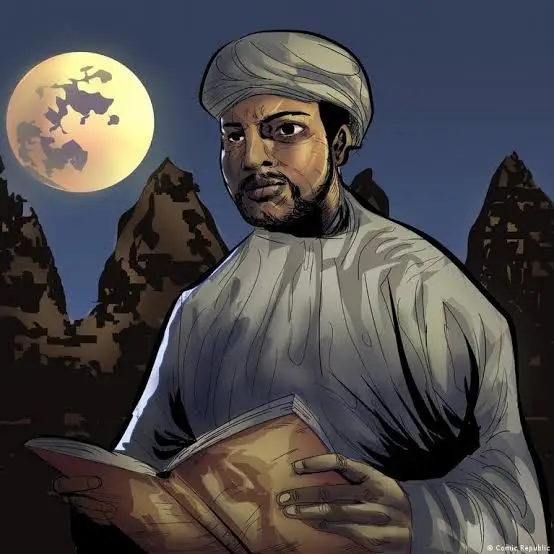
Ahmad Baba al Timbukti Early Life Ahmad Baba al-Timbukti was born in 1556 in the famous city of Timbuktu, a place known across Africa and the world as a center of learning and knowledge. He grew up in a family of scholars. From a young age, books were part of his life. His father and teachers trained him in Islamic studies, law, and literature. Unlike many children, Ahmad Baba...
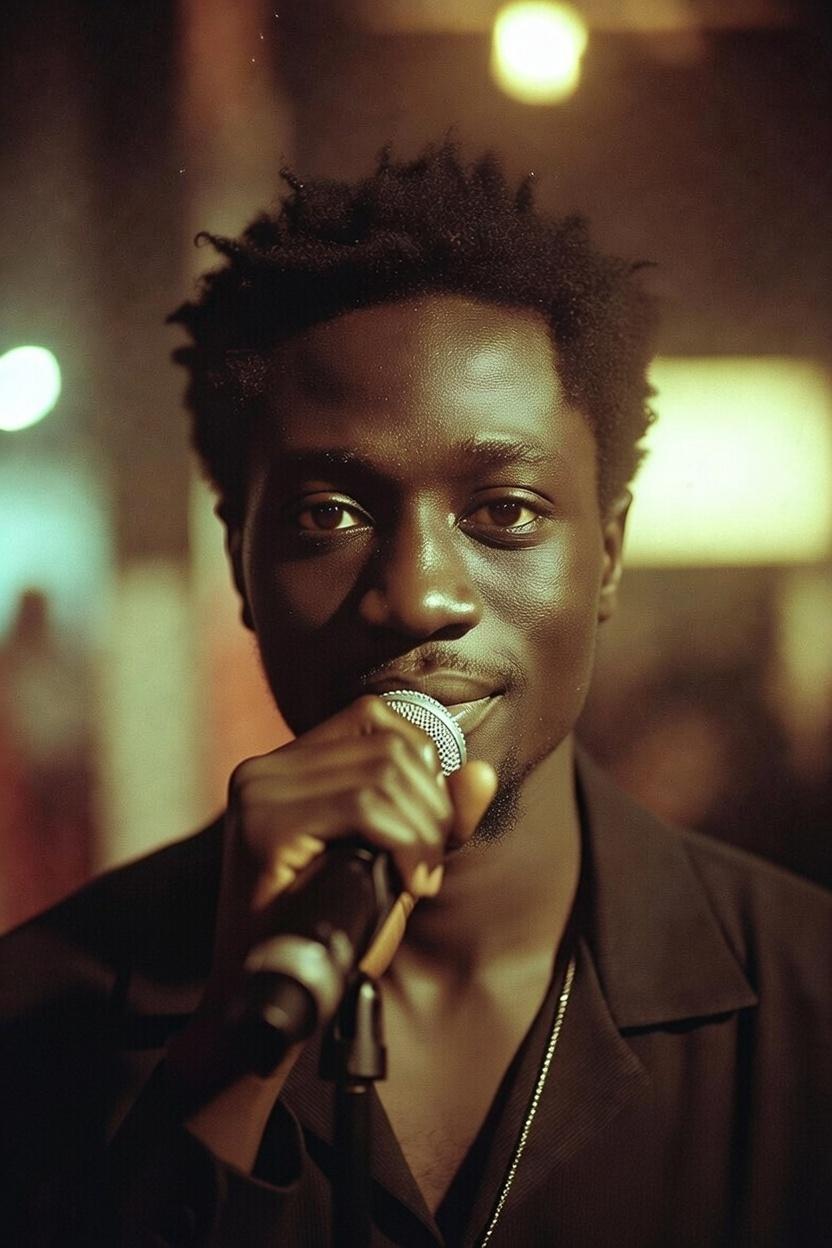
Yomi Fash Lanso Yomi Fash Lanso is a veteran Nigerian Nollywood actor, director, producer, and master of ceremonies widely known for his roles in Yoruba language films. For decades he has been one of the most respected and recognizable faces in the Yoruba movie industry. His powerful voice, expressive acting, and ability to interpret complex characters have made him a favorite among...

QUEEN ELIZABETH Early Life Queen Elizabeth II was born Elizabeth Alexandra Mary Windsor on April 21, 1926, in London, England. She was the first child of King George VI and Queen Elizabeth The Queen Mother. Initially third in line to the throne, her position changed when her uncle, King Edward VIII, abdicated in 1936, making her father king and her the heir presumptive. She was...

Adewale was a small boy from Ojuelegba, Lagos, who grew up believing his grandmother was his mother. She cared for him with so much love and attention that he never questioned it. To Adewale, she was everything—his world, his protector, and the center of his life. It wasn’t until a fateful day at the market that he discovered the truth. On their way back home, Adewale and his...
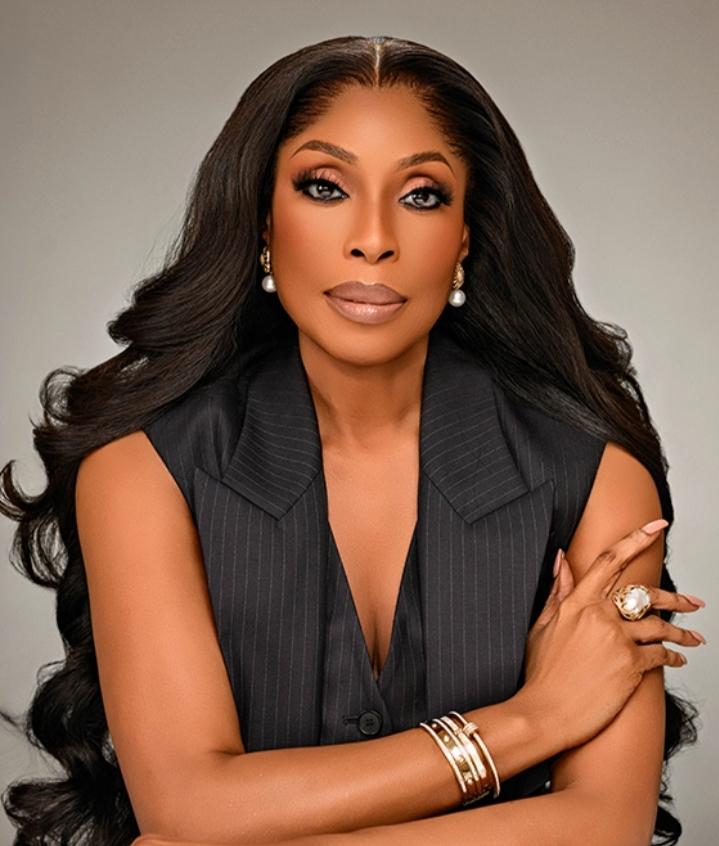
Mo Abudu In a world where stories shape perception and perception shapes power, one woman decided that Africa would no longer wait for others to tell its story. She would build the platform herself. Her name is Mo Abudu, born Mosunmola Abudu, a woman whose journey from corporate boardrooms to global film deals transformed African media. Early Life Between Continents Mo Abudu was...