About
About
The Flame of Faith and Justice The Legendary Rise of Shehu Usman dan Fodio
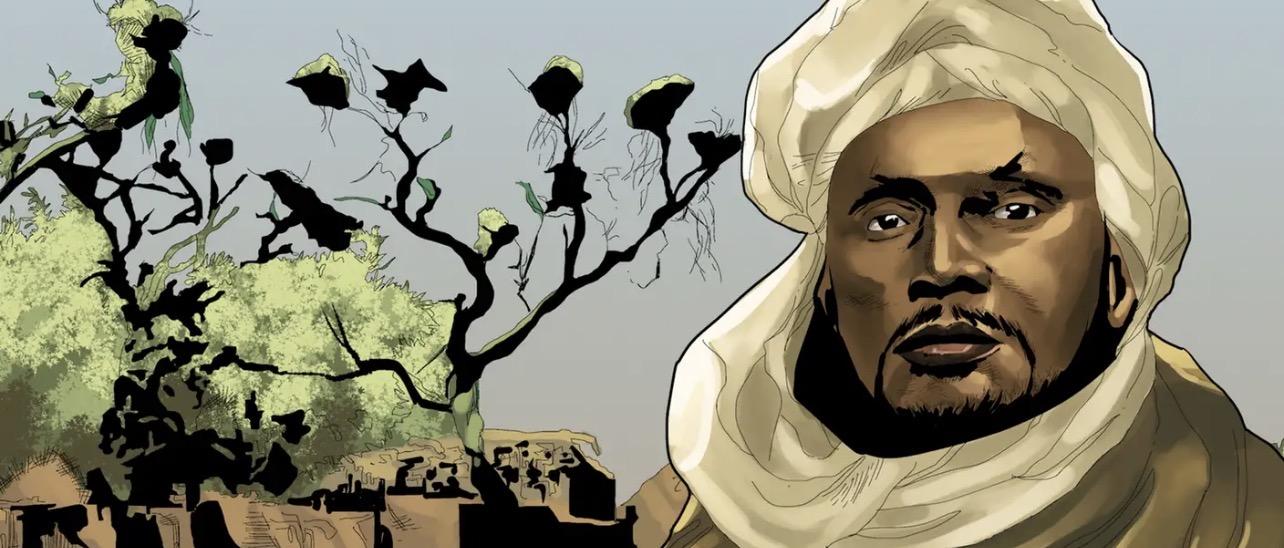
Shehu Usman dan Fodio
In the heart of West Africa, long before the noise of modern cities and digital voices filled the air, there lived a man whose words were stronger than swords, whose vision reshaped nations, and whose legacy still echoes across generations. His name was Shehu Usman dan Fodio a scholar, a reformer, a teacher, and ultimately, a legend.
Born in 1754 in the region of Gobir, part of present-day northern Nigeria, Usman dan Fodio came from a family deeply rooted in Islamic scholarship. From a young age, he showed an unusual hunger for knowledge. While other children played under the vast Sahel skies, young Usman sat at the feet of teachers, memorizing the Qur’an, studying law, theology, and ethics. His mind was sharp, but more importantly, his heart was soft filled with concern for the moral state of society around him.
As he grew, so did his awareness of injustice. The land was ruled by kings and leaders who, though Muslims by name, often practiced corruption, oppression, and ignored the true teachings of Islam. The poor suffered under heavy taxation, justice was uneven, and religion was mixed with practices that strayed far from its core.
Usman dan Fodio could not stay silent.
He began to preach.
Traveling from town to town, he spoke not with anger, but with clarity and conviction. His message was simple yet powerful—return to truth, embrace justice, and live by genuine faith. People listened. Farmers, traders, women, and students gathered in large numbers to hear him. His voice became a movement.
What made him different was not just what he said, but how he lived. He practiced what he preached. He dressed simply, avoided luxury, and treated everyone with dignity. Even women were encouraged to seek knowledge, which was rare at the time. His daughter, Nana Asma’u, would later become a respected scholar herself, continuing his mission.
But as his influence grew, so did resistance.
The rulers of Gobir began to see him not as a teacher, but as a threat.
Among them was King Yunfa, who initially had a relationship with Usman dan Fodio but later turned against him. The growing community of followers, known for their discipline and unity, made the rulers uneasy. They feared losing control.
Tension rose.
Restrictions were placed on his preaching. His followers were harassed. Eventually, the situation became unbearable.
In 1804, a turning point came.
Usman dan Fodio and his followers made a historic migration known as the Hijra, leaving Gobir for a safer place. This was not just a physical journey, but a spiritual and political declaration a stand against oppression.
From this moment, the movement transformed.
What began as peaceful preaching evolved into a struggle for justice. A jihad was declared—not one of mindless violence, but one aimed at establishing a society rooted in fairness, knowledge, and true religious practice.
Battles were fought.
Against all odds, the movement grew stronger. Town after town came under their influence. Within a few years, a vast territory was unified under what became known as the Sokoto Caliphate—one of the largest empires in African history.
At its peak, the caliphate stretched across much of northern Nigeria and beyond, becoming a center of learning, governance, and reform.
Yet, despite his position as leader, Usman dan Fodio did something unexpected.
He stepped back.
Rather than rule with absolute power, he focused on writing, teaching, and guiding. Leadership was shared among trusted individuals, including his brother Abdullahi and his son Muhammad Bello. This decision showed his true nature—he was never driven by power, but by purpose.
His writings were many over a hundred works covering religion, law, governance, and social justice. Through these, he built not just an empire, but an intellectual tradition that would outlive him.
So, what made him a legend?
It was not just the empire he built.
It was the transformation he inspired.
He changed how people saw leadership—not as domination, but as responsibility. He uplifted education, especially for women. He challenged corruption without becoming corrupt himself. He turned faith into action and belief into a system that governed millions.
Even in death in 1817, his legacy did not fade.
The Sokoto Caliphate continued for decades, and his teachings remained alive in schools, homes, and hearts. Today, his name is spoken with respect, not just in Nigeria, but across the Muslim world.
He is remembered as a man who stood when others stayed silent.
A man who taught when others ruled.
A man who chose truth over comfort.
In the sands of time, many rulers have come and gone. Many empires have risen and fallen. But few have left behind a legacy that blends faith, knowledge, justice, and humility the way Shehu Usman dan Fodio did.
That is why he is not just remembered.
He is revered.
He is a legend.

Categories
Read More
The Nigerian Civil Situation Room has called on the National Assembly to expedite action on pending electoral reforms and ensure their passage into law before the 2027 general elections. Speaking at a press conference in Abuja on Monday, Celestine Odo, Head of Programmes at ActionAid Nigeria, said Nigeria’s democracy is at a critical point, threatened by governance deficits and...

The Peoples Democratic Party (PDP) has raised the alarm over what it describes as a growing attempt to turn Nigeria into a one-party state. In a strong statement, the opposition party urged citizens to stand up for democracy, warning that political dominance by a single party undermines freedom, accountability, and good governance. The PDP emphasized that a vibrant multi-party system is the...

Deepika Padukone Deepika Padukone is an Indian actress, model, and film producer. She is one of the most successful and highest paid actresses in Bollywood and is widely known for her powerful performances in Indian cinema. Early Life and Background Deepika Padukone was born on January 5, 1986, in Copenhagen, Denmark. She was raised in Bangalore, India. She comes from a sports...

They say fashion is cyclical, and Xiaomi has just proved it. In an era dominated by 5G smartphones and AI gadgets, the tech giant is bringing back an old classic — the walkie-talkie — but with a modern twist. Almost a century after Motorola introduced the first walkie-talkies for military use, Xiaomi is reviving the concept with the Xiaomi Digital Walkie-Talkie, a device that...

The Day I Hid to See the Truth I used to think I knew everything about my daughter. My name is Olivia Carter, and for two years after my divorce, it had been just Lily and me in our quiet Massachusetts home. She was thirteen bright, responsible, the kind of child teachers praised and neighbors smiled at. I told myself we were okay. That I was doing enough. Then my neighbor spoke up. One...