О нас
О нас
The Silent Terror of the Night The Untold Story of Oro Masquerade
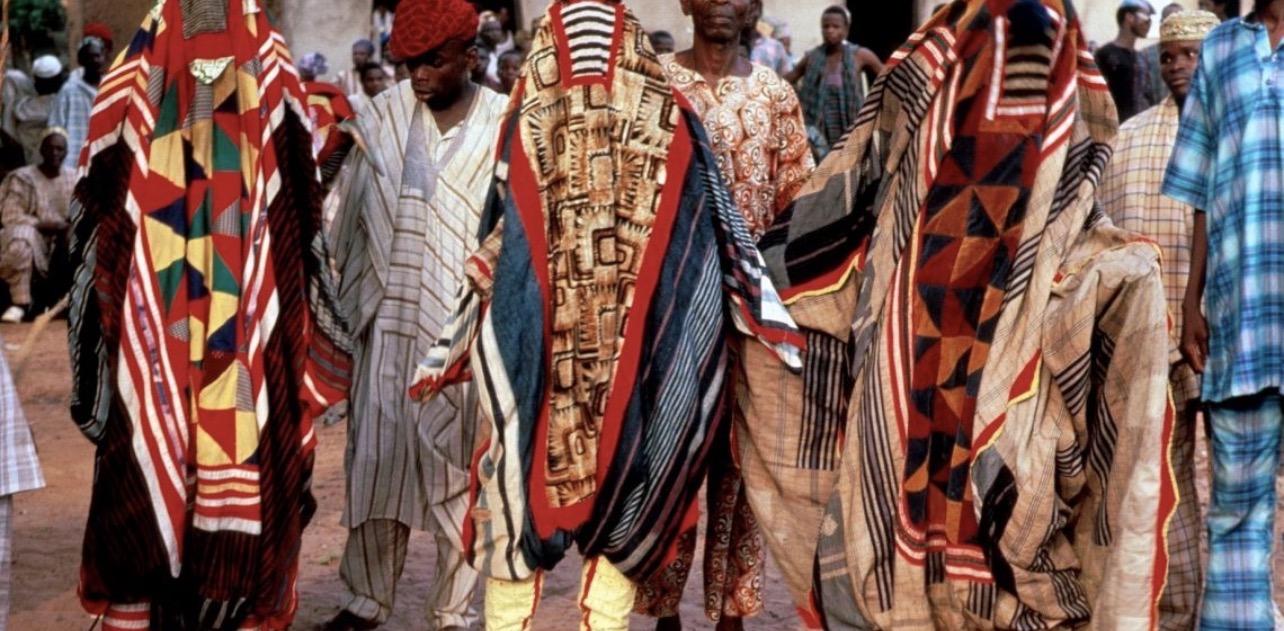
Oro Masquerade
In the deep heart of Yoruba land, when the sun begins to set and shadows stretch across the earth like ancient spirits waking from sleep, a silence unlike any other descends. It is not the peaceful silence of rest, nor the quiet of a sleeping village. It is a silence born from fear, respect, and something far older than memory.
That silence belongs to Oro.
Long before modern cities rose and electric lights pushed back the darkness, the Yoruba people lived in close harmony with forces both seen and unseen. Among these forces was Oro, not just a masquerade, but a powerful spiritual institution tied to justice, tradition, and ancestral authority.
Oro is not like other masquerades that dance in daylight, entertaining crowds with colorful displays and rhythmic movements. Oro does not perform for joy. Oro does not seek applause. Oro does not smile.
Oro comes in silence.
And when Oro comes, the world changes.
The elders say Oro is the voice of the ancestors, the enforcer of laws, the keeper of sacred order. It is deeply rooted in Yoruba traditional religion and is often associated with secret societies made up strictly of initiated men. Women, children, and non-initiates are forbidden from seeing Oro. Not advised. Forbidden.
Because seeing Oro is believed to come with consequences.
Serious consequences.
Stories passed from generation to generation speak of what happens when the rules are broken. Some say those who dare to look upon Oro risk spiritual punishment. Others whisper darker tales, stories of sudden disappearance, mysterious deaths, or irreversible curses.
Whether myth or reality, no one is eager to test it.
That is why, on nights when Oro is said to roam, entire communities shut down. Markets close early. Streets empty. Doors are locked. Lamps are dimmed. Even the boldest men lower their voices.
Because Oro is near.
The first sign is usually the sound.
A haunting, unearthly voice carried by the wind. It is not quite human, yet not entirely spirit. It echoes through the night like a warning from another realm. Some describe it as a deep humming roar. Others say it sounds like a distant cry of something ancient and unseen.
That sound alone is enough to send chills through the spine of anyone who hears it.
And then comes the movement.
Invisible, yet felt.
Oro does not walk like a man. Oro does not move like anything known. The presence is sensed more than seen. It passes through streets, compounds, and sacred grounds like a force of nature.
Those who are not meant to see it must remain hidden.
This is where the fear begins.
To outsiders, Oro may seem like just another cultural ritual exaggerated by folklore. But within Yoruba communities, Oro carries authority. It has historically been used to enforce laws, settle disputes, and cleanse the land of wrongdoing.
In ancient times, when kings ruled with the guidance of elders and spiritual leaders, Oro was sometimes invoked to bring justice. Thieves, traitors, and those who broke sacred laws were warned. If they refused to heed the warnings, Oro might be called upon.
And when Oro was called, people listened.
Because Oro did not argue.
Oro acted.
This power is part of what makes Oro both respected and feared. It represents a system where the physical and spiritual worlds intersect. Where justice is not just decided by humans, but enforced by forces believed to be beyond human control.
Yet, over time, this same power has led to controversy.
Many people today describe Oro as cruel.
Not because of what it represents in its original form, but because of how it has sometimes been used.
There have been accounts in modern times where Oro festivals have led to restrictions that affect daily life, especially for women. Since women are forbidden from seeing Oro, they are often required to stay indoors during Oro processions.
In some cases, this has sparked debates about human rights, freedom of movement, and the place of tradition in a changing world.
Some communities strictly enforce these rules, while others have relaxed them, adapting the tradition to fit modern realities.
But even in places where the influence of Oro has reduced, the fear remains.
Because fear is not just about what is happening now.
It is about what people believe could happen.
And belief, especially when rooted in generations of storytelling, is powerful.
There are countless stories, some whispered, some boldly told, of encounters with Oro.
A young man who claimed he saw Oro and fell mysteriously ill days later.
A traveler who ignored warnings and walked through a restricted path, only to vanish without a trace.
A woman who stepped outside during an Oro night and was found unconscious at her doorstep by morning.
Are these stories real?
Are they exaggerated?
Or are they cautionary tales designed to enforce obedience?
No one can say for certain.
But the stories persist.
And as long as they do, Oro remains one of the most feared masquerades in Yoruba land.
Yet, to understand Oro only through fear is to miss its deeper meaning.
Because at its core, Oro is not just about terror.
It is about control.
Order.
Structure.
In traditional societies, systems like Oro played a role similar to law enforcement today. It was a way to maintain discipline, ensure respect for cultural values, and uphold communal harmony.
Without written laws or modern policing, communities relied on such institutions to survive.
Oro was not just feared.
It was necessary.
But as times change, so do perspectives.
Younger generations, raised in cities and exposed to global ideas, often question the relevance of Oro. Some see it as outdated. Others view it as an important cultural heritage that should be preserved but reformed.
There are also those who defend Oro passionately, arguing that it is misunderstood. They believe the fear surrounding Oro has been exaggerated, and that in its true form, Oro is a sacred tradition that deserves respect, not condemnation.
Still, the mystery remains.
Because unlike other traditions that are open and visible, Oro thrives in secrecy.
What truly happens during an Oro procession is known only to the initiated.
What Oro really is, beyond the stories and sounds, is hidden behind layers of ritual, belief, and silence.
And perhaps that is what makes it so powerful.
The unknown.
Fear often grows strongest in the absence of knowledge.
And Oro, by its very nature, exists in that space.
A space where reality and myth blend.
Where history and mystery intertwine.
Where silence speaks louder than words.
So when night falls in a Yoruba town and the air begins to change, when doors close and voices drop, when the distant echo of something unearthly rides the wind, people do not ask questions.
They do not step outside.
They do not look.
Because some traditions are not meant to be challenged.
Some forces are not meant to be seen.
And some silences are not empty at all.
They are filled with presence.
The presence of Oro.
The silent terror of the night.

Категории
Больше
Kathryn Bernardo Kathryn Bernardo is a Filipino actress, model, and entrepreneur widely regarded as one of the most successful and influential actresses in the Philippines. Born Kathryn Chandria Manuel Bernardo on March 26, 1996, in Cabanatuan City, Nueva Ecija, Philippines, she rose to fame through television dramas and blockbuster films. Early Life and Background Kathryn Bernardo was born...

With the release of PoE 2, players have been rethinking their approach to late-game content. The revamped mechanics, streamlined skill gem system, and new ascendancies have opened up fresh build possibilities—even for those playing on a tight budget. Whether you're grinding maps solo or pushing the Atlas with friends, having a reliable yet affordable build is crucial. Below, we break down...

I was born the kind of girl people whispered about, though never to my face. Jealousy was in my blood, like a pulse I could never control. My sister, Nneka, had everything I wanted: beauty that turned heads, intelligence that earned praise, and a life that seemed effortless. And me? I was always in her shadow, no matter how hard I tried. The envy started small resentful glances, bitter...

Bono Bono, whose real name is Paul David Hewson, is an Irish singer, songwriter, and activist best known as the lead vocalist of the rock band U2. He is widely recognized for his powerful voice, meaningful lyrics, and global humanitarian efforts. Bono was born on May 10, 1960, in Dublin, Ireland. Early Life and Background Bono grew up in Dublin in a mixed religious household. From a...

Rotimi Amaechi In the bustling city of Port Harcourt, where oil wealth meets political intensity, a child was born on May 27, 1965. His name was Chibuike Rotimi Amaechi. Few would have imagined that this boy from Ubima in Ikwerre Local Government Area of Rivers State would grow into one of the most influential and outspoken figures in Nigeria’s Fourth Republic. Rotimi...