


 About
About
Rotimi Amaechi: The Relentless Strategist from Rivers
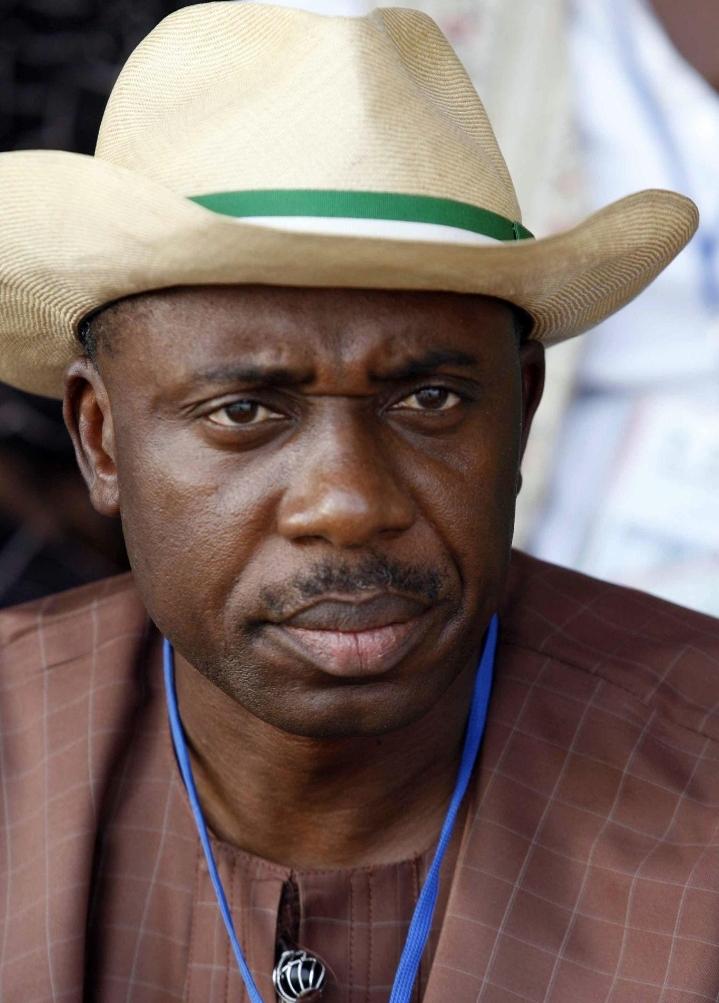
Rotimi Amaechi
In the bustling city of Port Harcourt, where oil wealth meets political intensity, a child was born on May 27, 1965. His name was Chibuike Rotimi Amaechi. Few would have imagined that this boy from Ubima in Ikwerre Local Government Area of Rivers State would grow into one of the most influential and outspoken figures in Nigeria’s Fourth Republic.
Rotimi Amaechi’s story is one of struggle, resilience, courtroom drama, and political reinvention. It is the story of a man who refused to surrender to political defeat and whose career has been shaped by both confrontation and strategy.
Early Life and Education
Amaechi grew up in a modest family in Rivers State. From an early age, he displayed a strong personality and a deep interest in leadership. His academic journey took him to the University of Port Harcourt, where he studied English Studies and Literature. While in school, he was actively involved in student politics, eventually serving as President of the National Union of Rivers State Students.
Those early years sharpened his political instincts. He learned how to mobilize support, navigate disagreements, and stand firm under pressure. These traits would later define his public life.
Entry into Politics
When Nigeria returned to democracy in 1999 after years of military rule, Amaechi joined the People’s Democratic Party. That same year, he was elected to the Rivers State House of Assembly. His colleagues soon recognized his leadership ability, and he was elected Speaker of the House.
As Speaker from 1999 to 2007, Amaechi became one of the most powerful political figures in Rivers State. He built alliances, strengthened his political base, and positioned himself as a key player in state politics.
But 2007 would test him like never before.
The Governorship Battle
In 2007, Rotimi Amaechi won the PDP primary election to contest for Governor of Rivers State. However, before the general election, the party substituted his name with that of another candidate, Celestine Omehia.
Amaechi refused to accept what he saw as injustice. Instead of stepping aside, he went to court.
The legal battle lasted months and became one of the most dramatic political cases in Nigeria’s democratic history. Finally, in October 2007, the Supreme Court ruled in Amaechi’s favor. The court declared that since the party had won the election, and Amaechi was the rightful candidate, he should be sworn in as governor.
Without contesting in the general election itself, Rotimi Amaechi became Governor of Rivers State.
It was a moment that defined his image nationwide. He was seen as a fighter who trusted the judiciary and believed in due process.
Governor of Rivers State
As governor from 2007 to 2015, Amaechi faced enormous challenges. Rivers State was politically volatile and economically strategic due to oil production.
His administration focused on infrastructure development. Roads were constructed, schools were renovated, and healthcare facilities were upgraded. One of his notable projects was the model secondary schools initiative, aimed at improving the quality of education in the state.
He also emphasized urban renewal in Port Harcourt, attempting to modernize the city’s appearance and functionality.
However, his tenure was not without controversy. His relationship with then President Goodluck Jonathan, who was also from the Niger Delta, deteriorated. Political tensions between the Rivers State government and the federal government escalated.
Amaechi eventually defected from the People’s Democratic Party to the All Progressives Congress in 2013, becoming a key opposition figure ahead of the 2015 general elections.
Role in the 2015 Political Shift
Rotimi Amaechi played a central role in the coalition that brought the All Progressives Congress to power in 2015. He was appointed Director General of Muhammadu Buhari’s presidential campaign.
His strategic coordination contributed significantly to the historic defeat of an incumbent president for the first time in Nigeria’s democratic history.
After the election victory, Amaechi was appointed Minister of Transportation in 2015.
Minister of Transportation
As Minister of Transportation under President Muhammadu Buhari, Amaechi oversaw major railway modernization projects. The Abuja to Kaduna rail line became operational, followed by the Lagos to Ibadan railway and other rail developments.
The railway revival was presented as one of the flagship achievements of the administration. For decades, Nigeria’s rail system had suffered neglect. Under Amaechi’s watch, new trains and modern stations began to emerge.
Critics questioned funding sources, especially loans from China used for railway infrastructure. Supporters argued that long term infrastructure required bold financial decisions.
Amaechi remained outspoken throughout his ministerial tenure. He did not shy away from public debates or political commentary.
Presidential Ambition
In 2022, Rotimi Amaechi declared his intention to run for president under the All Progressives Congress ahead of the 2023 elections. He resigned as Minister of Transportation to pursue his ambition.
Although he did not secure the party’s nomination, his decision reinforced his long standing ambition to remain at the center of national politics.
Personality and Public Perception
Rotimi Amaechi is widely known for his blunt speaking style. He rarely avoids tough questions and often speaks candidly about political issues. This has earned him both admiration and criticism.
Supporters see him as courageous and principled. Critics describe him as confrontational and politically aggressive.
Throughout his career, he has built a reputation as a political strategist capable of navigating complex alliances.
Legacy and Influence
Amaechi’s journey from student leader to Speaker, from embattled candidate to Supreme Court installed governor, from opposition strategist to federal minister, reflects resilience.
He has influenced Rivers State politics significantly and played a part in reshaping Nigeria’s national political landscape during the 2015 transition.
His legacy includes educational reforms, infrastructure development, railway modernization, and a defining legal precedent in Nigeria’s electoral jurisprudence.
Rotimi Amaechi’s story is not one of quiet politics. It is the story of a man who thrives in political storms.
From Ubima to Government House. From courtroom battles to national campaigns. From state leadership to federal cabinet.
His life illustrates that in Nigerian politics, persistence can rewrite destiny.
And as history continues to unfold, Rotimi Amaechi remains one of the most recognizable and resilient figures of his generation.


Categories
Read More
Tope Alabi Tope Alabi is a celebrated Nigerian gospel singer, songwriter, and actress known for her powerful voice, deep spiritual lyrics, and strong influence in the Yoruba gospel music scene. Over the years, she has become one of the most respected gospel ministers in Nigeria and beyond. Early Life and Background Tope Alabi was born on October 27, 1970, in Lagos State, Nigeria,...

Mary Slessor Mary Slessor was a Scottish missionary who became famous for her humanitarian work in Nigeria during the late nineteenth and early twentieth centuries. She is remembered for her efforts to stop the killing of twins and for promoting peace and education among communities in southeastern Nigeria. Born on December 2, 1848, in Aberdeen, Scotland, she later became one of...
Sheikh Ahmad Gumi has cautioned security operatives against provoking armed groups in Katsina, warning that fresh attacks could derail a fragile peace deal in Faskari LGA. The controversial Kaduna-based cleric made the remarks in a Facebook post after residents and local leaders held talks with wanted bandit kingpin Ado Alero and dozens of armed herders. Gumi claimed “those who...

The Petroleum and Natural Gas Senior Staff Association of Nigeria (PENGASSAN) has accused the Dangote Petroleum Refinery of unlawfully sacking about 800 Nigerian workers for joining the union, while retaining over 2,000 Indian expatriates. PENGASSAN’s General Secretary, Lumumba Okugbawa, claimed the dismissals came immediately after the workers completed their unionisation process,...

Lyta Lyta, whose real name is Opeyemi Babatunde Rahim, is a Nigerian singer and songwriter known for his soft vocals, emotional delivery, and street inspired Afrobeats sound. Born on July 4, 1998, in Ajegunle, Lagos State, Nigeria, Lyta rose to prominence as one of the promising young voices in Nigeria’s evolving music industry. Early Life and Background Lyta was born and...

