Sobre
Sobre
The Kingdom That Learned to Catch the Rain
The Land Where Water Was Rare
Long before modern dams, pipes, and irrigation systems, the highlands of Ethiopia were home to a people who understood something many civilizations struggled with: water is life, but it must be protected. The land was beautiful but difficult. Mountains rose high into the clouds, valleys stretched deep, and the rains came only at certain times of the year.
For farmers and families living there thousands of years ago, the biggest challenge was not finding land to grow crops. The challenge was keeping enough water to survive the dry seasons.
When the rains finally arrived, they came quickly and heavily. Water rushed down the hillsides like wild rivers, washing soil away and disappearing into the valleys below. If nothing was done, the land would dry again in a short time, leaving the people thirsty and their crops dying under the hot African sun.
But the people of ancient Ethiopia refused to let the water escape.
Instead, they began to study the land. They watched how rain flowed across the mountains. They noticed how water gathered in certain places and how the soil held moisture longer in shaded areas. Slowly, generation after generation, they began building a system that would change their future.
They learned how to catch the rain.
The Hidden Wisdom of Aksum
One of the greatest civilizations in Africa, the Kingdom of Aksum, flourished in northern Ethiopia more than 2,000 years ago. Traders came from distant lands like Egypt, Arabia, and India, and the city became one of the most powerful kingdoms of its time.
But its strength did not come only from trade or armies. It also came from water.
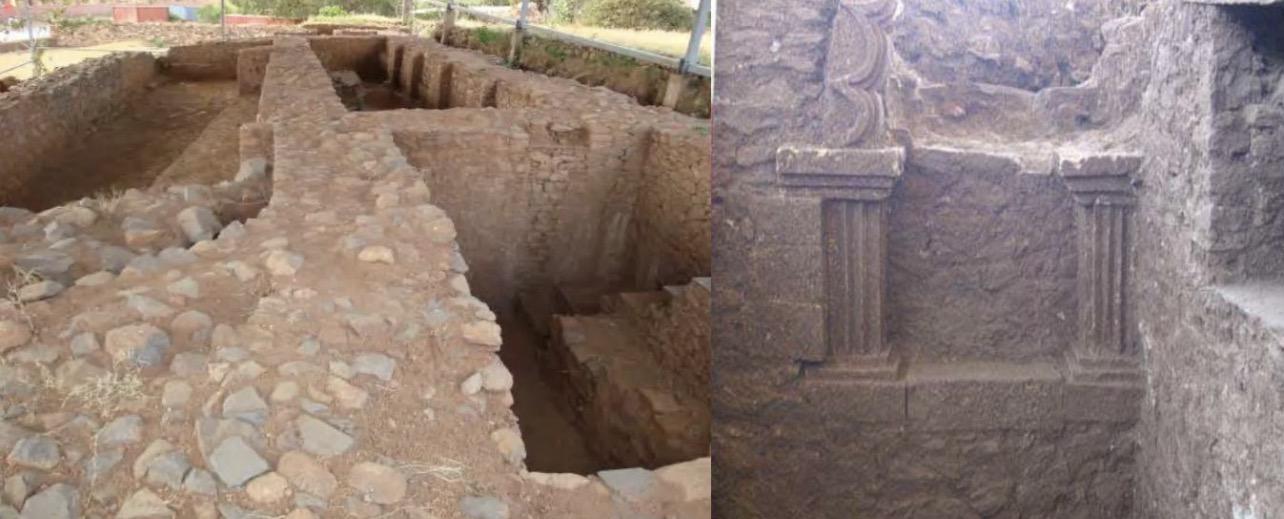
The people of Aksum built clever reservoirs carved into the earth and stone. These reservoirs collected rainwater during the wet season and stored it for months. One famous example was the Mai Shum reservoir, which is believed to be more than 2,000 years old.
During heavy rains, water flowed through carefully designed channels and into these storage pools. Instead of flooding the land and disappearing, the water was captured and protected.
The reservoirs served many purposes. They provided drinking water for the city, supported agriculture, and even helped control floods. The system worked so well that some of these ancient reservoirs are still visible today.
To the people of Aksum, water was not something to waste. It was something to respect.
Farming the Mountains
While cities like Aksum built reservoirs, farmers in the Ethiopian highlands developed another brilliant idea: they reshaped the mountains themselves.
Across steep hills, they constructed terraces — long steps carved into the slopes. These terraces turned dangerous hillsides into flat farming platforms. But their real magic was in how they controlled water.
When rain fell, instead of rushing down the mountain and carrying soil away, the terraces slowed the water. Each step caught the rain and allowed it to soak into the soil.
This meant crops could grow longer and stronger. The soil stayed fertile, and farmers could harvest food even when the rains stopped for weeks.
One of the best examples of this system can still be seen in the lands of the Konso people in southern Ethiopia. Their terraces stretch across entire hillsides like giant staircases built for the earth itself.
These structures are not just engineering. They are living history. Some terraces have been maintained for more than 500 years by generations of farmers who inherited the knowledge of their ancestors.
Water, Stone, and Community
The ancient Ethiopian water systems were not built by kings alone. They were community projects.
Villages worked together to dig reservoirs, shape terraces, and maintain irrigation channels. Every family had a role, because everyone depended on the same water.
Elders passed down knowledge about rainfall patterns, soil types, and construction methods. Children grew up learning where water flowed and how to guide it gently through the land.
The systems were also designed to work with nature rather than against it. Stones were placed carefully to prevent erosion. Small channels directed water toward farms without flooding them. Trees were sometimes planted near terraces to strengthen the soil.
This balance between human effort and natural flow was the secret to their success.
They did not try to control the water completely. They simply learned how to guide it.
Lessons That Still Flow Today
Today, modern engineers often study ancient water systems to understand how earlier civilizations managed their environment. Ethiopia’s early techniques are considered some of the most sustainable examples of water management in history.
In a time when climate change and water shortages threaten many regions of the world, the wisdom of these ancient systems feels more important than ever.
Reservoirs that capture seasonal rain, terraces that protect soil, and communities that share responsibility for water resources are ideas that remain powerful even in the modern age.
The people of ancient Ethiopia may not have had advanced machines or modern technology, but they possessed something just as valuable: patience, observation, and respect for nature.
They understood that survival depended not on conquering the land but learning from it.
And so, high in the Ethiopian mountains, the rain that once rushed away began to stay.
The land became greener. Crops grew stronger. Cities flourished.
All because a civilization decided that every drop of water was worth saving.

Categorias
Leia Mais
Chad Chad is a land of contrasts. In the north lies the vast Sahara Desert. In the center stretch dry Sahel plains. In the south, greener lands support farming and rivers. At its heart sits Lake Chad, once one of Africa’s largest lakes and a cradle of early civilization. The story of Chad is ancient and powerful. It begins with prehistoric life, rises through mighty...

Trailblazing Nigerian referee Yemisi Akintoye has been selected by the Confederation of African Football (CAF) to officiate at the 2025 Women’s Africa Cup of Nations (WAFCON) in Morocco. Hailing from Lagos, Akintoye’s appointment places her among Africa’s top female referees and highlights Nigeria’s growing influence in global women’s football. Her selection is a...

Zuby Michael Zuby Michael is a Nigerian actor, filmmaker, producer, and politician widely known for his action-packed roles and tough-guy characters in Nollywood. With his bold screen presence and commanding voice, he has become one of the most recognized faces in contemporary Nigerian cinema Early Life and Background Zuby Michael was born Azubuike Michael Egwu on February 1,...

Buchi Emecheta: Some lives begin quietly and unfold gently. Others begin in struggle and rise in defiance. The life of Buchi Emecheta was shaped by hardship from the very beginning, yet she transformed every wound into words. She did not inherit comfort. She inherited expectation. She did not grow up with freedom. She fought for it. Through sheer determination, Buchi Emecheta became one...

Mmanwu Ojionu Agaba Long before the noise of modern life filled the streets, before phones and flashing lights took over the nights, there was a time when silence itself carried meaning. In the heart of Igbo land, when the wind moved through the trees at dusk, elders would lower their voices, children would draw closer to their mothers, and even the bravest men would think twice before...