About
About
When Spirits Walk Among Men The Fearful Legend of Mmanwu Ojionu Agaba
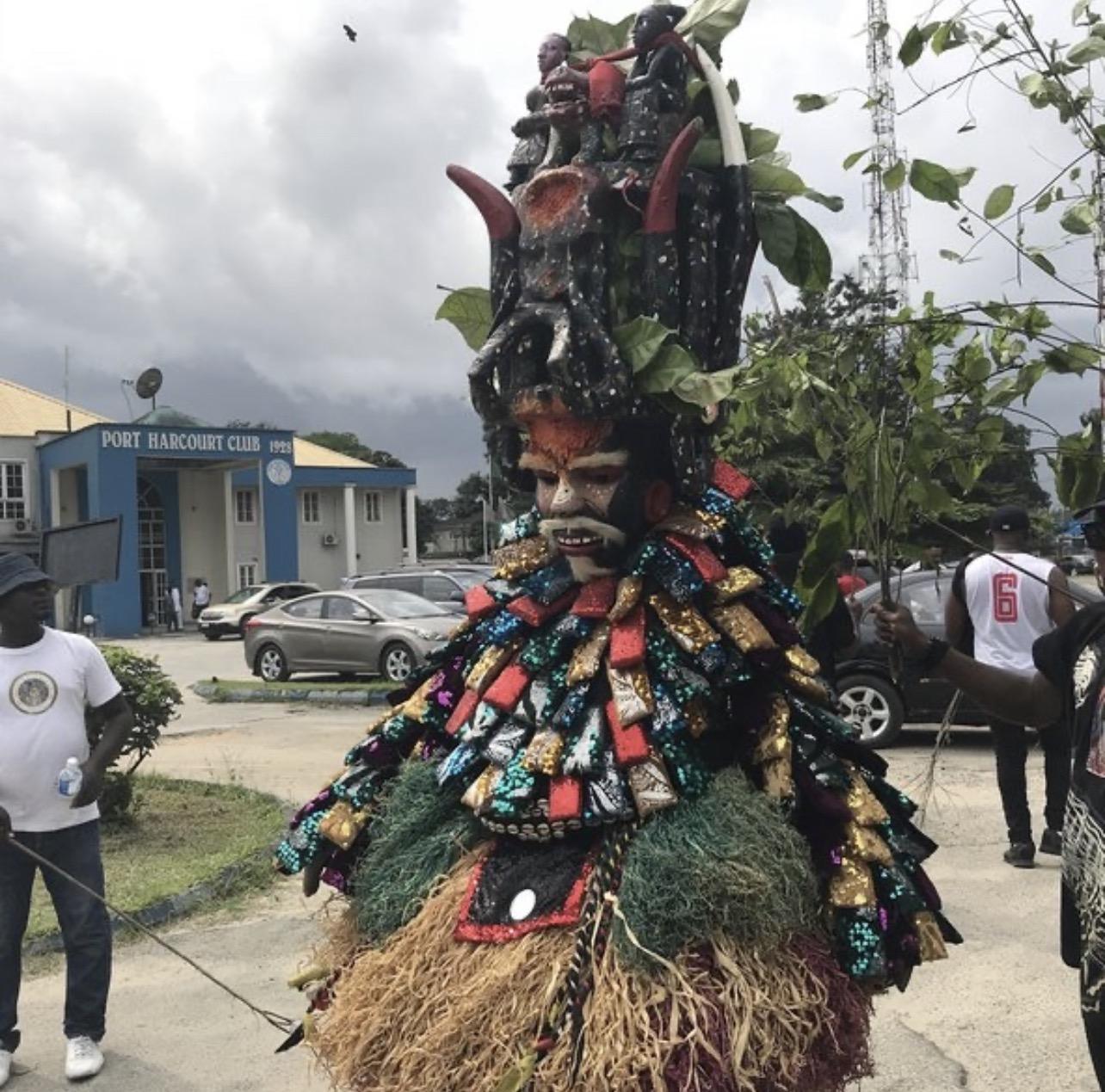
Mmanwu Ojionu Agaba
Long before the noise of modern life filled the streets, before phones and flashing lights took over the nights, there was a time when silence itself carried meaning. In the heart of Igbo land, when the wind moved through the trees at dusk, elders would lower their voices, children would draw closer to their mothers, and even the bravest men would think twice before stepping out.
Because there were moments when the boundary between the living and the spirits became thin.
And when that happened, something ancient walked among men.
They called it Mmanwu Ojionu Agaba.
Not just a masquerade. Not just a tradition. But a presence. A force. A mystery that stirred both awe and fear deep within the soul.
The Beginning of Fear
In Igbo culture, masquerades are not mere performers. They are believed to represent ancestral spirits, returning to the physical world for a purpose. Some come to celebrate. Some come to teach. Others come to protect.
But Mmanwu Ojionu Agaba was different.
From the earliest stories passed down by moonlight, this masquerade was never described with laughter or joy. It was always introduced with a pause… a deep breath… and then a warning.
Elders would say:
“When you hear the sound, do not look back.”
The name Agaba itself carried weight. It symbolized strength, wildness, something untamed. Something that did not move like a man, did not behave like a man, and did not answer to ordinary human control.
No one could clearly say when it first appeared.
Some believed it was born from a powerful ancestral spirit that refused to rest. Others said it was created by secret societies to enforce discipline among the people. And a few whispered that it came from something darker, something older than memory itself.
The Day It Appears
The day Mmanwu Ojionu Agaba appears is never ordinary.
It begins quietly.
The air changes. Birds seem to disappear. Even the marketplace, usually filled with noise and laughter, becomes tense. Women gather their children. Traders pack their goods earlier than usual.
Then comes the sound.
A deep, echoing rhythm. Drums, but not the joyful kind. These drums speak. They warn. They announce that something is coming.
From afar, dust begins to rise.
And then people start running.
Not walking. Not stepping aside. Running.
Because once Agaba enters, there is no negotiation.
The Presence of Agaba
When it finally emerges, it does not rush.
It moves with authority.
Tall, often towering above everyone else, covered in layers that seem almost alive, its costume is designed to overwhelm the senses. The face is hidden behind a mask that does not resemble any human expression. It is exaggerated, intense, almost otherworldly.
Its eyes do not look… they pierce.
Its movements are unpredictable.
One moment it stands still like a statue. The next, it charges with terrifying speed.
And that is where the fear truly begins.
Why People Say It Is Cruel
Many masquerades entertain. They dance, they bless, they interact with the crowd.
Agaba does not entertain.
Agaba dominates.
It is known to chase people, especially those who break certain cultural rules. Young men who act stubborn. Children who wander too close. Outsiders who fail to show respect.
And when it chases, it does not pretend.
The fear is real.
Stories are told of people falling while running, of others hiding behind walls, of strong men climbing fences just to escape its path. Some say it carries whips or uses its presence to intimidate physically.
This is why many describe it as cruel.
Not because it is evil… but because it shows no softness.
It does not smile. It does not joke. It does not forgive easily.
It reminds people of something important:
Respect.
The Secret Behind the Mask
Despite the fear, there is a truth everyone knows but no one openly discusses.
Behind the mask… is a man.
But not just any man.
To become Agaba is not a simple act. It requires initiation, secrecy, and a deep connection to tradition. The identity of the person inside is hidden, protected by strict cultural rules.
Once inside the costume, that person is no longer seen as human.
He becomes the spirit.
And during that moment, he must act as the spirit would act, not as himself.
That is why even friends and family cannot call him by name. Cannot stop him. Cannot question him.
Because when Agaba walks, it is no longer a man walking.
It is something else entirely.
Why It Is the Most Feared
There are many masquerades across Igbo land. Some are respected. Some are admired.
But Agaba is feared.
Not because it is the biggest.
Not because it is the loudest.
But because of what it represents.
Agaba represents judgment without negotiation.
It represents power without apology.
It represents the raw, untamed side of tradition that refuses to be softened for comfort.
Where others bring joy, Agaba brings awareness.
Where others celebrate, Agaba warns.
And in a world where many people try to escape consequences, Agaba stands as a reminder that some forces cannot be ignored.
The Children and the Stories
For children, Agaba is both a nightmare and a lesson.
Mothers use its name to correct behavior:
“If you don’t behave, Agaba will come.”
At night, children imagine its shadow moving outside their homes. They listen carefully to distant drums, wondering if it is near.
Yet, as they grow older, something changes.
Fear slowly turns into understanding.
They begin to see that Agaba is not just there to scare.
It is there to shape.
The Balance Between Fear and Culture
What makes Mmanwu Ojionu Agaba truly powerful is not just its appearance or behavior.
It is the balance it holds.
It stands between fear and order.
Between tradition and discipline.
Between the visible world and the invisible one.
To outsiders, it may look harsh. Even cruel.
But to those who understand, it is part of a larger system that has existed long before modern laws and institutions.
A system where fear was used not to destroy, but to guide.
When It Leaves
Just as suddenly as it appears, Agaba disappears.
The drums fade.
The dust settles.
The streets slowly return to normal.
People come out of hiding. They laugh nervously. They share stories of how fast they ran, how close it came, how they escaped.
Life continues.
But something always remains.
A memory.
A feeling.
A reminder that, for a brief moment, the world was not entirely human.
The Living Legend
Today, even as cities grow and traditions face change, the legend of Mmanwu Ojionu Agaba still lives on.
It may appear less often. It may be seen differently by younger generations.
But the fear… the respect… the mystery…
They remain.
Because some stories are too powerful to fade.
Some traditions are too deep to disappear.
And some spirits…
Never truly leave.

Categorías
Read More
Jerusalem, Israel – In an unprecedented and devastating offensive, Israel has announced that its forces have struck over 1,100 Iranian targets since launching its major military operation, "Operation Rising Lion," last Friday. This relentless campaign marks the most significant direct assault on Iran in decades, aiming to cripple its nuclear program and degrade its military capabilities....
Amid escalating violence and mass killings in Benue State, human rights lawyer and counsel to the Indigenous People of Biafra (IPOB), Ifeanyi Ejiofor, has called on President Bola Tinubu to immediately declare a state of emergency in the state. Citing Section 305(1) of the 1999 Constitution (as amended), Ejiofor said the situation in Benue clearly meets the legal grounds for such a declaration,...

Renowned journalist and PDP chieftain, Dele Momodu, has issued a sobering warning about the state of Nigeria’s democracy, claiming the country is sliding dangerously toward civilian dictatorship. In his statement, Momodu expressed deep concern over the growing centralization of power, suppression of dissent, and a political climate that increasingly mirrors the authoritarian tendencies of...

By Monday morning, fear had already spread. Messages flew across phones. Voices trembled on radio. Social media was heavy with one claim: over 100 worshippers had been kidnapped during a church service in Kurmin Wali, Kajuru. But when security officials arrived at the village, they met silence — not the silence of tragedy, but the silence of a story that never happened. The church...

As Nigeria celebrates 26 years of uninterrupted democratic governance, the Nigeria Governors’ Forum (NGF) has commended the nation's progress, highlighting milestones achieved under civilian rule. In a recent statement, the Forum praised the leadership of Borno State Governor Babagana Zulum and Plateau State Governor Caleb Mutfwang for their transformative actions. Zulum’s targeted...