About
About
When Africa Ruled the Forge The Hidden Story of Blacksmith Technology That Shocked Early Europeans
Blacksmith Technology
The Fire Kings of Africa
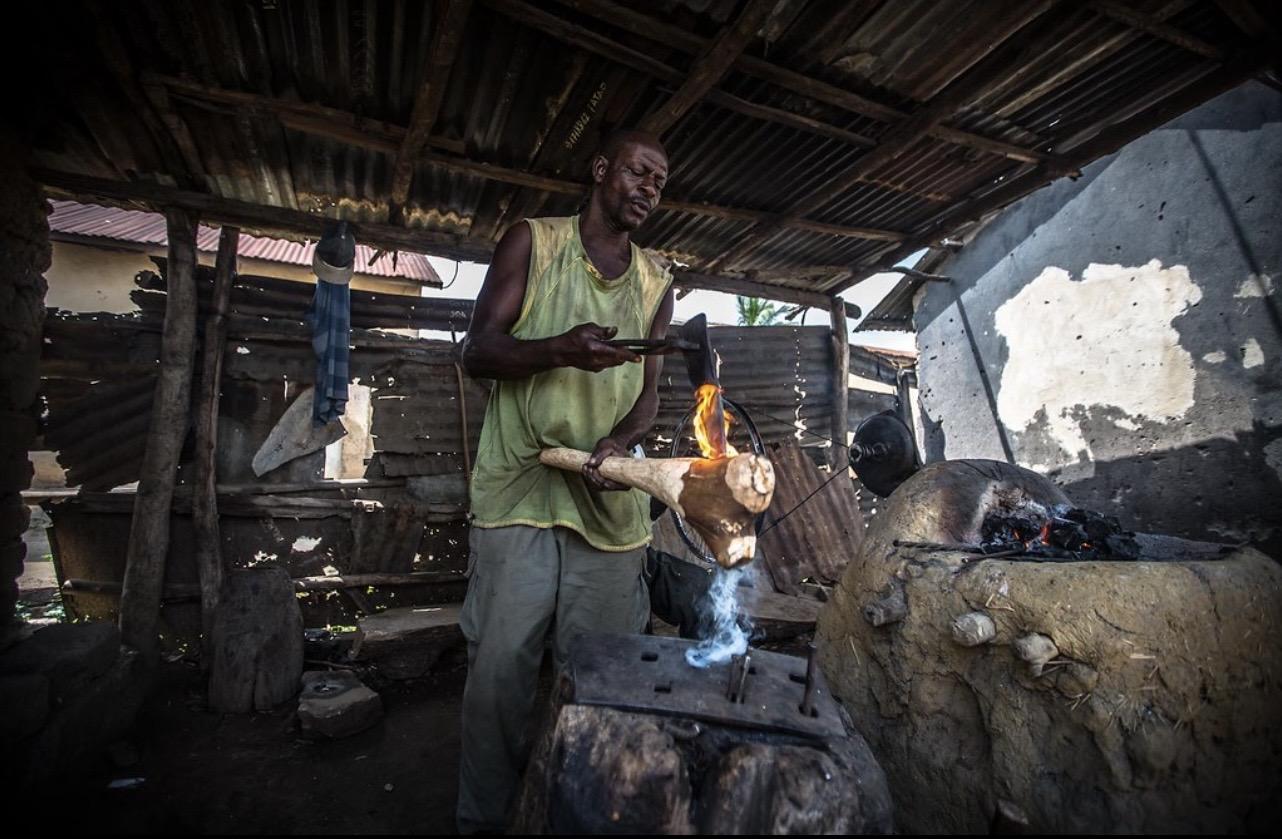
African blacksmithing was never a small village trick. It was a science of heat, air, ore, charcoal, patience, and memory. Long before many Europeans understood what they were seeing on African soil, smiths across the continent had already learned how to pull iron from stone, turn bloom into blade, and build furnaces suited to their own lands and needs. Archaeological and historical research shows that ironworking in sub Saharan Africa developed deep roots over many centuries, and in places such as northwestern Tanzania, smiths used remarkably sophisticated furnace designs capable of producing high quality iron and steel.
Where Fire Was Taught Like a Secret
Imagine dawn in an old African settlement. The ground is cool, but the furnace is already breathing. Charcoal is stacked like dark bread. Ore lies in baskets waiting its turn. Men and women move with purpose, not noise. Nothing here feels accidental. Every gesture has been taught, watched, corrected, and remembered. The blacksmith is not simply a worker. He is part chemist, part engineer, part ritual specialist, part guardian of community survival. In many African societies, smiths held special status because they transformed earth into tools, weapons, currency, symbols of authority, and sacred objects. That broad cultural importance is one reason modern scholars and museums continue to treat African blacksmithing as both technical history and artistic history.
The Furnace That Outsmarted Assumptions
One of the most astonishing stories comes from the Haya region near Lake Victoria in present day Tanzania. Research associated with Peter Schmidt and Donald Avery brought attention to furnaces dating back roughly 1,500 to 2,000 years. These were not crude pits with random flames. They were carefully designed systems that used preheating principles and controlled airflow to reach temperatures high enough to produce carbon steel. For a long time, many outside Africa assumed such advanced metallurgical control belonged only to Eurasian histories. The Haya evidence helped break that old prejudice. It showed that African ironworkers had solved technical problems in their own way, with their own materials, on their own timeline.
Picture the moment an outsider first truly understands what is happening. He expects smoke, sparks, and rough iron. Instead he finds design. He finds furnaces shaped to manage draft. He finds air being heated before it reaches the heart of the smelt. He finds smiths who know by color, smell, and sound when metal is changing within the fire. That is the point where surprise turns into respect. The amazement of early Europeans did not come only from seeing finished metal objects. It came from confronting a level of African technical mastery that colonial myths later tried to explain away. Modern scholarship has had to correct those myths again and again.
Benin Where Metal Became Majesty
Then there was Benin. If the furnace was the hidden heart of African metallurgy, Benin was one of its grand public faces. The historic Kingdom of Benin supported specialist guilds, including metalworkers attached to the royal court. The cast brass plaques and sculptures now called the Benin Bronzes recorded dynastic history, ritual life, warfare, and encounters with Europeans. British Museum material notes that these objects were part of a much wider landscape of West African brass traditions and that Benin maintained trade, diplomatic, and missionary contact with Portugal from the late 1400s. Smarthistory, drawing on British Museum scholarship, also notes that West Africans had already invented the smelting of copper and zinc ores and the casting of brass long before Portuguese arrival, even though Portuguese trade later expanded the supply of brass used by Benin casters.
That matters because for years some Europeans wrongly claimed Benin’s metal brilliance must have come from outside Africa. The art itself disproved them, and later research did too. Benin’s artists were not passive copyists waiting for Europe to teach them civilization. They were masters working inside an already powerful court culture. They took imported manillas and transformed them into royal memory cast in metal. They made plaques so detailed that centuries later the world still stares at them in museums with the same stunned attention.
When Europeans Arrived and Stared
The early Portuguese who entered into relations with Benin did not meet a people awestruck by Europe. They met a kingdom confident enough to control trade on its own terms. Sources on Benin note that diplomatic exchange visits took place between Benin and Portugal and that Europeans were often restricted in movement inland. The rulers of Benin controlled commerce tightly, and even representations of Portuguese soldiers appeared in Benin brass works because foreign people and foreign goods had already been absorbed into an African political and artistic system. In other words, Europe was not standing above Benin. It was entering Benin’s world.
European descriptions of Benin City added to the sense of astonishment. Accounts later repeated by historians describe broad, straight streets, ordered compounds, and a highly organized urban center. A Guardian history feature summarizing early foreign descriptions says visitors emphasized the city’s wealth, artistic beauty, magnificence, cleanliness, and order. That wider urban sophistication formed the setting in which Benin metalwork was made and displayed. The blacksmith and caster were not working in isolation. They were part of a civilization built to impress, govern, remember, and endure.
Meroe and the Land of Iron
Far to the northeast, the ancient city of Meroe in present day Sudan stood as another great center of ironworking memory. Britannica identifies Meroe as a major city of ancient Kush, and archaeological work in the region has long connected it with significant iron production. Modern experimental archaeology on Meroe’s furnaces has helped scholars understand the scale and technique behind that industry. Meroe reminds us that African metallurgical achievement was not one local miracle. It appeared in multiple regions, under different kingdoms, in different ecological settings.
If a traveler approached such a place expecting only desert silence, he would instead find the remains of an industrial landscape. Slag heaps. Furnace traces. Debris from repeated smelts. The evidence of organized labor. The evidence of repetition. The evidence of knowledge. Fire leaves memory in the ground, and Africa’s old metallurgical centers left a great deal of it. That is why archaeologists keep returning to them. The soil itself refuses the lie that Africa was waiting in darkness for metal, science, or invention to arrive by ship.
What the Blacksmith Really Made
The blacksmith made more than tools. He made farms possible by shaping hoes and blades. He made war possible by forging spearheads and knives. He made trade possible through bars, ornaments, and prestige goods. He made kingship visible through regalia and court art. In Benin, guild based metalworkers turned brass into state memory. In other regions, iron production on a large scale points to exchange networks beyond a single village. African metallurgy was tied to agriculture, ritual, statecraft, and long distance commerce all at once.
That is why the image of a lone blacksmith at an anvil is too small for the story. Behind every hammer blow stood forests cut for charcoal, miners gathering ore, furnace builders shaping clay, bellows makers, apprentices, traders, warriors, farmers, priests, and rulers. Technology was social. Fire was organized. Skill was inherited. The forge was not a side note in African history. It was one of the engines of African civilization.
The Silence Europe Tried to Create
There is a bitter ending to part of this story. Some of the very Europeans who marveled at African metalwork later helped destroy or loot the worlds that produced it. In 1897 British forces invaded Benin City, burned parts of the palace, and carried away thousands of artworks now scattered across museums and collections worldwide. The objects survived, but the violence around their removal also shaped how the world learned about them. Many people first encountered African brilliance in European display cases, separated from the workshops, guilds, courts, and communities that gave those works life.
Yet the truth still glows through the metal. Every plaque, furnace remnant, slag mound, and forged blade says the same thing. Africa did not merely use iron. Africa mastered it in many places with intelligence, discipline, and originality. Early Europeans were amazed because what they saw contradicted their assumptions. And today, when we tell the story honestly, that amazement still makes sense. The fire was real. The knowledge was real. The mastery was African.

Categorías
Read More
The family and lawyer of one of the alleged promoters of the CBEX investment scheme, Adefowora Abiodun, have urged the Economic and Financial Crimes Commission to release him unconditionally, stating that he voluntarily surrendered to the EFCC in April, following a ruling by Justice Emeka Nwite of the Federal High Court in Abuja. A family member, Taiwo Adefowora, in a statement issued on...

Suspended Rivers State Governor Siminalayi Fubara paid a visit to President Bola Tinubu in Lagos on Tuesday, marking a significant development amid the ongoing political crisis in the state. The visit comes months after President Tinubu suspended Fubara, his deputy Ngozi Odu, and members of the Rivers State House of Assembly over a deepening political standoff. The crisis, rooted in a power...

When I first came from Kogi to Lagos, my uncle told me, “Once you reach Ojota, just look for a bus going to Ikorodu Garage.” Simple, right? I thought so too. I got to Ojota and started listening carefully to the bus conductors. One was shouting “Berger! Berger!” Another was yelling “Ketu! Mile 12!” But the one I was waiting for Ikorodu Garage, never...

Just In: Gospel singer sentenced to death for killing girlfriend Salome Adaidu. The High Court in Lafia, Nasarawa State, has sentenced gospel musician Oluwatimileyin Ajayi to death by hanging for the murder of his girlfriend, Salome Adaidu. Justice Simon Aboki on Thursday found Ajayi guilty of culpable homicide after months of trial. Ajayi was convicted under Section 221 of the Penal...

Cosmas Maduka There was a time when a young boy walked the streets of Nnewi barefoot, not knowing that one day he would sit at the table of global automobile giants. That boy was Cosmas Maduka, a man whose life would become one of the most powerful business stories in Nigeria. A Childhood Marked by Loss Cosmas Maduka was born on December 24, 1958, in Nnewi, Anambra State,...