


 About
About
Imhotep The Mind Who Turned Stone Into Immortality
Imhotep
Long before the world knew the names of famous builders, physicians, or wise men, there lived a man in Ancient Egypt whose memory would outlive kings, dynasties, and even empires. His name was Imhotep. Time covered many lives with sand, but his name refused to disappear. It rose again and again, whispered in temples, carved in stone, remembered by priests, and honored by the sick who prayed for healing. He began as a man who served a king, but history remembered him as something greater. He became a legend.
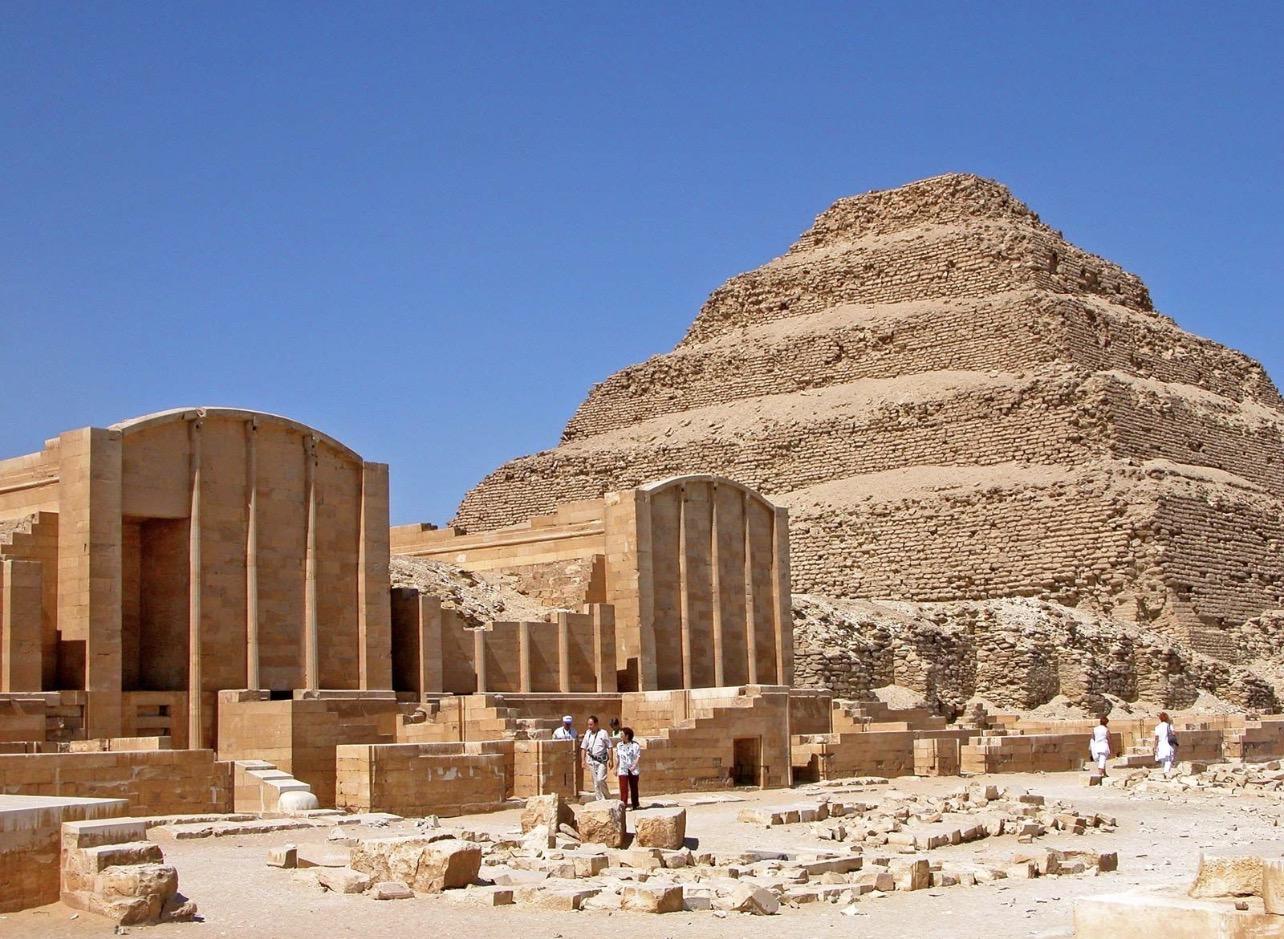
In the age of Pharaoh Djoser, when Egypt was still shaping the early grandeur that would later astonish the world, Imhotep stood near the center of royal power. He is known as an adviser to Djoser and is widely credited with the design of the Step Pyramid at Saqqara, the earliest pyramid in Egypt and the first monumental stone building of its kind. That single achievement changed architecture forever. UNESCO describes the Saqqara complex as containing the first monumental stone building ever constructed and the first pyramid ever built.
To understand why Imhotep became so great in memory, one must first imagine the Egypt of his day. The land breathed with the rhythm of the Nile. Each flood brought life, each harvest fed cities, and each ruler sought a way to defeat death through glory and remembrance. Kings did not simply want tombs. They wanted eternity. Before Imhotep, royal burials had already become grand, but they had not yet reached the astonishing form that would later define Egypt in the eyes of the world.
Then came the vision.
The tomb of a ruler had long been built in a rectangular form known as a mastaba. It was solid, dignified, and noble, but still earthbound. Imhotep saw beyond that. Whether in one sudden burst of imagination or through careful stages of design, he transformed the idea of the royal tomb into something the world had never seen before. Instead of one flat mastaba, he placed one level upon another, lifting the structure toward the sky in great ascending platforms. The result was the Step Pyramid of Djoser at Saqqara, a structure that looked as though the earth itself had been taught to climb. Britannica and the Met both credit Imhotep with this groundbreaking work.
It was more than a tomb. It was a declaration.
The Step Pyramid said that a king could rise. It said that stone, if shaped with intelligence and faith, could become a ladder to the eternal world. It also announced something else, perhaps even more important. Human imagination had reached a new level. This was not only a burial monument. It was the birth of a new architectural age.
The Saqqara complex surrounding the pyramid was vast and carefully ordered, filled with ceremonial spaces and symbolic structures. It showed planning, authority, and daring. This was no simple pile of stone. It was a complete statement about power, kingship, religion, and the afterlife. The structure became the ancestor of the later true pyramids that would rise in Egypt. In that sense, Imhotep did not merely build a monument. He opened a road that countless others would follow.
Yet the story of Imhotep did not end with architecture.
That is part of what makes him so fascinating. Ancient memory did not preserve him as only a builder. Later Egyptians remembered him as a man of learning, wisdom, and healing. Over the centuries, his reputation expanded far beyond stone and royal service. He came to be honored as a sage, a patron of writing and wisdom, and eventually a divine figure associated with medicine. Britannica notes that he was one of the very few nonroyal Egyptians to be deified, while the Met explains that by later periods he had fully divine status with his own cult.
There is something deeply moving in that transformation.
Kings were expected to become divine in memory. Imhotep was not a king. He was a man of mind, skill, and service. Yet later generations looked back and saw in him such brilliance that ordinary human remembrance was not enough. They raised him higher. They prayed to him. The Greeks later linked him with Asclepius, their own figure of healing. What began in the court of Djoser ended in temples where people sought health, wisdom, and hope.
Imagine the journey of that reputation.
At first, perhaps he was admired by those who worked beside him, the scribes who saw his orders, the laborers who watched impossible ideas take shape in stone, and the priests who knew he understood sacred meaning as well as practical design. Then the admiration grew. Stories formed. Achievements became polished by memory. A wise adviser became the ideal wise adviser. A gifted builder became the first master builder. A learned man became a healer. A healer became a sacred name.
This happens only to a few people in history. Fewer still sustain that honor across thousands of years.
Part of Imhotep’s power in memory comes from what he represents. He represents the unity of knowledge. In the modern world, people separate professions. One person designs buildings, another studies medicine, another advises rulers, another writes philosophy. Imhotep stands in memory as all these things joined together. He belonged to a civilization where knowledge was sacred and order mattered. To build well was not only technical. It was spiritual. To heal well was not only practical. It was wise. To advise a king was not only political. It was moral and cosmic. Imhotep seems to have embodied that harmony.
That is why his story still feels alive.
He was not remembered because he shouted loudly. He was remembered because he built something that spoke for him. Stone became his voice. The Step Pyramid still stands, weathered but unmistakable, and every surviving block seems to repeat the same truth. Great minds can outlive their bodies. Great work can outlive whole kingdoms.
And there is another lesson in his story. Imhotep shows that history does not belong only to rulers. Djoser was king, and his name matters, but the architect beside him became one of the most enduring names of ancient civilization. This is powerful. It means that wisdom, skill, and service can sometimes echo as strongly as royal blood. In a world obsessed with crowns, Imhotep proved that intellect could become immortal too.
Even now, when people speak of Ancient Egypt, many first think of pyramids. Behind that image stands a deeper beginning at Saqqara. Before the smooth sided giants at Giza, there was the bold experiment of layered stone. Before later traditions of monumental tomb architecture, there was a man who imagined elevation in a new way. Before later generations called him healer and sage, there was a brilliant servant of the court who dared to think beyond custom.
His life is partly hidden, as many ancient lives are. The sands do not tell everything. Much about the historical man remains uncertain. But the legacy is clear. He served Djoser. He is credited with the Step Pyramid. He became one of the rare mortals in Egyptian memory to be lifted into divinity. Those facts alone make him extraordinary.
So when we speak the name Imhotep, we are not only speaking of one man in one age. We are speaking of the dream of human greatness shaped through thought, discipline, and vision. We are speaking of the moment when stone was no longer just material, but meaning. We are speaking of a figure who crossed the boundary between memory and myth without ever fully disappearing into either.
He remains standing where earth meets eternity.
Not as a conqueror with a sword.
Not as a king on a throne.
But as a mind that built a stairway toward the sky and left the world wondering how one human being could hold so much wisdom in a single name.

Categories
Read More
Every morning, Sadiq kicked his okada to life before the sun rose over Ibadan. Dust was his breakfast. Insults were his uniform.“Bike man, shift!”“Is this work?”Even old friends laughed when he passed. But hunger doesn’t laugh—it pushes. One rainy night, Sadiq carried a quiet passenger from Bodija to the outskirts of the city. The man paid triple and said...

Akshay Kumar Akshay Kumar is an Indian actor, film producer, television personality, and martial artist. He is one of the most successful and hardworking actors in Bollywood, known for acting in action, comedy, drama, and patriotic films. Early Life and Background Akshay Kumar was born as Rajiv Hari Om Bhatia on September 9, 1967, in Amritsar, Punjab, India. He grew up in Delhi and...

Indira Tsengiwe Across the African continent, agriculture has always been more than just farming. It is culture, survival, identity, and the backbone of millions of livelihoods. Among the many innovators who have tried to modernize this ancient practice, the story of Indira Tsengiwe of South Africa stands out as one of creativity, resilience, and bold vision. Indira Tsengiwe...

A recent high-risk counter-terror operation has ended in tragedy, as 13 operatives were confirmed dead, contrary to earlier inflated reports. According to insights gathered by Zagazola Makama, security experts are raising red flags over the lack of real-time intelligence sharing, poor inter-agency collaboration, and absence of critical air support. The operation, spearheaded by the Department...

ABUJA — Former Vice President and 2023 Peoples Democratic Party (PDP) presidential candidate, Atiku Abubakar, has condemned President Bola Tinubu over the suspension and subsequent reinstatement of Rivers State Governor Siminalayi Fubara and members of the State House of Assembly, describing the move as unconstitutional. In a statement posted Thursday on his official X handle, Atiku said...

