


 About
About
When the Sea Chose a Sultan The Legend of Sultan Ali ibn al Hassan and the Birth of Kilwa
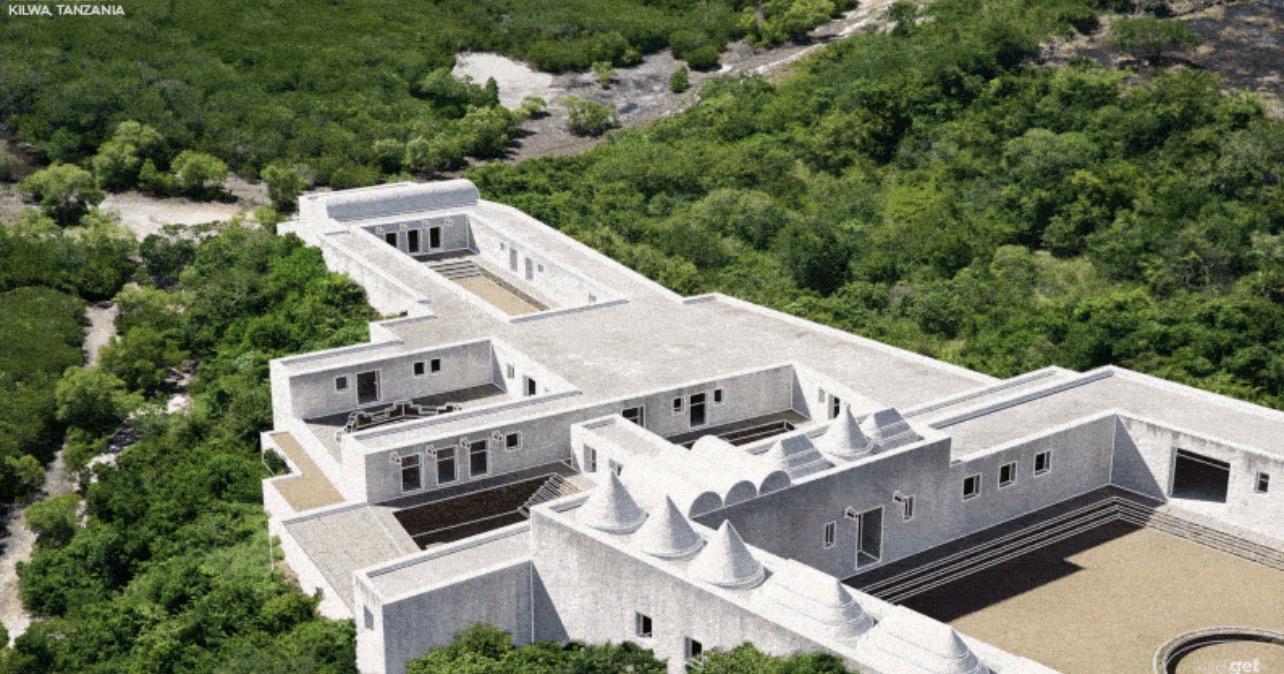
Kilwa
On the eastern edge of Africa, where the monsoon winds breathed life into the sea and the sea answered with wealth, memory, and mystery, stories were carried not only by people but by water. Before the ruins of Kilwa became silent stone, before travelers wrote in wonder about the beauty of its streets and mosques, there lived in the imagination of the Swahili coast a man whose name entered legend like a sail entering the horizon. That name was Sultan Ali ibn al Hassan.
His story belongs to that rich world where history and legend sit beside each other like elders in the same courtyard. Some details are preserved in the Kilwa traditions and later chronicles, while modern historians treat parts of the tale with caution. Even so, the story has endured for centuries because it explains more than the coming of one ruler. It explains how the coast understood itself, how Kilwa imagined its birth, and how a town of coral stone rose into greatness along the Indian Ocean. Britannica describes Kilwa as a city state founded in the late 10th century by settlers linked to Arabia and Persia, while UNESCO records Kilwa as one of the great Swahili trading cities whose prosperity later rested on control of Indian Ocean trade.
The old tale says that Ali ibn al Hassan came from Shiraz, in Persia. In the legend, he was one of the sons of a noble father and, after disputes over inheritance, left his homeland with his family and followers. The story gives him the dignity of exile, the sadness of departure, and the ambition of a man who refused to disappear. He crossed the waters not as a wandering beggar, but as someone carrying a future that had not yet found its shore. The tradition places him first in other coastal cities before he moved farther south, searching for a place where he could build something lasting. This outline survives in accounts of the Kilwa founding legend, though modern scholarship often treats the Persian prince image as part of a political and cultural tradition rather than a fully verifiable biography.
One can imagine the voyage as the coast itself must have remembered it. The dhow cuts through the water. The sky is wide and bright. The people aboard are tired but watchful. They know the sea can destroy a man, but they also know it can deliver him into destiny. Around them is the world that made the Swahili coast possible: the seasonal monsoon system, those turning winds that linked East Africa with Arabia, Persia, India, and beyond. Kilwa later grew powerful because it stood inside this ocean network, not outside it. UNESCO notes that the wealth of Kilwa and nearby Songo Mnara was tied to trade routes connecting the coast with Arabia, India, and China, while other historical sources note Kilwa’s later importance in the commerce of gold and ivory from the African interior.
Then comes the most famous scene in the legend, told and retold because it is clever, dramatic, and unforgettable. Ali ibn al Hassan arrived at Kilwa, an island settlement off the coast of what is now Tanzania. The ruler of the mainland, according to the tale, agreed to sell the island for as much colored cloth as could cover it. It sounds at first like an impossible bargain, one made in mockery. But Ali, in the way of story heroes, understood that words can be turned into tools. The cloth was cut into narrow strips and stretched so that the agreement could be honored in a way the seller had not expected. In some versions of the tradition, when the former owner later regretted the sale, the narrow land bridge linking Kilwa to the mainland was cut or dug through, making the island easier to defend. Whether literal or symbolic, the story captures something important: Kilwa was born not merely from conquest, but from intelligence, negotiation, and strategy.
That single legend reveals a great deal about the political imagination of the Swahili coast. It presents Ali not simply as a foreign adventurer, but as a founder with legal wit, maritime courage, and the favor of fortune. It also reflects an older coastal habit of linking authority to movement across the sea. To rule well on the Swahili coast was not only to command land. It was to understand tides, trade, kinship, religion, and the language of ports.
But the coast was never just a stage waiting for strangers. Modern scholarship has increasingly emphasized the deeply African foundations of Swahili civilization. Kilwa was part of an African coastal world with local communities, local rulers, and long standing settlements before and during the rise of the sultanate. Recent interpretations cited by National Geographic describe Ali ibn al Hassan as likely connected to an established African family with Persian roots rather than as a simple outsider arriving from nowhere. That matters because the greatness of Kilwa did not come from replacing Africa with Asia. It came from the meeting of African foundations with Indian Ocean connections, producing the distinct Swahili world.
So in the long memory of the coast, Ali ibn al Hassan becomes more than one man. He becomes a doorway. Through him enters the Shirazi tradition, the idea that certain ruling families traced ancestry to Persian origins. Britannica notes that Shirazi families later held influence in several coastal towns, including Kilwa. Yet the coast itself remained unmistakably African in language, society, and place. Kiswahili grew from Bantu roots while absorbing words and influences from Arabic and other Indian Ocean contacts. The founding legend therefore should not be read as the erasure of local people. It should be read as a statement about prestige, connection, and belonging in a cosmopolitan maritime world.
After the founding, whether by one dramatic arrival or by a longer process remembered through one name, Kilwa began its climb. Coral stone buildings rose. Mosques expanded. Merchants arrived with cloth, beads, ceramics, metal goods, and stories from lands beyond the horizon. From the interior came ivory, and in later centuries gold from the south moved through Kilwa’s commercial system. UNESCO records that Kilwa minted its own currency between the 11th and 14th centuries, a sign not only of wealth but of state organization and confidence. To mint coins is to tell the world that your name matters in trade. It is to stamp authority into metal and send it into other hands.
Generations after Ali ibn al Hassan, Kilwa became one of the most admired cities on the coast. The Moroccan traveler Ibn Battuta visited in the 14th century and described it as one of the most beautiful cities he had seen. By then, the seed associated with the founder’s legend had grown into a place of genuine splendor. Kilwa was not a village surviving on hope. It was a city of consequence, a center of religion, culture, architecture, and commerce. Archaeological and historical summaries of Kilwa point to its major regional role from roughly the 13th to the 15th centuries.
And yet all great cities live with shadows. Power attracts envy. Trade attracts rivals. The Portuguese eventually arrived on the East African coast in the early 16th century, violently disrupting older networks. Kilwa was occupied briefly and declined over time. Britannica notes Portuguese control in the early 1500s and the city’s gradual abandonment afterward. But ruins are not the end of a story. On the Swahili coast, ruins often become another kind of speech. Coral rag walls, broken arches, and weathered mosques still tell the truth that memory refuses to surrender.
This is why Sultan Ali ibn al Hassan still matters. Not because every detail of his tale can be proven line by line, but because legends preserve the emotional truth of a people’s beginnings. The story says that a man crossed the sea, found an island, used wisdom to secure it, and founded a dynasty. History replies that Kilwa truly did rise into one of the most important Swahili city states on the coast, shaped by African societies and Indian Ocean exchange. Between those two voices lies the real power of the tale.
In the evenings, one can almost imagine Kilwa as it once was. The call to prayer moving over the town. Traders speaking in more than one tongue. Children running past coral houses. Sailors studying the wind. Elders telling younger listeners how everything began with Ali ibn al Hassan, the man from the Shirazi tradition, the exile who became a founder, the founder who became a memory, and the memory that became a pillar of coastal identity.
Perhaps that is how such stories are meant to live. Not as cold records only, but as living fire. A ruler may die. A city may fall. Salt may eat the walls. But once the sea has carried a name into legend, it is very hard for time to wash it away.
Sultan Ali ibn al Hassan remains one of those names. On the Swahili coast, where history is written in coral, wind, trade, and faith, he stands at the beginning like the first light over the harbor. Half remembered man, half enduring legend, he is still there whenever Kilwa is spoken of with reverence. And in that speaking, the coast remembers its old greatness again.

Categorie
Leggi tutto
Blossom Chukwujekwu Blossom Chukwujekwu is a Nigerian actor, filmmaker, and producer known for his emotional performances and romantic roles in Nollywood. With his calm delivery and strong screen presence, he has built a solid reputation in Nigeria’s movie industry. Early Life and Background Blossom Chukwujekwu was born on November 4, 1983, in Benin City, Edo State,...

Margot Robbie Margot Robbie is an Australian actress and film producer known for her versatility, beauty, and powerful performances in Hollywood films. She has become one of the most successful and influential actresses of her generation. Margot Elise Robbie was born on July 2, 1990, in Dalby, Queensland, Australia. Early Life and Background Margot Robbie grew up on a farm in...

Episode Thirteen: Waiting Through Ramadan When the fight finally calmed down, life did not return to normal immediately. It only slowed. Fear still lived in the air, but survival demanded that we continue. The streets opened little by little, people returned cautiously to their routines, and we too returned to ours quietly, carefully. For us, the journey was not over yet. The focus...
EPISODE 4: VACATION LAUGHTER, A SILENT PAIN, AND THE ROAD HOME After settling in Funtua, life slowly became sweet again. The stress of the journey faded, and we began to truly enjoy our vacation. The air felt different calmer. Every morning came with greetings from neighbors, children playing freely, and laughter echoing around the compound. My granny was happy, moving from house to house,...

The Office of the Secretary to the Government of the Federation (OSGF), headed by George Akume, plans to spend ₦496 million in 2026 on just three heavy-duty photocopier machines and office furniture, according to Nigeria’s budget documents. The budget line states it is for the “purchase and installation of heavy-duty photocopy machines for cabinet affairs offices and supply of...

