О нас
О нас
Askia Muhammad I The Visionary Who Turned Songhai Into a Power of Government Trade and Faith
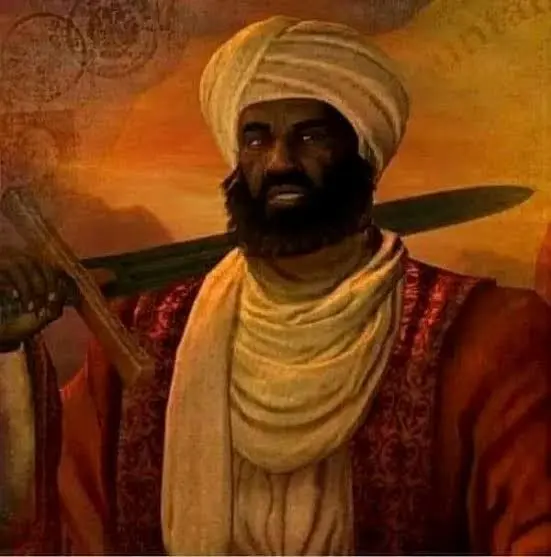
Askia Muhammad
There are rulers who inherit greatness, and there are rulers who build it with their own hands. Askia Muhammad I belongs to the second kind. His story does not begin in the comfort of an unquestioned crown. It begins in a world of tension, ambition, belief, struggle, and the restless movement of power across the great lands of West Africa. In the memory of history, he stands as one of the most important leaders of the Songhai Empire, the reformer who strengthened government, expanded trade, and gave the empire a firmer political and religious shape. He is remembered not simply because he ruled, but because he organized. He did not only command armies. He gave structure to victory. He did not only expand Songhai. He helped transform it into one of the greatest states of its age.
To tell the story of Askia Muhammad I in a storytelling way is to enter a world where the Niger River was more than water. It was movement, wealth, connection, and life. It touched cities of learning, markets of exchange, ports of ambition, and lands where caravans came and went carrying salt, cloth, books, horses, and gold. In that world, the Songhai Empire rose to astonishing importance. It was one of the great powers of West Africa, and the man later known as Askia the Great became one of the figures most responsible for giving that empire its lasting administrative strength.
Before he became ruler, Askia Muhammad was known as Muhammad Ture. He was not born into an easy path to uncontested kingship. Historical sources place him as a prominent military and political figure under Sunni Ali, the powerful ruler whose campaigns had greatly expanded Songhai. Sunni Ali was a conqueror of fearsome reputation, a man associated with battlefield force and state expansion. Muhammad Ture served in that environment and learned from it, but he was not destined to remain in another man’s shadow forever. After Sunni Ali died, his son Sunni Baru took power. That succession did not settle the state. Instead, it opened the door to conflict. In 1493, Muhammad Ture challenged Baru, defeated him, and took the throne, becoming Askia Muhammad I.
This moment was more than a palace struggle. It was the beginning of a new phase in Songhai history. Sunni Ali had built an empire through conquest, but Askia Muhammad would become known as the statesman who reorganized it. That difference is the heart of his legacy. Many rulers can take power in war. Far fewer know what to do after victory. Askia Muhammad understood that an empire held together only by fear could fracture. A realm spread over wide lands needed governors, law, armies, ministers, taxation, regulated commerce, and reliable channels of authority. He saw that political greatness did not rest only on winning battles. It rested on building systems.
Imagine him in those early days of rule, not yet the finished legend of later memory, but a man standing before an immense inheritance. He had taken power in a politically sensitive way. He had to prove that he was not merely a successful challenger, but a legitimate and capable ruler. He had to bind together far reaching territories, reassure powerful groups, and present himself as more than a military victor. One of the ways he did this was through religion, especially through a deeper public embrace of Islam and its political role in the state. Sources consistently describe him as a more openly devout Muslim ruler than Sunni Ali had been. He aligned himself more closely with Muslim scholars and with Islamic legal and administrative traditions, helping strengthen his legitimacy among influential religious elites, especially in places like Timbuktu.
This was not a small decision. In the western Sudan of that era, religion, politics, and commerce often touched one another. Islam was not merely a matter of personal devotion. It was also tied to scholarship, literacy, legal reasoning, diplomacy, and trans Saharan networks. By deepening the Islamic character of his rule, Askia Muhammad was not turning Songhai into something foreign to itself. He was strengthening an existing current within the empire and using it to stabilize power, encourage administration, and connect the state more firmly to the wider commercial and intellectual world. Arabic was used in official contexts, and Islamic scholars gained greater favor in governance and law.
One of the most famous episodes in his reign was his pilgrimage to Mecca. Britannica notes that he made the hajj and returned with enhanced prestige, while other historical summaries emphasize how the journey reinforced his religious standing and public image. The pilgrimage mattered because it announced to the wider Muslim world that Songhai was led by a ruler who saw himself as part of a broader community of power and faith. It also mattered at home, because legitimacy is often strengthened when a ruler can place himself within recognized sacred traditions. Askia Muhammad did not simply wear the crown of Songhai. He wrapped it in religious authority.
One can almost picture the emotional force of that return. A ruler who had taken power through conflict now came back carrying the aura of a pilgrim king. He had crossed distances many would never see. He had stood in lands known in prayer and memory. He had expanded his authority not just with weapons, but with symbolism. In kingdoms and empires, symbols matter. The ruler who knows how to place himself in the imagination of his people is often stronger than the ruler who relies only on the sword.
Yet Askia Muhammad’s true greatness did not lie in symbolism alone. It lay in administration. This is the reason history remembers him as a reformer. Britannica states that he set up an efficient administration of territories previously conquered and divided Songhai into provinces under governors. Other sources add that he expanded the council of ministers and centralized authority, creating a structure that could manage a very large realm more effectively. This was a turning point. He was giving the empire a spine.
Think of what that meant in practical terms. A wide empire could not be ruled every day from the ruler’s immediate presence. The river could carry messages, but not instantly. Caravans moved, but not at the speed of thought. Local disputes, tax matters, military needs, and trade security all required men in office, chains of command, and recognized power. By dividing the empire into provinces and appointing governors, Askia Muhammad made it possible for the state to function beyond the personal reach of the king. He created layers of government, which is one of the clearest marks of serious statecraft.
His government included ministers responsible for major affairs of state. Historical summaries describe offices linked to finance, justice, interior administration, agriculture, waters and forests, protocol, and relations involving desert peoples such as Tuaregs and Berbers. Whether one imagines this as a modern bureaucracy would be wrong, but the principle is unmistakable. Askia Muhammad understood specialization. He understood that great power required organized responsibility. This was not chaos disguised as empire. It was increasingly systematized rule.
He also strengthened the military in a more durable way. Britannica notes that he organized a standing army and a fleet of war canoes under established command. That detail matters because it shows that he was not ruling a loose coalition held together by seasonal force. He recognized the need for permanent military capacity. The Niger River was central to Songhai life and power, so control of river movement was strategically vital. A fleet was not decoration. It was state power made visible on water.
As government grew stronger, trade grew safer and more valuable. This is another major reason Askia Muhammad’s name still commands respect. The Songhai Empire sat astride important trade routes linking forest and savannah zones to Saharan and North African exchanges. Gold, salt, cloth, horses, and other goods passed through this broad commercial world. Askia Muhammad’s reforms helped commerce by increasing order, improving state supervision, and standardizing aspects of exchange. Sources note regulation of trade, standardization of weights and measures, tax organization, and the policing of routes. These were not small matters. Trade does not flourish where every road feels like a gamble. Merchants prefer order. Empires that protect commerce attract wealth.
In the marketplaces of Gao, Timbuktu, and Jenne, such changes would have had real meaning. A trader does not celebrate administration in poetry, but he feels it in his pocket. Safer roads mean fewer losses. Clearer measures mean fairer exchange. Reliable authority means contracts, taxes, and movement become more predictable. Askia Muhammad may have sat far above the stalls and boats and camel lines of daily commerce, but his reforms flowed down into the routines of buying, selling, storing, transporting, and taxing. That is what real government does. It reaches beyond the palace.
Timbuktu, too, gained from the pattern of rule that Askia Muhammad favored. While Gao remained the capital, scholars note that Timbuktu grew in importance as a major intellectual and religious center under his reign. His better relationship with ulama and learned men helped stabilize ties between political power and scholarship. This mattered because Timbuktu was not famous only for trade. It was also famous for books, teaching, legal thought, and Islamic learning. By strengthening relations with scholars rather than alienating them, Askia Muhammad helped shape an environment in which culture and governance could support one another.
In storytelling terms, this is one of the finest parts of his legacy. It is easy to admire a man with cavalry and conquest. It takes a deeper eye to admire the ruler who also understands the quiet power of judges, scribes, teachers, and legal thinkers. Askia Muhammad seemed to grasp that an empire fed only by military success grows loud but shallow. An empire rooted in law, learning, and managed commerce grows stronger from within.
His reign was not peaceful in the simple sense. No great empire of that age was. Askia Muhammad led campaigns and extended influence across broad regions. Accounts of his rule mention expeditions toward places such as Agadez, Mossi territories, and other neighboring zones. Expansion and defense remained part of his kingship. He was not a gentle administrator sitting apart from force. He was a ruler of a warrior state. But what distinguished him was the way force and order were joined. He used power to expand and secure the empire, then used government to hold it together.
This combination is what made Songhai under Askia Muhammad so formidable. He inherited momentum from conquest, but he added structure, legitimacy, and commercial discipline. He did not simply ride the empire. He steered it. Under his authority, Songhai became one of the largest and most influential empires in West African history. Later memory did not call him great by accident. It did so because he matched expansion with reform.
Still, like many rulers, Askia Muhammad’s final years remind us that power is never fully secure. Even men who build strong states cannot control the hearts of ambitious sons forever. Britannica records that he was eventually overthrown by his son Askia Musa in 1528. Another Britannica page describes his banishment and the sorrowful decline that followed, with internal family struggles darkening the empire he had once governed so masterfully. There is something tragic in this ending. The architect of order could not completely prevent disorder in his own house.
That ending gives his life the sadness found in many royal stories. A ruler may discipline provinces, regulate trade, organize ministers, and command armies, yet remain vulnerable to betrayal within his own bloodline. The old king who once shaped one of Africa’s greatest empires lived long enough to witness political violence among his children. It is a reminder that history rarely gives its greatest builders a perfectly peaceful farewell.
But endings do not erase foundations. Askia Muhammad’s legacy did not disappear because his final chapter was painful. His importance lies in what he made possible. He strengthened the machinery of Songhai government. He aligned the state more closely with Islamic scholarship and law. He improved the environment for trade. He made the empire more administratively coherent. These achievements outlived the personal sorrow of his decline.
To understand why his story still matters, one must look beyond dates and titles and see the larger truth inside his reign. Askia Muhammad I represents a style of African leadership that deserves far more attention than it often receives. He shows that African imperial history was not only about charismatic warriors or bursts of conquest. It was also about institutions, legal order, taxation, diplomacy, and commercial policy. He stands as evidence that West African states developed sophisticated methods of rule and were deeply connected to wider regional and international systems of exchange and thought.
This is why his story should be told carefully and proudly. Too many people still imagine African history in fragments, as though political intelligence and state reform belonged mainly to other continents. Askia Muhammad disproves that small vision. Here was a ruler in the region of present day Mali and Niger leading one of the most powerful empires of his age, organizing provincial rule, elevating administrative offices, strengthening legal structures, supporting trade systems, and cultivating prestige through religious legitimacy. That is not a minor tale. That is major world history.
And yet he is more than a lesson in governance. He is also a human story. One can imagine the young Muhammad Ture learning the hard language of politics in the court of Sunni Ali. One can imagine him watching how empire expanded, seeing both its strength and its weaknesses. One can imagine the dangerous calculation that preceded his challenge to Sunni Baru. He must have known the risk. Failure would not have meant simple disappointment. It would likely have meant destruction. But he acted, won, and then carried the burden of proving that his rise had purpose. That burden shaped the ruler he became.
The greatness of Askia Muhammad lies partly in that burden. He could not afford to be ordinary. A man who seizes a throne must govern so well that even his enemies are forced to remember him. He did exactly that. He made himself more than a usurper in the record of time. He became Askia the Great.
There is also something powerful in how his life joins river, desert, city, and faith. Songhai under his rule was not isolated. It stood at a crossroads of worlds. Canoes moved along the Niger. Caravans crossed the Sahara. Scholars copied texts. Merchants counted goods. Officials oversaw provinces. Judges reasoned through law. Soldiers guarded the realm. In the middle of all this stood Askia Muhammad, not as a distant ornament, but as the mind shaping the pattern.
Even his tomb in Gao has endured as a reminder of his place in memory. It stands associated with his reign and symbolizes the lasting mark he left on the region. Monuments matter not because stone itself remembers, but because people attach memory to place. When a ruler is still spoken of centuries later, it means he did more than occupy office. He entered the historical imagination.
In the end, Askia Muhammad I should be remembered as both ruler and reformer, both strategist and organizer. He was not the first force in Songhai history, but he was one of the most important shapers of its mature power. He took a strong empire and made it more governable. He took broad trade and made it more secure. He took religious identity and made it more politically useful. He took authority and gave it administrative depth. That is the work of a builder.
So when his story is told, it should not be told as a dry parade of dates. It should be told like the movement of a great river. It begins in ambition, widens into struggle, gathers force in victory, and then spreads into fertile influence across lands and lives. In its current one sees markets, mosques, scholars, governors, soldiers, tax systems, fleets, caravans, and royal decrees. In its center stands a man who understood that empires are not only won. They must be arranged.
Askia Muhammad I was that arranger.
He was the ruler who knew that trade needs security, that power needs structure, that belief can strengthen legitimacy, and that greatness is made durable by administration. He belongs among the great state builders of African history, not merely because he wore a crown, but because he taught that a crown without order is only glitter over instability. Through reform, discipline, and vision, he made Songhai stronger, wealthier, and more respected.
And that is why his name still travels through history.
Not as an echo of a forgotten throne, but as the voice of a ruler who saw farther than war alone.
Not merely as a king of Songhai, but as one of the master builders of West African civilization.
Not simply as Askia Muhammad I, but as the man who gave Songhai the shape of lasting power.

Категории
Больше
Sheikh Ibrahim Zakzaky Early Life Ibrahim Zakzaky was born on May 5, 1953, in Zaria, Kaduna State, Nigeria. He grew up in a modest Muslim family where religion played a strong role in daily life. From a young age, he showed deep interest in Islamic teachings and education. As a child, Zakzaky was known to be quiet but very observant. He spent much of his time learning from local...
Priscilla Ojo Priscilla Ajoke Ojo, popularly known as Priscilla Ojo Mkambala, is a Nigerian social media influencer, fashion entrepreneur, and brand ambassador who has steadily built her own identity beyond the fame of her mother, Nollywood actress Iyabo Ojo. Born on March 13, 2001, in Lagos State, Nigeria, Priscilla grew up in the spotlight, but over the years, she has carefully crafted a...
Lagos does not wake up gently. It explodes into consciousness. By 4:45 a.m., the city is already clearing its throat generators coughing to life, buses honking impatiently, hawkers dragging wooden trays onto their heads. The sky is still dark, but Lagos has places to be and money to chase. Sleep is a luxury, and hesitation is a sin. Adewale Johnson learned that early. He lived in a one-room...

Elozonam Ogbolu Elozonam is a Nigerian actor, filmmaker, music producer, voice over artist, and reality television personality. He gained widespread recognition after appearing on Big Brother Naija. Early Life and Background Elozonam whose full name is Elozonam Ogbolu was born on March 4, 1986, in Lagos State, Nigeria. He is originally from Delta State. He grew up in Lagos where he...

The Federal Government has debunked a fake recruitment letter circulating on social media, warning the public to beware of scammers posing as officials of the Civil Defence, Correctional, Fire and Immigration Services Board (CDCFIB). In a statement released by the Board’s Secretary, AM Jibril, the CDCFIB clarified that although Presidential approval has been granted for recruitment into...