About
About
Stone Giants of the Ancient Kingdom: The Story of the Aksum Stelae and the Glory of Ethiopia’s Lost Empire
Stone Giants of the Ancient Kingdom
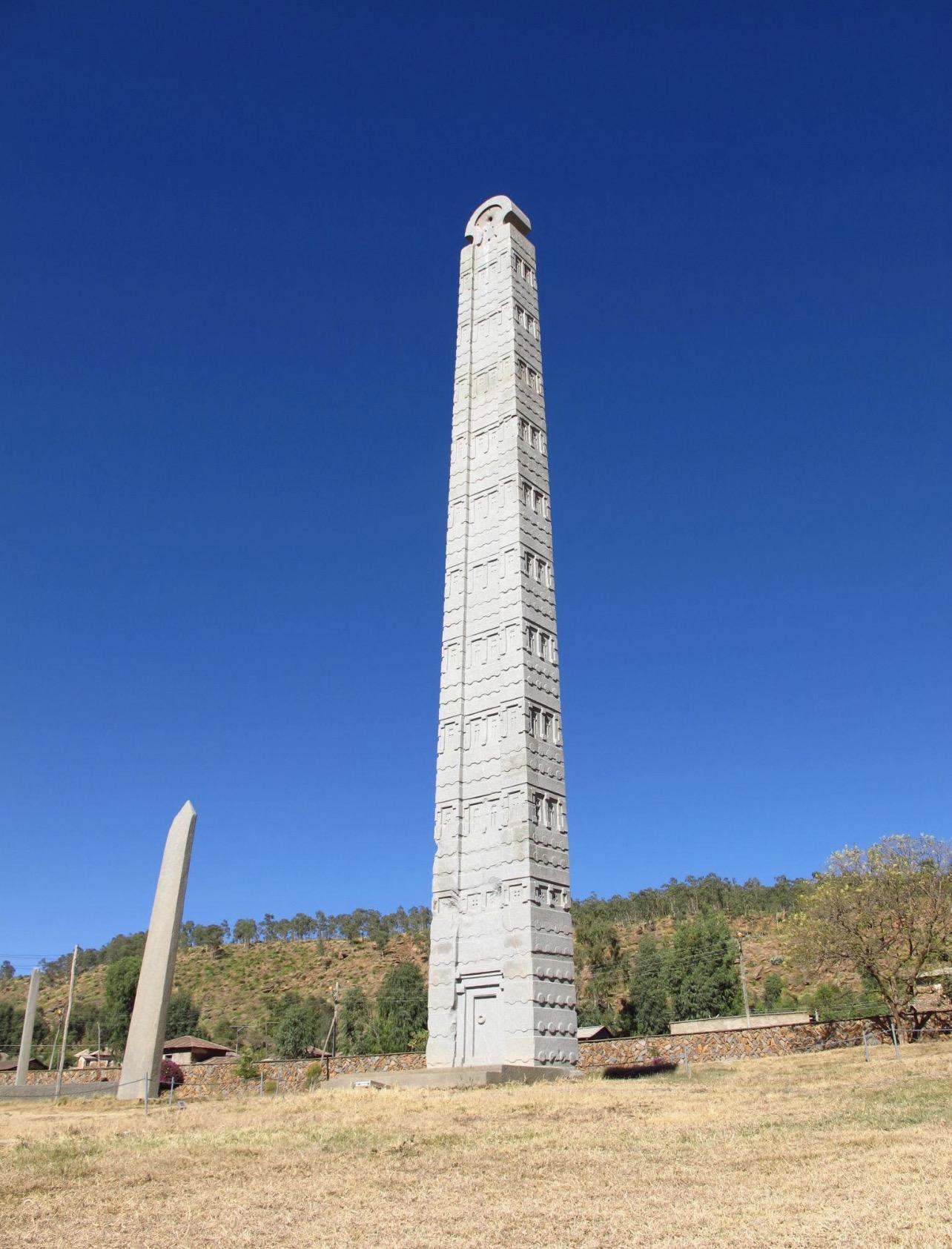
In the northern highlands of Ethiopia, in a quiet town known today as Aksum, massive stone giants rise from the earth like silent witnesses to a forgotten age. These towering monuments, carved from single pieces of granite, have stood for centuries. Some stretch as high as modern buildings, decorated with intricate designs that resemble doors and windows of ancient palaces.
They are known as the Aksum stelae, sometimes called obelisks. At first glance they appear like mysterious stone towers placed randomly in a field. But behind them lies one of the most fascinating stories in African history.
The Aksum stelae are not just stones. They are symbols of power, memory, engineering brilliance, and spiritual belief. They tell the story of the ancient Kingdom of Aksum, one of the greatest civilizations Africa has ever produced.
For centuries travelers and historians have stood before these monuments asking the same question. Who created them and how were they built in a time when modern machines did not exist.
The answers take us deep into a remarkable chapter of human history.
The Birth of the Kingdom of Aksum
Long before the rise of many famous empires of the world, the Kingdom of Aksum was already flourishing in what is now northern Ethiopia and Eritrea.
Historians believe Aksum began rising to power around the first century AD. Its location was perfect for trade. The kingdom sat between Africa, the Middle East, and Asia, connecting land routes and sea routes that carried goods across continents.
Merchants from Rome, Arabia, India, and Persia traded in Aksumite markets. Ivory, gold, spices, and precious stones moved through the kingdom.
As trade expanded, Aksum became wealthy and powerful.
Ancient historians such as the Persian writer Mani once described Aksum as one of the four greatest empires in the world alongside Rome, Persia, and China.
This was not an exaggeration.
The kingdom controlled major trade routes along the Red Sea and developed strong political and military power.
But what truly set Aksum apart was its culture of architecture and monumental construction.
This is where the famous stelae enter the story.
The Meaning of the Stelae
The word stela refers to a tall stone monument erected upright in the ground.
In Aksum these stelae were created primarily as grave markers for powerful kings, nobles, and important figures of the kingdom.
But they were far more than simple tombstones.
The stelae represented the authority and status of the person buried beneath them. The taller and more elaborate the monument, the greater the prestige of the individual.
Some stelae were plain stone slabs. Others were masterpieces of craftsmanship carved with detailed architectural designs.
These carvings made the stelae look like tall buildings.
You can see windows, doors, and decorative elements carved into the stone as if they were replicas of royal palaces.
Historians believe the carvings symbolized the homes of the dead in the afterlife.
It was the Aksumite way of honoring the departed and demonstrating their lasting influence.
Engineering a Stone Giant
One of the most astonishing aspects of the Aksum stelae is how they were made.
Some of these monuments weigh hundreds of tons.
The largest known stela ever carved in Aksum measured over thirty three meters tall and weighed more than five hundred tons. This enormous monument unfortunately collapsed while being erected in ancient times.
Even the standing stelae are enormous.
The famous Obelisk of Aksum stands about twenty four meters tall.
To understand the magnitude of this achievement imagine carving a skyscraper sized monument from a single block of stone using ancient tools.
The granite used for these stelae was quarried from nearby mountains.
Workers carved the monuments directly from the rock using iron tools.
After shaping the stone, the builders had to transport it several kilometers to the site where it would stand.
Historians believe they used a combination of wooden rollers, ropes, ramps, and human strength to move these giant stones.
Thousands of workers may have been involved in the process.
Once the monument reached the site, engineers carefully lifted it upright and lowered its base into a prepared hole in the ground.
The precision required for this task was extraordinary.
A single mistake could cause the entire structure to collapse.
The Stelae Field of Aksum
Today visitors to Aksum can walk through what is known as the Stelae Park.
This area contains dozens of monuments of different sizes.
Some are tall and decorated while others are smaller and simpler.
Together they form a monumental cemetery that reflects centuries of royal and noble burials.
Archaeologists have discovered that beneath many of the stelae lie elaborate underground tombs.
These tombs often include multiple chambers connected by stone corridors.
Inside them were once treasures, ceremonial objects, and the remains of the individuals honored by the monument above.
Although many tombs were looted long ago, the structures themselves still reveal the architectural sophistication of the Aksumite civilization.
The Rise of Christianity in Aksum
Another historical turning point in Aksum occurred in the fourth century.
During the reign of King Ezana, the kingdom adopted Christianity as its official religion.
This made Aksum one of the earliest Christian nations in the world.
According to historical records, a missionary named Frumentius played a key role in converting the king.
After embracing Christianity, King Ezana began placing Christian symbols on coins and monuments.
This shift in religion also influenced burial traditions.
Over time the construction of giant stelae gradually declined as Christian burial customs replaced older traditions.
However the monuments already built remained standing as reminders of the kingdom’s earlier beliefs.
Aksum and the Queen of Sheba
One of the most famous legends connected to Aksum is the story of the Queen of Sheba.
Ethiopian tradition claims that the Queen of Sheba ruled from this region thousands of years ago and traveled to visit King Solomon in Jerusalem.
According to Ethiopian history their union produced a son named Menelik who later became the first emperor of Ethiopia.
While historians debate the details of this legend, it has played a powerful role in Ethiopian culture and identity.
Aksum is often associated with this ancient royal heritage.
The presence of the great stelae reinforces the image of Aksum as a city of kings and powerful rulers.
The Fall of the Aksumite Empire
Like many great civilizations the Kingdom of Aksum eventually declined.
Historians believe several factors contributed to its fall around the seventh century.
Changes in trade routes reduced the kingdom’s economic power.
Environmental pressures such as deforestation and soil exhaustion also weakened the region.
At the same time the rise of Islamic empires altered trade patterns across the Red Sea.
As commerce shifted elsewhere, Aksum gradually lost its influence.
The once powerful empire faded into a quieter regional kingdom.
Yet the stelae remained standing.
They survived centuries of political change, invasion, and environmental challenges.
The Obelisk Taken to Italy
One of the most dramatic events in the modern history of the Aksum stelae occurred in the twentieth century.
In 1937 during the occupation of Ethiopia by Fascist Italy, the famous Obelisk of Aksum was removed from the site and transported to Rome.
It was erected in the Italian capital as a symbol of colonial conquest.
For decades Ethiopia demanded the return of the monument.
The obelisk had deep cultural and historical importance to the Ethiopian people.
Finally in 2005 after long negotiations the Italian government returned the monument to Ethiopia.
The massive stone was carefully transported back to Aksum in several pieces.
In 2008 it was reassembled and restored to its rightful place in the stelae field.
This event was celebrated as a powerful moment of cultural justice and national pride.
Why the Aksum Stelae Are Important to History
The Aksum stelae are among the most important historical monuments in Africa.
They demonstrate the advanced engineering and artistic abilities of an ancient African civilization.
They also reveal the political structure of the Aksumite kingdom where rulers used monumental architecture to express authority and legacy.
The carvings on the monuments provide clues about ancient Aksumite buildings and architectural styles.
Historians believe the designs represent multi story palaces that once stood in the city.
The stelae also help archaeologists understand burial practices and religious beliefs of the time.
Beyond their historical value, these monuments symbolize Ethiopia’s long and independent history.
Unlike many African regions that experienced centuries of colonial rule, Ethiopia maintained its sovereignty for most of its past.
The stelae stand as reminders that powerful and sophisticated civilizations flourished in Africa long before modern times.
A World Heritage Treasure
Because of their cultural and historical significance, the archaeological site of Aksum has been recognized as a UNESCO World Heritage Site.
Scholars from around the world continue studying the monuments and the ruins of the ancient city.
New discoveries are still being made about the kingdom’s architecture, trade networks, and political history.
Tourists who visit Aksum often describe a sense of awe when standing beside the towering stelae.
These stone giants have watched the passage of nearly two thousand years.
They have seen the rise and fall of empires, the spread of religions, and the transformation of the world.
Yet they remain standing.
Silent witnesses to one of Africa’s greatest civilizations.
The Legacy of Stone
Today the stelae of Aksum continue to inspire pride among Ethiopians and admiration from historians.
They remind us that history is not only written in books.
Sometimes it is carved into stone.
Each monument tells a story of ambition, power, faith, and human creativity.
Together they form one of the most extraordinary archaeological landscapes on earth.
In the quiet fields of Aksum the stone giants still reach toward the sky as if guarding the memory of a kingdom that once stood among the greatest in the world.
Their presence tells us something powerful.
Civilizations may rise and fall, but the marks they leave behind can speak across centuries.
And in Aksum those voices are written in stone.


Categorie
Leggi tutto
In the fast-paced world of online poker, staying one step ahead of your opponents is the key to long-term success. While strategy, patience, and experience still matter, technology is now playing a bigger role than ever before. One of the most exciting innovations in this space is the emergence of poker bots equipped with real-time tilt detection. Tilt is a well-known phenomenon in poker. It...

Daniel’s POV The moment I stepped into the school compound and saw Victoria across the courtyard, something in me slipped out of control. She was standing with two other teachers, holding a folder to her chest, laughing softly at something someone said. But all I saw were her lips. Those lips that had rested against mine on Saturday.Those lips that still lived on my couch...

Idia Aisien Idia Aisien is a Nigerian actress, television presenter, model, and entrepreneur known for her elegance, intelligence, and strong presence in the media and entertainment industry. She has built a reputation as a modern, multi talented personality in Nigeria. Early Life and Background Idia Aisien was born on July 4, 1991, in Lagos State, Nigeria. She hails from Edo State...

No one really knew her name. Not the neighbors, not the teachers, not even the classmates she passed every day in the crowded corridors of Maplewood High. People only called her “the quiet girl,” or whispered, “She never speaks.” Her name was Lila, but she never corrected anyone. Words, she believed, were dangerous things they could betray you, wound you, or vanish...

The National Agency for the Prohibition of Trafficking in Persons (NAPTIP) has confirmed that it issued a formal invitation to Nigerian singer Darlington Okoye, popularly known as Speed Darlington, in relation to online content linked to alleged sexual offences involving a minor. In a statement released on Friday by Hakeem Lawal, the agency’s Director of Information and Communications...