Sobre
Sobre
The Iron Discipline of Nigeria: The Life and Legacy of Tunde Idiagbon
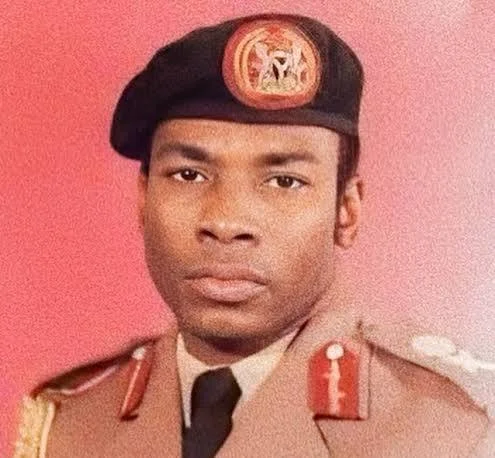
Tunde Idiagbon
Tunde Abdulbaki Idiagbon was one of the most disciplined and influential military officers Nigeria ever produced. Known for his rigid principles, quiet strength, and uncompromising commitment to order, Idiagbon played a defining role in one of the most controversial yet transformative periods in Nigeria’s history. To many Nigerians, his name still echoes with memories of queues at bus stops, punctuality enforced by soldiers, and a nationwide campaign that tried to force a culture of discipline into everyday life.
His life was not just the story of a soldier. It was the story of a man shaped by tradition, faith, education, and duty. From the quiet streets of Ilorin to the highest levels of military power in Nigeria, Idiagbon walked a path defined by loyalty, sacrifice, and a deep belief that a nation can only progress when its citizens embrace discipline.
Early Life and Background
Tunde Abdulbaki Idiagbon was born on September 14, 1943, in Ilorin, a historic city in present day Kwara State, Nigeria. Ilorin at the time was a city rich in Islamic culture and Yoruba heritage, a place where tradition, religion, and community values shaped the lives of young people.
He was born into a respected Muslim family that placed a strong emphasis on discipline, honesty, and education. His early upbringing was heavily influenced by Islamic teachings, which emphasized modesty, responsibility, and respect for authority. These values would later become the core of his personality and leadership style.
As a young boy, Idiagbon was known to be serious minded and focused. While many children enjoyed playful distractions, he often displayed maturity beyond his age. Teachers and community elders noticed his strong character early on.
His early education began in Ilorin where he attended primary school before moving on to secondary education. From his student days, he showed an interest in leadership and structure. He respected order and disliked chaos, a trait that would later define his career.
Joining the Nigerian Army
In the early 1960s Nigeria was still a young nation navigating its independence from British colonial rule. The military at the time offered opportunities for ambitious young men who wanted to serve their country and build strong careers.
In 1965, Tunde Idiagbon joined the Nigerian Army. His decision to become a soldier was not just about employment. It was about service and national duty.
He was sent to the Nigerian Defence Academy for training. The academy was known for its intense military discipline and rigorous academic standards. Cadets were trained to become officers capable of leadership under pressure.
Idiagbon excelled in the academy. His seriousness and discipline made him stand out among his peers. While others struggled with the demanding environment, Idiagbon seemed perfectly suited for it.
His instructors saw in him a man who valued structure and responsibility. He quickly gained a reputation for being calm, firm, and highly dependable.
The Nigerian Civil War
Not long after Idiagbon joined the military, Nigeria plunged into one of the darkest periods in its history. In 1967, the Nigerian Civil War began following the attempted secession of the eastern region as the Republic of Biafra.
Like many young officers of his generation, Idiagbon found himself at the center of a national crisis.
The war lasted from 1967 to 1970 and tested the strength of Nigeria’s military forces. It was a brutal conflict that reshaped the lives of millions of Nigerians.
During the war, Idiagbon served with dedication and courage. Though he was not known for flamboyant battlefield stories, his reputation grew as a disciplined officer who carried out his duties with precision.
The war ended in 1970 with the reintegration of the eastern region into Nigeria. For Idiagbon, the experience reinforced his belief that national unity required strong leadership and strict organization.
Rising Through the Military Ranks
After the civil war, Idiagbon continued his military career with determination. He attended several advanced military training programs both in Nigeria and abroad.
These training programs exposed him to international military strategies and leadership principles. He trained in India and Pakistan, where he studied command and staff responsibilities.
Each training opportunity sharpened his strategic thinking and leadership abilities.
Throughout the 1970s and early 1980s, Idiagbon steadily rose through the ranks of the Nigerian Army. He served in several important positions and gained the respect of fellow officers.
By the early 1980s, Nigeria was facing serious economic and political challenges. Corruption had become widespread. Government institutions were weak. Public confidence in leadership was declining.
Many military officers believed that drastic action was necessary to restore order.
The 1983 Military Coup
On December 31, 1983, the Nigerian military overthrew the civilian government of President Shehu Shagari.
The coup brought Major General Muhammadu Buhari to power as Head of State. Buhari chose Tunde Idiagbon as his Chief of Staff Supreme Headquarters, effectively making him the second most powerful man in the country.
While Buhari was the head of the military government, many observers believed Idiagbon was the driving force behind the administration’s policies.
He was known for his quiet but powerful presence. Unlike many politicians, he rarely spoke publicly or sought popularity.
Instead, he focused on implementing strict reforms.
The War Against Indiscipline
One of the most famous programs of the Buhari and Idiagbon government was the War Against Indiscipline.
This campaign was launched in 1984 and aimed to transform Nigerian society through strict enforcement of rules and moral standards.
The program focused on several areas including punctuality, respect for public order, environmental sanitation, and national pride.
Nigerians suddenly found themselves living in a society where soldiers supervised public behavior.
People were forced to line up properly at bus stops.
Civil servants who arrived late to work faced punishment.
Environmental sanitation days were strictly enforced.
Even littering in public places could lead to arrest.
For some Nigerians, the War Against Indiscipline felt harsh and authoritarian.
But for others, it was a refreshing attempt to restore order in a country that had become chaotic.
Idiagbon strongly believed that discipline was the foundation of national development. He believed that without order and responsibility, no society could progress.
His policies were strict, sometimes controversial, but always consistent.
Economic Reforms and Anti Corruption Measures
Beyond social discipline, the Buhari and Idiagbon government also launched a campaign against corruption.
Politicians from the previous civilian government were arrested and tried by military tribunals.
Many were convicted and given prison sentences.
The government also introduced policies to stabilize Nigeria’s struggling economy.
Import restrictions were introduced to reduce dependence on foreign goods.
Public spending was tightened.
Foreign exchange controls were implemented.
These measures were intended to protect Nigeria’s economy during a period of falling oil prices and economic crisis.
However, the policies also caused hardship for many Nigerians. Businesses struggled, and some citizens felt the government’s approach was too rigid.
Despite criticism, Idiagbon remained committed to his vision of reform.
His personal lifestyle reflected his beliefs. He was known for living modestly and rejecting corruption.
Unlike many powerful officials, there were no major scandals associated with his name.
The 1985 Coup and Fall from Power
On August 27, 1985, while Idiagbon was on a pilgrimage to Mecca in Saudi Arabia, another military coup took place in Nigeria.
The coup was led by General Ibrahim Babangida.
The Buhari government was overthrown.
Many analysts believe Idiagbon’s absence from the country made the coup easier to execute. His reputation for strict control might have made it harder for conspirators to succeed if he had been present.
After the coup, Idiagbon was arrested upon his return to Nigeria.
He and Buhari were both detained by the new military government.
For a man who had once been one of the most powerful figures in Nigeria, the fall from power was sudden and dramatic.
Years in Detention
Idiagbon spent several years in detention under the Babangida regime.
Despite the humiliation and loss of power, he remained calm and dignified.
Those who interacted with him during this period described him as reflective but not bitter.
Eventually he was released from detention and allowed to return to civilian life.
Unlike many former leaders, he did not attempt to return to politics or seek revenge.
Instead, he quietly resumed life with his family.
Life After the Military Government
After his release, Idiagbon lived a relatively quiet life.
He remained respected in military and political circles but avoided the spotlight.
He continued to advocate for discipline, accountability, and strong leadership.
Though he was no longer in power, many Nigerians still remembered his role in enforcing order during a turbulent time in the country’s history.
Some critics viewed him as too rigid and authoritarian.
But supporters believed he represented integrity and courage in leadership.
Death and Legacy
Tunde Idiagbon passed away on March 24, 1999, at the age of 55.
His death came just weeks before Nigeria returned to democratic rule after years of military government.
Many Nigerians reflected on his life with mixed emotions.
Some remembered the strict punishments and military control of the War Against Indiscipline.
Others remembered a rare leader who appeared immune to corruption and deeply committed to national reform.
His legacy remains one of the most debated in Nigerian history.
For some, he represents the possibility that Nigeria once had leaders willing to sacrifice popularity for discipline and reform.
For others, his era is a reminder of the dangers of authoritarian rule.
Yet regardless of opinion, few deny that Tunde Idiagbon was a unique figure in Nigeria’s political and military history.
He was not flamboyant.
He was not charismatic in the traditional sense.
But he was firm, focused, and deeply committed to his vision of national order.
In a country often defined by political noise and dramatic personalities, Idiagbon stood apart as a quiet enforcer of discipline.
His story remains a powerful chapter in Nigeria’s journey, a reminder that leadership sometimes comes in the form of silent strength and unwavering conviction.

Categorias
Leia mais
Ayo Adesanya Ayo Adesanya is a Nigerian actress, filmmaker, and entrepreneur best known for her work in Yoruba and English language Nollywood films. Born on August 11, 1969, in Ibadan, Oyo State, Nigeria, she became one of the prominent faces of Nollywood during the late 1990s and early 2000s. Early Life and Education Ayo Adesanya was born and raised in Ibadan, where she spent...

A retired Nigerian Army Major General, Danjuma Hamisu Ali-Keffi, has called for a comprehensive investigation into the release of 48 terrorism financing suspects, including an individual identified by foreign intelligence agencies as a senior Boko Haram leader. Ali-Keffi, who was appointed in October 2020 by former President Muhammadu Buhari to lead the covert Operation Service Wide (OSW),...
Apples are among the most popular and nutritious fruits in the world. They have been cultivated for thousands of years and are widely known for their health benefits, refreshing taste, and versatility. The saying “an apple a day keeps the doctor away” became popular because apples contain many nutrients that support overall health. Below is a clear explanation of the...

Episode Three: Far From Home That night, reality finally caught up with me. School had distracted me during the day, but once night fell, there was nothing left to hide behind. The compound grew quieter, yet my mind became louder. Different voices, different smells, different air nothing felt like Oyo State. I lay on the mat beside my brother. He was silent. Too silent. I wanted to ask...

The Crown of Queens My name is Toke. If you are reading this and my WhatsApp is no longer reachable, do not look for me. Do not pray for me. Just learn. Because greed does not knock loudly. It whispers. I am a Personal Assistant to one of the most talked‑about women in Lagos society Madam Rose. Influencer. Oil money. Soft life evangelist. The kind of woman bloggers call "self‑made" even...