About
About
Alex Ekwueme The Scholar Statesman Who Helped Shape Nigeria’s Democracy
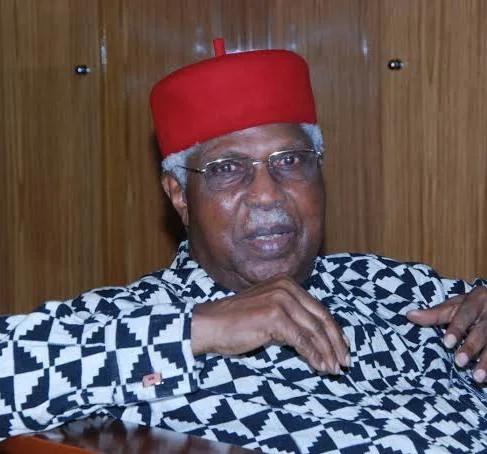
Alex Ekwueme
Alex Ifeanyichukwu Ekwueme was one of the most respected intellectuals and statesmen in Nigeria’s political history. His life was a remarkable journey that blended academic brilliance, professional excellence, and patriotic service to Nigeria. From humble beginnings in a small town in Anambra State to becoming Nigeria’s first elected Vice President during the Second Republic, Ekwueme’s story is one of vision, discipline, and unwavering dedication to nation building.
Early Life and Background
Alex Ekwueme was born on October 21, 1932, in Oko, a town in present day Anambra State in southeastern Nigeria. Oko was a traditional Igbo community where values such as hard work, respect, and communal responsibility were deeply rooted.
His parents recognized his intelligence early in life and encouraged him to pursue education with seriousness. As a young boy, Ekwueme showed exceptional curiosity and discipline. Teachers quickly noticed that he was not just intelligent but also deeply thoughtful.
Growing up in colonial Nigeria meant that opportunities were limited, but young Alex believed education could open doors beyond his village. This belief shaped the rest of his life.
Education and Academic Excellence
Ekwueme’s academic journey was extraordinary and remains one of the most impressive educational records among Nigerian leaders.
He began his early schooling in eastern Nigeria and later attended Government College, Umuahia. The school was known for producing brilliant Nigerian leaders and intellectuals. At Government College, Ekwueme distinguished himself academically and developed strong leadership qualities.
After completing his secondary education with outstanding results, he secured opportunities to study abroad. At a time when very few Nigerians could access higher education overseas, Ekwueme traveled to the United States to continue his studies.
In the United States, he attended the University of Washington where he studied Architecture and Urban Planning. His academic performance was exceptional.
Ekwueme did not stop with a single degree. He went on to earn multiple academic qualifications from different institutions. His educational achievements included degrees in Architecture, Sociology, History, Philosophy, and Law. This made him one of the most academically accomplished political leaders in Nigerian history.
Among the institutions where he studied were the University of Washington, the University of London, and other reputable academic institutions. His wide academic exposure gave him a broad understanding of society, governance, culture, and development.
By the time he returned to Nigeria, Ekwueme was not just an architect. He was a scholar with deep knowledge across several disciplines.
Professional Career
Before entering politics, Alex Ekwueme built a successful professional career.
He established an architectural firm and became one of the respected architects in Nigeria. His firm was involved in several important building projects across the country.
Ekwueme was also involved in education and community development. He founded educational institutions and supported initiatives that promoted learning and intellectual growth.
His professional success allowed him to live comfortably, but he believed that educated individuals had a responsibility to serve society. This belief eventually pushed him toward politics.
Entry into Politics
Nigeria gained independence from Britain in 1960. The early years of the country were filled with hope but also political challenges.
After the Nigerian Civil War ended in 1970, many intellectuals began discussing how to rebuild the country and strengthen democracy.
Ekwueme became increasingly involved in political discussions and national debates. His calm personality, intellectual depth, and balanced views made him a respected voice among political leaders.
In the late 1970s, Nigeria prepared to return to civilian rule after years of military government. Political parties began to form, and many Nigerians were eager for democratic governance.
Ekwueme joined the National Party of Nigeria, one of the major political parties during the transition period.
The 1979 Election and Becoming Vice President
In 1979, Nigeria held a historic presidential election that marked the beginning of the Second Republic.
Shehu Shagari emerged as the presidential candidate of the National Party of Nigeria. Alex Ekwueme was chosen as his running mate.
The Shagari Ekwueme ticket represented a balance between different regions of the country. Shagari came from northern Nigeria while Ekwueme represented the southeastern region.
When the election was concluded, Shehu Shagari won the presidency and Alex Ekwueme became Nigeria’s first elected Vice President.
This moment marked a historic milestone in Nigerian politics.
Vice Presidency and Contributions
From 1979 to 1983, Alex Ekwueme served as Vice President of Nigeria.
Although the Nigerian constitution at the time gave limited executive power to the Vice President, Ekwueme played an important advisory role within the government.
He chaired several government committees and participated in national policy discussions.
One of his notable intellectual contributions was his proposal for a six geopolitical zone structure in Nigeria. This idea was designed to promote fairness, balance, and unity in the country.
Today, Nigeria is commonly divided into six geopolitical zones for administrative and political considerations. Many historians trace the origin of this structure to Ekwueme’s ideas.
He believed that a diverse country like Nigeria needed a fair framework that allowed all regions to feel represented.
Military Coup and Detention
The Second Republic ended abruptly on December 31, 1983, when the Nigerian military took over power through a coup.
The military government accused several politicians of corruption and mismanagement. Many leaders of the civilian government were arrested.
Alex Ekwueme was among those detained and investigated.
Despite the political tensions of the time, many Nigerians believed that Ekwueme maintained a reputation for integrity and intellectual honesty.
His calm personality and dignified conduct during that difficult period earned him even more respect.
After some time, he was eventually released and returned to private life.
Role in the Fight for Democracy
The years that followed were dominated by military rule in Nigeria. However, many Nigerians continued to push for a return to democracy.
Alex Ekwueme became one of the prominent voices advocating for democratic governance.
In the 1990s, during the military regime of General Sani Abacha, Ekwueme joined other political leaders and intellectuals in calling for political reforms.
He was a key member of a group known as the G34. This group of thirty four prominent Nigerians demanded a transition to democratic rule.
The G34 movement later evolved into the Peoples Democratic Party, which became one of Nigeria’s largest political parties.
Although Ekwueme later contested for the presidential ticket of the party, he lost the nomination to Olusegun Obasanjo.
Despite the loss, he remained committed to the democratic process and continued supporting national unity.
Personality and Leadership Style
Alex Ekwueme was widely known for his humility, calm temperament, and intellectual depth.
Unlike many politicians who thrived on loud speeches and dramatic politics, Ekwueme preferred thoughtful dialogue and policy driven discussions.
He believed that leadership should be guided by knowledge, integrity, and long term planning.
Many Nigerians described him as a gentleman politician.
His life demonstrated that it was possible to participate in politics without abandoning dignity and moral values.
Family Life
Alex Ekwueme was married to Beatrice Ekwueme. Their marriage was built on mutual respect and support.
His family life was relatively private compared to many public figures. However, those close to him often described him as a devoted husband and father.
He believed that strong family values were essential for building a stable society.
Achievements and Recognition
Throughout his life, Alex Ekwueme received several honors and recognitions for his contributions to Nigeria.
He was widely respected in academic circles, professional institutions, and political communities.
His role in shaping Nigeria’s democratic development earned him recognition as one of the country’s elder statesmen.
Many universities and organizations honored him for his contributions to education, architecture, and national development.
Later Years
In his later years, Ekwueme stepped back from active politics but remained an important voice in national discussions.
Political leaders, scholars, and journalists frequently sought his opinions on governance and democracy.
His views were respected because they were often thoughtful, balanced, and free from personal ambition.
He spent much of his later life supporting educational initiatives and mentoring younger leaders.
Passing and Legacy
Alex Ekwueme passed away on November 19, 2017, at the age of 85.
His death was widely mourned across Nigeria. Political leaders from different parties paid tribute to him as a statesman who placed national interest above personal gain.
Many Nigerians remembered him as a bridge builder who believed strongly in unity and fairness.
His legacy continues to influence discussions about federalism, national unity, and democratic governance in Nigeria.
Lessons from His Life
Alex Ekwueme’s life offers several important lessons.
Education can be a powerful tool for leadership. His wide academic background helped him approach governance with knowledge and vision.
Integrity in public service is possible. Even his critics often acknowledged his reputation for honesty.
Politics can be practiced with dignity. Ekwueme demonstrated that intellectual leadership and calm dialogue can be powerful tools for national progress.
Conclusion
The story of Alex Ekwueme is the story of a scholar who entered politics not for personal power but for national development.
From the classrooms of prestigious universities to the highest levels of Nigerian government, his life was guided by knowledge, humility, and service.
He helped shape the political structure of modern Nigeria and contributed to the restoration of democracy during difficult times.
Years after his passing, his name continues to stand as a symbol of thoughtful leadership and principled politics.
Alex Ekwueme remains one of Nigeria’s most respected statesmen, remembered not just for the offices he held but for the ideas and values he brought into public life.


Categories
Read More
Sunday Adelaja Sunday Adelaja is a Nigerian-born pastor, author, and public speaker best known as the founder and senior pastor of The Embassy of the Blessed Kingdom of God for All Nations in Kyiv, Ukraine. He is widely known for building what has been described by his church and by international reporting as one of Europe’s largest Pentecostal ministries. Early Life and Background...
Yomi Fash Lanso Yomi Fash Lanso is a veteran Nigerian Nollywood actor, director, producer, and master of ceremonies widely known for his roles in Yoruba language films. For decades he has been one of the most respected and recognizable faces in the Yoruba movie industry. His powerful voice, expressive acting, and ability to interpret complex characters have made him a favorite among...
Bolanle Ninalowo Bolanle Ninalowo, popularly known as Nino B, is a Nigerian actor, film producer, and entrepreneur known for his charismatic screen presence and muscular physique. Over the years, he has built a strong reputation in Nollywood, particularly in Yoruba and English-language films. Early Life and Background Bolanle Ninalowo was born on May 7, 1980, in Ikorodu, Lagos...

The U.S. President Donald Trump’s recent warning to Iran has raised more questions than answers. While he insists the United States had “nothing to do” with Israel’s deadly strikes on Iranian nuclear and intelligence sites, his aggressive rhetoric tells a different story. By openly threatening Iran with “the full strength and might” of the U.S. military,...
Abraham Lincoln: Biography From Log Cabin to the Weight of a Broken Nation Introduction Abraham Lincoln is remembered as the president who preserved the United States during its greatest internal crisis and ended the institution of slavery in law. Yet his life was far more complicated than a simple heroic legend. He was born in poverty, largely self educated, haunted by depression, ambitious...