Environ
Bola Ige The Courageous Voice of Justice in Nigeria’s Political History
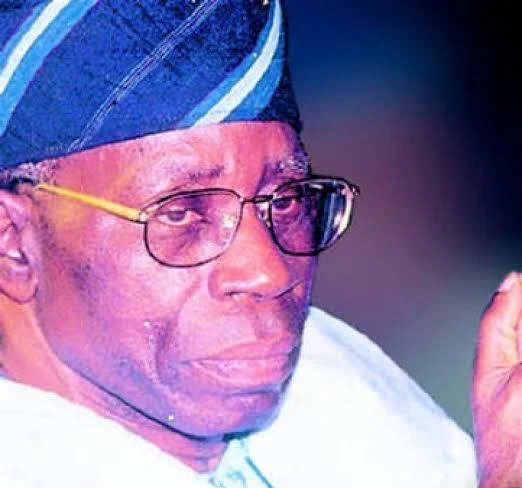
Bola Ige
In the long and sometimes turbulent journey of Nigeria’s political history, a few names shine brightly for their courage, intellect, and unwavering commitment to justice. One of those names is Chief James Ajibola Idowu Ige, widely known as Bola Ige. He was more than just a politician. He was a fearless advocate of democracy, a brilliant lawyer, a powerful orator, and a man whose life reflected both the hope and struggles of Nigeria’s political evolution.
Bola Ige’s story is one of ambition, resilience, public service, and tragic loss. His journey from a small town in southwestern Nigeria to becoming one of the most respected political voices in the country remains an inspiring chapter in Nigerian history.
Early Life and Background
Bola Ige was born on September 13, 1930, in Esa Oke, a historic town in present day Osun State, Nigeria. His parents were devoted Christians and believed strongly in the value of education and discipline. Growing up in a modest but principled household, young Bola Ige quickly displayed intelligence and curiosity.
From a young age he showed signs of exceptional brilliance. Teachers and community elders noticed his sharp memory, strong command of language, and natural leadership abilities. Education was highly valued in the Yoruba culture, and his family encouraged him to pursue knowledge with determination.
He attended local schools before gaining admission into Ibadan Grammar School, one of the most prestigious secondary schools in Nigeria at the time. His years at Ibadan Grammar School helped shape his intellectual confidence and leadership skills. He was known among his classmates for his sharp arguments, eloquent speech, and strong opinions about politics and justice.
Even as a teenager, Bola Ige was fascinated by political discussions and the future of Nigeria, which was then under British colonial rule.
Journey to Higher Education
After completing his secondary education with distinction, Bola Ige traveled abroad to further his studies. Like many brilliant Nigerian students of his generation, he went to the United Kingdom where he studied law.
He attended the University College London and later trained at the prestigious Lincoln’s Inn where he qualified as a barrister. His time in Britain exposed him to global political ideas and democratic principles. It was also during this period that he developed a deeper understanding of law, governance, and the importance of civil rights.
While studying abroad, Bola Ige remained deeply interested in the political developments happening in Nigeria as the country moved closer to independence. He believed that educated Nigerians had a duty to return home and contribute to nation building.
After completing his studies, he returned to Nigeria and began practicing law. His sharp legal mind and powerful courtroom presence quickly earned him recognition.
Entry into Politics
Although he was successful as a lawyer, Bola Ige felt a strong calling toward politics. Nigeria was entering a new era as independence approached, and many young intellectuals believed they could help shape the nation’s future.
He joined the Action Group, one of the most influential political parties in Nigeria during the late colonial period. The party was led by the legendary Yoruba leader Chief Obafemi Awolowo.
Awolowo quickly noticed Bola Ige’s intelligence and eloquence. Their relationship grew into one of mentorship and political partnership. Bola Ige became one of Awolowo’s trusted political allies and played an active role in the party’s activities.
His speeches were powerful and persuasive. He had a unique ability to communicate complex political ideas in simple language that ordinary people could understand. Because of his energetic style and fearless opinions, many supporters began to admire him as a bold political voice.
Rise in Nigerian Politics
After Nigeria gained independence in 1960, Bola Ige continued to grow in political influence. He served in various roles within the Western Region government and gained experience in governance and administration.
During this period Nigeria faced political instability and military interventions. Like many civilian politicians, Bola Ige experienced the ups and downs of Nigeria’s unpredictable political landscape.
Despite the challenges, he remained committed to democratic values. He strongly believed that Nigeria could only progress through responsible leadership, rule of law, and respect for citizens’ rights.
His loyalty to democratic ideals became one of the defining features of his political career.
Governor of Oyo State
One of the most important chapters in Bola Ige’s life began in 1979 when Nigeria returned to civilian rule after years of military government.
That year he contested for the position of Governor of Oyo State under the political platform of the Unity Party of Nigeria, the party founded by Obafemi Awolowo.
Bola Ige won the election and became Governor of Oyo State. His victory marked the beginning of a transformative period for the state.
As governor, Bola Ige focused heavily on education, infrastructure, and social welfare. He believed strongly in the philosophy that education was the foundation of development. His administration invested in schools and educational programs across the state.
He also introduced policies aimed at improving transportation and public services. Roads were constructed and urban development projects were launched.
His leadership style combined intellectual vision with practical governance. He was known for speaking directly to the people and explaining government policies openly.
Many citizens appreciated his transparency and his commitment to progressive policies.
The Famous “Penkelemes” Expression
One of the moments that made Bola Ige widely remembered in Nigerian political history occurred during the political crisis in Oyo State in the early 1980s.
During a heated political dispute, he described the situation as penkelemes, a Yoruba styled pronunciation of the English phrase peculiar mess.
The expression quickly became popular across Nigeria. Newspapers, radio stations, and citizens began using the word penkelemes to describe political confusion or chaos.
The phrase became permanently associated with Bola Ige’s political legacy and demonstrated his unique ability to blend humor with serious political commentary.
Life After the Governorship
Bola Ige served as governor until 1983 when Nigeria experienced another military coup that ended the Second Republic.
After the military takeover, many politicians returned to private life. Bola Ige resumed his legal practice and remained active in national discussions about democracy and governance.
Even during periods of military rule, he remained outspoken about the importance of democratic government.
His courage and honesty sometimes brought him into conflict with military authorities, but he never abandoned his principles.
He continued to write articles, deliver speeches, and mentor younger political leaders.
Return to National Politics
When Nigeria returned to civilian rule again in 1999, Bola Ige re entered active national politics. His experience and reputation made him one of the most respected elder statesmen in the country.
He was appointed Minister of Power and Steel by President Olusegun Obasanjo. In this role he worked to improve Nigeria’s electricity sector, which had long struggled with challenges.
Later he became the Minister of Justice and Attorney General of the Federation.
As Attorney General, Bola Ige focused on strengthening the rule of law and promoting judicial reforms. He believed strongly that Nigeria needed a strong and independent legal system to sustain democracy.
His tenure brought renewed attention to legal accountability and constitutional governance.
Personality and Intellectual Strength
Bola Ige was known for his remarkable intelligence and eloquence. He spoke English and Yoruba with extraordinary fluency and often quoted literature, philosophy, and law during his speeches.
His intellectual depth made him one of the most respected thinkers in Nigerian politics.
He was also known for his sense of humor and colorful expressions. Even during serious political debates he could introduce witty remarks that made people laugh while still delivering powerful arguments.
Many younger politicians admired him not only for his achievements but also for his courage to speak the truth regardless of political consequences.
Family Life
Bola Ige was married to Chief Justice Atinuke Ige, a respected jurist who later served as a Justice of the Court of Appeal in Nigeria.
Their marriage was known for its strong intellectual partnership. Both were accomplished legal professionals who shared a commitment to justice and public service.
The couple had children, including Muyiwa Ige who later became involved in politics and public service.
Tragic Assassination
The life of Bola Ige came to a shocking and tragic end on December 23, 2001.
He was assassinated at his residence in Ibadan, Oyo State. The news of his death sent shockwaves across Nigeria and the international community.
Many Nigerians were deeply saddened and outraged by the loss of a respected statesman. Political leaders, civil society groups, and ordinary citizens mourned the passing of a man who had dedicated his life to the pursuit of justice and democracy.
His assassination remains one of the most controversial political killings in Nigeria’s modern history.
Legacy and National Impact
Even after his death, Bola Ige’s influence continues to shape Nigerian political discourse.
He is remembered as a fearless defender of democracy and the rule of law. His speeches, writings, and political ideals continue to inspire discussions about leadership and governance.
In Yoruba political history, he is often described as one of the most brilliant political minds of his generation.
Many Nigerians still recall his courage during difficult political periods and his refusal to compromise his principles.
His life serves as a reminder that true leadership requires integrity, intellectual strength, and commitment to the public good.
Bola Ige’s story is not just the story of a politician. It is the story of a man who believed deeply in justice, democracy, and the power of ideas.
From the quiet town of Esa Oke to the national stage of Nigerian politics, he rose through determination, intellect, and courage.
Though his life ended tragically, his voice continues to echo through Nigeria’s history.
His words, ideas, and example remain part of the nation’s political heritage, reminding future generations that leadership must always stand on the side of truth and justice.

Catégories
Lire la suite
Once a viral sensation after her surprise appearance in a photo shoot with British-Nigerian artist Tinie Tempah, Olajumoke Orisaguna is stepping back into the spotlight — this time, with a powerful story of resilience, growth, and redemption. Following the collapse of her marriage and a quiet spell away from public view, the former bread seller is now rebuilding her life and speaking...

Time lost its meaning as I sat there, pressed against the cold wall, my body shaking uncontrollably. Every second felt stretched, heavy with fear. The sounds of the fight echoed through the corridor shouts, footsteps, the terrifying clash of weapons. I could hear my own breathing, fast and uneven, as if my chest was struggling to keep up with my heart. I tightened my grip on my school...

Olu Jacobs Olu Jacobs is one of Nigeria’s most respected and celebrated actors, widely regarded as a pioneer of the country’s modern film and television industry. With a career spanning over five decades, he has earned legendary status through his powerful screen presence, deep voice, and ability to embody authority figures, kings, fathers, villains, and wise elders. His...

Healing did not arrive like a miracle. It crept in quietly, disguised as routine, discipline, and small acts of courage I didn’t know I was capable of. Some mornings, I woke up strong. I made my bed, took a shower, and reminded myself that I was still here, still breathing. Other mornings, I lay staring at the ceiling, my chest heavy with memories I didn’t invite...

Daniel Kolenda Early Life Daniel Kolenda was born on September 6, 1981, in the United States. He grew up in a Christian home where faith was not just a belief but a daily way of life. From a young age, Daniel was surrounded by teachings about God, prayer, and service. As a child, he was curious and thoughtful. He often asked deep questions about life and purpose. While other children...