О нас
О нас
Joseph Sarwuan Tarka The Tiv Leader Who Stood for His People and Shaped Nigeria’s Early Politics
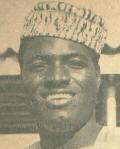
Joseph Sarwuan Tarka
Joseph Sarwuan Tarka was one of the most influential political figures to emerge from Nigeria’s Middle Belt region during the country’s early years of political awakening. Known for his courage, determination, and deep commitment to the rights of minority groups, Tarka became a powerful voice for the Tiv people and other communities that felt overshadowed in the political structure of Nigeria during the colonial and early post independence era.
His life was a journey of leadership, struggle, ambition, controversy, and national service. From humble beginnings in rural Benue to becoming a federal minister and one of the most recognizable politicians in Nigeria, Joseph Sarwuan Tarka left behind a legacy that still echoes in the political history of the country.
Early Life and Background
Joseph Sarwuan Tarka was born on July 10, 1932 in Gboko, a town in present day Benue State, Nigeria. He belonged to the Tiv ethnic group, one of the largest ethnic groups in Nigeria’s Middle Belt region.
Growing up in colonial Nigeria, young Tarka experienced firsthand the social and political dynamics of a country under British rule. His early years were shaped by the cultural traditions of the Tiv people, a community known for its strong sense of identity, farming heritage, and deep communal values.
The Tiv society at the time was largely rural, with agriculture serving as the main source of livelihood. Like many young boys in his community, Tarka was exposed early to the responsibilities of family and community life.
However, unlike many of his peers, he showed a strong interest in education and leadership from a young age.
Education and Early Career
Joseph Sarwuan Tarka attended Native Authority schools in Benue Province where he received his early education. These schools were part of the colonial administration’s effort to educate Nigerians while maintaining indirect rule through traditional authorities.
Tarka proved to be an intelligent and confident student. His teachers quickly noticed his leadership qualities and his ability to articulate ideas clearly.
After completing his early education, he trained as a teacher and began working in the education sector. Teaching at the time was one of the most respected professions among educated Nigerians.
But even as a teacher, Tarka’s interests extended beyond the classroom. He was deeply concerned about the political future of his people and the place of minority groups within Nigeria.
These concerns would soon push him into the world of politics.
Entry into Politics
The 1950s were a time of intense political activity in Nigeria. The country was moving steadily toward independence, and political parties were forming across different regions.
However, most of these parties were dominated by major ethnic groups.
In the Northern Region, politics was largely controlled by the Northern People’s Congress led by Sir Ahmadu Bello, the Sardauna of Sokoto. Many minority communities in the Middle Belt felt marginalized under this political arrangement.
Joseph Sarwuan Tarka emerged as one of the strongest voices challenging this system.
He became involved with the United Middle Belt Congress, a political movement created to represent the interests of minority groups in the Northern Region.
The movement aimed to ensure that the Middle Belt people had political representation and protection from domination by larger ethnic groups.
Tarka quickly became one of the leading figures of the party. His bold speeches, fearless criticism of political injustice, and ability to mobilize grassroots support made him extremely popular among the Tiv people.
Rise as a Political Leader
As the leader of the United Middle Belt Congress, Joseph Sarwuan Tarka campaigned vigorously for the creation of a Middle Belt state.
At the time, Nigeria was divided into three large regions dominated by major ethnic groups. Tarka believed that this structure left minority groups politically vulnerable.
He argued that the Middle Belt people deserved their own region where they could govern themselves and protect their cultural identity.
This demand for minority rights made Tarka both admired and controversial.
Supporters saw him as a fearless defender of oppressed communities.
Critics accused him of challenging the political dominance of powerful northern elites.
Despite opposition, Tarka continued to grow in influence.
He won elections into regional political institutions and became widely known across Nigeria.
Role During Nigeria’s First Republic
When Nigeria gained independence in 1960, Joseph Sarwuan Tarka was already a prominent political figure.
The First Republic brought new opportunities and new challenges for Nigerian politicians.
Tarka continued to advocate for the rights of minority groups and for the creation of new states that would give them greater autonomy.
During this period, political tensions were high across the country. Ethnic rivalries, regional competition, and struggles for power created instability.
Despite these challenges, Tarka remained committed to democratic politics.
He built alliances with leaders from other minority groups and became an important voice in national discussions about federalism and representation.
The Tiv Crisis
One of the most dramatic chapters in Joseph Sarwuan Tarka’s political career was the Tiv crisis of the early 1960s.
Tensions between the Tiv people and the Northern regional government escalated into violent conflicts.
Many Tiv leaders accused the regional authorities of political oppression and unfair treatment.
Joseph Tarka became one of the central figures in the struggle.
The crisis eventually led to widespread unrest in Tiv areas, and the federal government had to intervene to restore order.
This period was extremely difficult for Tarka and his supporters.
Yet it also strengthened his reputation as a leader willing to stand up for his people even in the face of political pressure.
The Military Era and Return to National Politics
Nigeria’s First Republic ended in 1966 when the military took power after a coup.
Like many politicians of his generation, Tarka had to adapt to the new political environment.
For a period, civilian politicians had limited influence.
However, when the military government later began to include civilians in administrative roles, Joseph Sarwuan Tarka returned to national prominence.
He was appointed as the Federal Commissioner for Transport and later served as the Federal Commissioner for Communications during the administration of General Yakubu Gowon.
In these roles, Tarka contributed to national development projects, particularly in transportation and communication infrastructure.
His appointment demonstrated that despite earlier controversies, he remained an important figure in Nigerian politics.
Controversy and Political Challenges
Joseph Sarwuan Tarka’s political career was not without controversy.
In the mid 1970s, allegations of corruption were raised against him.
These allegations became a major national issue and eventually led to his resignation from the federal cabinet.
The situation attracted widespread media attention and became one of the most talked about political scandals of the time.
Despite the controversy, many of his supporters believed that his contributions to Nigerian politics and to the Middle Belt cause could not be erased.
The incident marked a turning point in his career but did not completely remove him from political relevance.
Later Years
After leaving the federal cabinet, Joseph Sarwuan Tarka continued to remain active in political discussions.
He remained a respected figure in the Middle Belt and among Tiv leaders.
His earlier efforts for minority rights and state creation eventually became part of Nigeria’s evolving political structure.
Over time, the country moved from three regions to multiple states, a development that reflected many of the ideas Tarka had advocated decades earlier.
His vision of giving minority communities greater political representation gradually became reality.
Death
Joseph Sarwuan Tarka died on March 30, 1980.
His death marked the end of a remarkable political life that spanned some of the most critical years in Nigeria’s history.
Across Benue State and the wider Middle Belt region, many people mourned the loss of a man they considered a champion of their political rights.
Legacy
Today, Joseph Sarwuan Tarka is remembered as one of the most significant political leaders from Nigeria’s Middle Belt.
His legacy is closely tied to the struggle for minority rights and political inclusion in Nigeria.
The institution known as the Joseph Sarwuan Tarka University of Agriculture in Makurdi was named in his honor, reflecting the respect he earned as a historical figure.
Historians often describe him as a passionate advocate for justice and fairness in Nigeria’s early political system.
His speeches, activism, and leadership helped shape national debates about federalism, minority protection, and state creation.
Although his career experienced controversy and challenges, Joseph Sarwuan Tarka remains an important figure in the story of Nigeria’s political development.
His life serves as a reminder of a generation of leaders who navigated the difficult transition from colonial rule to independence and worked to build a more inclusive nation.
From a young teacher in rural Benue to a national political leader, Joseph Sarwuan Tarka’s journey was marked by courage, conviction, and a relentless belief that every community deserved a voice in the Nigerian federation.


Категории
Больше
Olamide Gbenga Adedeji Olamide (born Olamide Gbenga Adedeji, 15 March 1989) is a Nigerian rapper, singer, songwriter, and record executive from Bariga, Lagos. He’s widely regarded as one of the most influential modern Nigerian artists, famous for blending Yoruba street culture, rap, and Afrobeats into a sound that shaped the “street pop” era and helped launch a new generation...

I opened my wife’s Bible to read Psalm 91 for protection. Instead, I found my death sentence. The Bible slipped from my hands and hit the tiled floor with a dull thud. My knees buckled. I didn’t even remember running only that seconds later I was in the guest room, heart slamming against my ribs, locking the door with fingers that refused to cooperate. Now she was outside....

Worried parents across Nigeria are sounding the alarm as more children fall victim to online predators, cyberbullies, and dangerous social media challenges.With smartphones becoming common even for young kids, many are unknowingly exposed to:🔹 Fake online friendships🔹 Manipulation by predators🔹 Harmful content🔹 Secret chats and risky platforms🔹 Cyberbullying & inappropriate messages...

Introduction The history of Ethiopia is one of the oldest and most remarkable in the world. Often referred to as the cradle of humanity, Ethiopia holds a unique place not only in African history but in global civilization. Unlike most African nations, Ethiopia was never permanently colonized, and it developed a rich cultural, religious, and political tradition that stretches back thousands of...
Qing Madi Qing Madi, whose real name is Chimamanda Pearl Chukwuma, is a Nigerian singer and songwriter known for her soulful voice, emotional storytelling, and refreshing Afro R and B sound. Born on July 1, 2006, in Benin City, Edo State, Nigeria, Qing Madi is regarded as one of the most promising young female artists in the Nigerian music industry. Raised in a...